
Search Results
Keyword:Argonne National Laboratory
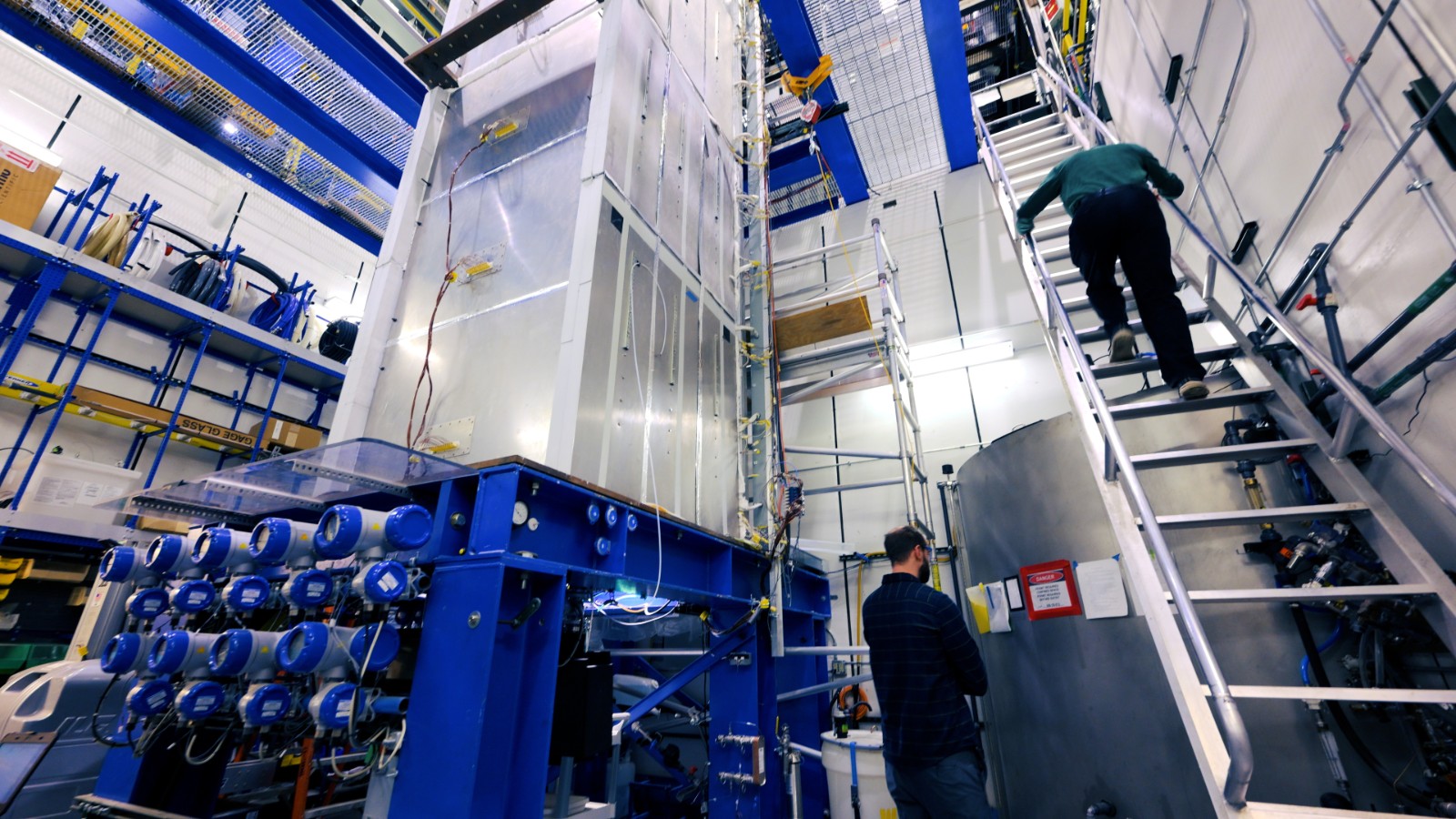
Argonne National Laboratory Achieves Latest Research Progress in Advanced Reactor Passive Safety, Revealing Flow Characteristics of Reactor Cavity Cooling System Using NSTF Facility
A research team at Argonne National Laboratory, under the U.S. Department of Energy (DOE), has achieved the latest research progress on passive shutdown decay heat removal mechanisms for next-generation advanced nuclear reactors. Under unplanned reactor shutdown or sudden emergency accident conditions, nuclear fuel continues to release decay heat. Ensuring continuous and reliable heat removal under complete power loss and without manual intervention is a core issue in the inherent safety design of Generation IV advanced reactors. The Argonne research team recently focused on the transient thermal-hydraulic response characteristics of key passive heat removal systems under realistic dynamic decay heat curves. This...
2026-09-30
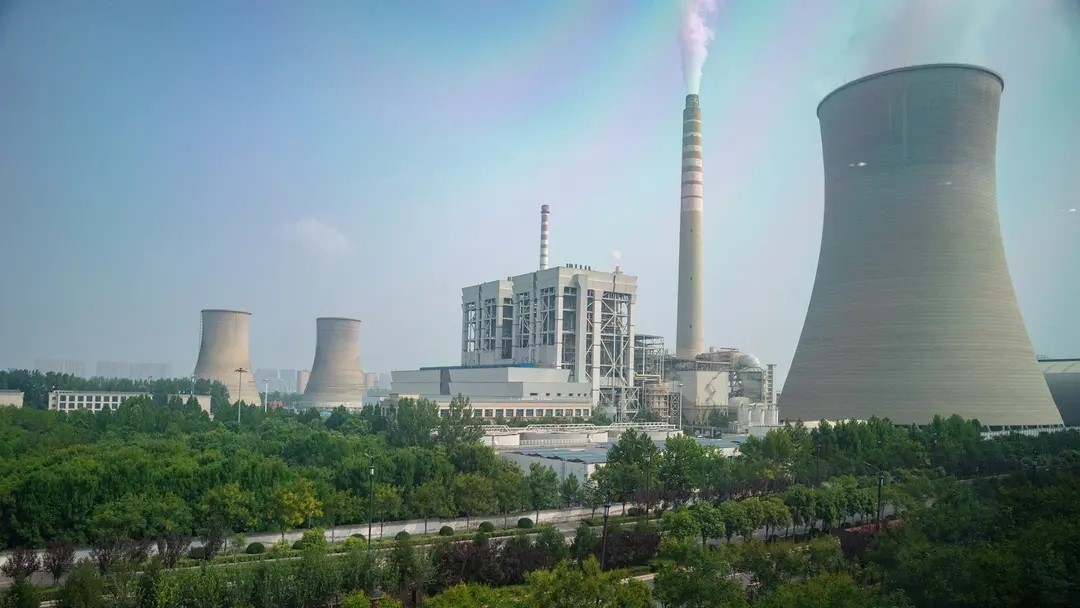
Argonne National Laboratory develops new monitoring system that can accurately diagnose hidden faults inside nuclear reactors
U.S. researchers have developed a new monitoring system that combines fiber-optic temperature sensors with artificial intelligence (AI) to identify hidden internal channel blockage risks before they cause costly reactor shutdowns. The technology was developed by Argonne National Laboratory (ANL), part of the U.S. Department of Energy (DOE), and is specifically designed for key heat exchanger components in molten-salt-cooled reactors (MSCRs). Heat exchangers ser...
2026-09-24
Argonne National Laboratory Measures Dust Resuspension Behavior in Radioactive Contamination Scenarios
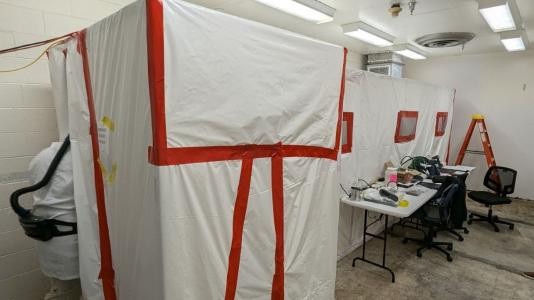
Researchers at the U.S. Department of Energy's Argonne National Laboratory recently conducted field experiments to simulate the movement of dust particles on concrete surfaces under radioactive contamination scenarios, measuring the effects of pedestrian activity and vehicle traffic on dust dispersion. The study was published in the journal Health Physics and received support from the U.S. Department of Homeland Security Science and Technology Directorate and the Radiological/Nuclear Emergency Response and Recovery Research and Development Program. To control humidity and temperature and prevent dust generation, pedestrian tests were conducted inside a tent. In the image, researchers can be seen entering the tent on the left. Particle counters are placed on a white table, with their hoses extending into the tent to collect air samples. (Image courtesy of Ar...
2026-08-27

Argonne National Laboratory's Nuclear Energy Operations Optimization Software Named Finalist for 2026 R&D 100 Awards
On August 18, 2026, multiple research projects from the U.S. Department of Energy (DOE) Argonne National Laboratory received recognition in the 2026 R&D 100 Awards. Among them, the open-source software FARM, directly related to nuclear energy system operations, was named a finalist, standing out as a noteworthy nuclear energy technology achievement among this year's winners and finalists. FARM stands for Feasible Actuator Range Modifier, jointly developed by Argonne National Laboratory and DOE's Idaho National Laboratory, with NuCube Energy Inc. as a collaborating partner. The software targets complex energy sy...
2026-08-19
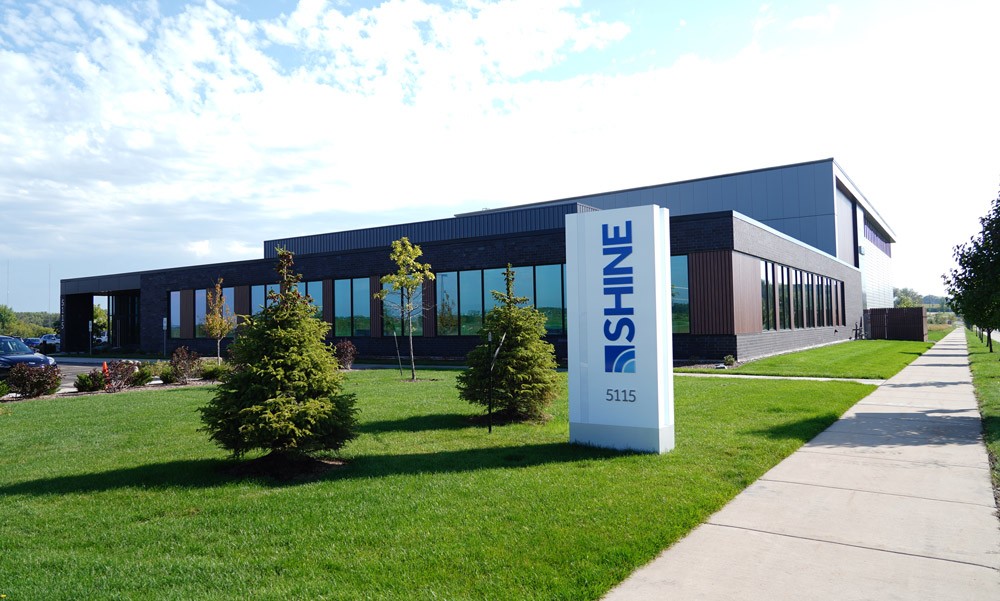
SHINE to Advance Spent Fuel Recycling Separation Technology with Argonne National Laboratory and Others
On August 18, fusion energy company SHINE announced that it will collaborate with the U.S. Department of Energy's Argonne National Laboratory and Case Western Reserve University to apply high-throughput chemical separation technology to the nuclear fuel recycling process it is currently developing. The collaboration is carried out under the CURIE program of the U.S. Department of Energy's Advanced Research Projects Agency-Energy (ARPA-E), with additional funding led by Case Western Reserve University, and SHINE participates as a subcontractor. Spent fuel is often referred to as nuclear waste, but it retains approximately 90% of its energy potential while containing multiple reusable byproducts. In recent years, federal programs and private investment in the United States have driven renewed interest in spent fuel recycling. Argonne National Laboratory is developing a new chemical processing device called "Packed Centrifugal Equipment for Radiochemical Separation," abbreviated as PaCERS. The device generates centrifugal force exceeding normal gravity conditions through high-speed rotation to improve chemical separation efficiency, and reduces costs across multiple stages of nuclear fuel recycling through higher throughput and lower solvent usage.
2026-08-19
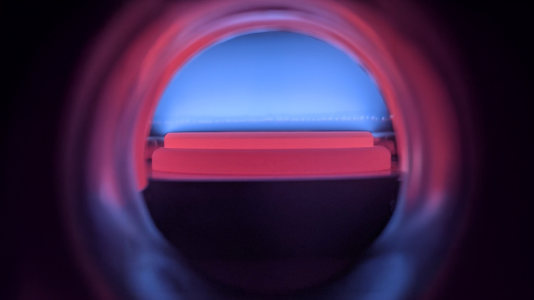
Argonne National Laboratory Launches Diamond Quantum Sensor Project to Serve High-Energy Physics Electromagnetic Field Measurements
The U.S. Department of Energy's Argonne National Laboratory recently launched a new three-year, $1 million research project that plans to combine quantum information science with high-energy physics research to develop a new generation of quantum sensors based on diamond materials for higher-precision measurement and mapping of electromagnetic fields. Inside this plasma-filled vacuum chamber is the diamond substrate used to fabricate the diamond thin film (not shown in the image), within which the nitrogen-vacancy qubits are located. (Image courtesy of Nazar Delegan/Argonne National Laboratory.) In high-energy physics experiments, the precision of electromagnetic field measurements directly affects the reliability of experimental results. Whether analyzing the momentum of debris produced after particle collisions...
2026-08-18
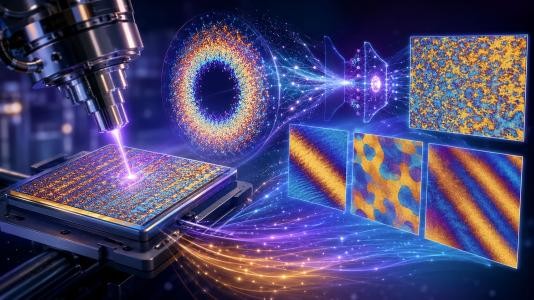
Argonne National Laboratory Unveils DONUT Tool to Accelerate Real-Time Analysis of X-ray Nanodiffraction Data
Researchers at the U.S. Department of Energy's Argonne National Laboratory have developed a new machine learning tool called DONUT to accelerate X-ray data analysis in experiments at the Advanced Photon Source (APS). The tool can process complex images generated by scanning X-ray nanodiffraction microscopy (SXDM) in real time during experiments, helping researchers more quickly determine internal structural changes in materials. DONUT stands for "Nanobeam Optical Diffraction based on Unsupervised Training," a physics-aware neural network. Its key feature is combining artificial intelligence methods with physical models of focused X-ray beam interactions with materials, allowing it to learn directly from experimental data without relying on pre-labeled training...
2026-08-17