
Search Results
Keyword:BEA
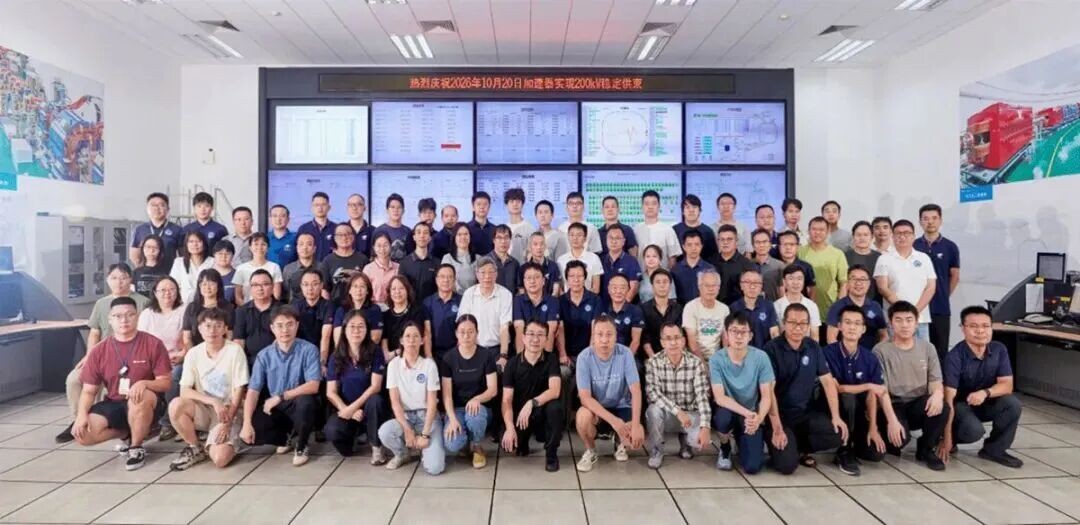
China Spallation Neutron Source Completes Important Milestone Equipment Installation Task, Beam Power Exceeds 200 kW
To minimize the impact on user operations, the China Spallation Neutron Source Phase II Project (CSNS-II) utilizes the annual summer shutdown window to carry out Phase II equipment installation. During this year's summer shutdown, the project team completed the installation and commissioning of the front-end equipment of the linear accelerator, all solid-state modulators, and the third magnetic alloy cavity of the rapid cycling synchrotron. At this point, all equipment of the CSNS-II accelerator except the superconducting accelerator has been installed. After nearly a month of beam commissioning, on October 20, 2026, the facility's beam power exceeded 200 kW and officially entered user operation, reaching twice the Phase I design beam power. This is also an important milestone in the CSNS-II construction, providing key verification for achieving the Phase II...
2026-10-25

"Power-Hungry Beast" Reshapes the Logic of Power Asset Revaluation: Can Tech Giants' 20-Year Long-Term Agreements Fundamentally Resolve the Nuclear Power Economics Dilemma?
On October 6, 2026, Constellation Energy (Nasdaq ticker CEG, the largest commercial nuclear reactor operator in the United States) and Google announced the signing of a 20-year strategic clean energy cooperation agreement. Following the announcement, Constellation Energy's stock price rose approximately 12% that day. The capital market's excitement is understandable. But an easily overlooked detail is that the true structure of this deal differs considerably from the "1 billion dollars" in media headlines. Bloomberg's initial report of "at least 1 billion dollars" was the figure at the time the deal first came to light, while the officially announced agreement amount is 4.3 billion dollars. The essence of the 4.3 billion dollars is Constellation Energy's capital investment to upgrade its 11 nuclear power units, with Google providing revenue certainty for this investment through a 20-year power purchase agreement.
2026-10-09

U.S. Department of Energy Plans to Provide Vistra with $4.2 Billion Conditional Loan to Support Power Uprates and Life Extensions at Operating Nuclear Plants: Safeguarding Nearly 4 GW of Baseload Power to Meet Surging Electricity Demand from AI Data Centers
The U.S. Department of Energy (DOE) announced a conditional loan commitment of up to $4.2 billion to Vistra Corp., an independent power producer headquartered in Irving, Texas. The funds will be dedicated to financing power uprates and equipment modernization projects at three of Vistra's nuclear power plants located in Pennsylvania and Ohio——Beaver Valley, Davis-Besse, and Perry——to meet the explosive growth in electricity demand driven by artificial intelligence and data centers. According to the project plan, this technical upgrade project is expected to add a cumulative 433 megawatts (MW) of nuclear generating capacity, and...
2026-10-08

The neutral beam injection system prototype independently developed by Shuyan Juchuang has been officially completed and completed its first plasma discharge.
Recently, the neutral beam injection (NBI) system prototype independently developed by Shuyan Juchuang, a domestic upstream commercialization company in controlled nuclear fusion, was officially completed, and on September 30, 2026, it successfully completed the first neutral beam plasma discharge verification. This marks the landing of China's first neutral beam engineering verification prototype fully independently developed along the entire chain by an upstream fusion commercialization company, achieving a technical closed loop from system design to productization verification. It is expected that the relevant capabilities of the system will reach an engineering state ready for direct commercial procurement in December this year. With the smooth completion and successful discharge of this prototype, the company's 2026 annual strategic goals set at the beginning of the year have all...
2026-10-08
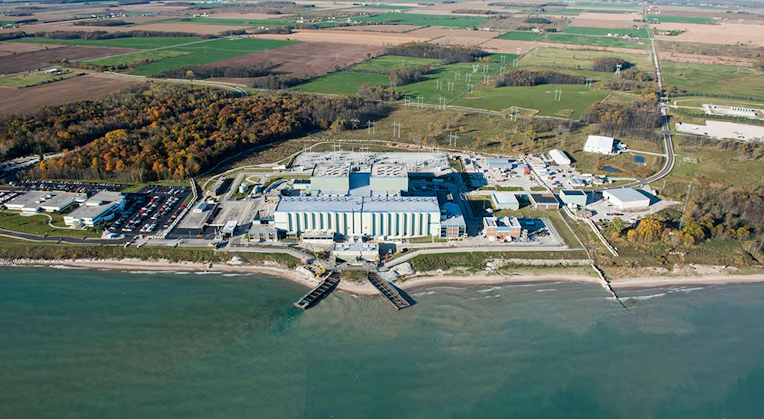
Oracle Plans to Purchase Power from Point Beach Nuclear Power Station to Supply Wisconsin AI Data Center
On October 5, 2026, U.S. tech giant Oracle announced plans to purchase 125 MW to 250 MW of power from the Point Beach Nuclear Power Station in Wisconsin to supply a large artificial intelligence and cloud computing data center campus in Port Washington. The power purchase agreement still requires approval from the Public Service Commission of Wisconsin. It is understood that Oracle will obtain approximately 10% to 20% of the total output of the dual-unit nuclear power station. Oracle stated that this commitment will help protect customers from the nuclear power station's cost...
2026-10-06
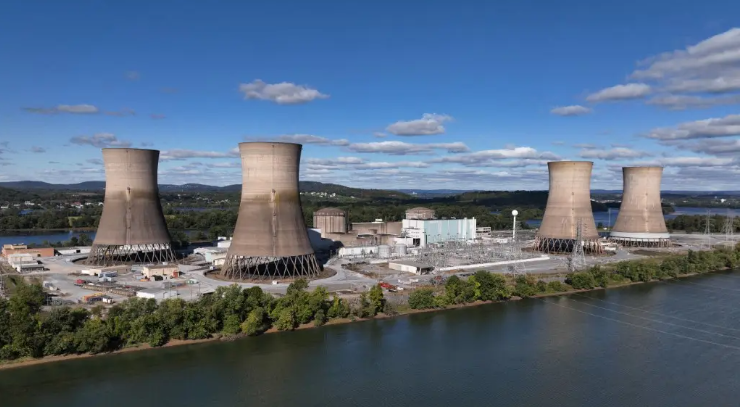
U.S. Department of Energy Commits $4.2 Billion Loan to Support Vistra Nuclear Plant Expansion and Upgrade
On October 5, 2026, the Office of Energy Dominance Financing of the U.S. Department of Energy (DOE) announced a commitment to provide a conditional loan of up to $4.2 billion to fund the expansion and modernization of nuclear power plants owned by Vistra Corp. in Pennsylvania and Ohio. It is understood that this investment aims to implement U.S. President Donald Trump's executive order on revitalizing the nuclear industrial base. U.S. Secretary of Energy Chris Wright stated that by increasing the power generation of existing nuclear power plants, affordable...
2026-10-06

IAEA and IDB Sign Cooperation Agreement to Advance Nuclear Energy and Nuclear Technology for Sustainable Development in Latin America and the Caribbean
On September 24, 2026, on the margins of the United Nations General Assembly in New York, the International Atomic Energy Agency (IAEA) and the Inter-American Development Bank (IDB) formally signed a Memorandum of Understanding (MoU) on cooperation. The two sides aim to establish a long-term partnership to jointly advance in-depth cooperation in Latin America and the Caribbean in the safe, secure and sustainable use of nuclear energy and nuclear technology. This also represents an important step by the IAEA to expand its network of cooperation with multilateral development finance institutions in support of the global low-carbon clean transition. The memorandum was signed by...
2026-09-27

Lightbridge Approved to Conduct Advanced Nuclear Fuel Irradiation Testing at Idaho National Laboratory
On September 9, Lightbridge Corporation (Lightbridge, Nasdaq: LTBR), a developer of advanced nuclear fuel technology, announced that it has completed the signing of Project Task Statement No. 2 (PTS No. 2) under the Cooperative Research and Development Agreement (CRADA) with Battelle Energy Alliance, LLC (BEA), the operating contractor of Idaho National Laboratory (INL). Under this task statement, Lightbridge will gain access to the loop test facility of the Advanced Test Reactor (ATR) at Idaho National Laboratory to conduct irradiation testing of Lightbridge Fuel™ cladded fuel rods. The loop...
2026-09-10

U.S. Bluecore Energy Raises $50 Million to Advance Floating Small Modular Reactors
On September 8, 2026, U.S.-based Bluecore Energy announced the completion of a $50 million seed financing round to accelerate the development, testing, and deployment of its floating nuclear energy systems. Bluecore Energy is developing small modular water-cooled reactors that can operate on floating barges, with target applications including ports, utilities, data centers, offshore infrastructure, and communities facing energy shortages. The round was led by Silverton Partners, with existing investor Slauson & Co continuing its participation, alongside Harlem Capital, Precursor Ventures, LMNT, Visible Hands VC, Karman Ventures, and others. Bluecore ...
2026-09-09
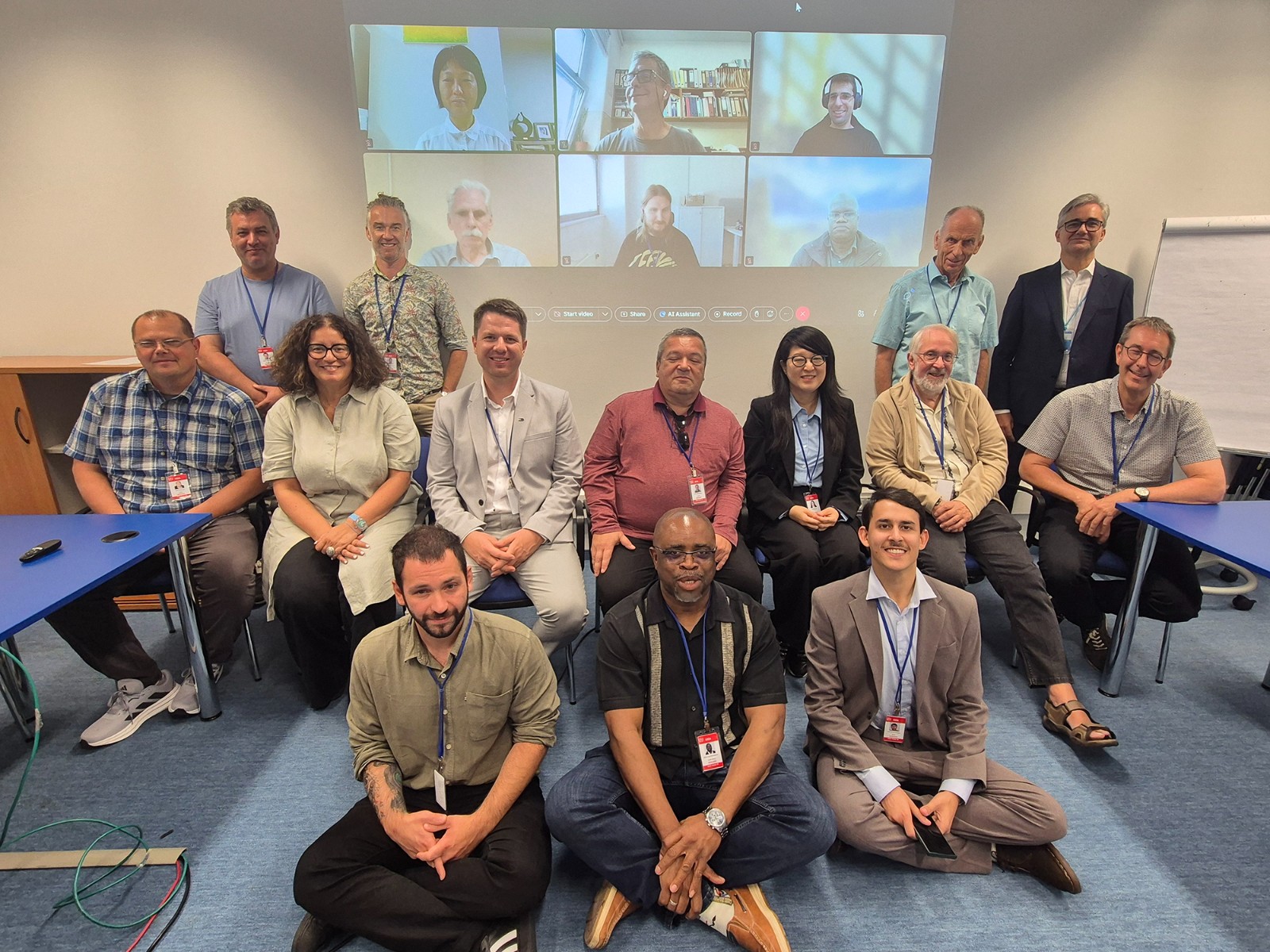
IAEA Technical Meeting on Data Requirements for Ion Beam Analysis Explores Prospects for Nuclear Track Emulsion Applications
From 24 to 28 August 2026, the International Atomic Energy Agency convened a Technical Meeting on Data Requirements for Ion Beam Analysis Experiments in Vienna, Austria, attended by scientists and experts from multiple nuclear physics research institutions. The meeting discussed the nuclear data requirements for current and future applications of ion beam analysis, with attention to new experimental methods and the application of artificial intelligence and machine learning in experiments and data processing. The meeting focused on assessing whether existing nuclear data can meet the needs of ion beam analysis applications, covering areas such as elastic recoil cross sections, nuclear reaction data, and gamma-ray spectrum analysis. Experts discussed the limitations that insufficient existing data impose on quantitative analysis and uncertainty assessment...
2026-09-08
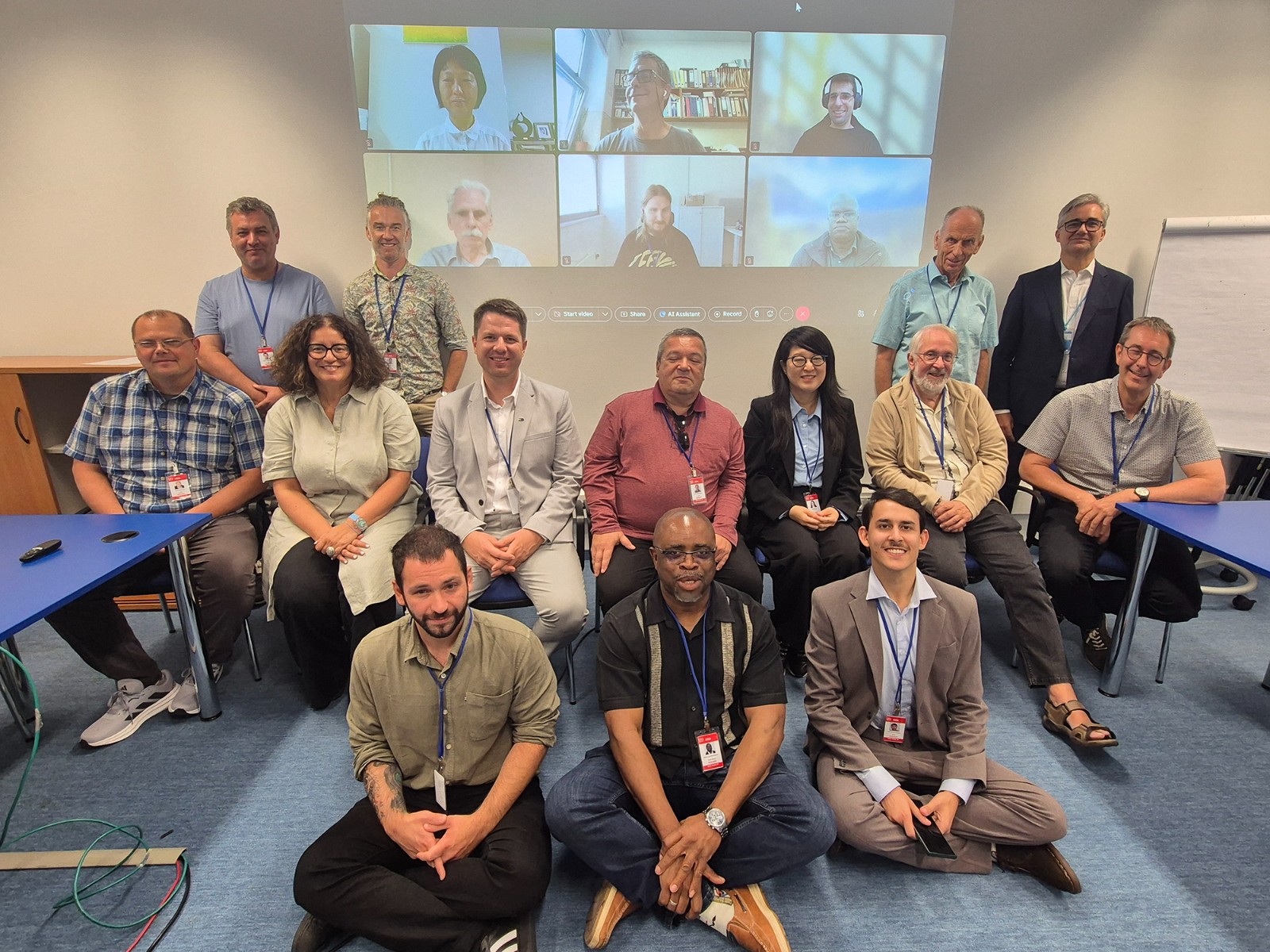
IAEA Meeting Focuses on Data Needs for Ion Beam Analysis, JINR Presents Progress in Nuclear Track Emulsion Research
From August 24 to 28, 2026, the International Atomic Energy Agency held a Technical Meeting on Data Requirements for Ion Beam Analysis in Vienna, Austria, attended by scientists and experts from multiple nuclear physics research institutions. Andrey Zaitsev, Senior Researcher at the High Energy Physics Laboratory of the Joint Institute for Nuclear Research, delivered a report at the meeting, presenting the current performance of nuclear track emulsions and research progress related to the BECQUEREL project. The meeting focused on assessing whether existing nuclear data can meet current and future application needs of ion beam analysis, and discussed new experimental methods, as well as the application of artificial intelligence and machine learning in experiments and data processing. Topics included elastic backscattering cross sections, nuclear re...
2026-09-05

CERN removes first giant beam absorbers from LHC, making room for High-Luminosity Large Hadron Collider upgrade
CERN recently completed a complex transport operation, moving the first two giant components from the Large Hadron Collider (LHC) tunnel to the surface, making room for the operation and upgrade of the future High-Luminosity Large Hadron Collider (HiLumi LHC). The equipment removed this time consists of two beam absorbers, also known as TAN absorbers. Each absorber is about 5 meters long and weighs about 30 tons, made of iron, copper, and marble, primarily used to protect accelerator magnets from damage caused by neutral particles generated along the beam direction during collisions. A relevant official stated that this type of equipment is among the heaviest and largest devices that need to be removed from the LHC during this shutdown period...
2026-09-03

U.S. to Conduct Underwater Neutrino Detection Tests in Lake Superior and Vermilion Lake
From October 2026 to approximately April 2027, a team of researchers from U.S. universities and government agencies will conduct underwater neutrino tests in Lake Superior and Vermilion Lake. The project, named the Experimental Neutrino Detector (END), aims to validate a baseline detection system in natural water bodies to identify the NuMI neutrino beam produced by Fermi National Accelerator Laboratory and distinguish it from cosmic-ray backgrounds and other noise in shallow-water environments. END will place underwater neutrino detectors on the lakebed of Lake Superior where the Fermilab neutrino beamline passes through—near Two Harbors, Minnesota. The beamline will continue toward...
2026-09-02
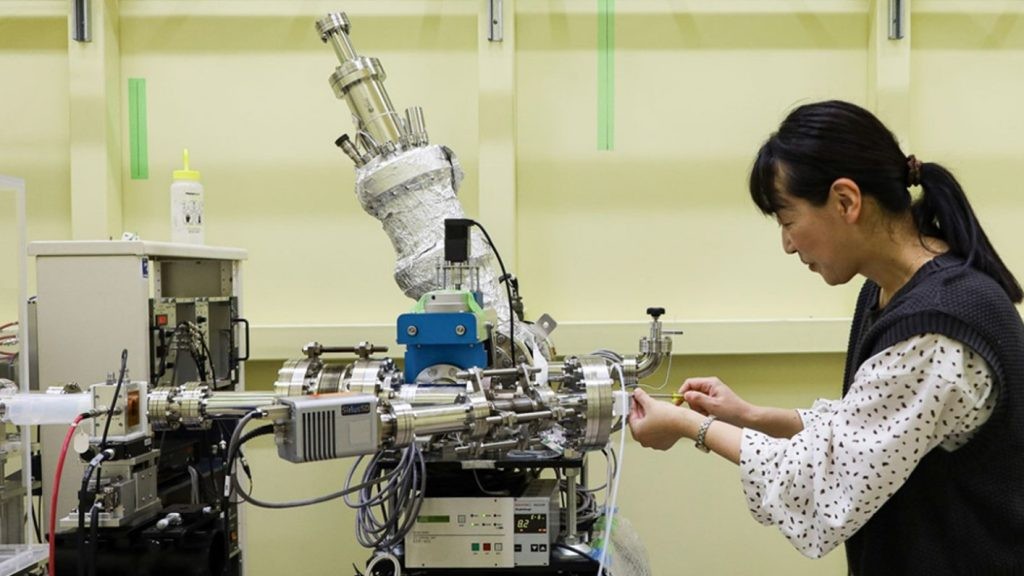
Japan's PF Launches Quantum Multi-Beam Experiments, Achieving Simultaneous Hard and Soft X-ray Measurements
The Photon Factory, a synchrotron radiation facility at the Institute of Materials Structure Science, High Energy Accelerator Research Organization (KEK) in Japan, has recently launched collaborative experiments on the development and research multi-purpose beamlines BL-11A and BL-11B, achieving simultaneous irradiation of the same sample with hard and soft X-rays at the same position. The research results will be published in the international academic journal *Review of Scientific Instruments*. The Photon Factory uses electrons moving at near-light speed to generate high-brightness X-rays, known as synchrotron radiation, for studying material structures and properties. Among these, hard X-rays are better suited for observing the internal structure of materials, while soft X-rays are ideal for analyzing material surfaces and electronic states. Previously, at synchrotron radiation facilities, the two types of X-rays typically had to...
2026-08-31
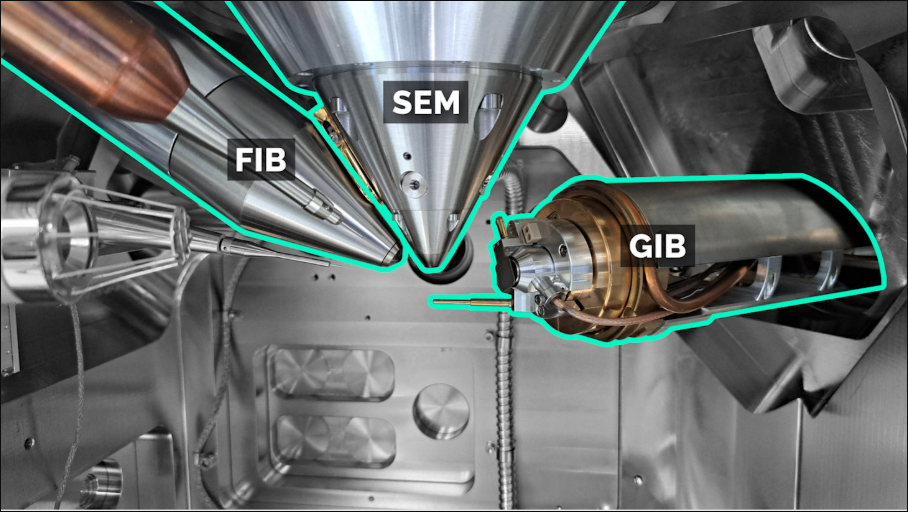
Gallium ion FIB-SEM sample preparation has a damage limit; low-energy argon ion beam cleaning is used to improve TEM sample quality
Gallium ion focused ion beam-scanning electron microscopy (Ga⁺ FIB-SEM) has become an important method for site-specific thin lamella sample preparation for transmission electron microscopy/scanning transmission electron microscopy (TEM/STEM), enabling cutting, extraction, and thinning of target regions at the nanometer scale. However, the literature indicates that while gallium ions provide high-precision machining capability, they also cause amorphization, ion implantation, and localized chemical modification on the sample surface, which can subsequently affect high-resolution imaging and energy dispersive spectroscopy analysis results. According to the literature, Ga⁺ FIB-SEM typically enables high-resolution site-specific machining at 30 keV, but high-energy gallium ions form a damage layer on the sample sidewalls. Taking silicon as an example...
2026-08-31