
Search Results
Keyword:CEI

GE HealthCare's Photonova Spectra Photon-Counting CT Receives CE Mark, to Be Commercialized in Countries Recognizing CE Marking
On August 31, GE HealthCare announced that its advanced photon-counting computed tomography (PCCT) system, Photonova Spectra, has received CE marking. The system utilizes GE HealthCare's proprietary Deep Silicon™ detector technology. This certification will expand the system's availability in countries and regions that recognize the CE mark and pave the way for its clinical use. According to reports, Photonova Spectra is designed to address the growing patient volumes and increasing diagnostic complexity faced by healthcare institutions today, aiming to provide clinicians with clearer and more timely imaging information. Leveraging deep silicon detector technology, the system can acquire spectral and spatial imaging information in each scan...
2026-09-01

Beijing Jiluntai's ¹⁷⁷Lu-JLT003 Injection Receives IND Approval for Treatment of Integrin αvβ3-Positive Malignant Tumors
Beijing Jiluntai Pharmaceutical Co., Ltd. has recently achieved progress in radiopharmaceutical R&D. Its self-developed Class 1 innovative therapeutic radiopharmaceutical ¹⁷⁷Lu-JLT003 Injection (generic name: ¹⁷⁷Lu-AB-3PRGD2) has obtained the Clinical Trial Approval (IND) from the Center for Drug Evaluation (CDE) of the National Medical Products Administration (NMPA), intended for the treatment of integrin αvβ3-positive malignant tumors. ¹⁷⁷Lu-AB-3PRGD2 is a therapeutic radiopharmaceutical targeting integrin αvβ3. Integrin αvβ3 is highly expressed on various solid tumor cells and tumor neovascular endothelial cells, while showing low expression in normal tissues, a characteristic that...
2026-09-01
German Photon and Neutron Research Data Alliance Receives €8.3 Million in Second-Phase Funding
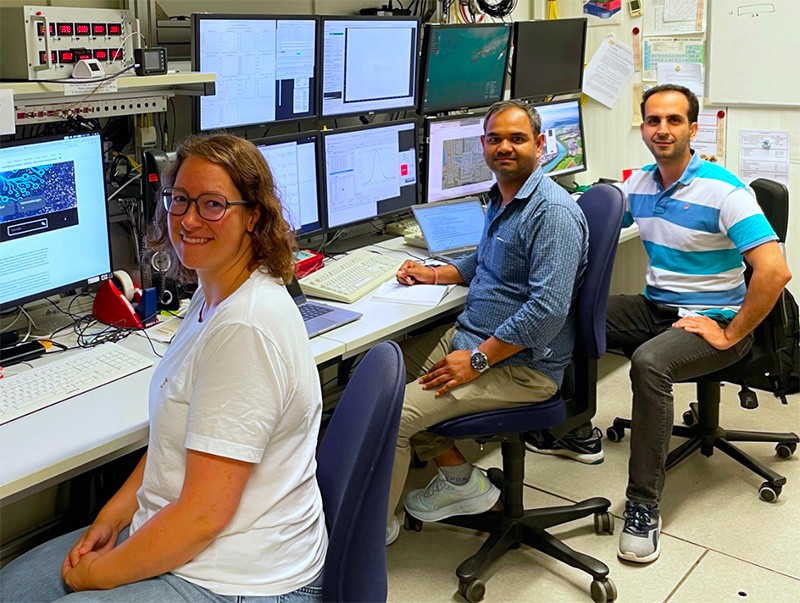
The German National Research Data Infrastructure consortium for photon and neutron experimental data (DAPHNE4NFDI) will enter its second funding phase, receiving initial funding of €8.3 million, with the funding period running until the end of 2028. Since 2021, the consortium has been working to improve the management of research data from photon and neutron experiments, making the data easier to find, access, and reuse over the long term. DAPHNE4NFDI is one of the disciplinary consortia under the German National Research Data Infrastructure (NFDI), with members including the German Electron Synchrotron (DESY), Kiel University (CAU), and other universities and research institutions. The funding decision is based on a recommendation from the German Research Foundation (DFG). Since January 2026...
2026-08-31

Japan's Tokai No. 2 Nuclear Power Plant Seawall Reinforcement Plan Receives Basic Approval
Japan's Nuclear Regulation Authority (NRA) held a review meeting on the 27th local time and basically approved the seawall structural modification plan for the Tokai No. 2 Nuclear Power Plant submitted by Japan Atomic Power Company (JAPC). The plant is located in Tokai Village, Ibaraki Prefecture, Japan, and the relevant seawall is an important component of the safety measures required for restart, with foundation defects having been discovered during construction. According to JAPC's explanation, the modification plan does not remove the underground foundation where defects were found, but instead adds pile foundations around it and uses cement-based materials to reinforce the ground. Regarding this plan, JAPC submitted an assessment of the seawall's seismic and tsunami resistance performance after modification, concluding that the structurally adjusted seawall can still fulfill the functions required of a tsunami protection facility.
2026-08-28
Canadian Light Source Synchrotron at University of Saskatchewan Receives $3 Million CAD in Upgrade Funding
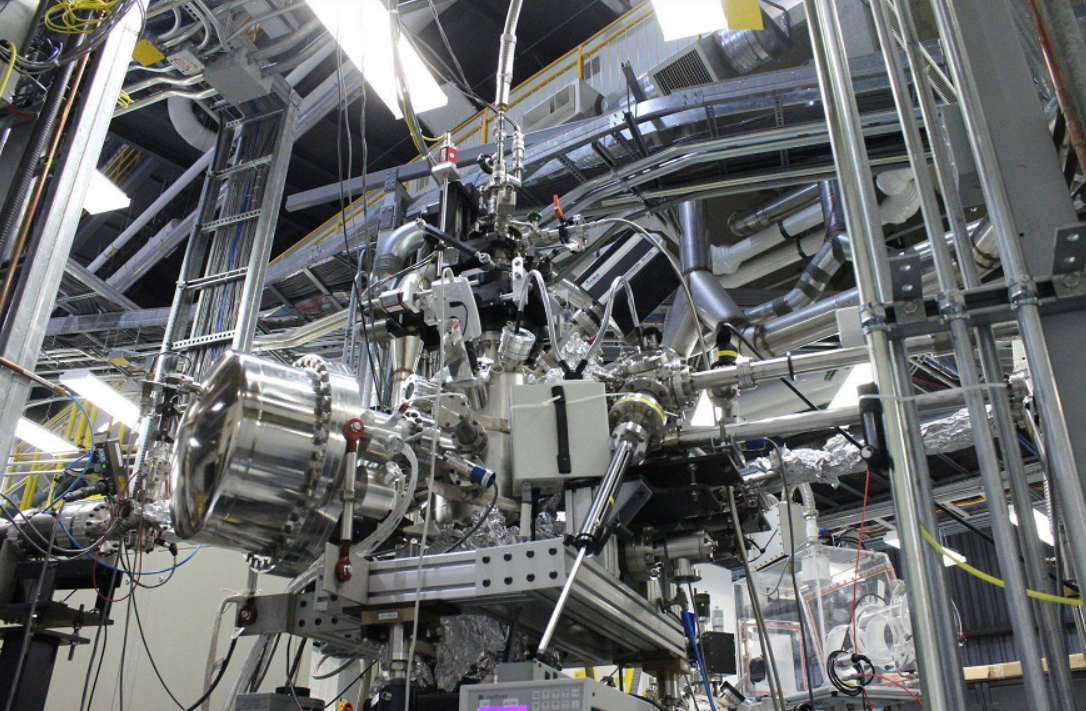
On August 26, Innovation Saskatchewan announced that it will provide $3 million CAD in funding to the Canadian Light Source synchrotron at the University of Saskatchewan to support the installation of an advanced solid-state amplifier, advancing the facility's upgrade efforts. According to reports, this solid-state amplifier is a key component of the Canadian Light Source's core particle accelerator and will support the operation of its 22 synchrotron radiation beamlines. The upgrade is expected to enhance facility performance, operational reliability, and energy efficiency, further strengthening its capacity for cutting-edge scientific research. The Canadian Light Source is Canada's only synchrotron facility. Synchrotrons use electromagnetic fields and radiofrequency waves to accelerate electrons to near the speed of light, keeping them in a circular orbit; as electrons move, they generate high-brightness, highly focused synchrotron radiation beams, which are directed to different experimental beamlines to help researchers study material structures and properties at the atomic scale.
2026-08-27

France's n-Floating Floating Nuclear Power Project Receives Nearly One Million Euros in Funding
newcleo announced on August 26 that a consortium led by the company has been selected for a call for projects managed by Bpifrance, the French public investment bank, supporting the decarbonization of France's maritime sector. The consortium will advance research on a floating nuclear power solution called n-Floating, with the project receiving nearly one million euros in funding and an expected duration of approximately 18 months. The n-Floating project aims to validate the relevance and technical feasibility of a new floating nuclear power solution. Under the proposed concept, a non-self-propelled floating unit would carry multiple LFR-AS-200 reactors, each with an electrical output of 200 megawatts. LFR-AS-200 is one of the lead-cooled fast reactor technology lines developed by newcleo.
2026-08-27
Lancaster University in the UK receives EPSRC funding to study antimatter production in intense laser pulses
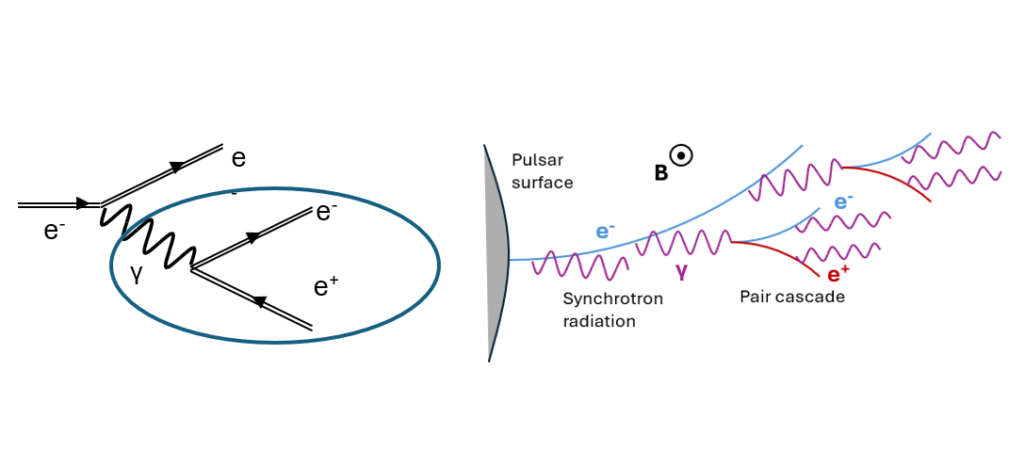
Christopher Arran, a lecturer at Lancaster University and the Cockcroft Institute in the UK, has recently been awarded a three-year New Investigator Award from the UK Engineering and Physical Sciences Research Council (EPSRC) to study electron-positron pair production in the extremely intense electromagnetic fields of high-power lasers. The research focuses on matter-antimatter production processes under intense laser pulse conditions. Similar interactions are believed to exist in extreme cosmic environments, such as near pulsars and black hole accretion disks. Previously, such interactions had only been measured at large particle accelerator facilities such as Stanford University and the European Organization for Nuclear Research (CERN), but the electric and magnetic field strengths used in those experiments were far weaker than the strong-field conditions achievable with current high-power lasers.
2026-08-26

Japan's Mihama Nuclear Power Plant Unit 3 Receives Preliminary Approval for Operation Plan Beyond 50 Years
On August 25, Japan's Nuclear Regulation Authority (NRA) gave preliminary approval to Kansai Electric Power Co. (KEPCO) for the long-term facility management plan for Unit 3 of the Mihama Nuclear Power Plant. Located in Mihama Town, Fukui Prefecture, the unit will mark its 50th anniversary of commercial operation on December 1. In May of this year, the metal top cover of the high-pressure turbine at Mihama Unit 3 suffered damage, resulting in steam leakage. At the NRA meeting held that day, KEPCO explained that the cause of the incident was believed to be thinning of the inner wall of the top cover due to steam flow. The company stated that this phenomenon falls under previously anticipated aging and degradation management for turbine equipment, and that the existing plan already includes corresponding management measures. Visual inspection and other examination methods were also deemed applicable, thus no revision to the long-term facility management plan was required.
2026-08-26

Japan's TEPCO Receives 4.8 Billion Yen in Nuclear Damage Compensation Funds
Tokyo Electric Power Company Holdings (TEPCO Holdings) announced on August 24 that it received a fund disbursement of 4.8 billion yen from the Nuclear Damage Compensation and Decommissioning Facilitation Corporation (NDF) on the same day. The disbursement was made in accordance with the revised Special Business Plan approved on March 31, 2026. TEPCO stated that, to date, it has received 188.9 billion yen in compensation under the Act on Compensation for Nuclear Damage, and a cumulative total of 11.5524 trillion yen in fund disbursements from the NDF. As the total compensation payments expected by the end of September 2026 are projected to exceed the combined amount of the above funds, the company applied for the 172nd fund disbursement. TEPCO said that while receiving institutional financial support, it will continue to advance compensation efforts for nuclear accident victims and meet related compensation demands. Information on claims and payment status, changes in cumulative total payments, and agreement amounts by category is available through the company's public channels.
2026-08-24

Hitachi Receives Order for Heavy Ion Therapy System from Shanghai Proton and Heavy Ion Center
Recently, Hitachi (China) Co., Ltd. received an order for one heavy ion cancer therapy system from the Shanghai Proton and Heavy Ion Center, and the two parties held a signing ceremony. This order is part of the Phase II construction project of the Shanghai Proton and Heavy Ion Center. Rendering of the completed Phase II project of the Shanghai Proton and Heavy Ion Center The Shanghai Proton and Heavy Ion Center is the first medical institution in China to possess both proton and heavy ion radiotherapy technologies. To further meet the demand for precision medicine, the center launched its Phase II construction in 2025, planning to add particle therapy system equipment. According to the project arrangement, the heavy ion therapy system ordered this time will be equipped with 4 treatment rooms and integrate Hitachi's moving-target tracking technology and pencil-beam scanning irradiation technology.
2026-08-24
Cubresa Brain PET Scanner Receives FDA 510(k) Clearance, Integrates with Existing PET/MR Systems
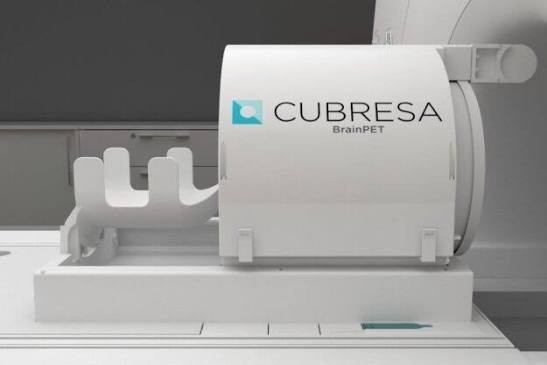
Molecular imaging technology company Cubresa Inc. announced on August 20 that its Cubresa BrainPET™ scanner has received 510(k) clearance from the U.S. Food and Drug Administration (FDA). According to the company, the Cubresa BrainPET™ is a positron emission tomography (PET) device specifically designed for brain imaging and can be integrated into existing Siemens Biograph mMR MR/PET systems. The device enables healthcare institutions to perform simultaneous PET/MR brain imaging on existing MRI infrastructure, capturing molecular and anatomical information without the need to purchase a separate whole-body hybrid imaging system. Cubresa founder and CEO James ...
2026-08-22
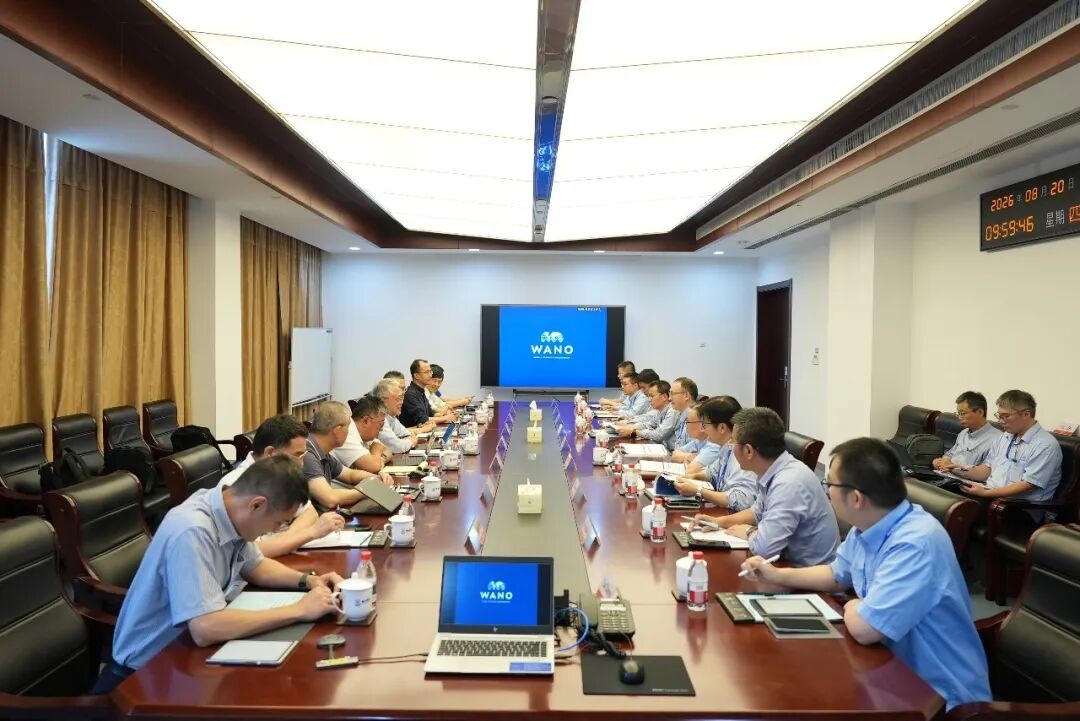
Qinshan Nuclear Power Receives On-Site Visit for WANO Enhanced Performance Monitoring and Achieves Highest Rating
Recently, experts from the World Association of Nuclear Operators (WANO) Tokyo Center and Shanghai Office visited Qinshan Nuclear Power to conduct an on-site Enhanced Performance Monitoring (ePM) assessment for its nine units. Based on a comprehensive evaluation, the WANO on-site visit team unanimously concluded that Qinshan Nuclear Power has demonstrated steady overall performance improvement in recent years and currently operates at the industry's highest "benchmark" level, with expectations that performance across key areas will remain stable or continue to improve over the next six months. Additionally, WANO experts conducted follow-up evaluations on selected Areas for Improvement (AFIs) and Significant Operating Experience Report (SOER) recommendations arising from the 2025 WANO peer review of Qinshan Nuclear Power's nine units, deeming the overall results satisfactory. At a summary meeting held on August 20...
2026-08-22
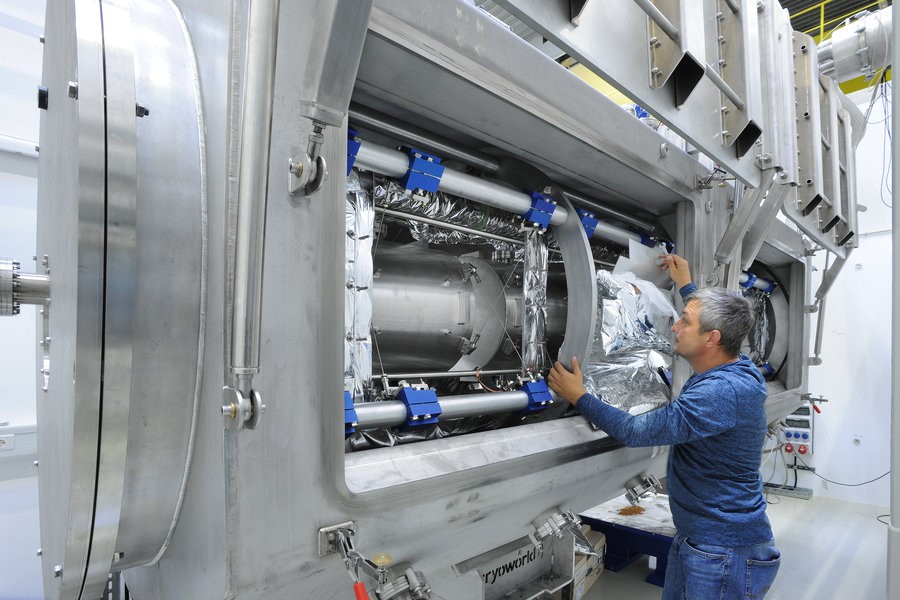
German SIBAF Project Receives €9.7 Million to Support Fusion Materials Research
On August 20, 2026, with funding from the German Federal Ministry of Research, Technology and Space (BMFTR), the SIBAF project will launch the construction of an accelerator infrastructure for fusion materials research. The project, whose full name is Superconducting Ion Accelerator as a Foundational Technology for Fusion Research, will receive €9.7 million over three years, of which €8.1 million is allocated to the GSI Helmholtz Centre for Heavy Ion Research (GSI) and its Facility for Antiproton and Ion Research (FAIR), currently under construction. Goethe University Frankfurt will also participate in the project. SIBAF is part of the funding program "Fusion Foundational Technologies — Toward the Fusion Power Plant." Project objectives...
2026-08-21

Norroy Bioscience's 68Ga-NYM096 Receives FDA Breakthrough Therapy and Fast Track Designations
China-based Norroy Bioscience announced on August 19 that the U.S. Food and Drug Administration (FDA) has granted Breakthrough Therapy and Fast Track designations to its radiopharmaceutical imaging agent 68Ga-NYM096. The agent is a PET imaging tracer targeting carbonic anhydrase IX (CAIX), intended for imaging clear cell renal cell carcinoma (ccRCC). According to the company, 68Ga-NYM096 is being developed as a non-invasive PET imaging tool to characterize renal masses detected by CT or MRI and to help distinguish clear cell renal cell carcinoma from other non-ccRCC renal lesions. Clear cell renal cell carcinoma is the most common subtype of renal cell carcinoma...
2026-08-21

Vivos Ships First Batches from U.S. IsoPet Production Facility, Receives AERB Approval to Build International Manufacturing Center in India
KENNEWICK, Wash. — Vivos Inc. recently announced two operational milestones: its in-house production facility in Richland, Washington, has begun delivering IsoPet® products to certified veterinary clinics in the United States; simultaneously, the company has received authorization from India's Atomic Energy Regulatory Board (AERB) to establish an international manufacturing center in India. This means Vivos will have a two-site production footprint spanning the U.S. and India. According to the company, the U.S. production facility, housed at the Applied Process Engineering Laboratory (APEL), will manufacture IsoPet® veterinary oncology products and RadioGel® human oncology products, and will serve as the center for subsequent process improvements and regulatory...
2026-08-19