
Search Results
Keyword:Crystal
U.S. Electron-Ion Collider ePIC Detector Completes First Batch of Lead Tungstate Crystal Procurement and Acceptance
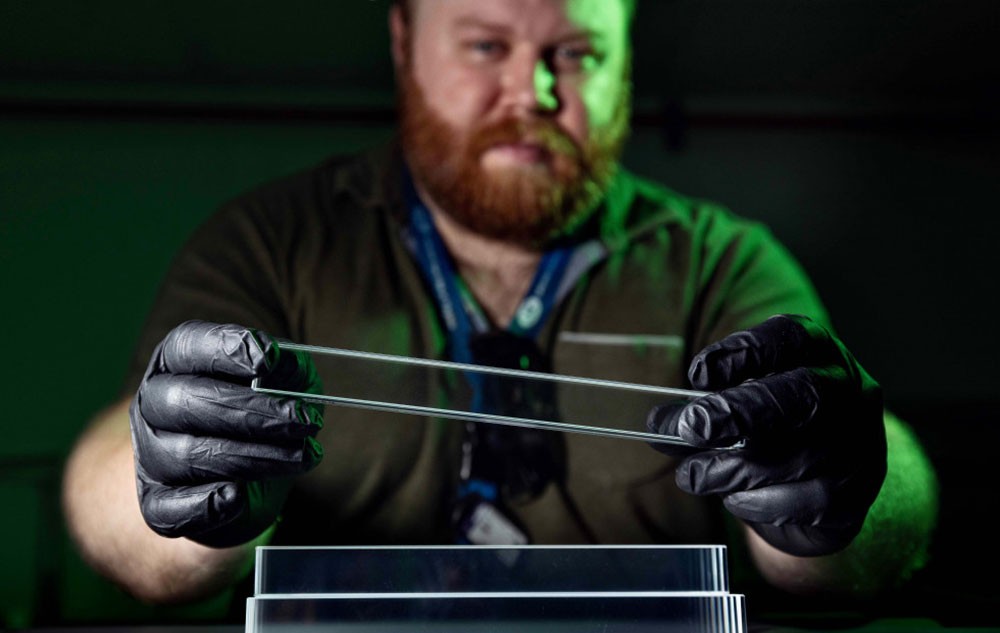
The U.S. Electron-Ion Collider (EIC) project recently achieved its first long-lead procurement milestone: 1,069 custom lead tungstate crystals for the new ePIC detector have been delivered, tested, and accepted. These crystals will be used in the Electron Endcap Electromagnetic Calorimeter (EEEMCAL) to help precisely measure the energy of scattered electrons during collisions. The EIC is being built by the U.S. Department of Energy's Brookhaven National Laboratory, in collaboration with the Thomas Jefferson National Accelerator Facility. The facility will circulate electron and ion beams in opposite directions, colliding them inside the ePIC detector. The ePIC detector records information about particles produced in the collisions, providing data for studying the fundamental constituents of visible matter...
2026-08-31
Russian Research Team Proposes New Method for Studying Morphology of Flexible Crystals
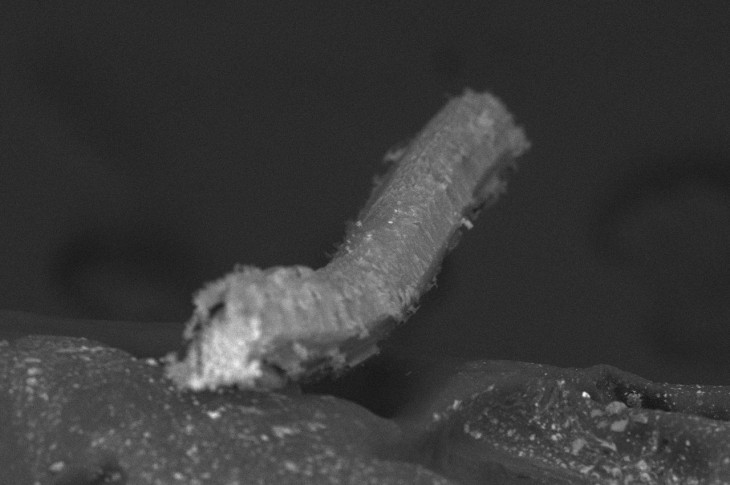
Experts from the Siberian Circular Photon Source Collaboration Center and the Institute of Solid State Chemistry and Mechanochemistry of the Siberian Branch of the Russian Academy of Sciences have proposed a comprehensive method for studying the morphology of flexible organic crystals. The method combines computational algorithms, laboratory microscopy techniques, and experimental diffraction studies, and can be used to more reliably determine crystal geometry and facet arrangement. The results have been published in the Journal of Applied Crystallography. Flexible crystals are a relatively rare class of organic crystals that can bend under very small mechanical stress while maintaining lattice integrity. Researchers indicate that among compounds with determined crystal structures, the proportion exhibiting such properties is less than...
2026-08-26

U.S. SYNOPTICS Produces Large-Size Yb:YLF Crystal for Inertial Confinement Fusion Laser Systems
On August 19, SYNOPTICS, a subsidiary of Northrop Grumman, announced that it had successfully grown and harvested a large-size ytterbium-doped yttrium lithium fluoride crystal, namely a Yb:YLF crystal ingot. The crystal measures approximately 127 millimeters at its widest point, with a diameter three times the industry standard. SYNOPTICS stated that as laser engineering continues to expand toward higher efficiency and higher power, the demand for gain media with larger apertures and larger dimensions continues to grow. The Yb:YLF crystal produced this time is approximately 20% larger than the largest crystal the company had previously grown, and approximately 50% larger than the company's conventional product size. Kevin Stevens, General Manager of SYNOPTICS, stated that yttrium lithium fluoride is a commonly used host material for laser-active rare-earth ions, and scaling up the growth of YLF crystals will help laser engineers continue to raise the upper limit of achievable laser output power. He said that such materials are of significant importance for applications including directed energy, inertial confinement fusion, and industrial laser systems. Stevens also stated that Yb:YLF crystals can be used in applications requiring reduced thermal lensing effects and enhanced pulsed energy storage capability, while also leveraging their natural birefringent host to achieve polarization characteristics. According to information recently released by SYNOPTICS, some of the crystals will be used in the high-energy laser system at the German Electron Synchrotron Research Center (DESY) to support its inertial confinement fusion energy research. The company is currently studying the feasibility of further scaling up the size of Yb:YLF crystals, and plans to extend the relevant processes to other rare-earth-ion-doped YLF crystals, including holmium, thulium, and neodymium doping systems.
2026-08-21