
Search Results
Keyword:El

Helen of Finland Launches EIA for Helsinki SMR
Recently, Helen Ydinvoima Oy (Helen) of Finland officially announced the launch of the environmental impact assessment (EIA) procedure, aimed at comprehensively assessing the environmental and social impacts of constructing a small modular reactor (SMR) nuclear power plant at one of three potential candidate sites in Helsinki, the capital of Finland. Helen is committed to achieving carbon-neutral energy production by 2040, and its nuclear energy plan aims to evaluate mature SMR technologies that can produce either heat only or combined electricity and heat. The EIA programme has been officially submitted for public consultation, marking the full launch of this statutory assessment procedure. The candidate sites include Salmisaari, Vuosaari, and Norrberget in Östersund.
2026-11-06
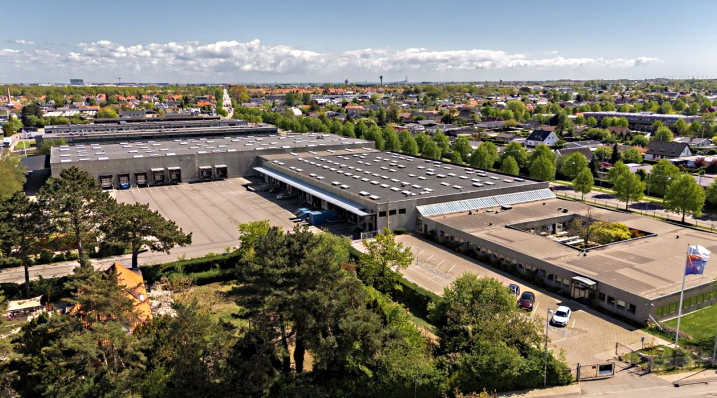
Copenhagen Atomics Plans to Build Uranium Conversion Production Facility in Denmark
Recently, Copenhagen Atomics and Urenco signed a memorandum of understanding to plan the construction of a dedicated production line in Copenhagen for converting uranium hexafluoride (UF₆) into uranium tetrafluoride (UF₄). The cooperation will focus on facility design, establishing a link for enriched uranium feedstock to enter the molten salt fuel manufacturing stage, and supporting Copenhagen Atomics in improving its fuel supply capability. The planned production line will be located within Copenhagen Atomics' fuel facility, where the company will procure enriched uranium hexafluoride, chemically convert it into uranium tetrafluoride, and then use it to formulate high-purity fuel salt. In addition to serving its own reactor research and development, the products are also planned to be supplied to other...
2026-11-06

U.S. Synchrotron Radiation Facility Achieves Intelligent Region Selection and Real-Time Image Reconstruction
Recently, the National Synchrotron Light Source II (NSLS-II) in the United States disclosed progress in intelligent X-ray imaging experiments: the research team integrated machine learning into the beamline experimental workflow, enabling automatic identification of regions within samples that warrant further measurement, and demonstrated real-time ptychographic reconstruction capability at 200 images per second. These achievements advance data analysis into the experimental process itself, providing a new technical pathway for improving the utilization efficiency of limited beam time. In the automatic region selection experiment, the system acquires images while simultaneously analyzing complex samples, and then autonomously selects locations requiring high-resolution measurement. Researchers can therefore first conduct large-area scans and then concentrate fine measurements on regions of research value. This demonstration verified the feasibility of data-driven experiments, but does not yet mean that all samples and beamline experiments have achieved autonomous operation.
2026-11-06
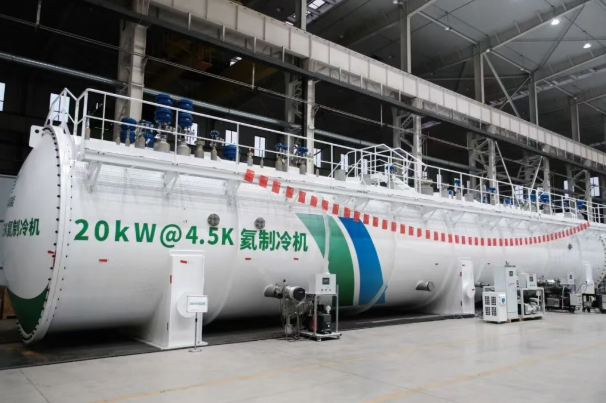
China Develops the Fusion "Cryogenic Heart": How a 20 kW Helium Refrigerator Strengthens China's Initiative in Building Large-Scale Facilities
In a superconducting tokamak, high temperature and deep cryogenic conditions must coexist. Inside the toroidal vacuum vessel, the plasma needs to be heated to extremely high temperatures; outside the vacuum vessel, the superconducting magnets responsible for magnetic confinement must be kept in an environment close to absolute zero. Supporting this coexistence of two temperature regimes is a complex engineering system comprising thermal insulation, shielding, magnets, and cryogenic systems. Among these, the large helium refrigerator continuously supplies cooling capacity to the cryogenic system and is an indispensable cryogenic heart of the facility. On November 5, 2026, the 20 kW, 4.5 Kelvin ultra-large helium refrigerator jointly developed by Henan Zhongke Qingneng Technology Co., Ltd. and the Institute of Plasma Physics, Chinese Academy of Sciences, held a development summary meeting in Hefei...
2026-11-06
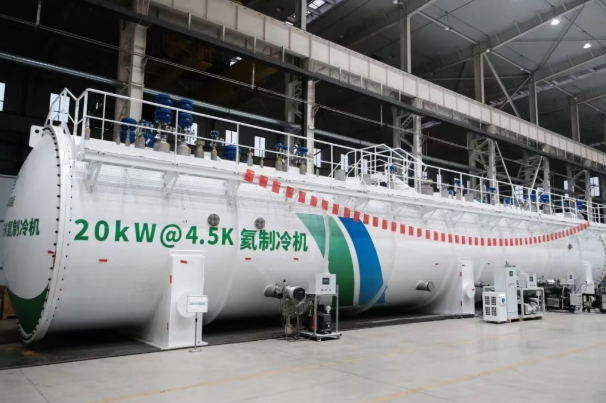
Zhongke Qingneng Completes Development of China's First Ultra-Large Helium Refrigerator
Recently, Henan Zhongke Qingneng Technology Co., Ltd., in collaboration with the Institute of Plasma Physics of the Chinese Academy of Sciences, successfully held in Hefei the development summary meeting for the 20kW@4.5K ultra-large helium refrigerator, marking that this first domestically produced ultra-large equipment has officially passed expert panel review and is ready for rollout and delivery. Helium refrigerators are indispensable core cryogenic equipment for frontier large-scale scientific facilities such as magnetic confinement controlled nuclear fusion devices. For a long time, key core technologies such as 20kW ultra-large cooling capacity equipment in the 4.5K temperature range and high-power cryogenic turbo-expanders have been monopolized by a few leading international enterprises such as France's Air Liquide and Germany's Linde Group. This time, the joint R&D team successfully broke through a series of bottleneck technologies, including high-power deep cryogenic refrigeration processes, cold box integration, and independent development of key rotating components, achieving full localization of the complete unit and key parts, with the procurement cost per unit significantly lower than that of imported comparable products. The successful development of this equipment has enabled China to achieve a historic transformation from "following" to "running abreast" in the field of core equipment for fusion reactor cryogenic systems, providing an independently controllable "cryogenic heart" for strategic emerging industries prioritized in China's 15th Five-Year Plan, such as controlled nuclear fusion energy, large superconducting accelerators, large-scale quantum infrastructure, and deep space exploration. Project leader Lu Xiaofei pointed out that this is a major leap from quantitative accumulation to qualitative transformation in China's deep cryogenic systems engineering. Pan Weiwei, General Manager of Zhongke Qingneng, stated that since its establishment, the company has built a diversified product family covering all temperature ranges. In the future, the company will continue to increase R&D investment, accelerate the construction of a full-chain ecosystem covering R&D, manufacturing, and operations, fully serve national strategic emerging industries and future industries, and provide strong technical support for China to seize the competitive high ground in high-tech industries.
2026-11-06
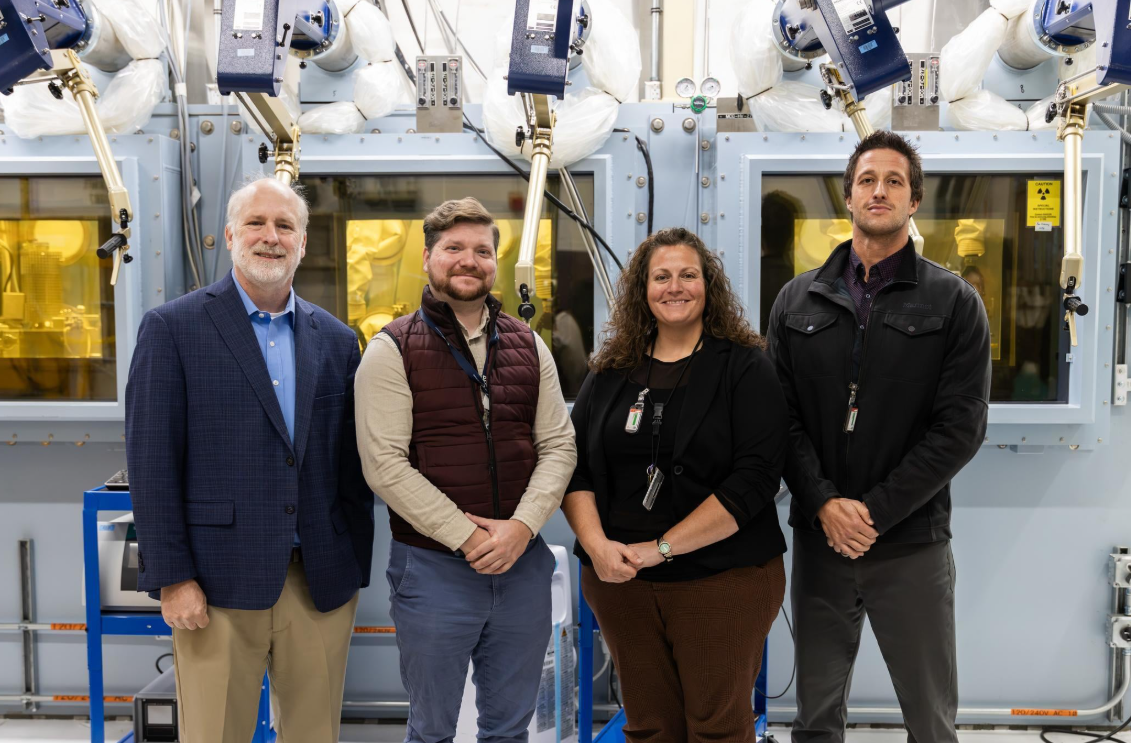
Recycled chloride salt fuel prepares to enter research reactor: Can spent fuel become a resource, and what data must be obtained first?
Turning nuclear material into another kind of fuel. Idaho National Laboratory (INL) announced on November 2 that it will lead the IMPACT project to fabricate and test chloride salt fuel containing recycled transuranic elements. The project has received $7 million in support from the U.S. Department of Energy's Advanced Research Projects Agency-Energy (ARPA-E) and plans to use nuclear materials already available at the laboratory to complete fabrication and property testing, and to conduct irradiation in the Advanced Test Reactor (ATR). This research advances the improvement of spent fuel utilization to a specific question: after recovered materials form new fuel, how exactly do they change in the reactor environment? Moltex participates in modeling and design-related work.
2026-11-05
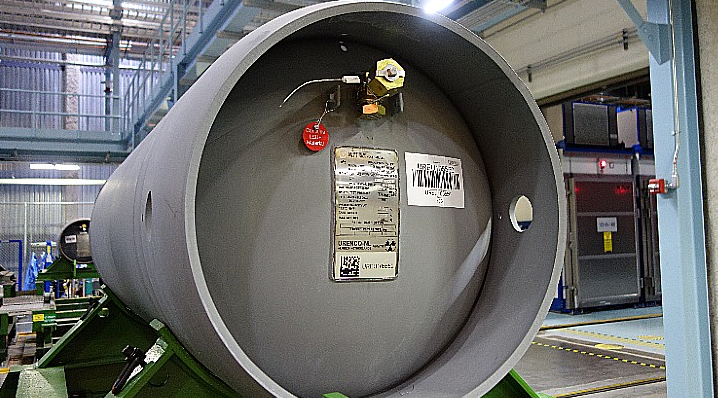
Urenco USA Completes Production of First Commercial Upgraded Low-Enriched Uranium Product Cylinder
Recently, Urenco USA completed the production of its first upgraded low-enriched uranium (LEU+) product cylinder at the National Enrichment Facility in New Mexico, advancing this fuel feedstock from production readiness to the commercial product supply stage. This development provides a new enriched uranium option for operating light water reactors and some advanced reactors, but completing the production of enriched product does not equate to fuel assemblies having been manufactured or loaded into a reactor. LEU+ is Urenco's product name for enriched uranium with uranium-235 assays of approximately 5% to 10%, higher than the typical enrichment levels of fuel commonly used in operating commercial nuclear power plants. Fuel made from this material is expected to support longer operating cycles and reduce refueling outages...
2026-11-05

Beyond 5% Uranium Enrichment: Why Does Nuclear Power Fuel Upgrading Require an Integrated Delivery Chain?
Nuclear Power Operational Needs Behind a Single Product Container On November 2, Urenco USA announced the completion of production of the first commercial LEU+ enriched uranium product container in New Mexico. This development brings fuel upgrading to a concrete industrial milestone: enrichment plants are beginning to supply new products, downstream enterprises need to process them into fuel, and power plants must demonstrate that these fuels can improve operations within established safety boundaries. For operators seeking to extend refueling cycles, higher enrichment levels provide more options, but whether these options can be translated into benefits still depends on whether manufacturing, transportation, licensing, and in-core use can be linked together. Urenco uses LEU+ to...
2026-11-04

Steel Containment Vessel Second Ring of Guangdong Lianjiang Nuclear Power Unit 2 Hoisted into Place
Recently, the second ring of the steel containment vessel (CV) for Guangdong Lianjiang Nuclear Power Unit 2, manufactured by State Nuclear Equipment, was successfully hoisted into place, creating favorable conditions for subsequent main construction of the nuclear island. It is reported that the second ring of the steel containment vessel hoisted this time is assembled from four layers of curved steel plates, with an overall height of approximately 16 meters, an inner diameter of nearly 40 meters, and a total hoisting weight of up to 1,124 tons. Throughout the assembly and hoisting process, the project team fully drew on the engineering and construction experience of Unit 1, strengthened on-site coordination and quality control, and ensured that the entire hoisting process was safe, smooth, and precisely positioned. The Lianjiang Nuclear Power Project, as a key batch construction project independently built by China based on CAP1000 third-generation nuclear power technology...
2026-11-04

Wyoming Signs MOU to Accelerate Uranium Mine Permitting
Recently, Wyoming Governor Mark Gordon and Emily Domenech, Executive Director of the Federal Permitting Improvement Steering Council (Permitting Council), formally signed a Memorandum of Understanding (MOU) aimed at comprehensively accelerating the federal and state permitting processes for infrastructure and uranium mining projects in the state. It is reported that the agreement was developed under the framework of Chapter 41 of the Fixing America's Surface Transportation Act (FAST-41). By signing the memorandum, Wyoming becomes the 10th state in the nation to join the FAST-41 coordination mechanism. This mechanism allows federal and state regulatory agencies to synchronize on a unified dashboard...
2026-11-04
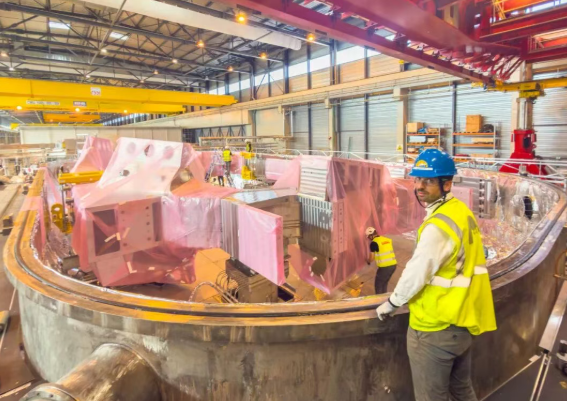
ITER Successfully Completes Half-Rated Current Test of Toroidal Field Coil #17
Recently, ITER's D-shaped superconducting toroidal field coil #17, weighing approximately 330 tonnes, was successfully energized to 34 kA (half of its 68 kA rated operating current) in the Magnet Cold Test Facility and has been smoothly transported out of the facility, ready to enter the tokamak assembly phase. It is reported that during the test, the magnet was cooled to a superconducting operating temperature of 4 K (minus 269 degrees Celsius). ITER Chief Mechanical Engineer Adrien Dedecker stated that reaching 34 kA and verifying that its actual performance is consistent with model predictions is not only a key step in magnet testing, but also accumulated valuable operational experience for subsequent integrated commissioning. The team used this opportunity to fully compare and confirm the coil structural deformation data under electromagnetic loads.
2026-11-04

The National Development and Reform Commission Deploys the 15th Five-Year Plan to Designate Nuclear Fusion as a Future Industry
Recently, the National Development and Reform Commission (NDRC) held the first press conference of the "Striving for the 15th Five-Year Plan" series, systematically introducing the strategic planning and key task deployments for cultivating and strengthening new growth drivers during the 15th Five-Year Plan period, marking the official unveiling of China's macro-level blueprint for emerging and future industries in the next stage. It is reported that Ren Zhongbao, Deputy Director of the Department of Innovation and High-Tech Development, stated at the meeting that the CPC Central Committee and the State Council, after comprehensively assessing technological trends, have explicitly designated fusion energy, together with quantum technology, biomanufacturing, hydrogen energy, brain-computer interfaces, embodied intelligence, and sixth-generation mobile communications, as the main directions for future industry development during the 15th Five-Year Plan period. The state will adhere to a nationwide coordinated approach and support regions with favorable conditions in selecting sub-sectors for development in accordance with local conditions.
2026-11-04
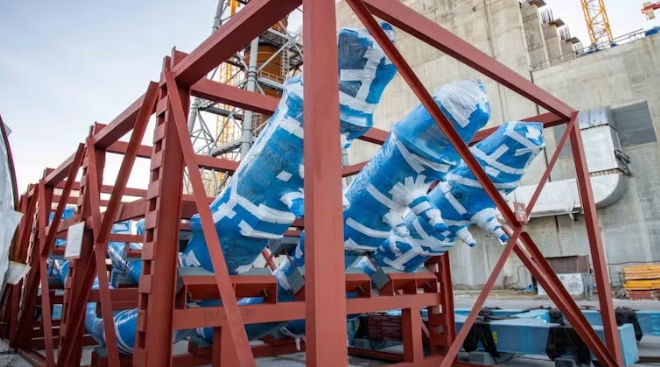
Russia Delivers First Steam Generator for MBIR Fast Neutron Research Reactor
Recently, the Podolsk Machine-Building Plant (ZiO-Podolsk), a subsidiary of Russia's State Atomic Energy Corporation (Rosatom), has officially completed the manufacture and delivery of the first of two steam generators for the Multipurpose Fast Neutron Research Reactor (MBIR). The unit is currently under intensive construction at the Research Institute of Atomic Reactors (NIIAR) in Dimitrovgrad, Ulyanovsk Oblast. It is reported that as the world's largest 150 MW sodium-cooled fast neutron research reactor of its kind, the MBIR employs a unique three-circuit heat transfer scheme and a counter-flow steam generator design, with its technology continuing and optimizing the experience from the BOR-60 reactor, which has been operating smoothly for decades. Each unit weighs 9 tonnes...
2026-11-04
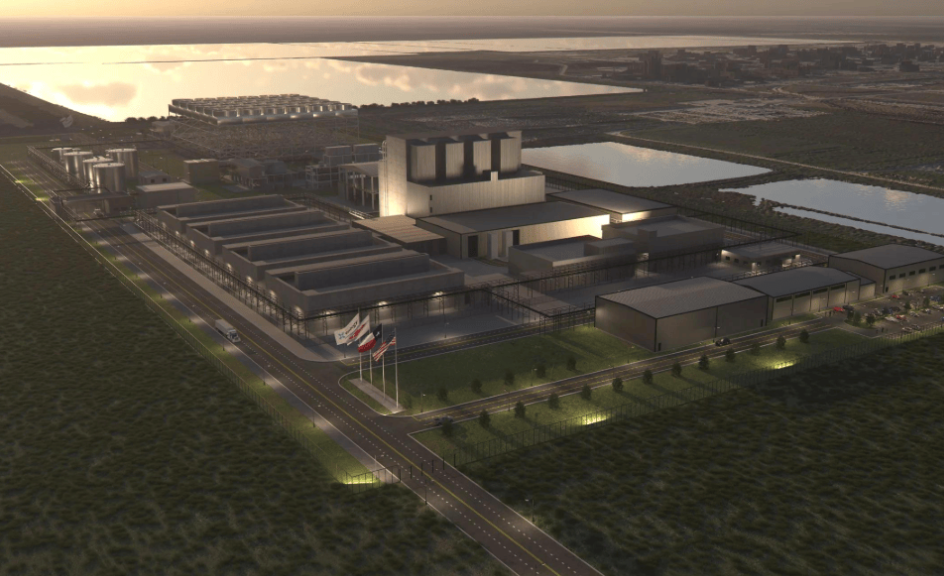
America's First "Large Reactor in a Chemical Plant" Clears the Hurdle: X-energy Xe-100 Ushers in the Conclusion of Safety Review and a Key Springboard to Commercialization
In the global race to industrialize advanced nuclear energy technologies, the high-temperature gas-cooled reactor is reaching a milestone. In late October 2026, the U.S. Nuclear Regulatory Commission (NRC) formally issued the Final Safety Evaluation Report (FSER) for the construction permit application of the Long Mott Generating Station, proposed to be built at Dow Chemical's Seadrift site along the Texas Gulf Coast. This means that the Xe-100 high-temperature gas-cooled reactor, developed by X-energy with an installed capacity of 320 megawatts electric, has successfully passed the most central safety examination at the U.S. nuclear regulatory level, clearing...
2026-11-03

Unit 2 of Phase I of the Sanao Nuclear Power Project Completes First Fuel Loading
Recently, Unit 2 of Phase I of CGN's Zhejiang Sanao Nuclear Power Project successfully completed its first nuclear fuel loading, marking the unit's official transition from the engineering installation phase to the new stage of commissioning with nuclear fuel in the main systems, and representing a key step toward the full completion and commercial operation of Phase I. It is reported that the fuel loading operation adopted a semi-automatic refueling system, precisely transferring 177 nuclear fuel assemblies sequentially into the reactor core. Since the commencement of nuclear island installation, the Sanao project department of China Nuclear Industry 23 Construction Co., Ltd., the contractor, has strictly followed the principles of "safety first, quality first, pursuit of excellence," and completed a series of major prerequisite tests—including nuclear circuit flushing and cold and hot performance tests—to a high standard...
2026-11-03