
Search Results
Keyword:Energies

KN Energies joins Baltic Energy Initiative
Lithuanian international energy terminal operator KN Energies announced on September 3 that it has joined the Baltic Energy Initiative launched by Poland's ORLEN Group. The initiative currently brings together 14 energy companies and institutions from 9 countries in Northern and Central Europe, with plans to enhance energy security, infrastructure resilience, and industrial competitiveness in the Baltic Sea region through regional cooperation. Under the relevant arrangements, the Baltic Energy Initiative will serve as a cross-border cooperation platform, promoting the sharing of professional expertise among members and the joint development of energy projects with regional impact. Key areas of cooperation include offshore wind, liquefied natural gas and bio-LNG market integration, regional hydrogen...
2026-09-04
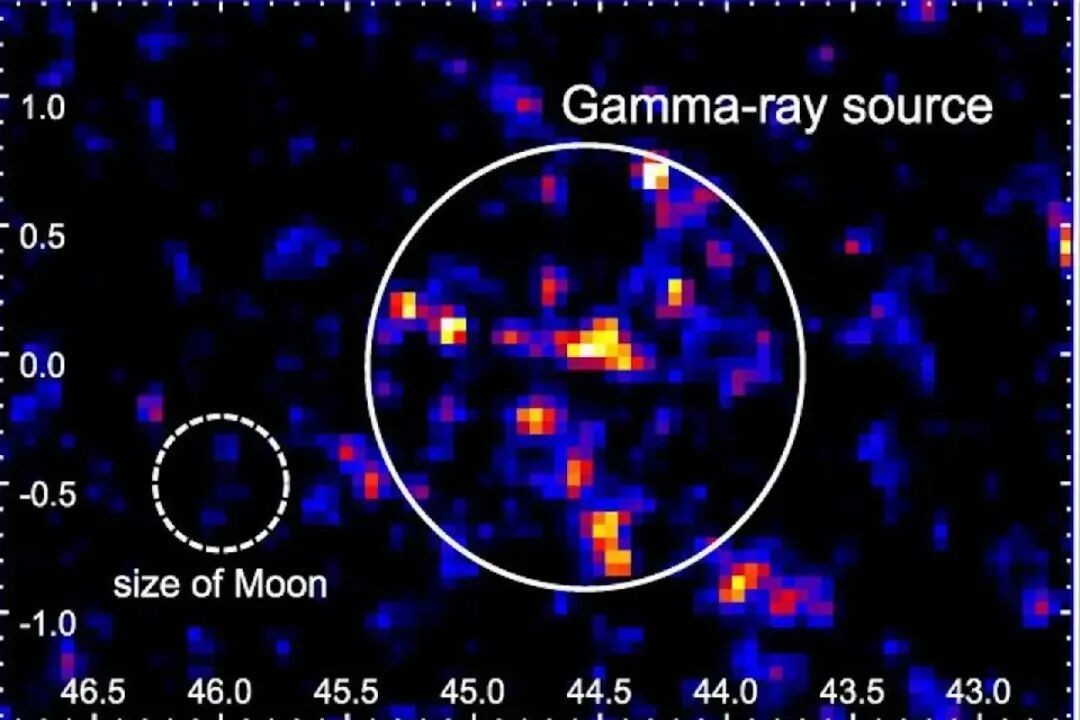
"Triple-Arrow Assault" Confirms a Cosmic "Natural Accelerator" Ejecting Protons at Energies 100 Times That of the Large Hadron Collider
Astronomers, using three observation facilities operating in different wavelength bands, have confirmed a mysterious celestial body in the direction of the Aquila constellation in the Milky Way as a natural cosmic accelerator. This object is continuously ejecting high-speed particles with energies far exceeding any man-made accelerator on Earth, equivalent to 100 times that of the Large Hadron Collider (LHC). This discovery provides key clues for tracing the origin of the highest-energy cosmic rays in the Milky Way, and the research findings were published in the latest issue of The Astrophysical Journal. A size comparison between the gamma-ray source (large circle) and the Moon (small circle). Image credit: The Astrophysical Journal. PeV (peta-electronvolt) energy cosmic rays are high-energy diffuse gamma-ray radiation, and...
2026-08-11

Study Shows Sustained Deuterium Fusion in Palladium and Titanium Metal Foils at Ultra-Low Energies
U.S. researchers have observed a low-energy deuterium fusion phenomenon in thin palladium and titanium metal foils: when the incident deuteron energy drops to levels where fusion reactions are generally expected to weaken significantly or even nearly cease, the reactions continue to occur. Experiments show that as incident energy decreases, the fusion rate does not continue to decline exponentially but instead enters a plateau region below approximately 2 keV. At the lowest detectable energy, the measured low-energy fusion rate exceeds predictions from isolated-nucleus models by more than 10^18 times. Image courtesy of Marina Light/University of California, Davis. The related research was conducted by teams at the University of California, Davis and Lawrence Berkeley National Laboratory...
2026-08-04