
Search Results
Keyword:FAST
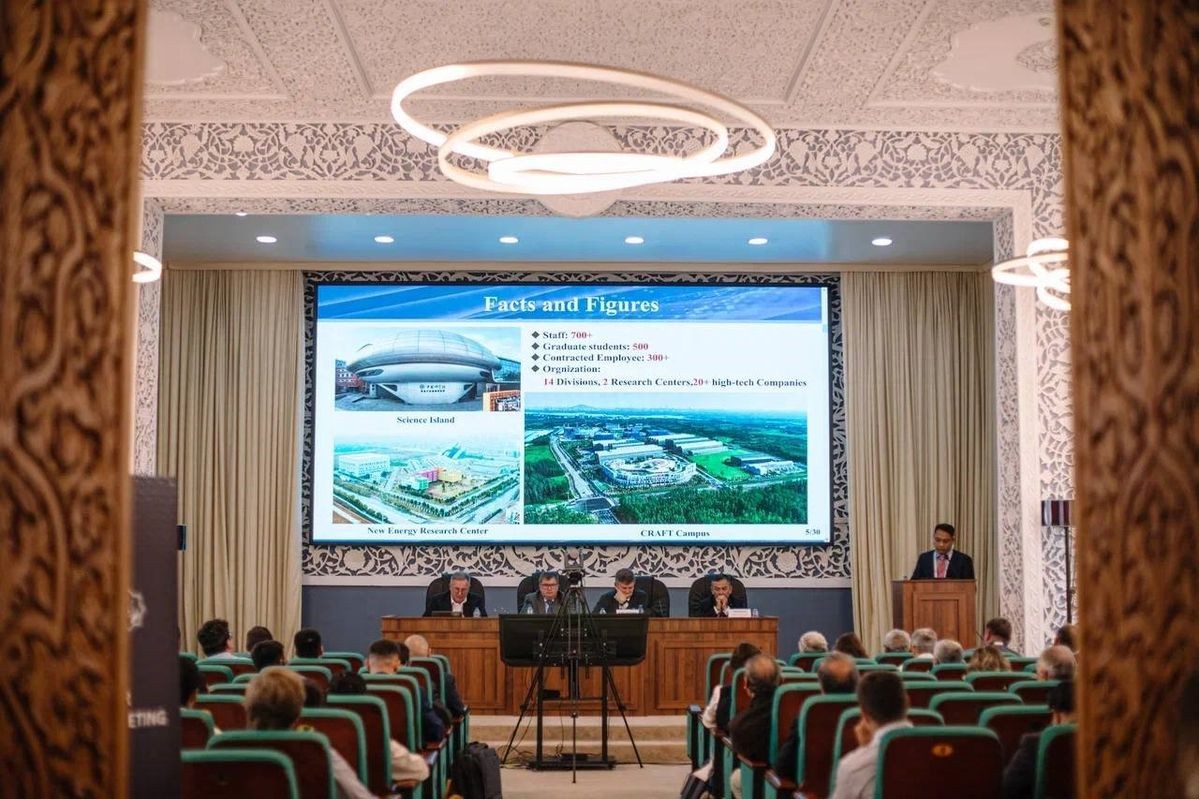
Experts from 18 Countries Discuss Research Planning for Russia's MBIR Fast Reactor International Research Center: Focusing on Closed Fuel Cycle and Mega-Science Engineering Synergy
At the Institute of Nuclear Physics of the Academy of Sciences of the Republic of Uzbekistan (INP AS RUz), the third meeting of the Advisory Council of the International Research Center (IRC MBIR), established on the basis of the Multi-purpose Fast Neutron Research Reactor (MBIR), was officially convened. The meeting attracted more than 150...
2026-10-03
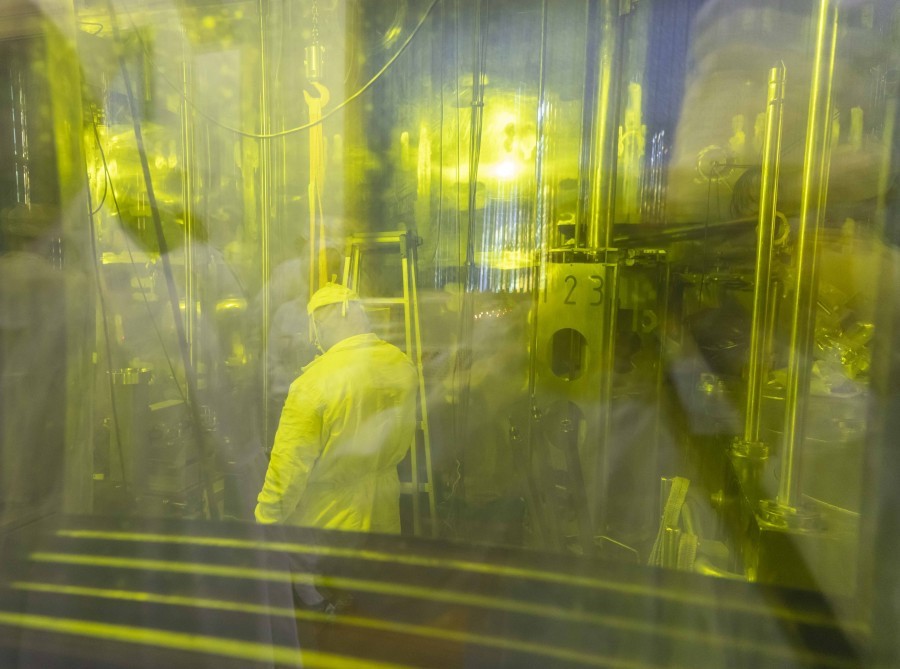
Rosatom has developed the first batch of nuclear fuel assemblies for the MBIR multi-purpose fast reactor, successfully passing factory acceptance testing
At the site of the Fuel Technology Division of the State Scientific Center — Research Institute of Atomic Reactors (NIIAR, Dimitrovgrad), under the Scientific Division of Rosatom, the first batch of 3 pilot nuclear fuel assemblies (Fuel assemblies / ТВС) for the multi-purpose sodium-cooled fast neutron research reactor (MBIR) successfully completed comprehensive factory acceptance tests. The professional acceptance committee conducted a thorough review of the maturity and completeness of the fuel production process line for this batch as well as all technical performance parameters of the trial-manufactured assemblies, and completed high-precision geometric dimension and quality re-verification measurements item by item. This acceptance review brought together the expertise of multiple core research and manufacturing institutions in the Russian nuclear industry, including the Dollezhal Research and Development Institute of Power Engineering (NIKIET), the Institute of Physics and Power Engineering (IPPE), and the Machine-Building Plant Joint Stock Company (MSZ, Elemash).
2026-09-27
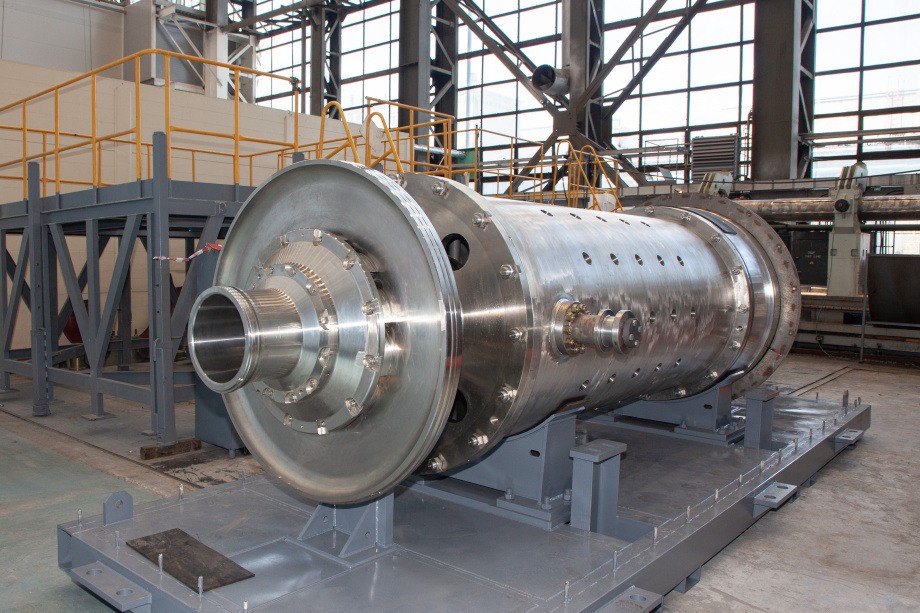
Afrikantov Experimental Design Bureau of Mechanical Engineering Completes Manufacture and Delivery of MBIR Fast Reactor Primary Coolant Circulation Pumps
The machine-building division of Rosatom State Atomic Energy Corporation (Госкорпорация «Росатом» / Rosatom), Afrikantov Experimental Design Bureau of Mechanical Engineering (АО «ОКБМ Африкантов» / OKBM Afrikantov), has completed the manufacture and delivery of the primary coolant circulation pumps (Главные циркуляционные насосы, ГЦН) for the multi-purpose fast neutron research reactor (МБИР / MBIR). As core equipment of the reactor facility, these circulation pumps will be responsible for driving the coolant to circulate within the reactor core...
2026-09-24
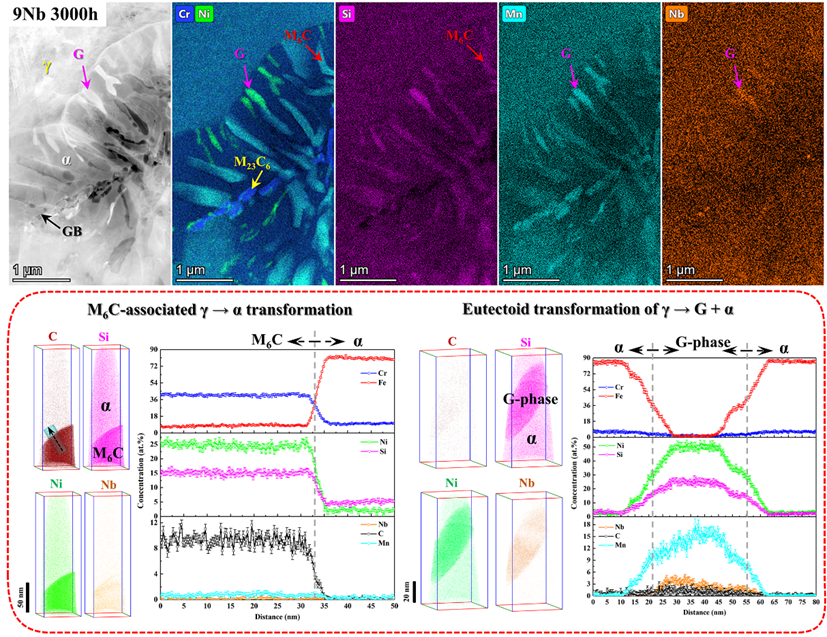
New Progress in Research on Microstructural Stability of High-Silicon Austenitic Steels for Lead-Cooled Fast Reactors
The lead-cooled fast reactor is an important reactor type in the fourth-generation nuclear energy system, and its structural materials need to withstand harsh service environments such as high temperature, irradiation, and liquid lead-bismuth corrosion over the long term. High-silicon austenitic stainless steel possesses excellent lead-bismuth corrosion resistance and is an important candidate structural material for core equipment such as the reactor vessel and internals of lead-cooled fast reactors. However, Si addition significantly alters the phase precipitation mechanism during high-temperature service and induces austenite decomposition, affecting the long-term microstructural stability of the material. Recently, the Special Alloys Research Department of the Institute of Metal Research, Chinese Academy of Sciences, in collaboration with the Department of Mechanical Engineering of The Hong Kong Polytechnic University, building on prior work that revealed Si-induced austenite decomposition behavior in high-silicon austenitic steels and the resulting mechanical...
2026-09-21

Russia and India Plan to Sign Nuclear Energy Cooperation Documents
Alexey Likhachev, Director General of the State Atomic Energy Corporation Rosatom (Rosatom), stated that Russia and India are preparing to sign a series of bilateral cooperation documents in the field of nuclear energy. The preparation of the relevant documents has reached a relatively high level of maturity and is ready for direct signing. Likhachev said that the documents to be signed involve multiple areas of cooperation, including fourth-generation nuclear energy technology using fast neutron reactors. Such cooperation will be carried out around the direction of advanced nuclear energy technology....
2026-09-12

Japan's Monju Fast Breeder Reactor Sodium Coolant Overseas Transport Planned to Start in Fiscal 2028
Japan's Ministry of Education, Culture, Sports, Science and Technology plans to include 23.7 billion yen in its fiscal 2027 budget request to advance decommissioning work for the Monju fast breeder reactor in Tsuruga City, Fukui Prefecture, including preparation costs for overseas transport of sodium coolant. The amount represents an increase of 4.9 billion yen over the previous fiscal year's budget, including supplementary budgets. Under the plan, overseas transport of sodium coolant from the Monju reactor will begin in fiscal 2028. Unlike conventional light water reactors, Monju uses metallic sodium rather than water as a coolant to remove heat from the reactor. Sodium has a boiling point of approximately 880 degrees Celsius and does not easily pressurize at high temperatures, but it can burn upon contact with water or air, making handling and management highly difficult...
2026-09-11
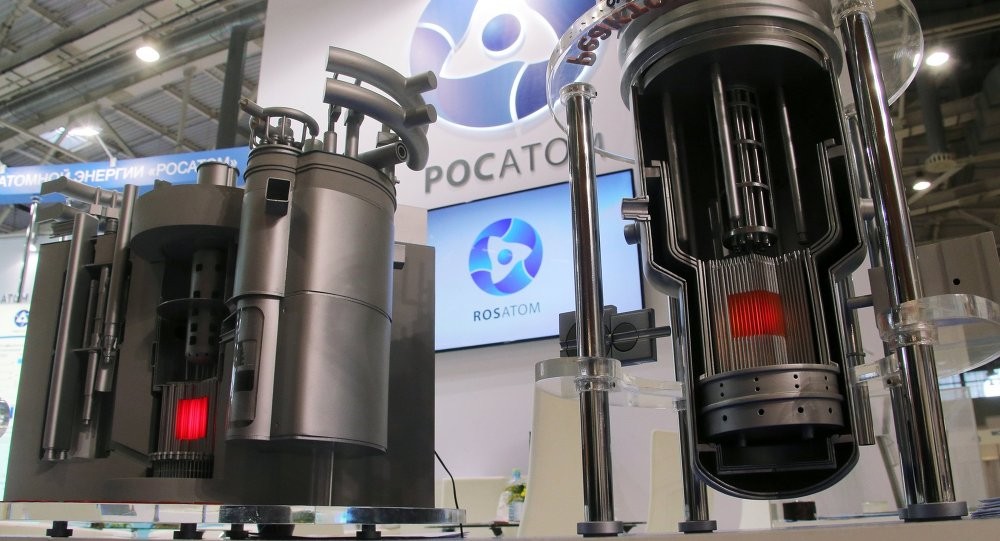
Vietnam to Join International Consortium for Russia's MBIR Fast Neutron Research Reactor
On September 9, the press service of Rosatom announced that Vietnam will join the international consortium for Russia's MBIR multi-purpose fast neutron research reactor. The reactor is currently under construction in Dimitrovgrad, Russia. Under the arrangement, the Vietnam Atomic Energy Institute (Vinatom) has been designated as Vietnam's lead organization for participation in the International Research Centre MBIR (IRC MBIR) project based on the MBIR reactor. Tran Chi Thanh, President of the Vietnam Atomic Energy Institute, stated in a declaration that participation in the project will give Vietnam more direct access to this unique experimental platform, further...
2026-09-10

UK think tank calls for clear nuclear reactor technology roadmap to support nuclear expansion
On September 8, 2026, UK think tank Policy Exchange released a white paper stating that the UK government needs to more clearly articulate which nuclear reactor technologies it will rely on to advance the so-called nuclear golden age, and to strengthen the supply chain and achieve economies of scale through batch construction. Policy Exchange's Nuclear Enterprise Committee is composed of experts from government, industry, and academia. The committee believes that the UK's civil nuclear strategy is at a critical stage, and related decisions will affect the country's energy system for decades to come. The white paper points out that given that new small modular reactor technologies are still in the early stages of development, the UK government should retain the option of building another large-scale nuclear...
2026-09-09

U.S. Research Team Discovers Strong Ultrafast Optical Response Induced by Ionizing Radiation, Potentially Advancing Medical Imaging and Sensing Technologies
September 3 news, Stanford University and the U.S. Department of Energy's SLAC National Accelerator Laboratory research team used ultrafast electron and laser pulses to observe a strong ultrafast optical response triggered by ionization processes in semiconductor materials. The related research has been published in Nature Photonics. The researchers believe this discovery could provide new insights for radiography and sensing technologies, and also offer experimental evidence for understanding the fundamental behavior of materials under high-energy particle interactions. Radiation detection is a key technology in particle accelerators, scientific instruments, medical imaging, and security screening equipment. Existing detectors typically face a trade-off between signal strength and response speed: processes with stronger signals tend to be slower, while those with faster response may produce weaker signals...
2026-09-08
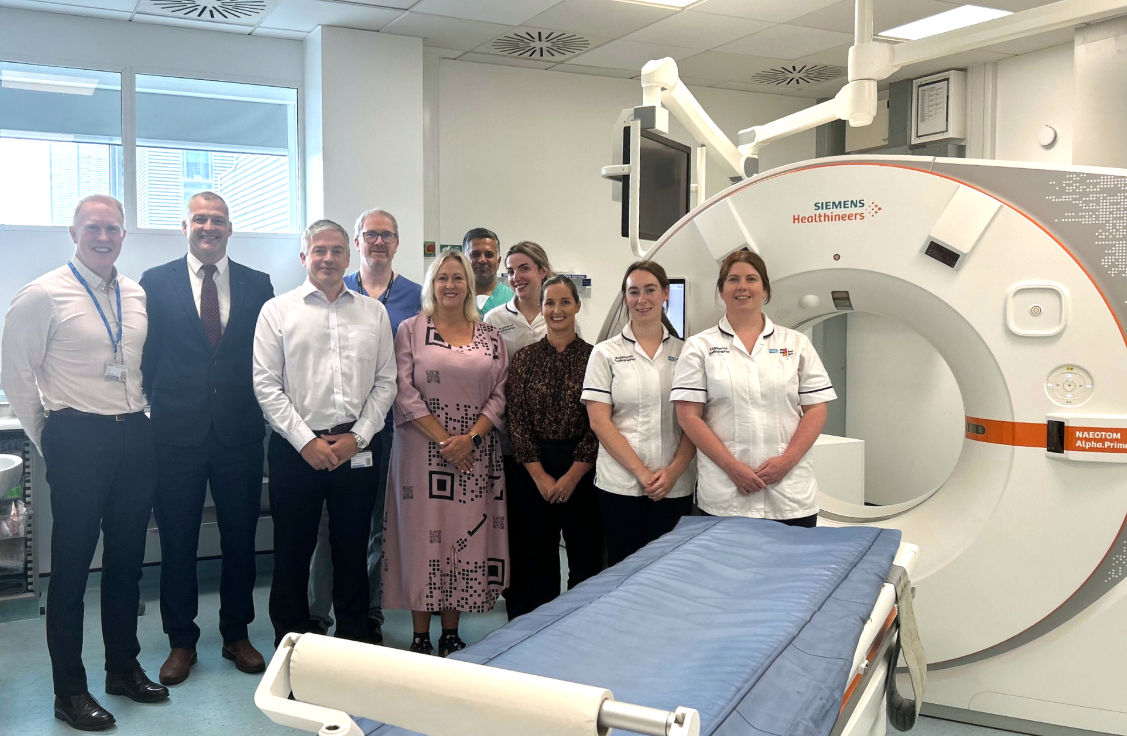
Royal Victoria Hospital Belfast Introduces Photon-Counting CT, Becoming Ireland's First Hospital to Adopt the Technology
Royal Victoria Hospital Belfast recently introduced the Siemens Healthineers NAEOTOM Alpha.Prime photon-counting CT scanner, becoming the first hospital in Ireland to adopt this next-generation CT imaging technology. The hospital is part of the Belfast Health and Social Care Trust, and this installation is part of a long-term value partnership between the hospital and Siemens Healthineers. According to reports, the NAEOTOM Alpha.Prime photon-counting CT delivers ultra-high-resolution images and spectral data at lower radiation doses. Its 0.2 mm slice thickness helps clinicians visualize small blood vessels, fine anatomical structures, and early pathological changes, enabling more diagnostic information to be obtained in a single scan...
2026-09-03

Blykalla Establishes Advanced Nuclear Reactor Technology Center in Austin
Advanced nuclear technology company Blykalla announced it will establish a new technology center in Austin, Texas, to expand its engineering and reactor R&D operations in the United States. Located at 801 Barton Springs Road in Austin, the center will house engineering and reactor development teams to strengthen the company's local operations and advance collaboration with its U.S. partners, regulators, and stakeholders in the clean energy industry. Blykalla stated that the Austin technology center will serve as its U.S. hub for engineering and advanced nuclear reactor R&D. The company currently operates two complementary business centers in the U.S.—Austin and New York: Austin focuses on technology R&D and engineering...
2026-09-02
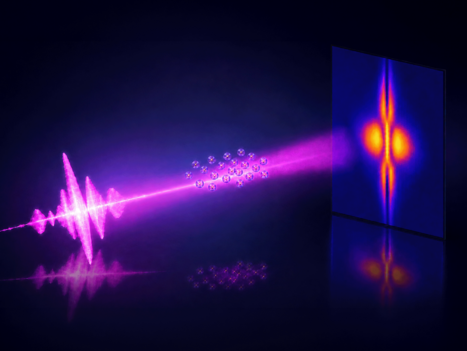
German Team Achieves Ultrafast Shaping of Extreme Ultraviolet Pulses Using High-Density Helium Gas
August 20, 2026, the international team led by researchers from the Max Planck Institute for Nuclear Physics (MPIK) in Heidelberg announced that they have utilized atomic gas as a rapidly switchable time-varying lens to control the beam shape and spectrum of intense high-frequency laser pulses. This achievement is expected to provide a new pathway for the fine control of extreme ultraviolet (XUV) and X-ray pulses, and may serve research directions such as improved spectroscopic methods, control of chemical reactions, and quantum computing. Extreme ultraviolet light can provide important tools for studying atomic-scale processes. With the development of free-electron lasers, researchers have been able to generate ultrashort, high-intensity XUV light pulses, but how to manipulate them like...
2026-08-31
Russia Advances Construction of Fourth-Generation Nuclear Power Projects
Rosatom reports that it is one of the global leaders in the implementation of fourth-generation nuclear energy systems. According to the report, fourth-generation nuclear technologies are designed to minimize the risk of nuclear power accidents and reduce radioactive waste generation through a closed nuclear fuel cycle. As part of the relevant deployment, an innovative power unit featuring the BREST-OD-300 lead-cooled fast neutron reactor is under construction in Seversk, Tomsk Oblast, Russia. The project is regarded as a key component of Russia's efforts to advance the engineering application of fourth-generation nuclear power technologies. The report indicates that in 2025, the installation of the metal cladding for the central cavity of the BREST-OD-300 reactor was completed at the Seversk site, and the cladding for the surrounding cavities has also been installed in the designed positions. Meanwhile, the analytical simulator for the power unit has been put into operation.
2026-08-29

France's n-Floating Floating Nuclear Power Project Receives Nearly One Million Euros in Funding
newcleo announced on August 26 that a consortium led by the company has been selected for a call for projects managed by Bpifrance, the French public investment bank, supporting the decarbonization of France's maritime sector. The consortium will advance research on a floating nuclear power solution called n-Floating, with the project receiving nearly one million euros in funding and an expected duration of approximately 18 months. The n-Floating project aims to validate the relevance and technical feasibility of a new floating nuclear power solution. Under the proposed concept, a non-self-propelled floating unit would carry multiple LFR-AS-200 reactors, each with an electrical output of 200 megawatts. LFR-AS-200 is one of the lead-cooled fast reactor technology lines developed by newcleo.
2026-08-27

Russian Far Eastern Federal University Develops Ultrafast Ceramic Scintillators for Rapid Ionizing Radiation Detection
On August 21, 2026, scientists at the Russian Far Eastern Federal University, with support from the Russian Science Foundation, are developing ceramic materials for ultrafast detection of ionizing radiation. The results could be used in the future for medical diagnostics, baggage and cargo security screening, radiation monitoring, and scientific equipment requiring fast, precise radiation detection. The project, titled "Ultrafast Ceramic Scintillators for Ionizing Radiation Detection," is led by Anastasia Vonovskikh, a researcher at the Research and Education Center for Advanced Ceramic Materials, Department of Industrial Safety, Polytechnic Institute, Far Eastern Federal University. Scintillators are a class of materials that emit light when exposed to ionizing radiation. Detectors record these light signals to determine radiation intensity and energy. Currently, most related equipment uses single-crystal scintillators, but their production typically requires significant energy and resource inputs. The Far Eastern Federal University team proposes special ceramic materials as an alternative, aiming to improve detection speed and efficiency, making them more suitable for detecting trace amounts of radiation.
2026-08-25