
Search Results
Keyword:IC

South Korea Advances First Domestic Commercial Production of Lu-177 Using Wolsong Heavy Water Reactors
Korea Hydro & Nuclear Power (KHNP) plans to use the heavy water reactors at the Wolsong Nuclear Power Plant to produce, for the first time domestically, the radioisotope lutetium-177 (Lu-177) for cancer treatment. Currently, South Korea relies entirely on imports for this material, which imposes cost pressures and supply instability on local radiopharmaceutical companies such as Cellbion and FutureChem. Industry experts generally believe that domestic production will help build a diversified supply chain and shorten transportation times. The primary goal of this plan is to achieve commercial production of Lu-177, with pilot production expected in 2028 and full-scale production commencing in 2031. Subsequently, KHNP will expand production to include cobalt...
2026-08-06

Clobot Signs MOU with Korea Atomic Energy Environment Corporation and Others to Demonstrate Multi-Robot System for Safe Radioactive Waste Management
Clobot, a specialized enterprise in intelligent robot services and integrated control of heterogeneous robots, announced on August 6 that it will apply its multi-robot integrated control system to radioactive waste safety management sites. On August 3, the company signed a business agreement at the headquarters of the Korea Atomic Energy Environment Corporation, with partners including T-Robotics, the Gyeongbuk ICT Convergence Industry Promotion Association, and the Korea Atomic Energy Environment Corporation, under the project name "Demonstration Project for Multi-Robot Operation in High-Risk Radioactive Waste Safety Management." The collaboration is based on the selection through the public call for proposals for the "Large-Scale Converged Robot Demonstration Project: Social Problem-Solving Type" hosted by the Korea Institute for Robot Industry Advancement in 2026, with Clobot serving as the lead organization.
2026-08-06

MIT Develops Ultrafast X-ray Thermometry Method to Observe Heat Transfer in Multilayer Chip Structures
Researchers at the Massachusetts Institute of Technology (MIT) have developed a new method for observing how heat transfers through multilayer materials, which can be used to precisely measure heat flow variations inside electronic devices such as computer chips. The findings have been published in Nature Communications. As computer chips continue to shrink in size and power density keeps rising, device overheating has become a major factor limiting performance improvements. Traditional heat flow measurement methods face limitations when dealing with the multilayer structures of real electronic devices—for example, the commonly used time-domain thermoreflectance method struggles to distinguish heat transport in different material layers, while infrared imaging and other approaches also fail to capture rapid changes at microscopic scales. To address this issue...
2026-08-06

Dark Energy Survey Releases Six-Year Results: Data from 669 Million Galaxies Helps Constrain Cosmic Accelerated Expansion
On August 4, the Dark Energy Survey (DES) project released its six-year findings on dark energy detection. The project compiled 18 related papers, based on nearly 300,000 astronomical images captured between 2013 and 2019, recording information on 669 million galaxies, thousands of galaxy clusters, and more than 3,000 supernovae to study the accelerated expansion of the universe and the evolution of cosmic structure. To carry out DES, Fermi National Accelerator Laboratory built an extremely sensitive 570-megapixel digital camera, DECam, which was installed on the Blanco 4-meter telescope at the National Science Foundation's Cerro Tololo Inter-American Observatory in the Chilean Andes. (Image courtesy of Reidar Hahn/Fermi National Acceler...
2026-08-06

U.S. Laboratories Plan "Materials Discovery Cloud" to Use AI to Predict Impact of Defects in Microelectronic Devices
Researchers at the U.S. Department of Energy's Argonne National Laboratory, Lawrence Berkeley National Laboratory, Oak Ridge National Laboratory, and Northwestern University are planning to develop a Materials Discovery Cloud platform that leverages a physics-based artificial intelligence framework to predict how tiny defects affect the performance and lifespan of microelectronic devices. Visualization of the Materials Discovery Cloud, a physics-based AI framework that integrates experimental data, simulations, and high-performance computing to predict how tiny defects affect the performance and lifespan of microelectronic devices. (Image provided by ChatGPT.) Microelectronic devices are widely used in smartphones, laptops, secure communications, and artificial intelligence hardware. As device dimensions continue to shrink and operating speeds increase, tiny defects within materials and at interfaces have a more pronounced impact on device stability. These defects can cause overheating, leakage current, switching instability, and other issues, or in certain conditions, improve electrical or thermal performance. Identifying critical defects and understanding their evolution under real-world operating conditions has become a key challenge in the design of next-generation microelectronic materials.
2026-08-06

United States to Host IAEA ATLAS Initiative Ministerial Launch
The United States will host the ministerial launch of the International Atomic Energy Agency (IAEA) Atoms for Transport Licensing and Applications at Sea (ATLAS) Initiative in Washington, D.C., on August 26-27, 2026. The event will bring together ministers, policymakers, and industry representatives to discuss topics related to the safe and reliable application of nuclear technology in the maritime domain. The ATLAS Initiative aims to establish an international framework to harmonize legal and regulatory issues facing maritime nuclear energy applications and to support the deployment of related civilian nuclear technologies. Building on the IAEA's experience in nuclear safety, nuclear security, and safeguards, the Initiative emphasizes technology neutrality and places safety, security, and non-proliferation requirements as the foundation for advancing maritime nuclear applications...
2026-08-06

Argentina's nuclear power generates 4.45 million kWh in half a year, accounting for over 7% of national electricity and meeting the residential electricity needs of 6 million people
Operating data from Nucleoeléctrica Argentina for the first half of 2026 shows that the Atucha 2 and Embalse nuclear power plants generated a combined 4,450,355 kWh, accounting for over 7% of the country's total electricity generation during the period and covering 13% of national residential electricity demand. Notably, although Atucha 1 is temporarily out of service due to a life extension project, the nuclear plants are still able to supply electricity to approximately 6 million people. In addition to its operational breakthroughs, Nucleoeléctrica Argentina is also actively expanding its international business. The company has formally established a new business unit aimed at...
2026-08-06
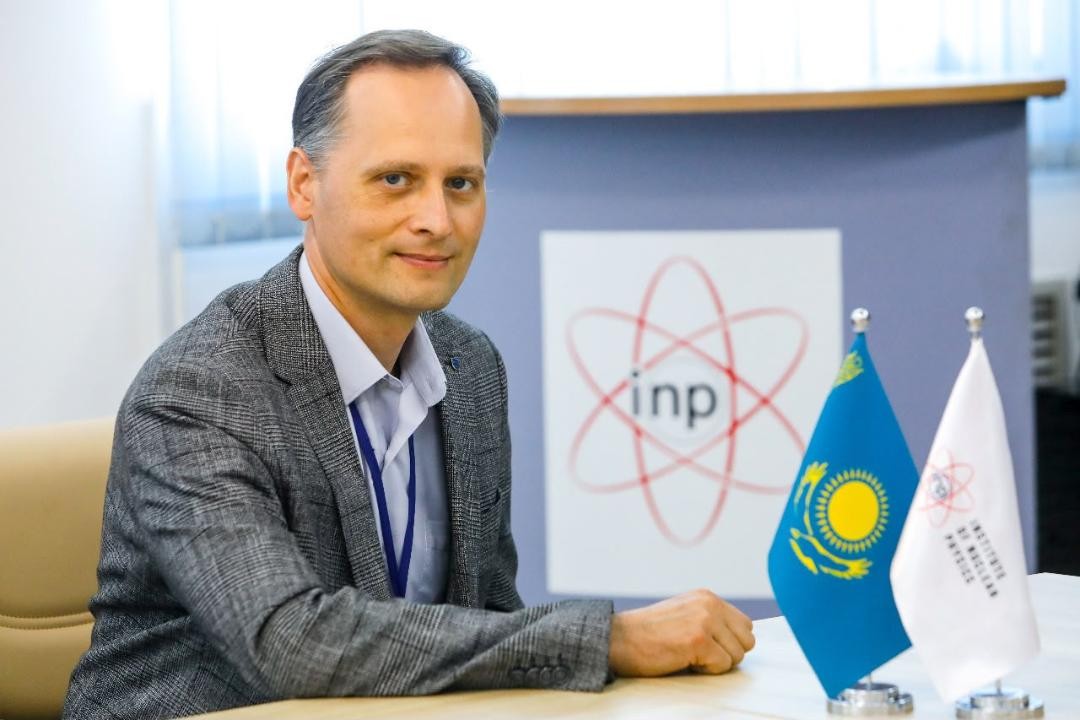
Kazakh experts call for enhanced radioecological monitoring in border regions
As Central Asian countries accelerate the development of nuclear energy, Kazakh experts have recently proposed that the radioecological monitoring system in border regions should be improved as soon as possible to provide long-term environmental data support for the construction and operation of regional nuclear power projects. Relevant materials indicate that nuclear energy is becoming an important direction in the energy policies of several Central Asian countries. Kazakhstan has decided to build its own nuclear power plant, while neighboring countries such as Uzbekistan are also advancing or preparing similar projects. Growing electricity demand and the need to reduce greenhouse gas emissions are key factors driving the development of nuclear energy in the region. Experts believe that nuclear power development involves not only the construction of advanced units, but also the simultaneous establishment of an effective ecological and radiation safety assurance system. Modern nuclear power plants...
2026-08-06

Rwandan Delegation Visits the Scientific and Technical Center for Nuclear and Radiation Safety in Russia
On August 4, 2026, a delegation from the Republic of Rwanda visited the Federal Budgetary Institution "Scientific and Technical Center for Nuclear and Radiation Safety" (FBU STC NRS) during its visit to the Federal Service for Environmental, Technological, and Nuclear Supervision (Rostekhnadzor). The delegation was led by Claude Nkusi, Deputy Director General of the Rwanda Utilities Regulatory Authority (RURA). At the beginning of the meeting, Alexander Khamaza, Director of the Scientific and Technical Center for Nuclear and Radiation Safety, delivered a welcome speech and introduced the Center's main activities in providing scientific and technical support to Rostekhnadzor. During the visit, the Rwandan delegation also learned about the...
2026-08-06

"Academician Lomonosov" Floating Nuclear Power Plant Passes Two-Week Audit by International Experts, with Significantly Fewer Findings Compared to 2022
An international team of inspectors at the Arctic port of Pevek conducted a two-week safety assessment of the Akademik Lomonosov, the world's only operating floating nuclear power plant. The experts observed daily operations and studied documentation in key areas. The audit focused on management organization, engineering support, maintenance and repair, radiation protection, and preparedness for various emergency scenarios. The final report shows a significant reduction in the number of findings compared to inspections prior to 2022. This is attributed to the professionalism of management and staff, who followed domestic and international best practices, thereby achieving a high level of safety and operational culture. The plant's nuclear...
2026-08-06

Rosatom selects SNIIP as chief design organization for radiation control systems, overseeing standardization of radiological instrumentation and import substitution assurance at nuclear facilities
Rosatom has selected the Research Institute of Scientific Instruments (SNIIP) as the chief design organization for radiation control systems. The institute, which is part of Rosatom's automation control and electrical equipment division, has been granted this status for a range of similar products in radiation control equipment and systems, including automated radiation control systems and radiation environment monitoring. SNIIP's status as chief design organization means it will be responsible for ensuring Russia's technological autonomy in this field and for developing radiation control instruments and systems. SNIIP General Director Alexey Nikitin stated that this recognition is a testament to the years of work, experience, and professional expertise of the institute's employees...
2026-08-06

University of Kansas Receives DOE Funding to Build New-Generation Detectors for CERN's Large Hadron Collider
A particle detector development project led by the University of Kansas has recently received funding from the U.S. Department of Energy's Established Program to Stimulate Competitive Research (DOE EPSCoR). The project, funded at $1 million, will be used to design and build two High-Luminosity Zero Degree Calorimeters (HL-ZDC) for the Compact Muon Solenoid experiment (CMS) at CERN's Large Hadron Collider (LHC). The four-year project is co-led by Michael Murray, professor in the Department of Physics and Astronomy at the University of Kansas, and Christophe Royon, distinguished professor at the University of Kansas. Murray also serves as the project lead for the CMS High-Luminosity Zero Degree Calorimeter upgrade...
2026-08-06

CGN and Shandong Provincial People's Government Sign Strategic Cooperation Agreement
On August 5, China General Nuclear Power Group Co., Ltd. and the People's Government of Shandong Province signed a strategic cooperation agreement in Jinan. Zhou Naixiang, Deputy Secretary of the Shandong Provincial Party Committee and Governor of Shandong Province, and Pang Songtao, Deputy Secretary of the Party Committee and General Manager of China General Nuclear Power Group Co., Ltd., witnessed the signing. Zhang Haibo, Member of the Standing Committee of the Shandong Provincial Party Committee and Executive Vice Governor of Shandong Province, and Cai Zhen, Member of the Standing Committee of the Party Committee and Vice General Manager of China General Nuclear Power Group Co., Ltd., signed the agreement on behalf of both parties respectively. According to the agreement, the two parties will carry out multi-level, multi-field, and multi-form cooperation and exchanges in accordance with laws and regulations, with a focus on frontier innovation areas such as nuclear energy development and utilization, deep-sea offshore wind power, new energy industries, and nuclear technology applications, intensifying cooperative development efforts to support Shandong Province in building a pilot zone for green, low-carbon, and high-quality development.
2026-08-06
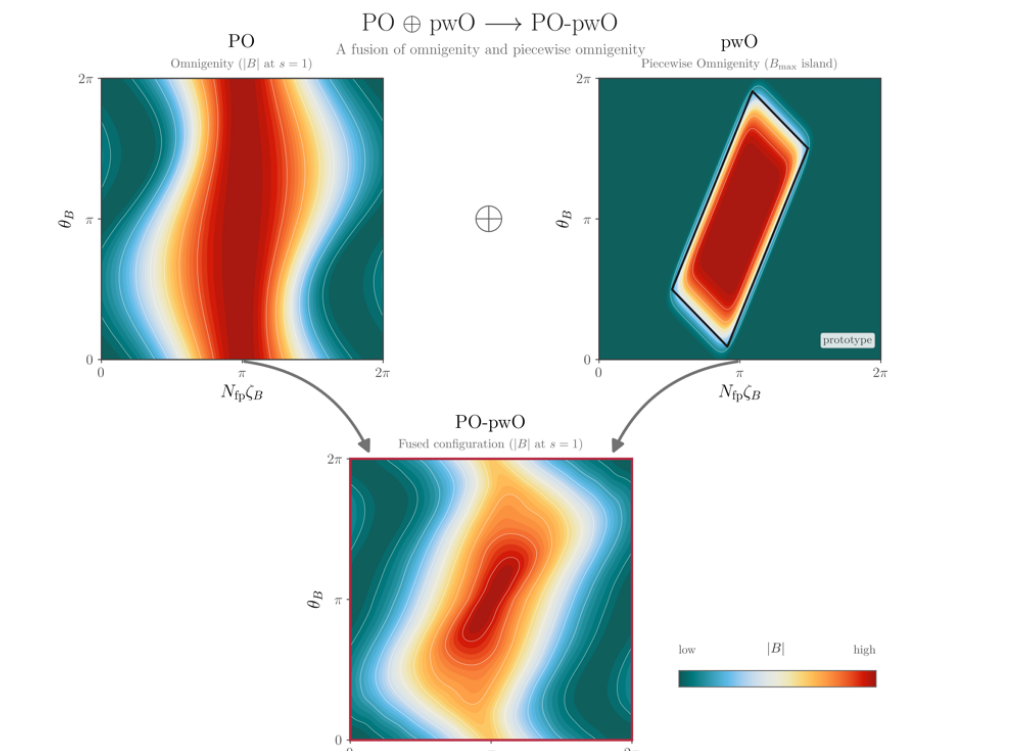
Department of Plasma Physics and Fusion Engineering at the University of Science and Technology of China Proposes New Three-Dimensional Magnetic Field Configuration for Stellarators
Stellarators confine high-temperature plasma using three-dimensional magnetic fields generated by external coils, enabling steady-state operation without relying on plasma current and avoiding instabilities such as disruptions, making them the fastest-growing technological route globally. However, if the three-dimensional magnetic field is not carefully optimized, trapped particles can experience significant radial drift, leading to a substantial increase in neoclassical transport losses. To suppress this drift, the magnetic field must satisfy the "omnigenity" condition, meaning that the time-averaged radial drift of all trapped particle orbits is zero. The most widely applied class of omnigenous magnetic fields is poloidal omnigenity (PO), and such configurations are also commonly referred to as quasi-isodynamic (QI) configurations...
2026-08-06

Japanese PET Study Suggests Late-Onset Psychosis May Be Linked to Neurodegenerative Pathology
A nuclear medicine imaging study conducted by a Japanese research team has shown that many adults who experience psychotic symptoms such as hallucinations and delusions for the first time after age 40 have abnormal protein deposits in the brain associated with Alzheimer's disease and other neurodegenerative disorders. The study included 37 patients with late-onset psychosis and 47 age-matched healthy controls. The researchers used the amyloid PET tracer ^11C-PiB and the tau protein PET tracer ^18F-florzolotau to assess the accumulation of β-amyloid and tau proteins in the participants' brains. The results showed that among patients with late-onset psychosis, β-amyloid positivity...
2026-08-06