
Search Results
Keyword:Nano

Scientists Reveal the Chemical Secrets of the Nanoscale Iridescent Effect in 9th-Century Islamic Ceramics
A scientific team led by the Universitat Politècnica de Catalunya (UPC) in Barcelona and the European Synchrotron Radiation Facility (ESRF) has successfully revealed the nanoparticle chemical reactions that created the distinctive shimmering iridescent effect in 9th-century Islamic ceramic painting. The related research findings have been published in the academic journal Science Advances. Centuries before the rise of modern nanotechnology, 9th-century Abbasid potters were already able to produce ceramics with vivid colors such as gold, red, brown, or yellow and a metallic luster. This technique for creating the iridescent effect originated in the Near East during the Abbasid period and subsequently spread throughout the entire Islamic world.
2026-09-16

Russian Researchers Propose New Method for Preparing Iron-59 Magnetite Nanoparticles, Potentially Advancing Nuclear Medicine Diagnostics and Therapy
Russian researchers have developed a new method for preparing iron-59-labeled magnetite nanoparticles, which is expected to provide a new material preparation pathway for medical applications such as magnetic resonance imaging, single-photon emission computed tomography, and radionuclide therapy. According to reports, researchers from the Vernadsky Institute of Geochemistry and Analytical Chemistry and the Karpov Institute of Physical Chemistry, both under the Russian Academy of Sciences, have proposed synthesizing iron-59 magnetite nanoparticles using the sol-gel method. The relevant findings have been published in the journal Applied Radiation and Isotopes. The sol-gel method is a chemical approach for preparing nanomaterials, with the core process involving the conversion of a liquid colloidal solution into a gel-like network...
2026-09-07
U.S. NANO Nuclear and Enveniam to Advance Microreactor and Nuclear Fuel Cycle Cooperation
U.S. advanced nuclear energy company NANO Nuclear Energy Inc. announced on September 4 that it has signed a non-binding memorandum of understanding with Enveniam, LLC, a project integration and engineering technology services provider, to explore cooperation in areas such as nuclear fuel cycle infrastructure, microreactor commercialization, advanced manufacturing, and end-user energy solutions. Under the MOU, the parties will evaluate how to leverage Enveniam's experience in nuclear engineering, project integration, safety analysis, licensing support, project controls, operational readiness, and complex energy infrastructure development to support NANO Nuclear...
2026-09-05

US NANO Nuclear KRONOS MMR Main Helium Circulator Enters Detailed Design Phase
NANO Nuclear Energy Inc. announced on September 3 that new progress has been made in the development of the main helium circulator for its KRONOS MMR energy system. The engineering collaboration with Howden, a Baker Hughes company, has advanced from preliminary engineering design to the detailed design phase. The main helium circulator is a critical mechanical subsystem of the KRONOS MMR energy system, primarily responsible for driving the helium coolant circulation within the reactor to efficiently transfer heat generated in the core to downstream systems. The performance of this equipment directly affects the reactor's thermal-hydraulic performance, overall efficiency, and long-term operational reliability. According to NANO Nuclear...
2026-09-04

Carbon Nanotubes Can "Remember" Their Initial Structure, Isotope Labeling Reveals Dynamic Growth Process
A study released on September 1 shows that carbon nanotubes can maintain their initial atomic structure in dynamically changing growth environments. The research team used digital isotope labeling technology to encode the elongation process of individual carbon nanotubes as sequences of different carbon isotope compositions, and read their growth history through Raman spectroscopy, thereby tracking the structural stability of nanotubes under conditions of temperature variation and catalyst evolution. The properties of carbon nanotubes are highly dependent on their atomic arrangement. The same material may exhibit metallic or semiconducting characteristics due to structural differences, so structural uniformity has always been a key issue for the large-scale application of carbon nanotubes. In floating catalyst chemical vapor deposition and other industrial production routes, catalyst particles experience constantly changing temperatures and gas compositions within the reactor and may undergo irreversible enlargement. Previously, direct evidence was lacking on whether individual carbon nanotubes could maintain their initial structure under such complex conditions.
2026-09-02
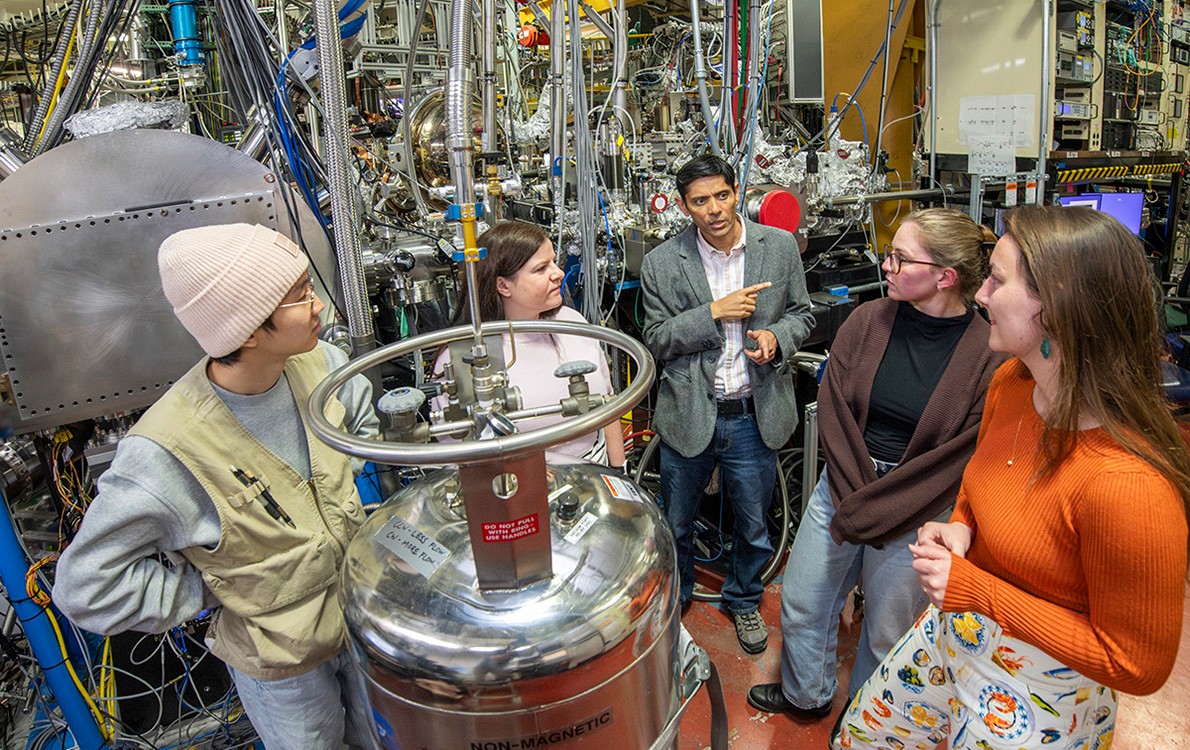
U.S. Advanced Light Source Upgrade to Enhance Nanoscale Research Capabilities for Quantum Materials
The Advanced Light Source (ALS) at Lawrence Berkeley National Laboratory in the United States is enhancing its quantum materials research capabilities through an upgrade project. As a U.S. Department of Energy Office of Science user facility, ALS has supported researchers worldwide over the past 30+ years in studying quantum materials such as superconductors, topological insulators, and correlated electron materials, leveraging its synchrotron soft X-ray, ultraviolet, and full-spectrum X-ray experimental capabilities. Doctoral students Wei Francis He (left), Kate Matthews (second from right), and Robin Greifke (right) from the University of California, San Diego, are from the Alex Frañó research group at the ALS COSMIC beamline (7.0.1)...
2026-08-27

U.S. NANO Nuclear Plans to Deploy Advanced Nuclear Energy for AI Industrial Parks
NANO Nuclear Energy Inc. recently announced that it has signed a non-binding strategic commercial framework agreement with Tillman Global Holdings and its global data center platform Tillman Digital Gateway, aiming to promote the future use of its KRONOS MMR energy system in artificial intelligence industrial parks that Tillman plans to build in the United States. Figure 1 - NANO Nuclear and Tillman Digital Gateway sign strategic commercial framework to advance nuclear power for gigawatt-scale AI industrial parks in the U.S. Under the agreement, NANO Nuclear will become...
2026-08-25
NANO Nuclear and QNI Sign Memorandum of Understanding to Advance Domestic HALEU Fuel Supply Cooperation in the U.S.
NANO Nuclear Energy Inc. (NANO Nuclear) and Quadrant Nuclear Industries, Inc. (QNI) announced on August 18 that the two companies have signed a memorandum of understanding (MOU) establishing a non-binding framework for future high-assay low-enriched uranium (HALEU) fuel supply cooperation. Under the MOU, the parties will engage in discussions regarding the supply of HALEU to be produced by QNI in the future and long-term offtake arrangements. The fuel in question is planned to come from QNI's proposed Vanguard facility at Idaho National Laboratory (INL). QNI stated that once the facility operates at full capacity, its annual HALEU production...
2026-08-19

Argonne National Laboratory Unveils DONUT Tool to Accelerate Real-Time Analysis of X-ray Nanodiffraction Data
Researchers at the U.S. Department of Energy's Argonne National Laboratory have developed a new machine learning tool called DONUT to accelerate X-ray data analysis in experiments at the Advanced Photon Source (APS). The tool can process complex images generated by scanning X-ray nanodiffraction microscopy (SXDM) in real time during experiments, helping researchers more quickly determine internal structural changes in materials. DONUT stands for "Nanobeam Optical Diffraction based on Unsupervised Training," a physics-aware neural network. Its key feature is combining artificial intelligence methods with physical models of focused X-ray beam interactions with materials, allowing it to learn directly from experimental data without relying on pre-labeled training...
2026-08-17
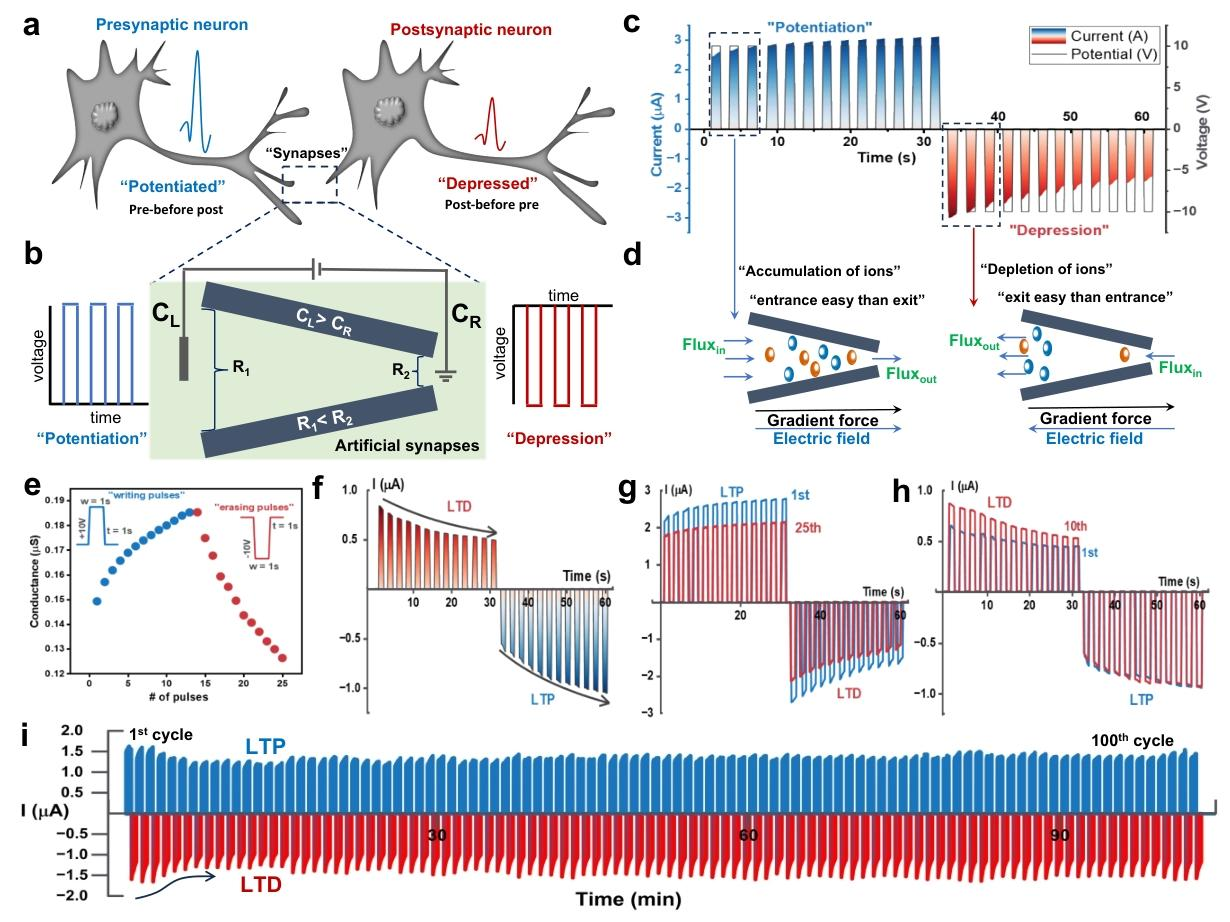
New Progress in Ion Dynamics Regulation in Nanofluidic Memristors by the Institute of Modern Physics, Chinese Academy of Sciences
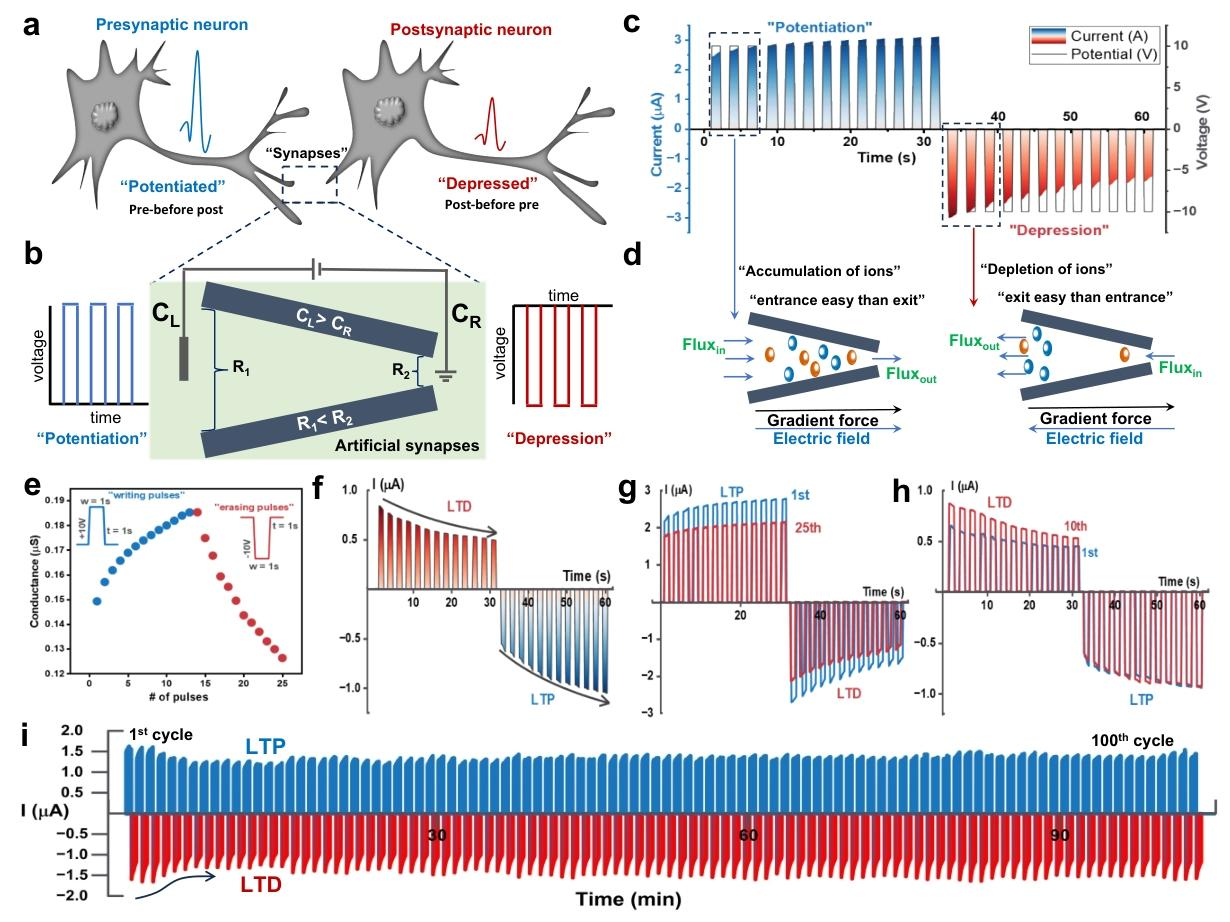
Water-based nanofluidic ionic devices offer unique advantages in frontier fields such as brain-computer interfaces and biocompatible computing. Recently, the research team from the State Key Laboratory of Heavy Ion Science and Technology at the Institute of Modern Physics, Chinese Academy of Sciences, in collaboration with Lanzhou University, Hebei University of Geosciences, and other partners, successfully achieved stable ionic memristive effects in single-ion-track nanochannels. Through precise regulation, they realized programmable transitions between memristive and synaptic functions, providing a new technological pathway for the development of next-generation low-power neuromorphic computing hardware. The related results were published in the journal *Small* on July 22. Relying on the Heavy Ion Research Facility in Lanzhou (HIRFL), the researchers...
2026-08-04
New Progress in Ion Dynamics Regulation in Nanofluidic Memristors by the Institute of Modern Physics, Chinese Academy of Sciences
Water-based nanofluidic ionic devices offer unique advantages in frontier fields such as brain-computer interfaces and biocompatible computing. Recently, the research team from the State Key Laboratory of Heavy Ion Science and Technology at the Institute of Modern Physics, Chinese Academy of Sciences, in collaboration with Lanzhou University, Hebei University of Geosciences, and other partners, successfully achieved stable ionic memristive effects in single-ion-track nanochannels. Through precise regulation, they realized programmable transitions in memristive and synaptic functions, providing a new technological pathway for the development of next-generation low-power neuromorphic computing hardware. The related results were published in the journal *Small* on July 22. Leveraging the Heavy Ion Research Facility in Lanzhou (HIRFL), the researchers...
2026-08-03
Multinational Team Reveals Mechanisms of Lithiation in Modulating the Structural and Electronic Properties of Borophene Using Synchrotron Techniques
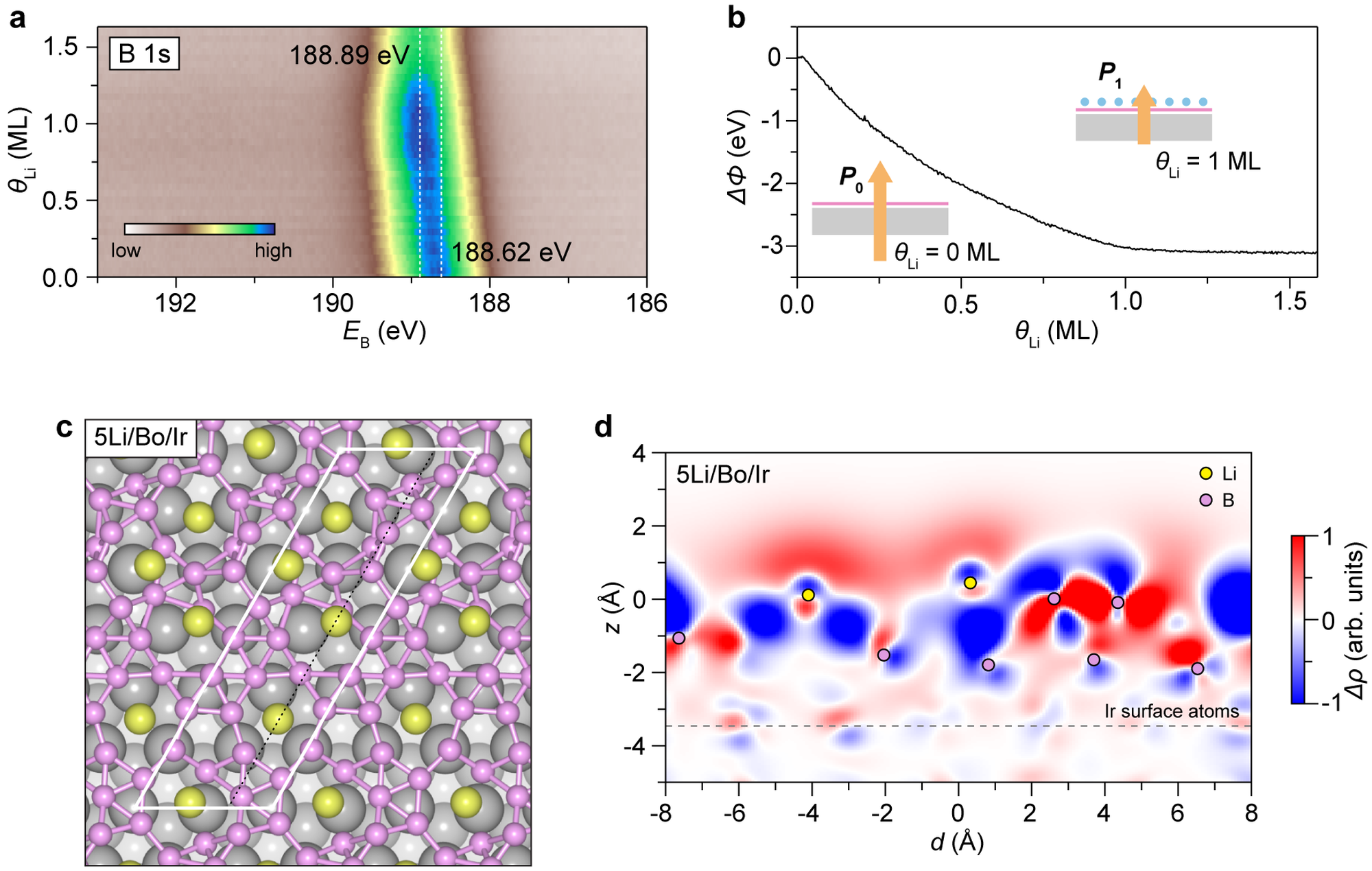
A research team from the Institute of Physics in Zagreb, Croatia, Elettra Synchrotron in Trieste, Italy, Shimane University, and Tokyo University of Science recently conducted a study on the interaction between lithium atoms and borophene, revealing the mechanisms by which lithiation affects the atomic structure and electronic properties of borophene. The findings were published in *ACS Nano* and selected as the journal cover article. (a) Shift of the B 1s core level toward higher binding energy; (b) reduction of the sample work function due to charge transfer from Li atoms to B atoms; (c) lithium atoms (yellow) deposited on borophene (magenta) induce deformation of the borophene lattice, attributed to significant charge redistribution within the system...
2026-08-03
IIT Develops Novel Nanomaterial for Efficient Recovery of Rare Earth and Uranium Resources
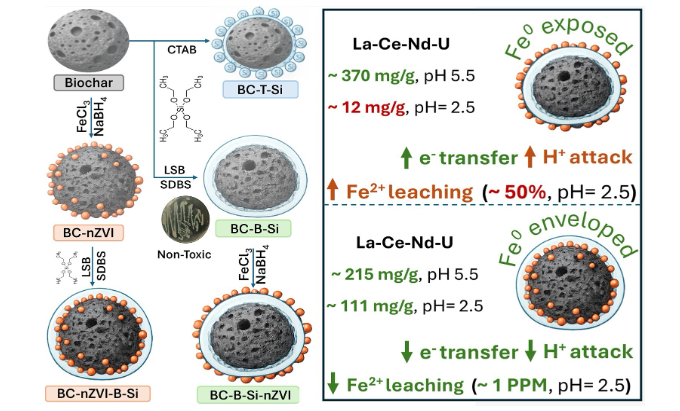
Researchers at the Indian Institute of Technology Roorkee have developed an acid-resistant magnetic nanocomposite capable of recovering uranium and rare earth elements from acidic leach solutions. The material consists of core active nanoparticles encapsulated in a protective silica layer, enabling efficient absorption and extraction of these valuable resources in complex acidic aqueous media. By synthesizing the silica shell using biocompatible reagents, the researchers not only enhanced the material's corrosion resistance but also made it safer and more environmentally friendly. This novel nanocomposite demonstrated exceptional performance in laboratory tests, recovering up to 370 grams of uranium and rare earth elements per kilogram of material. It can operate effectively not only under conditions such as natural groundwater...
2026-08-01