
Search Results
Keyword:RI
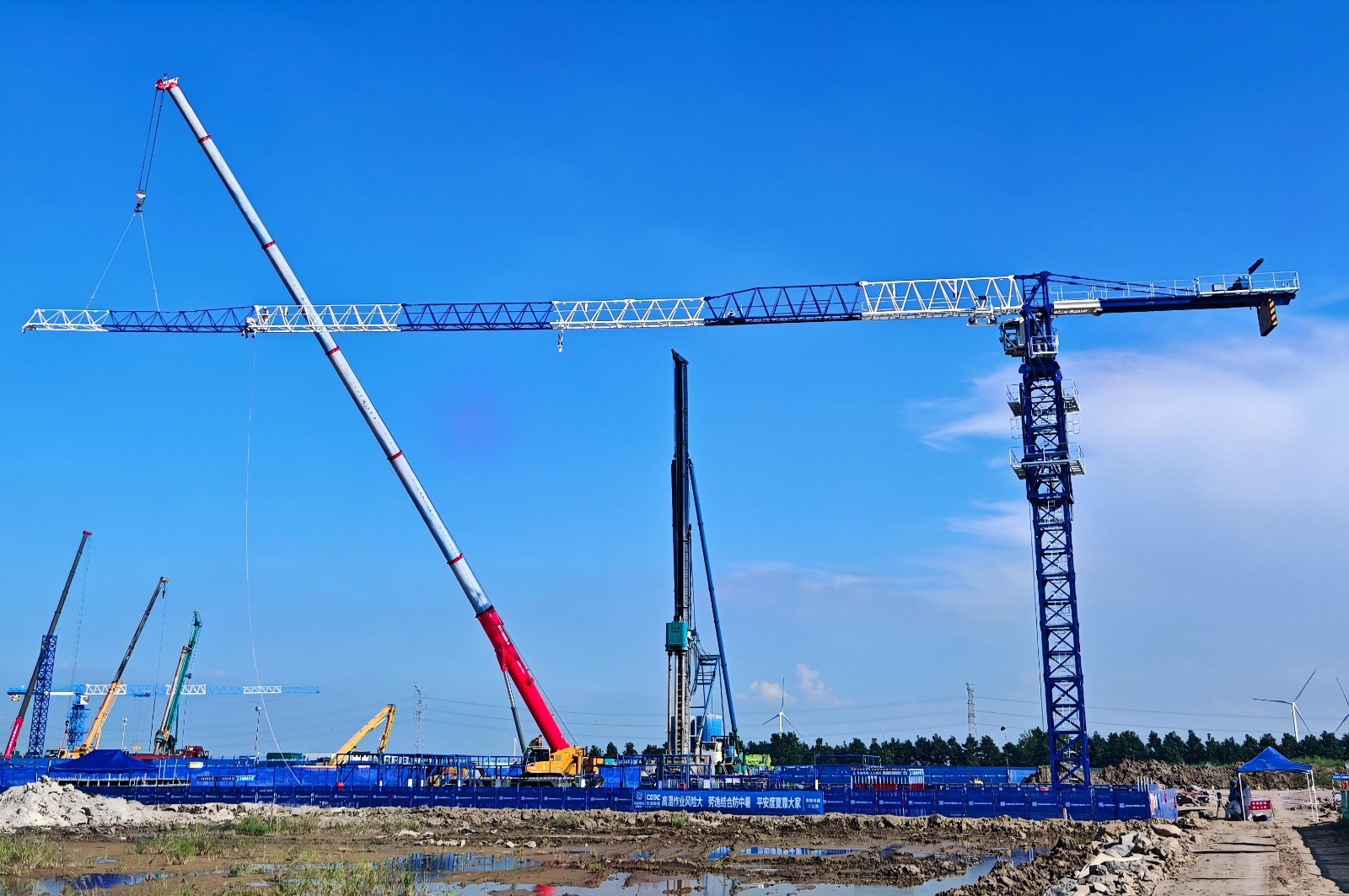
Installation of STT153A Tower Crane Completed at Jiangsu Xuwei Nuclear Heating and Power Plant by CEEC
On August 6, the installation and commissioning of the first special equipment STT153A tower crane was successfully completed for Section A of the natural draft cooling tower construction and installation project for Units 1, 2, and 3 of Phase I of the Jiangsu Xuwei Nuclear Heating and Power Plant, undertaken by CEEC Mechanization Company. The tower crane installed this time was manufactured by Fushun Yongmao Construction Machinery Co., Ltd., and is positioned at the rebar processing yard of the 1PB cooling tower, with a maximum rated lifting capacity of 10t. The jib length for this installation is 65m, and the standard section height is 37.5m. Based on the on-site machinery configuration, the installation of this tower crane was completed with the coordination of one 130t mobile crane and one 25t mobile crane. The technical team of the CEEC Mechanization Xuwei Project Branch, prior to the formal commencement of the tower crane installation...
2026-08-11
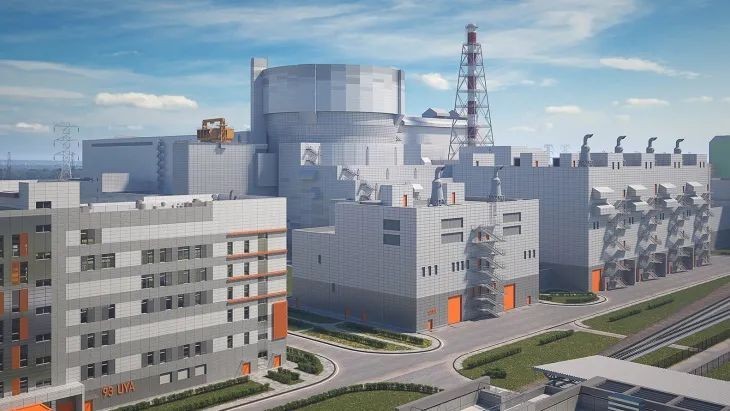
Danube Water Levels Recover, Hungary Restarts Second Turbine at Paks Nuclear Power Plant
On August 10, as the Danube River's water levels recovered, Hungary began restarting a previously constrained turbine at the Paks Nuclear Power Plant. The Paks plant uses Danube water for cooling and normally supplies nearly half of Hungary's electricity. Due to heatwaves and persistent drought, the Danube's water levels fell to historic lows in recent weeks, reducing the plant's generating capacity to about 10%, with only one of its eight turbines remaining operational. According to available information, Hungarian Prime Minister Péter Magyar stated on the 10th that the Danube's water level had risen 19 centimeters from the low point recorded last week, and that restart work on the second turbine at the Paks plant had begun, with power generation expected to resume by Monday evening. He also previously mentioned...
2026-08-11

UK's Harlette Capital seeks partners to develop lunar micro nuclear reactor
UK-based innovative company Harlette Capital has recently issued a Request for Information (RFI), seeking support from industry and research institutions for the development of a micro nuclear reactor for lunar missions. The company stated that the project aims to provide continuous power for long-term scientific research, communications, infrastructure construction, and future crewed exploration on the lunar surface. Harlette Capital is previously better known for its luxury fashion brand Harlette. The company also operates a separate innovation business segment, which is positioning itself in space and energy assets and advancing a small modular reactor (SMR) project named Alpha Moon. According to the company, the RFI has been sent to...
2026-08-11
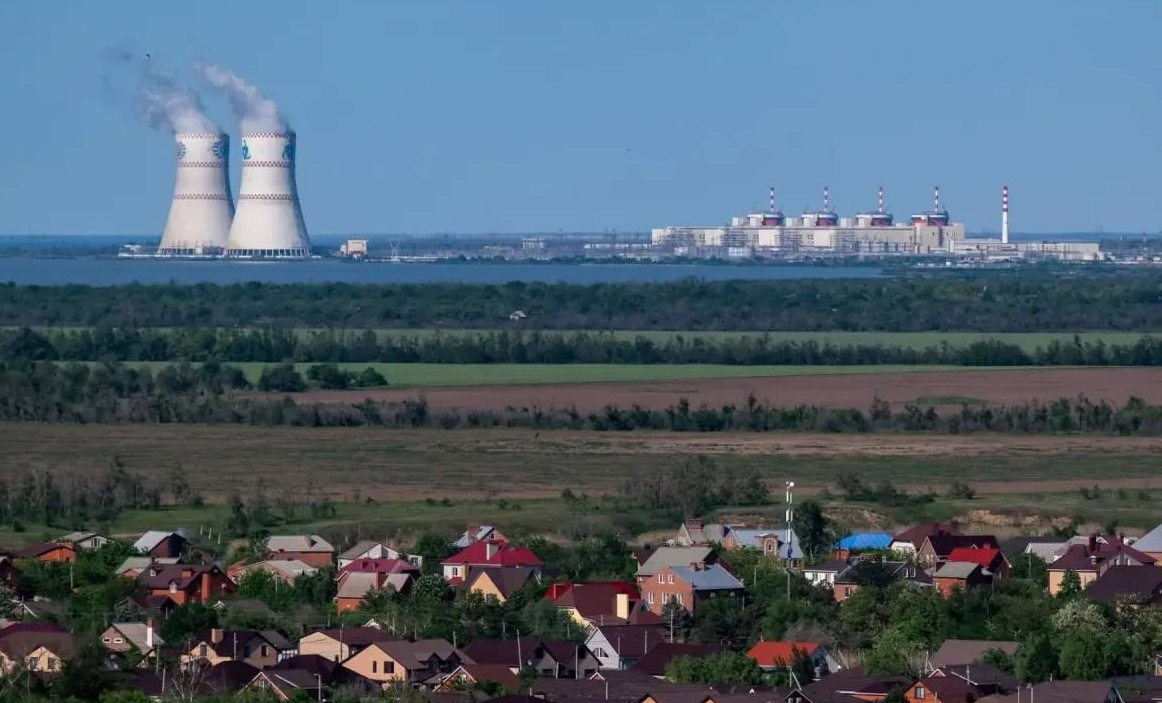
Rosatom launches project to bring medical students to closed nuclear cities
Rosatom and the Russian Student Teams (RSO) will launch a new medical project in Russia's closed nuclear cities starting in 2027, attracting medical students to work there. Mikhail Kiselev, Chairman of the RSO Supervisory Board and State Duma deputy, announced this to reporters at an event at the Siberian Chemical Combine. Kiselev stated: Starting next year, we plan to launch a large-scale medical project in nuclear cities together with Rosatom, the Russian Student Teams, the Federal Medical-Biological Agency, the Russian Youth Affairs Agency, and the Russian Ministry of Health. This will help systematically attract medical students...
2026-08-11
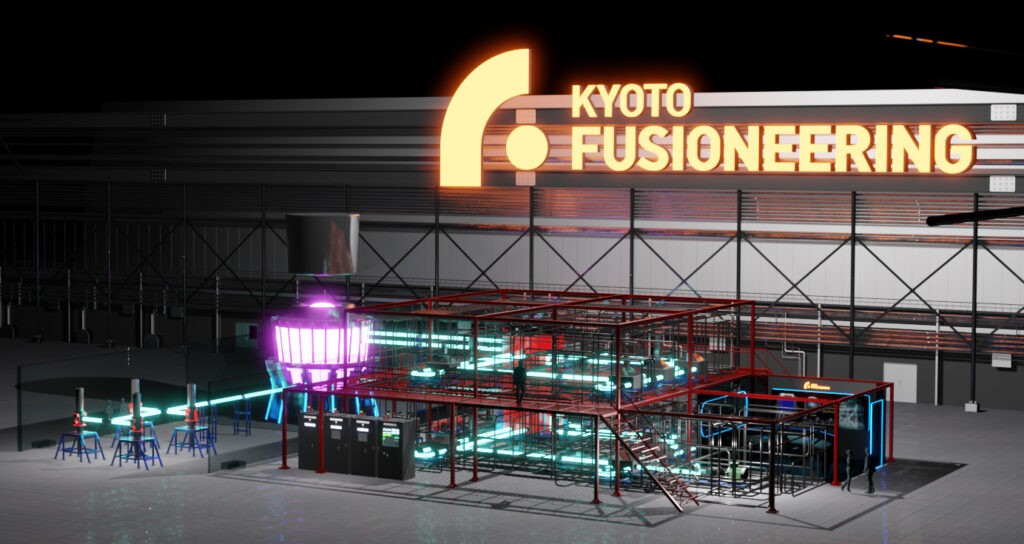
Kyoto Fusioneering to Relocate U.S. Headquarters to Oak Ridge
Kyoto Fusioneering (KF) will relocate its U.S. headquarters to Oak Ridge, Tennessee, investing $46.9 million in Anderson County and creating 51 new jobs. The project will build critical fusion testing infrastructure, with a focus on supporting the development of the fusion nuclear testing facility UNITY-3. UNITY-3 is planned to be built at Oak Ridge National Laboratory (ORNL) through a public-private partnership. The facility has received support from the U.S. Department of Energy (DOE) and has been listed as a national priority in its final "Fusion Science and Technology Roadmap." According to the plan, UNITY-3 will employ a deuterium-tritium (D-T) fusion neutron source to validate tritium breeding capabilities and related performance under conditions approaching a real fusion nuclear environment...
2026-08-11
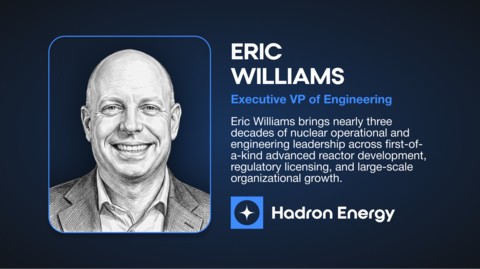
Hadron Energy Appoints Eric Williams as Executive Vice President of Engineering
Advanced nuclear technology company Hadron Energy announced on August 10 that Eric Williams will join the company as Executive Vice President of Engineering, effective August 31, 2026. Hadron Energy is currently developing the Halo micro modular reactor (MMR) based on pressurized water reactor technology. Hadron Energy went public on Nasdaq in May 2026. The company stated that Eric Williams' addition will strengthen its engineering organization and support the advancement of Halo MMR from design and licensing to commercial deployment. According to company information, Hadron Energy has recently made progress in work related to the U.S. Nuclear Regulatory Commission (NRC), including approval of its quality assurance program description and submission of major design criteria white papers.
2026-08-11
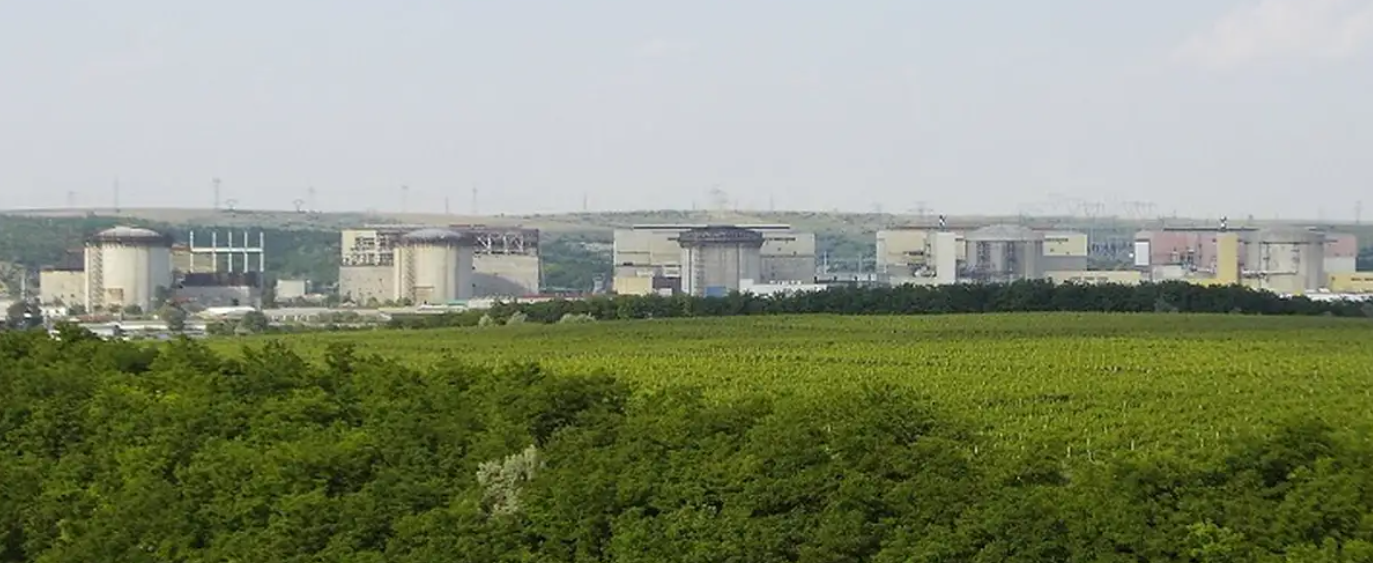
Unit 2 of Romania's Cernavoda Nuclear Power Plant Still at Risk of Shutdown
Ionel Scrioșteanu, State Secretary of Romania's Ministry of Transport and Infrastructure, stated that Unit 2 of the Cernavoda Nuclear Power Plant is currently still in operation, but the risk of shutdown has not been eliminated. On August 8, Romanian authorities took emergency measures by sinking four fully loaded barges into the Danube River to raise local water levels, increasing the water intake into the plant's cooling water system to ensure the cooling needs of the reactor units. Scrioșteanu said on social media that the related actions have achieved positive results, allowing Unit 2 of the Cernavoda Nuclear Power Plant to continue operating...
2026-08-11
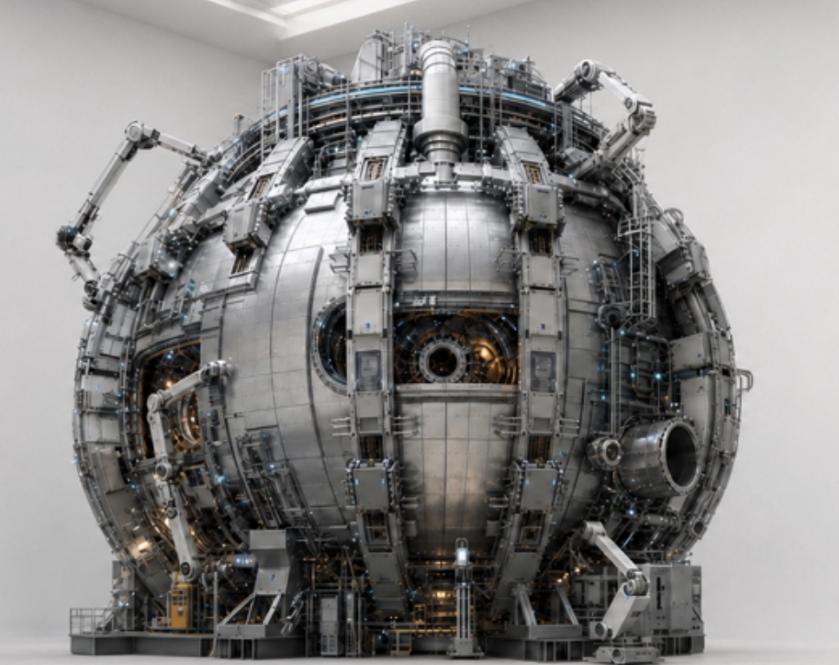
Shenju Nuclear Energy Unveils "Jinwu-1" Spherical Torus Fusion-Fission Hybrid Reactor Design
Shenju (Sichuan) Nuclear Energy Co., Ltd. has unveiled the first-generation device, the Jinwu-1 design, which adopts the spherical torus fusion-fission hybrid reactor technology pathway, driving a subcritical nuclear energy system with a compact fusion neutron source to achieve functions such as energy amplification, fuel breeding, and transmutation of long-lived nuclides. According to the design, Jinwu-1 uses a 50 MW-class fusion power as the conceptual design baseline, employing high-temperature superconducting magnets, a replaceable center column, and a modular subcritical nuclear energy zone. Its fusion core has a major radius of approximately 1.5 meters, with the goal of delivering approximately 40 MW of fusion neutron power at 14.1 MeV energy, serving as an industrial-grade neutron source. In terms of system design, Jinwu-1 amplifies fusion neutron energy through a subcritical fission blanket...
2026-08-11
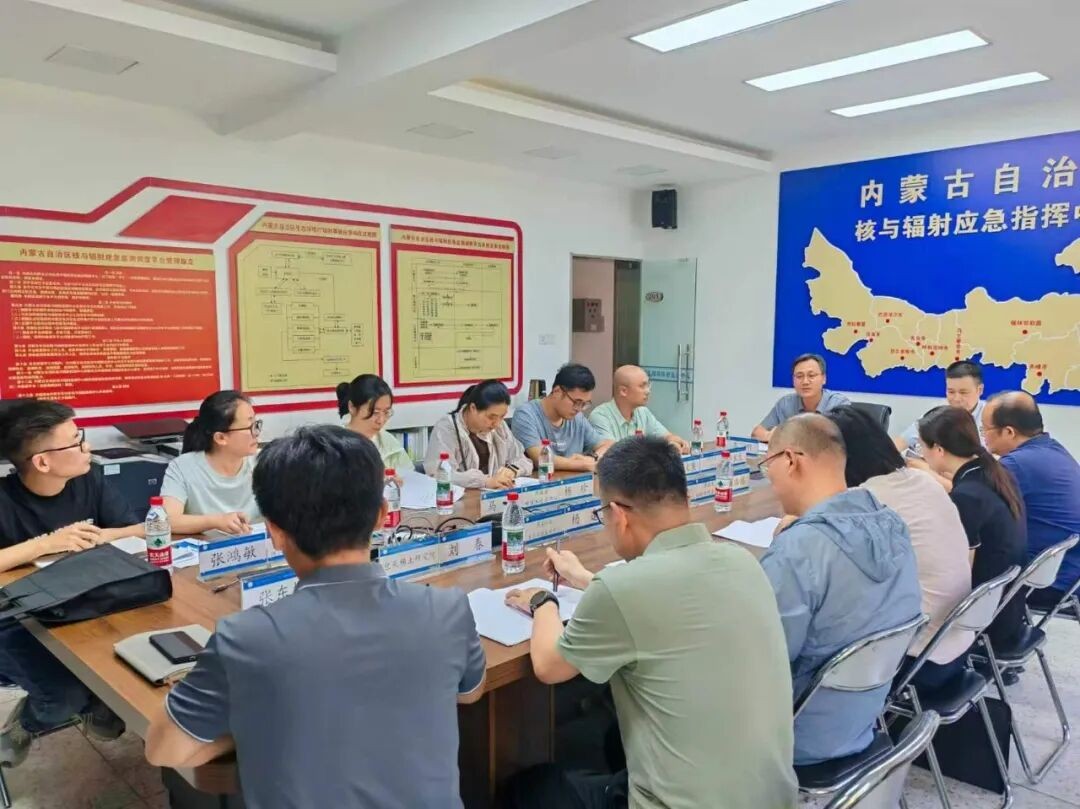
Inner Mongolia Nuclear and Radiation Monitoring Center Organizes Standard Pre-Research Exchange Meeting
In accordance with the arrangement of the radiation monitoring standard pre-research project, the Inner Mongolia Nuclear and Radiation Monitoring Center (hereinafter referred to as the Inner Mongolia Center) undertakes the pre-research task for the standard "Determination of Total Uranium and Thorium in Soil and Sediment - Inductively Coupled Plasma Mass Spectrometry." To standardize the inter-laboratory method validation process and ensure the smooth progress of the validation work, the Inner Mongolia Center recently organized a standard pre-research method validation exchange meeting in Baotou City, attended by experts from the Radiation Environmental Monitoring Technical Center of the Ministry of Ecology and Environment for on-site guidance. Seven laboratories from across the country participated in this validation exchange meeting, including provincial-level radiation environmental monitoring institutions and laboratories in the nuclear industry, nuclear technology applications,...
2026-08-11
Meeting of the New Academic Committee of the Key Laboratory of Radiation Environmental Monitoring of the Ministry of Ecology and Environment Held in Beijing
Recently, the meeting of the new academic committee of the Key Laboratory of Radiation Environmental Monitoring of the Ministry of Ecology and Environment (hereinafter referred to as the Key Laboratory) was successfully held in Beijing. Experts from multiple domestic universities, research institutes, and leading industry enterprises gathered together to discuss the construction, scientific and technological innovation, and the 15th Five-Year Plan development of the Key Laboratory. The Radiation Environmental Monitoring Technical Center of the Ministry of Ecology and Environment, the supporting institution of the Key Laboratory, attended the meeting. The meeting first announced the appointment documents for the new academic committee and held a certificate awarding ceremony. In his address, the main responsible person of the Radiation Environmental Monitoring Technical Center congratulated the establishment of the new academic committee and expressed gratitude to the experts who have long supported the construction of the Key Laboratory...
2026-08-11
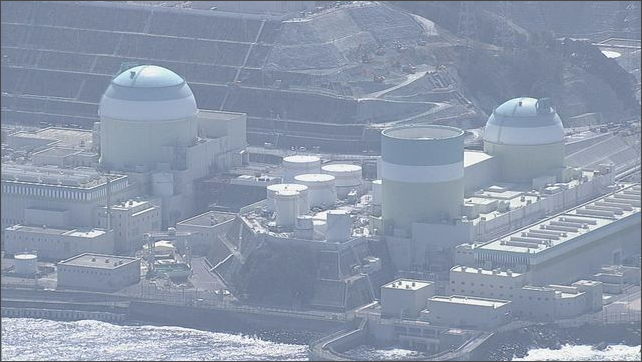
Ikata Nuclear Power Station Reports 5 Notifiable Events in July, None Causing Radiological Environmental Impact
Shikoku Electric Power Co. reported on August 10 that the five events reported to Ehime Prefecture, Ikata Town, and relevant local governments from the Ikata Nuclear Power Station in July 2026 did not fall under legally required reporting events and caused no radiological impact on the environment. The five events were as follows: On July 3, an employee of a partner company at the Ikata Nuclear Power Station experienced physical discomfort at an office location in a non-controlled area and was transported by ambulance at 17:18 that day. The employee was conscious at the time and experienced no radiation exposure or radioactive contamination. On July 16, during the decommissioning process of Unit 2 at the Ikata Nuclear Power Station, seawater leakage was discovered at the flange of the seawater outlet pipe of emergency diesel generator 2B in the reactor auxiliary building. After maintenance personnel determined that a detailed inspection of the flange was required, the leak point was isolated, and the leakage was confirmed to have stopped at 15:38 that day. The maximum estimated volume of leaked seawater was approximately 7 cubic meters, all of which was recovered in the floor drain sump within the building and did not flow outside. Subsequent inspection revealed a through-hole approximately 7 mm in diameter at the flange, and the station replaced the flange and confirmed water flow integrity, restoring normal conditions at 14:05 on July 17. This event did not affect the unit or cause radiological environmental impact, and further investigation into the cause will be conducted.
2026-08-10

MIT Research Proposes Framework for Assessing Economic Viability of Fusion Power Plants
Researchers at the Massachusetts Institute of Technology (MIT) have recently proposed an assessment framework aimed at addressing the core question that fusion energy must confront in transitioning from scientific feasibility to commercial profitability: how can a fusion power plant achieve economic viability in the energy market? The related open-access paper, titled "Criteria for the Economic Viability of Fusion Power Plants," has been published online in the Journal of Fusion Energy. The paper is authored by Dennis Whyte, Professor of Nuclear Science and Engineering at MIT, and Andrew W. Lo, Professor of Finance at the MIT Sloan School of Management, with contributions from researchers at Rutherford Energy Ventures and the MIT Plasma Science and Fusion Center.
2026-08-10
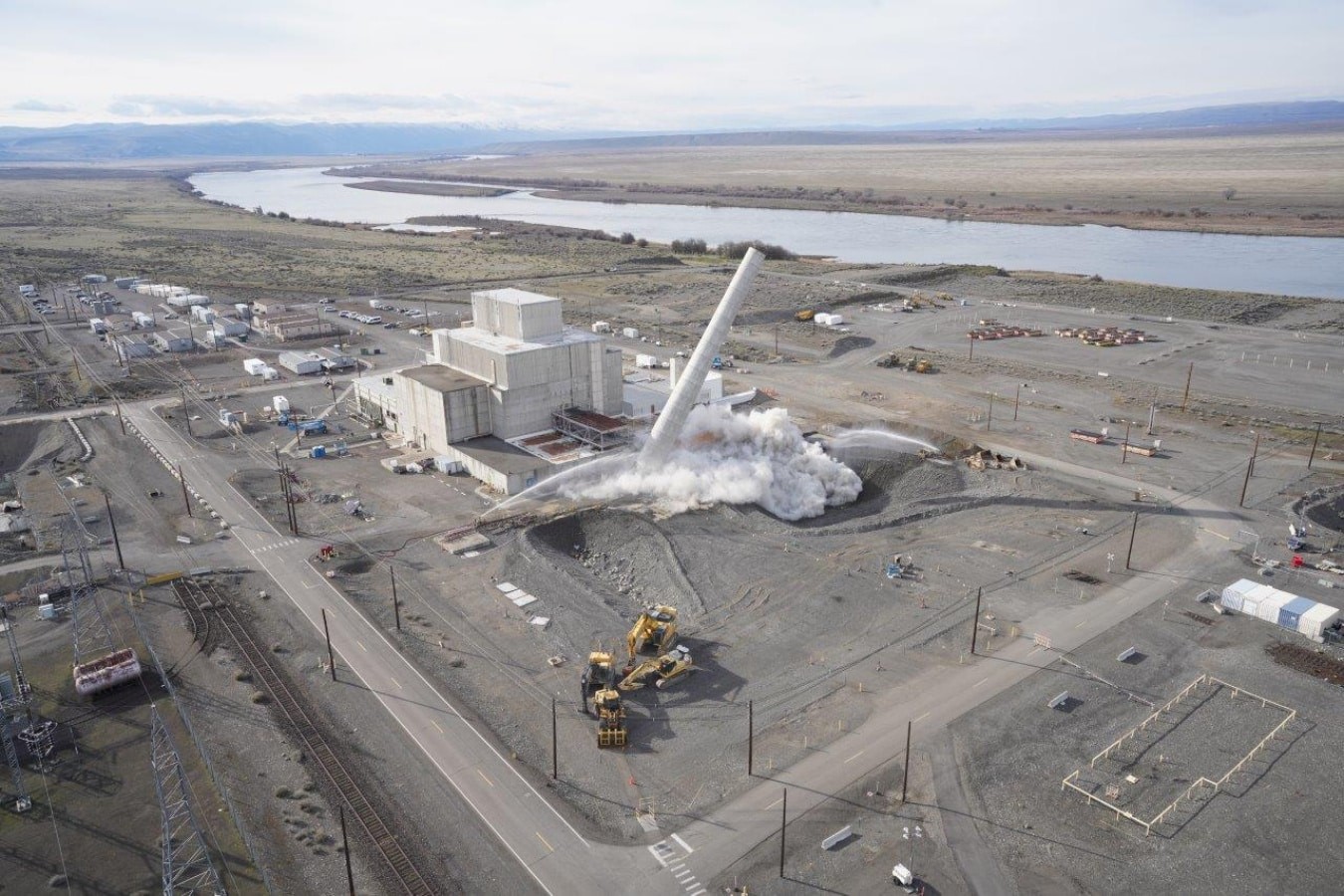
Accelerating Nuclear Facility Decommissioning Can Drive Redevelopment of Legacy Nuclear Sites
Amentum recently proposed in a report on nuclear facility decommissioning financing and site regeneration that decommissioning should not be viewed solely as a cost item for reducing environmental and radiological risks. As a wave of nuclear reactors worldwide enters shutdown phases, shortening cleanup timelines, unlocking land value, and creating conditions for new industry attraction are becoming shared priorities for the nuclear industry and local economies. The report notes that traditional decommissioning models often leave facilities in long-term surveillance and maintenance status, which, while deferring some expenditures, also delays land reuse, industry attraction, and community benefits. In contrast, accelerated decommissioning can eliminate environmental liabilities earlier, reduce...
2026-08-10
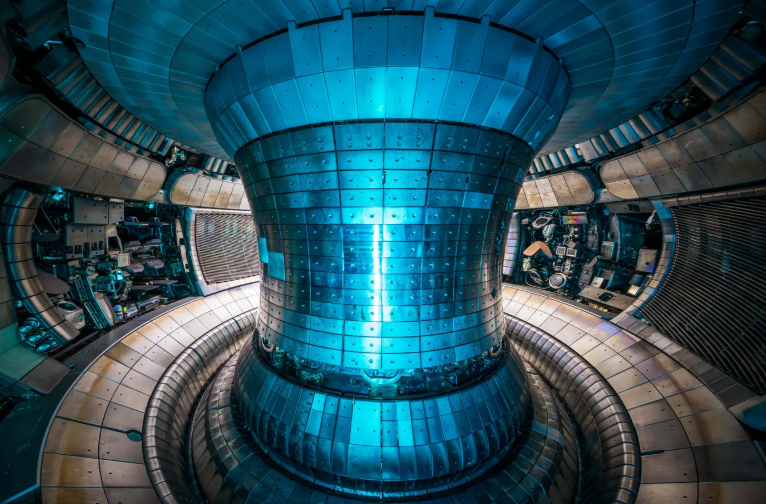
Two IPP studies reveal edge turbulence mechanisms in fusion plasmas from first principles
On August 10, 2026, two research teams at the Max Planck Institute for Plasma Physics (IPP) independently published findings that, for the first time, explain key phenomena in the extremely thin edge layer of fusion plasmas starting from fundamental physics equations. Both papers were published in Physical Review Letters, with one highlighted as an editor's suggestion. For stable operation of a fusion power plant, two requirements must be met simultaneously: on the one hand, the plasma at temperatures of around 100 million degrees Celsius must be effectively confined to achieve fusion ignition conditions; on the other hand, the generated heat must be distributed over a sufficiently large area to prevent damage to the device walls from excessive local heat loads. Whether this conflict can be resolved depends largely on a region only a few centimeters thick at the plasma edge.
2026-08-10
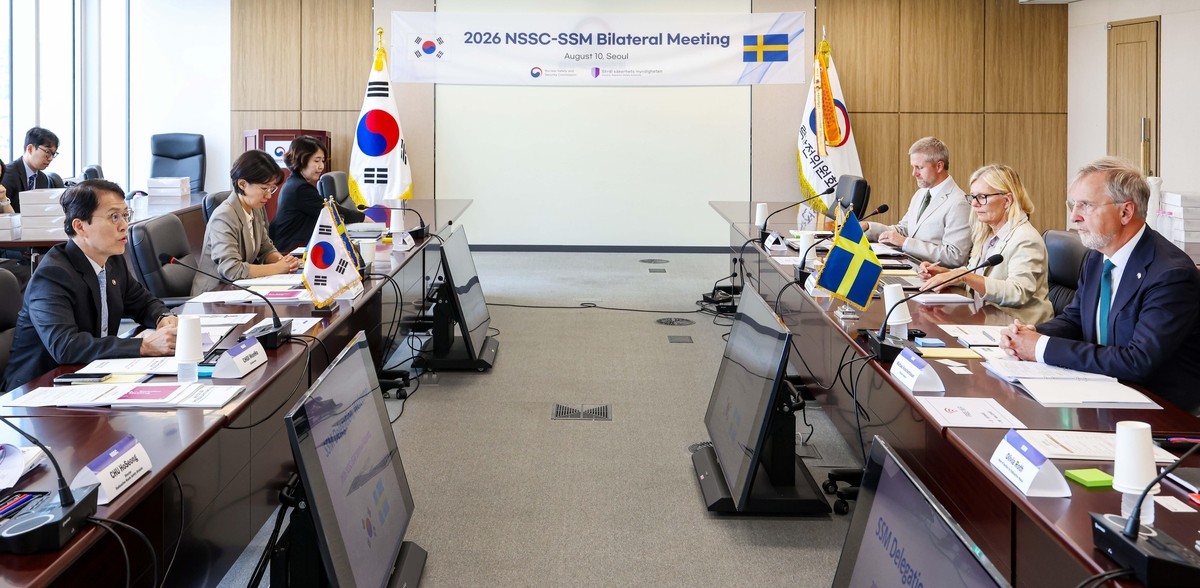
South Korea and Sweden Discuss Cooperation on High-Level Waste Disposal and SMR Regulation
The Nuclear Safety and Security Commission (NSSC) of South Korea announced on August 10 that it held a bilateral meeting with the Swedish Radiation Safety Authority (SSM) in Seoul, during which the two sides exchanged views on topics including high-level radioactive waste management, nuclear safety regulation, and the development of small modular reactors (SMRs). Sweden has accumulated strong technical expertise in the field of radioactive waste management and has developed a relatively mature technical system for high-level radioactive waste disposal. Currently, Sweden has 6 operating nuclear power units and 7 permanently shut down units, 6 of which are in the decommissioning phase. Following Finland, Sweden is constructing the world's second deep geological disposal facility for high-level radioactive waste. The NSSC of South Korea...
2026-08-10