
Search Results
Keyword:States

New Monitoring Well Characterizes Hexavalent Chromium Plume at Los Alamos National Laboratory
LOS ALAMOS, New Mexico — The U.S. Department of Energy Environmental Management Los Alamos Field Office continues to advance characterization efforts for the hexavalent chromium plume at Los Alamos National Laboratory to inform future remediation alternative selection. According to reports, its legacy cleanup contractor, Newport News Nuclear BWXT-Los Alamos LLC, has completed drilling of a new groundwater monitoring well. Designated R-80, the well reaches approximately 1,030 feet below ground surface and will be used to further characterize the northeastern extent of the hexavalent chromium plume and evaluate different remediation alternatives. Completion of this monitoring well also marks the achievement of a Fiscal Year 2026 consent order milestone for the hexavalent chromium remediation project...
2026-09-02

Demolition Begins on Contaminated Buildings in Isotope Area at Oak Ridge National Laboratory
The Oak Ridge Environmental Management Office in Tennessee recently initiated demolition of a group of highly contaminated buildings in the Isotope Area at Oak Ridge National Laboratory. Located in the laboratory's central campus, this area is considered one of the more challenging sites in the local cleanup effort. The Isotope Area comprises 10 facilities, constructed between the late 1940s and early 1960s, which once served the laboratory's isotope program. These facilities were used for decades in the production, processing, and research of chemical elements for medical, industrial, and scientific applications. As the laboratory evolved, the facilities were taken out of service in the early 1990s but remained standing. According to reports, the area retains contaminated...
2026-09-02

LUX-ZEPLIN Experiment Reports Anomalous Event in Dark Matter Search, More Data Needed for Verification
On September 1, the LUX-ZEPLIN (LZ) dark matter direct detection experiment released a new analysis result: researchers recorded a single-particle interaction event in the data whose characteristics could be interpreted as a Weakly Interacting Massive Particle (WIMP) signal, but the current evidence is insufficient to confirm a dark matter discovery. The LUX-ZEPLIN main detector is shown in a surface laboratory before being installed underground. (Matthew Kapust/Sanford Underground Research Facility) The LZ experiment involves approximately 250 scientists and engineers from 39 institutions, with the detector located nearly one mile underground at the Sanford Underground Research Facility in South Dakota, USA, and managed by the U.S. Department of Energy's Lawrence Berkeley National...
2026-09-02

U.S. to Conduct Underwater Neutrino Detection Tests in Lake Superior and Vermilion Lake
From October 2026 to approximately April 2027, a team of researchers from U.S. universities and government agencies will conduct underwater neutrino tests in Lake Superior and Vermilion Lake. The project, named the Experimental Neutrino Detector (END), aims to validate a baseline detection system in natural water bodies to identify the NuMI neutrino beam produced by Fermi National Accelerator Laboratory and distinguish it from cosmic-ray backgrounds and other noise in shallow-water environments. END will place underwater neutrino detectors on the lakebed of Lake Superior where the Fermilab neutrino beamline passes through—near Two Harbors, Minnesota. The beamline will continue toward...
2026-09-02
U.S. Proposes Clearer Groundwater Protection Standards for In-Situ Uranium Recovery Sites
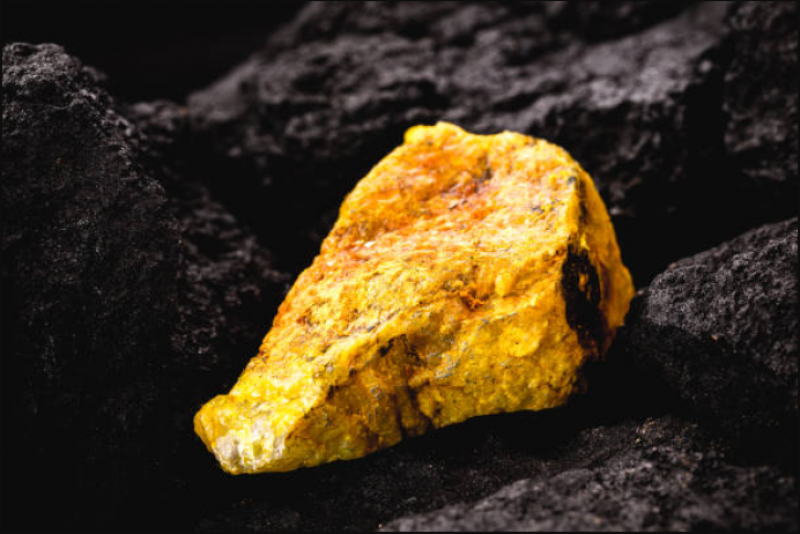
The U.S. Nuclear Regulatory Commission (NRC) on September 1 proposed a rule aimed at establishing clearer groundwater protection standards for communities surrounding in-situ uranium recovery sites, while streamlining the process for extending decommissioning deadlines for radioactive materials facilities and nuclear reactors, reducing redundant administrative steps without compromising safety. The rule addresses two aspects under NRC oversight. First, it proposes risk-informed regulatory standards for protecting drinking water near in-situ uranium recovery facilities, designed to guard against both radiological and non-radiological contamination. In-situ uranium recovery is a method of uranium extraction that involves injecting solution into uranium-bearing ore bodies to dissolve underground uranium resources and pump them to the surface for recovery. Second, it proposes to simplify the process for facility owners to apply for extensions of decommissioning deadlines. The NRC stated that current time requirements are relatively rigid and may lead to premature license termination; the proposed changes aim to reduce applicant costs, improve regulatory efficiency, and provide clearer expectations for communities and facility operators.
2026-09-02

AI-Enhanced MRI System Deployed at Utah Medical Center for Cardiac and Cancer Imaging
Intermountain Medical Center in Murray, Utah, has begun using a new magnetic resonance (MR) system for imaging cardiac and cancer patients. The facility stated that the GE HealthCare SIGNA Sprint Elite MR system was placed into service earlier this year, making it the first of its kind in Utah and the second in the United States. According to the hospital, the system integrates artificial intelligence software designed to reduce image noise and enhance scan clarity. The facility believes that clearer images will help clinicians assess cardiac tissue and cancer-related conditions, while also potentially reducing the time patients spend undergoing MR exams. Cardiac imaging is one of the system's key application areas.
2026-09-02

Ionetix begins routine supply of astatine-211 in North America, expanding sources of isotopes for targeted alpha therapy
Ionetix, a U.S. medical isotope producer, recently announced that it has begun routine supply of astatine-211 (At-211) in North America. The company stated that this development expands the supply sources of At-211 and is expected to support its further application in preclinical research and clinical development. Ionetix noted that it believes it is the first non-academic commercial supplier of At-211 in the United States. Ionetix produces At-211 at its facility in Lansing, Michigan, leveraging its proprietary cyclotron technology. The company currently operates a 30 MeV cyclotron equipped with optimized target technology, aiming to support the production of clinical-grade At-211. The company stated that its production ca...
2026-09-02

FDA Grants Breakthrough Therapy Designation to JBS-003 for Guiding De-escalated Radiotherapy in HPV-Positive Oropharyngeal Cancer
On September 1, Juniper Biosciences announced that the U.S. Food and Drug Administration (FDA) has granted Breakthrough Therapy Designation to its hypoxia tracer JBS-003. The product, 18F-Fluoromisonidazole (FMISO), is intended to identify tumor hypoxia and guide de-escalated radiotherapy in patients with HPV-positive oropharyngeal cancer (OPC). JBS-003 is licensed from Memorial Sloan Kettering Cancer Center (MSK). According to information released by the company, the tracer is based on F-MISO PET molecular imaging technology and can visualize specific hypoxic features within tumors. Tumor hypoxia is considered to be associated with radioresistance; by imaging hypoxic regions, clinicians can stratify patients by risk and...
2026-09-02
Bayer Presents Phase III Data for Iodine-124 PET Tracer: High Sensitivity Shown in Cardiac Amyloidosis Diagnosis
At the 2026 European Society of Cardiology Congress, Bayer presented results from the Phase III REVEAL study of its investigational PET radiotracer iodine-124 evuzamitide (I-124 evuzamitide). Data showed that the tracer met the study's primary endpoints in diagnostic sensitivity and specificity when used for imaging in patients with suspected cardiac amyloidosis. The REVEAL study, sponsored by Brigham and Women's Hospital, is a multicenter, open-label, single-arm Phase III clinical trial conducted at 18 sites in the United States, enrolling 170 adult patients with suspected cardiac amyloidosis. Following a single intravenous injection of I-124 evuzamitide, subjects underwent cardiac and...
2026-09-01
U.S. Heavy-Ion Collision Research Suggests Protons and Neutrons May Not Be Just "Three Quarks"
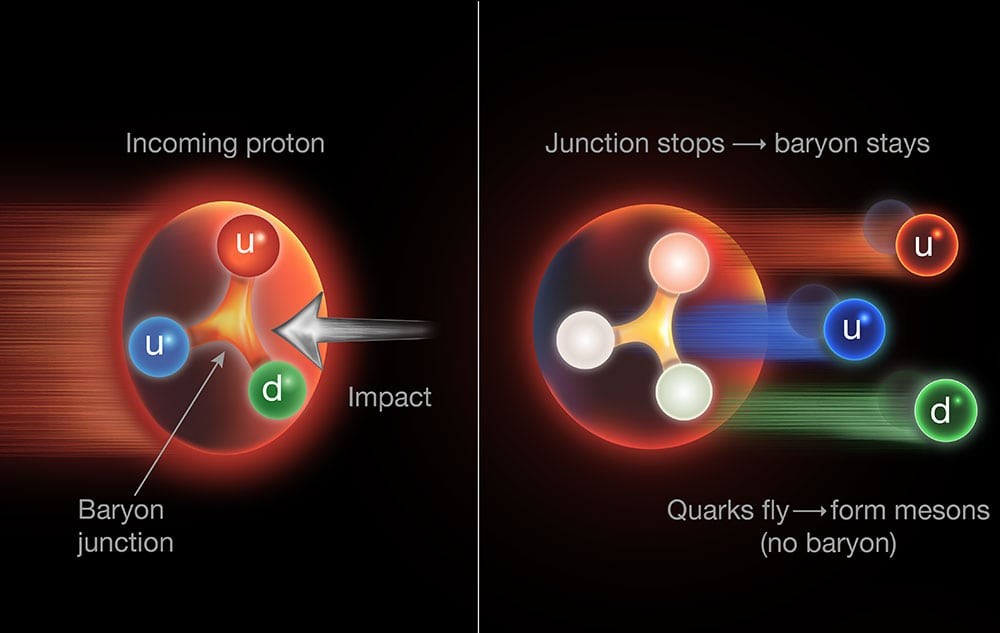
The STAR Collaboration at the Relativistic Heavy Ion Collider (RHIC) at the U.S. Department of Energy's Brookhaven National Laboratory recently proposed, based on heavy-ion collision data studies, that baryons such as protons and neutrons may not be simply composed of three valence quarks, and that their baryon number may be more closely related to "baryon junctions" in the gluon field. The findings were published in the journal *Science*. In the traditional valence quark model, each quark is assigned a baryon number of 1/3, so baryons such as protons and neutrons, composed of three quarks, carry a baryon number of +1. However, this model is not a fundamental requirement of quantum chromodynamics (QCD). As early as the 1970s, alternative explanations had been proposed in the theoretical community; in 1996, Dmitri Kharzeev proposed a model suggesting that the baryon number is not necessarily carried by the quarks themselves, but may instead be concentrated at the Y-shaped junction formed by the gluon field—the "baryon junction."
2026-08-31
U.S. Electron-Ion Collider ePIC Detector Completes First Batch of Lead Tungstate Crystal Procurement and Acceptance
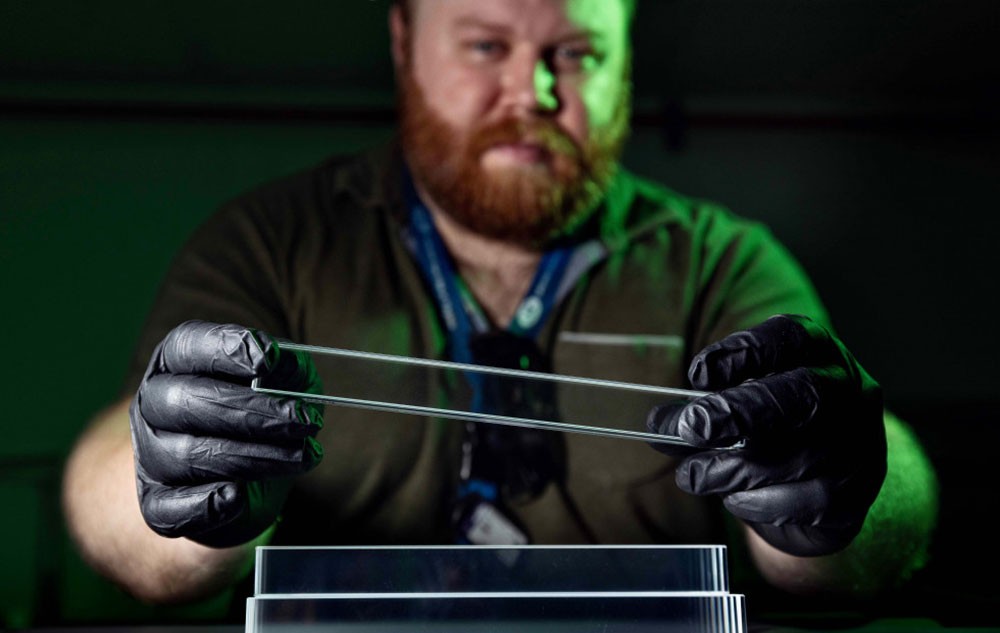
The U.S. Electron-Ion Collider (EIC) project recently achieved its first long-lead procurement milestone: 1,069 custom lead tungstate crystals for the new ePIC detector have been delivered, tested, and accepted. These crystals will be used in the Electron Endcap Electromagnetic Calorimeter (EEEMCAL) to help precisely measure the energy of scattered electrons during collisions. The EIC is being built by the U.S. Department of Energy's Brookhaven National Laboratory, in collaboration with the Thomas Jefferson National Accelerator Facility. The facility will circulate electron and ion beams in opposite directions, colliding them inside the ePIC detector. The ePIC detector records information about particles produced in the collisions, providing data for studying the fundamental constituents of visible matter...
2026-08-31
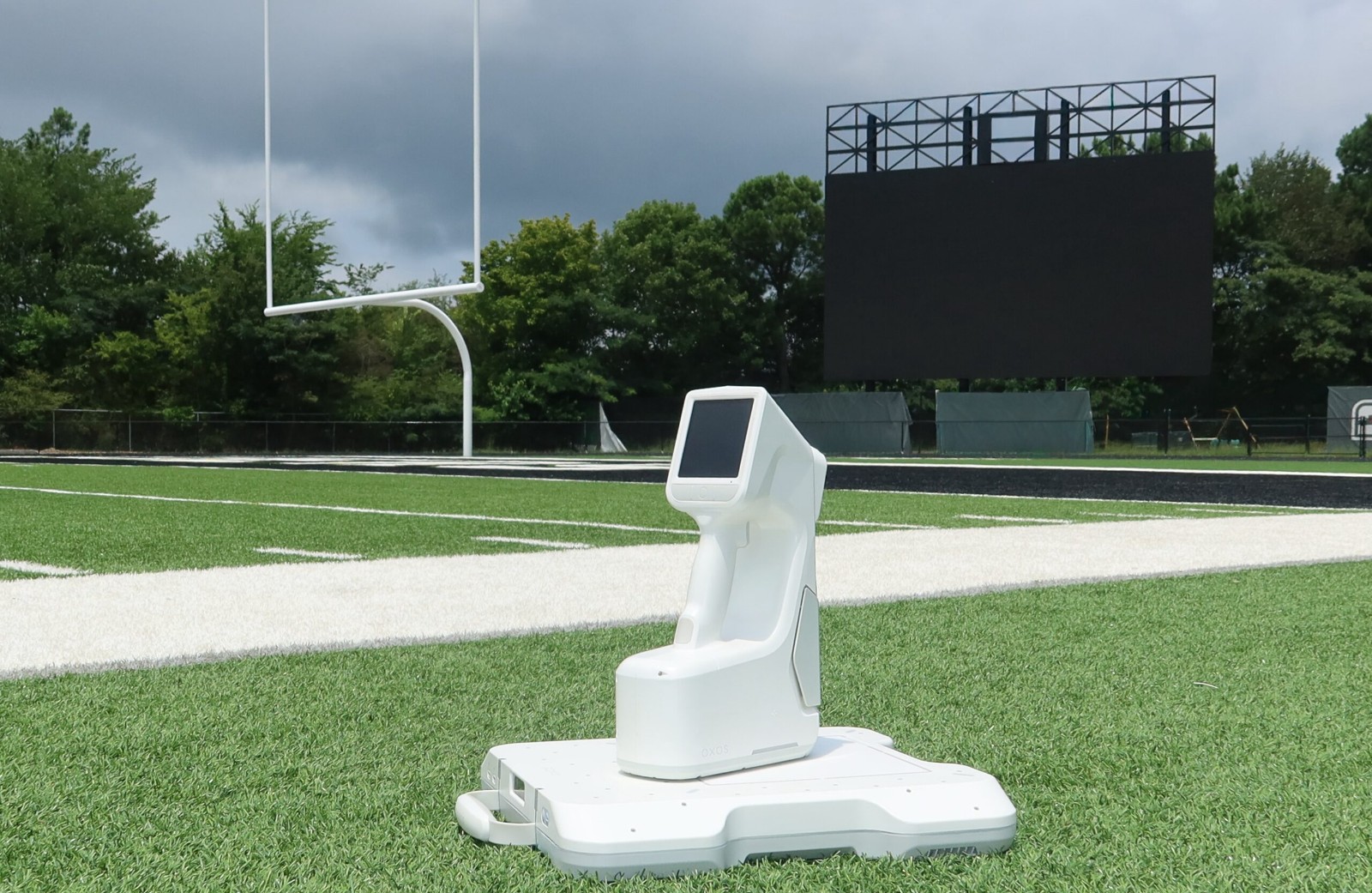
Portable X-ray Equipment in the U.S. Used for On-Site Assessment of American Football Injuries
As the 2026–2027 American football season approaches, team training camps, player evaluations, and medical support preparations are getting underway. Given the risk of acute sports injuries from the high-intensity physical contact in American football, portable X-ray equipment is being used to improve the efficiency of injury assessment on the sidelines and at training facilities. According to reports, American football players are prone to fractures, sprains, joint dislocations, and contusions. Relevant data indicates that the incidence of severe injuries such as fractures, dislocations, and contusions in this sport is higher than in other sports, with fractures accounting for approximately 10% of all football injuries. Such injuries typically require X-ray radiography to aid diagnosis, but traditional X-ray machines are bulky and fixed in place, usually requiring use in facilities with appropriate shielding. Injured players often need to be transported to the radiology department for examinations, which may delay diagnosis and treatment decisions.
2026-08-31

Korea Hosts ROK-U.S. Nuclear Industry Cooperation Seminar in the United States
The Korea Nuclear Energy Export Industry Association (KNA) announced on August 30 that it held the ROK-U.S. Nuclear Industry Cooperation Seminar in Dallas, Texas, on August 27. The seminar was held in conjunction with NECX 2026, a major nuclear energy event in North America, with the primary purpose of consolidating the foundation for ROK-U.S. nuclear industry cooperation and creating networking opportunities for Korean companies to enter the U.S. market and participate in related nuclear projects. Approximately 70 representatives from the nuclear industry sectors of both countries attended the meeting. Participants included a Korean delegation comprising Korea Electric Power Corporation (KEPCO) and Korea Hydro & Nuclear Power (KHNP), representatives of Korean small and medium-sized enterprises, and officials from relevant U.S. state government agencies...
2026-08-31
Leo Cancer Care and GE HealthCare Announce Collaboration to Advance Upright Radiotherapy Workflow Integration
Leo Cancer Care recently announced a commercial collaboration with GE HealthCare, focusing on GE HealthCare's advanced imaging solutions and intelligent radiotherapy software, with plans to apply related technologies to Leo Cancer Care's future upright radiotherapy systems to streamline patient and data workflows from simulation to treatment delivery. Under the collaboration framework, the two parties will explore integration pathways between GE HealthCare's intelligent radiotherapy software iRT and Leo Cancer Care's future upright radiotherapy solutions. iRT is an AI-assisted software developed for radiotherapy settings, primarily used to connect information, workflows, and applications across different systems, helping healthcare institutions simplify complex processes, enable patients to enter radiotherapy more promptly, and reduce clinician burden.
2026-08-30

Radiology Partners to Acquire Everlight, Expanding International Teleradiology Services
U.S. radiology services provider Radiology Partners has agreed to acquire Everlight Radiology, planning to expand its teleradiology diagnostic services into markets including the United Kingdom, Ireland, Australia, New Zealand, and South Africa. Founded in 2006, Everlight employs a "follow-the-sun" teleradiology service model, leveraging radiologists across different time zones to provide continuous imaging diagnostic coverage. The company currently has over 800 radiologists, operates in more than 40 countries, and completes over 2.5 million imaging examination reports annually for more than 340 client institutions. Radiology Partners is headquartered in Nashville, Tennessee, USA,...
2026-08-30