
Search Results
Keyword:UK
Japan considers expanding reuse of decontaminated soil from Fukushima
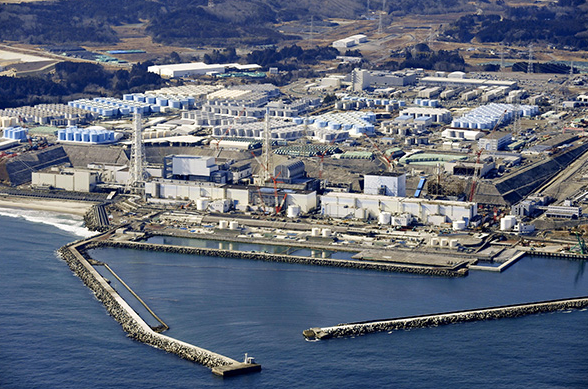
Japan's Environment Minister Ishihara stated after a Cabinet meeting on September 1 that the government is considering and coordinating efforts to continue the decontaminated soil reuse project from Fukushima Prefecture at government offices and other locations in other regions, in order to raise public awareness of the relevant systems and safety management approaches. Following the Fukushima Daiichi Nuclear Power Station accident, large volumes of soil removed during decontamination operations in Fukushima Prefecture are currently stored at an interim storage facility within the prefecture. Under Japanese law, this soil must be finally disposed of outside the prefecture by March 2045. To reduce the volume of final disposal, the Japanese government is promoting the reuse of decontaminated soil with lower radiation levels. Late last month, construction work was carried out at national government joint office buildings in Sendai City and Saitama City, with soil for flower beds and other areas delivered to the sites. This marked the first time decontaminated soil was reused at such government facilities outside the Tokyo region.
2026-09-03
Ukraine's Energoatom Supervisory Board Visits Rivne Nuclear Power Plant
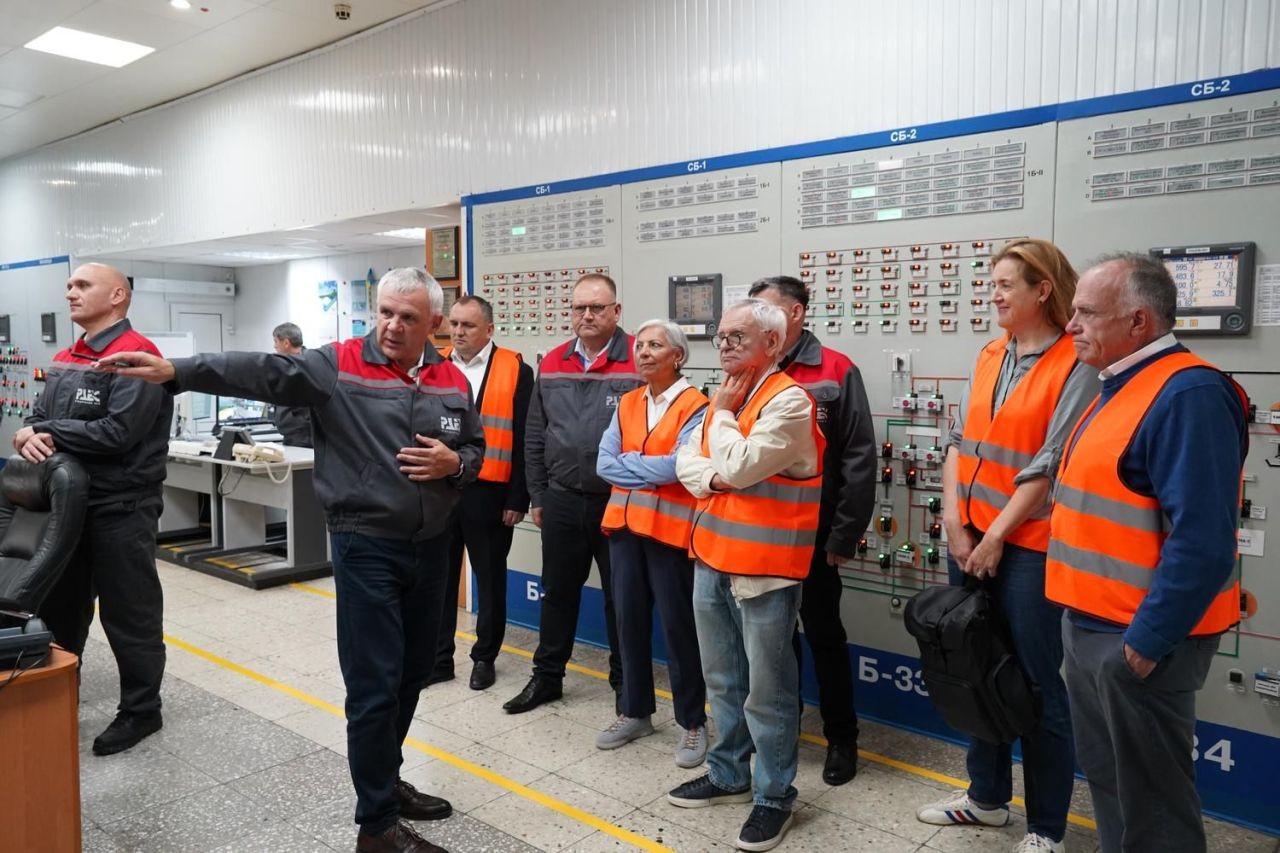
From August 25 to 28, the Supervisory Board of Ukraine's National Nuclear Energy Generating Company (Energoatom) conducted a four-day working visit in Ukraine and inspected the Rivne Nuclear Power Plant. During the visit, the Supervisory Board held meetings with Ukrainian government officials, parliament members, G7 ambassadors, and relevant stakeholders, focusing on the follow-up implementation of corporate governance reforms. The Energoatom Supervisory Board commended the company's preparations for winter operations. Supervisory Board Chair Luminita Vercell stated that Energoatom holds significant strategic importance both now and in the future. She noted that the company has developed a comprehensive winter response plan, with some planned outage maintenance work already completed; upon completion of relevant repairs, the company will be ready for autumn-winter operations. Energoatom has also procured critical spare parts and organized additional emergency preparedness training for its employees.
2026-09-02

Amentum Selected for UK Grid Upgrade and Protection Projects
Amentum has announced that it has been selected by SSEN Transmission to undertake strategic roles under two UK energy framework agreements, providing digital and cybersecurity engineering services for UK grid upgrades. Under the arrangements, Amentum will serve as the sole supplier of high-end cybersecurity engineering services, contributing to the digitalization and security capability enhancement of the UK power grid. The services will focus on critical asset protection, digital capability expansion, operational data application, and security architecture development for grid operations. SSEN Transmission is the owner of the high-voltage transmission system in northern Scotland...
2026-09-02
Japan Plans to Introduce Physical AI into Fukushima Daiichi Nuclear Power Station Decommissioning
The Japanese government and Tokyo Electric Power Company (TEPCO) are preparing to introduce Physical AI technology into the decommissioning operations at the Fukushima Daiichi Nuclear Power Station to enhance the autonomous operational capabilities of robots in high-radiation environments. This technology enables artificial intelligence to autonomously control robots based on on-site conditions, performing tasks such as inspection, data collection, and cleanup. To advance this effort, an advisory organization involving the government, businesses, universities, and research institutions is planned to be established within the year, with discussions centered on technology development, equipment application, and on-site verification. The organization is expected to be led by relevant government ministries and TEPCO, and will include AI startups, robot manufacturers, and university researchers.
2026-09-01
Fukushima Daiichi Nuclear Power Station begins 23rd discharge of treated nuclear-contaminated water
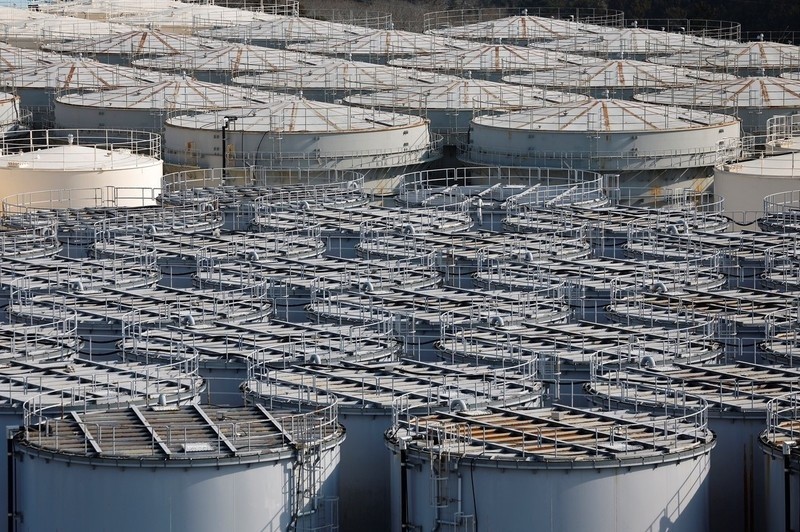
At 11:29 on August 31, Fukushima Daiichi Nuclear Power Station began its fifth discharge of treated nuclear-contaminated water in fiscal year 2026 and the 23rd overall. The operation is scheduled to last 19 days, concluding on September 18, with an estimated discharge of approximately 7,800 tonnes of nuclear-contaminated water diluted with seawater, equivalent to the capacity of about 8 storage tanks. The total tritium content is estimated at approximately 1.2 trillion becquerels. The reactors of Units 1 to 3 at Fukushima Daiichi still contain nuclear fuel that melted and solidified during the accident, known as fuel debris. Groundwater and rainwater that come into contact with this fuel debris form contaminated water. Since the discharge of treated nuclear-contaminated water began in August 2023, Fukushima Daiichi has cumulatively released approximately 173,000 tonnes, equivalent to about 173 storage tanks' capacity.
2026-09-01

Ukraine Advances Modernization of Odesa Radioactive Waste Management System
The State Agency of Ukraine for Exclusion Zone Management (SAUEZM) recently organized a working meeting in Odesa to discuss the modernization of the radioactive waste management system and the implementation progress of related international technical assistance projects. The meeting was held at the Odesa Interregional Branch of the Ukrainian state-owned specialized enterprise "Association Radon," chaired by Oleksiy Budyk, Deputy Head of SAUEZM, with participation from the Joint Support Office (JSO), NT-Engineering LLC, and management and experts of Association Radon. The meeting covered two international technical assistance projects...
2026-08-31
Finland's 2025 Environmental Radiation Monitoring Shows No Harmful Effects from Nuclear Power Plant Operations
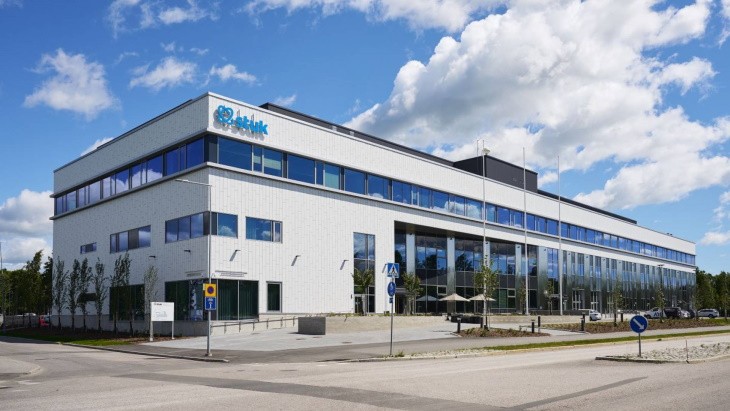
The 2025 environmental radiation monitoring results released recently by the Radiation and Nuclear Safety Authority of Finland (STUK) show that radioactive substance levels in the Finnish environment generally remained low, and the operation of the Loviisa and Olkiluoto nuclear power plants has not caused harmful radiation impacts on the public or the environment. STUK continuously tracks Finland's radiation situation through its environmental radiation monitoring program. The monitoring includes continuous measurement of external radiation, as well as monitoring of radioactive substances in air, radioactive fallout, water bodies, food, and the human body, with the aim of promptly detecting changes in radiation levels and confirming the safety of the living environment. Finland's automatic external radiation monitoring network covers essentially the entire country. In 2025, 255 monitoring...
2026-08-31
Decontaminated soil from Fukushima used in flower beds at Saitama municipal government building
Decontaminated soil generated after the Fukushima Daiichi Nuclear Power Station accident was transported on August 30 to a government building in Saitama City, Japan, and used in a reuse project for on-site flower beds. The work took place at the Saitama Shintoshin Joint Government Building in Chuo Ward, Saitama City. Approximately one cubic meter of decontaminated soil was brought to the site, where workers dug holes in the flower beds, filled the soil to a depth of about 20 centimeters, and then covered it with approximately 20 centimeters of ordinary soil. Similar decontaminated soil reuse work was carried out on August 29 at the Sendai Joint Government Building in Miyagi Prefecture. Apart from demonstration projects within Fukushima Prefecture, this is the second reuse case conducted outside the Tokyo area. On the day of the work, approximately...
2026-08-31

UK Poll Shows Nuclear Power as Respondents' Top Choice for Future Power Source
A latest YouGov survey commissioned by Eland Cables shows that the British public broadly supports the development of renewable energy, but many respondents remain skeptical about its ability to independently deliver low-cost, stable power supply. Among priority options for future power sources, nuclear power ranks first with 21% support, higher than solar power's 19% and offshore wind's 18%. The survey results show that 47% of UK respondents support the construction of nuclear power plants. However, when nuclear projects are set to be built locally in respondents' areas, the support rate drops to 38%, reflecting a disparity in acceptance of nuclear projects at the national versus local level. On renewable energy...
2026-08-30
Japan to Establish New Decontamination Base in Okuma, Fukushima
Japan's Ministry of the Environment has decided to establish a new work base in Okuma Town, Fukushima Prefecture, in the next fiscal year to coordinate decontamination and house demolition work in difficult-to-return zones following the accident at Tokyo Electric Power Company (TEPCO)'s Fukushima Daiichi Nuclear Power Station, aiming to accelerate environmental recovery in the affected areas. Within seven municipalities surrounding the Fukushima Daiichi Nuclear Power Station, approximately 309 square kilometers have been designated as difficult-to-return zones. These areas remain under strict control, with restrictions on residential habitation and entry, and evacuation orders remain in effect. Within the difficult-to-return zones, the Japanese government has established "specified return residential areas" and plans to advance decontamination, house demolition, and other measures based on residents' intentions to return. The proposed new base in Okuma Town will be responsible for on-site management and project coordination, with approximately 30 staff members expected to be assigned, and the relevant branch office currently located in Hirono Town will be relocated to Okuma Town.
2026-08-30
Japan's Fukui Prefecture Approves KEPCO's Construction of Dry Cask Storage Facilities for Spent Fuel
Fukui Prefecture Governor Tatsuji Sugimoto announced on August 28 that he approved Kansai Electric Power Company's (KEPCO) plan to construct dry cask storage facilities for spent fuel within the premises of the Mihama and Takahama nuclear power plants in Fukui Prefecture. The decision was made in accordance with the safety agreement between Fukui Prefecture and KEPCO. KEPCO plans to apply to the Nuclear Regulation Authority (NRA) for approval of the relevant design and construction plans as early as August 31. KEPCO plans to build dry cask storage facilities at three nuclear power plants in Fukui Prefecture to temporarily store spent fuel and prepare for future transport to an interim storage facility outside Fukui Prefecture. Among these, the plans for the Mihama and Takahama nuclear power plants...
2026-08-29
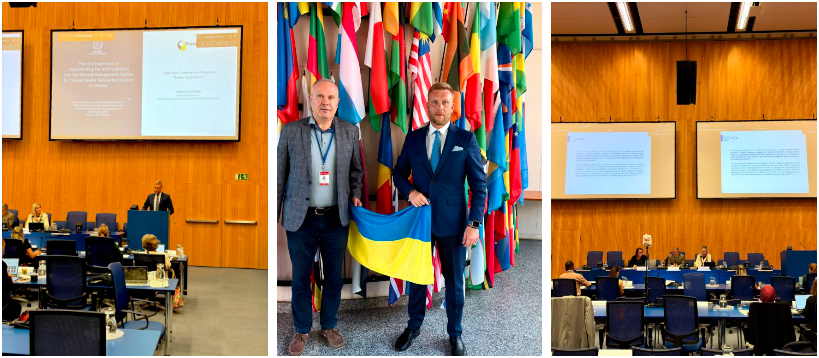
IAEA Technical Meeting on Indicators for the Management of Disused Ionizing Radiation Sources
From 24 to 28 August 2026, a technical meeting was held at the IAEA headquarters, focusing on indicators for the status of disused ionizing radiation sources and their application in sustainable management. The meeting emphasized how these indicators can serve as measurement tools to support countries in the long-term, safe, and traceable management of disused radiation sources. The Ukrainian delegation participated in the meeting, including Oleksii Zhyvotenko, Head of the Department for Production and Technical Issues and Radioactive Material Management at the "Radon" Association of the National Academy of Sciences of Ukraine, as well as representatives of the central nuclear power plant management. During the meeting, the Ukrainian side delivered a presentation on the practical experience of integrating key IAEA indicators into Ukraine's national management system for disused ionizing radiation sources.
2026-08-28
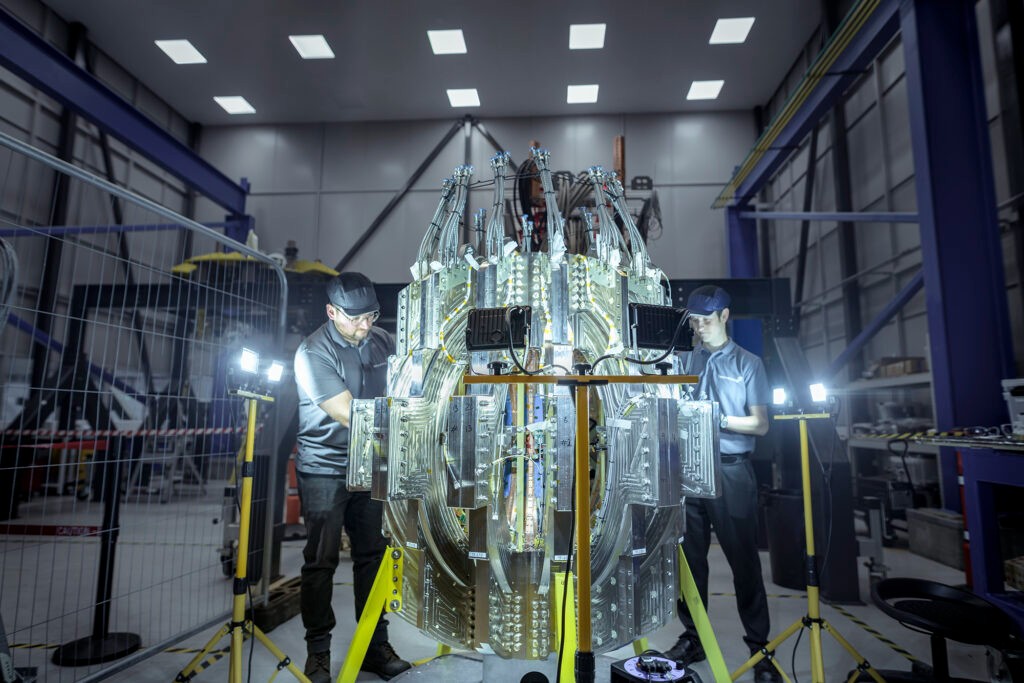
UK Fusion Energy Company Files 50th Patent Application
UK Fusion Energy (UKFE) filed its 50th patent application this week, marking new progress in the UK's efforts to advance fusion energy commercialization and related intellectual property development. UKFE is a government-backed organization responsible for developing and protecting intellectual property arising from the STEP fusion prototype plant project and driving the transfer of related innovations to industry. Since 2025, the organization has filed 52 patent applications and published 108 technical disclosures and 2 patent applications. These achievements cover key technologies required for the construction of the STEP prototype facility, as well as some innovations applicable beyond the fusion energy sector. UKFE stated that the intellectual property portfolio reflects the breadth and pace of the project's R&D activities.
2026-08-28
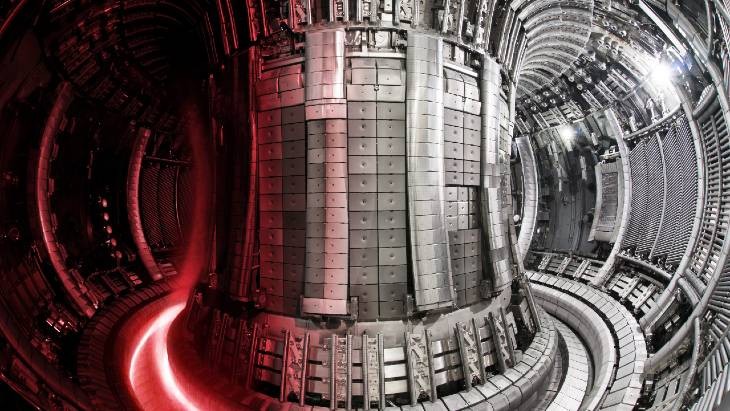
UK JET Decommissioning Project to Trial Asset-Based Decommissioning Approach
The JET Decommissioning and Repurposing (JDR) project recently announced that it will trial an asset-based decommissioning approach in three areas of the JET facility during the next phase of work. These areas were once part of the power supply infrastructure during JET plasma operations. This trial work will support the overall development of the Culham Campus and, in conjunction with the Strategic Investment and Development for Energy and AI (STRIDE) programme, facilitate land remediation to create conditions for the installation of a fourth supergrid transformer. JDR has signed a contract with Ramco UK to undertake the relevant trial work. JDR Engineering Integration Manager Steve...
2026-08-28
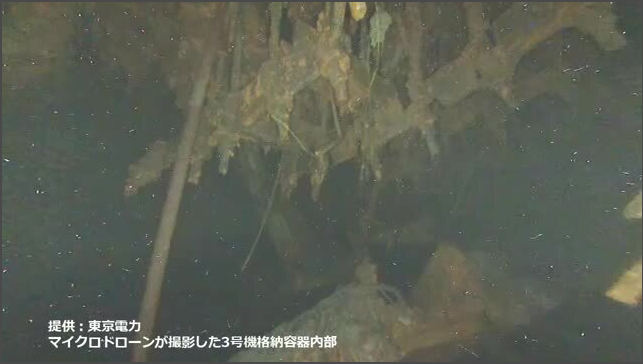
Hole of about 3 meters confirmed at bottom of reactor pressure vessel of Unit 3 at Fukushima Daiichi Nuclear Power Station
Tokyo Electric Power Company (TEPCO) announced on August 27 that a hole approximately 3 meters in diameter has been confirmed at the bottom of the reactor pressure vessel of Unit 3 at the Fukushima Daiichi Nuclear Power Station. The pressure vessel is a steel container that held nuclear fuel before the accident, with a cylindrical shape and a diameter of about 5.5 meters. This is the first time since the core meltdown accident at Units 1 to 3 of the Fukushima Daiichi Nuclear Power Station in 2011 that the specific size and shape of such a hole have been confirmed on the pressure vessel. The hole is believed to be related to the falling of melted nuclear fuel during the 2011 accident. After the accident, the containment vessel of Unit 3 has maintained a relatively high water level for an extended period, and access routes into the containment vessel are limited. TEPCO previously used a micro drone measuring approximately 12 centimeters per side...
2026-08-28