
Search Results
Keyword:Unit 3
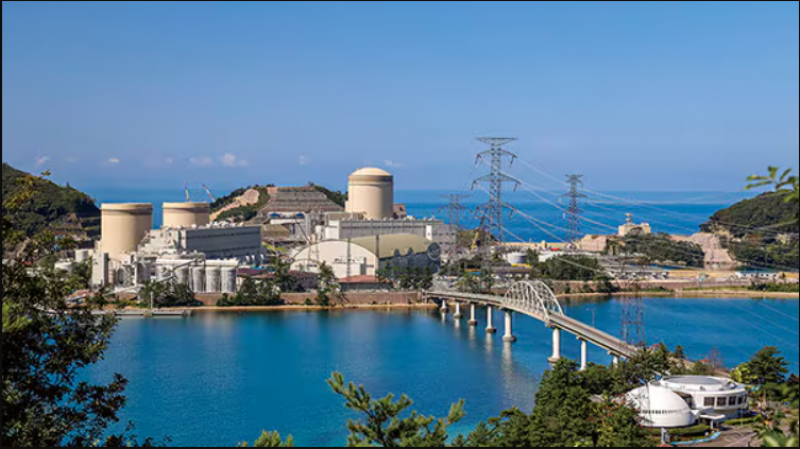
Japan's Mihama Nuclear Power Plant Unit 3 Receives Preliminary Approval for Operation Plan Beyond 50 Years
On August 25, Japan's Nuclear Regulation Authority (NRA) gave preliminary approval to Kansai Electric Power Co. (KEPCO) for the long-term facility management plan for Unit 3 of the Mihama Nuclear Power Plant. Located in Mihama Town, Fukui Prefecture, the unit will mark its 50th anniversary of commercial operation on December 1. In May of this year, the metal top cover of the high-pressure turbine at Mihama Unit 3 suffered damage, resulting in steam leakage. At the NRA meeting held that day, KEPCO explained that the cause of the incident was believed to be thinning of the inner wall of the top cover due to steam flow. The company stated that this phenomenon falls under previously anticipated aging and degradation management for turbine equipment, and that the existing plan already includes corresponding management measures. Visual inspection and other examination methods were also deemed applicable, thus no revision to the long-term facility management plan was required.
2026-08-26
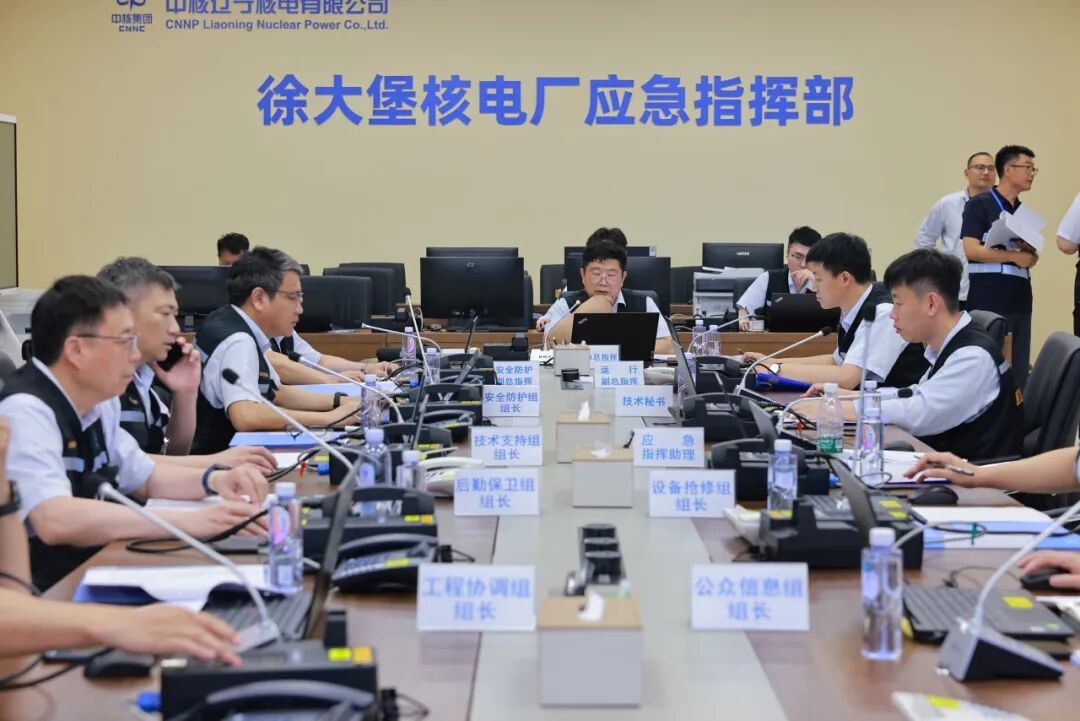
Xu Dabao Nuclear Power Plant Completes On-Site Comprehensive Emergency Exercise Before First Fuel Loading of Unit 3
On August 20, Liaoning Nuclear Power conducted an on-site comprehensive emergency exercise before the first fuel loading of Unit 3, honing nuclear emergency response capabilities through practical drills. The exercise was carried out under the full guidance and supervision of the Northeast Regional Office of Nuclear and Radiation Safety Supervision under the Ministry of Ecology and Environment, with a total of over 300 participants from Liaoning Nuclear Power, the supervision company, the general contractor, and various construction units. The exercise successively completed responses across all emergency preparedness levels, including emergency standby, building emergency, site area emergency, and off-site emergency, with plant recovery efforts initiated during the emergency termination phase. The exercise activated key emergency facilities such as the emergency command center, mobile power garage, and fire station, comprehensively testing the organizational command, comprehensive response, and multi-party coordination capabilities of Liaoning Nuclear Power's nuclear emergency system, as well as the reliability and availability of various emergency facilities and equipment.
2026-08-22
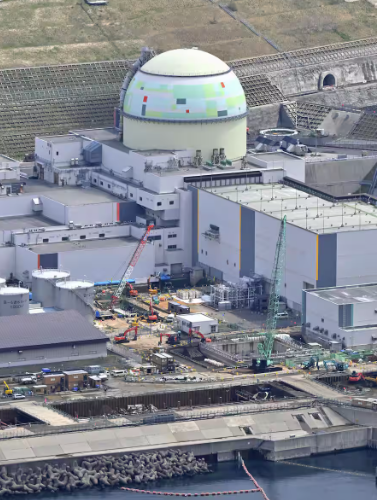
Restart Plan for Unit 3 of Japan's Tomari Nuclear Power Plant May Face Uncertainty Due to Supplementary Review and Accident
Hokkaido Electric Power Co.'s Unit 3 of the Tomari Nuclear Power Plant was originally scheduled to restart in 2027, but the plan may face uncertainty due to additional review items and a fatal accident at the construction site. The Nuclear Regulation Authority (NRA) announced on August 20 that it will hold a supplementary review meeting on September 3 to deliberate on the approval of construction plans related to the restart of Unit 3 at the Tomari Nuclear Power Plant. This review requires new confirmation of fire safety measures. Hokkaido Electric Power stated that it will explain the construction plans at the September meeting and continue to work toward the 2027 restart target. Additionally, during the seawall construction at the Tomari Nuclear Power Plant, a...
2026-08-23
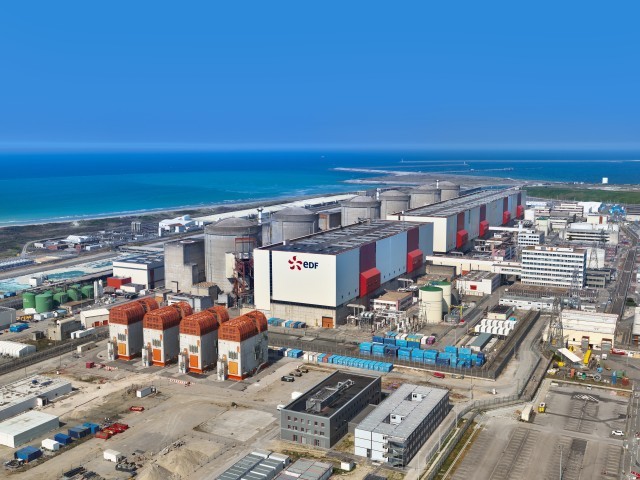
Unit 3 of France's Gravelines Nuclear Power Plant Reconnected to Grid, Unit 4 Remains Shut Down
According to EDF on August 18, Unit 3 of the Gravelines Nuclear Power Plant in northern France was reconnected to the national grid at 3:55 a.m. local time on August 18. The unit had been automatically shut down at 7:43 p.m. on August 10 in accordance with established safety protection procedures due to a large influx of jellyfish into the seawater pump station filtration system. The Gravelines Nuclear Power Plant has a total of six units. On August 10, a large number of jellyfish entered the pump station used to draw seawater for cooling nuclear facilities, affecting equipment such as pre-filters and filter drums. In accordance with operating procedures, Units 3 and 4 were automatically shut down; the operating team also shut down Unit 2 and reduced Unit 1's power to 50% to adapt to changing site conditions. Unit 5 was...
2026-08-20
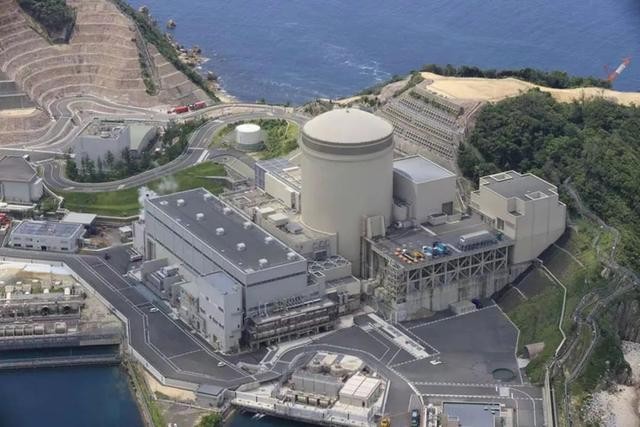
Japan's regulator says steam leak at Mihama Nuclear Power Plant Unit 3 was "avoidable"
On August 19, Japan's Nuclear Regulation Authority (NRA) released the results of its nuclear regulatory inspections for the first quarter of the current fiscal year, determining that the steam leak incident at Mihama Nuclear Power Plant Unit 3, operated by Kansai Electric Power Co., in May this year was "foreseeable within a reasonable range" and that the associated losses "could have been avoided." The incident occurred in the high-pressure turbine area of Mihama Unit 3. A small hole approximately 8 centimeters long and 1 centimeter wide appeared in the metal cover atop the high-pressure turbine casing, causing a steam leak that forced a manual reactor shutdown. In its assessment, the NRA concluded that the event was foreseeable and could have been prevented through appropriate management or maintenance measures. However, since no pipe rupture or fire occurred between the onset of the steam leak and the reactor shutdown, the NRA rated the significance and severity of the incident at the lowest of four levels.
2026-08-20
Eight economic organizations in Hokkaido urge early restart of Tomari Nuclear Power Plant Unit 3 and electricity price reduction
On August 19, eight economic organizations in Hokkaido, including the Hokkaido Economic Federation, submitted a request to Hokkaido Electric Power Company (HEPCO), urging the company to promote the early restart of Unit 3 at the Tomari Nuclear Power Plant and to reduce electricity prices as soon as possible after restart, while ensuring that safety measures are given priority. On the same day, Hiroshi Fujii, Chairman of the Hokkaido Economic Federation and Chairman of Hokkaido Electric Power Company, and Mitsuharu Yasuda, Chairman of the Hokkaido Chamber of Commerce and Industry and Chairman of Hokuyo Bank, along with other heads of economic organizations, visited HEPCO's headquarters in Sapporo and presented the request to HEPCO President Susumu Saito. The request states that the Tomari Nuclear Power Plant is of great significance for Hokkaido's economic growth and decarbonization efforts...
2026-08-20
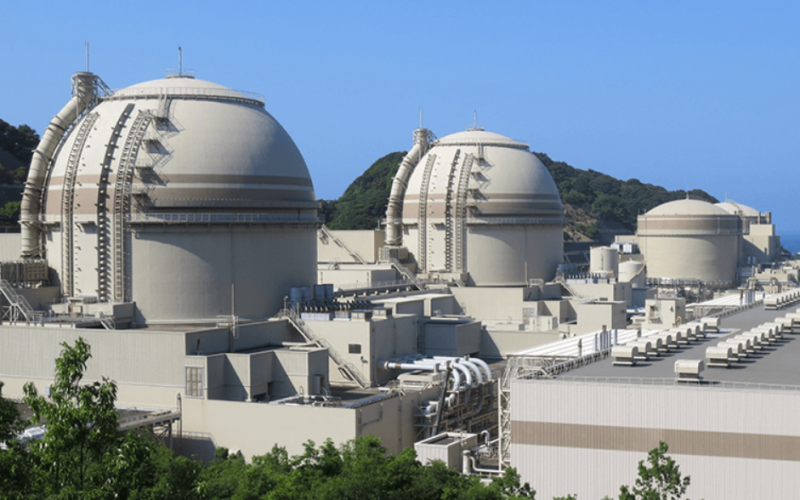
Investigation into Automatic Shutdown of Unit 3 at Japan's Ohi Nuclear Power Plant: Damage Found in Exciter Rotating Rectifier
Kansai Electric Power reported on August 19 that Unit 3 of the Ohi Nuclear Power Plant experienced an automatic generator trip triggered by a generator loss-of-field alarm at 23:56 on August 8, followed by an automatic reactor shutdown. At the time of the event, the unit was operating stably at rated thermal power. The company stated that the event caused no radiological impact on the environment. The loss-of-field alarm is used to indicate an abnormal state in the magnetic field generated inside the generator. Following the incident, Kansai Electric conducted on-site inspections of equipment related to generator magnetic field establishment, including the generator, exciter, and automatic voltage regulator (AVR). Among these, the exciter is used to establish the magnetic field for the generator...
2026-08-19
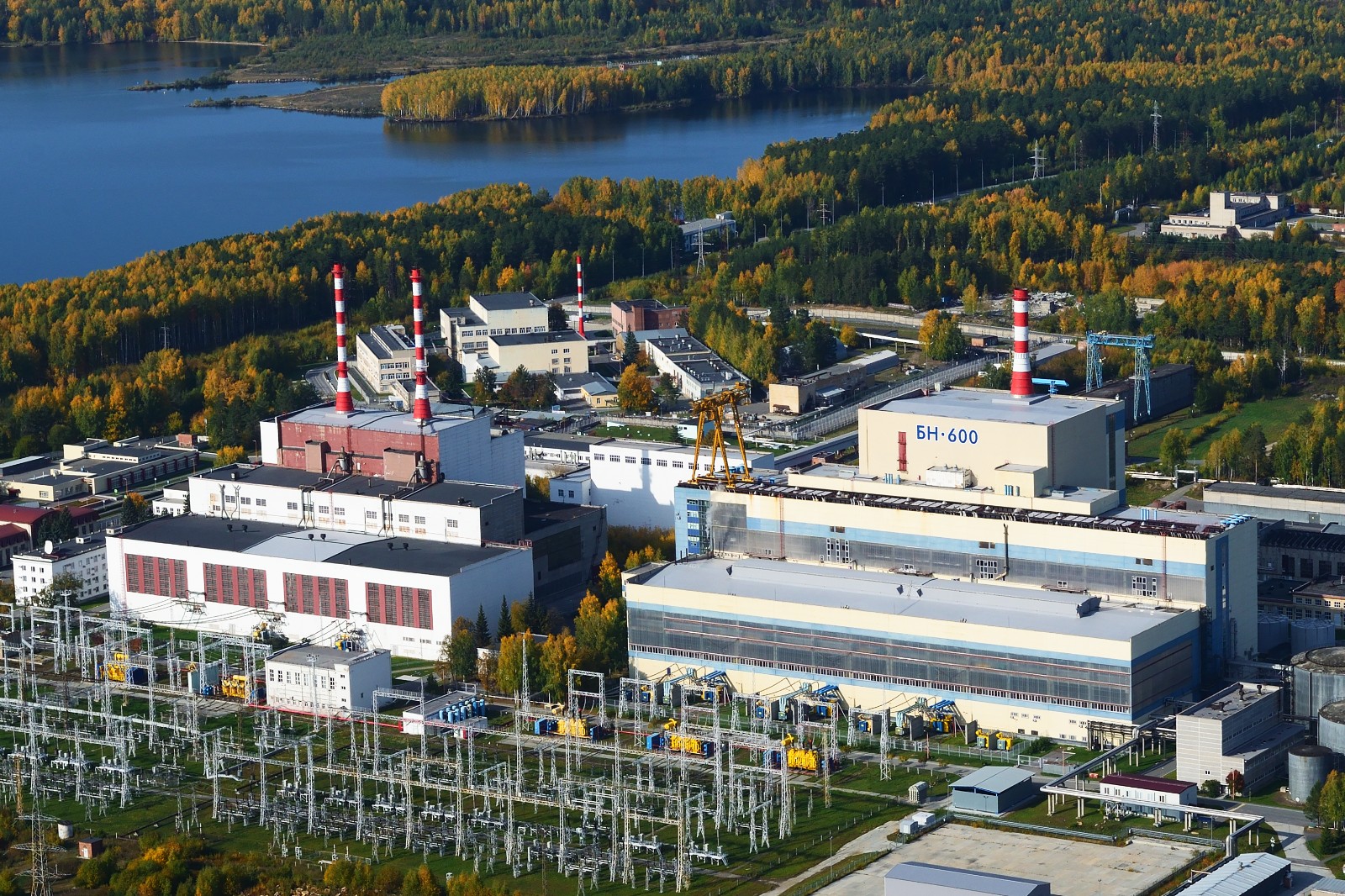
Unit 3 of Beloyarsk NPP begins scheduled maintenance and equipment modernization
Unit 3 of Russia's Beloyarsk NPP entered scheduled preventive maintenance on August 18. This outage maintenance will be used for fuel reloading, equipment maintenance, and preventive repairs, along with partial modernization efforts to maintain reliable unit operation and improve equipment performance. The unit features a BN-600 sodium-cooled fast neutron reactor. During the maintenance period, the plant will carry out major repairs on the BN-600 reactor facility and replace 9 guide tubes in the control and protection system. Such operations are uncommon and are typically performed approximately once every 10 years. According to the maintenance schedule, the plant will also repair the unloading lift device and conduct operational monitoring inspections of the reactor pressure vessel metal...
2026-08-19
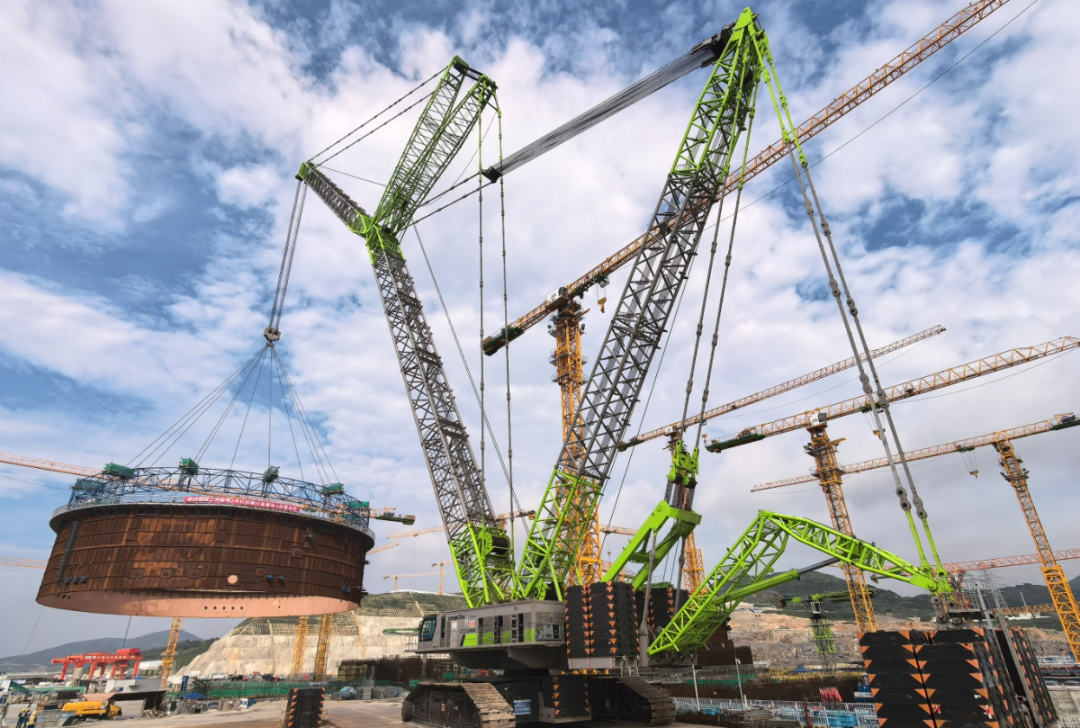
Module 4 of Steel Liner for Unit 3 of San'ao Nuclear Power Plant Successfully Hoisted
At 8:16 a.m. on August 15, the hoisting operation of Module 4 of the 3BRX steel liner for Unit 3 of the San'ao Nuclear Power Plant was officially launched. Under the stable operation of the 2,000-ton crawler crane of CNNC Machinery Engineering, the module successively completed a series of procedures including slewing, load-bearing travel, and alignment adjustment. After 220 minutes, the hoisting task was successfully completed. Module 4 of Unit 3 hoisted this time was integrally assembled from the fourth and fifth layers of the cylinder, with a diameter of approximately 45 meters and a height of 11.46 meters. The module features a large volume, susceptibility to deformation, and limited slewing space for the crane. The project team strictly implemented the special plan, completed site reinforcement, transport of baskets and counterweights, and crawler crane relocation in advance, organized hoisting simulation drills, and comprehensively inspected various safety hazards...
2026-08-18
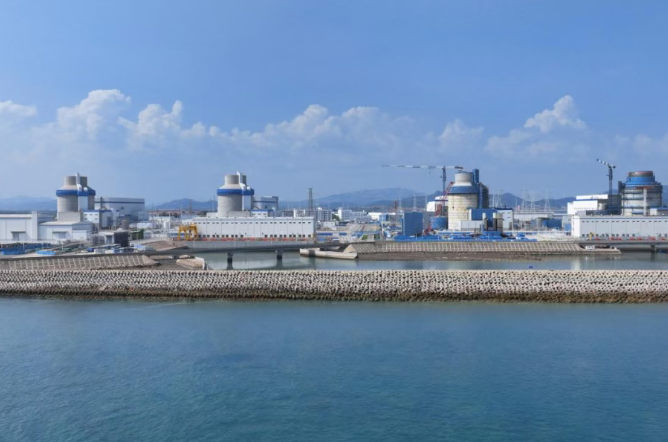
SPIC Haiyang Nuclear Power Unit 3 Hot Functional Test Successfully Completed
At 17:30 on August 13, the hot functional test (HFT) of Unit 3 at SPIC Shandong Nuclear Power Haiyang Nuclear Power Plant was successfully completed, laying a solid foundation for subsequent fuel loading and first grid connection of the unit. ▲Aerial view of Shandong Nuclear Power Haiyang Nuclear Power Plant. The hot functional test is the most critical non-nuclear comprehensive verification phase before nuclear fuel loading, often referred to as the "final exam" or "mock exam" before a nuclear power plant officially generates electricity. By executing a series of tests simulating actual operating conditions within the pressure and temperature ranges of normal reactor operation, it comprehensively verifies the reliability of nuclear island and conventional island systems and equipment under hot operating conditions, ensuring that relevant parameters meet design requirements. ▲On July 4, during the normal residual heat removal system (RNS) test at the heat-up platform of the hot functional test...
2026-08-15
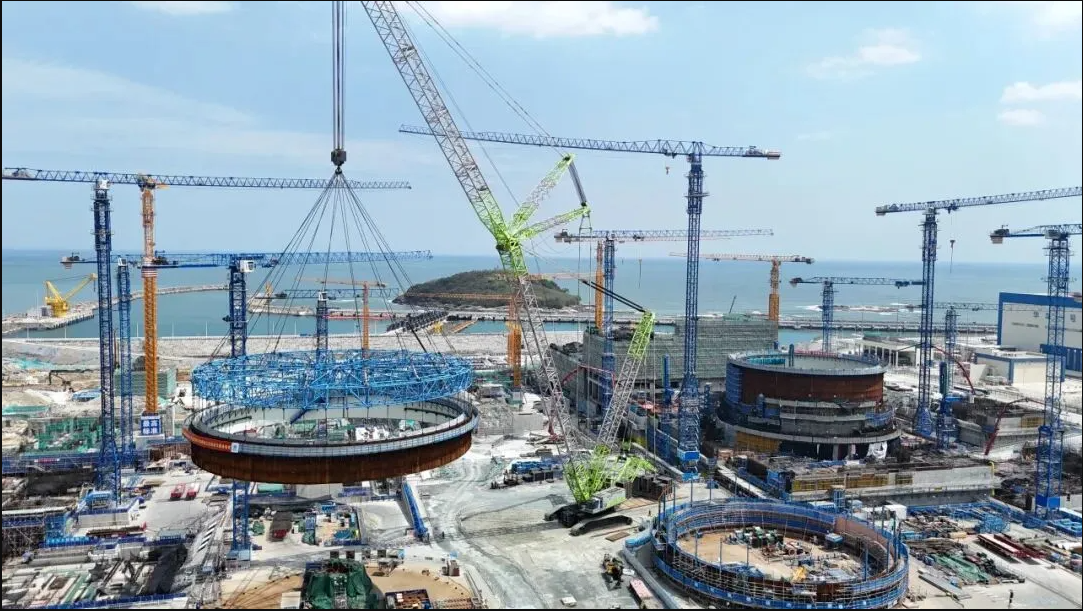
Module 5 of Containment Steel Liner Successfully Lifted at Unit 3 of Guangdong Taipingling Nuclear Power Plant
On August 10, the construction of Unit 3 at CGN's Guangdong Taipingling Nuclear Power Plant reached a critical milestone. A Zoomlion 2,000-tonne crawler crane, serving as the core lifting main force, successfully completed the precise positioning of Module 5 of the containment steel liner. This lifting operation involved significant technical challenges and demanding working conditions. The steel liner Module 5 weighed nearly 280 tonnes, with a component diameter of 45 meters, a height of nearly 6 meters, and a wall thickness of only 6 millimeters, making it a typical ultra-large thin-walled flexible component. The module's lateral windward area exceeded 300 square meters, making it susceptible to wind-induced sway during lifting, which imposed extremely high requirements on the crane's operational stability, control precision, and heavy-load adaptability. The Zo...
2026-08-14
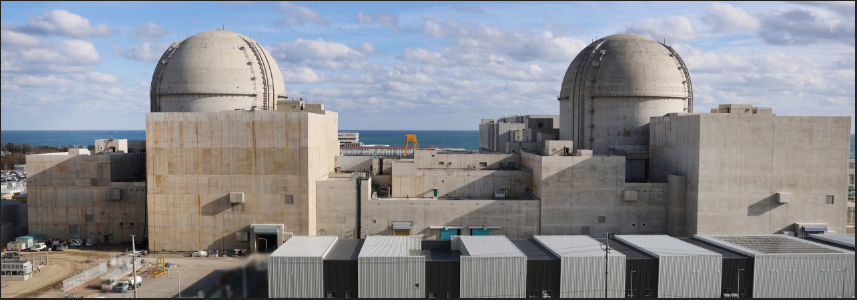
Automatic Reactor Trip at Unit 3 of Shin-Kori Nuclear Power Plant During Commissioning
Unit 3 of the Shin-Kori nuclear power plant in Ulju, Ulsan, South Korea, is undergoing commissioning ahead of its planned commercial operation this year. The Nuclear Safety and Security Commission (NSSC) stated that it had received a report from Korea Hydro & Nuclear Power (KHNP) that the unit's reactor automatically tripped at approximately 20:56 on the 11th. Unit 3 of the Shin-Kori plant received its operating license from the NSSC in December last year and is currently in the power ascension testing phase. KHNP reported that during the commissioning test, when reactor power reached 80%, the unit experienced a loss of power transmission, and the reactor subsequently tripped automatically. The unit has been confirmed to remain in a safe shutdown condition...
2026-08-12
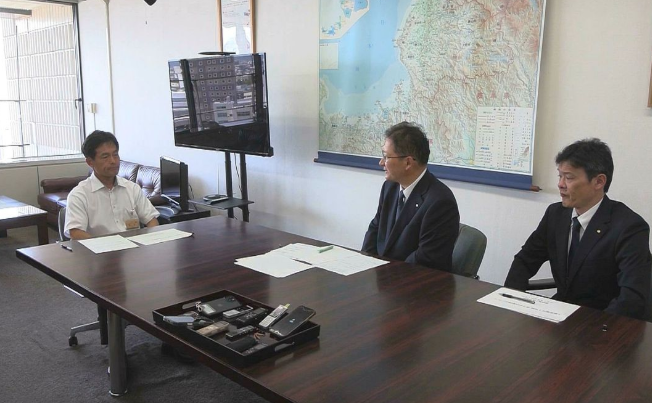
Automatic Shutdown of Unit 3 at Oi Nuclear Power Plant During Operation; Kansai Electric Power to Investigate Cause from the 12th
Unit 3 of the Oi Nuclear Power Plant in Fukui Prefecture, Japan, experienced an automatic shutdown during operation in the early hours of the 9th. Operator Kansai Electric Power stated that the fault is related to an internal abnormality in the generator and plans to formally begin a cause investigation from the 12th. Currently, there is no clear timeline for when the unit can resume operation. According to reports, an alarm related to loss of magnetic field occurred inside the generator used for power generation at the time of the incident, after which the generator stopped, and the reactor in operation also automatically shut down. On the 10th, Kansai Electric Power visited the Fukui Prefectural Government to apologize for the fault and report on subsequent response measures. Yuichiro Sakamoto, head of the Fukui Prefecture Disaster Prevention and Safety Division, pointed out that following a steam leak fault at Mihama Nuclear Power Plant Unit 3 in May this year, an unexpected emergency shutdown of a reactor in operation occurring within a short period may undermine public trust in nuclear safety. Local government authorities have demanded that the operator promptly identify the cause and implement measures to prevent similar issues from recurring.
2026-08-11
Unit 3 of Japan's Ohi Nuclear Power Plant Automatically Shuts Down
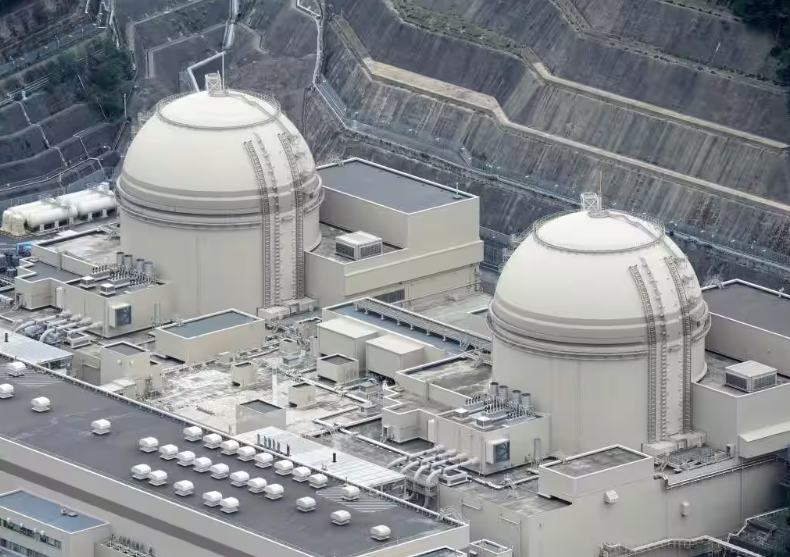
Kansai Electric Power Co. announced in the early hours of the 9th that Unit 3 of the Ohi Nuclear Power Plant, located in Ohi Town, Fukui Prefecture, Japan, automatically shut down during operation. The unit has a generating capacity of 1.18 million kilowatts. According to Kansai Electric Power, at around 23:56 on the 8th, an alarm was triggered at the unit, indicating that the generator had lost the conditions required to produce a magnetic field. Subsequently, the generator automatically stopped operating, and the reactor also automatically shut down. Preliminary information suggests that the anomaly may involve the exciter, a device used to establish the magnetic field for the generator. Kansai Electric Power stated that no radioactive material leakage occurred as a result of this incident, and there was no radiological impact on nearby personnel or the environment. The cause of the malfunction...
2026-08-10
Belarus Plans Nuclear Expansion: BelAES Unit 3 and Second NPP in Mogilev Region to Advance in Parallel
Belarusian Energy Minister Denis Moroz recently stated that nuclear energy has become a strategic energy direction for Belarus, bearing on national energy security, economic growth, and technological sovereignty. Since the Belarusian Nuclear Power Plant was commissioned, it has helped the country reduce its dependence on imported natural gas, cumulatively replacing approximately 14.5 billion cubic meters of natural gas and saving over $600 million in budget funds. After assessing the multiplier effect of nuclear power on the economy, Belarus has decided to continue advancing its nuclear energy development. Moroz stated that the country has made a principled decision: on the one hand, to build a third unit at the Belarusian Nuclear Power Plant (BelAES) in Ostrovets, and on the other hand, to simultaneously study the plan for constructing a second nuclear power plant.
2026-08-09