
Search Results
Keyword:Uranium Mine
Kazakhstan's Kazatomprom Says the Era of "Cheap Uranium" Is Fading
Meirzhan Yussupov, CEO of Kazakhstan's national atomic company Kazatomprom, said during a semi-annual financial results conference call that the global uranium market is entering a new supply-demand phase and the era of cheap uranium is fading. The company also disclosed arrangements for natural uranium concentrate trading and the latest updates on the delay of the TQZ sulfuric acid plant project. Yussupov said that 38 countries worldwide have signed commitments to support tripling nuclear power capacity by 2050, with these countries collectively accounting for more than 70% of global GDP. In his view, nuclear energy development has moved beyond policy discussions and entered the stage of actual deployment...
2026-08-25
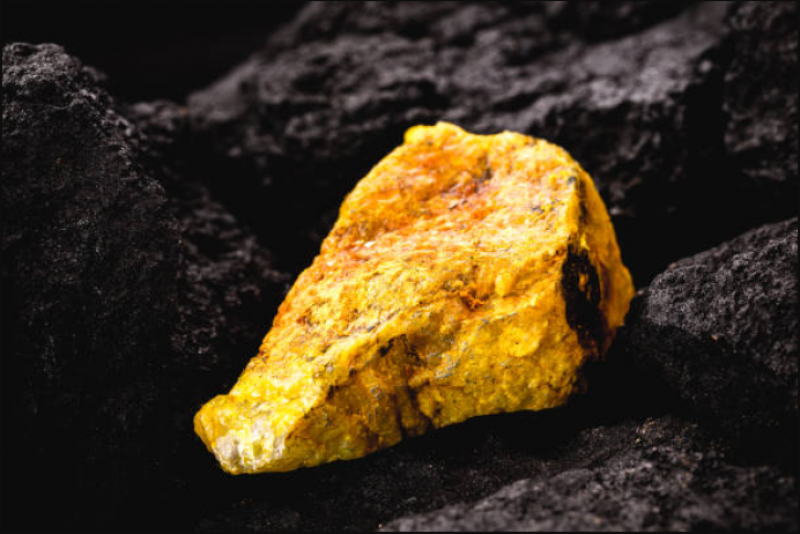
Madouela Uranium Project Rights in Niger Re-Secured
Atomic Eagle Limited has reached a new mining agreement with the Republic of Niger to re-secure the rights to the Madouela uranium project. The project is located in Niger, and its mining rights were revoked in 2024 from the previous holder, GoviEx Uranium Inc. Phil Hoskins, CEO of Atomic Eagle Limited, stated that re-acquiring the Madouela mining rights will significantly expand the company's resource base and add a more advanced-stage uranium project to its portfolio. He noted that Madouela is a large-scale, high-grade uranium project with substantial historical...
2026-08-25

Argentina advances uranium mine restart to support nuclear power program
The Argentine government is incorporating the resumption of domestic uranium mining into its nuclear energy development plan. The government of Javier Milei proposed a nuclear program in June this year, covering uranium resource development, support for the operation of existing nuclear power units, and the construction of modular reactors. Argentina has a long history of uranium mining. According to data, the Huemul uranium mine in Mendoza Province operated from 1955 to 1975, and the Sierra Pintada uranium mine operated from 1975 to 1997. Since then, Argentina has relied mainly on imports for the uranium fuel needed to operate its nuclear power plants. Currently, nuclear power accounts for about 7% of the country's electricity generation. Argentine official data shows that the country has identified recoverable uranium resources of 34,250 tonnes.
2026-08-23
Ur-Energy Ships First Uranium from Shirley Basin Mine to Lost Creek Processing Plant
U.S. uranium producer Ur-Energy announced that on August 19, 2026, its Shirley Basin uranium mine in Wyoming shipped its first uranium to the Lost Creek processing plant in the same state. This marks the company's second in-situ recovery (ISR) uranium mine entering full production and beginning its ramp-up phase. Ur-Energy President and CEO Matt Gili stated that the shipment of first uranium signifies the full commissioning of the Shirley Basin project and represents the company's transition into a multi-asset U.S.-based uranium producer. According to him, the Shirley Basin project took approximately two and a half years from planning and construction to production. The Shirley Basin uranium mine is Ur-Energy's second in-situ uranium...
2026-08-21
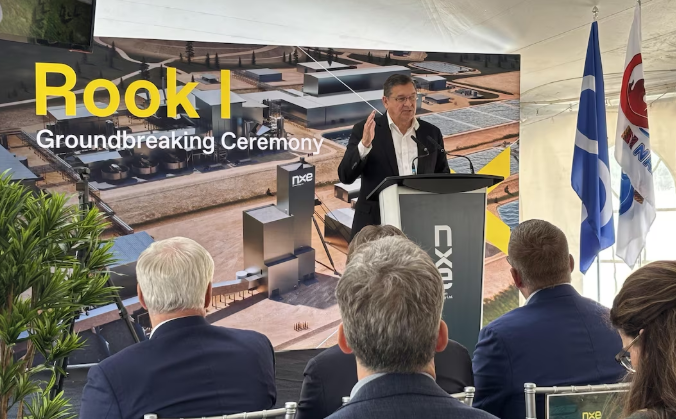
Canada's Rook 1 Uranium Mine Breaks Ground, Could Contribute One-Fifth of Global Uranium Production
The Rook 1 uranium mine project in northern Saskatchewan, Canada, has officially commenced construction. The project, advanced by NexGen Energy, is located south of the Athabasca Basin, approximately 130 kilometers north of La Loche. Saskatchewan Premier Scott Moe, former Canadian Prime Minister Stephen Harper, Secretary of State for Rural Development Buckley Belanger, and local Indigenous representatives attended the groundbreaking ceremony. The total project investment is approximately CAD 2.2 billion, with an expected construction period of four years. External infrastructure work has already begun, shaft sinking is planned for 2027, and the on-site runway will be expanded to 1,780 meters. Rook 1 is regarded as one of the world's largest uranium mine projects. NexGen estimates...
2026-08-14
Romania in Talks to Purchase 300 Tons of Uranium from Niger, Nuclear Fuel Supply Diversification Faces Legal Uncertainties
Romania's state-owned nuclear power company Nuclearelectrica has initiated negotiations to purchase 300 tons of uranium from Niger, against the backdrop of Romania's push to diversify its external nuclear fuel sources. The talks began on April 13, 2026, with Niger's Minister of Mines Ousmane Abarchi responding positively, after which the Romanian delegation continued engagement with the Nigerien side. The transaction is valued at approximately $40 million, but Nuclearelectrica has emphasized that no final agreement has been reached yet. The potential appeal of this uranium supply lies in Romania's expanding nuclear power development plans, while domestic large-scale uranium mining has ceased. As the operator of the Cernavodă nuclear power plant...
2026-08-10
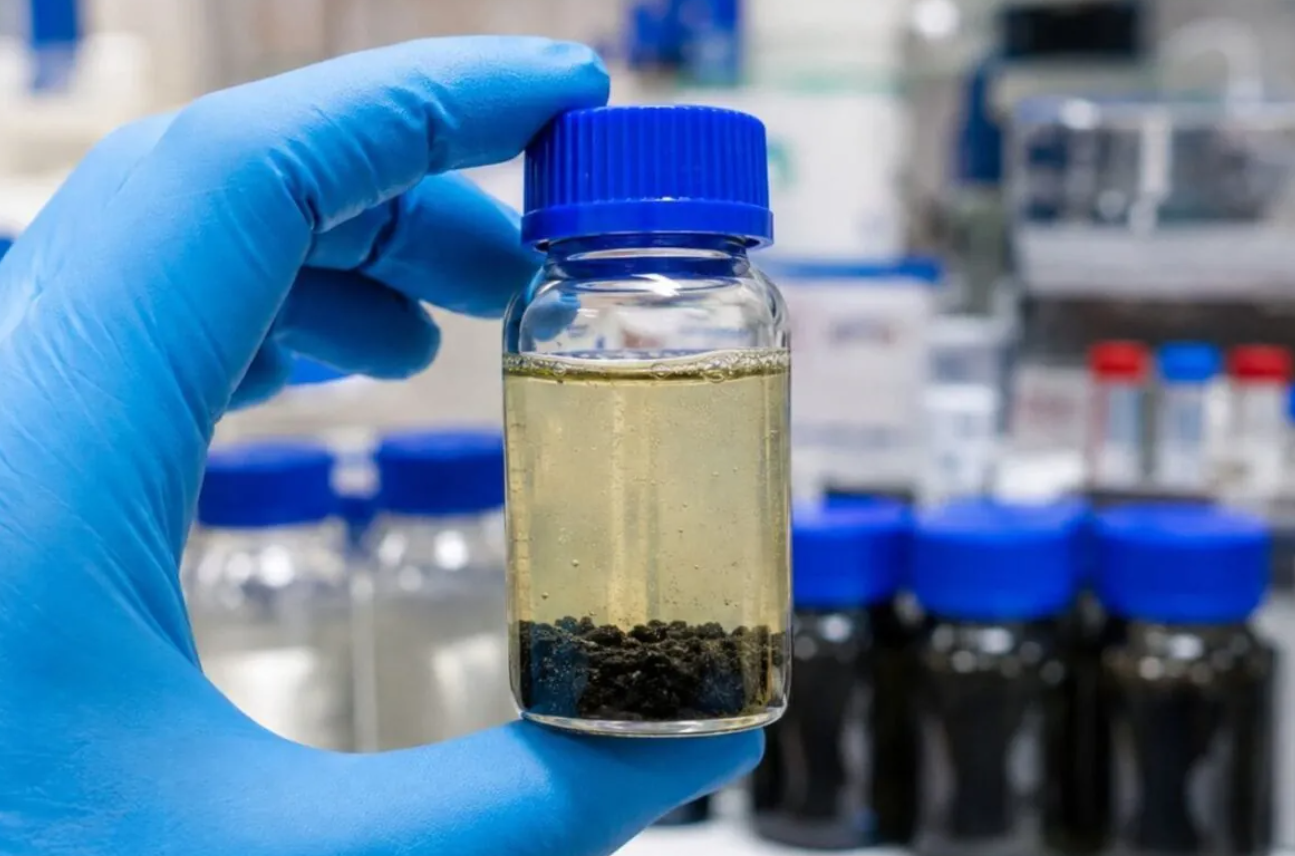
German-Grenoble Joint Experiment: Bacteria Immobilize 96% of Uranium in Mine Water, Offering New Insights for Legacy Uranium Mine Remediation
More than three decades after the closure of the Schlema-Alberoda legacy uranium mine in Saxony, Germany, remediation pressure continues unabated. After the mine workings were flooded, the water still contains approximately 1 milligram of uranium per liter, far exceeding the World Health Organization's provisional guideline value of 0.03 milligrams per liter for drinking water. This means that even though mining has long ceased, contaminated water must still be treated over the long term to prevent radioactive metals from migrating with groundwater into rivers or drinking water sources. A team involving the Helmholtz-Zentrum Dresden-Rossendorf in Germany, the University of Grenoble, and other institutions conducted experiments directly using real water samples from the mine and achieved noteworthy results: after 130...
2026-08-10
IsoEnergy and DISA to Form DISA Uranium, Advancing U.S. Uranium Recovery and Processing Platform
IsoEnergy Ltd. and DISA Technologies, Inc. have entered into a definitive agreement to jointly establish DISA Uranium™ Corporation, building a technology-driven U.S. uranium production, processing, and remediation platform. The platform will combine conventional uranium mining assets, uranium recovery operations, and DISA's proprietary High-Pressure Slurry Ablation processing technology (HPSA™) to serve U.S. domestic nuclear fuel supply needs. Under the agreement, IsoEnergy will transfer its portfolio of licensed and previously producing uranium mine projects located in Utah, U.S., to DISA Uranium, including the Tony M Mine, Daneros Mine, Rim Mine, Sage Plain Project, and Flatir...
2026-08-05
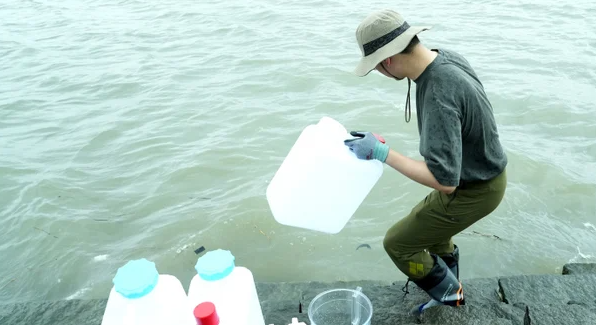
Uranium Levels Exceed Standards in Water Supply on Seogyeom Island, Ganghwa County, Incheon; Government Denies Impact from North Korea's Pyongsan Uranium Mine Wastewater
Uranium levels exceeding standards have been detected in the water supply facilities at the groundwater source on Seogyeom Island, Ganghwa County, Incheon, and the government has stated that this is not attributable to wastewater from North Korea's Pyongsan uranium plant. According to the Ministry of Climate and Energy Environment, a recent detection at the Seogyeom Island water supply facility recorded a uranium concentration of 45 micrograms per liter, exceeding the drinking water quality standard of 30 micrograms per liter. The government stated that, following concerns raised over wastewater discharge from the Pyongsan uranium plant, the Nuclear Safety and Security Commission has conducted monthly regular inspections since July 2025, and quarterly inspections starting in 2026. The most recent inspection (June 2026) showed uranium concentrations ranging from 0.133 to 3.025 micrograms per liter at seven points, including the downstream Han River and areas near Ganghwa Island...
2026-08-04
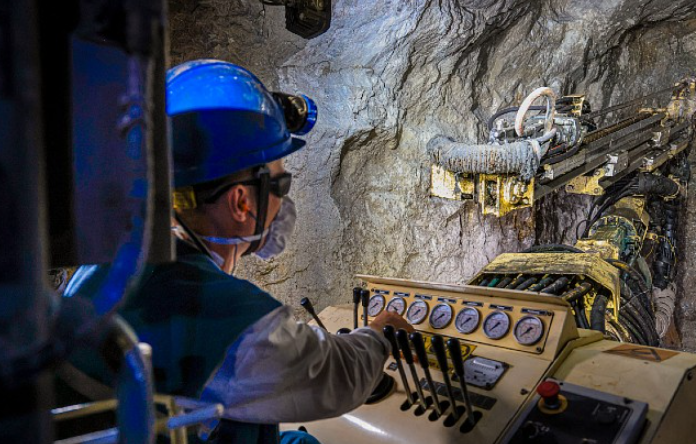
Progress in Russia's Khilonduevskoye Uranium Deposit Development: 3 Kilometers of Mine Workings Completed Ahead of Schedule
The mining division of Russia's Rosatom recently announced that underground mining crews completed three kilometers of mine workings ahead of schedule during the development of the Khilonduevskoye deposit. This milestone, originally planned for completion on August 10, was achieved by a team of workers from the Priargunsky Industrial Mining and Chemical Union (PIMCU), which is part of Rosatom Nedra. According to PIMCU, this mine connection will significantly optimize the ventilation system at the fourth level of the Khilonduevskoye deposit and improve the efficiency of rock block loading, laying the foundation for subsequent development work. The company's CEO, Ivan Kiselev, stated that this connection is of critical importance to the company, as it not only links two sections of the mine but also fundamentally transforms the logistics and safety of fourth-level operations.
2026-07-31

Denison Phoenix In-Situ Recovery Uranium Mine Enters Full Construction Phase
Denison Mines Corp. of Canada announced on July 28 that the Phoenix in-situ recovery uranium mine, part of the Wheeler River uranium project in northern Saskatchewan, Canada, has completed site preparation and transitioned from the preliminary engineering phase to full construction. Current project priorities include initiating the installation of the freeze wall around the Phase I mine. According to the company's disclosure, since site preparation and preliminary engineering began in March 2026, the project has substantially completed site clearing, advanced several time-critical civil works, and constructed construction management facilities. A temporary construction camp has also been installed and put into operation, increasing the on-site accommodation capacity of the Wheeler River project to nearly 400 people, providing conditions for the subsequent increase in construction personnel...
2026-07-29
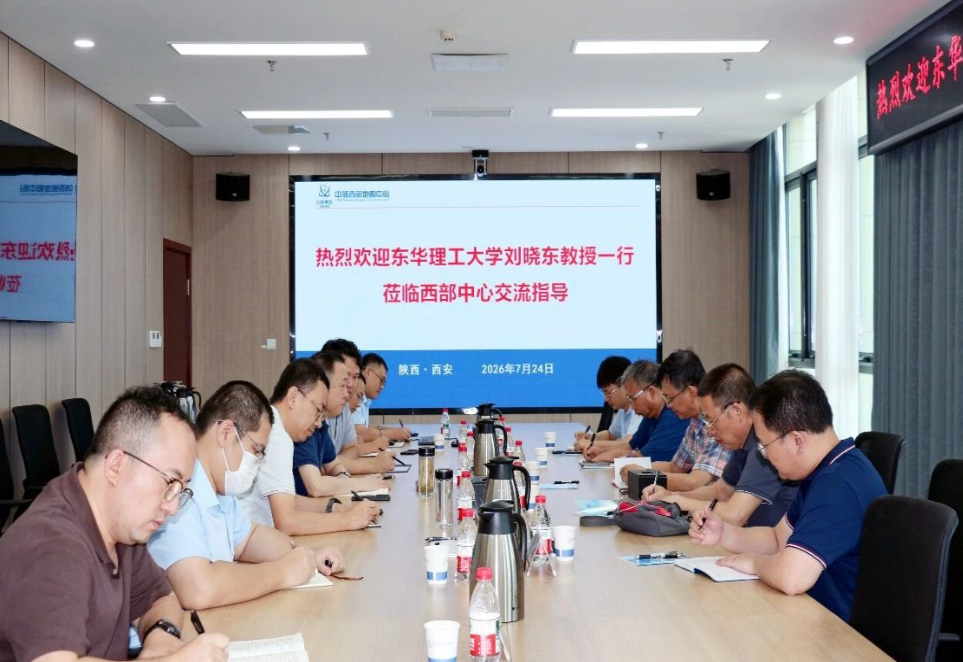
Professor Liu Xiaodong and his delegation from East China University of Technology visited the CNNC Western Geological Exploration Center for exchanges and guidance.
On July 24, a five-member delegation led by Professors Liu Xiaodong and Pan Jiayong from East China University of Technology visited the CNNC Western Geological Exploration Center for professional exchanges. Wang Leli (Party Secretary), Wang Gui (Director
2026-07-27
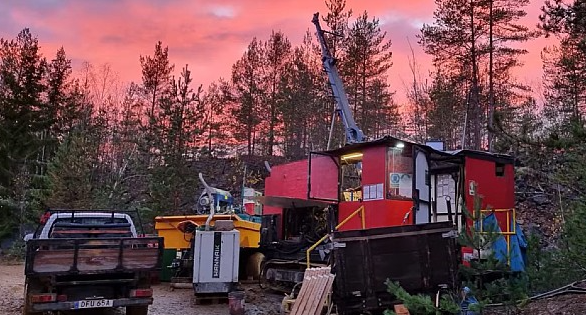
Economic assessment for Swedish uranium project submitted; new law officially takes effect.
Canadian mining company District Metals Corp has filed a technical report on the Preliminary Economic Assessment (PEA) for the Viken energy-metal deposit in Sweden via the SEDAR+ system. This filing follows, by just a few days, the entry into force of leg
2026-07-27