
Search Results
Keyword:X-ray diffraction
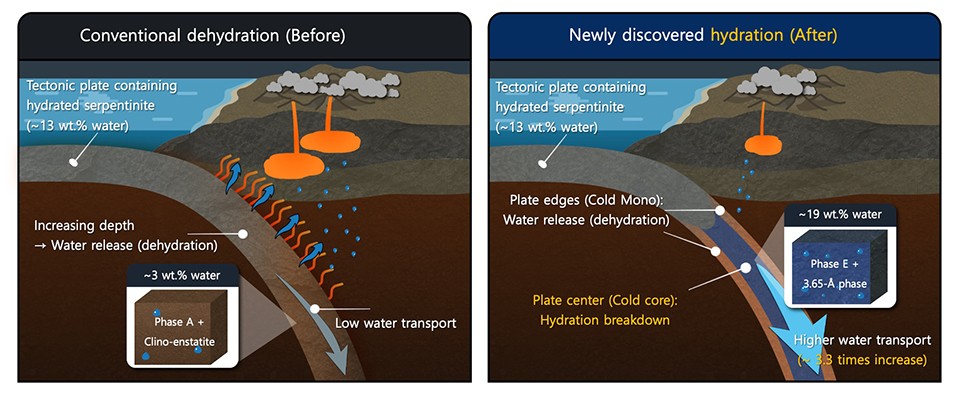
South Korean research team reveals that water storage capacity of cold subducting slabs has been underestimated using synchrotron radiation sources
A research team led by Professor Yongjae Lee of the Department of Earth System Sciences at Yonsei University in South Korea has recently found that in cold, rapidly descending tectonic subduction zones, crustal rocks may transport up to 1 trillion kilograms of water to the mantle each year—approximately twice the previous estimate. The findings have been published in Nature Communications. Subduction zones are regions where Earth's tectonic plates converge and one plate descends beneath another, often accompanied by volcanic and seismic activity. For a long time, the academic community has generally believed that serpentinite, a water-bearing rock, gradually dehydrates as it descends with the plate due to increasing pressure and temperature, and the released water further promotes melting of the overlying plate and is associated with the formation of volcanic arc chains.
2026-09-07
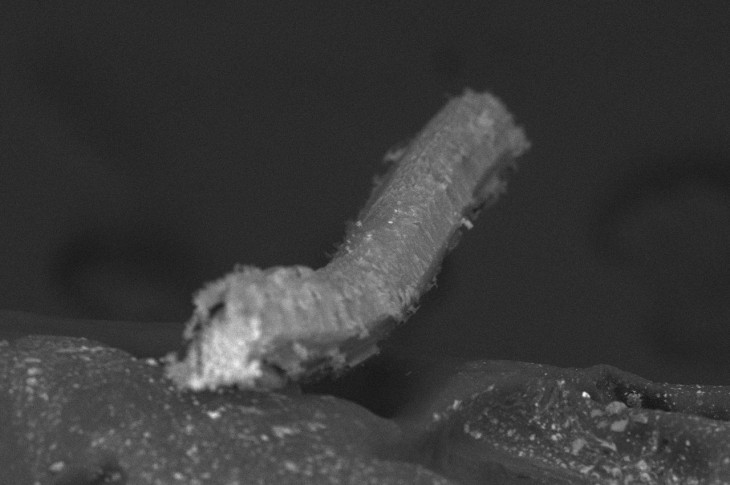
Russian Research Team Proposes New Method for Studying Morphology of Flexible Crystals
Experts from the Siberian Circular Photon Source Collaboration Center and the Institute of Solid State Chemistry and Mechanochemistry of the Siberian Branch of the Russian Academy of Sciences have proposed a comprehensive method for studying the morphology of flexible organic crystals. The method combines computational algorithms, laboratory microscopy techniques, and experimental diffraction studies, and can be used to more reliably determine crystal geometry and facet arrangement. The results have been published in the Journal of Applied Crystallography. Flexible crystals are a relatively rare class of organic crystals that can bend under very small mechanical stress while maintaining lattice integrity. Researchers indicate that among compounds with determined crystal structures, the proportion exhibiting such properties is less than...
2026-08-26
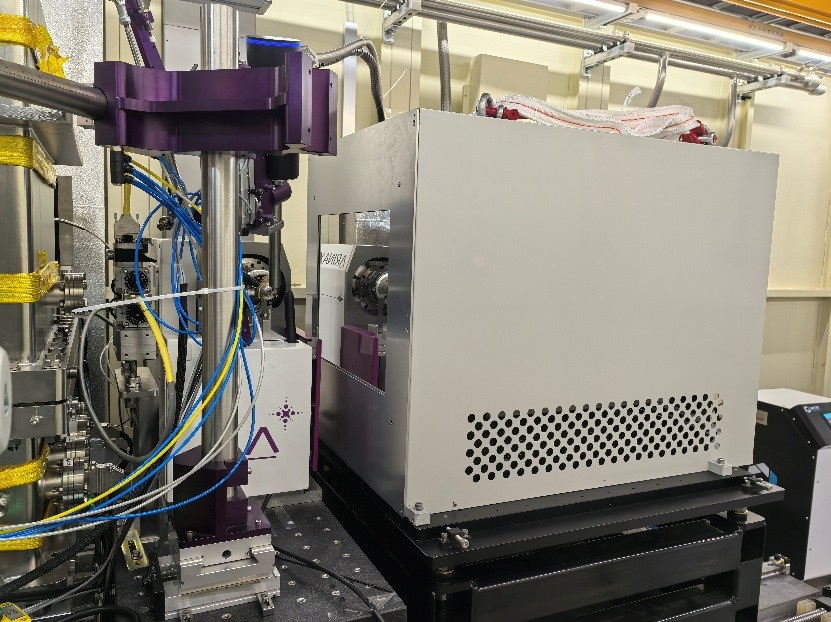
Large-area pixel detector independently developed by the Institute of High Energy Physics, Chinese Academy of Sciences completes long-term online operation validation
Recently, the 6-megapixel large-area two-dimensional pixel array detector independently developed by the detector R&D team of the High Energy Photon Source (HEPS) at the Institute of High Energy Physics, Chinese Academy of Sciences, completed long-term online operation validation. Since its deployment for trial operation at the HEPS Biological Macromolecular Microcrystal Diffraction Beamline in October 2025, it has supported nearly 90 research projects from over 50 research groups as of June 30, 2026. During the trial operation period, the detector accumulated more than 2,000 hours of operation with stable, uninterrupted performance. The beamline and detector teams conducted joint commissioning and optimization, verifying its operational stability and data reliability under complex working conditions. Leveraging the high-quality data collected by this detector, some...
2026-08-24
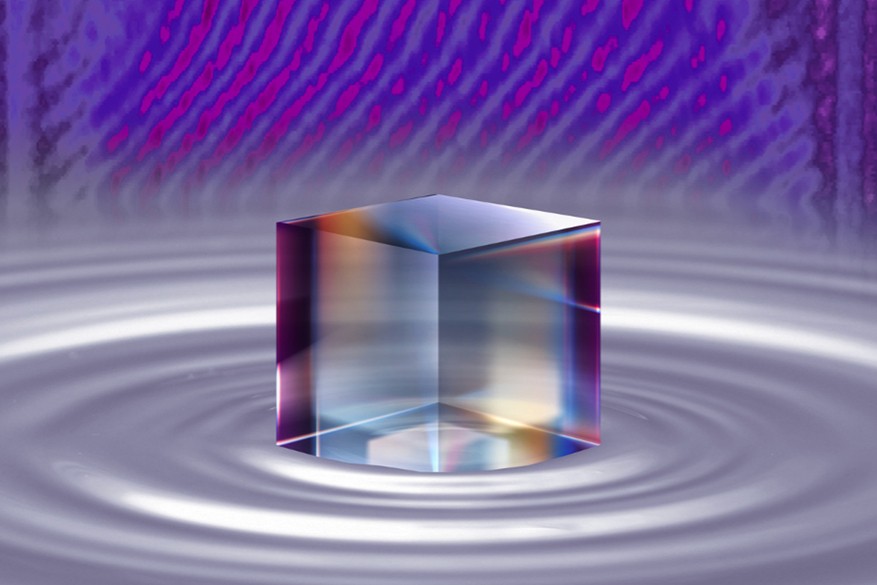
US experiment reveals diamond melting behavior under high pressure, potentially advancing inertial confinement fusion research
Researchers at Lawrence Livermore National Laboratory published a new study in Nature Physics documenting the melting process of diamond at pressures approximately three times greater than those at Earth's core. The experiments showed that under high-pressure conditions, diamond floats in liquid metallic carbon, similar to how ice floats in water. This finding helps improve inertial confinement fusion experimental models and provides new evidence for understanding the potential "diamond rain" phenomenon inside ice giant planets such as Neptune and Uranus. The latest melting experiments confirmed that under high pressure, diamond floats in liquid metallic carbon, just as ice floats in a glass of water. (Concept image: James Wickboldt/LLNL) The research team stated...
2026-08-17
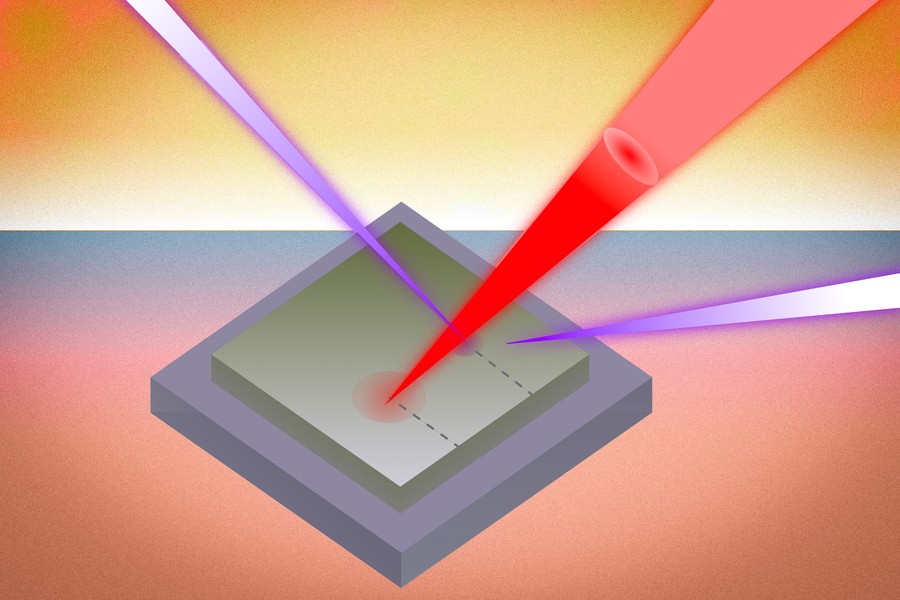
MIT Develops Ultrafast X-ray Thermometry Method to Observe Heat Transfer in Multilayer Chip Structures
Researchers at the Massachusetts Institute of Technology (MIT) have developed a new method for observing how heat transfers through multilayer materials, which can be used to precisely measure heat flow variations inside electronic devices such as computer chips. The findings have been published in Nature Communications. As computer chips continue to shrink in size and power density keeps rising, device overheating has become a major factor limiting performance improvements. Traditional heat flow measurement methods face limitations when dealing with the multilayer structures of real electronic devices—for example, the commonly used time-domain thermoreflectance method struggles to distinguish heat transport in different material layers, while infrared imaging and other approaches also fail to capture rapid changes at microscopic scales. To address this issue...
2026-08-06