
Large-area pixel detector independently developed by the Institute of High Energy Physics, Chinese Academy of Sciences completes long-term online operation validation
 Scan to share
Recently, the 6-megapixel large-area two-dimensional pixel array detector independently developed by the detector R&D team of the High Energy Photon Source (HEPS) at the Institute of High Energy Physics, Chinese Academy of Sciences, completed long-term online operation validation. Since its deployment for trial operation at the HEPS Biological Macromolecular Microcrystal Diffraction Beamline in October 2025, it has supported nearly 90 research projects from over 50 research groups as of June 30, 2026.
During the trial operation period, the detector accumulated more than 2,000 hours of operation with stable, uninterrupted performance. The beamline and detector teams conducted joint commissioning and optimization, verifying its operational stability and data reliability under complex working conditions.
Based on the high-quality data collected by this detector, some user research results have already been published in international journals, demonstrating that the instrument's performance meets the requirements of frontier structural biology research. For example, users from China Agricultural University utilized data obtained from this detector to resolve the crystal structure of the important tobacco protein α1 complex (PDB ID: 20YG), and the corresponding paper has been officially accepted by The Plant Journal. Data and manuscripts from other users are being progressively analyzed and prepared. The successful operation of this detector marks the achievement of full-chain independent development and engineering implementation of China's core synchrotron radiation detection equipment.
Two-dimensional pixel array detectors are among the core terminal detection instruments for fourth-generation synchrotron radiation light sources, widely applied in fields such as biological macromolecular crystallography and materials diffraction. Previously, high-performance detectors of this kind in China were entirely dependent on imports, representing a critical bottleneck constraining the self-reliance and controllability of major scientific facilities.
The joint R&D team, comprising the HEPS detector group led by Li Zhenjie from the Multidisciplinary Division and the electronics group led by Wei Wei from the Experimental Physics Center, has completed the full-process independent development of this detector through more than a decade of effort, involving multiple rounds of scheme iteration, independent chip design, packaging process development, and system integration testing. The core performance is comparable to mainstream foreign commercial products. The pixel size is 140 μm×140 μm, with a routine readout frame rate of 100 Hz and a maximum design frame rate of 1 kHz, featuring a large detection area, high count rate, low dead time, and low noise, tailored to meet the hard X-ray diffraction experimental requirements of HEPS.
The long-term online operation validation has laid the foundation for transitioning the detector from the laboratory to routine application at major scientific facilities. The team will continue to optimize performance and advance batch production, providing autonomous detector equipment solutions for other HEPS beamlines and domestic synchrotron radiation light sources.
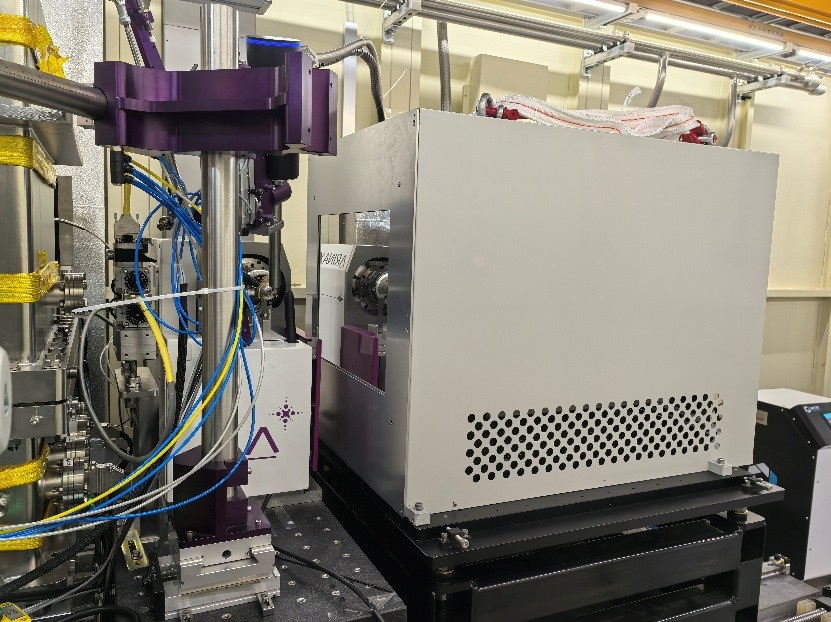
The 6-megapixel detector installed at the HEPS Biological Macromolecular Microcrystal Diffraction Beamline
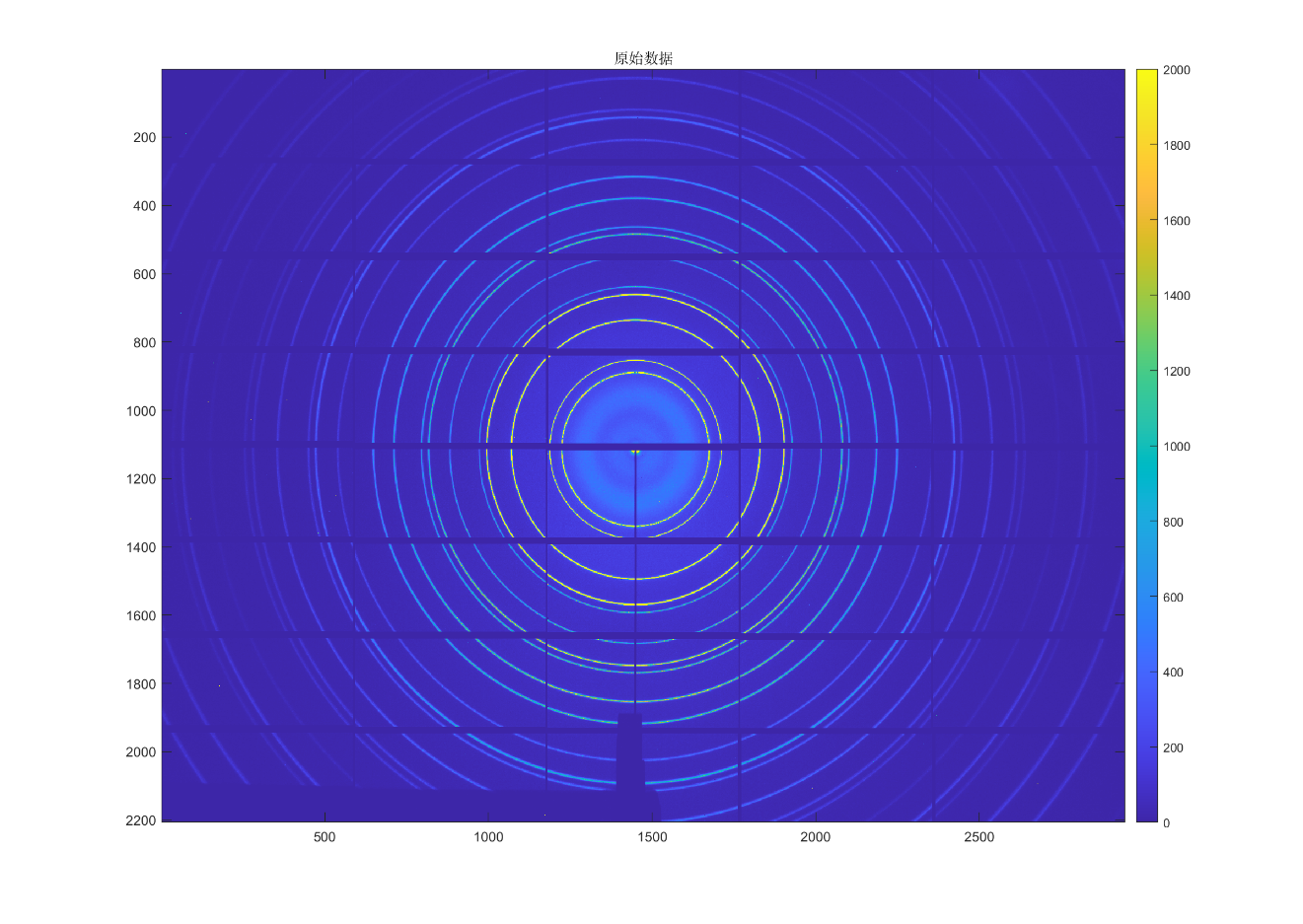
Powder diffraction pattern of standard sample CeO2
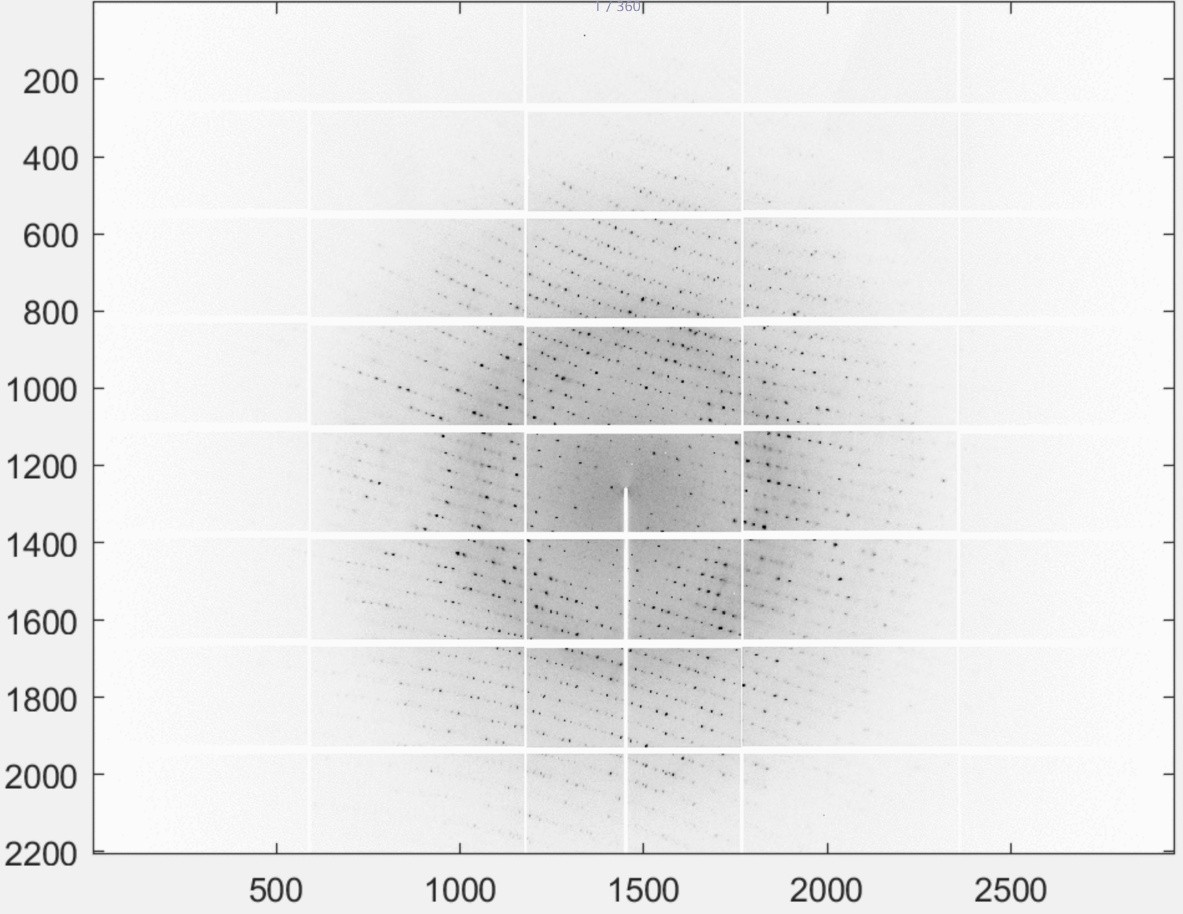
Diffraction pattern of biological macromolecular protein crystal
Disclaimer: Information republished from partner media, institutions or other websites is provided for reference and communication purposes only. It does not imply endorsement of its views or verification of its accuracy. Please contact us if any content infringes rights or requires correction.