
Search Results
Keyword:fusion device
Strengthen Regulation of Fusion Devices, Empower the Development of New Technologies
Recently, the South China Regional Office of Nuclear and Radiation Safety Supervision of the Ministry of Ecology and Environment (hereinafter referred to as the South China Regional Office) conducted a radiation safety supervision inspection of the J-TEXT tokamak fusion experimental device at Huazhong University of Science and Technology. As the only medium-to-large tokamak experimental device at a university in China, J-TEXT bears the important mission of fusion talent cultivation and frontier physics experiments. The South China Regional Office focused on key aspects including equipment operation, radiation protection, and authorization management, meticulously investigated safety hazards, verified the implementation of safety management systems, and urged Huazhong University of Science and Technology to promptly plug safety loopholes and standardize device operation procedures, effectively building a strong defense line for the safe and stable operation of fusion experimental devices, providing solid support for the orderly conduct of scientific research experiments...
2026-10-01
National Nuclear Safety Administration Issues the Guidelines for Ecological Environment Impact Assessment of Magnetic Confinement Fusion Devices
To implement the regulatory requirements for fusion devices under the Ecological Environment Code of the People's Republic of China and the Atomic Energy Law of the People's Republic of China, and to improve China's regulatory framework for radiation safety supervision of fusion devices, the Ministry of Ecology and Environment's National Nuclear Safety Administration recently officially issued the Guidelines for Ecological Environment Impact Assessment of Magnetic Confinement Fusion Devices (hereinafter referred to as the Guidelines). The Guidelines were compiled by the Nuclear and Radiation Safety Center of the Ministry of Ecology and Environment, drawing on relevant domestic and international regulations and standards, and incorporating the construction and operation characteristics and environmental impact features of China's fusion devices. They aim to standardize and guide the ecological environment impact assessment of fusion devices throughout their entire life cycle...
2026-09-20
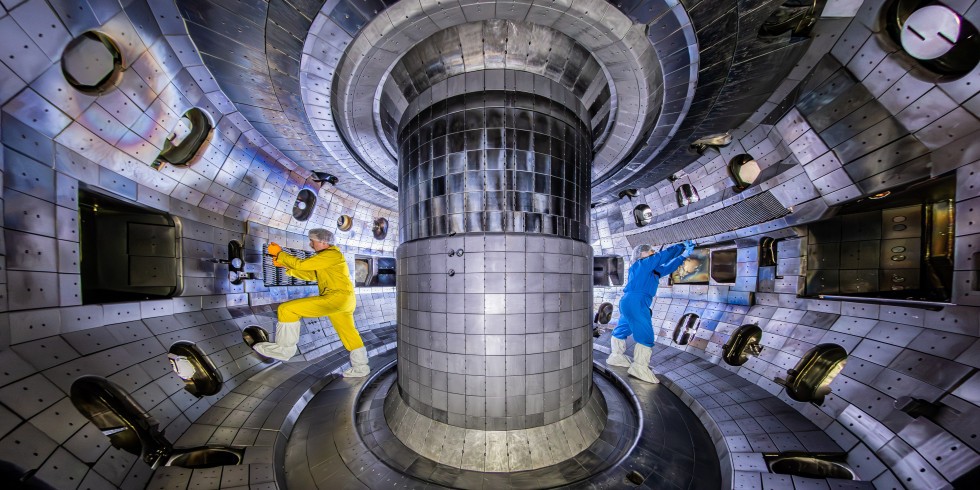
Machine learning framework predicts micro-displacements of DIII-D fusion device coils
Researchers at the U.S. Department of Energy's (DOE) Thomas Jefferson National Accelerator Facility (Jefferson Lab) and collaborating teams have developed a machine learning framework that can predict subtle changes in critical fusion device hardware before the next experiment begins. The method targets the DIII-D National Fusion Facility in San Diego, and the findings have been published in the journal Machine Learning with Applications. Interior of the DIII-D National Fusion Facility tokamak. (Image courtesy of General Atomics) DIII-D is a tokam...
2026-08-17
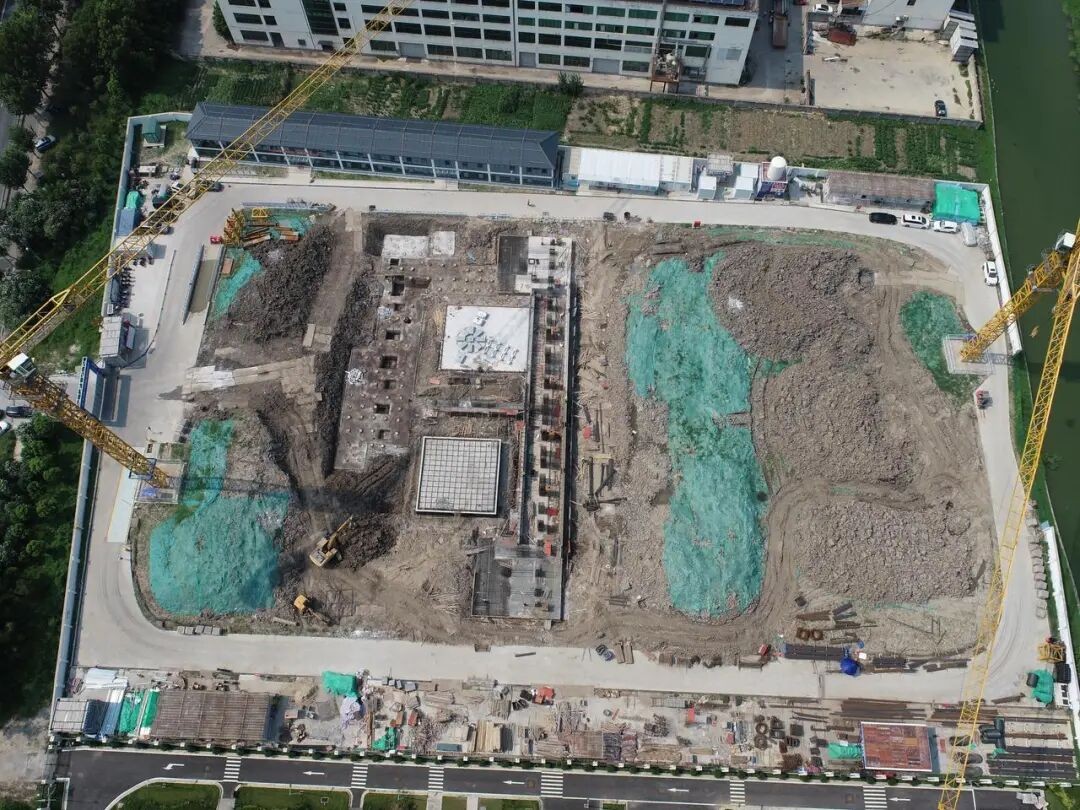
StarRing Fusion Completes RMB 880 Million Series A++ Financing to Advance Fusion Device and Key Technology Engineering
StarRing Fusion recently announced the completion of a new Series A++ financing round, raising RMB 880 million. This round was jointly invested by Shenzhen Capital Group, Shendan Venture Capital, ABC Capital, BOCOM Investment, GGV Capital, Yongxin Ark, Keke Capital, Advantage Capital, and other institutions, with existing shareholder Shanghai Science and Technology Innovation Group's intellectual property fund and other institutions continuing to follow on. The company stated that the proceeds from this round, together with the previous Series A and A+ financing, will be used for the construction of the Shanghai Jiading experimental base, the construction and operation of the NTST negative-triangularity spherical tokamak, the design and construction of the CTRFR-1 "StarRing One," and the continued engineering advancement of key technologies including fusion-grade high-temperature superconducting magnets and AI-based plasma control...
2026-08-08
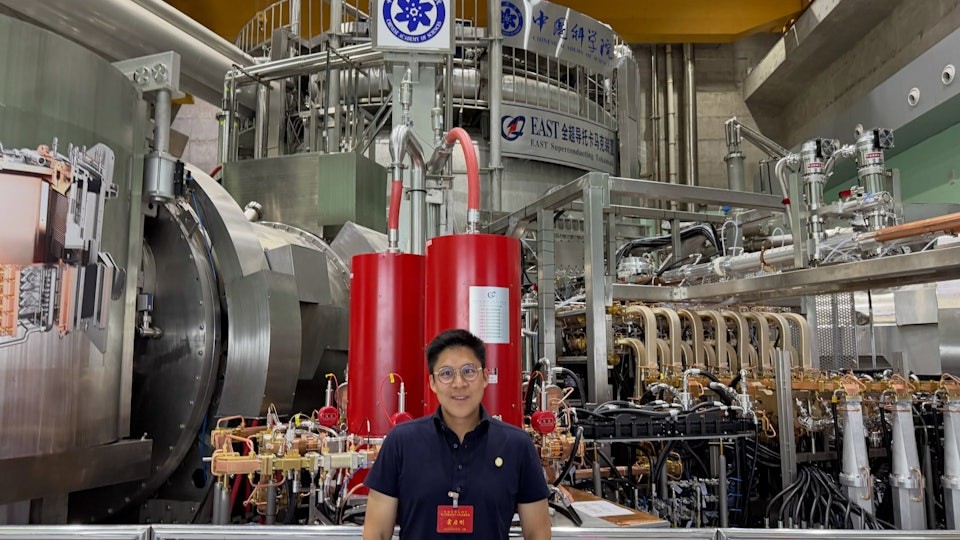
Hong Kong deputies to the National People's Congress visit Hefei to inspect fusion device and innovation industry development
On August 4, a delegation of Hong Kong deputies to the National People's Congress conducted an inspection and research visit in Hefei, Anhui Province. The itinerary included visits to the Hefei Innovation Museum, the Memorial Hall of the Crossing-the-Yangtze Campaign, and the Hefei Institutes of Physical Science of the Chinese Academy of Sciences, to learn about the local layout of scientific and technological innovation, the construction of major scientific facilities, and the development of the nuclear fusion industry. At the Hefei Institutes of Physical Science of the Chinese Academy of Sciences, the delegation visited the Experimental Advanced Superconducting Tokamak (EAST) nuclear fusion device. Often referred to as the "artificial sun," this device serves as an important scientific research platform for Hefei in advancing the cluster development of major scientific facilities and the growth of the nuclear fusion-related industry. The delegation also received briefings on the construction of the Hefei Future Science City and the layout of related industries. Hong Kong deputies to the National People's Congress...
2026-08-05

U.S. Team Proposes New In-Situ Cleaning Method for Porous Tungsten Walls in Fusion Devices
Researchers from the U.S. Department of Energy's Princeton Plasma Physics Laboratory, Princeton University, and Pennsylvania State University have proposed an in-situ cleaning method for fusion system wall materials, which uses heating combined with neon plasma to remove contaminants from the surface of porous tungsten materials after components are installed and sealed within a vacuum chamber. The research findings have been published in *Nuclear Materials and Energy*. Image credit: Kyle Palmer / PPPL Communications Department. Fusion system walls must withstand extreme temperatures. Liquid lithium is considered a promising wall protection material, which can be retained within porous tungsten wall tile structures much like water absorbed by a sponge. However, this...
2026-08-05
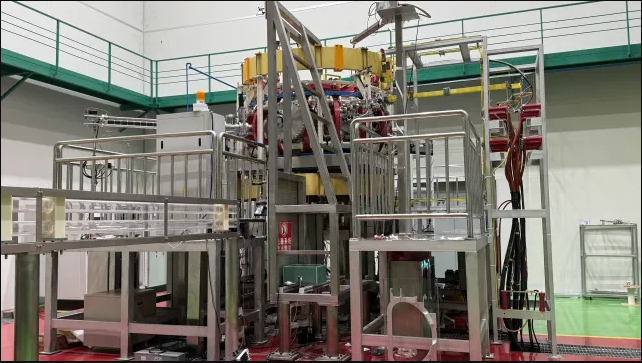
IAEA Launches New Project to Advance Research Network on Small and Medium-Sized Fusion Devices
The International Atomic Energy Agency recently launched a new Coordinated Research Project, aiming to further strengthen the global network of small and medium-sized fusion devices, supporting multinational coordinated experiments, diagnostic technology development, and personnel training, providing a platform for cultivating the next generation of fusion researchers. The Tokamak TT-1 device at the Thailand Institute of Nuclear Technology (TINT) has long participated in the IAEA Coordinated Research Project on the network of small and medium-sized fusion devices, contributing to international cooperation, research, and capacity building. (Photo: JP Cayol/IAEA) This project builds upon a previous five-year collaborative research program. The previous project was named Small and Medium-Sized Magnetic Confinement...
2026-07-30