
The Supply-Demand Fault Line Beneath the Boom: Can the Uranium Mining Industry Support the Global Nuclear Renaissance?
 Scan to share
Driven by the explosive electricity demand of global AI data centers and the COP“triple nuclear power capacity”commitment, nuclear energy is ushering in the most certain renaissance in half a century. However, behind the capital market's frenzied pursuit of nuclear power concept stocks and commodities, the core raw material upstream in the nuclear power industrial chain——uranium mining and nuclear fuel processing——is facing severe constraints from insufficient production capacity elasticity, lengthy development cycles, and geopolitical fragmentation. The optimistic signals recently released by renowned Wall Street asset management institution Sprott certainly reflect the momentum of capital return, but upon closer examination of its supply-demand fundamentals and technical barriers, whether the uranium mining industry can timely and smoothly support this wave of nuclear power infrastructure construction still requires a huge question mark.
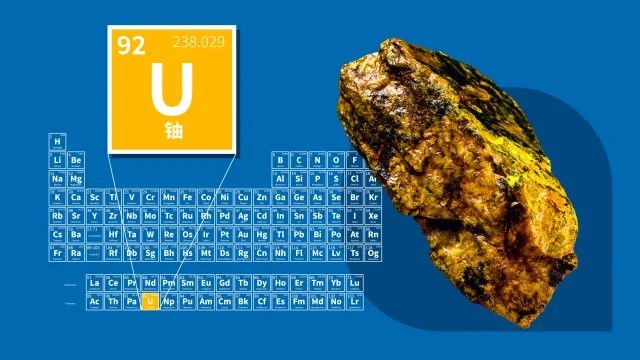
I. Capital Narrative Reconstruction: From“Marginal Asset”to“Core of Energy Security”
After experiencing a prolonged downturn of more than a decade following the Fukushima nuclear accident, the global nuclear industry is once again becoming the focus of the capital stage at a visible pace. At the World Nuclear Association (WNA) annual symposium held in September, nuclear energy was formally established as an irreplaceable pillar supporting high-tech industry and energy transition.
According to data cited by John Ciampaglia, CEO of Sprott Asset Management, there are currently approximately 440 nuclear reactors in operation globally, with another approximately 80 reactors at various stages of construction. With the rigid demand of computing clusters for 7×24-hour zero-carbon baseload power, as well as multiple European and American countries reassessing traditional grid stability, the pace from project approval to capital injection for nuclear reactors has notably accelerated.
Price signals in the upstream raw material market have already made dramatic feedback first. Over the past year or more, international spot uranium ($\text{U}_3\text{O}_8$) prices have recorded significant double-digit increases (as of end-August 2026, the annual increase reached 17.68%). As commodity prices climb, long-stalled exploration projects have regained financing channels, and thematic funds such as Sprott Uranium Miners ETF (URNM) and Sprott Junior Uranium Miners ETF (URNJ), which focuses on small mining companies, have seen their scale surge.
On the surface, this is a classic commodity super-cycle script: downstream demand expansion drives raw material prices up, prices stimulate capital return, which in turn drives new capacity release. However, applying the supply elasticity assumptions of general bulk minerals to the nuclear fuel sector can easily underestimate the industry's extremely stringent entry barriers and technical specificity.
II. The Deadlock of Cycle Mismatch: Trillion-Dollar Nuclear Blueprint Encounters Lengthy Mining Cycles
The first core crux facing the uranium industry in the face of the nuclear energy expansion wave is the severe time mismatch between downstream commissioning speed and upstream capacity expansion cycles. Downstream computing data center expansion is generally 18~36 months; downstream nuclear reactor construction periods are 7~10 years; while upstream uranium mining from exploration to full production requires 10~15 years.
The development of large-scale uranium mines is far from“turning a valve and ore flows naturally.”From greenfield exploration, geological feasibility studies, lengthy environmental and nuclear safety approvals, to mine drilling and hydrometallurgical facility construction, the average production cycle typically spans 10 to 15 years. Although governments, under pressure from energy crises and AI competition, have begun to reflect on and streamline permitting reform in an attempt to shorten mine time-to-market, nuclear raw materials, due to radiation safety and radioactive waste concerns, cannot have their legal litigation and environmental assessment thresholds objectively compressed without limit.
A more severe reality lies in the depletion of secondary supply inventories. Over the past two decades, the reason global reactor uranium demand could be maintained despite insufficient mine production largely depended on secondary supply channels such as the highly enriched uranium dilution programs left over from the Soviet Union's dissolution (such as the“Megatons to Megawatts”agreement), strategic inventories of commercial utility companies, and government reserves. The current industry consensus is that these buffer cushions have been consumed to near exhaustion.
The uranium fuel required for initial core loading of nuclear reactors is typically 2 to 3 times the annual refueling quantity. When more than 80 newly built nuclear reactors concentratedly enter their first core loading period in the coming years, the pulse-like run on physical spot supplies will be extremely intense, and by then, mature new mines truly capable of producing qualified uranium concentrate at scale will be few and far between.
III. Geopolitical Map Fragmentation: The Fragile Resilience of the Global Uranium Supply Chain
The geographical distribution of global uranium resources exhibits extremely high regional concentration, with significant geopolitical mismatches with the major consuming countries currently leading AI computing expansion and energy transition.
High degree of oligopolistic monopoly in upstream resources:
Kazakhstan's National Atomic Company Kazatomprom and Canada's Cameco control more than half of the world's high-quality primary uranium mine output. Among them, Kazakhstan, as the world's largest primary uranium producing country, has frequently encountered supply chain obstacles such as shortages of key mining reagents (such as sulfuric acid) and cross-border logistics restrictions in recent years, with its actual production capacity repeatedly falling short of expectations;
Structural breakpoints in the processing segment:
The“yellowcake”($\text{U}_3\text{O}_8$) extracted from uranium mines cannot be directly fed into nuclear power plants for operation; it must undergo two critical intermediate industrial processes: conversion and enrichment. The bottlenecks in this area are even more severe than in the mining segment. For a long time, nearly half of the world's commercial uranium enrichment centrifuge separation capacity has been located in Russia. As geopolitical tensions persist, Western utility organizations are accelerating their departure from dependence on Eastern European fuel supplies, but the expansion pace of nuclear fuel conversion and enrichment facilities in Europe and America has been slow, resulting in severe liquidity blockage within the entire nuclear fuel cycle system.
This geopolitical dimension of fragmentation means that even if capital markets inject billions of dollars into various junior mining companies, the funds cannot be converted overnight into safe fuel rods usable by European and American power grids.
IV. Derivatives Frenzy and Capital-Physical Disconnect
The capital enthusiasm currently displayed by the uranium mining sector has, to some extent, masked the fragility at the micro level of the industry. The ETF products actively promoted by asset management institutions (such as URNM, URNJ) do provide institutional and retail investors with channels to capture commodity upward volatility, but there exists a disconnect between the operating mechanisms of financial capital and mining operations that cannot be ignored.
High leverage and high fulfillment risk of junior miners:
Small exploration companies often surge due to capital premiums during bull markets, but most of these enterprises only hold early-stage exploration rights, lacking both the tens-of-billions-level capital expenditure (CapEx) capacity required for mine construction and the executive teams and technical workers capable of navigating industry cycles. Once commodity prices experience high-level volatility, junior mining companies lacking substantive cash flow will rapidly face liquidity shock.
Spot hoarding amplifies market squeeze effects:
In recent years, financial investment vehicles including physical uranium trust funds have absorbed large quantities of physical yellowcake and locked them in vaults. While this has accelerated the depletion of free float in the short term and pushed up spot quotations, it has in fact exacerbated the procurement cost volatility for nuclear power operators. When physical raw materials are excessively financialized, power utility companies are forced to delay signing long-term supply contracts, which conversely constitutes a reverse inhibition on physical mining companies' ability to make long-term capital expenditure decisions.
V. Path to Breakthrough: Constructive Recommendations for Building Sustainable Nuclear Fuel Resilience
Facing the surging wave of nuclear energy construction, the global uranium industry cannot rely solely on the passive feedback of“price surge—capital influx,”but must undertake systematic repair from three dimensions: strategic coordination, industrial policy, and technological innovation:
1. Shift from“Spot Speculation”to“Long-term Offtake Contracts”
Power utility companies and high-energy-consuming technology giants (such as Microsoft, Google, Amazon, etc.) must break free from short-term procurement thinking and adopt forward-looking“capital co-sharing”mechanisms. Technology companies should directly participate in or guarantee long-term nuclear fuel procurement agreements (PPA+fuel binding), providing primary mining companies with predictable, floor-protected cash flow support, giving them the confidence to initiate heavy-capital mine expansion projects with decade-long cycles.
2. Cross-sector Promotion of Permitting Reform and Full-Chain Safety Fault Tolerance
National nuclear safety regulatory agencies should re-examine outdated approval processes:
Promote“Concurrent Review”mechanisms, changing environmental assessment, water resource permitting, and mining rights approval processes from serial to parallel without lowering nuclear safety and environmental protection baselines;
Open fast-track restart channels for brownfield projects with mature mining histories, prioritizing the release of marginal capacity from existing assets.
3. Accelerate Strategic Domestic Layout of Next-Generation Fuel Cycles and Enrichment Capacity
Government-level industrial funds should concentrate on breaking through intermediate conversion and enrichment bottlenecks:
Focus on supporting the construction of advanced centrifuge separation and High-Assay Low-Enriched Uranium (HALEU) enrichment facilities, breaking dependence on a single geopolitical region for technology and capacity;
Conduct strategic reserve research on spent fuel reprocessing and advanced reactor types (such as sodium-cooled fast reactors), enhancing the utilization limits of nuclear fuel resources from a long-term perspective and reducing sole dependence on primary uranium ore mining.
Conclusion: Nuclear energy is one of the optimal solutions for humanity to combat climate change and support advanced intelligent computing civilization, but this grand vision must be built on a solid material foundation. At present, capital return has injected long-awaited vitality into the uranium mining industry that has been stagnant for years; however, capital cannot rewrite physical laws and engineering construction cycles in the short term. Only by squarely facing the long-term supply gap, geopolitical restructuring barriers, and processing bottlenecks, and establishing a new contract of deep collaboration among utilities, technology capital, mining entities, and government regulators, can the global uranium industry chain truly be prepared to calmly receive this once-in-a-century nuclear renaissance wave. (The general background analysis regarding the nuclear power industry in this article, such as production country patterns, construction cycles, and policy discussions, represents common industry knowledge; specific price and project data are sourced from Sprott's public statements cited in the original text dated October 2026. This article does not constitute any investment advice.)
Disclaimer: Information republished from partner media, institutions or other websites is provided for reference and communication purposes only. It does not imply endorsement of its views or verification of its accuracy. Please contact us if any content infringes rights or requires correction.