
Search Results
Keyword:-
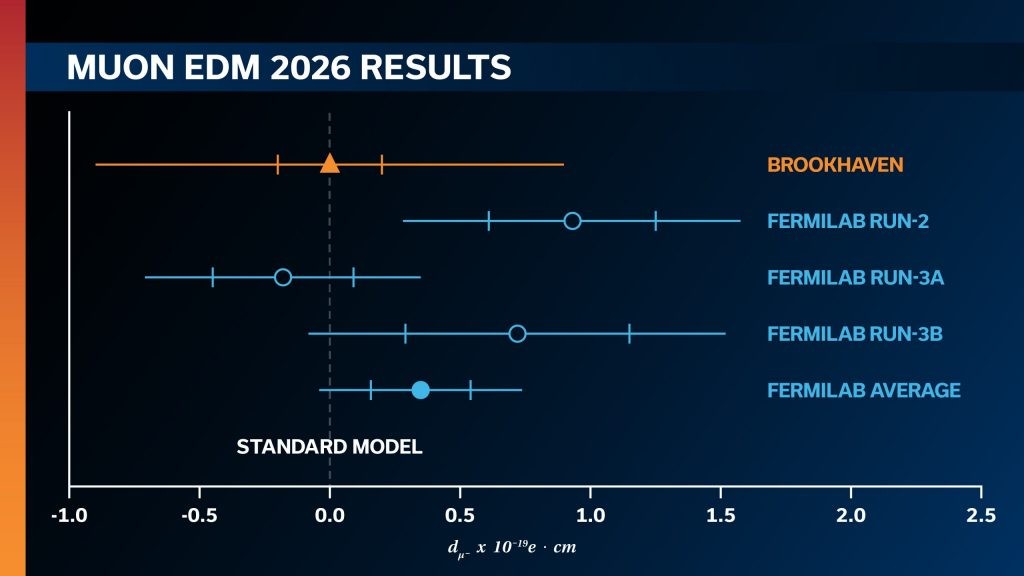
Fermilab Muon g-2 Experiment Sets New Direct Detection Limit on Muon Electric Dipole Moment
On August 12, 2026, the Muon g-2 Collaboration announced that a new analysis based on 25% of the data from the Muon g-2 experiment at the U.S. Department of Energy's Fermi National Accelerator Laboratory has produced the most sensitive direct measurement of the muon's electric dipole moment to date. The results show that if a muon electric dipole moment exists, its magnitude is below the current detection threshold of the experiment. The muon electric dipole moment values measured by Fermilab across different data-taking periods were compared with previous results from Brookhaven National Laboratory. The combined Fermilab value is consistent with zero (no observation). Although the experiment uses positive muons, results are typically reported for negative muons, which reverses the sign of the measured value...
2026-08-17
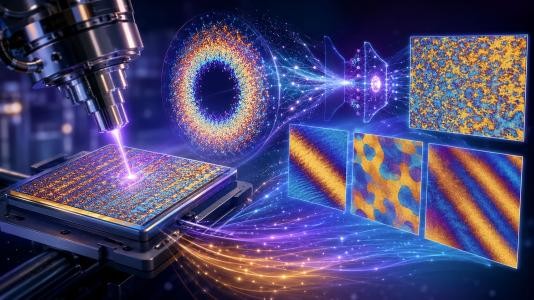
Argonne National Laboratory Unveils DONUT Tool to Accelerate Real-Time Analysis of X-ray Nanodiffraction Data
Researchers at the U.S. Department of Energy's Argonne National Laboratory have developed a new machine learning tool called DONUT to accelerate X-ray data analysis in experiments at the Advanced Photon Source (APS). The tool can process complex images generated by scanning X-ray nanodiffraction microscopy (SXDM) in real time during experiments, helping researchers more quickly determine internal structural changes in materials. DONUT stands for "Nanobeam Optical Diffraction based on Unsupervised Training," a physics-aware neural network. Its key feature is combining artificial intelligence methods with physical models of focused X-ray beam interactions with materials, allowing it to learn directly from experimental data without relying on pre-labeled training...
2026-08-17

Nuclear-Powered Aircraft Carrier USS John F. Kennedy Completes Acceptance Sea Trials
Huntington Ingalls Industries (HII) announced on August 15 that its subsidiary Newport News Shipbuilding (NNS) has successfully completed acceptance sea trials for the second Gerald R. Ford-class nuclear-powered aircraft carrier, USS John F. Kennedy (CVN 79). USS John F. Kennedy conducted further testing and evaluation of critical ship systems and components at sea before returning to Newport News Shipbuilding. Earlier this year, the carrier had completed builder's sea trials. Derek Murphy, NNS vice president in charge of the new carrier construction program, stated that the carrier...
2026-08-17

India Unveils Nuclear Energy Self-Reliance Roadmap, Targeting 100 GW Nuclear Capacity by 2047
India's Minister of State for the Prime Minister's Office, Jitendra Singh, recently stated in a written reply to the Lok Sabha that India is accelerating the development of its domestic nuclear energy ecosystem, with key focus areas including advanced reactor technologies, small modular reactors, domestic manufacturing capabilities, private sector participation, and the long-term development and utilization of thorium resources. Singh stated that India's long-term nuclear energy strategy remains based on its three-stage nuclear power program, aiming to gradually utilize the country's relatively abundant thorium resources while ensuring long-term energy security. India proposed a Nuclear Energy Mission in its 2025-2026 federal budget, planning to expand nuclear power capacity to 100 GW by 2047...
2026-08-17
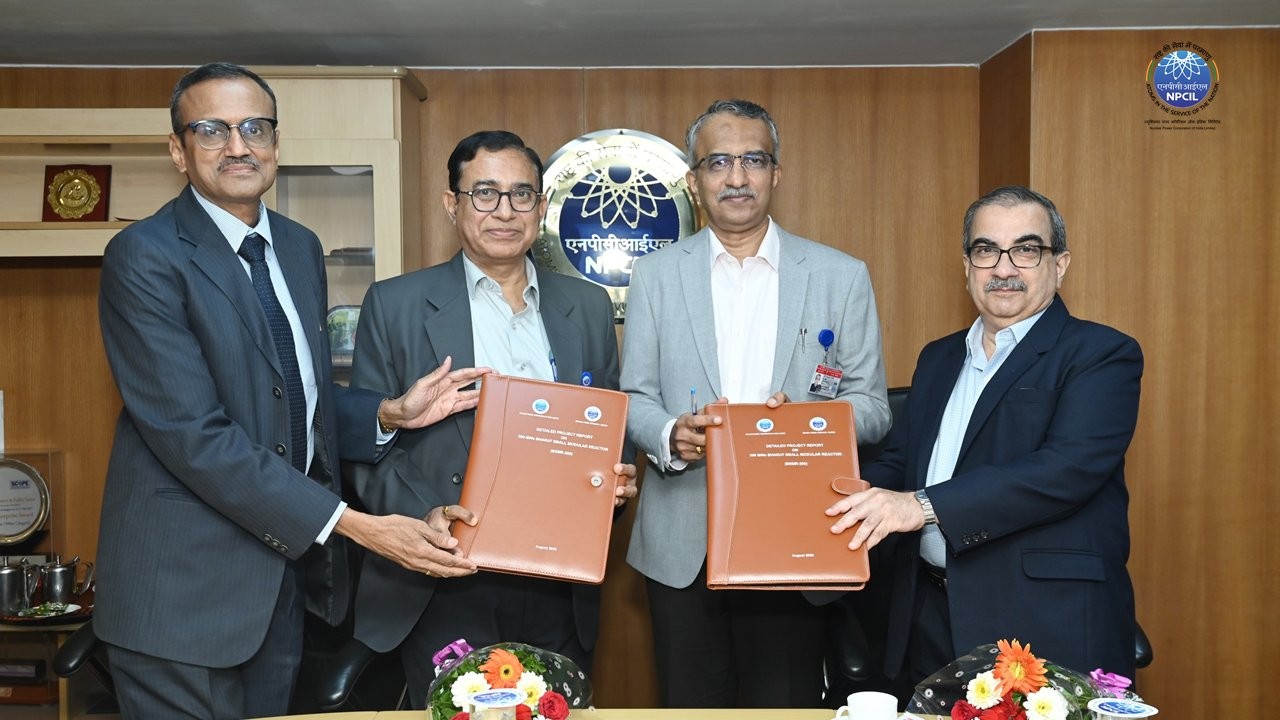
India Releases Detailed Project Report for 300 MWe Bharat Small Modular Reactor
The release of the Detailed Project Report (DPR) for India's 300 MWe Bharat Small Modular Reactor (BSMR-300) marks a new milestone in India's indigenous small modular reactor program. The report was released on August 14, 2026, and was jointly prepared by the Bhabha Atomic Research Centre (BARC) and the Nuclear Power Corporation of India Limited (NPCIL). The project falls under the indigenous Small Modular Reactor (SMR) program advanced by India's Department of Atomic Energy (DAE), positioned as a complement to India's existing large-scale nuclear power construction projects and offering captive nuclear power solutions. According to the released information, the BSMR-300 is designed as a fully indigenously developed Generation III+ pressurized water reactor with an installed capacity of 300 MWe. The project continues...
2026-08-17
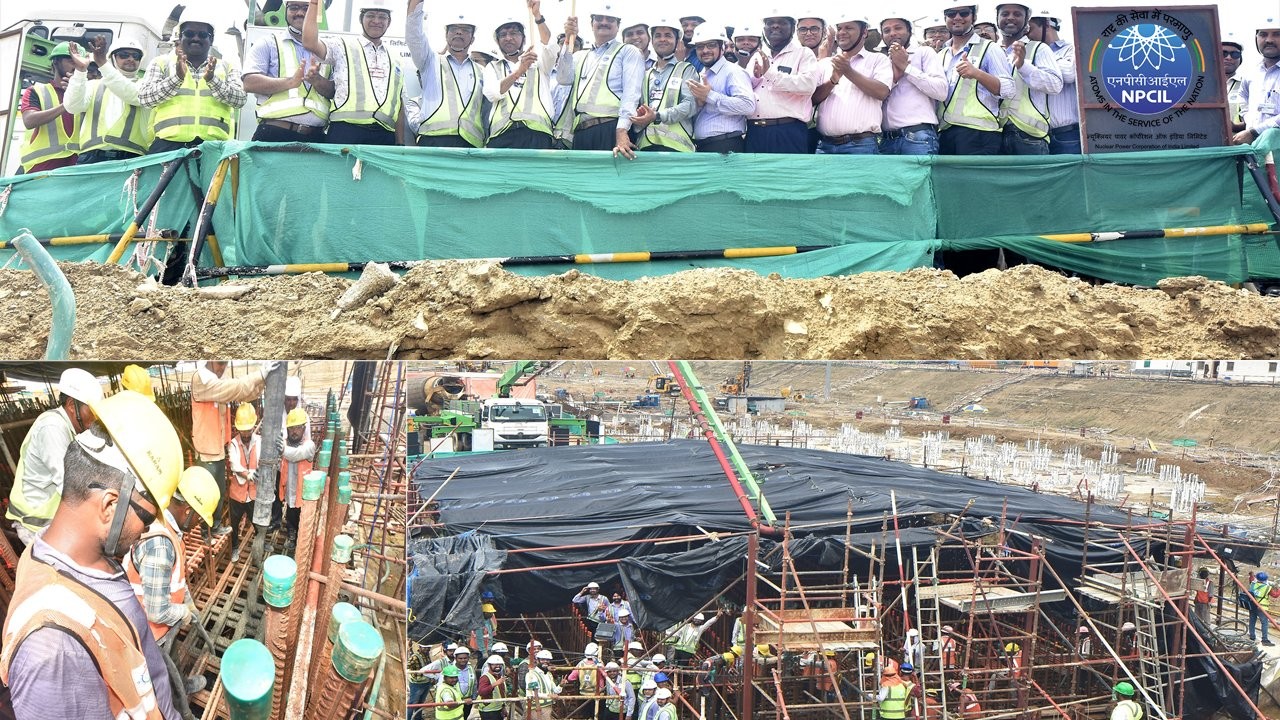
First Concrete Pour Initiated for ECCS Sump of Units 1 & 2 at Gorakhpur Nuclear Power Plant, India
Nuclear Power Corporation of India Limited (NPCIL) announced on August 14 that the first concrete pour was initiated on the same day for the Emergency Core Cooling System (ECCS) sump of Nuclear Building-01 (NB-01) of Units 1 & 2 at the Gorakhpur Haryana Anu Vidyut Pariyojana (GHAVP) — the Gorakhpur Nuclear Power Plant, marking a phased milestone in the project's construction. Units 1 & 2 of the Gorakhpur Nuclear Power Plant are located in Gorakhpur Village, Fatehabad District, Haryana State, India, with two 700 MWe units planned, totaling 1,400 MWe in installed capacity. The pouring operation was carried out after addressing geotechnical and foundation-related challenges, pile foundation qualification, and obtaining necessary regulatory approvals.
2026-08-17
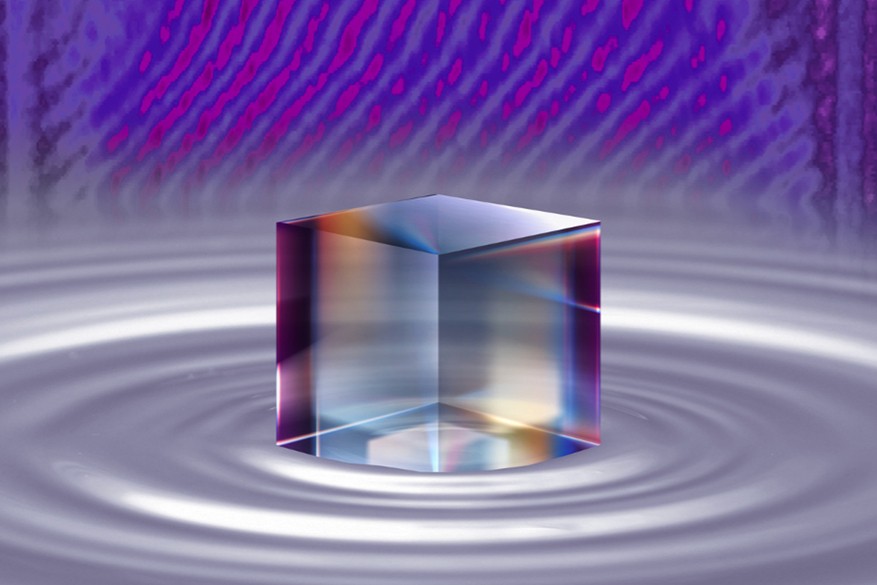
US experiment reveals diamond melting behavior under high pressure, potentially advancing inertial confinement fusion research
Researchers at Lawrence Livermore National Laboratory published a new study in Nature Physics documenting the melting process of diamond at pressures approximately three times greater than those at Earth's core. The experiments showed that under high-pressure conditions, diamond floats in liquid metallic carbon, similar to how ice floats in water. This finding helps improve inertial confinement fusion experimental models and provides new evidence for understanding the potential "diamond rain" phenomenon inside ice giant planets such as Neptune and Uranus. The latest melting experiments confirmed that under high pressure, diamond floats in liquid metallic carbon, just as ice floats in a glass of water. (Concept image: James Wickboldt/LLNL) The research team stated...
2026-08-17
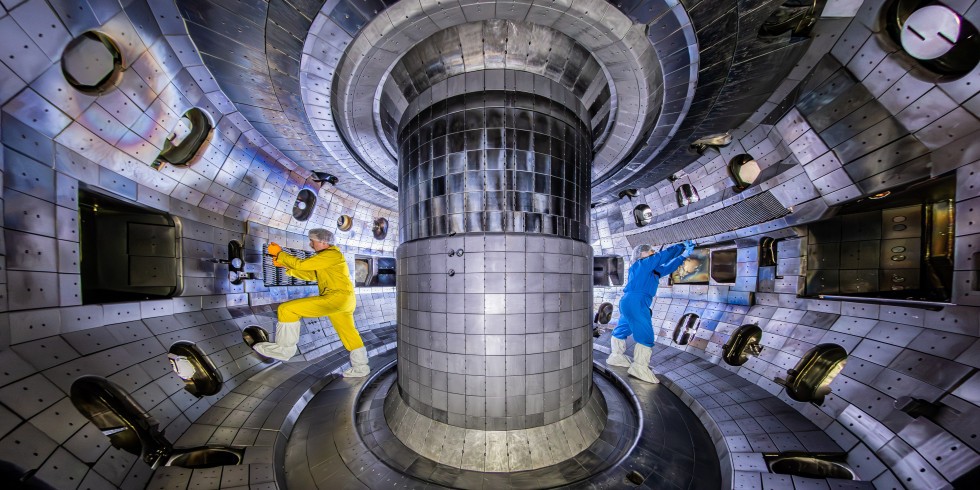
Machine learning framework predicts micro-displacements of DIII-D fusion device coils
Researchers at the U.S. Department of Energy's (DOE) Thomas Jefferson National Accelerator Facility (Jefferson Lab) and collaborating teams have developed a machine learning framework that can predict subtle changes in critical fusion device hardware before the next experiment begins. The method targets the DIII-D National Fusion Facility in San Diego, and the findings have been published in the journal Machine Learning with Applications. Interior of the DIII-D National Fusion Facility tokamak. (Image courtesy of General Atomics) DIII-D is a tokam...
2026-08-17
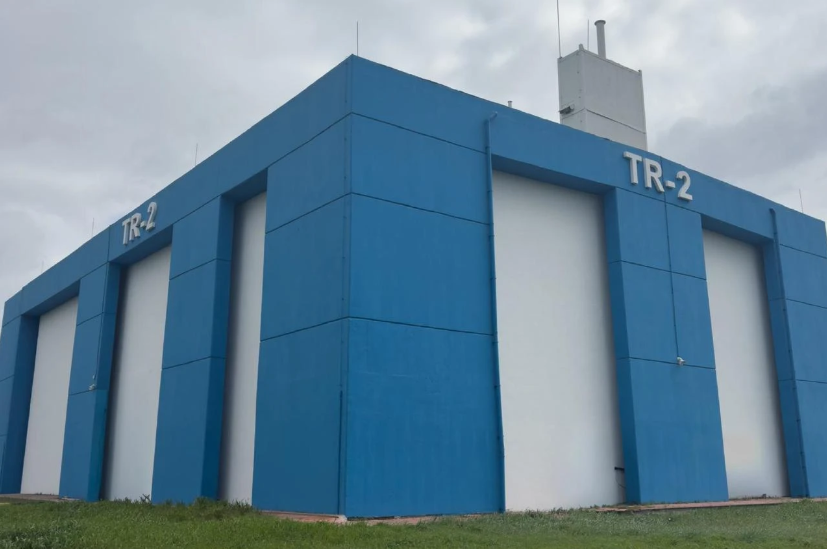
Turkey's TR-2 Research Reactor Receives Operating License
The Turkish Nuclear Regulatory Authority has issued an operating license for the TR-2 research reactor at the Istanbul campus of the Nuclear Energy Institute under the Turkish Energy, Nuclear and Mineral Research Agency (TENMAK). The license was issued pursuant to the Authority's Decision No. 2026-34/3 dated August 6, 2026. Following the review and evaluation of TENMAK's application documents, the Turkish Nuclear Regulatory Authority authorized the agency to carry out the activities required for the transition of the TR-2 research reactor from its current status to the operational phase. TR-2 is located at the Istanbul campus of TENMAK's Nuclear Energy Institute, with an approved thermal power of 5 megawatts. The facility is a research reactor and is not a nuclear facility primarily intended for power generation. According to...
2026-08-17
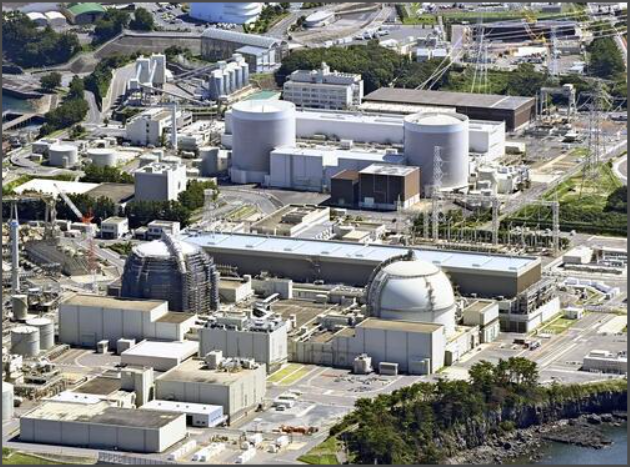
4.4-Magnitude Earthquake Hits Fukuoka Area; Kyushu Electric Says No Abnormalities at Genkai and Sendai Nuclear Plants
At around 6:37 a.m. on August 17, an earthquake struck the Fukuoka area of Fukuoka Prefecture, Japan, with a maximum seismic intensity of 4, a focal depth of approximately 10 kilometers, and a magnitude of 4.4. Kyushu Electric Power Co. (KEPCO) subsequently announced that the operational status of its Genkai and Sendai nuclear power plants was unaffected, with no abnormalities detected in the relevant units. According to Kyushu Electric Power, Unit 4 of the Genkai Nuclear Power Plant in Saga Prefecture continued normal operation, while Unit 3 was undergoing periodic inspection; Units 1 and 2 of the Sendai Nuclear Power Plant in Kagoshima Prefecture continued normal operation. The company stated that no impact on power supply had been confirmed. During the earthquake, Itoshima City in Fukuoka Prefecture...
2026-08-17
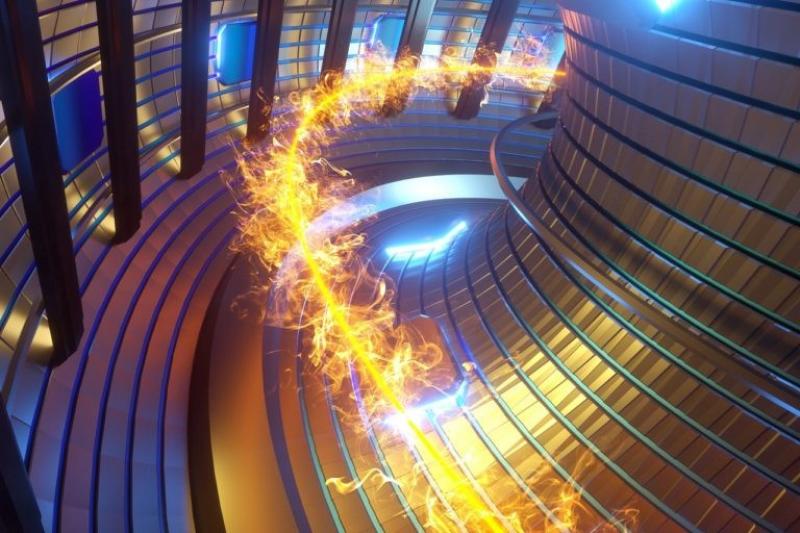
Controlled Nuclear Fusion Specialized Power Supply Industry Matchmaking Conference Held in Hefei High-tech Zone
On August 14, a major industry event focused on the fusion core equipment track — the "Fusion Power Source, Chain Linkage, New Journey" Controlled Nuclear Fusion Specialized Power Supply Industry Matchmaking Conference — was held at the Zhongke Hefei Technology Innovation Engineering Institute. The conference was guided by the Hefei High-tech Zone Science and Technology Bureau, co-hosted by the USTC Silicon Valley Service Platform and the Fusion Financial Institutions Alliance, organized by Hefei Tai'a Fusion Technology Co., Ltd., Science Island Hefei Technology Innovation Engineering Institute Co., Ltd., and the Anhui Science, Technology and Industry Integration Innovation Association, with exclusive support from the Bank of China Hefei Branch. Specialized power supplies are the core power hub supporting the stable operation of controlled fusion devices, and are also key hardware for achieving stable plasma confinement and advancing self-sustaining fusion reactions. In various fusion experimental devices, the overall cost of the power supply system accounts for a considerable proportion. Currently, the global controlled nuclear fusion industry has entered a stage where engineering demonstration and commercialization breakthroughs proceed in parallel, and the industry is facing a window of opportunity for development. However, the industry still faces practical development challenges such as long cycles for translating scientific research into technology applications, lack of information exchange between upstream and downstream supply and demand, and heavy R&D burdens on sci-tech innovation and manufacturing enterprises.
2026-08-17
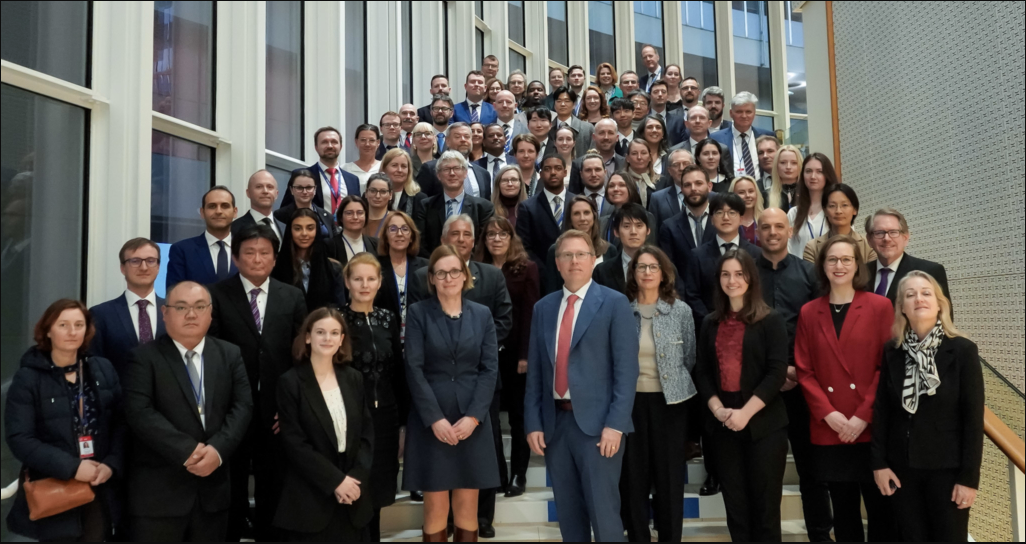
UK National Nuclear Laboratory Secures Nuclear Safeguards Programme Contract
The UK National Nuclear Laboratory (UKNNL) has been awarded the Nuclear Safeguards Programme (NSP) contract by the UK Department for Energy Security and Net Zero (DESNZ). The contract has an initial term of 3.5 years with committed funding of £10.5 million, with the possibility of further extensions. This contract continues the UK's 45 years of support for the global nuclear safeguards system, as well as the UK National Nuclear Laboratory's nearly 20 years of core work within that system. The UK National Nuclear Laboratory's responsibilities include providing technical support to the UK government in the nuclear field and driving the development of the UK's nuclear energy industry. The Nuclear Safeguards Programme is an important platform for fulfilling this responsibility, primarily providing nuclear safeguards and non-proliferation expertise to UK government departments and international partners...
2026-08-16
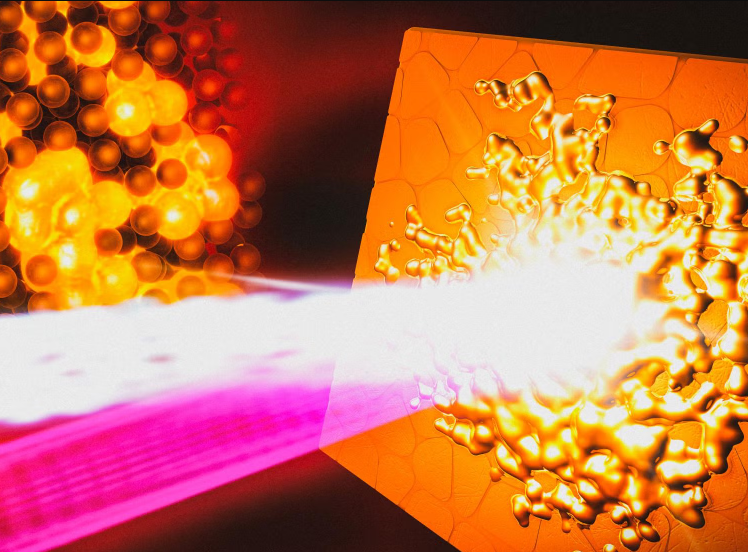
SLAC team observes progressive melting of copper under extreme heat in real time
Researchers at the SLAC National Accelerator Laboratory, under the U.S. Department of Energy, and their collaborators used the Mega-electron-volt Ultrafast Electron Diffraction (MeV-UED) facility to observe in real time the melting process of copper atoms under extreme temperatures. The study was published in Nature Communications. Future fusion power plants will need to replicate fusion reactions that occur inside stars here on Earth. The core plasma can reach temperatures of hundreds of millions of degrees Celsius, while surrounding structural materials must withstand sudden, intense thermal shocks. Copper and its alloys, owing to their excellent thermal conductivity, are considered capable of serving as "heat sinks" in fusion systems...
2026-08-15
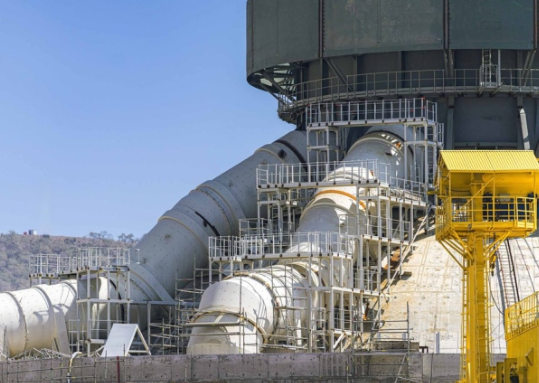
Akkuyu Nuclear Power Plant: Türkiye's Gateway to the Nuclear Supply Chain and a Platform for Long-Term Technology Acquisition
On August 15, Professor Şer Ergun, Head of the Nuclear Engineering Department at Hacettepe University, commented on the commissioning progress of the Akkuyu Nuclear Power Plant in Mersin Province, emphasizing the project's strategic and technical significance for Türkiye. She noted that the VVER-1200 technology used at Akkuyu is operational in multiple countries worldwide, and Türkiye is seizing this opportunity to operate modern reactor technology while accumulating nuclear knowledge and experience and strengthening international cooperation through collaboration with other VVER-1200 user countries. She also stressed that Turkish engineers should actively participate in similar projects. Ergun stated that Akkuyu's value should not be assessed solely from the perspective of power generation, but also from its contribution to the nuclear technology ecosystem. The project provides...
2026-08-16

Survey of Japanese 18-year-olds: Nearly 60% support restarting or replacing nuclear reactors that meet safety standards
A survey of young people around age 18 in Japan shows that nearly 60% of respondents support restarting nuclear power plants that meet safety standards or replacing existing reactors with new units; meanwhile, over 70% of respondents have expectations or some expectations for advanced innovative reactors. The 18-year-old awareness survey conducted by the Nippon Foundation asked respondents to choose which of two statements was closer to their own view: one being that nuclear power plants meeting safety standards should be restarted or replaced with new units; the other being that nuclear power should not be relied upon due to accident risks and radioactive waste issues. The results showed that 28.5% of respondents said their view was "close" to the first statement, and 29.8...
2026-08-16