
Search Results
Keyword:-
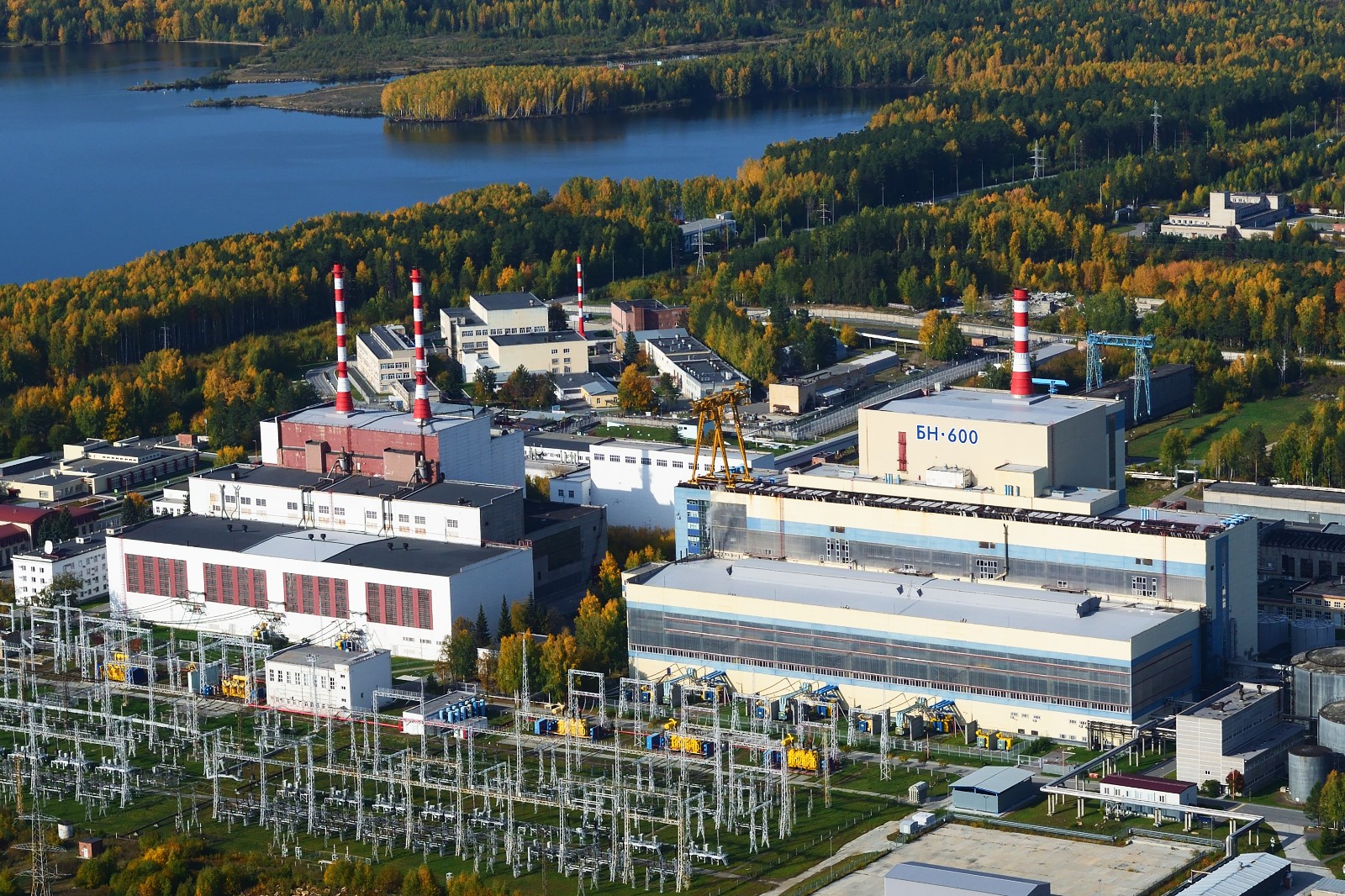
Unit 3 of Beloyarsk NPP begins scheduled maintenance and equipment modernization
Unit 3 of Russia's Beloyarsk NPP entered scheduled preventive maintenance on August 18. This outage maintenance will be used for fuel reloading, equipment maintenance, and preventive repairs, along with partial modernization efforts to maintain reliable unit operation and improve equipment performance. The unit features a BN-600 sodium-cooled fast neutron reactor. During the maintenance period, the plant will carry out major repairs on the BN-600 reactor facility and replace 9 guide tubes in the control and protection system. Such operations are uncommon and are typically performed approximately once every 10 years. According to the maintenance schedule, the plant will also repair the unloading lift device and conduct operational monitoring inspections of the reactor pressure vessel metal...
2026-08-19

SHINE Advances Commercial Spent Fuel Recycling Facility Construction
U.S. electricity demand is growing at a rate rarely seen in decades, and nuclear energy is considered one of the key options to meet the incremental demand. Meanwhile, the current open nuclear fuel cycle still treats spent fuel primarily as single-use waste, failing to fully utilize most of the energy potential that remains within it. SHINE Technologies is developing spent fuel recycling technologies and plans to build a facility with spent fuel recycling capabilities. The company stated that multiple collaborations funded by the U.S. Department of Energy's Advanced Research Projects Agency-Energy (ARPA-E) CURIE program are advancing the work from validated laboratory-scale chemical processes toward commercial scale...
2026-08-19

SHINE Joins GE Vernova-Led Project to Modernize Nuclear Fuel Reprocessing Materials Accountability
SHINE Technologies (SHINE) announced on August 18 that it has joined a nuclear fuel reprocessing materials management project led by GE Vernova (GE Vernova), with both parties collaborating on tracking, measurement, and nuclear materials accountability of spent fuel during the reprocessing process. The project is led by GE Vernova's Advanced Research Center and funded by the U.S. Department of Energy's Advanced Research Projects Agency-Energy (ARPA-E), with the goal of introducing artificial intelligence technologies into reprocessing facilities to improve real-time monitoring of spent fuel flow and the efficiency of nuclear materials accounting. As a subcontractor to GE Vernova, SHINE will participate in improving sensor deployment schemes and developing an AI-supported materials tracking system, ensuring that nuclear materials control and accountability requirements are incorporated into the overall design at the early stages of reprocessing facility development.
2026-08-19

TerraPower Plans to Deepen South Korean Supply Chain Cooperation to Advance K-Sodium SMR Business Model
TerraPower CEO Chris Levesque recently stated that South Korea possesses strong nuclear supply chain capabilities, with both a foundation in small modular reactor (SMR) construction and familiarity with the stable power demands of AI data centers, semiconductors, and other industries. TerraPower plans to further strengthen cooperation with South Korean companies in supply chain and project manufacturing. Levesque stated that small modular reactors are not a technology intended to replace traditional large-scale nuclear power plants, but rather a new class of energy solution targeting incremental electricity demand in the AI era. He recently met with TerraPower Chairman Bill...
2026-08-19
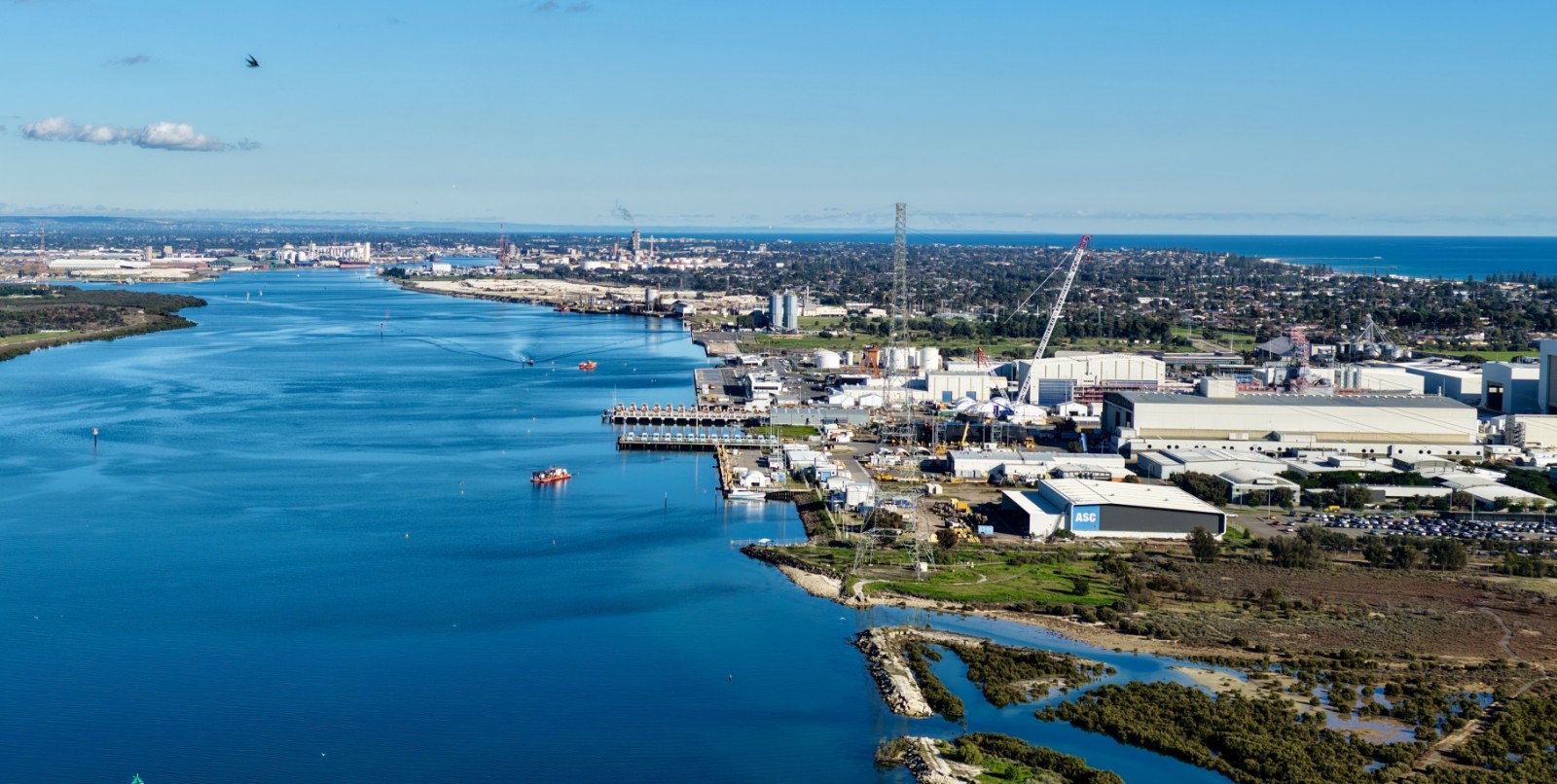
Amentum Joint Venture Selected as Capability Partner for Australia's Nuclear-Powered Submarine Shipyard Project
Australian Naval Infrastructure (ANI) has selected a joint venture between Amentum and Laing O'Rourke as the capability partner for the nuclear-powered submarine construction shipyard project in South Australia. The project is located at the new Osborne shipyard north of Adelaide, which will be used to build Australia's conventionally armed, nuclear-powered submarines under the AUKUS trilateral agreement. Under a long-term contractual arrangement, Amentum and Laing O'Rourke will undertake key support roles during the development of the new shipyard. The work will be integrated into ANI's Integrated Delivery Office, focusing on providing specialized support in nuclear-related project management, construction management, and safety management.
2026-08-19

NANO Nuclear and QNI Sign Memorandum of Understanding to Advance Domestic HALEU Fuel Supply Cooperation in the U.S.
NANO Nuclear Energy Inc. (NANO Nuclear) and Quadrant Nuclear Industries, Inc. (QNI) announced on August 18 that the two companies have signed a memorandum of understanding (MOU) establishing a non-binding framework for future high-assay low-enriched uranium (HALEU) fuel supply cooperation. Under the MOU, the parties will engage in discussions regarding the supply of HALEU to be produced by QNI in the future and long-term offtake arrangements. The fuel in question is planned to come from QNI's proposed Vanguard facility at Idaho National Laboratory (INL). QNI stated that once the facility operates at full capacity, its annual HALEU production...
2026-08-19

Vivos Ships First Batches from U.S. IsoPet Production Facility, Receives AERB Approval to Build International Manufacturing Center in India
KENNEWICK, Wash. — Vivos Inc. recently announced two operational milestones: its in-house production facility in Richland, Washington, has begun delivering IsoPet® products to certified veterinary clinics in the United States; simultaneously, the company has received authorization from India's Atomic Energy Regulatory Board (AERB) to establish an international manufacturing center in India. This means Vivos will have a two-site production footprint spanning the U.S. and India. According to the company, the U.S. production facility, housed at the Applied Process Engineering Laboratory (APEL), will manufacture IsoPet® veterinary oncology products and RadioGel® human oncology products, and will serve as the center for subsequent process improvements and regulatory...
2026-08-19
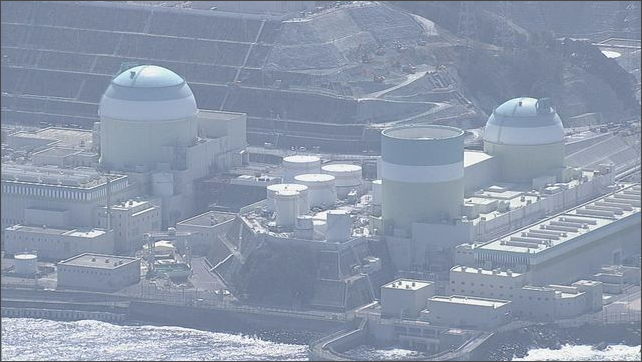
Ikata Nuclear Power Station Unit 1 Decommissioning Phase 2 Plan Approved by Experts
An expert organization in Ehime Prefecture, Japan, regarding safety management at the Ikata Nuclear Power Station recently held a meeting to discuss the decommissioning plan for Unit 1 of the station. The report formed at the meeting deemed it appropriate for the unit to enter the second phase of decommissioning in fiscal year 2027. The meeting was convened by the Nuclear Safety Expert Subcommittee under the Ikata Nuclear Power Station Environmental Safety Management Committee. This committee is responsible for providing advice to the Governor of Ehime Prefecture on safety management at the Ikata Nuclear Power Station. At the meeting, eight academic experts reviewed the decommissioning plan for Unit 1. The decommissioning of Unit 1 at the Ikata Nuclear Power Station began in 2017 and is divided into four phases overall, planned to last approximately 40 years. Currently, the decommissioning work...
2026-08-19
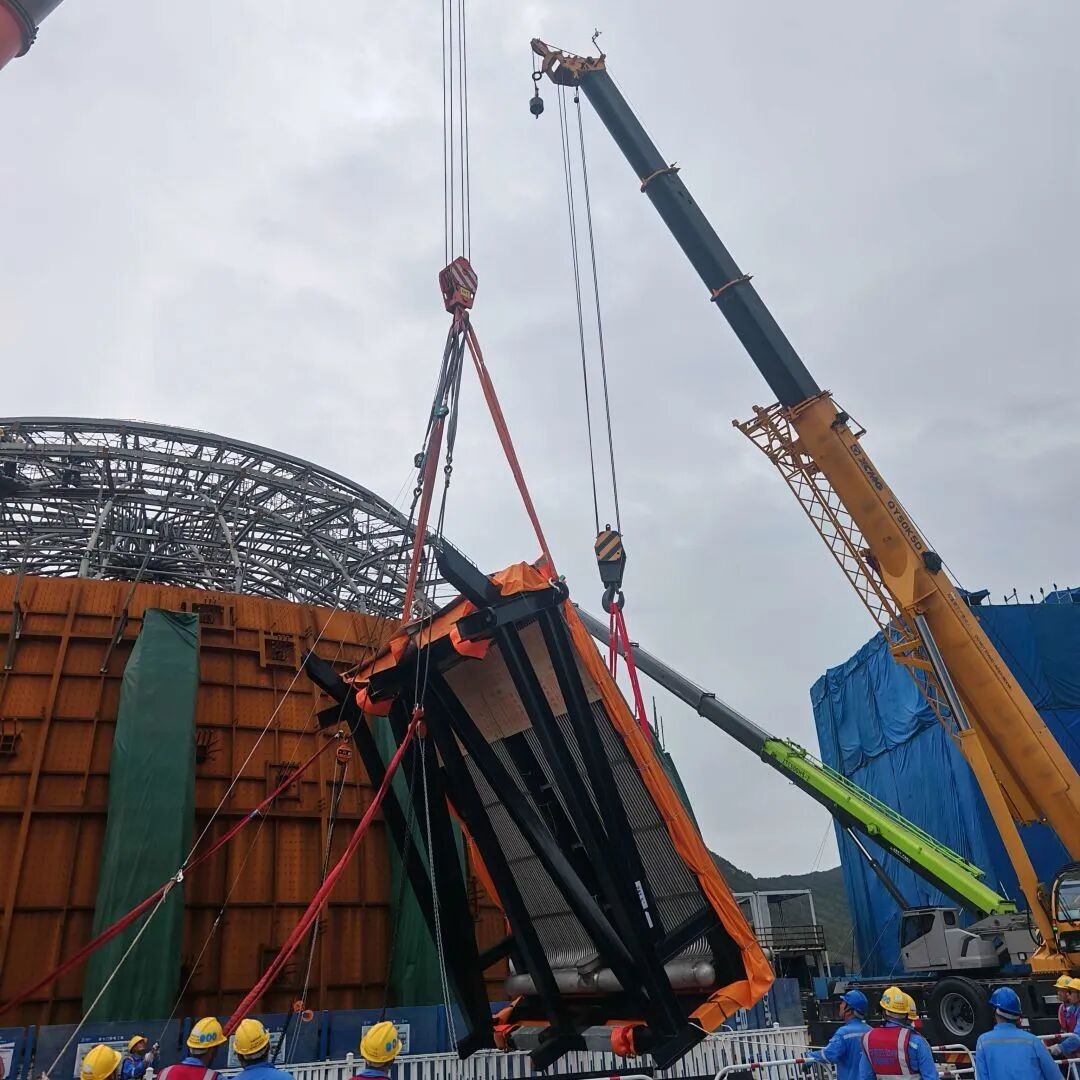
First PCS Heat Exchanger Pre-Introduction Successfully Completed at Zhejiang Jinqimen Nuclear Power Project
On August 16, the pre-introduction of the first PCS heat exchanger at the Zhejiang Jinqimen Nuclear Power Project, undertaken by China Nuclear Industry Fifth Construction Co., Ltd. (CNFC), was successfully completed. The entire introduction process was smooth and orderly, with safety and quality fully under control. The smooth pre-introduction of this PCS heat exchanger has laid a solid foundation for the subsequent modular dome lifting and overall project construction. As a core key equipment in the reactor building, the PCS heat exchanger features heavy weight, high installation precision, and significant difficulty. To ensure lifting safety, the project team organized 7 special discussions and 5 on-site surveys, sorted out preconditions, fabricated dedicated angle tooling, and clarified operation procedures and safety control points. During the lifting, management personnel provided full-time on-site supervision, with commanders and operators working in close coordination to strictly control equipment positioning. After 3 hours of continuous operation, a series of processes including equipment lifting, flipping to vertical, fine angle adjustment, and equipment pre-introduction were precisely completed, and the equipment was finally placed smoothly, marking the successful completion of the pre-introduction work.
2026-08-19
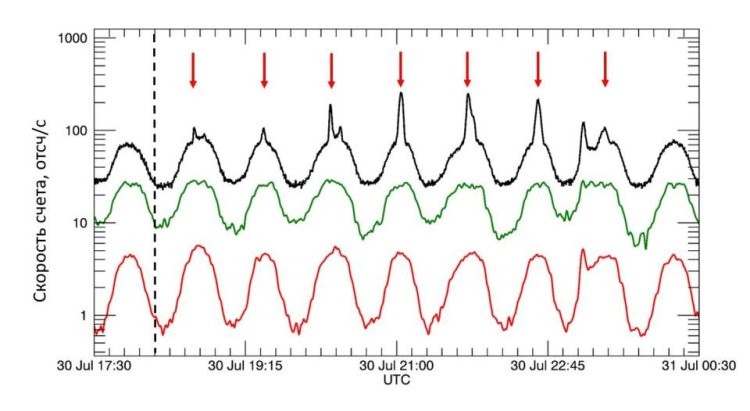
Russian Segment of ISS Adjusts BTN-M2 Equipment Configuration, Continues Neutron and Gamma Radiation Observations
On August 13, 2026, during the ISS-75 expedition mission, Russian cosmonauts Pyotr Dubrov and Anna Kikina performed configuration adjustments to the BTN-M2 scientific equipment inside the Nauka module of the Russian Segment of the International Space Station. Figure 1. Profiles of gamma rays (energies below 500 keV, black curve), 511 keV photons from electron-positron annihilation (green curve), and high-energy neutrons (red curve) detected by the BTN-M2 instrument aboard the ISS on July 30–31, 2026. Red arrows indicate enhanced gamma-ray flux during the solar proton event (SPE) as the ISS passed over high-latitude regions of the Earth...
2026-08-18

U.S. FRIB Secures Contract from Naval Nuclear Laboratory to Develop Quantum-Classical Hybrid Nuclear Reaction Calculation Methods
A research project at the Facility for Rare Isotope Beams (FRIB) at Michigan State University, led by Dean Lee, Professor of Physics at FRIB, Professor in the Department of Physics and Astronomy at Michigan State University, and Head of the Theoretical Nuclear Science Department at FRIB, has received one-year contract support from the Naval Nuclear Laboratory. The laboratory is managed by Fluor Marine Propulsion. The project will study how to combine quantum computers with classical computers to improve the accuracy of predictions for neutron interactions with matter. This also represents the first phase of a five-year plan aimed at developing and evaluating new computational tools for nuclear science. In nuclear physics research, accurately predicting how neutrons interact with atomic nuclei...
2026-08-18
Argonne National Laboratory Launches Diamond Quantum Sensor Project to Serve High-Energy Physics Electromagnetic Field Measurements
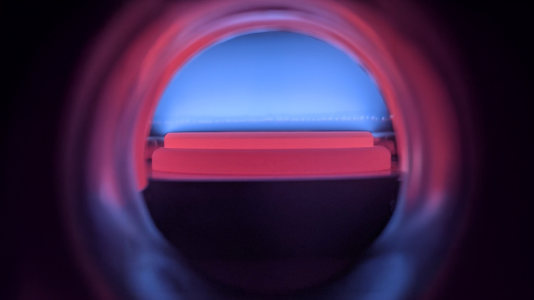
The U.S. Department of Energy's Argonne National Laboratory recently launched a new three-year, $1 million research project that plans to combine quantum information science with high-energy physics research to develop a new generation of quantum sensors based on diamond materials for higher-precision measurement and mapping of electromagnetic fields. Inside this plasma-filled vacuum chamber is the diamond substrate used to fabricate the diamond thin film (not shown in the image), within which the nitrogen-vacancy qubits are located. (Image courtesy of Nazar Delegan/Argonne National Laboratory.) In high-energy physics experiments, the precision of electromagnetic field measurements directly affects the reliability of experimental results. Whether analyzing the momentum of debris produced after particle collisions...
2026-08-18
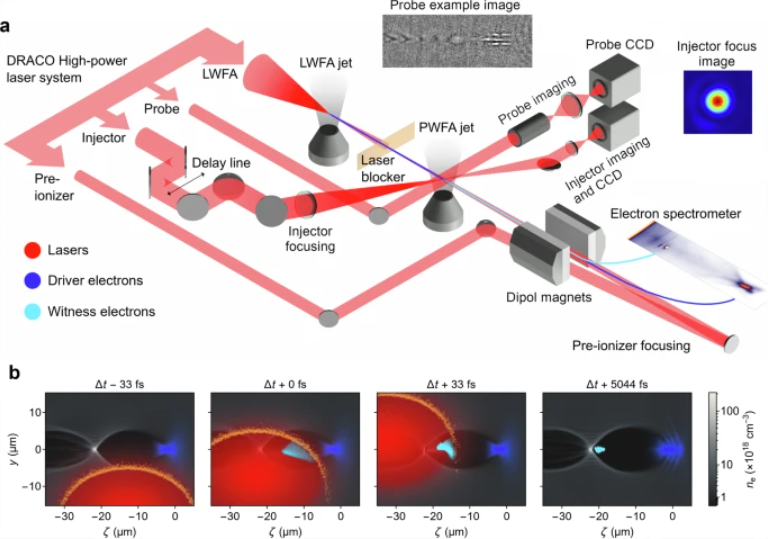
German research team achieves ultra-compact plasma photocathode injection
A research team from institutions including the Helmholtz-Zentrum Dresden-Rossendorf in Germany has demonstrated an ultra-compact plasma photocathode injection scheme integrated into a hybrid plasma wakefield accelerator on the DRACO laser facility. The study utilized a 150 TW-class laser system to drive a laser wakefield accelerator (LWFA), generating high-peak-current electron beams, which in turn drove a subsequent particle beam wakefield accelerator (PWFA), completing the generation and acceleration of witness electron beams within millimeter-scale plasma structures. Plasma wakefield accelerators can produce accelerating fields far exceeding those of conventional radiofrequency linear accelerators, but how to obtain high-quality, high-brightness electron beams in compact devices...
2026-08-18

Decoding the Clinical-Radiological Paradox: Brain Network Mechanisms in Spinocerebellar Ataxia Type 3 Revealed
On August 17, the team of Professor Liu Chen and Professor Wang Jian from the Department of Radiology at Southwest Hospital of Army Medical University, in collaboration with Professor Long Zhiliang's team from the Faculty of Psychology at Southwest University, systematically revealed for the first time the micro-level molecular pathological mechanisms underlying macroscopic brain network decoupling in patients with spinocerebellar ataxia type 3 (SCA3) by integrating multimodal magnetic resonance imaging technology with high-resolution micro-biological atlases. This provides a novel perspective and objective imaging targets for resolving the clinical-radiological dissociation challenge in clinical diagnosis and treatment. The findings were published in the internationally leading journal in the field of movement disorders under the title "Putaminal Structure-Function Decoupling as an Early Candidate Imaging Biomarker for Motor Severity in Spinocerebellar Ataxia Type 3."
2026-08-18

World's first laser plasma accelerator-driven high-resolution muon imaging experiment to launch in Romania
Ideon Technologies, a global subsurface detection muon tomography company, is participating in an international research consortium to conduct the world's first high-resolution muon imaging experiment driven entirely by a laser plasma accelerator. The experiment aims to use a compact accelerator to produce muon beams on demand for non-destructive high-resolution imaging, with applications targeting mineral production, critical infrastructure, cargo inspection, medical imaging, semiconductors, nuclear security, and space radiation testing. Consortium members include the University of Texas at Austin, the Extreme Light Infrastructure - Nuclear Physics (ELI-NP) facility team, Heinrich Heine University Düsseldorf, Helmholtz-Zentrum Dresden-Rossendorf, ELI-Beamlines, and Tau Systems.
2026-08-18