
Search Results
Keyword:CT
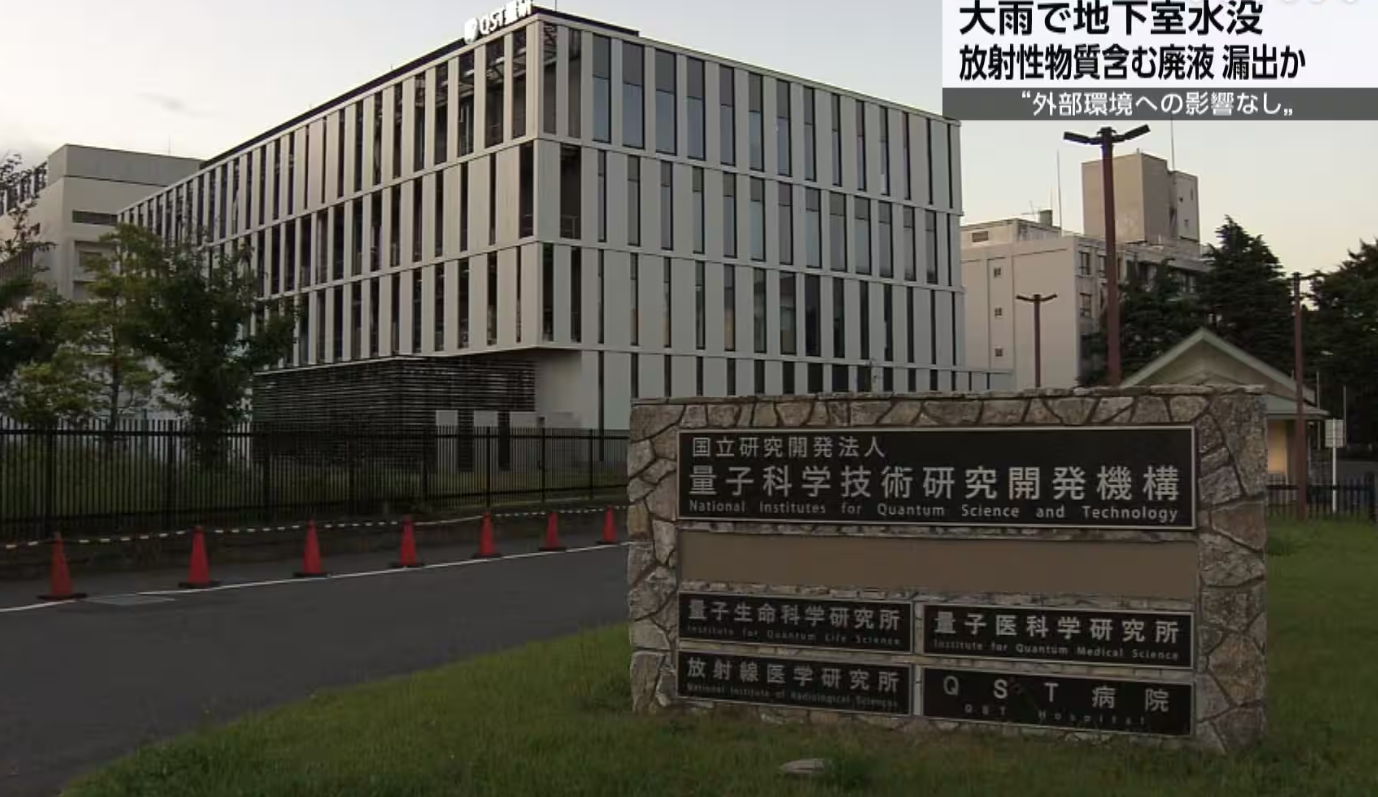
Radioactive liquid waste leak suspected at QST's underground facility in Chiba due to record rainfall
According to Japanese media reports, due to record-breaking rainfall in Chiba Prefecture, an underground facility of the National Institutes for Quantum Science and Technology (QST) in Chiba City was flooded, and radioactive liquid waste in underground storage tanks at the facility may have mixed with rainwater and leaked outdoors. QST stated that as of the 13th, an estimated 2,000 to 3,000 liters of liquid waste had accumulated in the relevant underground storage tanks. After investigating water bodies around the tanks, the institute confirmed that detected radioactive material concentrations were below standard values, and no environmental impact has been indicated so far. QST reported the incident to national and local governments the following day and plans to submit preventive measures to the Nuclear Regulation Authority of Japan.
2026-08-18

Multiple regions in Japan demand nuclear power operators strengthen safety management and information disclosure
On August 17, Keisuke Yokoo, the new chairman of Tokyo Electric Power Company (TEPCO), visited the Niigata Prefectural Government and met with Niigata Governor Hideyo Hanazumi. Yokoo assumed his post in June, becoming the first chairman of TEPCO to come from a financial institution. The meeting is seen as an arrangement for the new TEPCO management, following its official launch, to communicate with local governments on nuclear safety and trust rebuilding. Yokoo stated that, as the party responsible for the Fukushima Daiichi nuclear accident, TEPCO will always bear in mind that there is no end to safety and will continuously improve the safety level of its nuclear power plants. He also expressed his commitment to ensuring the safe operation of the Kashiwazaki-Kariwa Nuclear Power Plant. Hanazumi said at the meeting...
2026-08-18
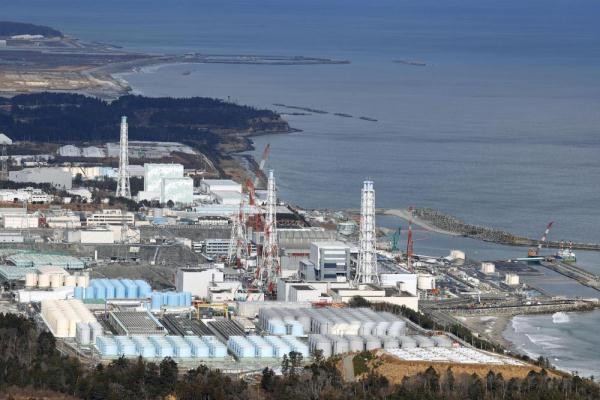
Fire alarm triggered for fifth time at Fukushima Daiichi Nuclear Power Station in August; no fire confirmed on site
At 7:14 a.m. on August 18, a fire alarm was triggered on the first basement floor of the turbine building of Unit 5 at the Fukushima Daiichi Nuclear Power Station. Tokyo Electric Power Company (TEPCO) stated that after fire department personnel arrived and conducted inspections, no fire was confirmed on site at 7:55 a.m. Readings from radiation monitoring stations around the plant showed no significant fluctuations. This was the fifth time a fire alarm had been triggered at the Fukushima Daiichi Nuclear Power Station since the beginning of August. Previously, related alarms had occurred on August 8 at the maintenance building for Units 5 and 6, on August 12 at the emergency diesel generator room for the high-pressure core spray system of Unit 6, on August 13 at the main administration building, and on August 15 at the southwest stairwell of the turbine building of Unit 5. After each of the above alarms was triggered, the fire department confirmed that no fire had occurred...
2026-08-18

Nuclear-powered icebreaker "Leningrad" completes installation of two RITM-200 reactors
United Shipbuilding Corporation (USC) announced that Baltic Shipyard has completed the installation of two RITM-200 nuclear reactors on the Project 22220 nuclear-powered icebreaker "Leningrad". The "Leningrad" is the sixth vessel in the Project 22220 nuclear-powered icebreaker series. The vessel is being built by Baltic Shipyard under an order from Rosatom, and its keel-laying ceremony was held on January 26, 2024. Project 22220 nuclear-powered icebreakers are primarily designed to ensure year-round navigation in the western Arctic waters of Russia. Equipped with nuclear propulsion systems, these vessels can perform icebreaking escort and fairway maintenance missions under complex ice conditions.
2026-08-18
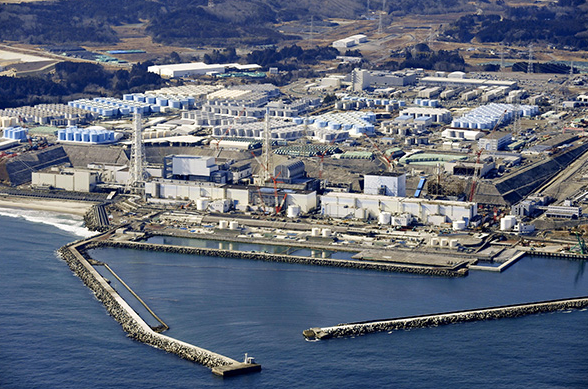
22nd Round of Fukushima Daiichi Nuclear Power Station ALPS Treated Water Discharge Completed
Tokyo Electric Power Company (TEPCO) stated on August 17 that the 22nd round of ALPS treated water discharge from the Fukushima Daiichi Nuclear Power Station had been completed by the afternoon of the same day (local time). This round of discharge began on July 30, with a total of 7,888 tonnes of ALPS treated water released. According to information released by TEPCO, the total amount of radioactive tritium contained in the water discharged in this round was approximately 1.3 trillion becquerels. This is the 4th round of ALPS treated water discharge from the Fukushima Daiichi Nuclear Power Station in Japan's fiscal year 2026. Japan began discharging ALPS treated water from the Fukushima Daiichi Nuclear Power Station in August 2023. To date, 22 rounds of discharge have been carried out, with a cumulative discharge volume of approximately 173,000 tonnes...
2026-08-18
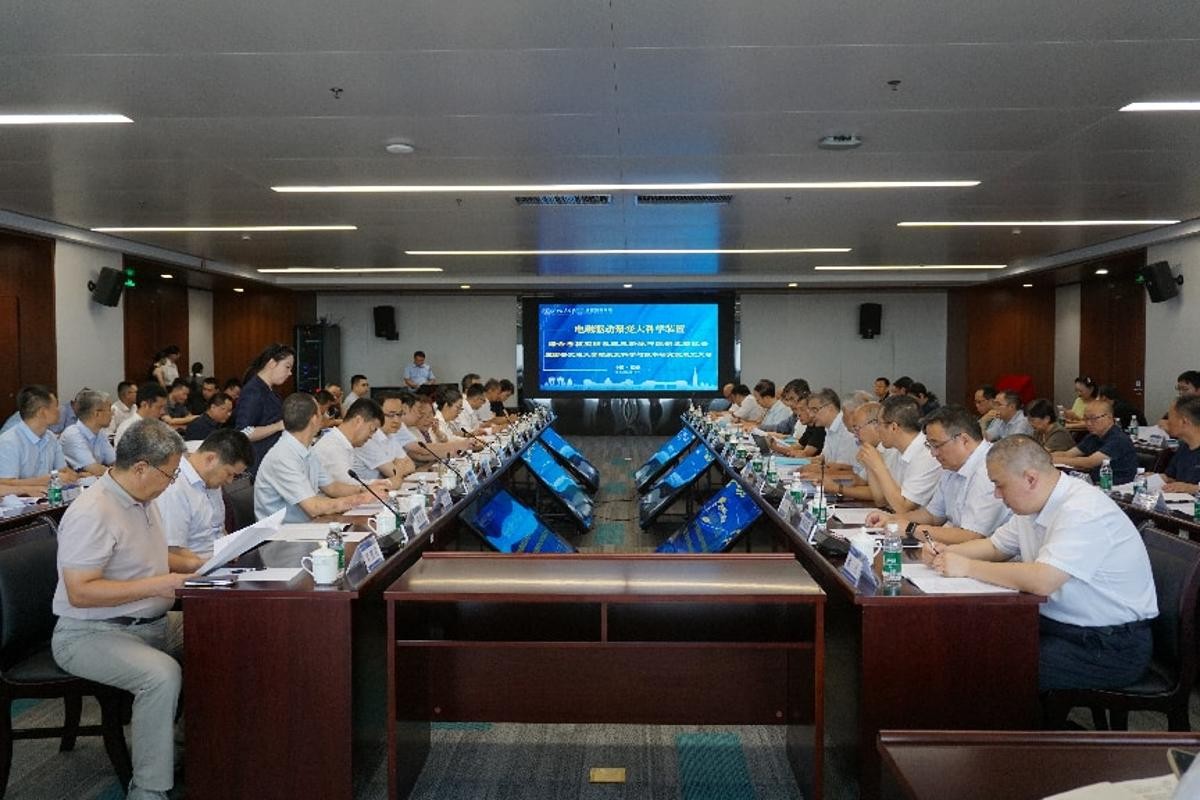
Single-Channel Pulse Source of Electromagnetic-Driven Fusion Large Scientific Facility Passes Acceptance
On August 16, the test and acceptance meeting for the single-channel pulse source of the comprehensive assessment experimental system of the electromagnetic-driven fusion large scientific facility, along with the inauguration ceremony of the Institute of Nuclear Fusion Science and Technology at Xi'an Jiaotong University, was held at the China Western Science and Technology Innovation Harbor. During the meeting, the single-channel pulse source of the comprehensive assessment experimental system passed testing and acceptance, and the Institute of Nuclear Fusion Science and Technology at Xi'an Jiaotong University was officially inaugurated. Before the meeting, attending experts and guests inspected the single-channel pulse source experimental system. During the acceptance session, the project team presented the overall status of the electromagnetic-driven fusion large scientific facility, the development progress of the single-channel pulse source, and the test verification results. The expert panel discussed the...
2026-08-18
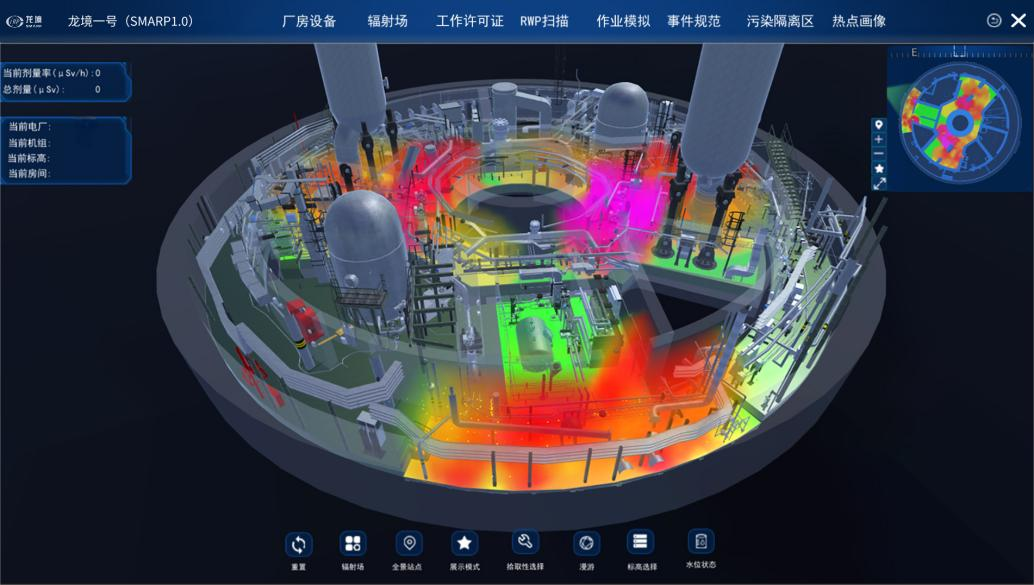
CIRP's "Dragon Realm" Series Advances Digital Upgrade of Radiation Protection for Nuclear Facilities
The Dragon Realm series is a digital radiation protection system product independently developed by CIRP (China Institute for Radiation Protection), refined over more than a decade of accumulation, based on the on-site radiation protection needs of nuclear facilities. It integrates radiation field visualization, real-time monitoring, and intelligent management and control, providing core technical support for the digital transformation of radiation protection in nuclear facilities. Dragon Realm One focuses on "seeing." It recreates the radiation environment of nuclear facilities in three-dimensional digital form, integrating scene roaming and operational simulation to make radiation risks perceivable and tangible, providing an intuitive basis for protection decision-making. Radiation field visualization: establishes a mapping relationship between dose rate and color in the radiation field, achieving 3D visualization of the radiation field. Simulation roaming: supports...
2026-08-18

CNNC Sichuan Environmental Protection Holds Cadre Meeting to Announce Comrade Zhang Xiangming's Appointment as Chief Accountant of the Company
On August 17, CNNC Sichuan Environmental Protection held a cadre meeting to announce the decision of the Group Company Party Leadership Group on the appointment of Comrade Zhang Xiangming as Chief Accountant of CNNC Sichuan Environmental Protection Engineering Co., Ltd. Wang Suohui, Secretary of the Party Committee and Chairman of CNNC Environmental Protection, attended the meeting via video and delivered a speech. Chang Yu, Secretary of the Party Committee and Chairman of the Company, presided over the meeting. On behalf of the Party Committee of CNNC Environmental Protection, Wang Suohui extended congratulations to Comrade Zhang Xiangming on his new appointment. He pointed out that this cadre adjustment was a decision made by the Group Company Party Leadership Group from the overall perspective of optimizing and strengthening the leadership team, fully reflecting the high importance attached to and earnest expectations for CNNC Sichuan Environmental Protection. At present, CNNC Sichuan Environmental Protection is at a critical stage of tackling tough challenges, with various tasks...
2026-08-18
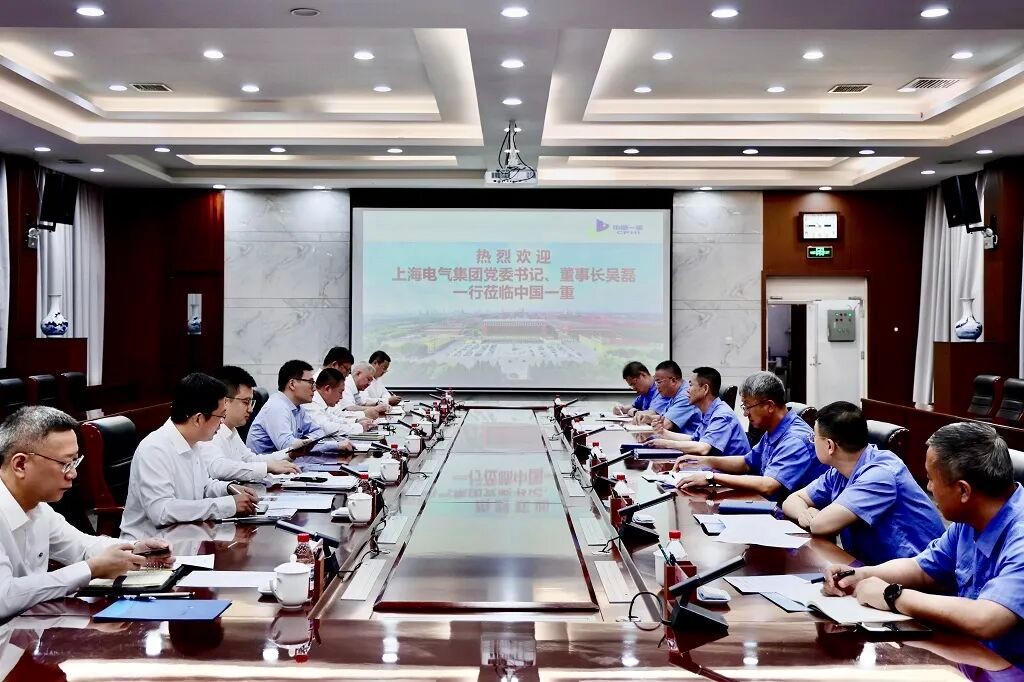
CFHI and Shanghai Electric Hold Talks to Advance Cooperation in Nuclear Power Equipment and Other Fields
On August 17, Lu Zhiqiang, Secretary of the Party Committee and Chairman of China First Heavy Industries (CFHI), met with Wu Lei, Secretary of the Party Committee and Chairman of Shanghai Electric Group, and his delegation at CFHI. The two sides held discussions on further deepening strategic cooperation, focusing on exchanging views on cooperation in fields such as metallurgical equipment, high-end materials, nuclear power equipment, new energy wind power, scientific research and development, and industrial chain synergy. Lu Zhiqiang welcomed Wu Lei and his delegation and expressed gratitude to Shanghai Electric for its long-standing support to CFHI. He stated that CFHI will continue to focus on its primary responsibility of equipment manufacturing, coordinate the transformation and upgrading of traditional industries, and thoroughly implement the "1235" development strategy. He expressed hope that both sides...
2026-08-18
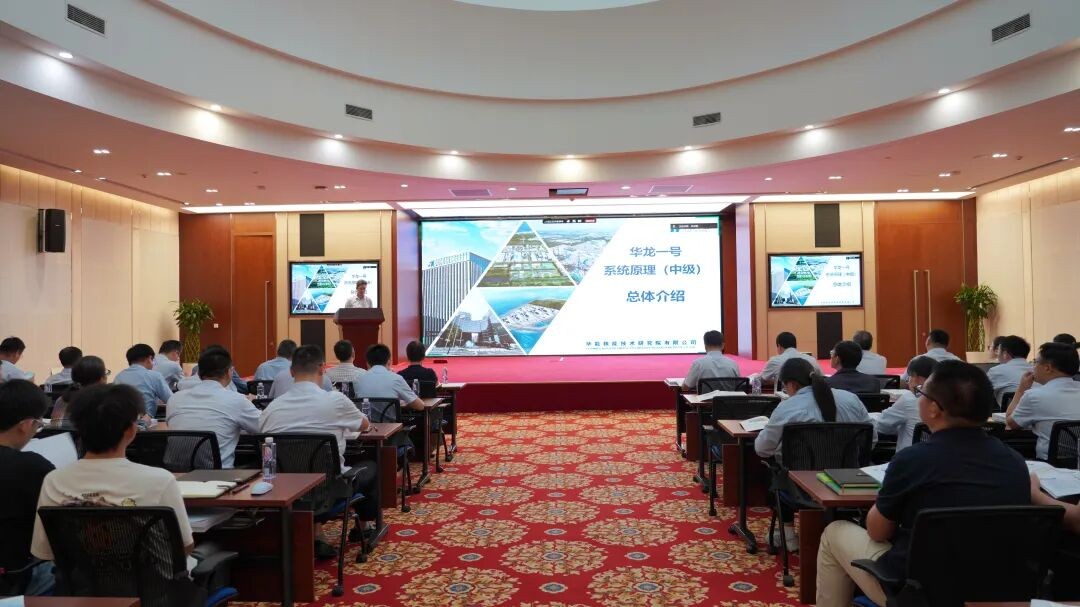
Huaneng Nuclear Energy Research Institute Conducts First Specialized Training on Hualong One System Principles
To enhance the Institute's technical support services and scientific research capabilities regarding Hualong One technology, and to strengthen employees' systematic understanding of Hualong One, Huaneng Nuclear Energy Research Institute organized training on Hualong One system principles, completing the first specialized session on August 12. A total of 101 company leaders and employees participated in the training through a combination of online and offline methods. The first training session reviewed China's path toward independent development of pressurized water reactor technology from an industry development perspective, systematically outlining the global evolution of nuclear power technology and the safety design criteria for Generation III nuclear power. By benchmarking against mainstream Generation III reactor designs such as the US AP1000 and European EPR, the session provided in-depth explanations of Hualong One's dual safety architecture combining active and passive safety systems...
2026-08-18
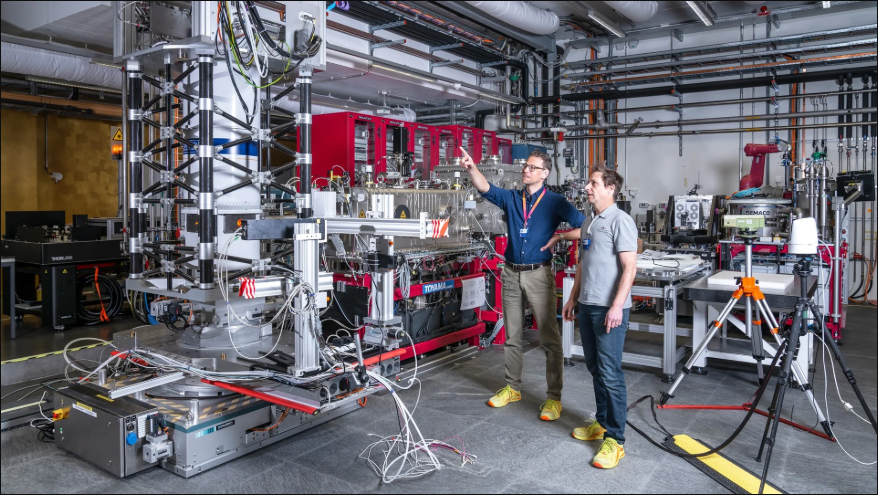
SwissFEL Achieves Ultralow-Temperature X-ray Observation of Quantum States
Researchers at the Paul Scherrer Institute (PSI) in Switzerland recently reported that the Cristallina experimental station of the Swiss Free-Electron Laser (SwissFEL) can now observe quantum states that only emerge at extremely low temperatures using X-ray scattering at temperatures close to absolute zero. Simon Gerber (left) and Bill Pedrini (right) at the Cristallina experimental station of SwissFEL. With the help of a custom-built cryostat connected to the beamline (far left), quantum states can now be studied at extremely low temperatures. Paul Scherrer Institute PSI/Markus FischerAccording to the team, they recently achieved a low temperature of 35 millikelvin in experiments...
2026-08-17
Fermilab Muon g-2 Experiment Sets New Direct Detection Limit on Muon Electric Dipole Moment
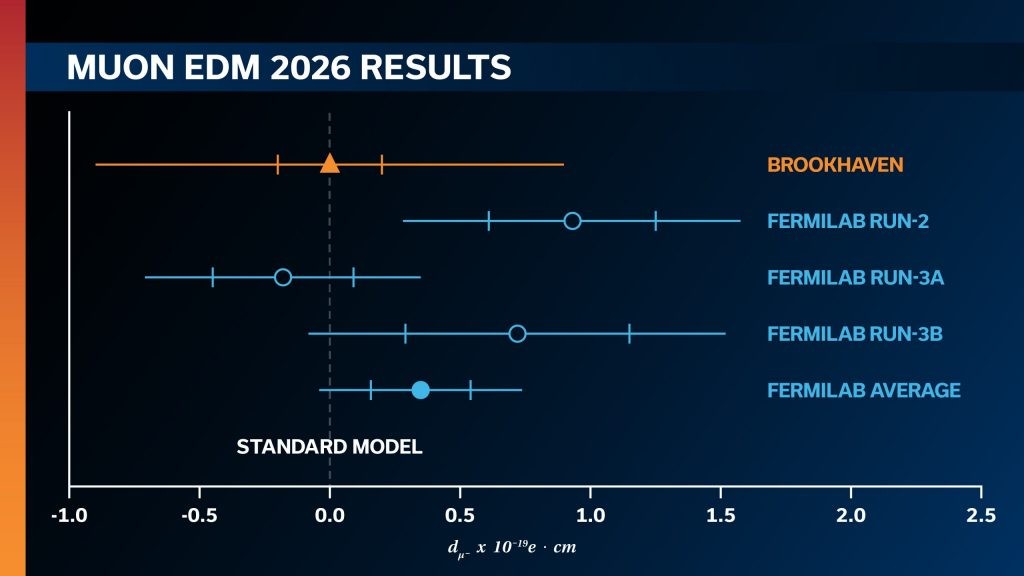
On August 12, 2026, the Muon g-2 Collaboration announced that a new analysis based on 25% of the data from the Muon g-2 experiment at the U.S. Department of Energy's Fermi National Accelerator Laboratory has produced the most sensitive direct measurement of the muon's electric dipole moment to date. The results show that if a muon electric dipole moment exists, its magnitude is below the current detection threshold of the experiment. The muon electric dipole moment values measured by Fermilab across different data-taking periods were compared with previous results from Brookhaven National Laboratory. The combined Fermilab value is consistent with zero (no observation). Although the experiment uses positive muons, results are typically reported for negative muons, which reverses the sign of the measured value...
2026-08-17

Argonne National Laboratory Unveils DONUT Tool to Accelerate Real-Time Analysis of X-ray Nanodiffraction Data
Researchers at the U.S. Department of Energy's Argonne National Laboratory have developed a new machine learning tool called DONUT to accelerate X-ray data analysis in experiments at the Advanced Photon Source (APS). The tool can process complex images generated by scanning X-ray nanodiffraction microscopy (SXDM) in real time during experiments, helping researchers more quickly determine internal structural changes in materials. DONUT stands for "Nanobeam Optical Diffraction based on Unsupervised Training," a physics-aware neural network. Its key feature is combining artificial intelligence methods with physical models of focused X-ray beam interactions with materials, allowing it to learn directly from experimental data without relying on pre-labeled training...
2026-08-17

FDG PET/CT Enables More Precise Identification of Multiorgan Involvement in Brazilian Paracoccidioidomycosis
A study conducted by researchers at the Brazilian CEPID CancerThera center shows that molecular imaging with fluorodeoxyglucose (FDG) PET/CT can detect systemic lesions of paracoccidioidomycosis (PCM) more sensitively than conventional staging methods, helping to reassess the extent and severity of the disease. The findings were published in Clinical Infectious Diseases. Paracoccidioidomycosis is a systemic fungal disease caused by inhalation of fungal spores of the Paracoccidioides genus, with significant clinical and epidemiological importance in Brazil. Often referred to as "coffee planter's disease," it primarily affects the lungs but can also spread to multiple organs via lymphatic and hematogenous routes. Conventional staging typically relies on...
2026-08-17
India Unveils Nuclear Energy Self-Reliance Roadmap, Targeting 100 GW Nuclear Capacity by 2047
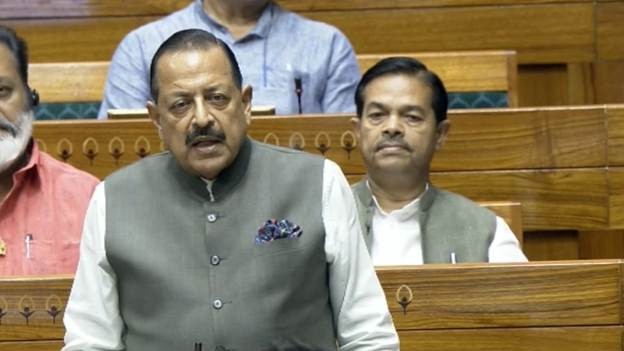
India's Minister of State for the Prime Minister's Office, Jitendra Singh, recently stated in a written reply to the Lok Sabha that India is accelerating the development of its domestic nuclear energy ecosystem, with key focus areas including advanced reactor technologies, small modular reactors, domestic manufacturing capabilities, private sector participation, and the long-term development and utilization of thorium resources. Singh stated that India's long-term nuclear energy strategy remains based on its three-stage nuclear power program, aiming to gradually utilize the country's relatively abundant thorium resources while ensuring long-term energy security. India proposed a Nuclear Energy Mission in its 2025-2026 federal budget, planning to expand nuclear power capacity to 100 GW by 2047...
2026-08-17