
Search Results
Keyword:Fusion

South Korea Designates Small Modular Reactors and Nuclear Fusion as Key Future Growth Technologies
South Korean President Lee Jae-myung will chair a briefing session on the "Seven Seeds for Future Growth Engines" at the presidential office Cheong Wa Dae on the afternoon of August 12, focusing on the development pathways for advanced technologies including Small Modular Reactors (SMRs) and nuclear fusion, as well as related industrial ecosystems and supply chain security measures. According to Cheong Wa Dae, the meeting aims to jointly study advanced technology deployment with the science and industry communities, support artificial intelligence (AI) transformation, and strengthen South Korea's future industrial foundation capabilities. The seven areas designated as priorities include Small Modular Reactors, nuclear fusion, renewable energy, quantum technology, aerospace, advanced biotechnology, and advanced materials and component supply chains....
2026-08-12
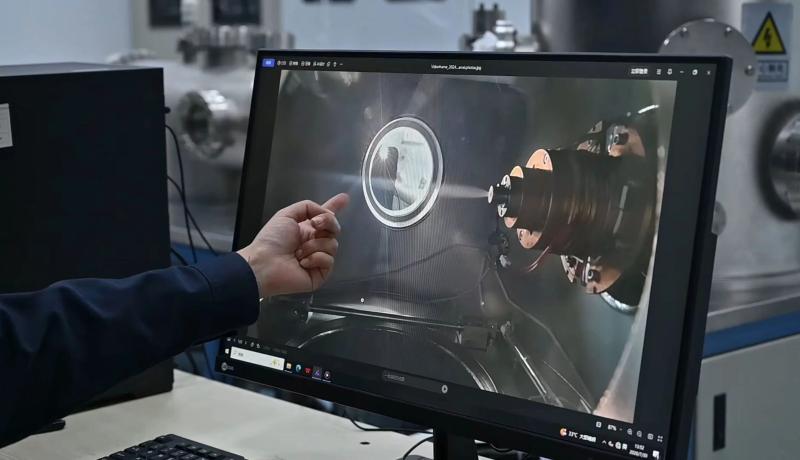
Unanimously Approved! China's First ISO International Standard in the Field of Fusion Fueling Officially Released
On August 10 local time, the international standard ISO 19991:2026, "Fusion Technology — Experimental Magnetic Confinement Fusion Facilities — Ultrasonic Molecular Beam Injection Fueling Technology for Fusion Devices," formulated by China, was officially released. Earlier, during the final voting process, all 12 countries, including France, Germany, and Russia, cast affirmative votes. This is the first ISO international standard in the field of fusion fueling and the second ISO international standard in the fusion field led by the Southwestern Institute of Physics (SWIP) under the China National Nuclear Corporation (CNNC). Ultrasonic molecular beam injection fueling technology is a key fuel supply technology for controlled nuclear fusion devices. This technology, an advanced fusion fueling technology originally developed by China, forms high-speed, directional molecular beams through adiabatic gas expansion. It features high speed, strong directionality, relatively high fueling efficiency, and low particle recycling, significantly enhancing the fuel control capability of fusion devices. It has been applied to more than ten magnetic confinement fusion experimental devices both domestically and internationally.
2026-08-11
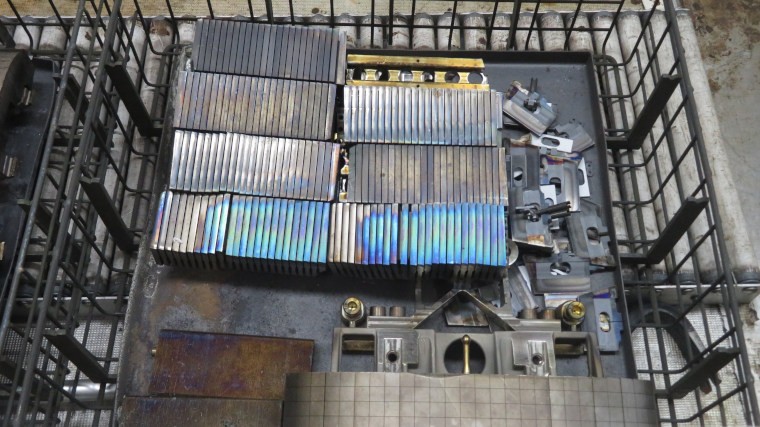
UK's Materials Detritiation Facility at Culham Resumes Operations to Support JET Fusion Decommissioning Materials Research
The UK Atomic Energy Authority recently announced that the Materials Detritiation Facility (MDF) at Culham has resumed operations following a 12-month engineering shutdown and upgrade. Experimental data produced by the facility has already been used to support research related to the removal of materials from the Joint European Torus (JET) device, providing a basis for waste management strategies under the JET Decommissioning and Repurposing (JDR) project. Over three years of plasma operations, deuterium-tritium (DT) experiments conducted at JET have left residual amounts of tritium in the tokamak's walls and internal components. This phenomenon is associated with tritium's tendency to enter materials under high-power fusion operating conditions. For JET decommissioning work, accurately determining the tritium...
2026-08-11
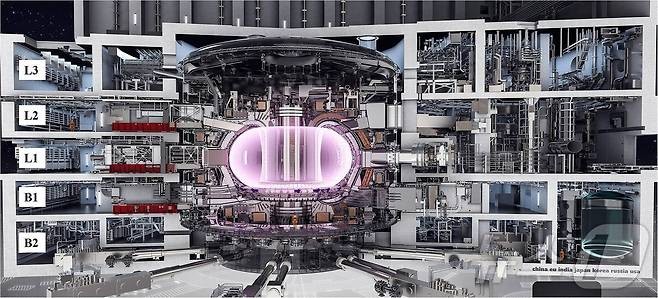
Korea's Naju Artificial Sun Research Facility Expected to Receive Preliminary Feasibility Study Results in September
The project to build the Naju Artificial Sun research facility in Korea is expected to receive the results of the national preliminary feasibility study in September. With a total investment of approximately 1.2 trillion KRW, the project plans to construct large-scale nuclear fusion research and demonstration infrastructure in Wangok-myeon, Naju City, South Jeolla Province, and is regarded by local governments as a key pillar in the future industrial layout of the South Jeolla–Gwangju Integrated Special Zone. The Ministry of Science and ICT (MSIT) designated the "Nuclear Fusion Core Technology Development and Strategic Infrastructure Construction Project" as a national R&D project and included it in the preliminary feasibility study on January 30. According to the previous schedule, the evaluation period was approximately seven months. The results were originally expected to be announced in August, but...
2026-08-11
Russian Scientists Propose Fast Calculation Method to Simulate Plasma Ion Parameters in Seconds
Researchers from the HSE University and the Moscow Institute of Physics and Technology (MIPT) have developed an analytical method for calculating the behavior of heavy ions in helium under strong electric fields, which can accelerate the computation of ion mobility and ion–molecule reaction rates by thousands of times. The findings have been published in Physica Scripta. Plasma, composed of charged particles such as electrons, negative ions, and positive ions, is typically quasi-neutral and highly conductive. It exists not only in fluorescent lamps and welding arcs but is also used in controlled nuclear fusion devices such as tokamaks. Atmospheric plasma jets can also be applied to wound disinfection, work surface cleaning...
2026-08-11

Kyoto Fusioneering to Relocate U.S. Headquarters to Oak Ridge
Kyoto Fusioneering (KF) will relocate its U.S. headquarters to Oak Ridge, Tennessee, investing $46.9 million in Anderson County and creating 51 new jobs. The project will build critical fusion testing infrastructure, with a focus on supporting the development of the fusion nuclear testing facility UNITY-3. UNITY-3 is planned to be built at Oak Ridge National Laboratory (ORNL) through a public-private partnership. The facility has received support from the U.S. Department of Energy (DOE) and has been listed as a national priority in its final "Fusion Science and Technology Roadmap." According to the plan, UNITY-3 will employ a deuterium-tritium (D-T) fusion neutron source to validate tritium breeding capabilities and related performance under conditions approaching a real fusion nuclear environment...
2026-08-11

TMTG Advances $6 Billion-Plus Merger with TAE, Pivoting to Commercial Fusion Energy
Trump Media & Technology Group (TMTG) recently disclosed that it will proceed with its merger plan with fusion energy firm TAE Technologies (TAE), despite reporting significant losses in the second quarter. The deal is valued at over $6 billion, with TMTG committing to invest $300 million in TAE before the transaction closes. According to company disclosures, TMTG recorded a loss of $238 million in the second quarter of 2026, with revenue of $1.7 million and total assets approaching $2 billion. In the first half of 2026, the company's net loss widened to $644 million, compared to a loss of $52 million in the same period last year. The company attributed the widening losses primarily to...
2026-08-11
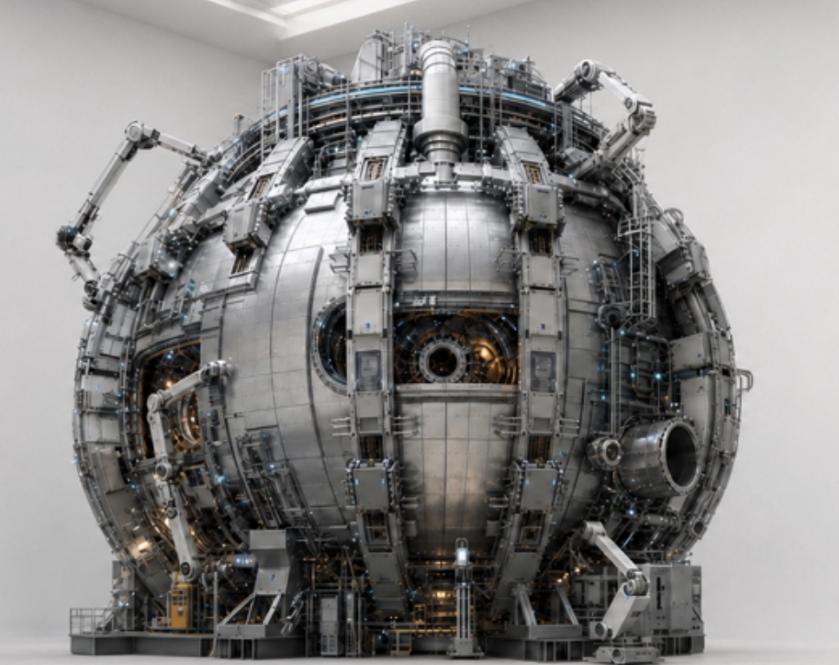
Shenju Nuclear Energy Unveils "Jinwu-1" Spherical Torus Fusion-Fission Hybrid Reactor Design
Shenju (Sichuan) Nuclear Energy Co., Ltd. has unveiled the first-generation device, the Jinwu-1 design, which adopts the spherical torus fusion-fission hybrid reactor technology pathway, driving a subcritical nuclear energy system with a compact fusion neutron source to achieve functions such as energy amplification, fuel breeding, and transmutation of long-lived nuclides. According to the design, Jinwu-1 uses a 50 MW-class fusion power as the conceptual design baseline, employing high-temperature superconducting magnets, a replaceable center column, and a modular subcritical nuclear energy zone. Its fusion core has a major radius of approximately 1.5 meters, with the goal of delivering approximately 40 MW of fusion neutron power at 14.1 MeV energy, serving as an industrial-grade neutron source. In terms of system design, Jinwu-1 amplifies fusion neutron energy through a subcritical fission blanket...
2026-08-11

MIT Research Proposes Framework for Assessing Economic Viability of Fusion Power Plants
Researchers at the Massachusetts Institute of Technology (MIT) have recently proposed an assessment framework aimed at addressing the core question that fusion energy must confront in transitioning from scientific feasibility to commercial profitability: how can a fusion power plant achieve economic viability in the energy market? The related open-access paper, titled "Criteria for the Economic Viability of Fusion Power Plants," has been published online in the Journal of Fusion Energy. The paper is authored by Dennis Whyte, Professor of Nuclear Science and Engineering at MIT, and Andrew W. Lo, Professor of Finance at the MIT Sloan School of Management, with contributions from researchers at Rutherford Energy Ventures and the MIT Plasma Science and Fusion Center.
2026-08-10
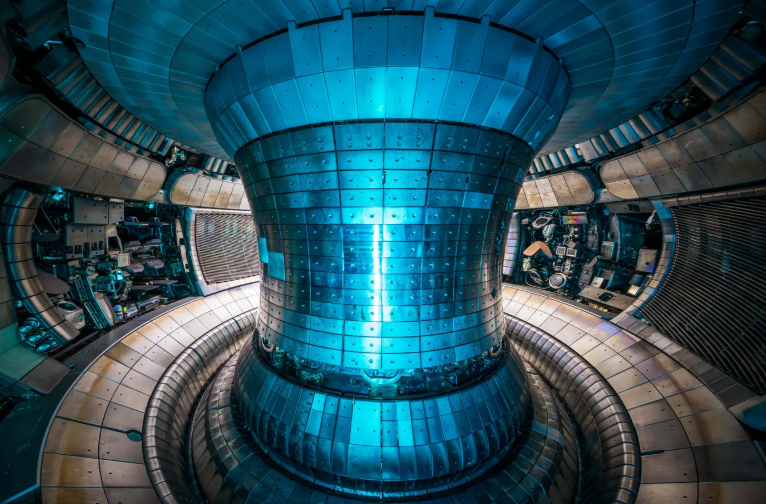
Two IPP studies reveal edge turbulence mechanisms in fusion plasmas from first principles
On August 10, 2026, two research teams at the Max Planck Institute for Plasma Physics (IPP) independently published findings that, for the first time, explain key phenomena in the extremely thin edge layer of fusion plasmas starting from fundamental physics equations. Both papers were published in Physical Review Letters, with one highlighted as an editor's suggestion. For stable operation of a fusion power plant, two requirements must be met simultaneously: on the one hand, the plasma at temperatures of around 100 million degrees Celsius must be effectively confined to achieve fusion ignition conditions; on the other hand, the generated heat must be distributed over a sufficiently large area to prevent damage to the device walls from excessive local heat loads. Whether this conflict can be resolved depends largely on a region only a few centimeters thick at the plasma edge.
2026-08-10

LLNL Research in the U.S. Reveals New Mechanisms of Laser Polarization Effects in NIF Inertial Confinement Fusion Experiments
Researchers at Lawrence Livermore National Laboratory (LLNL) have recently discovered in studies related to the National Ignition Facility (NIF) that the polarization state of lasers may influence the cross-beam energy transfer (CBET) process in inertial confinement fusion experiments and could help reduce backscatter and the risk of damage to optical components. The related paper, titled "Effects of Laser Polarization on Cross-Beam Energy Transfer in Inertial Confinement Fusion," was recently published as a featured article in the journal Physics of Plasmas. NIF experiments demand extremely high precision in laser control. The facility's 192 laser beams must be focused to a width of a few millimeters and enter the target area through holes approximately 3 millimeters in diameter located at the top or bottom of a gold hohlraum. The hohlraum is about 2 centimeters in diameter. After the lasers enter the plasma, different beams cross each other and undergo energy transfer, a process known as cross-beam energy transfer. When designing NIF inertial confinement fusion experiments, scientists carefully tune the laser wavelengths to use CBET to balance energy distribution and improve implosion symmetry.
2026-08-10

South Korea Advances K-Moonshot Initiative, Nuclear Fusion and SMR Spacecraft Listed as Key Missions
The South Korean government is accelerating the K-Moonshot initiative, seeking to tackle critical technologies that are difficult to break through via traditional research pathways through a national-level R&D organizational approach. Among these, nuclear fusion and small modular reactor (SMR) spacecraft have been included in 12 key missions, alongside new drug development, quantum technology, and artificial intelligence, all under the government's coordinated promotion. On August 10, Vice Minister Goo Hyuk-chae of the Ministry of Science and ICT (MSIT) met with the heads of the 12 mission projects and representatives of related institutions at the K-Moonshot Project Support Office in Sejong City to discuss next-stage implementation arrangements. The meeting focused on detailing...
2026-08-10

StarRing Fusion Completes RMB 880 Million Series A++ Financing to Advance Fusion Device and Key Technology Engineering
StarRing Fusion recently announced the completion of a new Series A++ financing round, raising RMB 880 million. This round was jointly invested by Shenzhen Capital Group, Shendan Venture Capital, ABC Capital, BOCOM Investment, GGV Capital, Yongxin Ark, Keke Capital, Advantage Capital, and other institutions, with existing shareholder Shanghai Science and Technology Innovation Group's intellectual property fund and other institutions continuing to follow on. The company stated that the proceeds from this round, together with the previous Series A and A+ financing, will be used for the construction of the Shanghai Jiading experimental base, the construction and operation of the NTST negative-triangularity spherical tokamak, the design and construction of the CTRFR-1 "StarRing One," and the continued engineering advancement of key technologies including fusion-grade high-temperature superconducting magnets and AI-based plasma control...
2026-08-08

Harbin Fusion and Superconducting Industry Technology Innovation Alliance Established
On August 7, the inaugural meeting and first member assembly of the Harbin Fusion and Superconducting Industry Technology Innovation Alliance was held. Under the guidance of the Heilongjiang Provincial Department of Science and Technology and the Harbin Municipal Science and Technology Bureau, Harbin Institute of Technology (HIT) took the lead in establishing the Harbin Fusion and Superconducting Industry Technology Innovation Alliance. The alliance not only comprehensively integrates HIT's national-level advantageous research capabilities in fields such as robotics, advanced welding and joining, special composite materials, and extreme environment simulation, but also brings in local scientific innovation forces and industrial entities including Harbin Engineering University, the Heilongjiang Provincial Institute of Atomic Energy, and Harbin Electric Group. At the same time, it brings together the Institute of Plasma Physics of the Chinese Academy of Sciences, the Southwest Institute of Physics of Nuclear Industry,...
2026-08-07
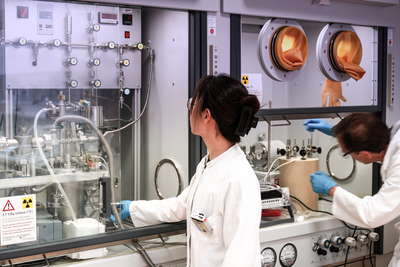
German team achieves first separation of tritium-containing hydrogen isotope mixtures using silver-exchanged zeolites
A team at the Helmholtz-Zentrum Dresden-Rossendorf (HZDR) and partners recently demonstrated a new method for separating hydrogen isotopes using silver-containing zeolites, successfully separating hydrogen isotope mixtures containing radioactive tritium through a porous solid material for the first time. The research findings were published in Nature Communications. Future fusion power plants will require not only high-temperature plasma and strong magnetic fields during operation, but also a stable fuel cycle system for recovering, separating, and reusing deuterium and tritium. Inside a fusion reactor, deuterium and tritium participate in reactions and release energy, but the fuel is not completely consumed, and the residual gas may also contain ordinary hydrogen (protium), forming a mixture of protium, deuterium, and tritium...
2026-08-07