
Search Results
Keyword:Fusion
Beijing's First Second-Generation High-Temperature Superconducting Tape Mass Production Line Project Approved
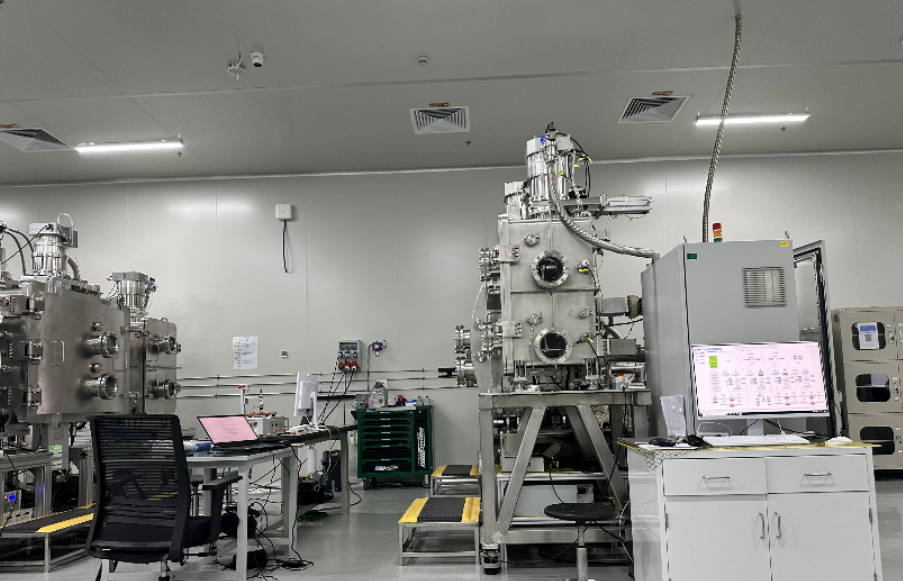
Recently, the second-generation high-temperature superconducting tape R&D and production project invested in by Energy Singularity Superconducting Technology (Beijing) Co., Ltd., a wholly-owned subsidiary of Energy Singularity, was officially approved for project initiation in the Daxing section of the Airport Economic Zone. Once completed and put into operation, the project will establish Beijing's first mass production line for second-generation high-temperature superconducting tape. According to reports, the project plans to build three production lines for rare-earth barium copper oxide (ReBCO) high-temperature superconducting tape based on the pulsed laser deposition (PLD) process route, achieving an annual output of 1,200 kilometers of high-temperature superconducting tape in the 12 mm width specification. High-temperature superconducting tape is a key raw material for manufacturing high-temperature superconducting magnets. In tokamak devices, high-temperature superconducting tape accounts for approximately...
2026-08-24
U.S. Plans to Launch Nuclear Fission-Powered Spacecraft to Fly by Mars by End of 2028
The National Aeronautics and Space Administration (NASA) is advancing the Space Reactor-1 "Freedom" (SR-1 Freedom) mission, with the goal of launching a nuclear fission-powered spacecraft by the end of 2028 to validate deep-space nuclear electric propulsion technology. According to existing mission documentation, the mission plans to fly by Mars in 2029 and deploy the SkyFall payload. The SR-1 Freedom is neither a fusion spacecraft nor a crewed Mars vehicle. Its core experiment is to operate a small uranium fission reactor, an energy conversion system, and Hall-effect thrusters in coordination beyond Earth orbit, accumulating engineering data for future higher-power deep-space missions...
2026-08-24

Japan's GX Promotion Organization Invests in Nuclear Fusion Startups
Japan's Green Transformation Promotion Organization (GX Promotion Organization) has invested in two startups, focusing on nuclear fusion-related technology and plastic recycling businesses respectively. The public funds invested are expected to be approximately 3 billion yen; when private sector funds are included, the total related investment is expected to reach approximately 20 billion yen. The two companies are Kyoto Fusioneering and JEPLAN. Among them, Kyoto Fusioneering is primarily engaged in the development of nuclear fusion engineering technology, while JEPLAN is involved in circular economy businesses such as plastic recycling. Details of the investment are expected to be officially announced by the relevant parties. This investment is seen as part of Japan's push to industrialize its green transformation.
2026-08-24
Italy's Eni Plans to Build Commercial Nuclear Fusion Power Plant in Europe by Early 2040s
Italian energy company Eni plans to build a commercial nuclear fusion power plant in Europe by the early 2040s or sooner. Francesca Ferrazza, head of Eni's magnetic confinement fusion project, stated that nuclear fusion technology has seen significant progress in recent years, and competition in the field is accelerating. Ferrazza said that nuclear fusion, which was previously confined mainly to the research stage, has now begun to meet the conditions for industrial application. She noted that Eni's goal is to promote the deployment of a commercial nuclear fusion power plant in Europe by the early 2040s, or even earlier. Eni has also shown interest in the extraction, purification, and recycling of spent fusion fuel back into reactors. Recently, Eni has...
2026-08-24

Xingtu Helium Energy's First Satellite "Xingtu-1" Passes Feasibility Review
On August 23, 2026, Beijing Xingtu Helium Energy Space Technology Co., Ltd. organized a feasibility review meeting for the Xingtu-1 lunar probe. Experts from aerospace research institutes, renowned universities, and leading commercial space companies formed a review expert panel to evaluate the project plan. At the meeting, the Xingtu Helium Energy model development team presented the "Xingtu-1 Lunar Probe Feasibility Plan Report," covering the probe's technical scheme, project progress, and subsequent implementation arrangements. The review expert panel affirmed the technical scheme, project progress, and commercial value of Xingtu-1, while offering optimization suggestions for key challenges in engineering implementation. Xingtu Helium Energy...
2026-08-24
Naju City, Korea Proposes Construction of National Fusion Energy Center
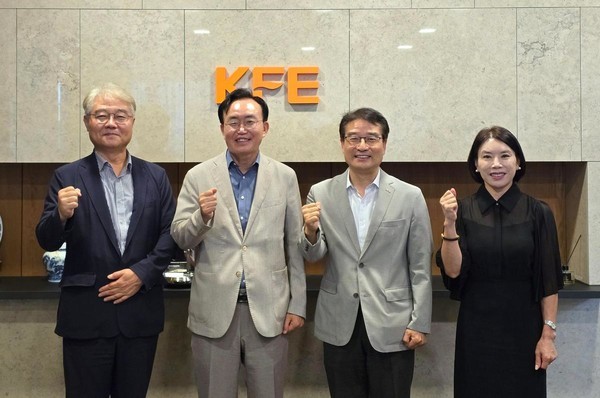
Naju City, Korea recently proposed the concept of building a national-level fusion energy center, planning to use the locally planned artificial sun research facility as a foundation to connect the entire process of fusion energy from basic research, demonstration and validation, to power generation and industrialization. On August 21, Naju City Mayor Yoon Byung-tae visited the Korea Institute of Fusion Energy (KFE) and met with its President Oh Young-kuk. Yoon proposed that Naju City would strive to host the fusion demonstration reactor (DEMO) linked to the artificial sun research facility, while promoting the construction of a government-led comprehensive fusion energy research base and industrial cluster, and applying for the designation of a specialized fusion energy...
2026-08-22
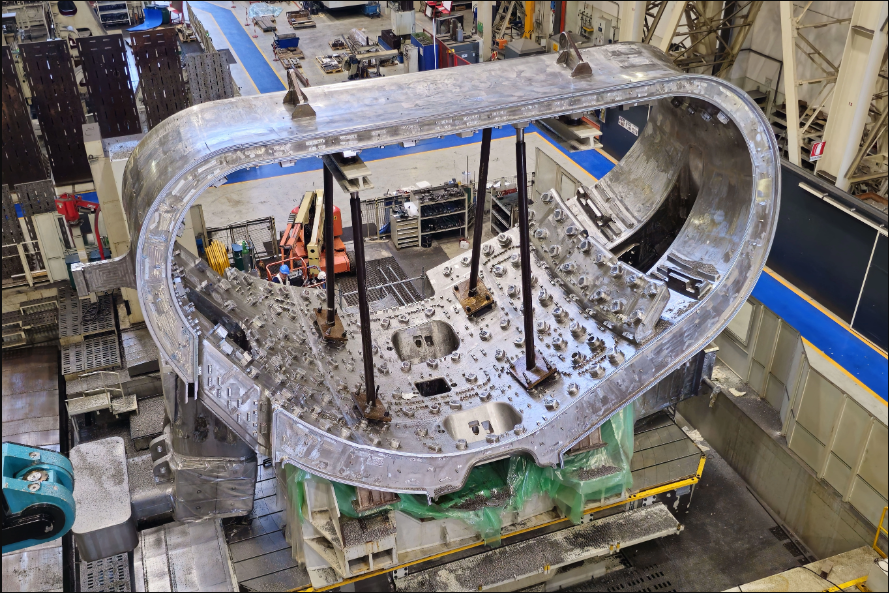
ITER vacuum vessel assembly in France progresses steadily, with five European sectors at different critical stages
The vacuum vessel assembly work for the International Thermonuclear Experimental Reactor (ITER) project in southern France is progressing steadily. As the core component of the ITER tokamak device, the vacuum vessel will contain the plasma confined by superconducting magnets, serving as the critical space where fusion reactions occur. This stainless steel ring-shaped structure weighs approximately 5,200 tonnes in total, measures 19.4 meters in diameter, and consists of nine sectors, five of which are manufactured by Europe. The European Fusion for Energy organization (F4E), together with the AMW consortium comprising Ansaldo Nucleare, Westinghouse Electric Italy, and Walter Tosto Company, is responsible for the related manufacturing work.
2026-08-21
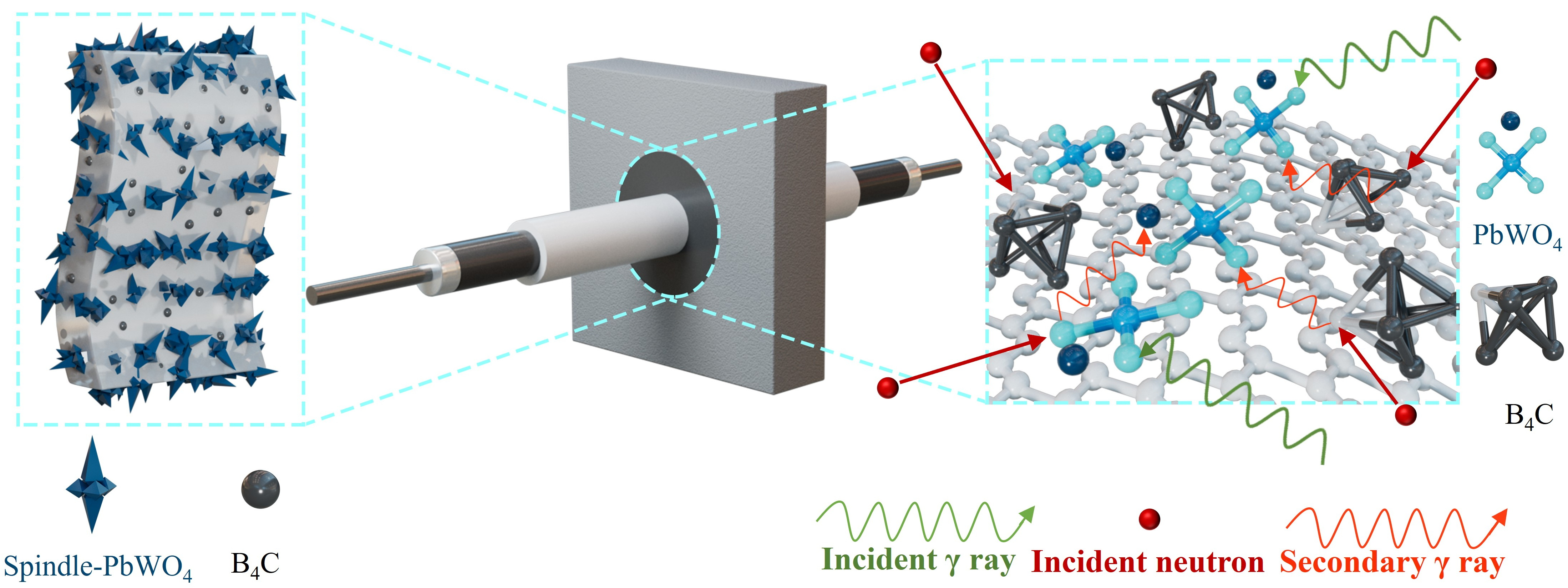
Progress in Tritium Containment and Radiation Protection Materials Research at the Institute of Plasma Physics, Chinese Academy of Sciences
Recently, Associate Researcher Huo Zhipeng of the Fusion Reactor Blanket and Safety Research Center at the Institute of Plasma Physics, Chinese Academy of Sciences, together with his supervised master's students Zhang Jie and Chen Zuoyang, developed a class of flexible PbWO4-B4C reinforced silicone rubber composites with dual functions of tritium safety containment and nuclear radiation protection. The related research results were published in Journal of Materials Research and Technology. Future fusion facilities require comprehensive performance from radiation protection materials in tritium safety containment systems, including airtight sealing, flexibility for easy assembly and disassembly, and radiation shielding capability, for penetration hole sealing, post-maintenance, and high-flux neutron and γ-ray radiation protection. The research...
2026-08-21
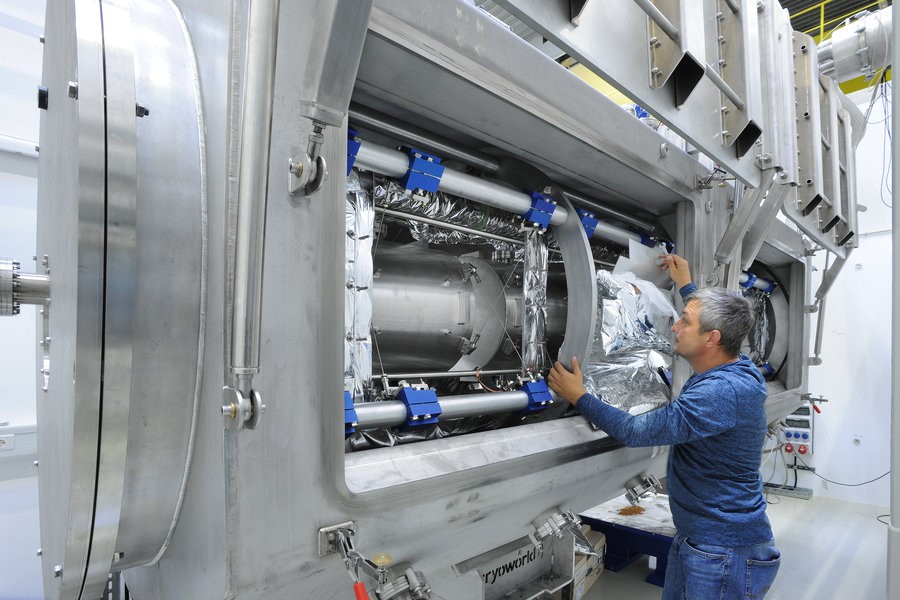
German SIBAF Project Receives €9.7 Million to Support Fusion Materials Research
On August 20, 2026, with funding from the German Federal Ministry of Research, Technology and Space (BMFTR), the SIBAF project will launch the construction of an accelerator infrastructure for fusion materials research. The project, whose full name is Superconducting Ion Accelerator as a Foundational Technology for Fusion Research, will receive €9.7 million over three years, of which €8.1 million is allocated to the GSI Helmholtz Centre for Heavy Ion Research (GSI) and its Facility for Antiproton and Ion Research (FAIR), currently under construction. Goethe University Frankfurt will also participate in the project. SIBAF is part of the funding program "Fusion Foundational Technologies — Toward the Fusion Power Plant." Project objectives...
2026-08-21

Russia Plans to Build New Tokamak Device Using Reactor Technologies
Alexey Likhachev, Director General of Rosatom, recently stated at a nuclear energy development conference that Rosatom is collaborating with the Kurchatov National Research Centre to build a new tokamak device using reactor technologies. Likhachev said that fusion energy technology is one of the key directions for Russia's nuclear energy development. Currently, the European Union, the United States, the United Kingdom, and China are all advancing related projects, and technological competition in the field of controlled thermonuclear fusion continues to intensify. Russia hopes to use this project to maintain its technological leadership in this knowledge-intensive nuclear energy sector.
2026-08-21

U.S. SYNOPTICS Produces Large-Size Yb:YLF Crystal for Inertial Confinement Fusion Laser Systems
On August 19, SYNOPTICS, a subsidiary of Northrop Grumman, announced that it had successfully grown and harvested a large-size ytterbium-doped yttrium lithium fluoride crystal, namely a Yb:YLF crystal ingot. The crystal measures approximately 127 millimeters at its widest point, with a diameter three times the industry standard. SYNOPTICS stated that as laser engineering continues to expand toward higher efficiency and higher power, the demand for gain media with larger apertures and larger dimensions continues to grow. The Yb:YLF crystal produced this time is approximately 20% larger than the largest crystal the company had previously grown, and approximately 50% larger than the company's conventional product size. Kevin Stevens, General Manager of SYNOPTICS, stated that yttrium lithium fluoride is a commonly used host material for laser-active rare-earth ions, and scaling up the growth of YLF crystals will help laser engineers continue to raise the upper limit of achievable laser output power. He said that such materials are of significant importance for applications including directed energy, inertial confinement fusion, and industrial laser systems. Stevens also stated that Yb:YLF crystals can be used in applications requiring reduced thermal lensing effects and enhanced pulsed energy storage capability, while also leveraging their natural birefringent host to achieve polarization characteristics. According to information recently released by SYNOPTICS, some of the crystals will be used in the high-energy laser system at the German Electron Synchrotron Research Center (DESY) to support its inertial confinement fusion energy research. The company is currently studying the feasibility of further scaling up the size of Yb:YLF crystals, and plans to extend the relevant processes to other rare-earth-ion-doped YLF crystals, including holmium, thulium, and neodymium doping systems.
2026-08-21
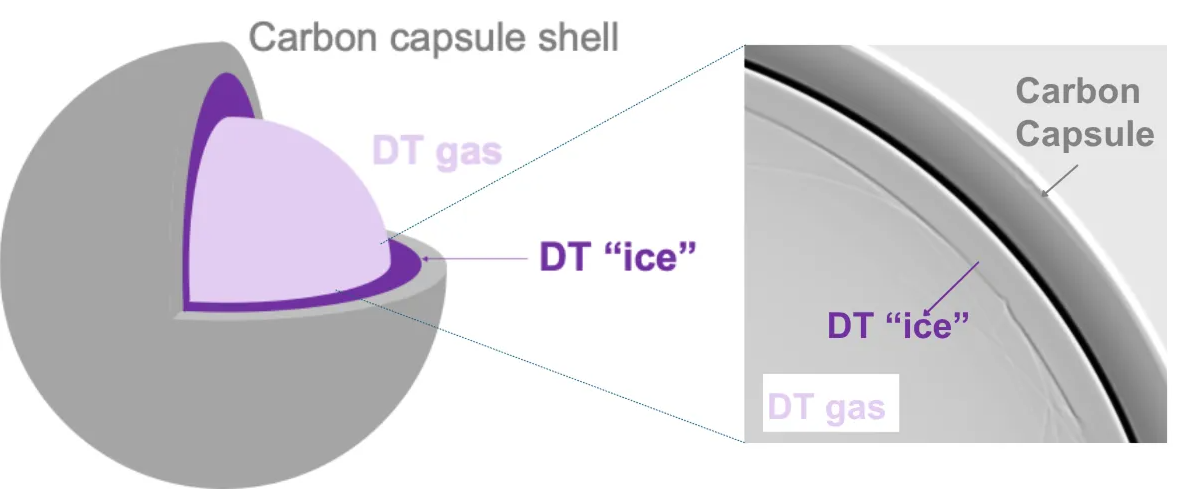
US Inertia Fusion Fuel Preparation Time Significantly Reduced
US fusion startup Inertia Enterprises said it has made progress in inertial fusion energy fuel preparation in collaboration with Lawrence Livermore National Laboratory (LLNL), reducing the time required for the critical step of forming a cryogenic deuterium-tritium fuel layer from potentially several days in the past to tens of minutes. The company said this achievement completes a key task in the first phase of its commercial fusion power plant development goals. The fundamental approach of inertial fusion energy involves using high-energy lasers to compress and heat small targets containing deuterium-tritium fuel, bringing the fuel to ignition conditions and releasing energy. The National Ignition Facility (NIF) has already...
2026-08-21
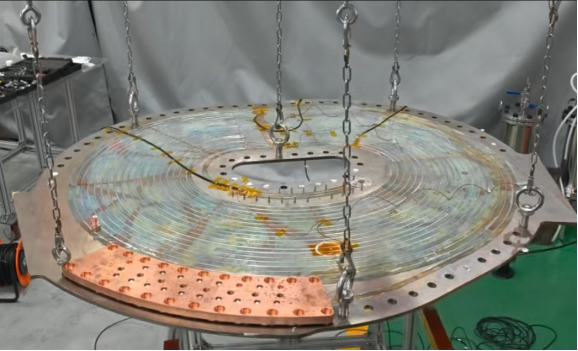
SuperMag New Energy Achieves Milestone Progress in Development of 25 T-Class High-Temperature Superconducting Toroidal Field Model Magnet
Recently, SuperMag New Energy has achieved two milestone progresses in the development of its 25 T-class high-temperature superconducting toroidal field model magnet: following the completion of R&D and testing of the first panel-type high-temperature superconducting single pancake coil, the company has initiated batch manufacturing of panel-type single pancake coils; meanwhile, the self-developed 24 cm² low-resistance detachable joint has completed prototype fabrication and performance testing in the liquid nitrogen temperature range, with an equivalent joint resistance of approximately 33 nΩ. These two progresses correspond to two critical aspects: stable manufacturing of single pancake coils and low-loss interconnection of multiple units. The project has advanced from the single-component process validation stage toward multi-pancake manufacturing and model magnet system integration. The single pancake coil is not an ordinary component in the model magnet, but rather a fundamental unit integrating conductor, panel structure, insulation, electrical connection, and testing interfaces. Each single pancake requires independent manufacturing and inspection, and also serves as the foundation for subsequent multi-pancake stacking, magnet excitation, and cryogenic operation.
2026-08-21

Mellifluous Fusion and Advaiya Solutions Partner to Deliver AI and Business Technology Solutions for the Fusion Energy Industry
On August 19, Mellifluous Fusion, a fusion energy marketing company, signed a cooperation agreement with Advaiya Solutions, a business technology company, to provide solutions related to business applications, artificial intelligence development, and deployment for the rapidly growing fusion energy industry. Under the agreement, the collaboration will focus on enhancing operational efficiency, organizational coordination, and responsiveness in the fusion energy supply chain through integrated systems and AI tools. As fusion energy companies, suppliers, and supporting service systems expand rapidly, digital business systems and AI applications are seen as key to supporting the industry's large-scale development...
2026-08-20
Aomori Prefecture in Japan to Apply as Candidate Site for Nuclear Fusion Power Generation Demonstration Facility
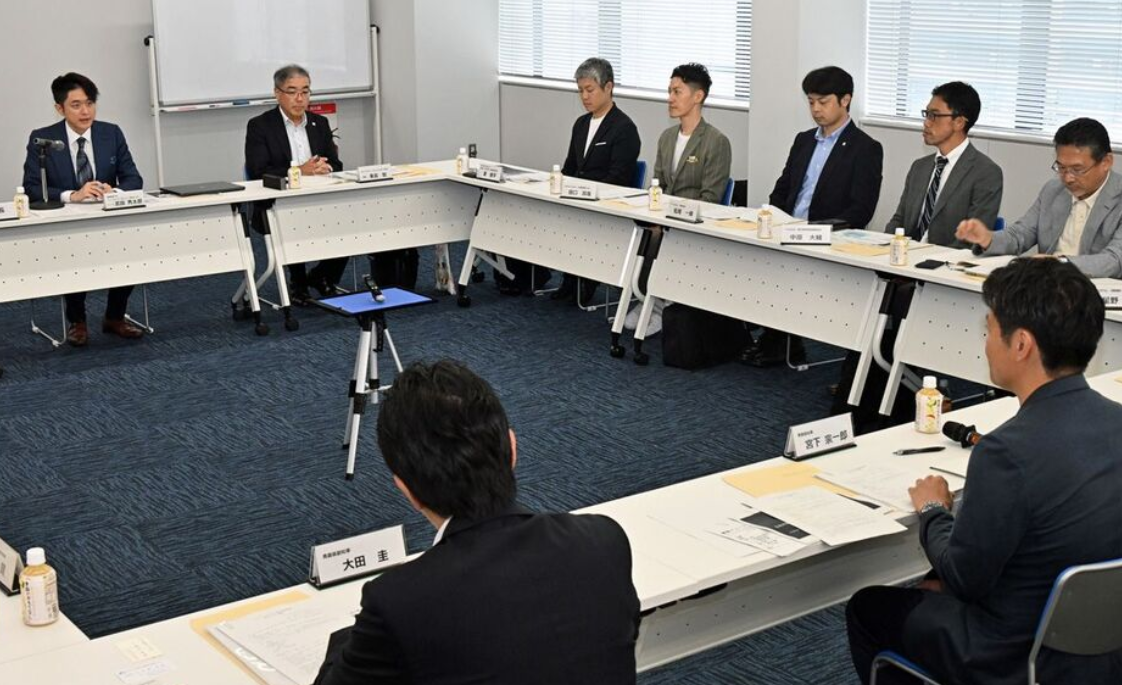
On August 19, Soichiro Miyashita, Governor of Aomori Prefecture, stated that the prefecture will apply as a candidate site for a nuclear fusion power generation demonstration facility once relevant preparatory work is completed. Starlight Engine, a Japanese nuclear fusion startup, is currently soliciting candidate sites from prefectures and government-designated cities, with plans to conduct field surveys of promising candidates as early as this autumn. Starlight Engine plans to finalize the construction site by 2028, launch the FAST nuclear fusion power generation demonstration project in 2035, and conduct power generation demonstrations in 2038. The application deadline for site selection is October. Aomori Prefecture stated that it will consult with Rokkasho Village and, after preparing the application documents, formally submit the application.
2026-08-20