
Search Results
Keyword:Fusion

The National Development and Reform Commission Deploys the 15th Five-Year Plan to Designate Nuclear Fusion as a Future Industry
Recently, the National Development and Reform Commission (NDRC) held the first press conference of the "Striving for the 15th Five-Year Plan" series, systematically introducing the strategic planning and key task deployments for cultivating and strengthening new growth drivers during the 15th Five-Year Plan period, marking the official unveiling of China's macro-level blueprint for emerging and future industries in the next stage. It is reported that Ren Zhongbao, Deputy Director of the Department of Innovation and High-Tech Development, stated at the meeting that the CPC Central Committee and the State Council, after comprehensively assessing technological trends, have explicitly designated fusion energy, together with quantum technology, biomanufacturing, hydrogen energy, brain-computer interfaces, embodied intelligence, and sixth-generation mobile communications, as the main directions for future industry development during the 15th Five-Year Plan period. The state will adhere to a nationwide coordinated approach and support regions with favorable conditions in selecting sub-sectors for development in accordance with local conditions.
2026-11-04

Xeonova Pulsed Field-Reversed Configuration Fusion Validation Device X-3 Begins Installation
Recently, Xeonova, a fusion startup established under the authority of the University of Science and Technology of China, has officially entered the on-site construction and equipment installation phase for its self-developed X-series pulsed compression Field-Reversed Configuration (FRC) high-parameter validation device XEONOVA-3 (X-3). It is noted that the Field-Reversed Configuration (FRC) possesses unique advantages such as high beta, compact structure, and low cost, and is becoming an important development direction in the international controlled nuclear fusion field. Professor Sun Xuan, founder of Xeonova, pointed out that the X-3 device adopts the overall technical route of "high-flux FRC formation + staged wall compression + magnetic compression implosion," aiming to validate the formation, compression, and high-repetition-rate pulsed operation capabilities of high-parameter FRCs...
2026-11-03
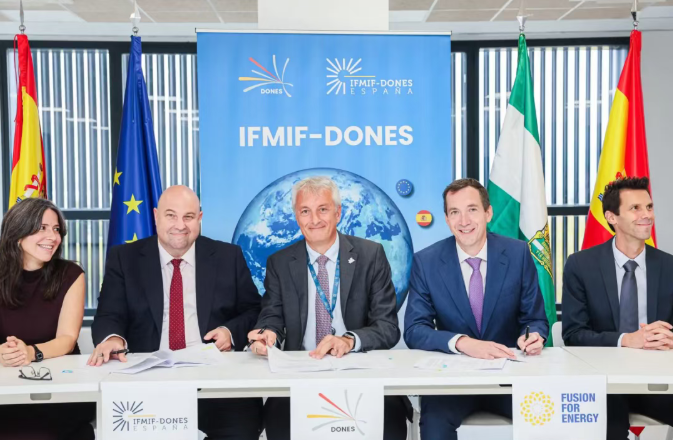
The "Chain-Building" Lessons from Europe's Fusion Supply Chain: An Industrial Paradigm Leap from "Building Devices" to "Nurturing Chains"
When examining the global race toward commercializing controlled nuclear fusion, external attention is often drawn to record-breaking plasma temperatures, confinement times, and device scales. However, as the industry gradually enters the deep waters of transitioning from physics experiments to engineering construction, what ultimately determines whether parties can cross the commercialization chasm is often no longer merely theoretical breakthroughs in the laboratory, but rather the thickness of the industrial supply chain hidden behind the spotlight. Recently, Europe's "Fusion for Energy" organization (F4E, Fusion for Energy) officially released the research report "Building Europe's Fusion Supply Chain: 2007–2026." This report, which systematically reviews nearly two decades of construction history, discloses that through more than €7 billion...
2026-11-02
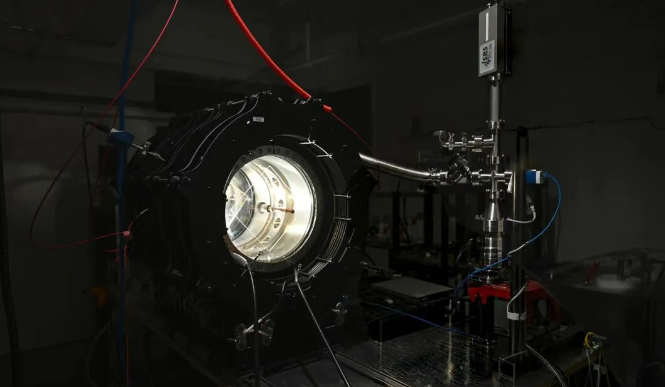
Startup "Marathon Fusion" Announces Transmutation of Mercury into Gold Using Thermonuclear Fusion Neutrons
Recently, San Francisco-based startup Marathon Fusion announced that it has successfully used high-energy neutrons produced by deuterium-tritium (D-T) thermonuclear fusion reactions to transmute the element mercury into gold, claiming that its yield reached ten times the previously recorded level at CERN. It is reported that the technology is based on high-energy neutrons released by D-T fusion reactions striking mercury-198 nuclei, stripping one neutron to convert them into the radioactive isotope mercury-197, which subsequently decays to ultimately form gold-197, the only stable isotope of gold. Marathon Fusion published gamma-ray spectroscopy as characteristic evidence for the presence of mercury-197; however, the specific mass of gold produced remains at...
2026-11-02

Exploring the Frontier of Advanced Fusion Physics: Physical Mechanisms and Engineering Challenges of D–³He Secondary Neutron Suppression under the Synergy of Hot Tails and Spin Polarization
In the process of controlled nuclear fusion advancing from theoretical exploration to commercial validation, the choice of fuel pathway has always been the core variable determining the engineering feasibility and economics of a reactor. For a long time, the deuterium–helium-3 (D–³He) reaction has been regarded as an ideal "low-neutron" ultimate fusion scheme because its primary products are only charged particles (helium-4 and high-energy protons), it does not directly produce neutrons, and it possesses the potential for direct energy conversion. However, under the traditional thermal equilibrium plasma framework, D–³He is not a truly neutron-free fuel. In October 2026, the U.S. Princeton Plasma Physics Laboratory (PP...
2026-10-31
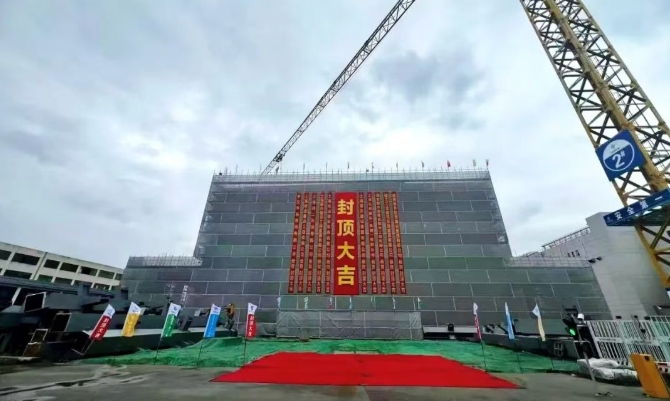
Top-Out of the Experimental Hall of Startorus Fusion's NTST Fusion Device and Delivery of the Dewar
Recently, Startorus Fusion's self-developed native negative triangularity spherical tokamak (NTST) device has achieved two breakthrough milestones: the main structure of the device's experimental hall at the experimental base in Xuxing Town, Jiading District, Shanghai, has been successfully topped out, and the device's core component—the Dewar—has completed manufacturing and factory acceptance and been officially delivered. It is reported that the Dewar, as the outermost core structure of the fusion device's main machine, can provide a high-vacuum insulation environment and a precise installation reference for the entire system, and is a key facility for ensuring the stable operation of magnet coils at cryogenic temperatures. The Dewar was independently designed overall by Startorus Fusion and jointly manufactured with Wuxi Huali Fusion Energy Equipment Co., Ltd. Its structure and interfaces...
2026-10-31
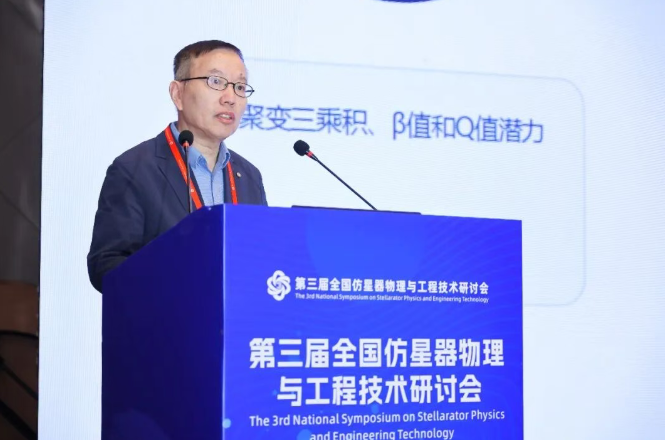
Topological Fusion of Magnetic Mirror and Stellarator: How Fu Guoyong's Team's "Linked-Mirror" Deduces a New Engineering Pathway for Controlled Nuclear Fusion
After decades of fundamental theoretical exploration and engineering trial and error, global controlled nuclear fusion is accelerating into the deep waters of commercial validation. Faced with the engineering limits of the Tokamak approach under extreme parameters and the manufacturing complexity ceiling confronting traditional Stellarators, Chinese research teams are opening a new pathway that combines physical feasibility with engineering economy. Recently, the team led by Fu Guoyong, Professor at the School of Physics of Zhejiang University, Director of the Zhejiang University Fusion Theory and Simulation Center, and Founder of Jingjie Fusion Energy, officially released on the preprint website arXiv a research paper titled "A Novel Linked-Mirror Device for Fusion." Through three-dimensional numerical computation, the study obtained for the first time equilibrium solutions of the Linked-Mirror configuration under finite Beta (the ratio of plasma pressure to magnetic pressure) conditions. This breakthrough marks a decisive step for this technical pathway from a purely theoretical concept toward an engineering validation device.
2026-10-30
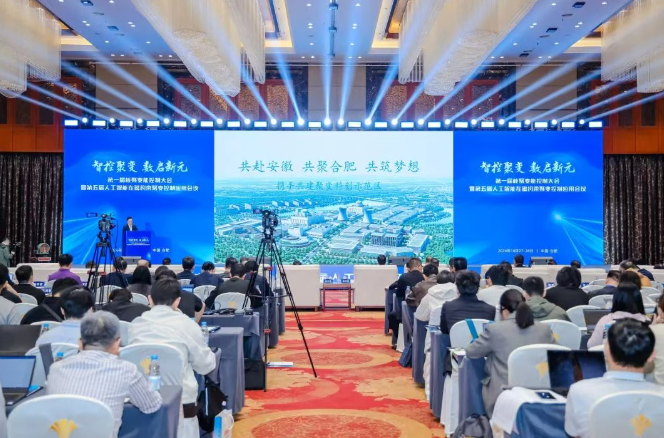
"Lingshu" Plasma Control System Reaches Internationally Leading Level
Recently, the First Fusion Energy Control Conference and the Fifth Conference on the Application of Artificial Intelligence in Magnetic Confinement Fusion Control opened in Hefei, Anhui Province, where the latest progress of China's self-developed Lingshu plasma control system was officially released. It is understood that the Lingshu system has integrated more than 40 control algorithms, achieved a system reliability of 99.7%, and features a minimum control cycle of only 50 microseconds (equivalent to one twenty-thousandth of a second), along with continuous stable operation capability exceeding 50 hours. Multiple key performance indicators have reached internationally leading levels. Xiao Bingjia, a researcher at the Institute of Plasma Physics of the Chinese Academy of Sciences and Director of the Artificial Intelligence and Digital Twin Center at the Energy Research Institute of the Hefei Comprehensive National Science Center...
2026-10-29

China's Largest Fusion Power Supply System Simulation Platform Begins Trial Operation
Recently, China's largest hardware-in-the-loop simulation platform for power supply systems in the fusion field has officially entered trial operation and passed final acceptance, with its comprehensive performance reaching the leading level among comparable international platforms. This marks that China has established a complete technology chain from algorithm research and development for fusion power supply systems, hardware-in-the-loop simulation verification, to the implementation of complete equipment sets. It is reported that the platform was developed by China Fusion Energy Co., Ltd. under CNNC, relying on a fully independent real-time simulation architecture. Under operating conditions where the number of model switches exceeds 10,000, the core solving step can reach as high as 0.8 microseconds. The performance parameters of the full-chain software and hardware all meet the preset design indicators at high standards, and core technologies are fully independently controlled. The platform's commissioning...
2026-10-28

From Aerospace to the "Artificial Sun": Deconstructing the Extreme Manufacturing Breakthrough of China's Fusion Industry Chain
In the grand narrative of controlled nuclear fusion, public attention is often drawn to plasma temperatures exceeding 100 million degrees, the massive scale of tokamaks, and the ultimate vision of unlimited clean energy. However, in the shadows beyond the spotlight of fundamental physics, what determines whether humanity can truly tame nuclear fusion has never been merely theoretical breakthroughs in laboratories, but rather the extreme manufacturing foundation hidden within micron-level machining precision, ultra-high vacuum sealing, and extreme material irradiation. As global commercial fusion startups struggle in Western capital markets due to high capital burn rates and supply chain fractures, the Fusion Science and Technology Innovation City—located within the Science City of Chengdu Tianfu New Area, with a core planned area of...
2026-10-28
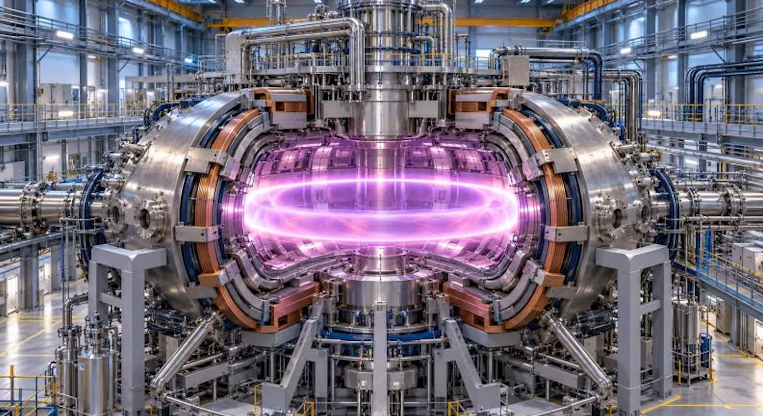
Israel Releases Report Calling for Immediate Launch of Nuclear Fusion Industry Layout
Recently, Israel's Ministry of Energy and Infrastructure officially released a strategic report, calling on the government to take immediate action to fully promote the development of the national nuclear fusion energy industry through the introduction of a public-private collaborative investment mechanism. It is reported that the report proposes three potential development roadmaps aimed at positioning Israel as a key player in the global nuclear fusion industry chain. The Israeli government plans to fully leverage the country's existing advantages in laser technology, radio frequency systems, advanced materials, and robotics to support technological breakthroughs and equipment development in controlled nuclear fusion. The report also acknowledges that Israel in...
2026-10-28
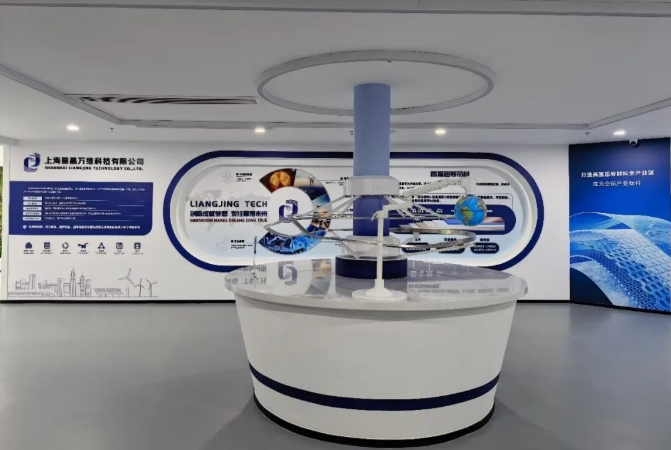
Liangjing Technology Completes Hundreds of Millions of Yuan in Financing to Advance High-Temperature Superconducting Tapes
Recently, Shanghai Liangjing Wanwei Technology Co., Ltd. (referred to as Liangjing Technology), a Chinese high-temperature superconducting materials industrialization enterprise, announced the consecutive completion of angel round, angel+ round, and Pre-A round financing totaling hundreds of millions of yuan. This round of financing was jointly led by Shenzhen Capital Group and China Reform Fund, with participation from China Nuclear Fund, CRRC Transformation and Upgrading Fund, Zijin Mining, and several other industrial and state-owned funds. The funds will be used for capacity expansion, research platform construction, and full-chain self-development of core equipment. It is reported that Liangjing Technology was established in May 2025, with core technology originating from the team of Professor Li Yijie at the School of Physics and Astronomy, Shanghai Jiao Tong University. The company adopts an independent pulsed laser deposition (PLD) route, having achieved breakthroughs in superconducting target self-manufacturing...
2026-10-26
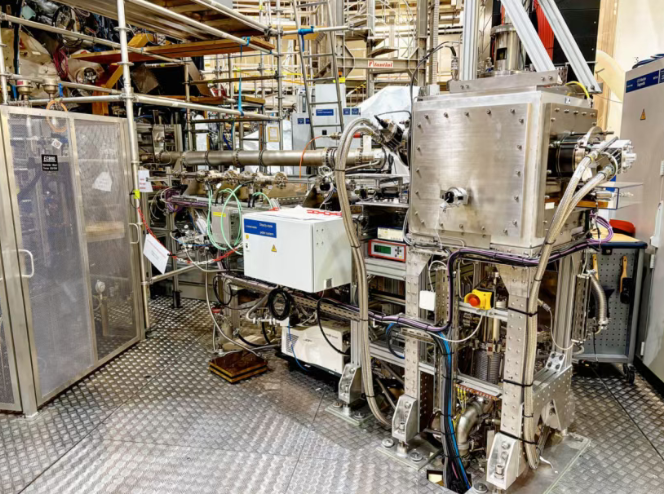
World's Largest Stellarator W7-X Launches New Experimental Campaign to Pursue Long Pulses
Recently, Wendelstein 7-X (W7-X), the world's largest and most complex stellarator fusion device operated by the Max-Planck-Institute for Plasma Physics (IPP) in Germany, has officially launched its latest OP2.4 experimental campaign. This three-month experiment has attracted over one hundred top scientists from approximately 20 laboratories across Europe and around the world, jointly advancing stellarator technology toward longer pulses and higher performance. It is understood that the OP2.4 experiment will focus on three key research areas: high-performance plasmas, fast ions and turbulent transport, and long-pulse operation. Sci...
2026-10-26
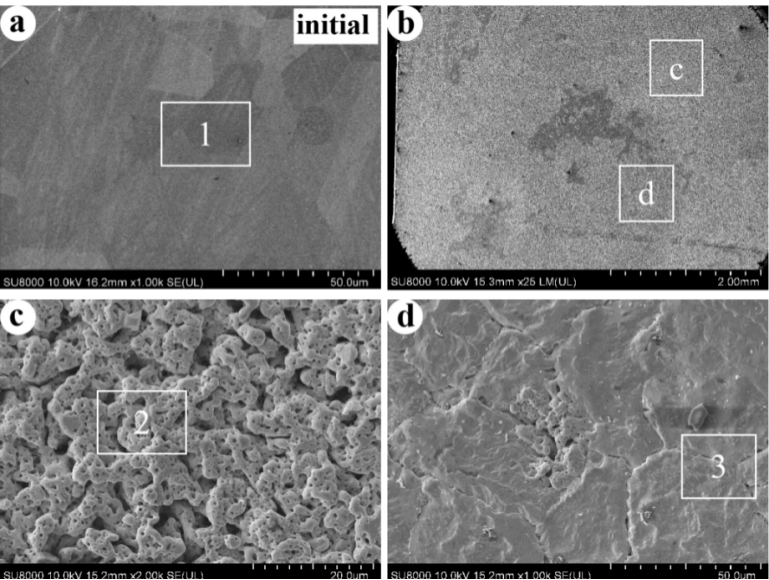
Hefei Energy Research Institute Achieves Progress in Research on Compatibility Between Fusion Materials and Liquid Metals, Providing a Basis for Cladding and First Wall Material Selection
The research team at the Neutron Technology Application Research Center of the Institute of Energy, Hefei Comprehensive National Science Center, has recently made important progress in research on material compatibility and performance evolution mechanisms under liquid metal environments in nuclear fusion reactors. The team conducted in-depth research on the long-term corrosion characteristics of austenitic heat-resistant stainless steel and iron-nickel-based heat-resistant alloys in high-temperature static liquid lead-lithium, as well as the contact damage mechanisms between tungsten fiber-reinforced tungsten matrix composites and liquid lithium. The related results were not only published in top academic journals in the field of nuclear materials, but also presented at the 9th International Symposium on Liquid Metal Applications in Fusion. Liquid lithium and lead-lithium eutectic alloys, due to their...
2026-10-25

Pulsed Fusion Technology Race Drives U.S. High-Voltage Semiconductor R&D; Helion Secures $225 Million to Build Domestic Supply Chain
U.S. commercial fusion developer Helion Energy has recently reached a preliminary funding agreement with the U.S. Department of Commerce to receive up to $175 million in federal funding support under the framework of the CHIPS and Science Act (CHIPS Act). Combined with $50 million in matching funds from private investors, the total joint investment of $225 million will be dedicated to establishing dedicated manufacturing bases and production lines in the United States, with a full-scale push to develop high-voltage, high-power pulsed semiconductor power devices and integrated modules required for commercial fusion reactor operation. Helion's technology pathway is fundamentally based on high-power pulsed power systems, a physical approach...
2026-10-24