
Search Results
Keyword:Fusion
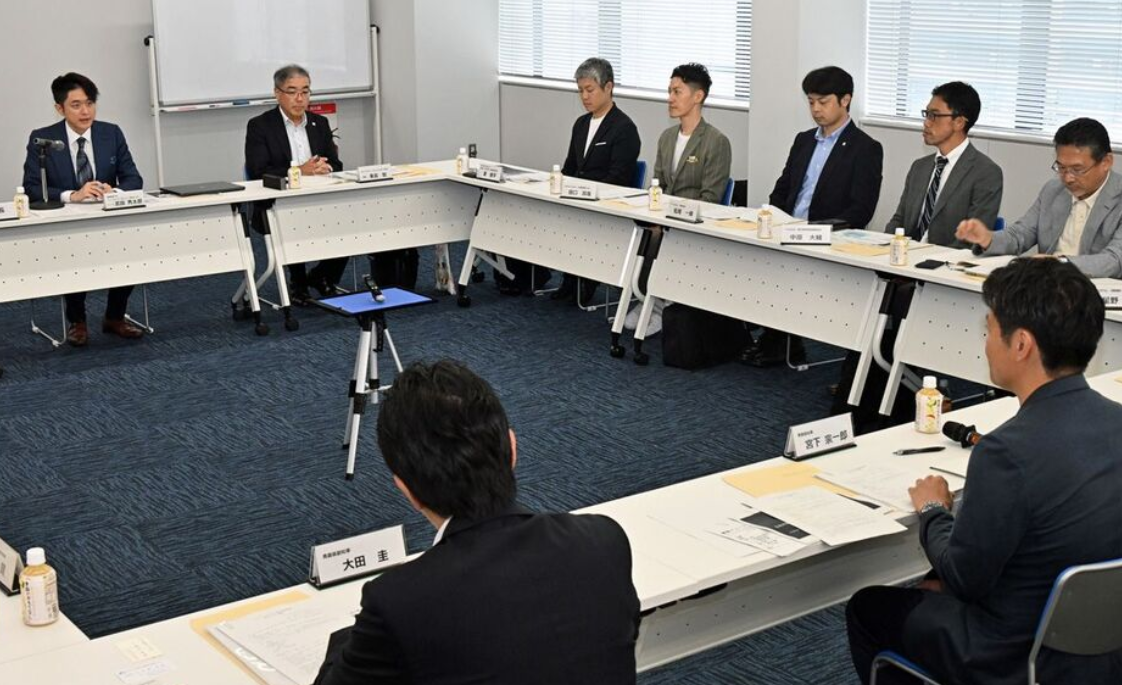
Aomori Prefecture in Japan to Apply as Candidate Site for Nuclear Fusion Power Generation Demonstration Facility
On August 19, Soichiro Miyashita, Governor of Aomori Prefecture, stated that the prefecture will apply as a candidate site for a nuclear fusion power generation demonstration facility once relevant preparatory work is completed. Starlight Engine, a Japanese nuclear fusion startup, is currently soliciting candidate sites from prefectures and government-designated cities, with plans to conduct field surveys of promising candidates as early as this autumn. Starlight Engine plans to finalize the construction site by 2028, launch the FAST nuclear fusion power generation demonstration project in 2035, and conduct power generation demonstrations in 2038. The application deadline for site selection is October. Aomori Prefecture stated that it will consult with Rokkasho Village and, after preparing the application documents, formally submit the application.
2026-08-20

South Korea plans to build an innovative self-developed fusion reactor by 2035
Yang Hyeong-ryeol, head of the fusion sector of the K-Moonshot project at the Korea Institute of Fusion Energy (KFE), recently stated that South Korea plans to complete the construction of an independently developed innovative fusion reactor by 2035 and strives to complete power generation demonstration by 2039. He said that nuclear fusion is an extremely challenging technical endeavor, but once a breakthrough is achieved, it will have broad driving effects on the energy, industrial, and technological systems. Yang Hyeong-ryeol, project director of South Korea's Moonshot program, said nuclear fusion is often called an artificial sun because it generates energy by simulating the energy production process inside the sun. Against the backdrop of rapid expansion of AI applications, rising electricity demand, and increasing global pressure for carbon reduction, the commercialization of fusion energy is attracting growing attention from more countries and enterprises. The South Korean government has listed nuclear fusion, along with small modular reactors and renewable energy, as key future technology directions, and hopes to advance the commercialization of fusion energy through public-private partnerships.
2026-08-20
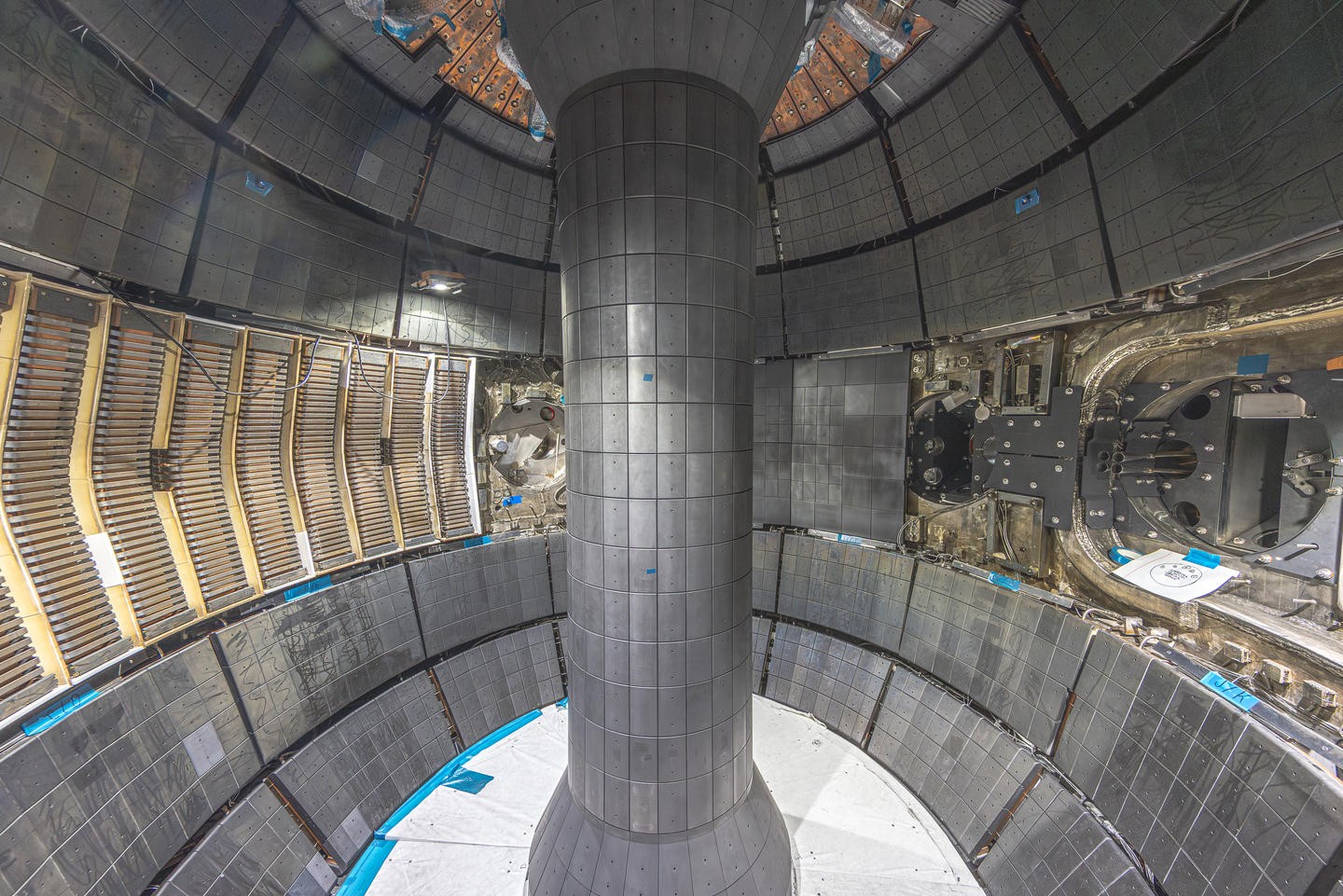
Princeton Plasma Physics Laboratory to Validate Spherical Tokamak Fusion Path with NSTX-U
The Princeton Plasma Physics Laboratory (PPPL) is advancing research on the National Spherical Torus Experiment-Upgrade (NSTX-U), planning to use this largest spherical tokamak in the United States to assess the potential of compact tokamak configurations for future fusion power plants. The device is designed to become one of the most powerful spherical tokamaks in the world and will be used to study key issues such as high-temperature plasma confinement, heat transport, material performance, and real-time control. The image above shows the vacuum vessel and center column of the NSTX-U at the Princeton Plasma Physics Laboratory (PPPL). This device will help scientists determine the optimal shape for future fusion power plants...
2026-08-20
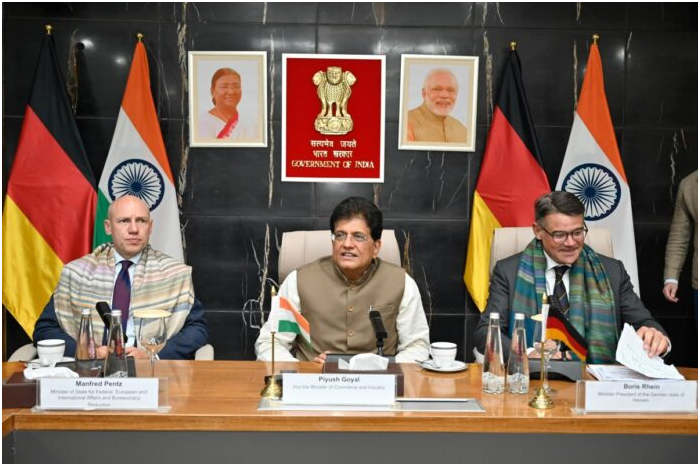
India and Germany's Hesse Explore Clean Energy Cooperation, with Discussions Covering Laser-Based Nuclear Fusion Research
On August 19, India's Minister of Commerce and Industry Piyush Goyal held talks with Boris Rhein, Minister-President of the German state of Hesse, to discuss strengthening economic and technological cooperation between India and Hesse. Manfred Pentz, Minister for Federal and European Affairs, International Affairs and Deregulation, along with a German business delegation, attended the meeting. The talks covered several emerging and high-growth sectors, with energy-related discussions focusing on clean energy and future technologies. The two sides discussed Hesse's initiatives in next-generation energy technologies, including laser-based...
2026-08-20
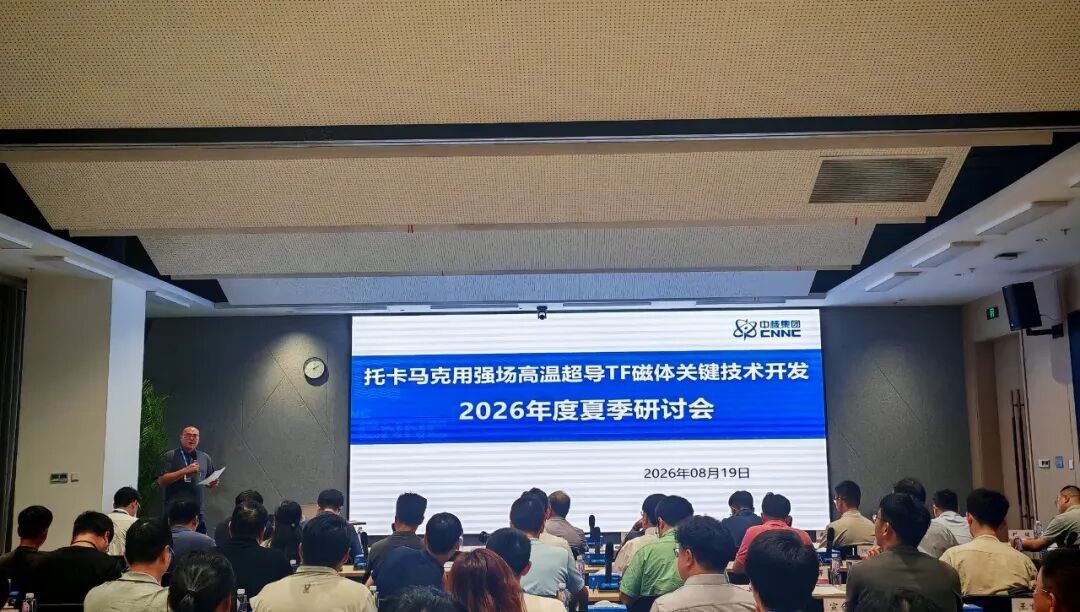
Summer Technical Symposium on High-Temperature Superconducting High-Field Magnets Successfully Held in Shanghai
On August 19, the Summer Technical Symposium on High-Temperature Superconducting High-Field Magnets was successfully held at the China Fusion Shanghai Headquarters. Yu Xuefeng, Deputy Secretary of the Party Committee and Deputy General Manager of China Fusion, and Xue Lei, Deputy Director of the Fusion Engineering Design Institute, attended the meeting. Xue Lei delivered an address on behalf of the Fusion Engineering Design Institute, extending a warm welcome to the experts present for their guidance. The symposium was moderated by Hu Xinbo, Director of the High-Temperature Superconducting Magnet R&D Department of the Fusion Engineering Design Institute. The symposium invited research institutions including the Technical Institute of Physics and Chemistry of the Chinese Academy of Sciences, Shanghai Advanced Research Institute of the Chinese Academy of Sciences, High Magnetic Field Science Center of the Hefei Institutes of Physical Science of the Chinese Academy of Sciences, Zhongshan Advanced Cryogenic Technology Research Institute, and Southwestern Institute of Physics of the Nuclear Industry, as well as universities...
2026-08-20

General Fusion Announces Business Update: LM26 Plasma Heated to Approximately 0.72 keV
General Fusion released a business update on August 18, disclosing its latest progress in fusion energy technology validation, commercial partnerships, and financing arrangements. The company went public on Nasdaq in July 2026 under the ticker symbol GFUZ. General Fusion stated that it entered the public market with approximately $150 million in cash following the completion of its business combination with Spring Valley Acquisition Corp. III. The funds include net transaction proceeds from private placement and trust capital, and are planned to support the Lawson Machine 26 (LM26) project and drive the completion of multiple...
2026-08-19

Thea Energy Completes Series B Extension to Advance Stellarator Fusion Plant Deployment
Thea Energy, Inc. announced on August 18 that it has completed an extension of its Series B financing round, with new investors including Brevan Howard Macro Venture, Aloniq, ALJ Investments, Beyond Earth Ventures, and other global strategic investors. The company stated that the new funds will be used to advance the engineering and commercial deployment of its stellarator fusion technology. Thea Energy had previously announced the completion of a $100 million Series B round, led by the U.S. Innovative Technology Fund (USIT) under Thomas Tull. The funds are primarily intended to expand magnet manufacturing capacity and build a second facility in northern New Jersey.
2026-08-19
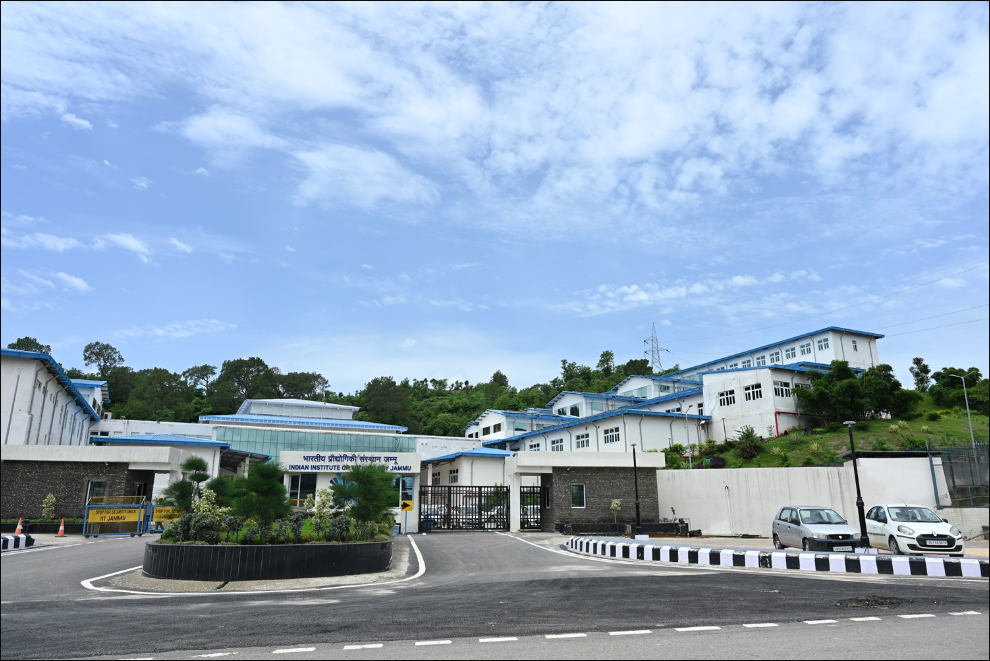
Indian research team uses supercomputer to track microscopic mechanisms of turbulence in dusty plasmas
Researchers at the Indian Institute of Technology Jammu (IIT Jammu), in collaboration with the Indian Institute of Technology Kanpur (IIT Kanpur), used supercomputer simulations to study the origin of chaos in dusty plasmas. By tracking the motion of millions of individual particles, the study revealed how turbulent energy is transferred from large-scale vortices to microscopic thermal motion of particles, providing a new computational perspective for nuclear fusion plasma research and astrophysical process analysis. Plasma is often referred to as the fourth state of matter. Unlike solids, liquids, and gases, atoms in plasma are ionized, forming a system composed of positively charged ions and negatively charged electrons. When tiny solid dust particles enter the plasma, these particles absorb electrons and become negatively charged, subsequently undergoing complex interactions with surrounding particles to form dusty plasma.
2026-08-19

ASP Isotopes Subsidiary Evaluates Metal Hydrofluorination and Fluorination Project in Namibia
ASP Isotopes Inc. recently announced that its wholly-owned subsidiary, Quantum Leap Energy LLC, is evaluating metal conversion opportunities in Namibia, with work focusing on technologies and processes required for critical stages of the fission and fusion nuclear fuel cycles. According to the disclosure, the evaluation includes plans to construct a pilot-scale hydrofluorination and fluorination facility in the Walvis Bay area of Namibia. Public environmental and social impact assessments and consultation procedures for the project have already been initiated. The proposed facility will be used to develop, test, and demonstrate metal hydrofluorination and fluorination processes. In accordance with Namibian regulatory requirements, relevant public consultation notices have been published through customary local channels. The company...
2026-08-19
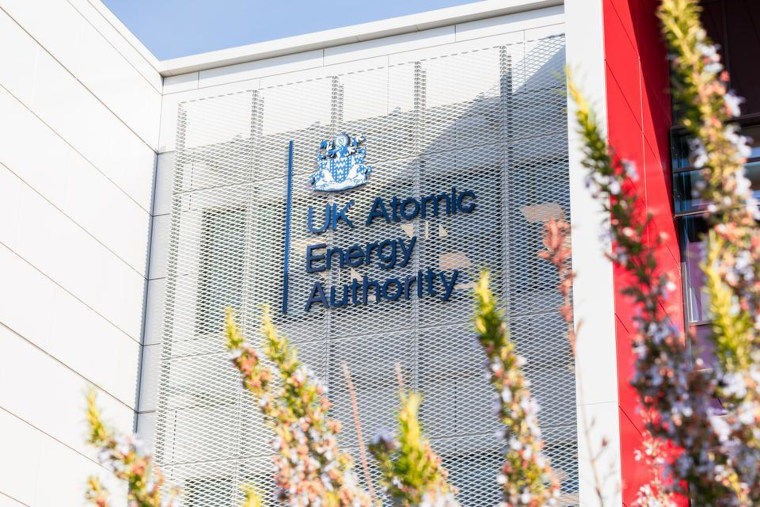
UK Atomic Energy Authority spins out Singular Machines
The UK Atomic Energy Authority (UKAEA) has recently spun out Singular Machines, a UK engineering automation company. The company is commercializing artificial intelligence technologies originating from fusion engineering R&D scenarios and has secured strategic investment and new industry contracts. According to information released by UKAEA on August 17, Singular Machines has completed a round of strategic investment. The round was led by the UK Innovation & Science Seed Fund and Oxford Science Enterprises, with participation from global engineering firm Arup and Japan's Miraiso...
2026-08-18
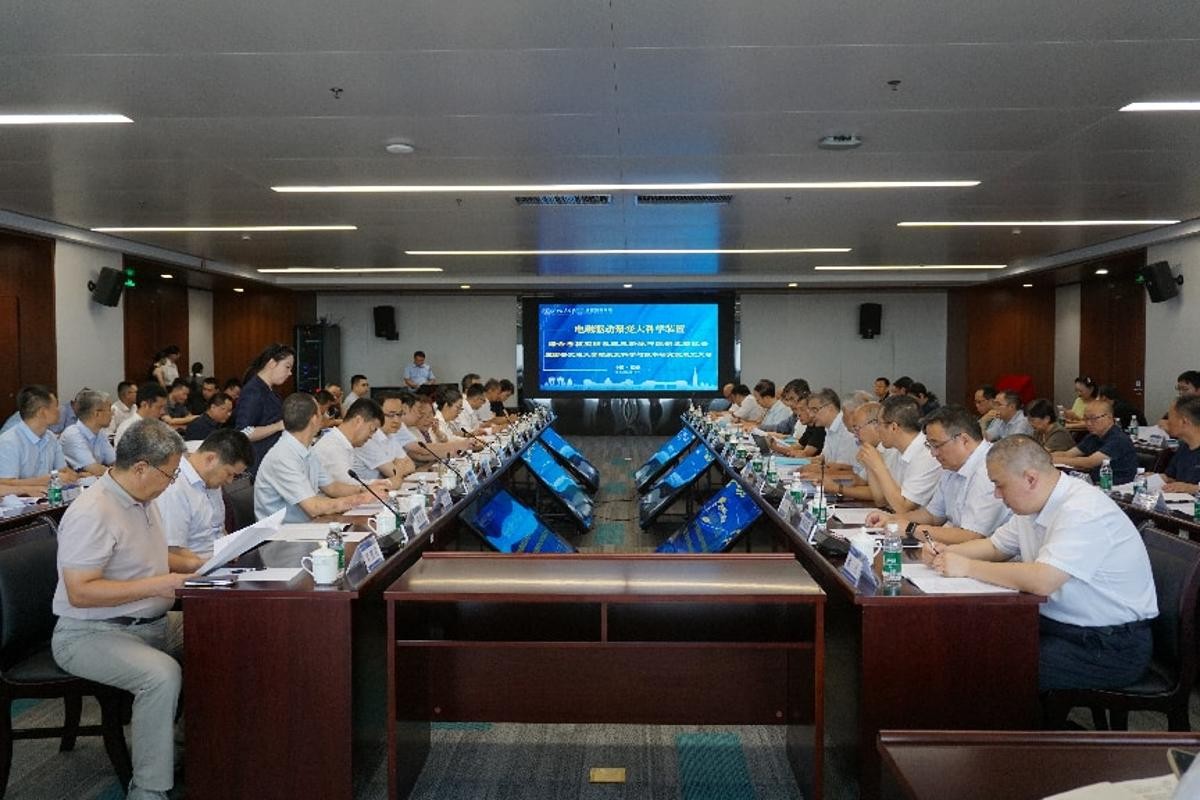
Single-Channel Pulse Source of Electromagnetic-Driven Fusion Large Scientific Facility Passes Acceptance
On August 16, the test and acceptance meeting for the single-channel pulse source of the comprehensive assessment experimental system of the electromagnetic-driven fusion large scientific facility, along with the inauguration ceremony of the Institute of Nuclear Fusion Science and Technology at Xi'an Jiaotong University, was held at the China Western Science and Technology Innovation Harbor. During the meeting, the single-channel pulse source of the comprehensive assessment experimental system passed testing and acceptance, and the Institute of Nuclear Fusion Science and Technology at Xi'an Jiaotong University was officially inaugurated. Before the meeting, attending experts and guests inspected the single-channel pulse source experimental system. During the acceptance session, the project team presented the overall status of the electromagnetic-driven fusion large scientific facility, the development progress of the single-channel pulse source, and the test verification results. The expert panel discussed the...
2026-08-18

Russia to Develop General Safety Rules for Controlled Thermonuclear Fusion Facilities
The Federal Environmental, Industrial and Nuclear Supervision Service of Russia (Rostekhnadzor) has completed the development of the draft federal norms and rules in the field of atomic energy use, "General Provisions for Ensuring the Safety of Controlled Thermonuclear Fusion Facilities," and has been soliciting comments and suggestions on the results of the draft review since August 17, 2026, with a feedback deadline of September 17, 2026. According to the draft, the document applies to controlled thermonuclear fusion facilities equipped with thermonuclear reactors or thermonuclear devices. The scope of application includes thermonuclear devices with a neutron production intensity exceeding 10²⁰ neutrons per second, or, in pulsed operation with a single pulse of less than 1 second, exceeding 10²⁰ neutrons per pulse, as well as...
2026-08-17
U.S. Fusion Company Discloses Texatron Platform Progress and Capital Markets Plans
American Fusion disclosed to shareholders on August 14 the latest developments in the global fusion energy industry, data center electricity demand in Texas, and the company's capital markets arrangements. The company stated that its Texatron fusion engine under development remains in the testing and engineering validation phase, and whether it can be used for commercial power supply in the future depends on multiple conditions, including test plans, regulatory approvals, financing, scaled production, and commercialization progress. American Fusion stated that its long-term goal is to develop the Texatron platform into a scalable distributed power source and explore supplying electricity to data centers, hospitals, defense facilities, industrial facilities, and other customers through a power-as-a-service model.
2026-08-17

US experiment reveals diamond melting behavior under high pressure, potentially advancing inertial confinement fusion research
Researchers at Lawrence Livermore National Laboratory published a new study in Nature Physics documenting the melting process of diamond at pressures approximately three times greater than those at Earth's core. The experiments showed that under high-pressure conditions, diamond floats in liquid metallic carbon, similar to how ice floats in water. This finding helps improve inertial confinement fusion experimental models and provides new evidence for understanding the potential "diamond rain" phenomenon inside ice giant planets such as Neptune and Uranus. The latest melting experiments confirmed that under high pressure, diamond floats in liquid metallic carbon, just as ice floats in a glass of water. (Concept image: James Wickboldt/LLNL) The research team stated...
2026-08-17
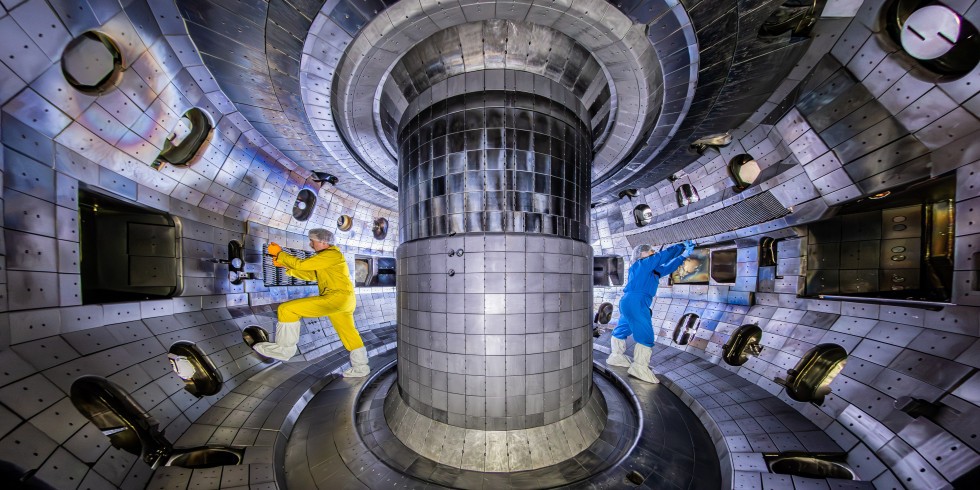
Machine learning framework predicts micro-displacements of DIII-D fusion device coils
Researchers at the U.S. Department of Energy's (DOE) Thomas Jefferson National Accelerator Facility (Jefferson Lab) and collaborating teams have developed a machine learning framework that can predict subtle changes in critical fusion device hardware before the next experiment begins. The method targets the DIII-D National Fusion Facility in San Diego, and the findings have been published in the journal Machine Learning with Applications. Interior of the DIII-D National Fusion Facility tokamak. (Image courtesy of General Atomics) DIII-D is a tokam...
2026-08-17