
Search Results
Keyword:Italy

Italy may restart nuclear power generation by 2035
Italian Minister of Environment and Energy Security Gilberto Pichetto Fratin stated that the Italian government does not rule out the possibility of restarting domestic nuclear power generation by 2035. If mass production of nuclear reactors begins by the end of this decade, their construction time could be shortened to three to four years. This might allow Italy to begin generating electricity in 2034 or 2035. The bill aims to establish the legal framework needed for Italy to build new nuclear reactors. Since the referendum held after the 1987 Chernobyl nuclear accident and the closure of the last nuclear power plants in 1990, Italy has consistently prohibited nuclear energy. However, geopolitical uncertain...
2026-09-20
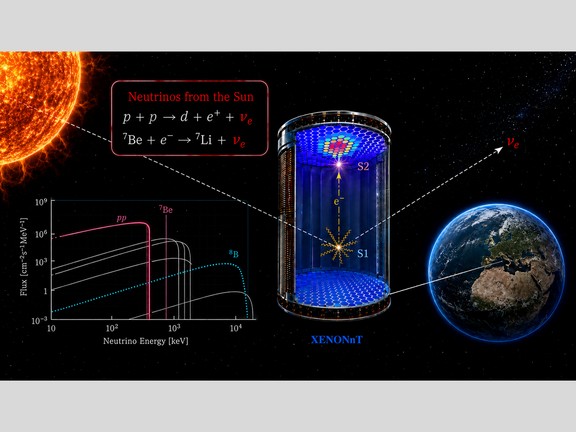
XENONnT Observes First Low-Energy Solar Neutrino-Electron Scattering Signals
Scientists of the XENON collaboration recently announced the first observation of low-energy solar neutrino scattering off electrons in the XENONnT particle detector. The results were presented at a workshop held on August 31, 2026, at the Gran Sasso National Laboratory of the Italian National Institute for Nuclear Physics. The team of Prof. Teresa Marrodán Undagoitia and Dr. Hardy Simgen from the Max Planck Institute for Nuclear Physics played a key role in the experiment. Nuclear fusion in the Sun continuously produces vast numbers of neutrinos, with hundreds of billions passing through every square centimeter of Earth each second. Because neutrinos interact with matter extremely weakly, detecting these particles...
2026-09-07
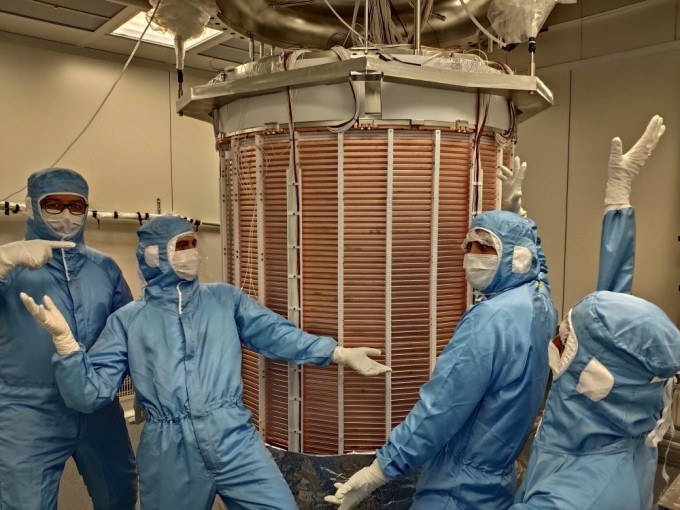
XENONnT Dark Matter Detector Captures Faintest Solar Neutrino Signal Ever Observed
September 1 news - The XENONnT dark matter detection experiment at the Gran Sasso National Laboratory in Italy has achieved new progress. The XENON collaboration research team announced that the detector has captured low-energy solar neutrino collision signals never observed before, lowering the neutrino detection energy threshold to approximately 17 kiloelectron-volts (keV). The research team's analysis indicates that the probability of the signal being merely a statistical fluctuation is less than one in a million. Neutrinos are elementary particles with no electric charge and extremely small mass, which can be produced in processes such as nuclear fusion reactions in the solar core, supernova explosions, and nuclear fission in reactors. Due to the extremely weak interaction between neutrinos and matter, vast numbers of neutrinos can pass through the Earth, which also makes detection...
2026-09-02

Italy's Eni Plans to Build Commercial Nuclear Fusion Power Plant in Europe by Early 2040s
Italian energy company Eni plans to build a commercial nuclear fusion power plant in Europe by the early 2040s or sooner. Francesca Ferrazza, head of Eni's magnetic confinement fusion project, stated that nuclear fusion technology has seen significant progress in recent years, and competition in the field is accelerating. Ferrazza said that nuclear fusion, which was previously confined mainly to the research stage, has now begun to meet the conditions for industrial application. She noted that Eni's goal is to promote the deployment of a commercial nuclear fusion power plant in Europe by the early 2040s, or even earlier. Eni has also shown interest in the extraction, purification, and recycling of spent fusion fuel back into reactors. Recently, Eni has...
2026-08-24

International Team Measures Niobium-94 Neutron Reactions, Explaining Anomalous Molybdenum-94 Abundance in the Solar System
An international team of physicists has, for the first time, conducted a comprehensive study of the interactions between neutrons and the niobium-94 isotope. The findings have been published in Physical Review Letters. The study suggests that the elevated abundance of molybdenum-94 in the primordial material of the solar system can be explained by a series of neutron-involving nuclear reaction processes inside old stars, without requiring the introduction of previously unknown special formation mechanisms. The research was led by Alberto Mengoni, a researcher at the Italian National Institute for Nuclear Physics. The team conducted experiments using the n_TOF facility at CERN, focusing on tracking the interactions between neutrons and niobium-94 atoms. The n_TOF facility is used to...
2026-08-11
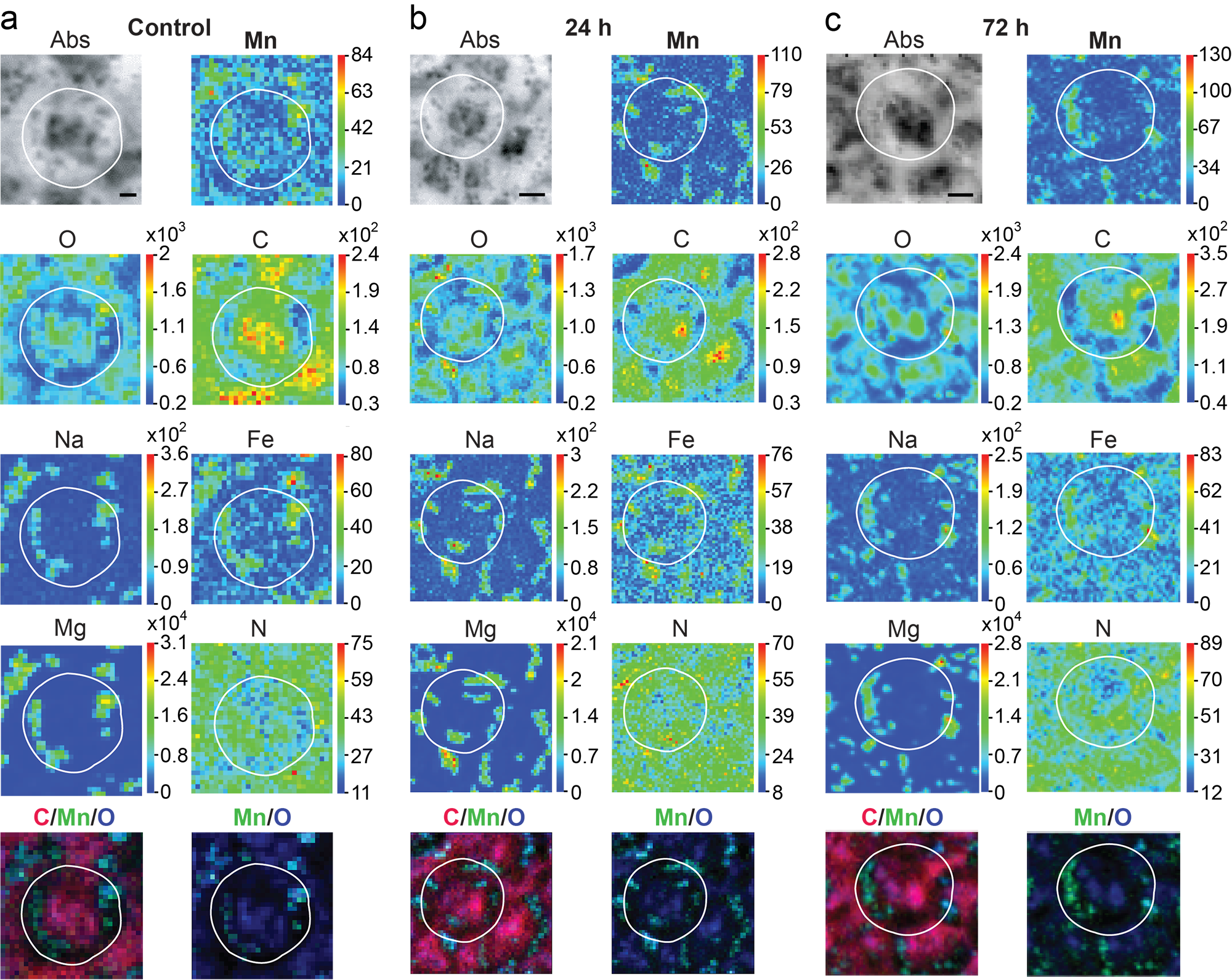
Synchrotron radiation reveals mechanism of acidophilic microalga PM01 tolerating high-concentration manganese
Researchers have used synchrotron radiation techniques to reveal the key mechanism by which an acidophilic green microalga survives in high-concentration manganese environments. The research subject is the acidophilic alga C. acidophila PM01, originally isolated from an acid mine drainage pond, which can survive at manganese concentrations up to 50 mM (approximately 2.75 g/L), making it one of the most manganese-tolerant microalgae reported to date. Manganese is a nutrient element required by organisms, but during processes such as mining, ore processing, and electrolytic manganese production, high concentrations of manganese can enter water bodies and cause pollution. In particular, manganese removal is difficult in acidic waters. Some microorganisms can adapt to such extreme environments, but their tolerance mechanisms still require fine analytical tools to elucidate...
2026-08-10
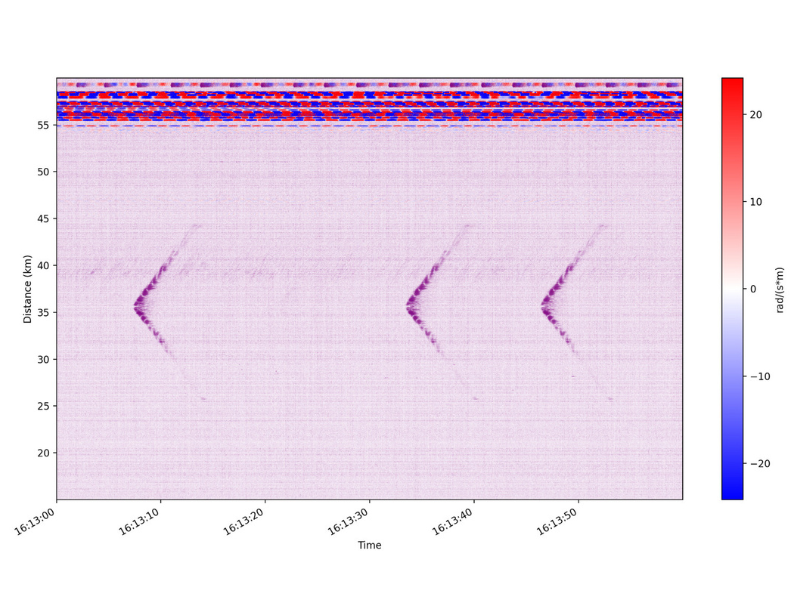
Italian Neutrino Telescope Undersea Network Captures Fin Whale Songs
August 5 news, after months of silence, fin whale songs have once again been recorded in the southern Ionian Sea. This observation was jointly completed by multiple experiments connected to the underwater infrastructure of the Southern National Laboratory of the Italian National Institute for Nuclear Physics (LNS-INFN), involving three projects: ITINERIS, LOWNOISER, and VONGOLA. The related work was carried out with the participation of LNS-INFN and the Sicilian Center for Nuclear Physics and Structure of Matter (CSFNSM). The detection occurred in late winter. At that time, the eastern Mediterranean region was affected by strong anthropogenic noise from a long-term geophysical survey of offshore oil and gas resources, and only weeks had passed since the transit of Hurricane Harry. Researchers identified fin whale signals amid the complex acoustic background...
2026-08-09
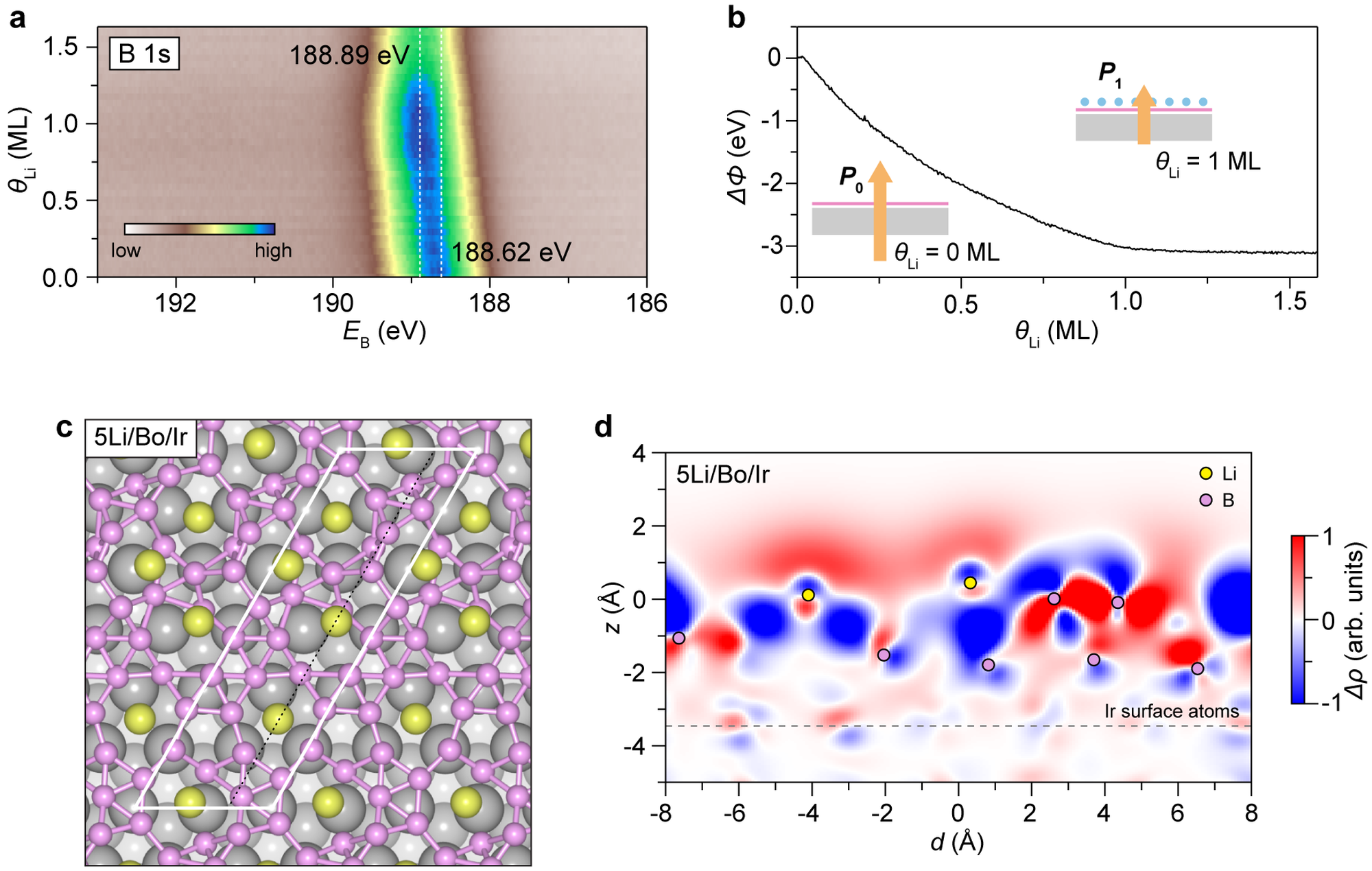
Multinational Team Reveals Mechanisms of Lithiation in Modulating the Structural and Electronic Properties of Borophene Using Synchrotron Techniques
A research team from the Institute of Physics in Zagreb, Croatia, Elettra Synchrotron in Trieste, Italy, Shimane University, and Tokyo University of Science recently conducted a study on the interaction between lithium atoms and borophene, revealing the mechanisms by which lithiation affects the atomic structure and electronic properties of borophene. The findings were published in *ACS Nano* and selected as the journal cover article. (a) Shift of the B 1s core level toward higher binding energy; (b) reduction of the sample work function due to charge transfer from Li atoms to B atoms; (c) lithium atoms (yellow) deposited on borophene (magenta) induce deformation of the borophene lattice, attributed to significant charge redistribution within the system...
2026-08-03

Italy Moves to Approve Advanced Nuclear Legal Framework, Paving Way for Small Modular Reactors
Italy's parliament is expected to approve a bill next week establishing a legal framework for advanced nuclear technologies, covering next-generation nuclear solutions such as small modular reactors (SMRs). If passed, the bill would authorize the government to formulate specific rules within one year on reactor licensing, safety regulation, radioactive waste management, and site selection. Italy's Minister of Environment and Energy Security, Gilberto Pichetto Fratin, stated that the government's current responsibility is to create the necessary conditions so that entities responsible for future construction decisions can proceed in accordance with the law. In June this year, the Italian Chamber of Deputies...
2026-08-02