
Search Results
Keyword:MIT

New Generation "Harmony System" and Other Technological Achievements Debut at the 23rd China-ASEAN Expo
At the five-day 23rd China-ASEAN Expo and China-ASEAN Business and Investment Summit, CGN showcased its innovative achievements in nuclear power, new energy, and digitalization under the theme "Smart Nuclear Powers Free Trade, Green Electricity Connects ASEAN." At the exhibition, CGN Digital Technology highlighted its independently developed Harmony System series products and their applications in the new energy sector, and used virtual reality technology to give visitors the opportunity to tour nuclear power plants. The Harmony System is hailed as the "nerve center" and "brain" of nuclear power plants. It is China's independently developed nuclear safety-class digital instrumentation and control system, and has now been widely applied to 34 nuclear power units nationwide, covering second- to fourth-generation nuclear power reactor types and technologies. Through the comprehensive iterative upgrading of the Harmony System, CGN Digital Technology has equipped it with a smarter, safer, and more economical "super intelligent brain," aiming to provide digital and intelligent empowerment for the full-cycle production and operation of nuclear power plants.
2026-09-22
China Formally Commits to Complying with the IAEA's "Management of Disused Radioactive Sources Guidelines"
Following its political commitments to the "Code of Conduct on the Safety and Security of Radioactive Sources" and the "Guidance on the Import and Export of Radioactive Sources," China has made a commitment to the International Atomic Energy Agency (IAEA) to comply with the "Management of Disused Radioactive Sources Guidelines" (hereinafter referred to as the "Disused Sources Guidelines"), marking a further improvement of China's international benchmarking system for the full chain and entire process of radioactive source management. The relevant information was officially published on the IAEA website on September 9. The "Disused Sources Guidelines" is one of the two important supporting guidance documents of the IAEA's "Code of Conduct on the Safety and Security of Radioactive Sources," approved and issued by the Board of Governors in 2017. As an internationally applicable non-binding normative framework, the Guidelines provide a unified reference standard for the standardized management of disused radioactive sources by member states, covering key areas such as policy planning, legislative development, regulatory responsibilities, storage and transport, full-process control, and international cooperation, and identifying multiple management pathways including return to supplier, recycling and reuse, long-term storage, and safe disposal, adapting to the nuclear technology utilization development levels and regulatory systems of different countries.
2026-09-20
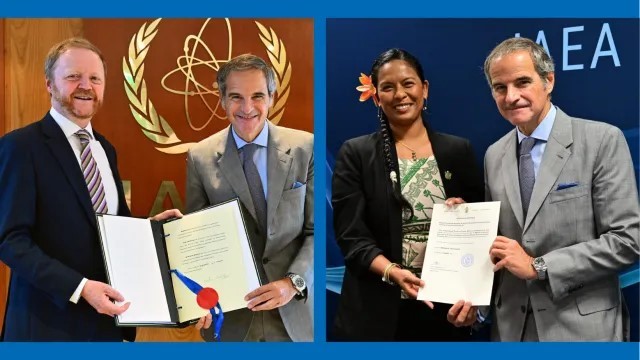
UK and Cook Islands Sign International Legal Instruments, Reaffirming Commitment to International Nuclear Cooperation
At the annual treaty signing event held during the International Atomic Energy Agency (IAEA) General Conference, the United Kingdom and the Cook Islands each deposited relevant legal instruments, demonstrating their strong commitment to the international legal framework supporting the safe, secure and peaceful uses of nuclear science and technology. IAEA Director General Rafael Mariano Grossi stated that by acceding to such treaties, contracting parties not only assume important national responsibilities but also signal to the international community their dedication to building a solid legal framework to ensure the safe, secure and peaceful uses of nuclear technology. During the event, the United Kingdom deposited the ratification of the Amendment to the Convention on Supplementary Compensation for Nuclear Damage...
2026-09-17
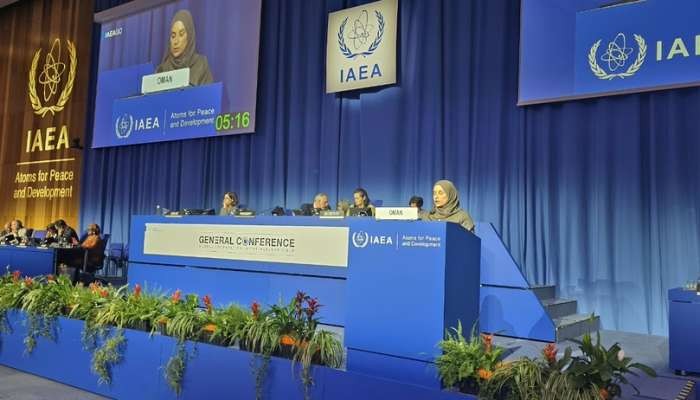
Oman Reaffirms Cooperation Commitment at IAEA General Conference, Promotes Peaceful Uses of Nuclear Technology
The Sultanate of Oman delivered a statement at the 70th Regular Session of the International Atomic Energy Agency (IAEA) General Conference held in Vienna, Austria, expressing appreciation for the work of the IAEA Secretariat and reaffirming its continued close cooperation with the Agency and its Member States to achieve strategic objectives and further enhance the key role of nuclear technology in peace and modern development. The statement was delivered on behalf of the Sultanate of Oman by Faiza Saif Al Siyabi, Chargé d'Affaires of Oman's Permanent Mission to the IAEA. In its statement, Oman welcomed the Democratic Republic of Timor-Leste as a new member of the IAEA. Oman emphasized in its statement its active participation...
2026-09-17
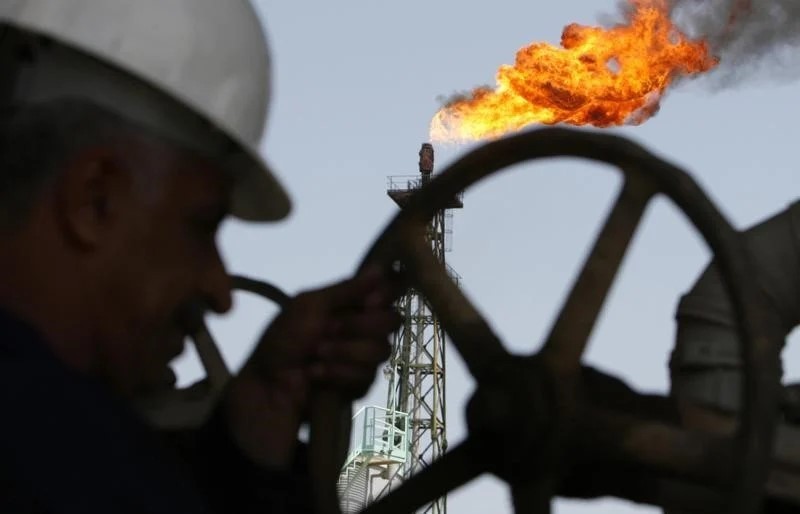
Blue Energy Submits Construction Permit Application to U.S. Nuclear Regulatory Commission to Advance Texas Gas-to-Nuclear Project
Blue Energy announced that it has submitted Part One of its construction permit application to the U.S. Nuclear Regulatory Commission (NRC) for its first gas-to-nuclear project at Port Victoria, Texas. This milestone move makes Blue Energy one of only five nuclear energy companies to have submitted a construction permit application to the NRC in the current new wave of nuclear power development. Blue Energy employs the Blue Way of prefabricated and standardized construction, transport, and assembly of nuclear power plants. Compared with traditional nuclear power projects, this model can shorten project commissioning time by more than a decade and significantly reduce costs and construction risks. With the final investment decision expected to be made in 2027, the project plans to deploy GE Vernova 7HA.02 gas turbines and GE Vernova Hitachi BWRX-300 small modular reactors (SMRs) to create a first-of-its-kind gas-to-nuclear hybrid power plant.
2026-09-17

Terrestrial Energy Submits Graphite Topical Report to U.S. Nuclear Regulatory Commission, Advancing Integrated Molten Salt Reactor Licensing Process
Terrestrial Energy, a leading company in fourth-generation molten salt reactor technology, announced on September 10 that it has submitted the Graphite Topical Report to the U.S. Nuclear Regulatory Commission (NRC). The submission of this report is intended to establish a solid regulatory certification basis for the application of nuclear-grade graphite—a core component of the IMSR core unit—in commercial power plants, marking an important step in the company's commercialization process. The IMSR reactor is a graphite-moderated molten salt reactor. Although graphite has a relatively long history of application in the nuclear power field, regulators require independent performance verification for each specific reactor design to ensure safety and reliability. This submission...
2026-09-16
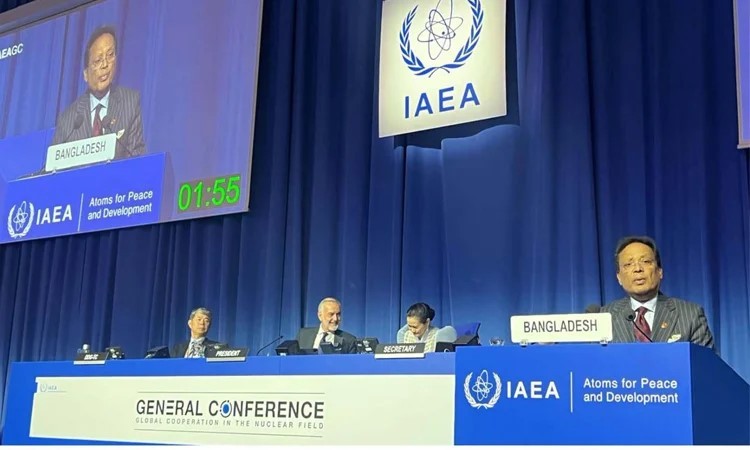
Bangladesh Reaffirms Commitment to Peaceful Uses of Nuclear Technology
Minister of Science and Technology Fakir Mahbub Anam recently attended the 70th General Conference of the International Atomic Energy Agency (IAEA) on behalf of Bangladesh, where he reaffirmed Bangladesh's firm commitment to the peaceful uses of nuclear technology and its dedication to the highest safety standards and strengthened international cooperation. This statement highlights Bangladesh's increasingly important position and sense of responsibility in the field of nuclear technology. In a statement by the delegation in Vienna, Bangladeshi Prime Minister Tarique Rahman expressed congratulations to the President of the IAEA General Conference, and also expressed gratitude to IAEA Director General Rafael Mariano Grossi for his outstanding role in promoting the peaceful uses of nuclear technology and international cooperation...
2026-09-16

US-based Terrestrial Energy Submits IMSR Graphite Topical Report to Advance Molten Salt Reactor Licensing Preparation
US fourth-generation molten salt nuclear power plant developer Terrestrial Energy Inc. (NASDAQ: IMSR) recently announced that it has submitted a graphite topical report to the US Nuclear Regulatory Commission (NRC). The report is intended to provide a regulatory basis for the use of graphite, a key core component of the Integral Molten Salt Reactor (IMSR), in commercial power plant operation. Terrestrial Energy CEO Simon Irish stated that this is the second of at least three IMSR topical reports the company plans to submit to the NRC in 2026, and is part of its structured regulatory engagement plan, ultimately...
2026-09-11

Greece Establishes Committee to Study Inclusion of Nuclear Energy in Long-Term Energy Planning
On September 9, 2026, the Greek government published a decision in the Official Gazette establishing a government committee to study the possibility of including nuclear energy in the country's long-term energy planning. According to the document, the committee will work in accordance with relevant guidelines of the International Atomic Energy Agency (IAEA) as Greece's Nuclear Energy Programme Implementing Organisation (NEPIO), responsible for organizing and managing the first phase of the IAEA Milestones Approach. This phase is the exploratory stage set by the IAEA for countries considering the development of nuclear power. The IAEA Milestones Approach is a framework guideline for countries interested in developing nuclear power, divided into three phases and covering 19 infrastructure issues, with the related work to be completed before the commissioning of the first nuclear power plant.
2026-09-10
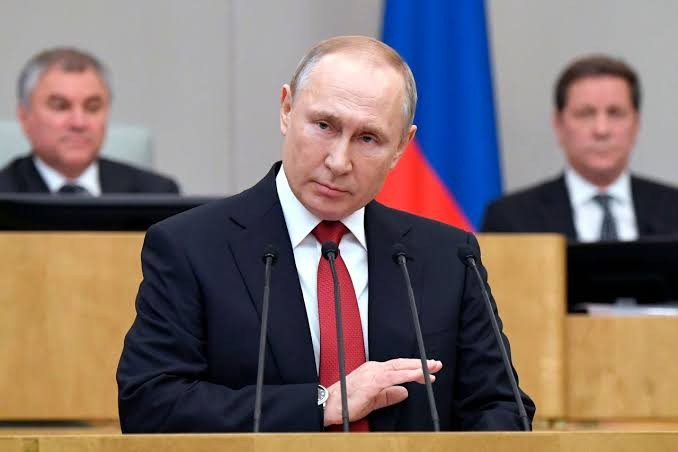
Indian, Russian Leaders to Meet Ahead of BRICS Summit; Talks on New Nuclear Power Plants on Agenda
Kremlin spokesman Dmitry Peskov confirmed on September 8 that Indian Prime Minister Narendra Modi and Russian President Vladimir Putin will meet this Friday, ahead of the 18th BRICS Leaders' Summit scheduled for September 12-13 in New Delhi. Peskov stated that Russia is awaiting negotiations with India on new nuclear power plants. He also noted that the two leaders maintain close contact and are able to discuss sensitive issues in bilateral relations in an open and constructive manner. The Indian side has not yet issued an official statement regarding the bilateral meeting between Modi and Putin. India holds the presidency of the 2026 BRICS Summit. This year's summit will be held at the India Exposition Centre in New Delhi under the theme "Building Resilience, Innovation, Cooperation, and Sustainable Development." During the summit, participants will exchange views on shared priorities and related global and regional issues.
2026-09-09
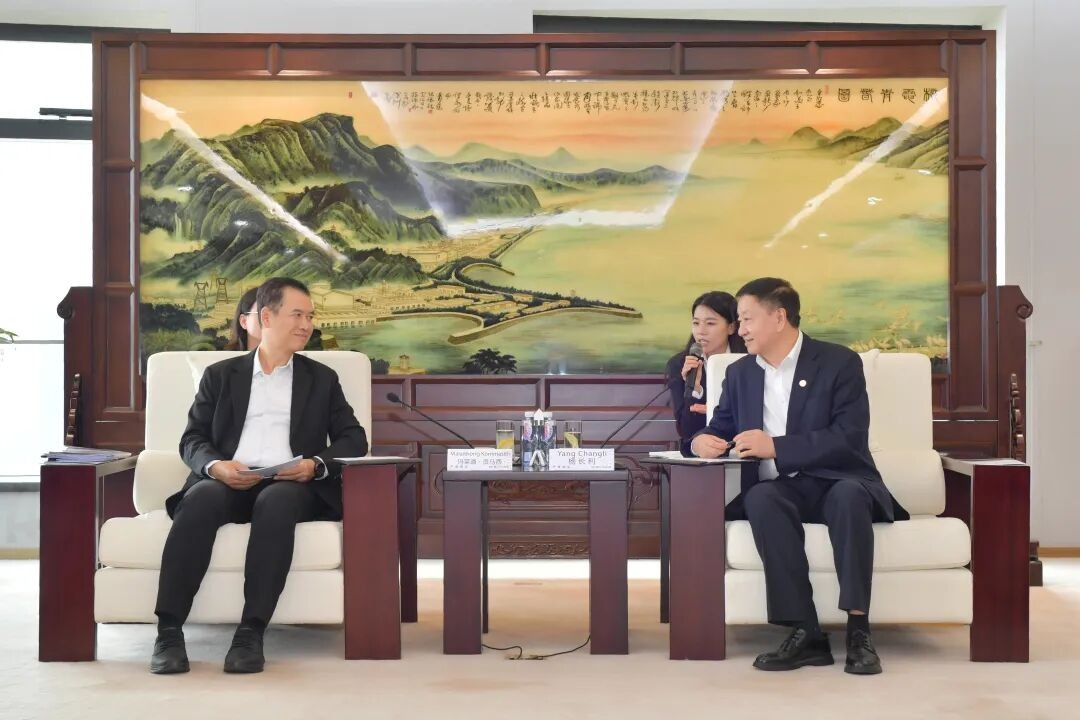
Yang Changli, Chairman of China General Nuclear Power Group, Meets with Lao Minister of Industry and Commerce Malaythong Kommasith and Standing Vice Chairman of the Lao-China Cooperation Committee Sengsadeth Sayasone
On September 7, Yang Changli, Chairman of China General Nuclear Power Group Co., Ltd., met separately with Lao Minister of Industry and Commerce Malaythong Kommasith and Sengsadeth Sayasone, Standing Vice Chairman of the Lao-China Cooperation Committee, at the CGN Tower in Shenzhen, conducting in-depth exchanges on deepening practical cooperation in energy, industry, agriculture, and people's livelihood. Prior to the meetings, Malaythong Kommasith and his delegation also visited and inspected the Daya Bay Nuclear Power Base. He Haibin, Chief Accountant of the Group, and Li Yilun, Vice President, attended relevant activities respectively. ▲Yang Changli meets with Lao Minister of Industry and Commerce Malaythong Kommasith ▲Yang Changli meets with Standing Vice Chairman of the Lao-China Cooperation Committee Sengsadeth Sayasone...
2026-09-09
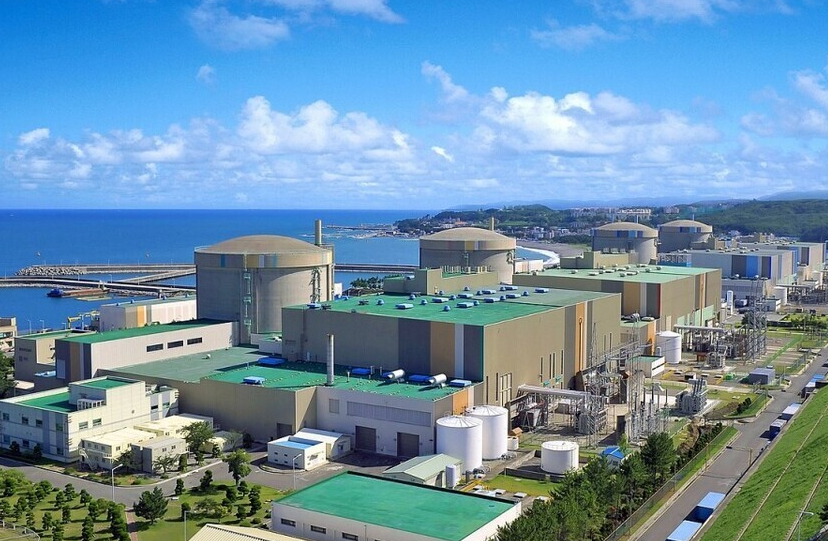
Gyeongju City in South Korea Submits Key Requests to Government for Extension of Wolseong Nuclear Power Plant
Gyeongju City, North Gyeongsang Province, South Korea, stated on September 7 that it has submitted five key pending matters to the Ministry of Climate, Energy and Environment, covering nuclear power plants, support facilities for low- and intermediate-level radioactive waste disposal, and water supply guarantees for the Hyeongsan River basin. On the same day, Gyeongju Mayor Joo Nak-young and National Assembly member Kim Seok-ki met with Minister Kim Sung-hwan of the Ministry of Climate, Energy and Environment to explain the importance of the relevant projects to regional development and public welfare, and requested review and support at the central government level. Regarding support facilities for radioactive waste disposal...
2026-09-08
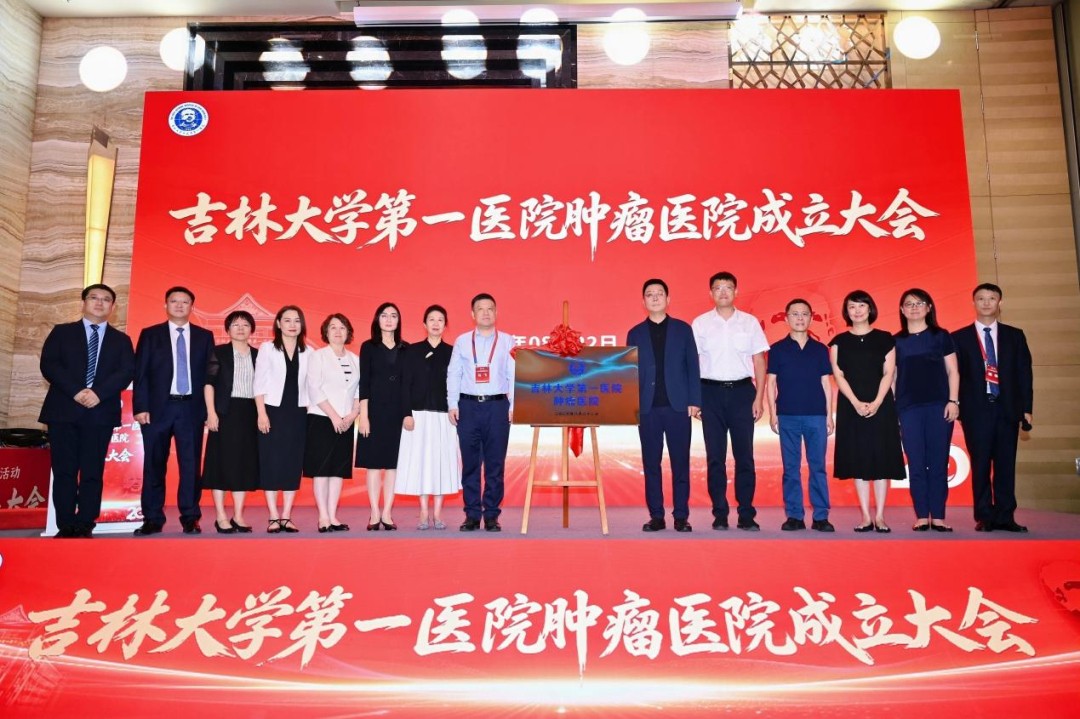
Cancer Hospital of the First Hospital of Jilin University Established, Granted Configuration Permit for Heavy Ion Radiotherapy System
Recently, the 7th Bethune Conference on New Advances in Cancer Treatment was held in Changchun, Jilin Province. The conference coincided with the 80th anniversary of Jilin University and the 20th anniversary of the Cancer Center of the First Hospital of Jilin University, aiming to establish a high-level academic exchange platform and promote the continuous improvement of cancer diagnosis and treatment capabilities in the three northeastern provinces. During the conference, the inauguration ceremony of the Cancer Hospital of the First Hospital of Jilin University was also held. According to reports, the newly established Cancer Hospital will, based on the coordinated development of the original Cancer Center, integrate three advantageous disciplines—oncology, hematology, and radiation oncology—further improve the multidisciplinary collaborative diagnosis and treatment model, promote smoother connections in cancer diagnosis and treatment processes, and enhance comprehensive treatment capabilities for difficult cancers. The conference also...
2026-09-08
China-Russia Energy Cooperation Committee Meeting Discusses Cooperation in Nuclear Energy and Other Fields
Ding Xuexiang, Member of the Standing Committee of the Political Bureau of the CPC Central Committee and Vice Premier of the State Council, co-chaired the 23rd meeting of the China-Russia Energy Cooperation Committee with Russian Deputy Prime Minister Novak in Vladivostok on the 4th. Ding Xuexiang stated that President Xi Jinping and President Putin have held multiple meetings this year, conducting in-depth strategic communication and making top-level arrangements, drawing a clear blueprint for upgrading and enhancing China-Russia energy cooperation. Since the 22nd meeting of the China-Russia Energy Cooperation Committee, bilateral energy trade has steadily expanded, landmark major cooperation projects have progressed smoothly, and new progress has been made in clean energy cooperation. China is willing to work with Russia to implement the important consensus of the two heads of state, fully leverage the role of the committee mechanism, and promote...
2026-09-05
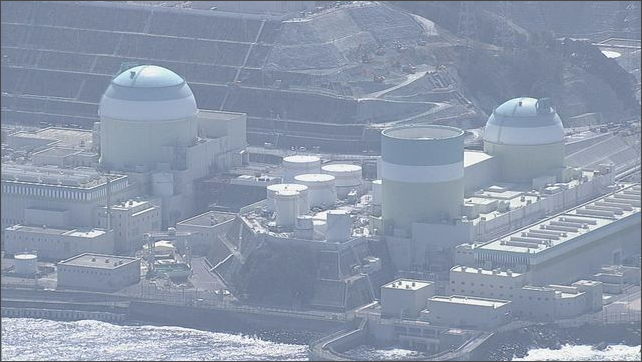
Second Phase of Decommissioning for Unit 1 of Japan's Ikata Nuclear Power Plant Approved by Prefectural Committee
The Environmental Safety Management Committee for the Ikata Nuclear Power Plant in Ehime Prefecture, Japan, held a meeting in Matsuyama City on September 2 to discuss plans by Shikoku Electric Power to proceed with the second phase of decommissioning for Unit 1 of the Ikata Nuclear Power Plant. The unit, located in Ikata-cho, Ehime Prefecture, is currently in the process of being decommissioned. The decommissioning of Unit 1 at the Ikata Nuclear Power Plant has been divided into four main phases. Shikoku Electric Power had previously conducted prior consultations with Ehime Prefecture and Ikata-cho regarding the transition to the next phase, obtained local consent, and submitted relevant applications to Japan's Nuclear Regulation Authority (NRA). In July of this year, the NRA approved the application...
2026-09-03