
Search Results
Keyword:NTS
Russian Energopotok Plant Delivers 241 Units of Equipment to Multiple Nuclear Power Plants in August
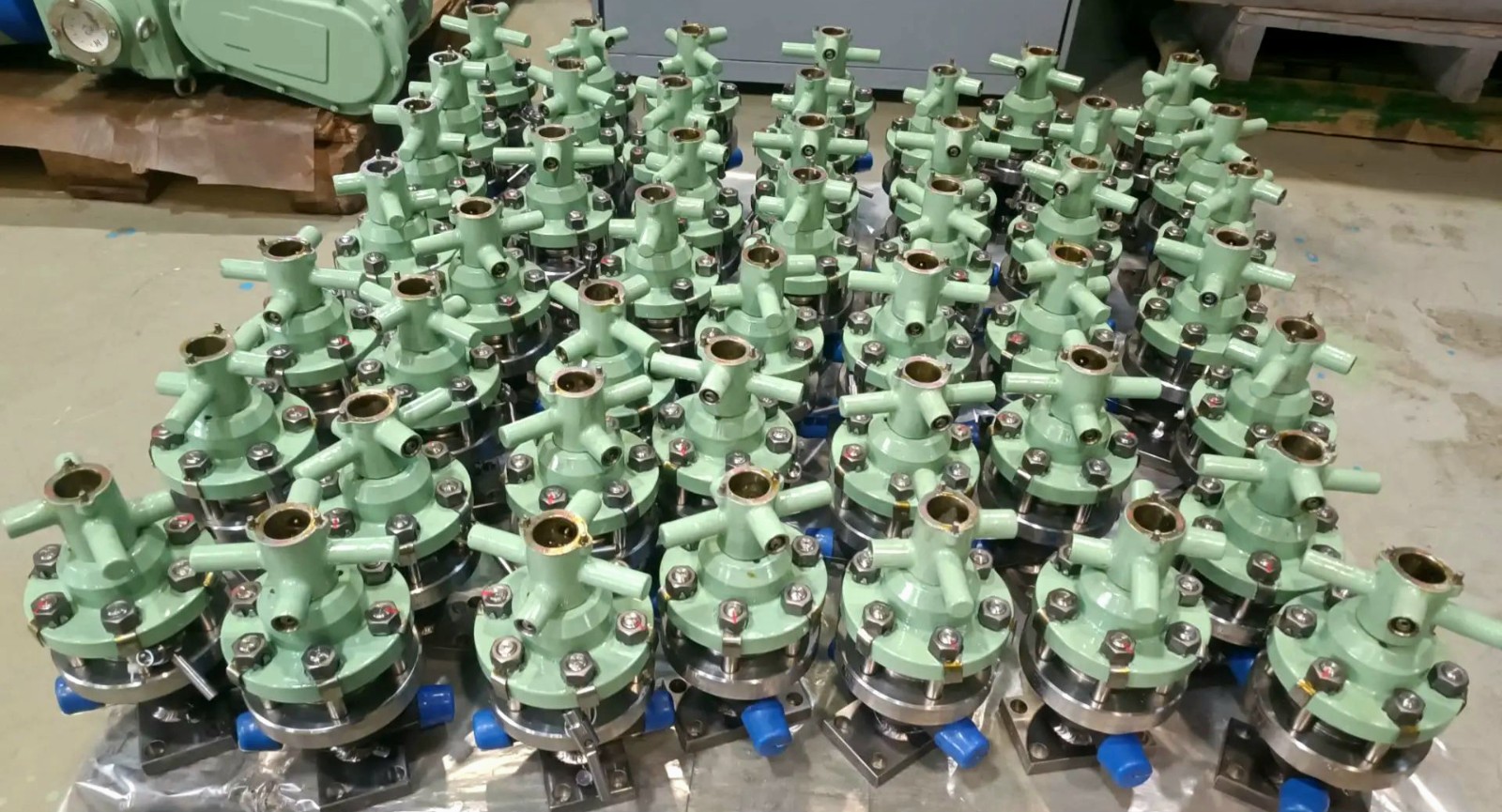
The Energopotok plant, located in the Sarov Advanced Development Territory (ADT) in Russia, continues to supply equipment to nuclear power projects in Russia and abroad. In August, the company delivered a total of 241 units of equipment to the Akkuyu Nuclear Power Plant, the El-Dabaa Nuclear Power Plant, and the Kursk Nuclear Power Plant. The delivered products include globe valves, bellows-sealed valves, throttling control devices, gate valves, check valves, and non-return valves, primarily used in systems of Russian-designed nuclear power plants. Energopotok has expanded its production footprint to the Sarov ADT, where it is advancing an investment project focused on manufacturing globe valves for Russian-designed nuclear power plants. The Sarov ADT...
2026-09-03

IAEA 70th General Conference to Host Technical Cooperation Side Events Focusing on Radiotherapy Financing and African Nuclear Workforce Development
The 70th Regular Session of the International Atomic Energy Agency General Conference will be held from September 14 to 18, 2026, at the Vienna International Centre in Austria. During the session, delegates and technical experts from various countries will discuss the Agency's ongoing work and topics related to nuclear science and technology. The 70th Regular Session of the IAEA General Conference will take place from September 14 to 18, 2026, at the Vienna International Centre. (IAEA) As part of the arrangements related to the General Conference, the IAEA Department of Technical Cooperation will host two side events during the conference week, highlighting its technical cooperation support to Member States. One event will focus on financing for the expansion of radiotherapy services, while the other will...
2026-09-03

Study Says Neutrino Laser Physically Impossible Due to Mechanism Constraints
On September 2, physicists at the Massachusetts Institute of Technology published two papers in Physical Review Letters analyzing a previously proposed neutrino laser concept. The research concludes that, due to atomic recoil effects and the fermionic nature of neutrinos, the scheme of using radioactive atomic clouds to produce laser-like neutrino beams is physically impractical. Neutrinos are elementary particles with extremely small mass and very weak interactions with ordinary matter. Earlier research had envisioned cooling radioactive atomic clouds to nanokelvin temperatures to form a Bose-Einstein condensate. According to this concept, atoms in a quantum coherent state might decay synchronously, producing neutrino beams with strong directionality through a quantum amplification effect similar to superradiance...
2026-09-03
CERN Finds Statistical Hints of Higgs Boson Pair Production
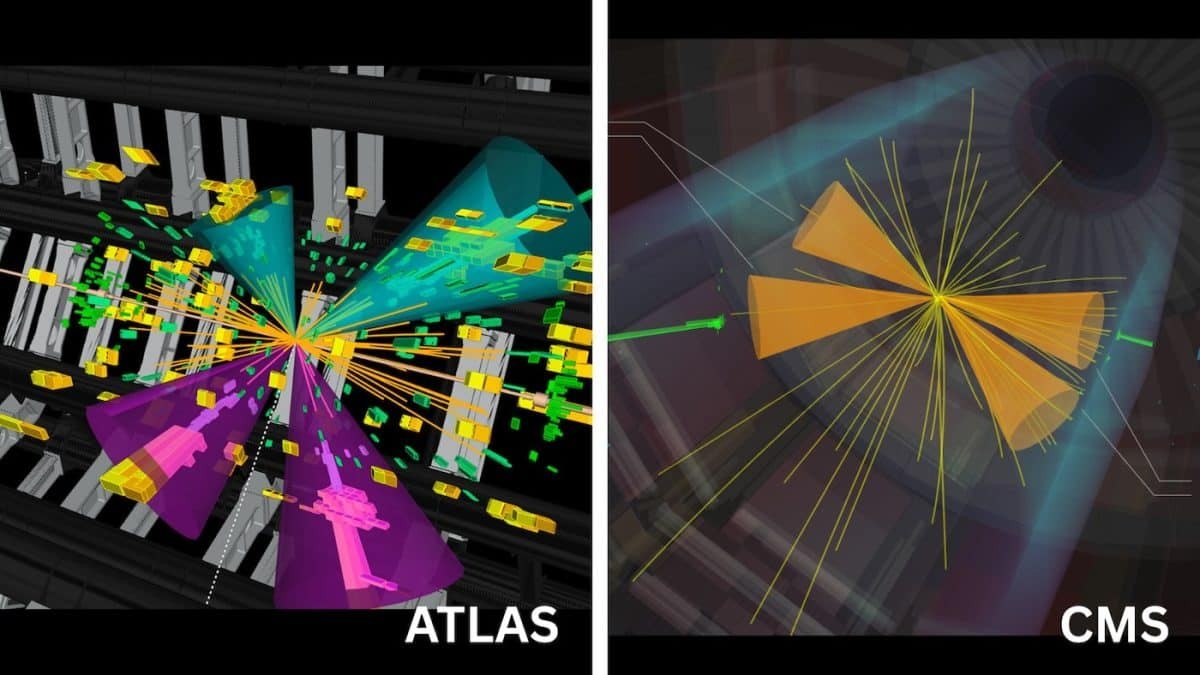
Physics teams at CERN have recently found statistical hints of Higgs boson pair production in data analysis from the Large Hadron Collider. Researchers analyzed millions of collision results over eight years at the collider, with the findings presented at the ICHEP conference and published as two preprints. The figure shows schematic diagrams of events involving the production of two Higgs bosons as observed by ATLAS (left) and CMS (right) CERN The Higgs boson was discovered in 2012, and since then physicists have continuously measured its interactions with other elementary particles to test the Standard Model's explanation of the origin of mass. However, the self-interaction of the Higgs boson has not yet been directly observed.
2026-09-02
Japanese Team Develops High-Temperature, High-Pressure Isotope Ratio Analysis Method for Tracing Halogenated Pollutants
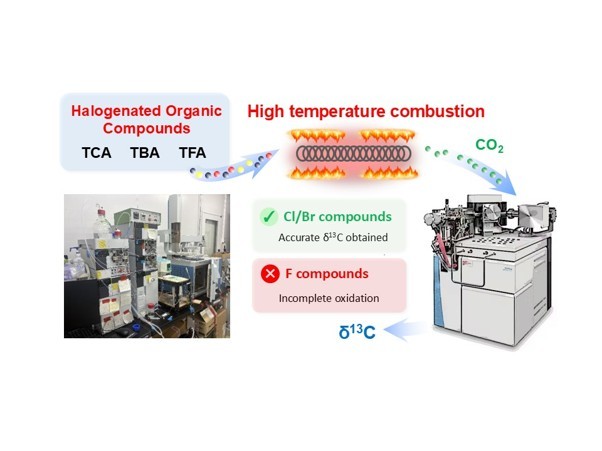
Researchers from Shibaura Institute of Technology (SIT) and the National Institute of Advanced Industrial Science and Technology (AIST) in Japan have collaboratively developed a customized high-temperature, high-pressure combustion interface for liquid chromatography-isotope ratio mass spectrometry (LC-IRMS), enabling carbon stable isotope ratio (δ¹³C) analysis of various halogenated organic compounds. The research findings were published online on August 2, 2026, and will appear in Volume 1421 of Analytica Chimica Acta, scheduled for release on November 1, 2026. Source of the new high-temperature, high-pressure LC-IRMS system: Professor Hiroto Kawashima, SIT, Japan. Halogenated organic compounds are widely present in disinfection byproducts, pesticides, refrigerants, and industrial chemicals, some of which exhibit persistence, bioaccumulation, and toxicity. Traditional environmental monitoring primarily relies on concentration measurements, which makes it difficult to directly provide information on pollutant sources and environmental transformation processes. δ¹³C analysis can offer clues for studying chemical sources, production processes, and environmental fate, but organic pollutants containing strong carbon—chlorine or carbon—fluorine bonds are difficult to fully oxidize under conventional LC-IRMS combustion conditions, limiting the application of this technique.
2026-09-02

FDA Grants Breakthrough Therapy Designation to JBS-003 for Guiding De-escalated Radiotherapy in HPV-Positive Oropharyngeal Cancer
On September 1, Juniper Biosciences announced that the U.S. Food and Drug Administration (FDA) has granted Breakthrough Therapy Designation to its hypoxia tracer JBS-003. The product, 18F-Fluoromisonidazole (FMISO), is intended to identify tumor hypoxia and guide de-escalated radiotherapy in patients with HPV-positive oropharyngeal cancer (OPC). JBS-003 is licensed from Memorial Sloan Kettering Cancer Center (MSK). According to information released by the company, the tracer is based on F-MISO PET molecular imaging technology and can visualize specific hypoxic features within tumors. Tumor hypoxia is considered to be associated with radioresistance; by imaging hypoxic regions, clinicians can stratify patients by risk and...
2026-09-02

South Korea to Launch National Radiation Monitoring Center in 2027
The South Korean government reviewed and approved the "2027 Budget Plan" at a cabinet meeting on September 1. According to the budget arrangement, South Korea will launch the National Radiation Monitoring Center in 2027 to centrally collect and manage national environmental and marine radioactive information; simultaneously, it will expand the Nuclear Safety Information Sharing Center to strengthen direct communication with residents near nuclear power plants. The Nuclear Safety and Security Commission (NSSC) has allocated 1.4 billion KRW for the construction and operation of the National Radiation Monitoring Center. The project aims to strengthen the environmental radioactivity monitoring and analysis system to address regulatory demands arising from the expansion of domestic nuclear power utilization in South Korea and the increased operation and construction of nuclear facilities in neighboring countries. The National Radiation Monitoring Center is planned...
2026-09-01

Bayer Presents Phase III Data for Iodine-124 PET Tracer: High Sensitivity Shown in Cardiac Amyloidosis Diagnosis
At the 2026 European Society of Cardiology Congress, Bayer presented results from the Phase III REVEAL study of its investigational PET radiotracer iodine-124 evuzamitide (I-124 evuzamitide). Data showed that the tracer met the study's primary endpoints in diagnostic sensitivity and specificity when used for imaging in patients with suspected cardiac amyloidosis. The REVEAL study, sponsored by Brigham and Women's Hospital, is a multicenter, open-label, single-arm Phase III clinical trial conducted at 18 sites in the United States, enrolling 170 adult patients with suspected cardiac amyloidosis. Following a single intravenous injection of I-124 evuzamitide, subjects underwent cardiac and...
2026-09-01

Russia's Far East Plans to Build Two Nuclear Power Plants by 2042
Alexey Chekunkov, Minister for the Development of the Russian Far East and Arctic, said on September 1 during the Eastern Economic Forum that the Russian Far East plans to complete two nuclear power plants by 2042, with a total installed capacity of 3.2 GW. Chekunkov noted that during the same period, the Far East also plans to commission six hydroelectric power plants with a total installed capacity of 3.77 GW, and construct approximately 4,000 kilometers of new power grid. He stated that energy construction is not limited to new power generation projects but also includes supporting grid infrastructure to meet the region's long-term development needs. According to the relevant arrangements, the first phase of construction will last until 2030. During this period, the Far East plans to add 8.3 GW of thermal power installed capacity, including...
2026-09-01

Russia Says Prospects Broad for Cooperation with Iran on Large and Small Nuclear Power Plants
Alexey Likhachev, CEO of Russia's Rosatom, recently stated that the company sees significant room for cooperation with Iran in nuclear power construction, covering both large gigawatt-scale nuclear power units and small nuclear power plants. Likhachev said that Rosatom and Iran have broad prospects in expanding the construction of large nuclear power units and advancing small plant projects. Currently, Rosatom is already involved in Iran's Bushehr nuclear power plant project. Unit 1 of the Bushehr plant was put into operation in 2013. The second phase of the plant, covering Units 2 and...
2026-09-01

First experiments at Russia's SKIF microfocus station to target "invisible" gold deposits and extraterrestrial particle research
On August 19, 2026, the microfocus station, one of the first-stage experimental stations of the Russian SKIF Collective Use Center, announced its initial experimental directions. The station will utilize synchrotron radiation-based analytical techniques to study the elemental composition and structural characteristics of objects, serving fields such as geology, geophysics, microelectronics, and materials science. At the SKIF opening ceremony, Russian President Vladimir Putin inspected the microfocus station. According to the presentation, the station's first experiments will focus on the exploration and extraction of hard-to-recover gold, platinum, rare earth elements, and oil reserves. Ore sample research is a critical step in the development of new mineral deposits. By determining the elemental composition of rocks, researchers can...
2026-08-31
Russian Research Team Proposes New Method for Measuring Proton and Deuteron Electric Dipole Moments in a Single Storage Ring
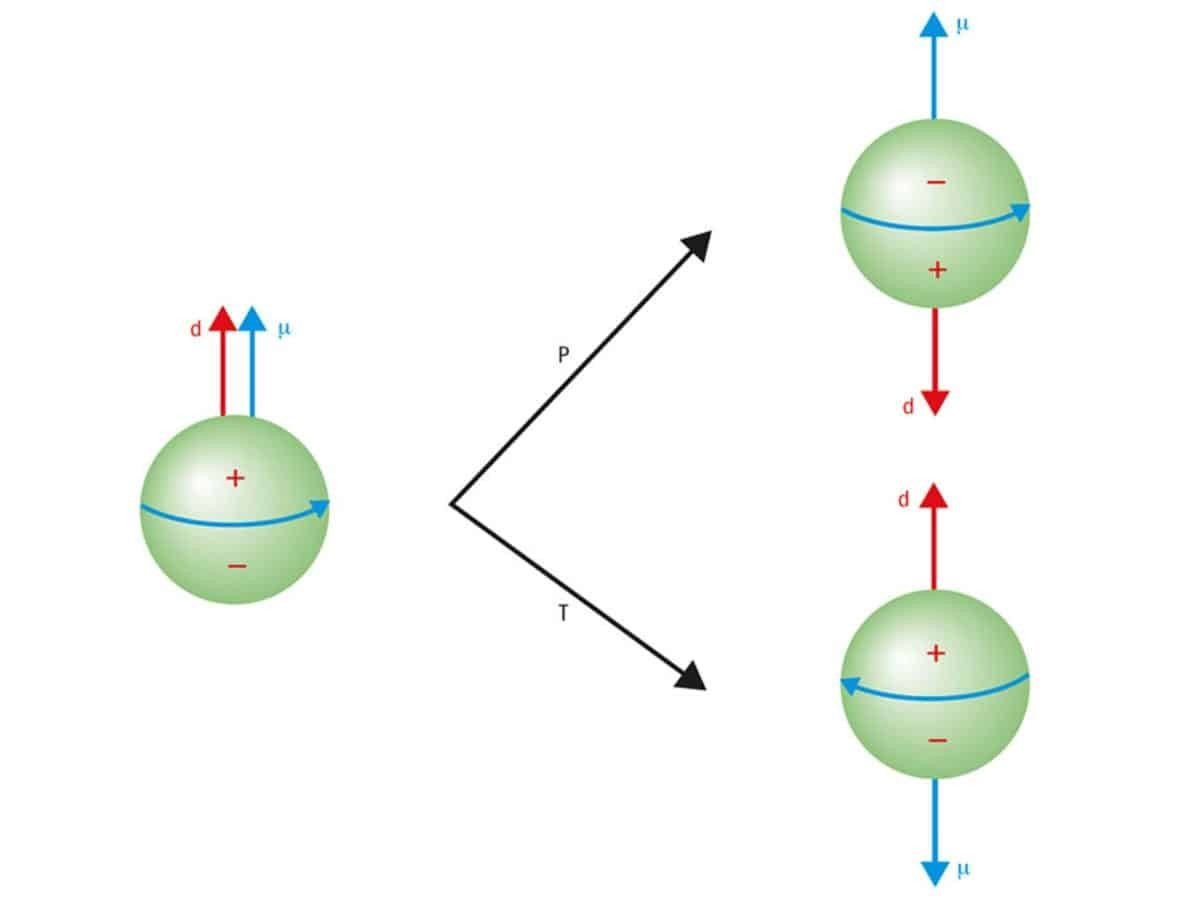
Physicists from several Russian research institutions have proposed a new method for searching for the electric dipole moments of protons and deuterons, potentially enabling the study of both particle types in a single storage ring. The participating institutions include the Moscow Institute of Physics and Technology, the Institute for Nuclear Research of the Russian Academy of Sciences, the National Research Nuclear University MEPhI, and the Landau Institute for Theoretical Physics of the Russian Academy of Sciences. The research was published in the journal *Nuclear Science and Technology* and was supported by a grant from the Russian Science Foundation. The electric dipole moment reflects whether there is a tiny asymmetry between the internal charge distribution of a particle and its spin direction. According to Standard Model predictions, the electric dipole moments of the proton and deuteron are nonzero but extremely small, on the order of 10...
2026-08-31
Japan's PF Launches Quantum Multi-Beam Experiments, Achieving Simultaneous Hard and Soft X-ray Measurements
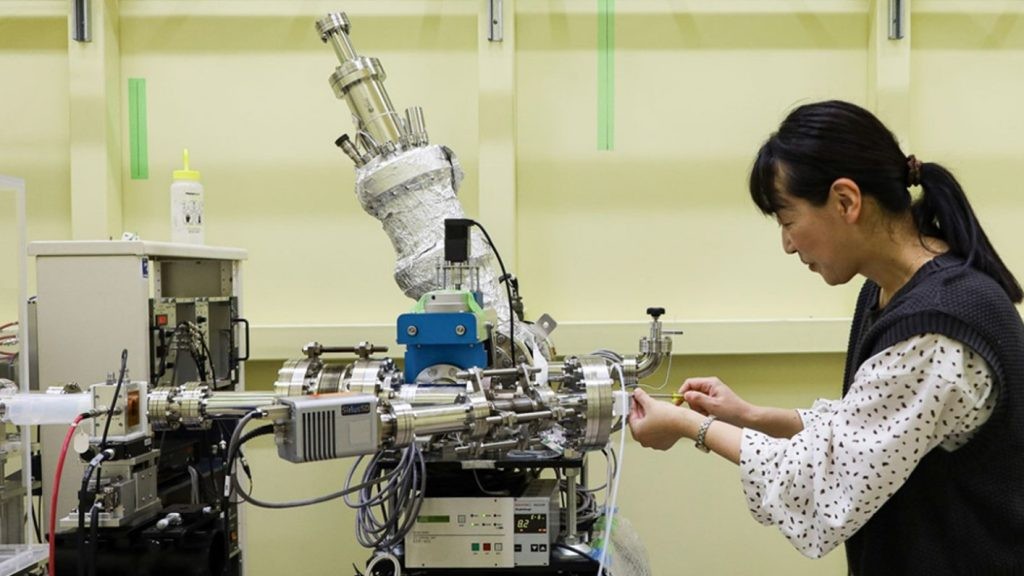
The Photon Factory, a synchrotron radiation facility at the Institute of Materials Structure Science, High Energy Accelerator Research Organization (KEK) in Japan, has recently launched collaborative experiments on the development and research multi-purpose beamlines BL-11A and BL-11B, achieving simultaneous irradiation of the same sample with hard and soft X-rays at the same position. The research results will be published in the international academic journal *Review of Scientific Instruments*. The Photon Factory uses electrons moving at near-light speed to generate high-brightness X-rays, known as synchrotron radiation, for studying material structures and properties. Among these, hard X-rays are better suited for observing the internal structure of materials, while soft X-rays are ideal for analyzing material surfaces and electronic states. Previously, at synchrotron radiation facilities, the two types of X-rays typically had to...
2026-08-31
Japanese team achieves high-precision mass measurements of argon isotopes, revealing variations in the strength of the new magic number N=32
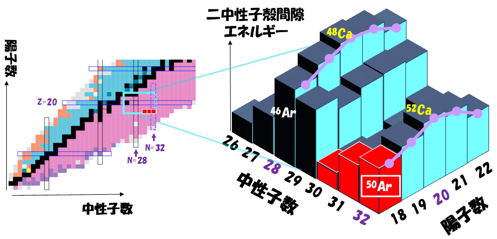
An international collaborative research team comprising RIKEN and the High Energy Accelerator Research Organization (KEK), among others, conducted high-precision mass measurements of short-lived argon isotopes far from the line of nuclear stability, using the superconducting RI beam generation and separation device BigRIPS at the RI Beam Factory (RIBF) of RIKEN Nishina Center for Accelerator-Based Science, as well as the CRISMASS system, a stationary slow radioactive isotope precision mass spectrometer jointly developed by the two institutions. The research team directly measured the mass of argon-50 (^50Ar, 18 protons, 32 neutrons) for the first time, and improved the mass measurement precision of argon-49 (^49Ar) by approximately 250-fold compared to previous measurements, providing insights into the energy of the two-neutron shell gap near the new magic number N=32. The results have been...
2026-08-31

Korea's Eugene MS Wins KRW 11.4 Billion Order for ITER Core Components
Korea's Eugene MS announced on August 31 that it has signed a contract with the Korea Institute of Fusion Energy (KFE) to produce and supply the second batch of vacuum vessel port sealing flanges for the International Thermonuclear Experimental Reactor (ITER). The contract is valued at approximately KRW 11.4 billion, equivalent to about 44% of Eugene MS's 2025 revenue of KRW 25.9 billion. The contract period runs through December 2030. Under the arrangement, the sealing flanges will be delivered to the ITER Organization in three batches, with final inspection and related procedures scheduled for completion by June 30, 2031. The ITER vacuum vessel port sealing flanges consist of large fasteners and other components...
2026-08-31