
Search Results
Keyword:Serva
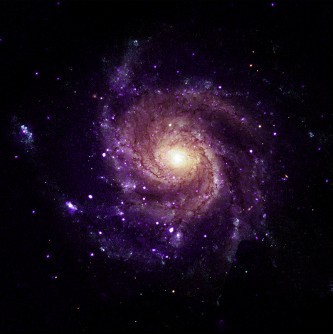
NASA's Chandra Telescope Discovers 84 Mysterious Supersoft X-ray Sources
NASA's Chandra X-ray Observatory recently announced that researchers using the observatory's publicly available observation data discovered 84 mysterious celestial objects known as supersoft X-ray sources in 6 galaxies. The related research was published in Nature Astronomy. Image credit: X-ray: NASA. These objects emit X-rays with unusually low energy and may be accompanied by strong high-energy ultraviolet radiation. The research team stated that the behavior of these objects is clearly different from previously observed known celestial bodies and may provide new clues for explaining the origin of Type Ia supernovae and the electron-stripping mechanism in the intergalactic medium. The 6 galaxies covered by this search include two spiral...
2026-09-10
Russian Segment of ISS Adjusts BTN-M2 Equipment Configuration, Continues Neutron and Gamma Radiation Observations
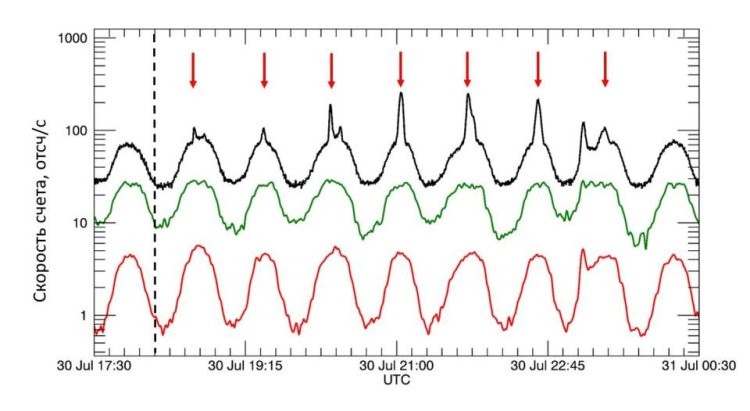
On August 13, 2026, during the ISS-75 expedition mission, Russian cosmonauts Pyotr Dubrov and Anna Kikina performed configuration adjustments to the BTN-M2 scientific equipment inside the Nauka module of the Russian Segment of the International Space Station. Figure 1. Profiles of gamma rays (energies below 500 keV, black curve), 511 keV photons from electron-positron annihilation (green curve), and high-energy neutrons (red curve) detected by the BTN-M2 instrument aboard the ISS on July 30–31, 2026. Red arrows indicate enhanced gamma-ray flux during the solar proton event (SPE) as the ISS passed over high-latitude regions of the Earth...
2026-08-18
SwissFEL Achieves Ultralow-Temperature X-ray Observation of Quantum States
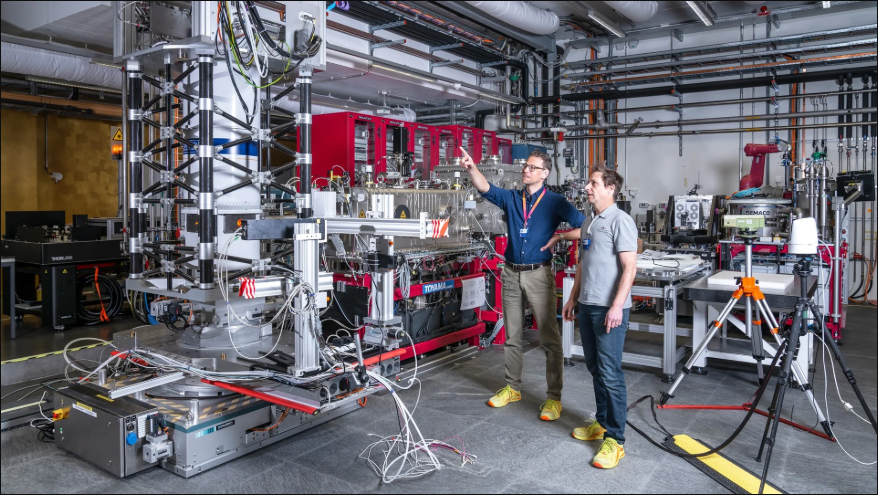
Researchers at the Paul Scherrer Institute (PSI) in Switzerland recently reported that the Cristallina experimental station of the Swiss Free-Electron Laser (SwissFEL) can now observe quantum states that only emerge at extremely low temperatures using X-ray scattering at temperatures close to absolute zero. Simon Gerber (left) and Bill Pedrini (right) at the Cristallina experimental station of SwissFEL. With the help of a custom-built cryostat connected to the beamline (far left), quantum states can now be studied at extremely low temperatures. Paul Scherrer Institute PSI/Markus FischerAccording to the team, they recently achieved a low temperature of 35 millikelvin in experiments...
2026-08-17
Long-term radiation environment at Kola NPP remains under control: gamma dose rates within natural background levels, 15 permanent observation stations operating since 1972
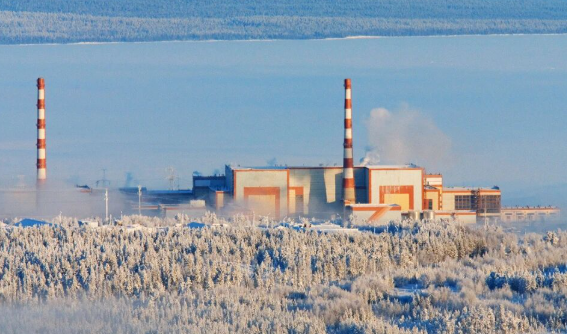
Long-term monitoring results from the external radiation monitoring group at Russia's Kola Nuclear Power Plant show that gamma radiation dose rates around the plant site have consistently remained within natural background radiation levels, with radionuclide concentrations matching background values, indicating a sound radiation environment with no differences from surrounding areas. The station's radiation safety department collects surface water samples from the discharge canal monthly, with monitoring coverage encompassing all elements including the atmosphere, snow cover, bottom sediments, food products, algae, berries, mushrooms, and caged fish. The monitoring architecture consists of two tiers: 15 permanent environmental observation stations have been in continuous operation since before the commissioning of the first reactor unit in 1972; 13 ASKRO automated radiation environment monitoring system stations provide real-time ground-level gamma dose rate data, which is transmitted directly to the Rosenergoatom crisis center and integrated into the national unified radiation monitoring network. Approximately 200,000 cubic meters of air are drawn weekly through air filtration units to capture radionuclides, with volumetric activity of radioactive iodine also measured. A mobile radiological laboratory performs on-site spectrometric analysis. Annually, about 1,200 environmental samples are collected from around the plant site and delivered to the Polyarnye Zori laboratory, where well water samples analyzed by Canberra spectrometers yield "zero nuclide" results, with samples retained for one year for potential re-analysis. Biological samples are processed using the ashing method, and instrument sensitivity is sometimes insufficient to even detect any signal from the plant's impact.
2026-08-14
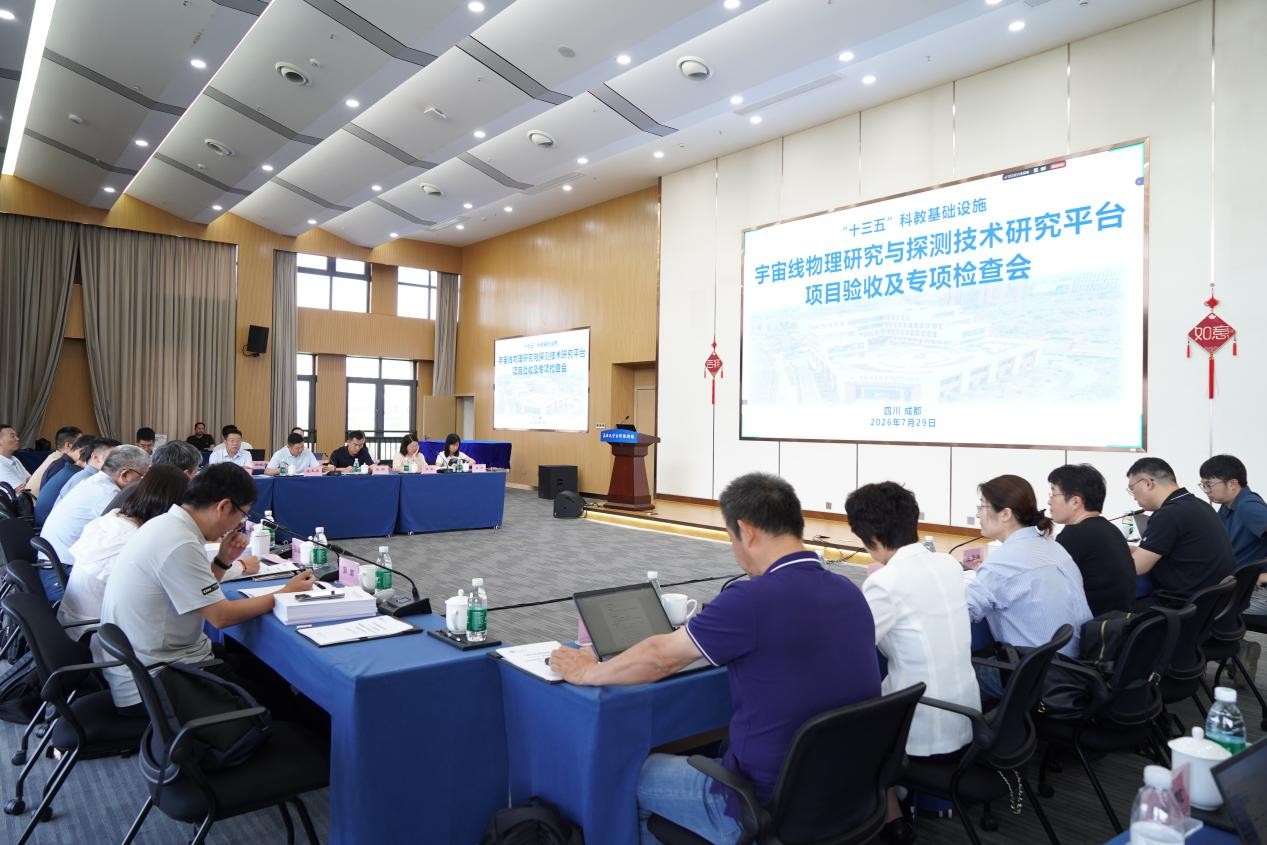
The "13th Five-Year" Science and Education Infrastructure Cosmic Ray Physics Research and Detection Technology Platform Project Passed Acceptance
On July 29, 2026, the Finance Bureau of the Chinese Academy of Sciences organized the acceptance meeting for the Cosmic Ray Physics Research and Detection Technology Platform Project (hereinafter referred to as the Research Platform). The meeting was chaired by Wei Zichao, Director of the Investment and Infrastructure Projects Division of the Academy. Tan Zhouliang, Vice President and Member of the Party Leadership Group of the Chengdu Branch of the Chinese Academy of Sciences, and Liu Congzhan, Deputy Director of the Institute of High Energy Physics of the Chinese Academy of Sciences, delivered speeches respectively. Academician Cao Zhen, Project Manager of the Research Platform, gave an overall introduction to the project construction, and Researcher Zhang Shoushan of the project team presented a summary report on the project construction. Subsequently, the acceptance expert group inspected the construction and installation works on site, verified the procurement, installation, and operation of project equipment, and verified the completion of project investment...
2026-08-11
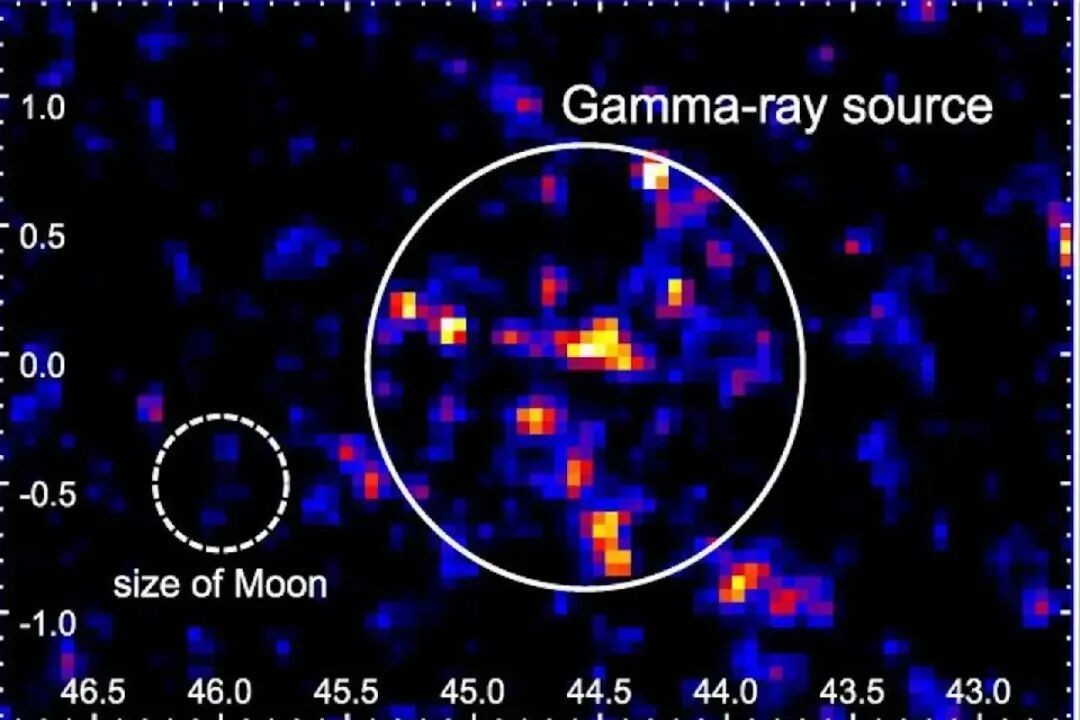
"Triple-Arrow Assault" Confirms a Cosmic "Natural Accelerator" Ejecting Protons at Energies 100 Times That of the Large Hadron Collider
Astronomers, using three observation facilities operating in different wavelength bands, have confirmed a mysterious celestial body in the direction of the Aquila constellation in the Milky Way as a natural cosmic accelerator. This object is continuously ejecting high-speed particles with energies far exceeding any man-made accelerator on Earth, equivalent to 100 times that of the Large Hadron Collider (LHC). This discovery provides key clues for tracing the origin of the highest-energy cosmic rays in the Milky Way, and the research findings were published in the latest issue of The Astrophysical Journal. A size comparison between the gamma-ray source (large circle) and the Moon (small circle). Image credit: The Astrophysical Journal. PeV (peta-electronvolt) energy cosmic rays are high-energy diffuse gamma-ray radiation, and...
2026-08-11
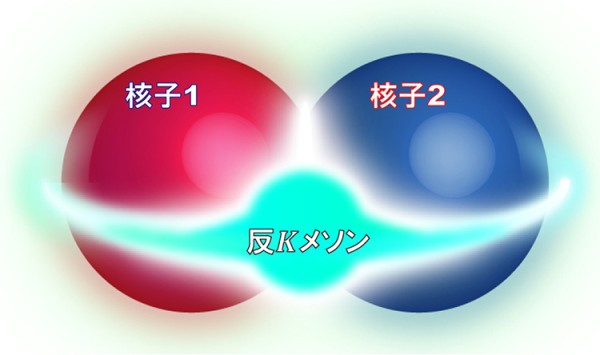
First Observation of Anti-Kaonic Nuclei in Photon Beam Experiments
The LEPS2/Solenoid collaboration, composed of researchers from the Research Center for Nuclear Physics at Osaka University, Kyoto Sangyo University, the Research Center for Advanced Quantum Beam Science at Tohoku University, Korea University, Gifu University, the Institute of Modern Physics of the Chinese Academy of Sciences, RIKEN, Kyoto University, the Institute of Physics at Academia Sinica in Taiwan, and the University of Saskatchewan in Canada, has for the first time observed nuclei containing anti-kaons in a photon beam experiment. This achievement provides new experimental evidence confirming the existence of anti-kaonic nuclei and offers important clues for understanding high-density nuclear matter and the internal structure of neutron stars. The research team conducted the experiment at the LEPS2 laser-electron photon facility at the large synchrotron radiation facility SPring-8 in Hyogo Prefecture, Japan...
2026-08-07

Yunnan Caiyunhui Innovation Competition Semifinals Conclude, Irradiation Technology Application Projects Debut
On July 29, the semifinals of the 2026 Caiyunhui Innovation Competition Yunnan Division, themed "Caiyunhui, Win the Future," concluded at Kunming City College. The semifinals covered five industry sectors: next-generation information technology, biomedicine, high-end equipment manufacturing, new materials, new energy, and energy conservation and environmental protection, with 301 enterprises from Yunnan Province advancing to the semifinals. In terms of participant composition, 111 enterprises were in next-generation information technology and 104 in biomedicine, with these two categories accounting for over 70% of the total semifinalists, making them the key tracks of this year's Yunnan Division. In the startup group, projects in next-generation information technology and biomedicine rose to 67%, reflecting that local science and technology innovation projects in Yunnan are extending from traditional industry tracks to emerging industry tracks.
2026-08-01
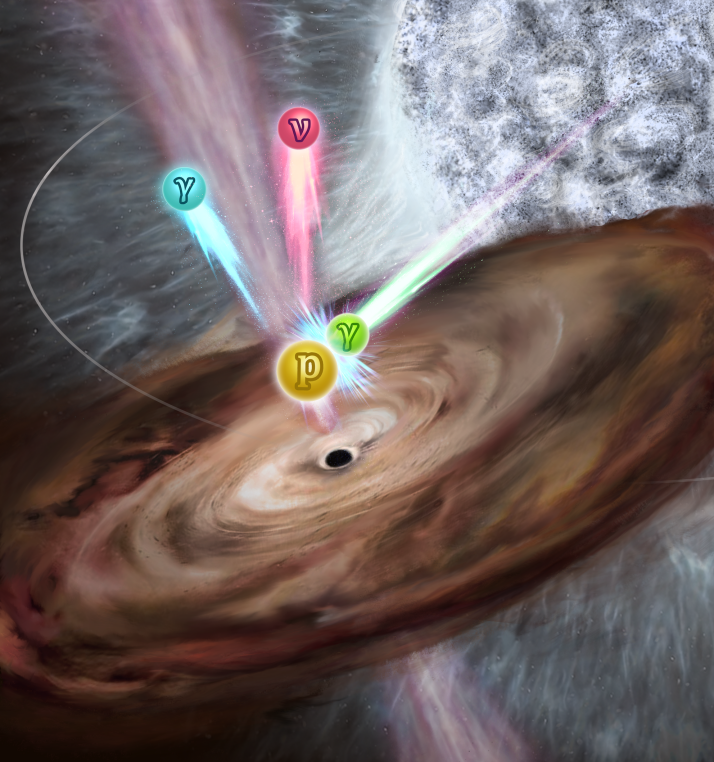
LHAASO "Sees" for the First Time How Black Holes Produce the Highest-Energy Particles in the Universe
How do black holes accelerate particles to the highest energies in the universe? The latest research provides the answer. On July 31, it was learned from the Institute of High Energy Physics of the Chinese Academy of Sciences that the Large High Altitude Air Shower Observatory (LHAASO, "Lasso"), a major national scientific and technological infrastructure, has for the first time clearly observed the process by which a black hole, while devouring material from its companion star, regularly produces the highest-energy particles in the universe like a metronome, and has identified the first PeV gamma-ray variable source. The related research results were published in the *National Science Review*. Cygnus X-3 is a binary system located in the constellation Cygnus, consisting of a black hole and a massive companion star. The gravitational pull there is extremely strong, and the black hole frantically accretes the stellar wind blown off by its companion. LHAASO detected...
2026-07-31

Kazakhstan advances the use of radiation technology for agricultural preservation and advanced wastewater treatment.
Sayabek Sakhiyev, Director of the Institute of Nuclear Physics of Kazakhstan, recently stated that radiation technology holds promise for helping Kazakhstan reduce post-harvest losses, extend the shelf life of agricultural products, and facilitate advance
2026-07-27