
Search Results
Keyword:nuclear medicine

IAEA imPACT Assessment Recommends Namibia Expand Cancer Diagnosis and Treatment Services
August 18, 2026, the results of the International Atomic Energy Agency's imPACT review show that Namibia has demonstrated a clear commitment to strengthening cancer treatment, while still needing to further expand service coverage, build the oncology workforce, and improve access to cancer diagnosis and treatment nationwide. Cancer is becoming an increasingly prominent public health challenge in Namibia. Data shows that the country records more than 4,200 new cancer cases annually. According to Globocan 2024 projections, this figure is expected to rise to 7,200 by 2040. Breast cancer, cervical cancer, prostate cancer, and Kaposi sarcoma currently account for nearly half of all confirmed cancer cases in Namibia...
2026-08-19

Vivos Ships First Batches from U.S. IsoPet Production Facility, Receives AERB Approval to Build International Manufacturing Center in India
KENNEWICK, Wash. — Vivos Inc. recently announced two operational milestones: its in-house production facility in Richland, Washington, has begun delivering IsoPet® products to certified veterinary clinics in the United States; simultaneously, the company has received authorization from India's Atomic Energy Regulatory Board (AERB) to establish an international manufacturing center in India. This means Vivos will have a two-site production footprint spanning the U.S. and India. According to the company, the U.S. production facility, housed at the Applied Process Engineering Laboratory (APEL), will manufacture IsoPet® veterinary oncology products and RadioGel® human oncology products, and will serve as the center for subsequent process improvements and regulatory...
2026-08-19

Kazakhstan's Institute of Nuclear Physics Plans to Expand Medical Radioisotope Production and Export
The Institute of Nuclear Physics (INP) of Kazakhstan is progressively expanding the applications of radioisotopes and radiation technologies, with related products already used in cancer diagnosis and treatment, industrial production, and scientific research. Institute Director Sayabek Sakhiyev stated that radioisotope and radiopharmaceutical production is one of the institute's key applied activities, covering the full chain from scientific research and research reactor operation to radiochemical technology development and medical applications. Currently, INP produces three main categories of radiopharmaceuticals: sodium iodide I-131 for thyroid disease treatment, Mo-99/Tc-99m related products for radionuclide diagnostics, and...
2026-08-18
Decoding the Clinical-Radiological Paradox: Brain Network Mechanisms in Spinocerebellar Ataxia Type 3 Revealed
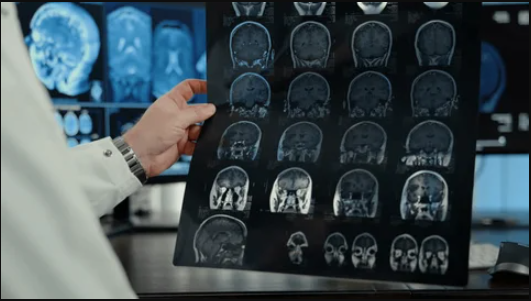
On August 17, the team of Professor Liu Chen and Professor Wang Jian from the Department of Radiology at Southwest Hospital of Army Medical University, in collaboration with Professor Long Zhiliang's team from the Faculty of Psychology at Southwest University, systematically revealed for the first time the micro-level molecular pathological mechanisms underlying macroscopic brain network decoupling in patients with spinocerebellar ataxia type 3 (SCA3) by integrating multimodal magnetic resonance imaging technology with high-resolution micro-biological atlases. This provides a novel perspective and objective imaging targets for resolving the clinical-radiological dissociation challenge in clinical diagnosis and treatment. The findings were published in the internationally leading journal in the field of movement disorders under the title "Putaminal Structure-Function Decoupling as an Early Candidate Imaging Biomarker for Motor Severity in Spinocerebellar Ataxia Type 3."
2026-08-18

Libya Plans to Restore Tajoura Research Reactor for Medical Isotope Production
The Libyan Atomic Energy Establishment recently proposed a plan to restore and restart the Tajoura nuclear research reactor for the production of medical radioisotopes. The establishment stated that this initiative aims to support the diagnosis and treatment of diseases and tumors, while reducing dependence on imports of relevant isotopes. Radioisotopes are essential materials in nuclear medicine, serving as tracers in medical imaging to help track organ function and detect certain diseases and tumors; some isotopes are also used in radiotherapy targeting specific tissues. According to the Libyan Atomic Energy Establishment, the Tajoura reactor has a rated thermal power of 10 megawatts and holds potential for producing various medical isotopes, including...
2026-08-18
FDG PET/CT Enables More Precise Identification of Multiorgan Involvement in Brazilian Paracoccidioidomycosis
A study conducted by researchers at the Brazilian CEPID CancerThera center shows that molecular imaging with fluorodeoxyglucose (FDG) PET/CT can detect systemic lesions of paracoccidioidomycosis (PCM) more sensitively than conventional staging methods, helping to reassess the extent and severity of the disease. The findings were published in Clinical Infectious Diseases. Paracoccidioidomycosis is a systemic fungal disease caused by inhalation of fungal spores of the Paracoccidioides genus, with significant clinical and epidemiological importance in Brazil. Often referred to as "coffee planter's disease," it primarily affects the lungs but can also spread to multiple organs via lymphatic and hematogenous routes. Conventional staging typically relies on...
2026-08-17
Korean Hospital Team Develops AI Model to Improve Bone Metastasis Detection Using PET/CT and Other Information
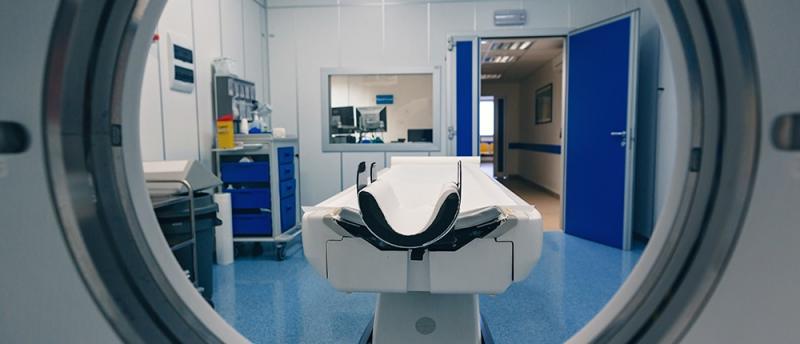
A research team at Seoul Metropolitan Government Seoul National University Boramae Medical Center has recently developed an artificial intelligence model capable of identifying bone metastases that are difficult to detect on CT images. By incorporating MRI and PET/CT information during the training process, the model enables lesions that are inconspicuous on CT and prone to being missed to be included in the training data, thereby enhancing detection capability. Bone metastasis is an important basis for determining cancer staging and formulating treatment plans. If lesions are not clearly visible on CT images, bone metastasis may be detected late and may lead to complications such as pathological fractures and spinal cord compression. Previous related AI studies have largely relied on lesions clearly visible on CT to build training data, and the research team believes that this approach may...
2026-08-17

Oak Ridge National Laboratory marks 80 years of isotope research and production, with applications spanning medicine, industry, and scientific research
On August 2, 1946, the Clinton Laboratories in Oak Ridge, Tennessee, held the first formal ceremony to deliver reactor-produced radioactive isotopes. A shipment of carbon-14 was sent from there to the Barnard Free Skin and Cancer Hospital in St. Louis, Missouri. Over the past 80 years, this event has been regarded as the starting point of Oak Ridge National Laboratory's isotope research and production endeavors, and also marked the beginning of broader civilian applications for reactor-produced radioactive isotopes. After World War II, the U.S. scientific community began exploring peaceful uses of atomic energy, with radioactive isotopes becoming an important direction. As unstable variants of elements, radioactive isotopes release radiation during decay and can be used...
2026-08-15
NRC to Hold Online Public Meeting on Proposed Medical Use Licensing Rule
The U.S. Nuclear Regulatory Commission recently announced it will hold an online public meeting from 1:00 p.m. to 2:30 p.m. Eastern Time on August 20 to introduce the proposed rule aimed at reducing barriers to medical use licensing. The proposed rule was published in the Federal Register on July 27. During the meeting, NRC staff will outline the key provisions of the rule and related implementation activities, and answer questions from the public. The meeting is open to the public and will focus on regulatory processes related to medical use licensing, with the goal of explaining and discussing the proposed rule and subsequent implementation arrangements...
2026-08-16
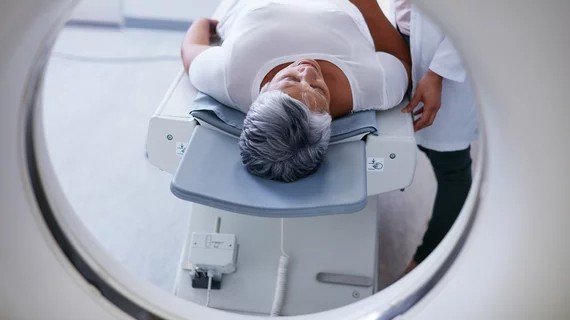
FDA Approves Tauklarify, a Tau PET Imaging Agent for Alzheimer's Disease
The U.S. Food and Drug Administration has approved Tauklarify, a new brain imaging agent for the evaluation of Alzheimer's disease. The drug, also known as MK-6240, is a radioactive diagnostic agent for positron emission tomography (PET) in adults, primarily indicated for adults with cognitive impairment who require physician assessment of abnormal tau protein accumulation in the brain. The twisted, insoluble fibrous deposits formed by tau protein are believed to be associated with neurodegenerative diseases such as Alzheimer's disease. The developer, Lantheus, stated that the safety of Tauklarify was evaluated in two clinical trials involving more than 1,700 subjects. Adverse reactions...
2026-08-16

CGN Medical and West China Hospital of Sichuan University Sign Proton Therapy Innovation Technology Cooperation Agreement
On August 14, the 32nd China International Medical Instruments and Equipment Exhibition & Technology Exchange Conference (China-Hospeq 2026) opened at the China National Convention Center in Beijing. CGN Medical was invited to exhibit under the theme of "Precision Radiotherapy · Nuclear Medicine Empowerment," showcasing achievements in the healthcare sector including the Hezhi® proton therapy system and the Hejia® germanium-gallium generator. The exhibits covered radiotherapy solutions, new medical isotopes, SiPM chips for molecular imaging, radiation protection, and medical device sterilization. On the first day of the exhibition, representatives from relevant departments and institutions visited the CGN Medical booth, learning about CGN's product layout and technological progress in the nuclear medicine field, and showing interest in its efforts in the domestic substitution of high-end medical equipment...
2026-08-15
ASP Isotopes Plans Commercial Delivery of Multiple Stable Isotopes in Second Half of 2026
ASP Isotopes Inc. recently presented its expansion plans for isotope production, radiopharmaceuticals, and helium operations at Canaccord Genuity's 46th Annual Growth Conference. The company aims to begin commercial delivery of stable isotopes including silicon-28, carbon-14, and ytterbium-176 in the second half of 2026. Victor Petkov, the company's Chief Commercial Officer, stated that ASP Isotopes is leveraging its proprietary enrichment technology to serve electronics, nuclear medicine, and nuclear fuel-related markets. Currently, the company operates three production facilities in Pretoria, South Africa, primarily producing silicon-28 for semiconductor applications, as well as carbon-14 and ytterbium-176 for nuclear medicine-related uses. Regarding isotope supply...
2026-08-13
Maistop Completes Pre-A Round Financing to Advance Medical Radionuclide Industrialization via Electron Accelerator Method
August 12 news, Xi'an Maistop Technology Co., Ltd. recently completed its Pre-A round of financing, with investors including the Central Enterprise Strategic Emerging Fund and Guoxin Venture Capital Fund, both under China Reform Holdings Corporation. The proceeds from this round will primarily be used for site construction, equipment procurement, technology R&D, and daily operations. Founded in 2019, Maistop is a technology enterprise engaged in the R&D and production of medical radionuclides as well as nuclear medicine technical services. The company focuses on the preparation of medical radionuclides via the electron accelerator photonuclear reaction method, with core products including Actinium-225, Lead-212, Copper-67, and Molybdenum-99. Among these, Actinium-225 is a scarce radionuclide of significant interest in alpha-emitting nuclide targeted therapy, with relatively strong global clinical demand...
2026-08-13

Southwest University of Science and Technology Releases Medical Radioactive Waste Treatment Technology Covering Liquid, Gas, and Solid Waste Management
On August 10, the Mianyang Science and Technology City Strategic Development Research Center held an online innovation achievement release conference, unveiling a medical radioactive waste treatment technology developed by the School of National Defense Science and Technology / School of Nuclear Science and Technology at Southwest University of Science and Technology. The technology targets radioactive contaminants including liquid waste, off-gas, and solid waste generated during nuclear medicine diagnosis and treatment, offering a full-chain comprehensive treatment solution. The conference attracted 87,000 experts in the nuclear medicine field, departmental representatives, and enterprise users. With the rapid development of the domestic nuclear medicine industry, insufficient radioactive waste disposal capacity has gradually become a key issue facing the industry's safe expansion. Relevant data show that over 96% of nuclear medicine departments nationwide are constrained by decay tank capacity...
2026-08-13
American Society for Radiation Oncology Foundation to Award $2.4 Million in Grants to 14 Researchers
The American Society for Radiation Oncology (ASTRO) Foundation will award a total of $2.4 million in research grants to 14 scientists dedicated to advancing patient care in radiation medicine. ASTRO stated that the 2026 awards are the first annual grants issued since the society renamed its foundation to LightSpeed—ASTRO Foundation earlier this year. The rebranded foundation will focus on accelerating relevant research and strengthening workforce development in the field of radiation oncology. This round of funding is co-sponsored by the American Cancer Society, the American Association of Physicists in Medicine, the Breast Cancer Research Foundation, the LUNGevity Foundation, and the Prostate Cancer Foundation. ASTRO CEO Vive...
2026-08-13