
Search Results
Keyword:radiotherapy
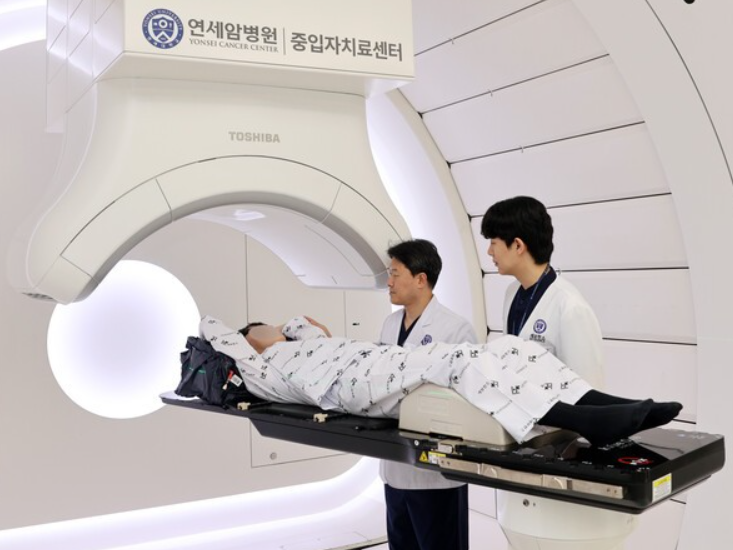
Yonsei Cancer Hospital in South Korea Expands Heavy Ion Radiotherapy Indications, Three Systems Operating Simultaneously
Yonsei Cancer Hospital in South Korea recently announced that it has further expanded the indications for heavy ion radiotherapy to include head and neck cancer, sarcoma, and recurrent rectal cancer. Since becoming the first hospital in South Korea to perform heavy ion radiotherapy for prostate cancer in 2023, the hospital has gradually expanded its treatment scope to cover pancreatic cancer, liver cancer, lung cancer, and other cancer types. Medical staff, including Proton Therapy Center Director Kim Woong-sub (left), are preparing for proton therapy. (Photo provided by Yonsei University Medical Center) Meanwhile, the hospital's second rotating heavy ion radiotherapy system has been fully commissioned. This brings the hospital to a configuration of one fixed-beam system and two rotating systems operating simultaneously. The hospital...
2026-08-20

IAEA imPACT Assessment Recommends Namibia Expand Cancer Diagnosis and Treatment Services
August 18, 2026, the results of the International Atomic Energy Agency's imPACT review show that Namibia has demonstrated a clear commitment to strengthening cancer treatment, while still needing to further expand service coverage, build the oncology workforce, and improve access to cancer diagnosis and treatment nationwide. Cancer is becoming an increasingly prominent public health challenge in Namibia. Data shows that the country records more than 4,200 new cancer cases annually. According to Globocan 2024 projections, this figure is expected to rise to 7,200 by 2040. Breast cancer, cervical cancer, prostate cancer, and Kaposi sarcoma currently account for nearly half of all confirmed cancer cases in Namibia...
2026-08-19
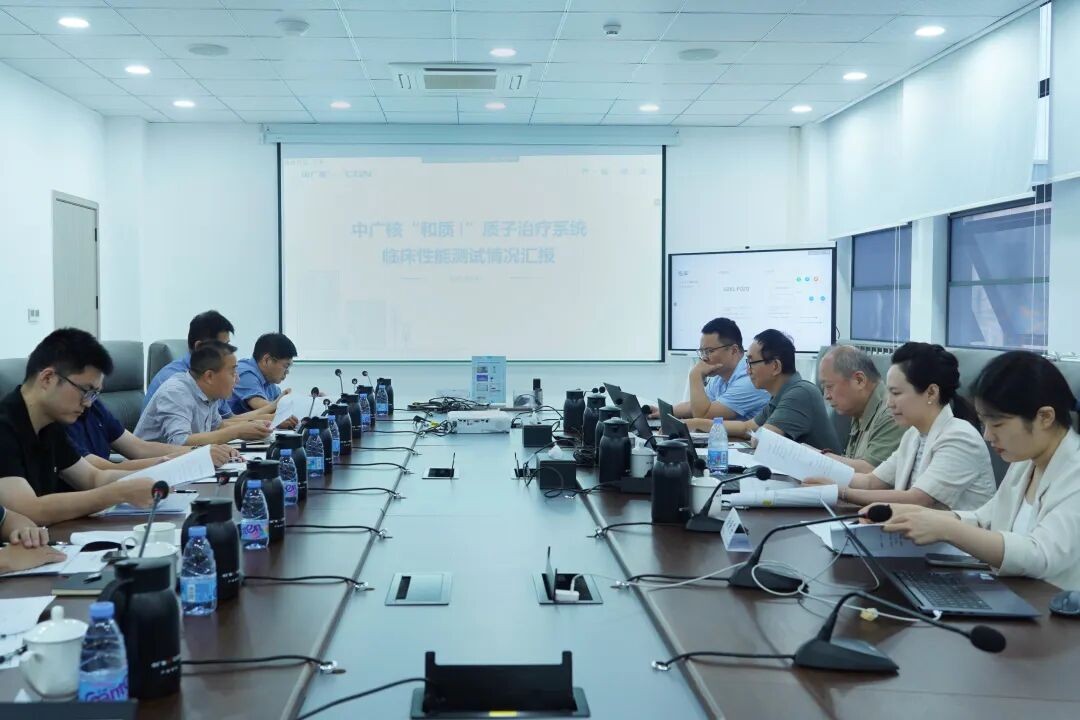
CGN Hezhi® Proton Therapy System Clinical Performance Successfully Passes Expert Review
On July 31, the expert review meeting for the clinical performance evaluation of the CGN Hezhi® Proton Therapy System was held at the CGN Proton Therapy Equipment Manufacturing Base. Clinical experts from Sun Yat-sen University Cancer Center, National Cancer Center/Cancer Hospital of Chinese Academy of Medical Sciences, Sichuan Cancer Hospital, National Cancer Center/Cancer Hospital of Chinese Academy of Medical Sciences Shenzhen Hospital, and Shandong First Medical University Affiliated Cancer Hospital attended the review meeting.▲Expert review of CGN Hezhi® Proton Therapy System clinical performanceAt the review meeting, the relevant person in charge of CGN Medical Technology Co., Ltd. (hereinafter referred to as the "Company") introduced that the comprehensive verification platform for the proton therapy system has achieved full-process independent controllability from design, procurement, production,...
2026-08-12
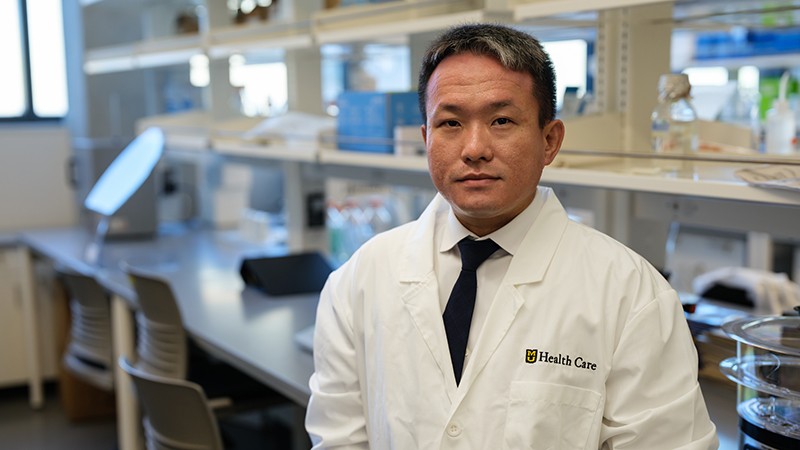
University of Missouri Receives $1 Million Grant to Research New FLASH Radiotherapy System
On August 11, researchers at the University of Missouri School of Medicine received a $1 million grant from the National Institutes of Health to study a new technology in cancer radiotherapy—the TheryQ FLASHKNiFE system. The project is funded through June 2027. A long-standing challenge in cancer treatment is how to kill tumor cells while protecting surrounding healthy tissue as much as possible. Existing radiotherapy can already achieve millimeter-level precision, but radiation damage and related side effects still limit the dose patients can safely receive. Unlike conventional approaches, FLASH radiotherapy does not primarily alter the direction of radiation beams, but instead delivers irradiation in an extremely short time at an ultra-high dose rate...
2026-08-12
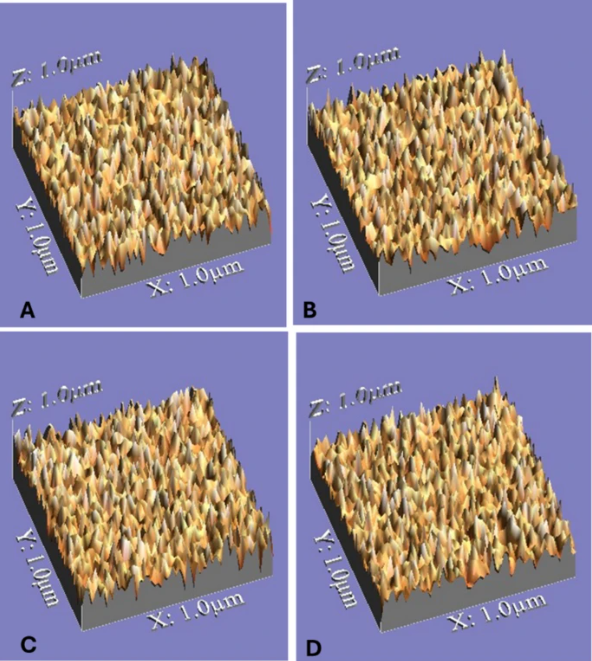
Fractionated radiotherapy did not significantly alter surface properties of two types of dental restorative composites
On August 5, a recently published in vitro study showed that under a simulated clinical head and neck cancer radiotherapy regimen, the surface microhardness and roughness of two modern dental restorative composites did not change significantly. The study focused on the effects of therapeutic ionizing radiation on the durability of dental restorative materials. After head and neck cancer patients receive radiotherapy, the oral environment may change, including reduced saliva secretion, mucositis, radiation caries, and other issues, which may affect the surface condition and long-term performance of restorations. To this end, the research team selected Giomer resin composite based on glass ionomer technology and Or...
2026-08-10
Jiangsu's First uLinac HalosTx Integrated Ring-Gantry CT Linac Enters Clinical Use
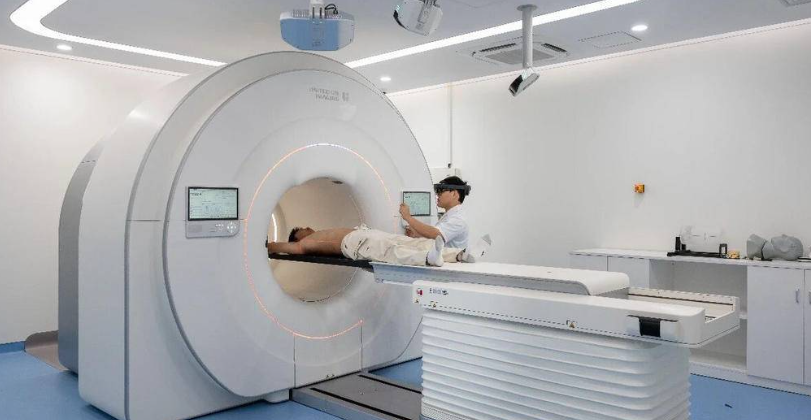
On August 7, the first uLinac HalosTx integrated ring-gantry CT linear accelerator in Jiangsu Province was officially put into clinical use at the Third Affiliated Hospital of Nanjing Medical University (Changzhou Second People's Hospital). The system integrates a diagnostic-grade CT scanner and a ring-gantry accelerator on a single platform, shifting regional tumor radiotherapy from the traditional step-by-step positioning approach to a same-platform real-time model. Radiotherapy is one of the important modalities for cancer treatment. In the conventional split-system radiotherapy workflow, patients typically need to be transported between the CT room and the treatment room, and treatment plans are mostly formulated based on static images acquired beforehand. In cases such as tumor regression or changes in patient weight, previous images may not fully reflect the actual condition on the day of treatment...
2026-08-08
Construction of Proton Therapy Center in Ulsan, South Korea Faces Hurdles: Government Funding Allocation Adjustments Impact Project Progress
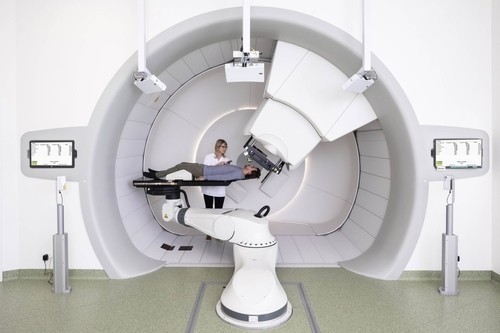
The proton therapy center construction project in Ulsan, South Korea, has recently encountered obstacles to progress. The project was once regarded as a key component in improving the regional cancer treatment system in southeastern South Korea, but due to shifts in government medical financial support priorities, the difficulty of securing large-scale national funding independently has increased significantly. According to information from Ulsan City on August 6, Ulsan City completed the feasibility study and basic planning services for the proton therapy center construction in March of last year and began seeking national funding. However, the Ministry of Health and Welfare responded that it would be difficult to provide large-scale project funding to Ulsan City alone. Previously, Ulsan City had planned to establish a proton therapy center to build a system enabling cancer patients to undergo surgery...
2026-08-07
Korea's Ajou University Hospital Launches Halcyon 5.0 Integrated Precision Radiotherapy Solution
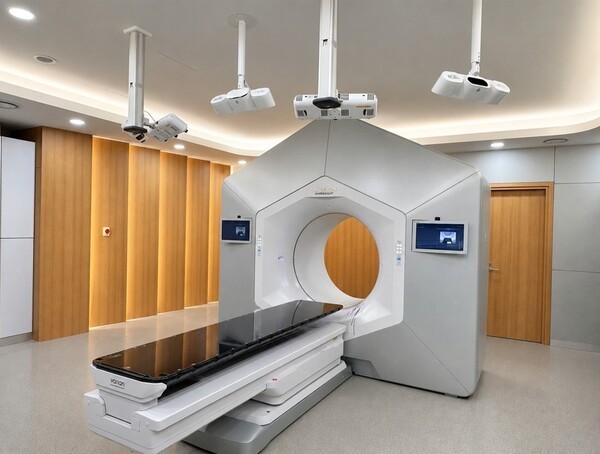
Ajou University Hospital announced on August 6 that it has established a Halcyon 5.0 integrated precision radiotherapy solution and has begun full-scale use for patient treatment. The system integrates high-definition high-speed image acquisition, six-degree-of-freedom patient positioning correction, and markerless real-time motion management into a single treatment workflow to enhance the accuracy and safety of image-guided radiotherapy. This implementation is based on Halcyon system software version 5.0, integrating the high-resolution cone-beam CT imaging system HyperSight, the six-degree-of-freedom patient positioning couch Dynamic Couch, and the surface-guided radiotherapy system IDENTIFY. Ajou University Hospital stated that it is the first hospital in Korea to establish the integrated Halcyon system and the second in Asia to use the system for actual patient treatment.
2026-08-06
Bahamas to Strengthen Cancer Control System Based on imPACT Review Findings
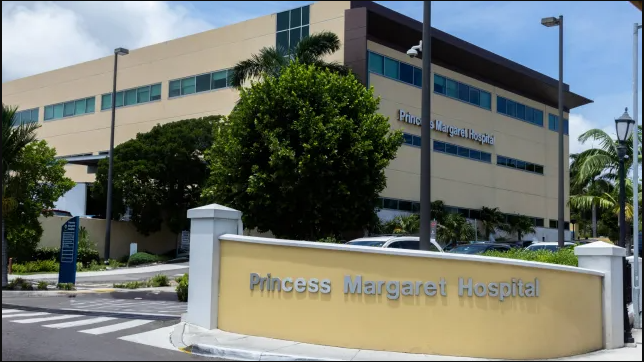
August 5, 2026, an international review led by the International Atomic Energy Agency showed that the Bahamas has room for further improvement in strengthening cancer treatment services. The review provided a roadmap for the country to improve coordination of cancer services, reduce diagnostic and treatment waiting times, and enhance patient outcomes. Princess Margaret Hospital in Nassau, Bahamas (Image: Pelow Media/Adobe Stock) The imPACT review was conducted jointly by the International Atomic Energy Agency, the World Health Organization/Pan American Health Organization, and the International Agency for Research on Cancer, at the request of the Bahamas Ministry of Health and Wellness, focusing on assessing the country's cancer control capacities and needs. From June 9 to 11, the expert team visited...
2026-08-06

Han Bing, Chairman of Hefei Municipal CPPCC, Leads Delegation to CYC Ion for Research and Guidance
On the afternoon of August 4, Han Bing, Chairman of Hefei Municipal Committee of the Chinese People's Political Consultative Conference (CPPCC), led a delegation to CYC Ion for research and guidance, and held a symposium. Yong Fengshan, Deputy Director of the Standing Committee of the Municipal People's Congress; Su Xiang, Secretary-General of the Municipal CPPCC; Jiang Xin, Chairman of the Municipal Industrial Investment Group; Zhang Xiaofeng, Director of the Education, Science, Health and Sports Committee of the Municipal CPPCC; and Guo Mei, Deputy Director of the Municipal Bureau of Industry and Information Technology, participated in the event. Song Yuntao, Deputy Director of the Hefei Institutes of Physical Science, Chinese Academy of Sciences; Liu Lu, Chairman of CYC Ion; Chen Yonghua, General Manager; and Deputy General Managers Ding Kaizhong, Li Jun, and Guang Ruohuai accompanied the delegation. The delegation was briefed in detail on CYC Ion's industrial layout and business operations, with discussions focusing on key technological breakthroughs in nuclear medicine and high-end equipment, technology transfer and commercialization, and industrial development.
2026-08-06
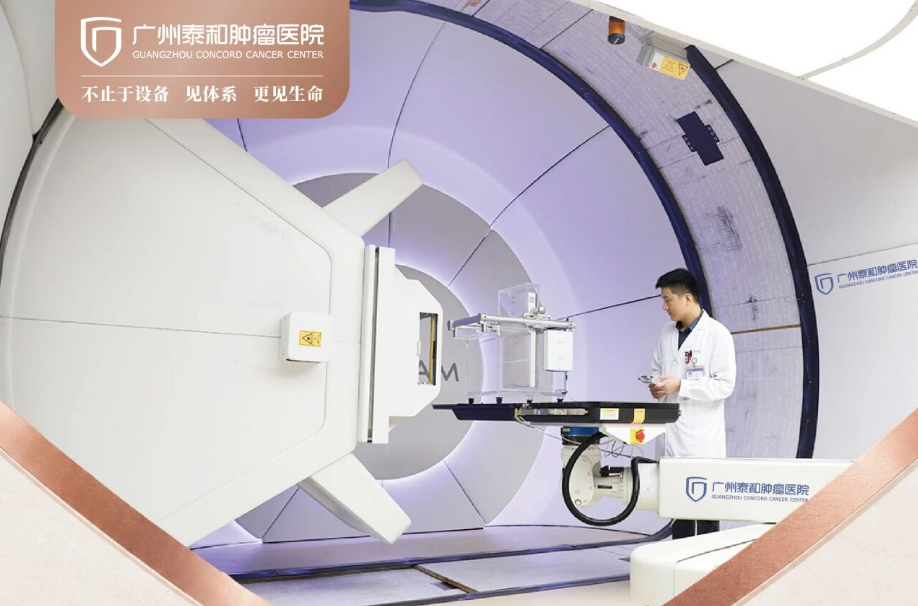
Guangzhou Taihe Proton Therapy Center Surpasses 1,000 Patients Treated
Since the ProBeam proton radiotherapy system at the Proton Therapy Center of Guangzhou Taihe Cancer Hospital was officially put into clinical use in December 2024, the center has provided proton radiotherapy services to more than 1,000 patients within 19 months, with consecutive single-day treatment volumes exceeding 100 patient sessions. According to information released by the hospital, compared with the time taken by some internationally comparable proton centers to complete 1,000 clinical cases, Guangzhou Taihe took 19 months. Relevant comparisons include: Emory Proton Therapy Center in the United States took 2 years to complete 1,000 cases after launching in December 2018; MIBS Proton Therapy Center in Russia took approximately 2 years after trial operation began in September 2017; University College London Hospitals Proton Centre in the United Kingdom took nearly 4 years after launching in December 2021; Tata Memorial Centre in Mumbai, India, took nearly 3 years after launching in 2023; and the Proton Centre at the National Cancer Centre Singapore took 26 months to complete 500 cases after launching in June 2023.
2026-08-04
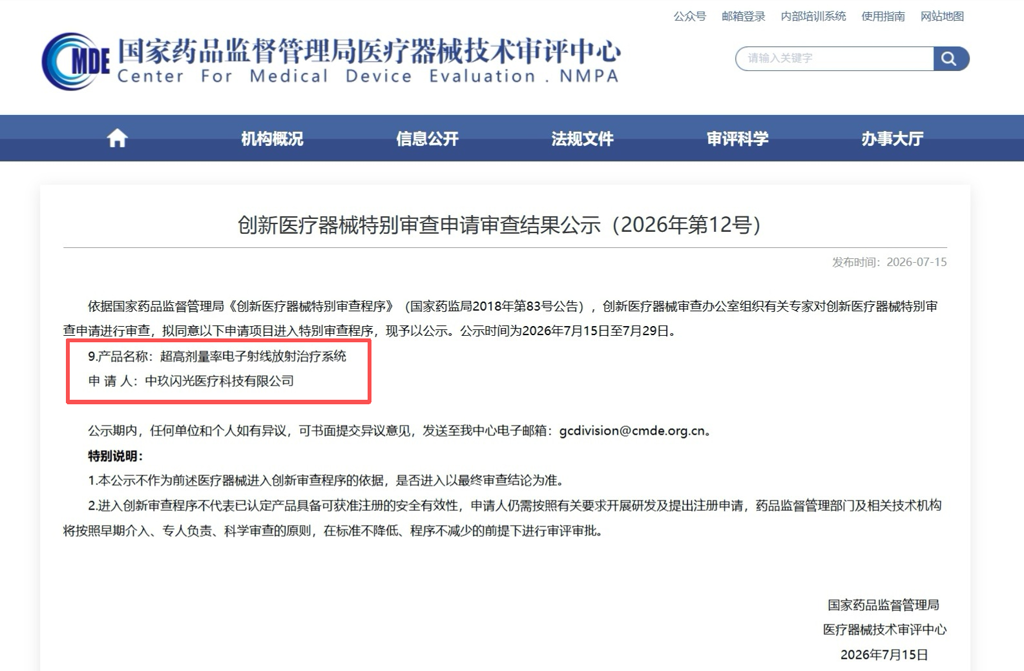
Zhongji Flash e-Flash 200A Enters Innovative Medical Device Special Review Program
Recently, the public notice period for the review results of applications for the Innovative Medical Device Special Review Program by the Center for Medical Device Evaluation of the National Medical Products Administration has concluded. The ultra-high dose rate electron beam radiotherapy system (e-Flash 200A), independently developed by Zhongji Flash Medical Technology Co., Ltd., has officially entered the Innovative Medical Device Special Review Program. According to reports, the e-Flash 200A is China's first ultra-high dose rate electron beam FLASH radiotherapy device and had previously been included in the "Global New" green channel. Its entry into the Innovative Medical Device Special Review Program signifies further recognition of the product's technological innovation and clinical application value. The system is designed for superficial tumor radiothe...
2026-08-04
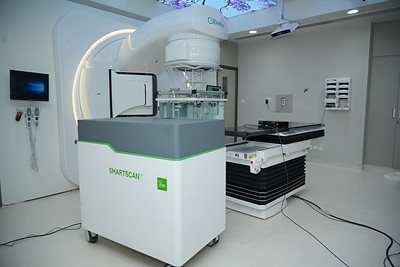
India's First Elekta Evo Installed at Manipal Hospital in Bengaluru for Online Adaptive Radiotherapy
Bengaluru, India – Manipal Hospital Yelahanka has become the first healthcare facility in India to install Elekta Evo, Elekta's AI-enhanced adaptive CT linac platform, which will support clinical teams in delivering online adaptive radiotherapy for more personalized and precise cancer treatment. The system was previously showcased at AROICON 2025, India's radiation oncology conference. According to data from the Indian Council of Medical Research, India records an estimated 1.46 million new cancer cases annually, with radiotherapy demand continuing to grow. For patients with complex conditions or those presenting at advanced stages...
2026-08-01
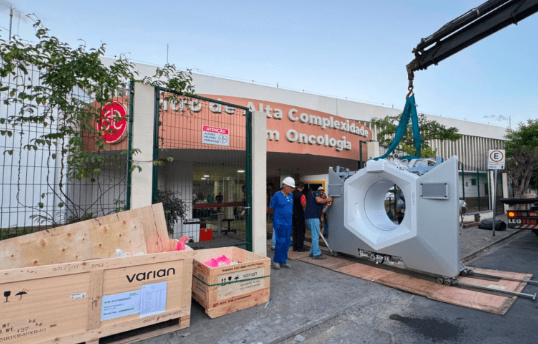
Santa Casa Hospital in Ceará, Brazil, Introduces New Linear Accelerator for Cancer Treatment
Santa Casa de Sobral Hospital in northern Ceará, Brazil, has introduced a new linear accelerator to strengthen cancer treatment for patients in the northern region. The hospital received a new linear accelerator for radiotherapy of cancer patients. After completing the installation, training, and licensing processes, this new technology is expected to double the institution's radiotherapy capacity, increasing from the current 600 patients per month to approximately 1,200 new patients. This equipment, the Halcyon linear accelerator, is considered the latest technology in radiotherapy and is the second unit of its kind installed in Ceará. The device is capable of providing faster, more precise, and safer treatment for various types of cancer...
2026-08-01

Kangbuk Samsung Hospital in South Korea Validates Precision of New-Generation Surface-Guided Radiation Therapy System
The research team from the Department of Radiation Oncology at Kangbuk Samsung Hospital in South Korea announced on July 31 that they have completed validation of the geometric accuracy and respiratory tracking performance of a new-generation surface-guided radiation therapy system. The research findings have been published in the latest issue of the international academic journal *Radiation Physics and Chemistry*. In breast cancer radiotherapy, the deep inspiration breath-hold technique is commonly used in clinical practice to reduce radiation exposure to the heart and lungs. Traditional procedures typically require tattoo marks or drawn guide lines on the patient's skin surface, along with wearing sensors to monitor respiratory motion, which somewhat compromises treatment convenience and patient comfort. The new-generation surface-guided radiation therapy system validated in this study utilizes 3D stereoscopic cameras and thermal imaging technology...
2026-08-02