Registration
REGISTER FOR THE CONFERENCE
Registration
REGISTER FOR THE CONFERENCE
 Apply to Exhibit
APPLICATION FOR EXHIBITION
Apply to Exhibit
APPLICATION FOR EXHIBITION
 Sponsorship
SPONSORSHIP APPLICATION
Sponsorship
SPONSORSHIP APPLICATION

Rosatom Public Council holds expanded meeting in Novovoronezh
The Public Council of Rosatom recently held an expanded field meeting in Novovoronezh and organized a technical tour of the Novovoronezh Nuclear Power Plant (NPP) for its delegation. The event was timed to coincide with commemorative activities related to Unit 6 of the Novovoronezh NPP. The unit features a VVER-1200 reactor and is one of Russia's flagship Generation III+ nuclear power projects. The meeting was held online and chaired by Rosatom Director General Alexey Likhachev. Participants included representatives of Rosenergoatom, Russia's nuclear power operator, Rosatom, the Voronezh Region government, the city of Novovoronezh, as well as public, environmental, and research organizations. Representatives from the scientific community of Primorsky Krai also took part in the visit, as the region plans to develop nuclear energy projects in the coming years.
2026-08-18
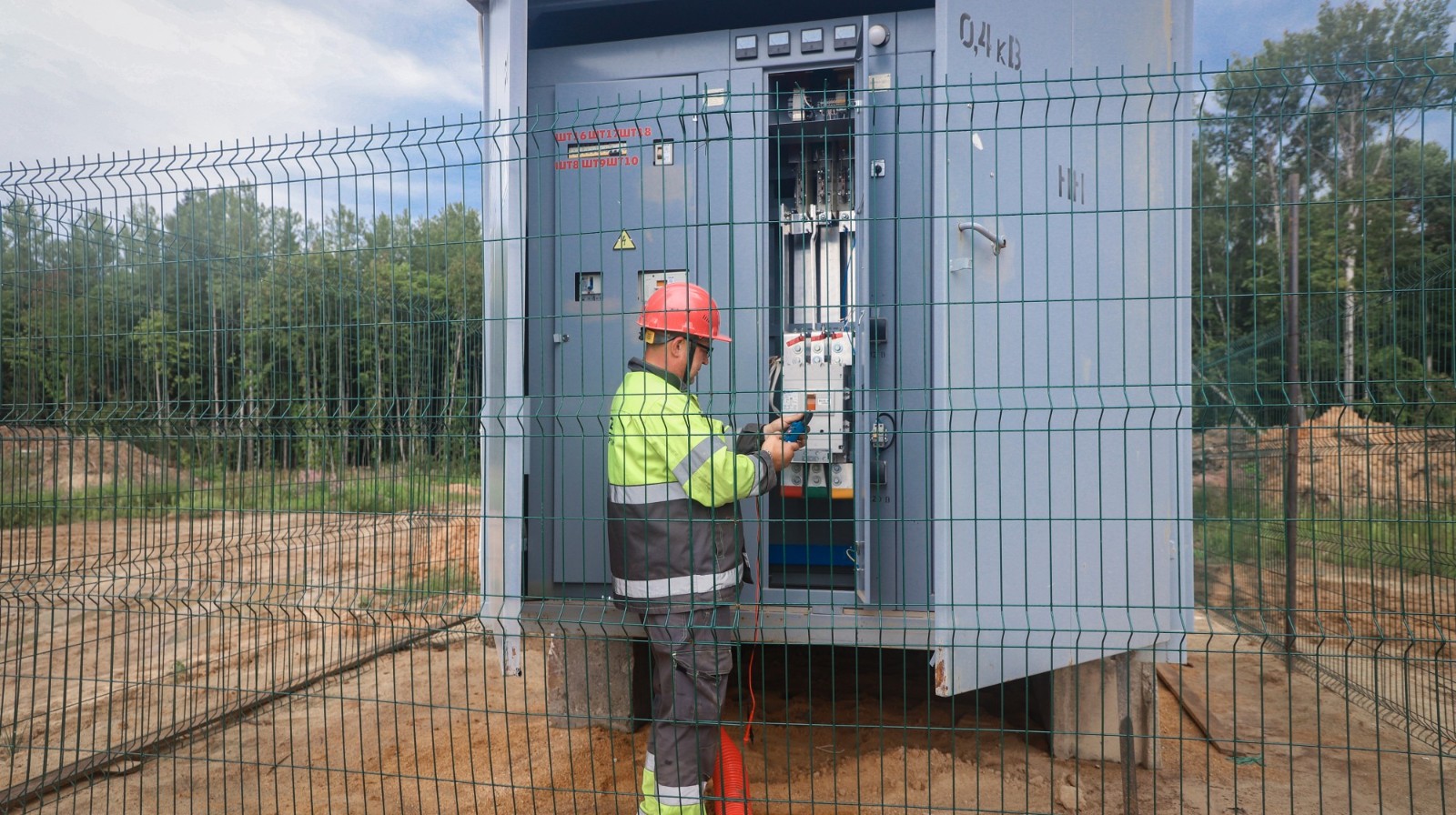
First Power Transmission Line Commissioned at Smolensk NPP-2 Construction Site
2026-08-18

Fresh nuclear fuel delivered for Reactor 1 of the Akademik Lomonosov floating nuclear power plant
2026-08-18

Myanmar Leader's Visit to Russia to Attend Bilateral Business Forum, Small Nuclear Power Plant Cooperation Draws Attention
2026-08-18

First American Nuclear Company's Regulatory Engagement Plan for Proposed HALEU Fuel Facility Accepted for Docketing by NRC
2026-08-18
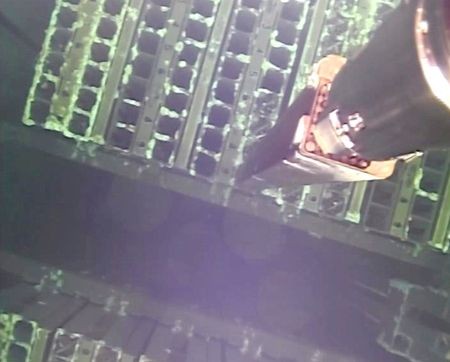
Removal of Highly Radioactive Spent Fuel Begins at Unit 2 of Fukushima Daiichi Nuclear Power Station
2026-08-18
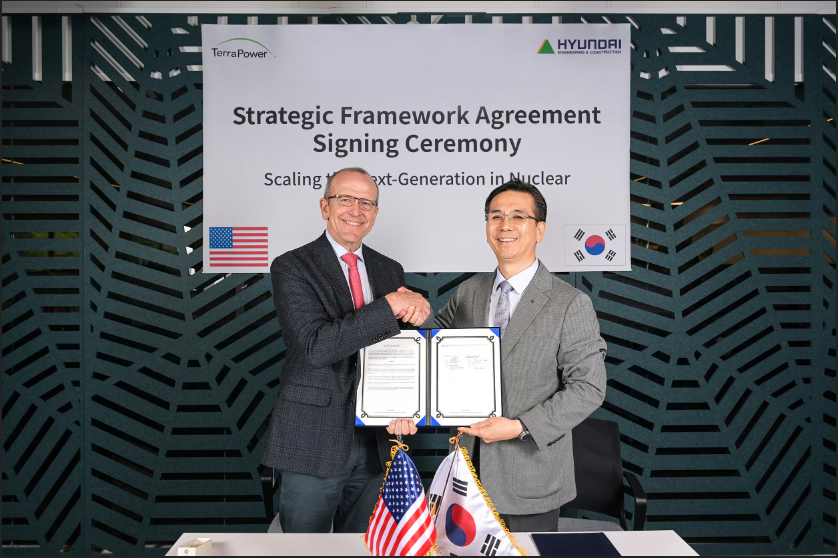
Hyundai E&C Signs Framework Agreement with TerraPower for Natrium Nuclear Power Plant Project
2026-08-18

Multiple regions in Japan demand nuclear power operators strengthen safety management and information disclosure
2026-08-18
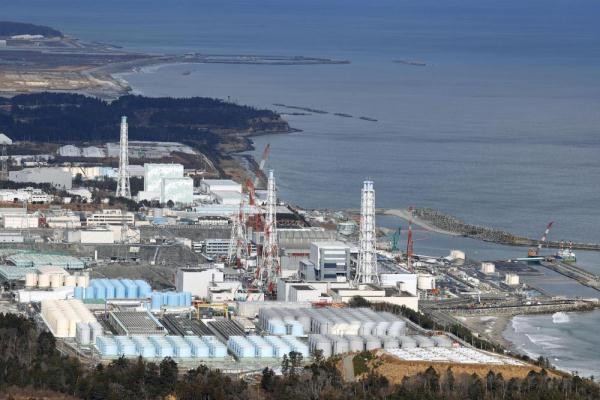
Fire alarm triggered for fifth time at Fukushima Daiichi Nuclear Power Station in August; no fire confirmed on site
2026-08-18
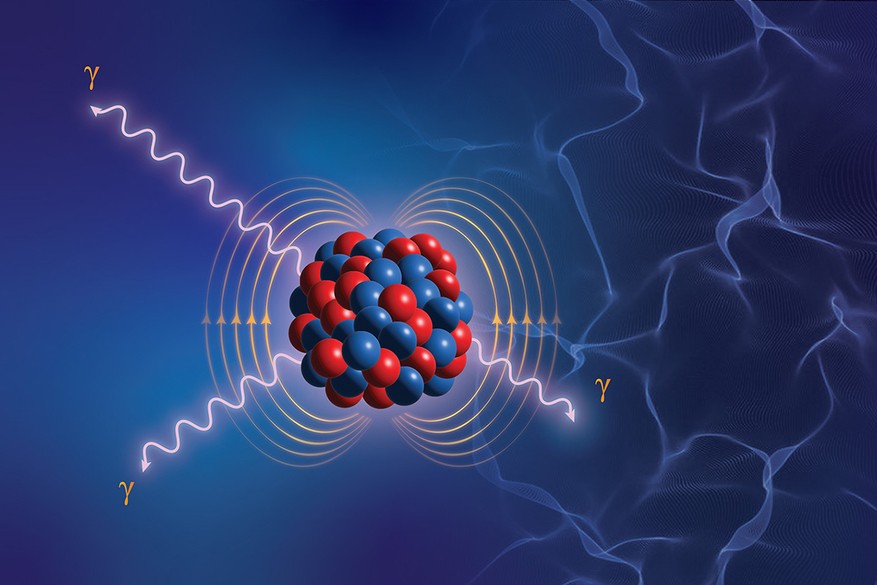
An international research team led by the US Facility for Rare Isotope Beams (FRIB), with participation from Lawrence Livermore National Laboratory (LLNL) and other institutions, recently published findings in Nature that explain a long-standing question in nuclear physics: why some atomic nuclei emit anomalously high numbers of low-energy gamma rays. Image: FRIB Gamma rays are a type of electromagnetic radiation. Excited atomic nuclei release gamma rays during radioactive decay, gradually returning to lower, more stable energy levels. Over the past few decades, scientists have discovered that certain nuclei exhibit a low-energy enhancement phenomenon, where the number of low-energy gamma rays emitted exceeds expectations. However, this phenomenon is not universal, and its occurrence is theoretically difficult to predict.
2026-08-18
The Libyan Atomic Energy Establishment recently proposed a plan to restore and restart the Tajoura nuclear research reactor for the production of medical radioisotopes. The establishment stated that this initiative aims to support the diagnosis and treatment of diseases and tumors, while reducing dependence on imports of relevant isotopes. Radioisotopes are essential materials in nuclear medicine, serving as tracers in medical imaging to help track organ function and detect certain diseases and tumors; some isotopes are also used in radiotherapy targeting specific tissues. According to the Libyan Atomic Energy Establishment, the Tajoura reactor has a rated thermal power of 10 megawatts and holds potential for producing various medical isotopes, including...
2026-08-18
According to Japanese media reports, due to record-breaking rainfall in Chiba Prefecture, an underground facility of the National Institutes for Quantum Science and Technology (QST) in Chiba City was flooded, and radioactive liquid waste in underground storage tanks at the facility may have mixed with rainwater and leaked outdoors. QST stated that as of the 13th, an estimated 2,000 to 3,000 liters of liquid waste had accumulated in the relevant underground storage tanks. After investigating water bodies around the tanks, the institute confirmed that detected radioactive material concentrations were below standard values, and no environmental impact has been indicated so far. QST reported the incident to national and local governments the following day and plans to submit preventive measures to the Nuclear Regulation Authority of Japan.
2026-08-18
On August 17, CNNC Sichuan Environmental Protection held a cadre meeting to announce the decision of the Group Company Party Leadership Group on the appointment of Comrade Zhang Xiangming as Chief Accountant of CNNC Sichuan Environmental Protection Engineering Co., Ltd. Wang Suohui, Secretary of the Party Committee and Chairman of CNNC Environmental Protection, attended the meeting via video and delivered a speech. Chang Yu, Secretary of the Party Committee and Chairman of the Company, presided over the meeting. On behalf of the Party Committee of CNNC Environmental Protection, Wang Suohui extended congratulations to Comrade Zhang Xiangming on his new appointment. He pointed out that this cadre adjustment was a decision made by the Group Company Party Leadership Group from the overall perspective of optimizing and strengthening the leadership team, fully reflecting the high importance attached to and earnest expectations for CNNC Sichuan Environmental Protection. At present, CNNC Sichuan Environmental Protection is at a critical stage of tackling tough challenges, with various tasks...
2026-08-18
Researchers at the Paul Scherrer Institute (PSI) in Switzerland recently reported that the Cristallina experimental station of the Swiss Free-Electron Laser (SwissFEL) can now observe quantum states that only emerge at extremely low temperatures using X-ray scattering at temperatures close to absolute zero. Simon Gerber (left) and Bill Pedrini (right) at the Cristallina experimental station of SwissFEL. With the help of a custom-built cryostat connected to the beamline (far left), quantum states can now be studied at extremely low temperatures. Paul Scherrer Institute PSI/Markus FischerAccording to the team, they recently achieved a low temperature of 35 millikelvin in experiments...
2026-08-17
An international team of researchers from Denmark, Sweden, and Switzerland recently conducted a three-dimensional non-destructive analysis of a slice of the Martian meteorite NWA 7034 "Black Beauty" using neutron tomography and X-ray tomography, discovering macroscopic hydrogen-rich regions within it. The study suggests that these hydrogen-rich features provide evidence of early water-rock interactions on Mars. The findings have been published in Geophysical Research Letters. Black Beauty is a brecciated meteorite from Mars that was ejected into space by an impact event and eventually landed in the Sahara Desert in Morocco. Weighing approximately 320 grams, the meteorite contains material up to 4.48 billion years old, making it one of the oldest known Martian crustal fragments...
2026-08-17
On August 12, 2026, the Muon g-2 Collaboration announced that a new analysis based on 25% of the data from the Muon g-2 experiment at the U.S. Department of Energy's Fermi National Accelerator Laboratory has produced the most sensitive direct measurement of the muon's electric dipole moment to date. The results show that if a muon electric dipole moment exists, its magnitude is below the current detection threshold of the experiment. The muon electric dipole moment values measured by Fermilab across different data-taking periods were compared with previous results from Brookhaven National Laboratory. The combined Fermilab value is consistent with zero (no observation). Although the experiment uses positive muons, results are typically reported for negative muons, which reverses the sign of the measured value...
2026-08-17