
Search Results
Keyword:El

New Chair Takes Office for ASME BPV III China International Working Group
On August 4, the 2026 First Working Meeting and the Fourth Chairmanship Election Conference of the ASME Boiler and Pressure Vessel Code Section III (BPV III) China International Working Group (hereinafter referred to as the "Working Group") were held at Shanghai Nuclear Engineering Research and Design Institute (SNERDI). Following a vote by attending committee members, Jiao Ming, Deputy General Manager of the company, was unanimously elected as the new Chair of the Working Group, while Zhou Zhou, Director of the Nuclear Equipment Safety and Reliability Center at China Productivity Center for Machinery, and Jiang Cailin, Vice President of Shanghai Electric Nuclear Power Group, were elected as Vice Chairs. Jiao Ming stated that the Working Group will continue to establish regular communication channels between the domestic industry and ASME, leverage key domestic nuclear power projects, and lead the industry in tackling cutting-edge technologies such as radiography testing of ultra-thick forgings, phased array ultrasonic testing, and additive manufacturing of nuclear equipment...
2026-08-07
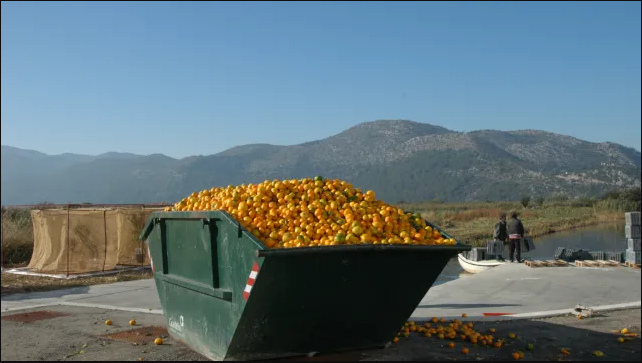
Nuclear science helps reduce global food spoilage and waste
On April 10, 2026, the International Atomic Energy Agency introduced several applications of nuclear science in reducing food spoilage and food waste. According to data from the Food and Agriculture Organization of the United Nations, approximately 1 billion tonnes of edible food are wasted globally each year, accounting for about one-fifth of the total food available to consumers. Of this, 13.2% of food is lost before reaching the retail stage, valued at approximately $400 billion; another 19% is wasted at the retail and consumption stages due to spoilage and other reasons. Food loss not only means wasted resource consumption but also exacerbates greenhouse gas emissions, pollution, and biodiversity loss. The International Atomic Energy Agency, through the Food and Agriculture Organization...
2026-04-10

FAO and IAEA: Nuclear Technologies Are Enhancing Agricultural Production and Food Security
On March 30, 2021, the Food and Agriculture Organization of the United Nations and the International Atomic Energy Agency presented multiple applications of nuclear technologies in agriculture and food security. The two organizations have collaborated for over 50 years in knowledge sharing and capacity building, further strengthening their partnership through the establishment of the Joint FAO/IAEA Centre of Nuclear Techniques in Food and Agriculture. In the field of animal health, nuclear technologies are used for the detection, control, and prevention of transboundary animal diseases and zoonoses. Belize previously had to send animal disease testing samples to overseas laboratories; with support from the Joint FAO/IAEA Centre, the Belize Agricultural Health Authority established a molecular diagnostic laboratory for animal health and adopted real-time polymerase chain reaction (PCR) testing technology. This method can detect animal diseases within 24 hours, helping frontline personnel take rapid prevention and control measures. Recently, the laboratory has also been used to assist in human COVID-19 testing, reflecting the "One Health" concept that animal, human, plant, and environmental health are interconnected.
2021-03-30

China's First Industry Standard for LOCA BEPU Analysis, Led by CGN Research Institute, Officially Released
Recently, approved by the National Energy Administration, the energy industry standard "Technical Requirements for Best Estimate Plus Uncertainty Analysis of Loss of Coolant Accident in Pressurized Water Reactor Nuclear Power Plants" (NB/T 20751-2026), led by CGN Research Institute, was officially released. The standard was developed under the leadership of the Research Institute, in collaboration with the Nuclear and Radiation Safety Center of the Ministry of Ecology and Environment, China Nuclear Power Research and Design Institute, Shanghai Nuclear Engineering Research and Design Institute, Hualong Nuclear Power Technology Co., Ltd., and China Nuclear Power Engineering Co., Ltd., among other organizations. It will come into effect on December 26, 2026. This standard is China's first BEPU analysis...
2026-08-06

IAEA Publishes Report on Aging Management of Spent Fuel Dry Storage Systems
The International Atomic Energy Agency (IAEA) has published the findings of a decade-long study on aging management of spent fuel dry storage systems. According to IAEA estimates, by the end of 2024, spent fuel discharged from nuclear power plants worldwide had exceeded 400,000 tonnes of heavy metal (tHM). Of this, 106,000 tHM is in dry storage, a long-term storage method that is becoming increasingly common compared with wet storage. Most IAEA member states are still decades away from commissioning permanent spent fuel repositories, which means dry storage systems will likely need to continue operating safely beyond their design lifetimes. Wet storage has been in operation for decades, and the IAEA states that aging management of such facilities is generally well understood. Utilities choose dry storage for its passive safety features, and many dry storage facilities have already received license extensions. The IAEA expects demand for dry storage to continue growing, with service periods extending well beyond the original 20-to-40-year licensing terms, potentially exceeding 120 years. Aging management programs (AMPs) are therefore needed to verify continued safe operation.
2026-08-06
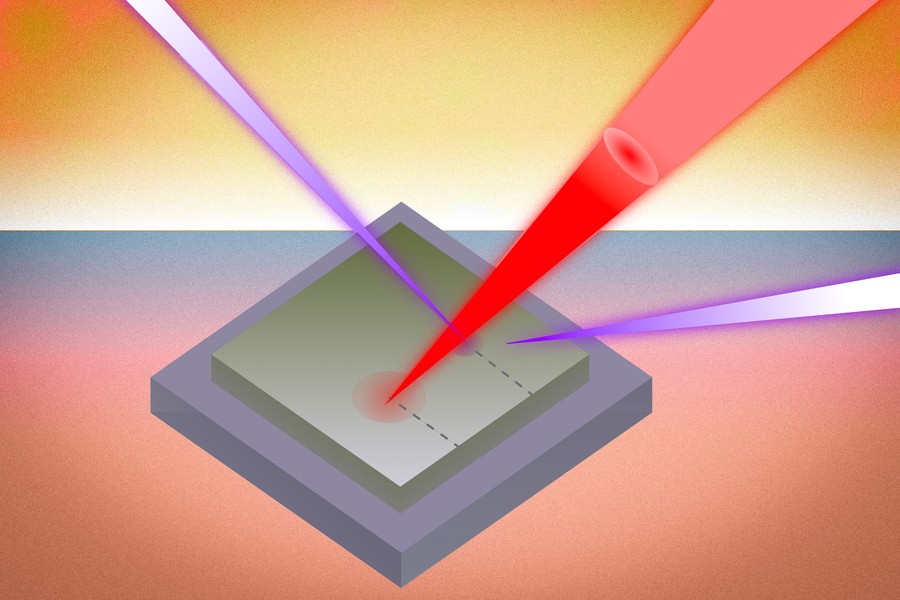
MIT Develops Ultrafast X-ray Thermometry Method to Observe Heat Transfer in Multilayer Chip Structures
Researchers at the Massachusetts Institute of Technology (MIT) have developed a new method for observing how heat transfers through multilayer materials, which can be used to precisely measure heat flow variations inside electronic devices such as computer chips. The findings have been published in Nature Communications. As computer chips continue to shrink in size and power density keeps rising, device overheating has become a major factor limiting performance improvements. Traditional heat flow measurement methods face limitations when dealing with the multilayer structures of real electronic devices—for example, the commonly used time-domain thermoreflectance method struggles to distinguish heat transport in different material layers, while infrared imaging and other approaches also fail to capture rapid changes at microscopic scales. To address this issue...
2026-08-06

Dark Energy Survey Releases Six-Year Results: Data from 669 Million Galaxies Helps Constrain Cosmic Accelerated Expansion
On August 4, the Dark Energy Survey (DES) project released its six-year findings on dark energy detection. The project compiled 18 related papers, based on nearly 300,000 astronomical images captured between 2013 and 2019, recording information on 669 million galaxies, thousands of galaxy clusters, and more than 3,000 supernovae to study the accelerated expansion of the universe and the evolution of cosmic structure. To carry out DES, Fermi National Accelerator Laboratory built an extremely sensitive 570-megapixel digital camera, DECam, which was installed on the Blanco 4-meter telescope at the National Science Foundation's Cerro Tololo Inter-American Observatory in the Chilean Andes. (Image courtesy of Reidar Hahn/Fermi National Acceler...
2026-08-06

U.S. Laboratories Plan "Materials Discovery Cloud" to Use AI to Predict Impact of Defects in Microelectronic Devices
Researchers at the U.S. Department of Energy's Argonne National Laboratory, Lawrence Berkeley National Laboratory, Oak Ridge National Laboratory, and Northwestern University are planning to develop a Materials Discovery Cloud platform that leverages a physics-based artificial intelligence framework to predict how tiny defects affect the performance and lifespan of microelectronic devices. Visualization of the Materials Discovery Cloud, a physics-based AI framework that integrates experimental data, simulations, and high-performance computing to predict how tiny defects affect the performance and lifespan of microelectronic devices. (Image provided by ChatGPT.) Microelectronic devices are widely used in smartphones, laptops, secure communications, and artificial intelligence hardware. As device dimensions continue to shrink and operating speeds increase, tiny defects within materials and at interfaces have a more pronounced impact on device stability. These defects can cause overheating, leakage current, switching instability, and other issues, or in certain conditions, improve electrical or thermal performance. Identifying critical defects and understanding their evolution under real-world operating conditions has become a key challenge in the design of next-generation microelectronic materials.
2026-08-06

Final Voyage Completed for Rebar Cage Sea Transport to Hinkley Point C Nuclear Power Station
This summer, the cargo vessel Anfield Peak departed from the Port of Bristol in the UK, heading to Hinkley Point C Nuclear Power Station in Somerset. This marked the vessel's final voyage for the related transport mission. Previously, it had made over 100 round trips between the two locations, delivering factory-prefabricated rebar cages to the nuclear construction site. These rebar cages are large in volume and high in density, serving as critical foundational components in civil engineering construction. Under traditional practices, such rebar cages are typically prefabricated on-site before concrete pouring. The Hinkley Point C project, however, has shifted part of the rebar cage prefabrication process to a factory in Bristol, with the cages then transported by sea to the site for installation...
2026-08-06
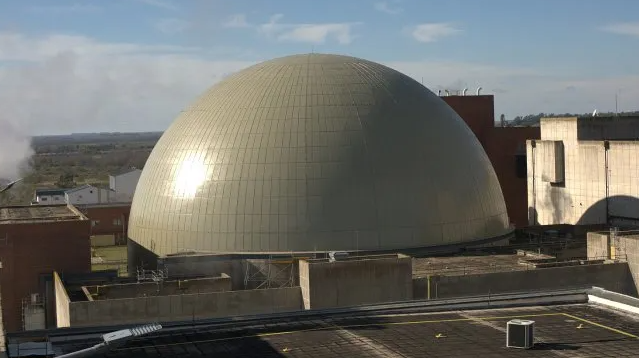
Argentina's nuclear power generates 4.45 million kWh in half a year, accounting for over 7% of national electricity and meeting the residential electricity needs of 6 million people
Operating data from Nucleoeléctrica Argentina for the first half of 2026 shows that the Atucha 2 and Embalse nuclear power plants generated a combined 4,450,355 kWh, accounting for over 7% of the country's total electricity generation during the period and covering 13% of national residential electricity demand. Notably, although Atucha 1 is temporarily out of service due to a life extension project, the nuclear plants are still able to supply electricity to approximately 6 million people. In addition to its operational breakthroughs, Nucleoeléctrica Argentina is also actively expanding its international business. The company has formally established a new business unit aimed at...
2026-08-06

Rwandan Delegation Visits the Scientific and Technical Center for Nuclear and Radiation Safety in Russia
On August 4, 2026, a delegation from the Republic of Rwanda visited the Federal Budgetary Institution "Scientific and Technical Center for Nuclear and Radiation Safety" (FBU STC NRS) during its visit to the Federal Service for Environmental, Technological, and Nuclear Supervision (Rostekhnadzor). The delegation was led by Claude Nkusi, Deputy Director General of the Rwanda Utilities Regulatory Authority (RURA). At the beginning of the meeting, Alexander Khamaza, Director of the Scientific and Technical Center for Nuclear and Radiation Safety, delivered a welcome speech and introduced the Center's main activities in providing scientific and technical support to Rostekhnadzor. During the visit, the Rwandan delegation also learned about the...
2026-08-06

Rosatom selects SNIIP as chief design organization for radiation control systems, overseeing standardization of radiological instrumentation and import substitution assurance at nuclear facilities
Rosatom has selected the Research Institute of Scientific Instruments (SNIIP) as the chief design organization for radiation control systems. The institute, which is part of Rosatom's automation control and electrical equipment division, has been granted this status for a range of similar products in radiation control equipment and systems, including automated radiation control systems and radiation environment monitoring. SNIIP's status as chief design organization means it will be responsible for ensuring Russia's technological autonomy in this field and for developing radiation control instruments and systems. SNIIP General Director Alexey Nikitin stated that this recognition is a testament to the years of work, experience, and professional expertise of the institute's employees...
2026-08-06
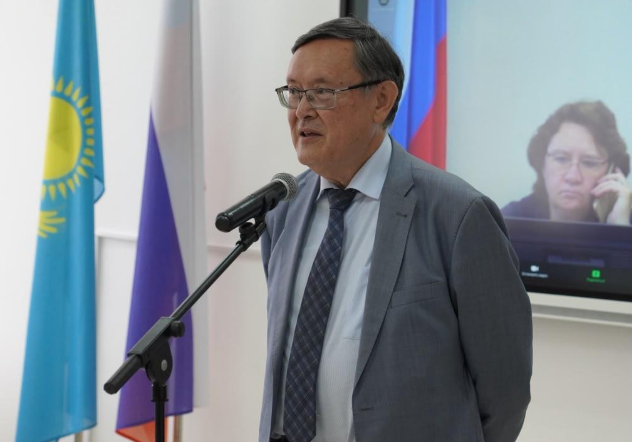
Kazakhstan Welcomes Its First Cohort of Nuclear Industry Specialists
On August 5, the inaugural graduation ceremony was held in Almaty for the first cohort of students at the Kazakhstan branch campus of the National Research Nuclear University MEPhI (НИЯУ МИФИ). Timur Zhantikin, Vice Chairman of the Atomic Energy Agency of Kazakhstan, attended the ceremony and presented diplomas to the graduates. In his address, he noted that as Kazakhstan's atomic energy industry enters a new phase of development, the demand for specialized professionals continues to grow, and the targeted training programs offered by the branch campus are crucial to filling this gap. The graduation of this first cohort marks the beginning of Kazakhstan's establishment of an independent domestic nuclear talent cultivation system. For a long time, Kazakhstan's nuclear industry has relied on overseas education or on-the-job training to supplement its engineering workforce...
2026-08-06
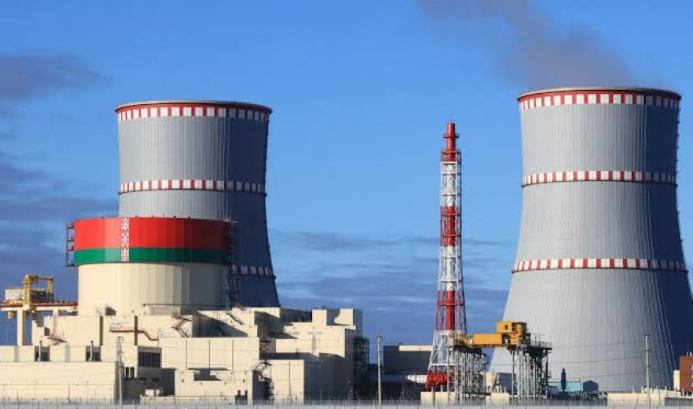
Belarus Plans Construction of New Nuclear Power Plant
Belarus plans to build a third unit at its existing nuclear power plant and is planning a second nuclear power plant. The Belarusian nuclear power plant has become a flagship project of the Union State and a symbol of cooperation between Belarus and Russia. However, the country does not intend to stop there. The President of Belarus has made an important decision: to build a third unit at the existing nuclear power plant, while studying the possibility of constructing a second nuclear power plant in the Mogilev region. Energy Minister Denis Moroz discussed the significance of this initiative, its timeline, and the direction of energy development over the next 15 years in the "Economic Environment" program. In 2008, the President of Belarus made the strategic decision to build a nuclear power plant, at a time when other countries were shutting down...
2026-08-06

"China Nuclear Power Development Report (2026)": China's Total Scale of Operating and Approved-Under-Construction Nuclear Power Units Ranks First in the World
On August 6, the National Energy Administration released the "China Nuclear Power Development Report (2026)". As of the end of 2025, China had a total of 112 nuclear power units in operation and approved for construction, with a total installed capacity of 125 million kilowatts, ranking first in the world. Among them, 59 units were in operation with an installed capacity of 62.48 million kilowatts, ranking third globally; 53 units were approved and under construction with a capacity of 62.93 million kilowatts, maintaining the world's largest nuclear power engineering construction scale for 19 consecutive years. The report shows that during the "14th Five-Year Plan" period, China newly approved 46 nuclear power units with a total capacity of 54.5 million kilowatts, and newly commissioned 11 units with a capacity of 12.45 million kilowatts. In 2025, China commissioned one new nuclear power unit, namely Unit 2 of the "Guohe One" demonstration project; and approved the construction of 10 new nuclear power units with a total capacity of 12.1 million kilowatts, involving Units 5 and 6 of Zhejiang Sanmen, Units 5 and 6 of Shandong Haiyang, Units 1 and 2 of Fujian Xiapu, Units 3 and 4 of Guangdong Taishan, and Units 5 and 6 of Guangxi Fangchenggang...
2026-08-06