
Search Results
Keyword:El
World's first laser plasma accelerator-driven high-resolution muon imaging experiment to launch in Romania
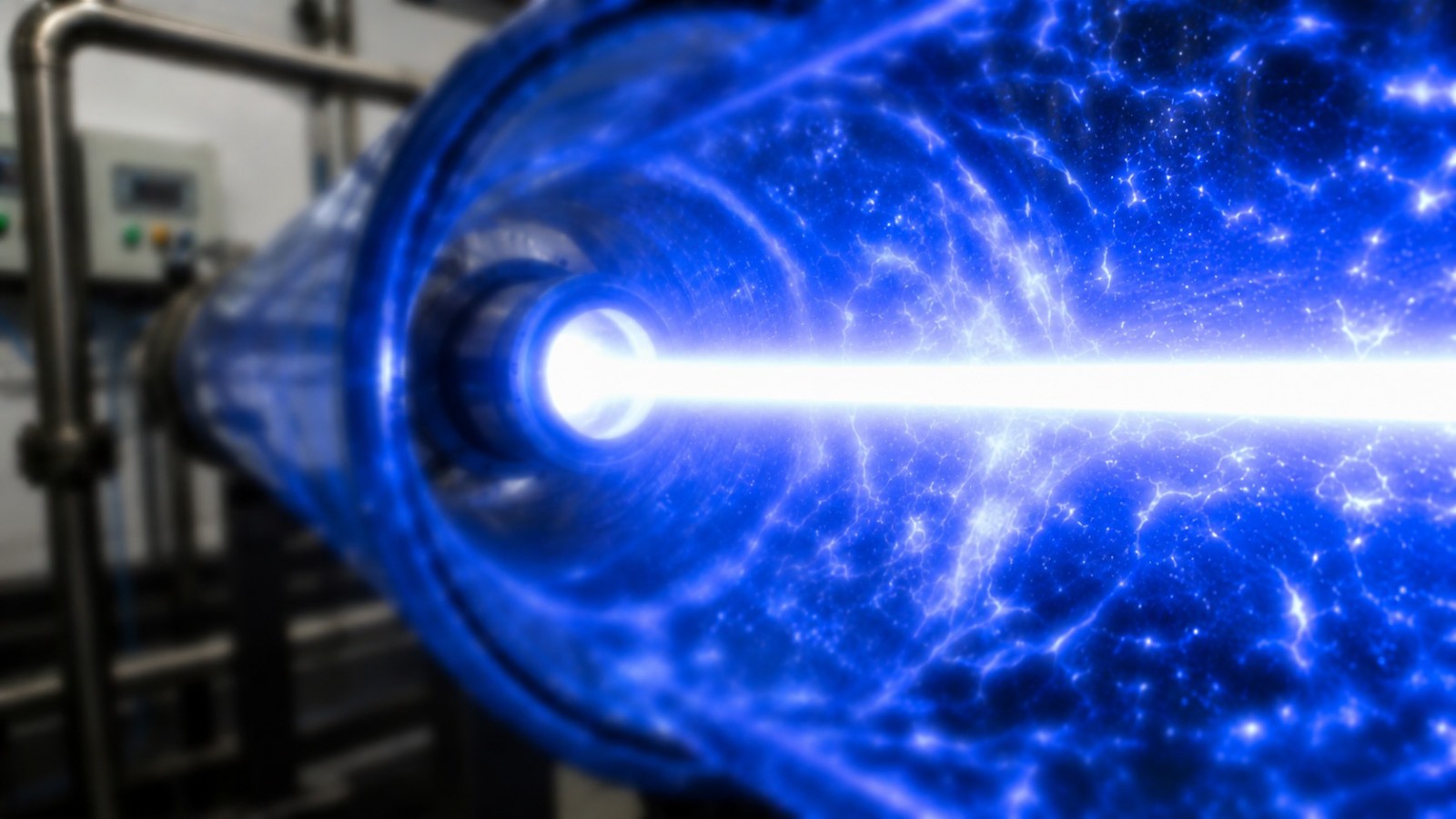
Ideon Technologies, a global subsurface detection muon tomography company, is participating in an international research consortium to conduct the world's first high-resolution muon imaging experiment driven entirely by a laser plasma accelerator. The experiment aims to use a compact accelerator to produce muon beams on demand for non-destructive high-resolution imaging, with applications targeting mineral production, critical infrastructure, cargo inspection, medical imaging, semiconductors, nuclear security, and space radiation testing. Consortium members include the University of Texas at Austin, the Extreme Light Infrastructure - Nuclear Physics (ELI-NP) facility team, Heinrich Heine University Düsseldorf, Helmholtz-Zentrum Dresden-Rossendorf, ELI-Beamlines, and Tau Systems.
2026-08-18
Fuel Loading Completed for Tianwan Nuclear Power Plant Unit 7, Entering Commissioning Phase with Nuclear Fuel
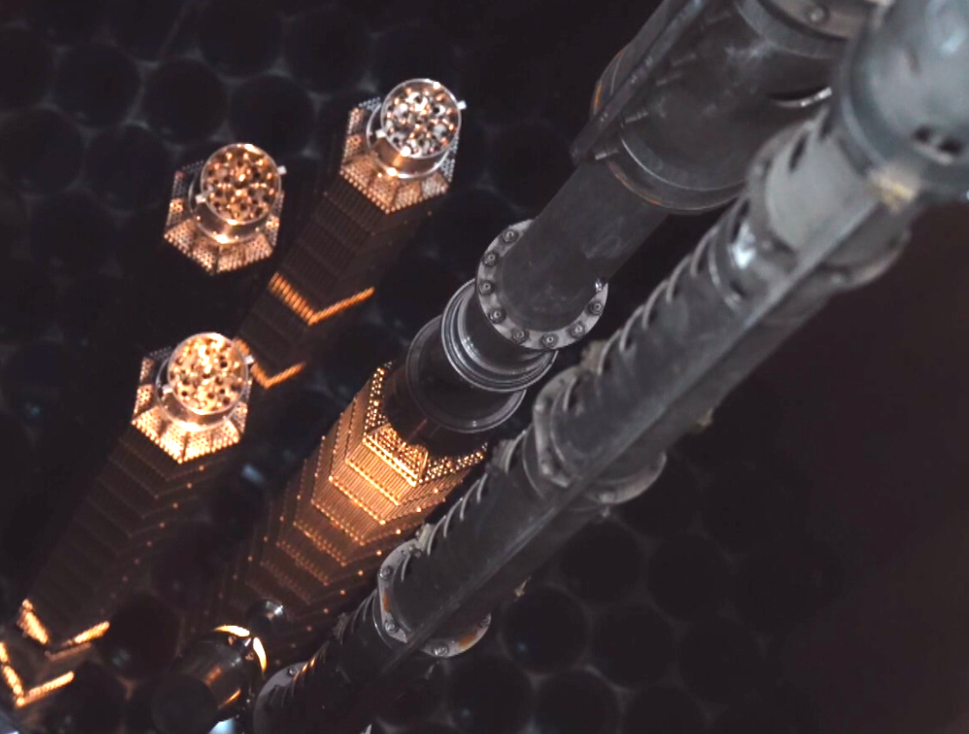
On August 18, with the completion of core loading correctness verification and the commencement of protective tube assembly reinstallation, the first nuclear fuel loading work for Unit 7 of the Tianwan Nuclear Power Plant in Lianyungang, Jiangsu Province, was successfully concluded, marking the entry into the commissioning phase with nuclear fuel. This laid a solid foundation for subsequent reactor criticality, grid connection, and commercial operation of the unit. Fuel loading is a key milestone in the entire lifecycle of nuclear power plant construction and a critical starting point for the unit's operation with nuclear fuel. Unit 7 of the Tianwan Nuclear Power Plant is the first VVER-1200 Generation III nuclear power unit to be constructed in China, and this fuel loading also marks the first-ever fuel loading for a VVER-1200 type nuclear power unit in China. The loading process commenced on the 12th and was fully completed by the 18th, with a total of 163 nuclear fuel assemblies loaded.
2026-08-18

South Korea's Gyeongbuk East Coast Nuclear Power Belt Proposed as National AI Training Center
On August 17, the Gyeongbuk Research Institute proposed developing the nuclear power-concentrated region on the east coast of North Gyeongsang Province into a national artificial intelligence (AI) training center to accommodate high-energy computing demands such as large-scale model training and retraining. The research suggests that if the South Korean government expands AI data centers to 18.4 gigawatts in the long term, power supply and grid connection capacity in the capital area and metropolitan regions could approach their limits. To alleviate power and network load pressures, real-time inference and user-facing services could be deployed in the capital area and major cities, while large-scale training and retraining facilities could be located in developing regions with access to power sources. The east coast of North Gyeongsang Province is home to Hanul...
2026-08-18
South Korea's Nuclear Expansion Faces Fuel Supply Pressure as Enriched Uranium Costs Surge Nearly Sixfold in Seven Years
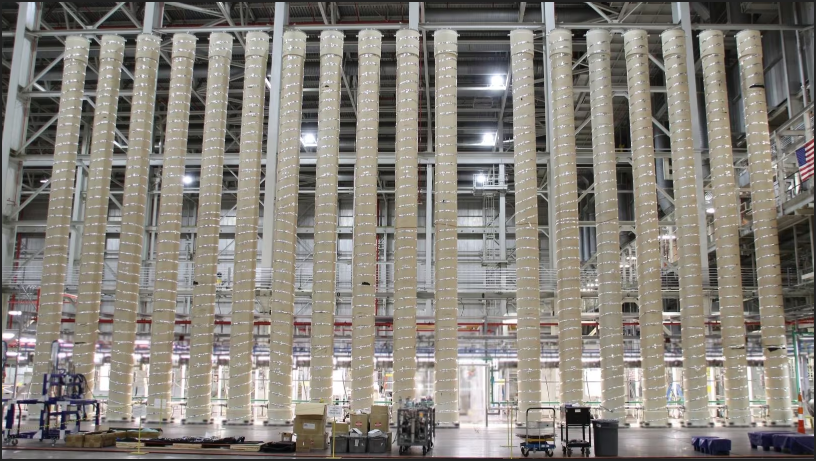
Against the backdrop of accelerating global nuclear power construction and surging electricity demand from AI data centers, the nuclear fuel supply chain is facing new tensions. Due to limited uranium enrichment capacity and sanctions affecting Russian-related supplies, international uranium enrichment prices have risen sharply over the past seven years. South Korea's nuclear expansion plans are consequently facing fuel procurement pressure, with industry experts concerned that if mid- to long-term nuclear fuel security proves insufficient, newly built nuclear units could face operational risks in the future. Korea Hydro & Nuclear Power (KHNP) recently disclosed that South Korea's domestic annual enriched uranium consumption is expected to increase from approximately 460 tons currently to about 540 tons next year. The rising demand mainly stems from the overlap between life-extension operations of some older nuclear units and the commissioning of new units...
2026-08-18
China National Nuclear Power Deeply Studies and Practices the Ecological Environment Code, Undertaking the Historic Mission of Green and Low-Carbon Energy Transition
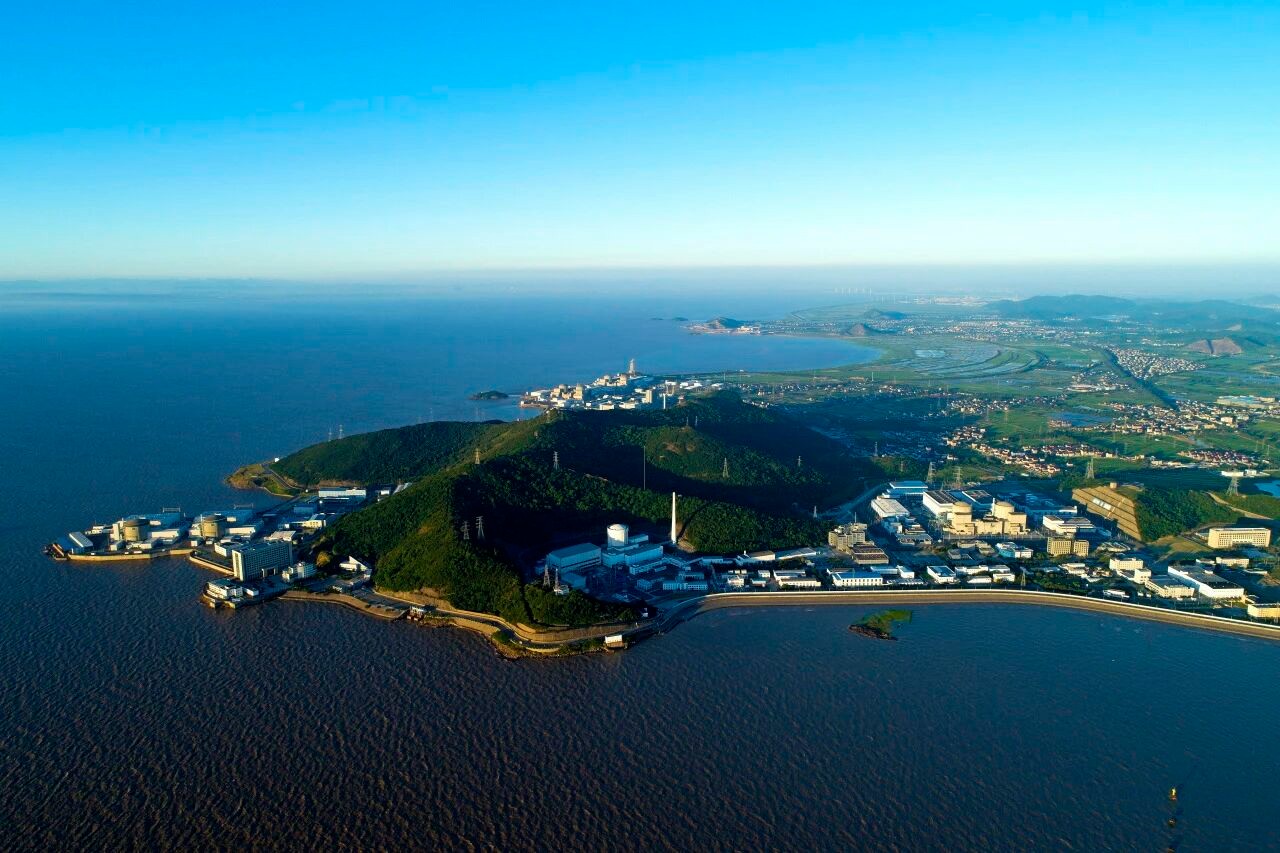
The Ecological Environment Code of the People's Republic of China (hereinafter referred to as the Ecological Environment Code) officially came into effect on August 15, 2026. The Ecological Environment Code is an important achievement in implementing Xi Jinping's Thought on Ecological Civilization and Xi Jinping's Thought on the Rule of Law. It is the second law in China named after a "Code" following the Civil Code of the People's Republic of China, providing solid legal safeguards and fundamental legal guidance for the construction of a Beautiful China. China National Nuclear Power Co., Ltd. (hereinafter referred to as China National Nuclear Power), as a main force in China's nuclear energy development and an important force in achieving the "dual carbon" goals, deeply implements the Ecological Environment Code, practices the concept of green development, contributes safe and clean energy, and empowers the construction of a Beautiful China...
2026-08-18
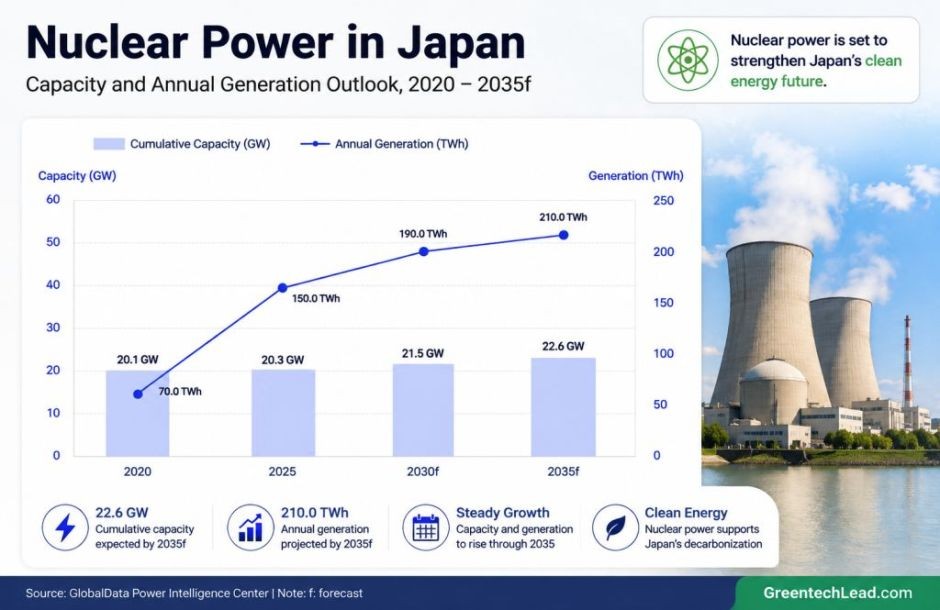
Japan's Nuclear Power Revival Enters Supply Chain Rebuilding Phase, with Spent Fuel and Engineering Capacity as Key Constraints
As Japan advances energy security, reduces dependence on fossil fuel imports, and expands low-carbon electricity supply, the focus of the country's nuclear power market is shifting from mere reactor restarts to a comprehensive supply chain rebuild covering manufacturing, operations and maintenance, life extension, fuel cycle, and waste management. GlobalData estimates Japan's nuclear power generation at 101.0 TWh in 2025 and projects it to increase to 123.3 TWh by 2035. Japan's policy target is to maintain nuclear power at approximately 20% to 22% of the electricity generation mix. Based on total annual electricity demand of approximately 1,050 TWh, a 20% nuclear share corresponds to about 210 TWh, while a 22% share corresponds to about 231 TWh. Compared with the 2025 nuclear generation figure of 101.0 TWh, the estimated gap is approximately 109 TWh to 130 TWh.
2026-08-18

Fresh nuclear fuel delivered for Reactor 1 of the Akademik Lomonosov floating nuclear power plant
The fuel division of Russia's State Atomic Energy Corporation (Rosatom) has delivered a batch of fresh nuclear fuel to Pevek, Chukotka Autonomous Okrug, for Reactor 1 of the Akademik Lomonosov floating nuclear power plant. The plant, which is part of Rosatom's power division, is currently the only operating floating nuclear power plant in the world. The fuel was produced by Machine-Building Plant Joint-Stock Company (MSZ JSC) in Elektrostal, Moscow Oblast. Prior to delivery to the plant, the fuel assemblies had undergone acceptance testing and technical inspections, and received certification from the Russian Maritime Register of Shipping, the authority responsible for acceptance certification of nuclear fuel for marine reactor units.
2026-08-18
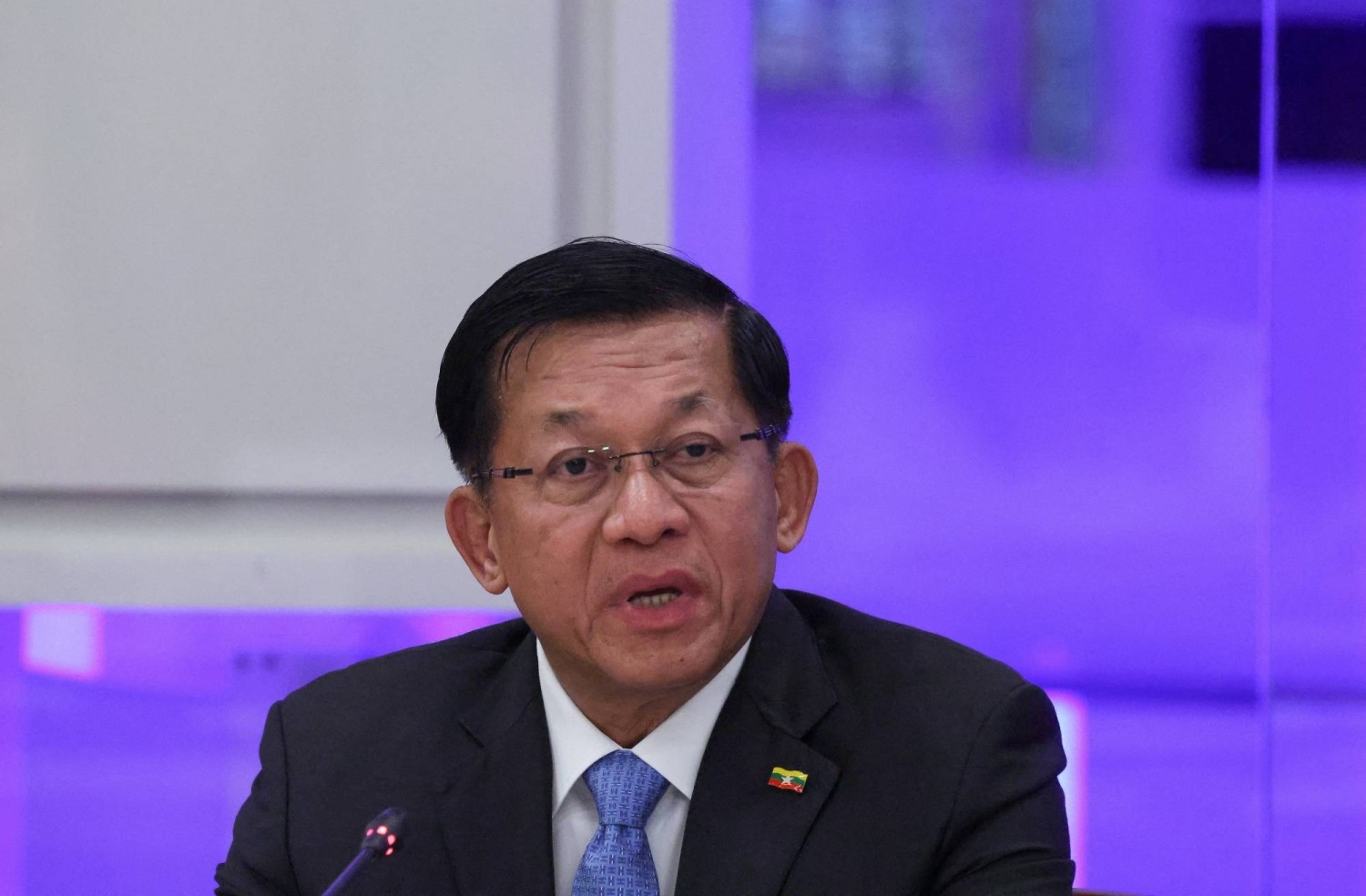
Myanmar Leader's Visit to Russia to Attend Bilateral Business Forum, Small Nuclear Power Plant Cooperation Draws Attention
According to Myanmar state media, Myanmar's leader Min Aung Hlaing departed for Russia on August 17 for an official visit. This is his first official visit to Russia since assuming the presidency in April this year, and the fifth country he has visited since taking office. Nuclear energy cooperation is one of the key areas in Myanmar-Russia economic, trade, and energy cooperation in recent years. In 2025, during formal talks between Min Aung Hlaing and Russian President Vladimir Putin in Moscow, the two countries signed an agreement to build a small nuclear power plant in Myanmar. Relevant reports did not disclose the project's installed capacity, site selection, technical route, or construction timeline. Russia...
2026-08-18
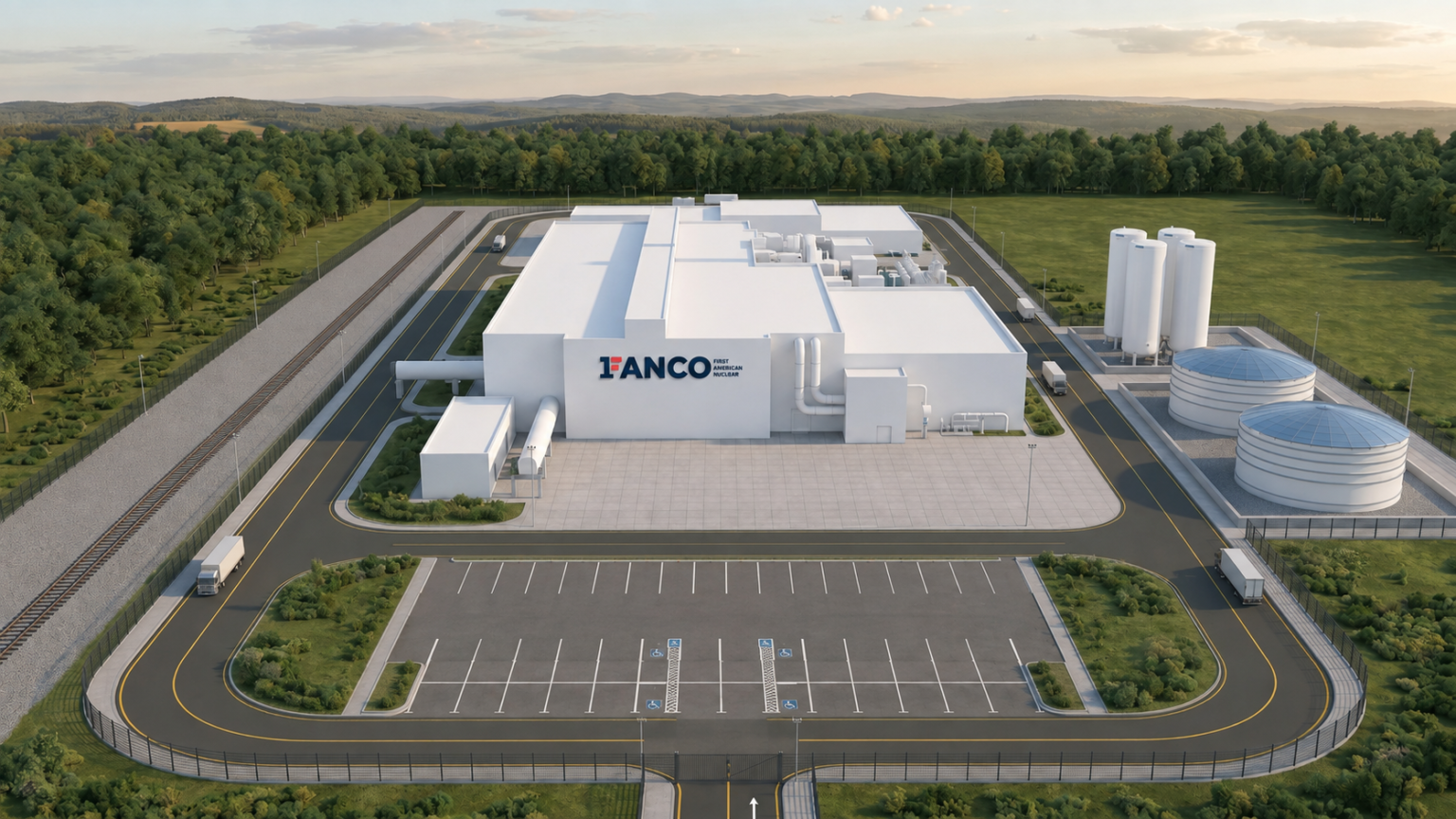
First American Nuclear Company's Regulatory Engagement Plan for Proposed HALEU Fuel Facility Accepted for Docketing by NRC
First American Nuclear Co. (FANCO) announced on August 17 that its regulatory engagement plan for the proposed Class II high-assay low-enriched uranium (HALEU) conversion and fuel fabrication facility has been accepted for docketing by the U.S. Nuclear Regulatory Commission (NRC). The facility will serve the company's EAGL-1 small modular reactor project currently under development. According to the company's disclosure, the NRC ADAMS accession number for the letter of intent is ML26222A181, and the NRC ADAMS accession number for the regulatory engagement plan is ML26222A177. This submission advances the pre-application regulatory engagement between FANCO and the NRC regarding the proposed ceramic fuel fabrication facility. The facility is planned to support the EAGL-1 lead-bismuth...
2026-08-18
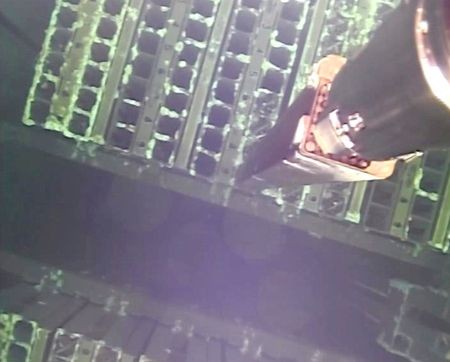
Removal of Highly Radioactive Spent Fuel Begins at Unit 2 of Fukushima Daiichi Nuclear Power Station
Tokyo Electric Power Company Holdings (TEPCO) said on August 17 that it has begun removing spent fuel assemblies with high radiation levels from the spent fuel pool of Unit 2 at the Fukushima Daiichi Nuclear Power Station in northeastern Japan, the site of a severe nuclear accident. Last month, TEPCO removed 28 unused nuclear fuel assemblies from the Unit 2 spent fuel pool. Compared with spent fuel, these unused fuel assemblies pose relatively lower risks. The company plans to complete the removal of spent fuel from Unit 2 by the end of fiscal year 2028. To date, the Unit 2 spent fuel pool contains a total of 587 spent fuel assemblies, of which TEPCO has completed the removal of...
2026-08-18
Multiple regions in Japan demand nuclear power operators strengthen safety management and information disclosure
On August 17, Keisuke Yokoo, the new chairman of Tokyo Electric Power Company (TEPCO), visited the Niigata Prefectural Government and met with Niigata Governor Hideyo Hanazumi. Yokoo assumed his post in June, becoming the first chairman of TEPCO to come from a financial institution. The meeting is seen as an arrangement for the new TEPCO management, following its official launch, to communicate with local governments on nuclear safety and trust rebuilding. Yokoo stated that, as the party responsible for the Fukushima Daiichi nuclear accident, TEPCO will always bear in mind that there is no end to safety and will continuously improve the safety level of its nuclear power plants. He also expressed his commitment to ensuring the safe operation of the Kashiwazaki-Kariwa Nuclear Power Plant. Hanazumi said at the meeting...
2026-08-18
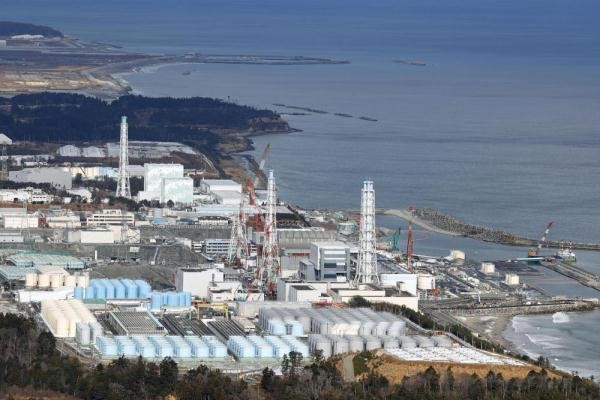
Fire alarm triggered for fifth time at Fukushima Daiichi Nuclear Power Station in August; no fire confirmed on site
At 7:14 a.m. on August 18, a fire alarm was triggered on the first basement floor of the turbine building of Unit 5 at the Fukushima Daiichi Nuclear Power Station. Tokyo Electric Power Company (TEPCO) stated that after fire department personnel arrived and conducted inspections, no fire was confirmed on site at 7:55 a.m. Readings from radiation monitoring stations around the plant showed no significant fluctuations. This was the fifth time a fire alarm had been triggered at the Fukushima Daiichi Nuclear Power Station since the beginning of August. Previously, related alarms had occurred on August 8 at the maintenance building for Units 5 and 6, on August 12 at the emergency diesel generator room for the high-pressure core spray system of Unit 6, on August 13 at the main administration building, and on August 15 at the southwest stairwell of the turbine building of Unit 5. After each of the above alarms was triggered, the fire department confirmed that no fire had occurred...
2026-08-18
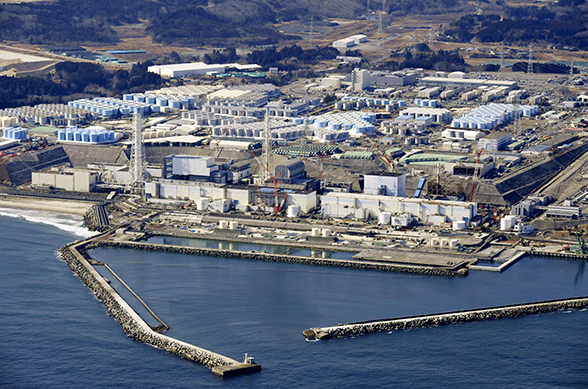
22nd Round of Fukushima Daiichi Nuclear Power Station ALPS Treated Water Discharge Completed
Tokyo Electric Power Company (TEPCO) stated on August 17 that the 22nd round of ALPS treated water discharge from the Fukushima Daiichi Nuclear Power Station had been completed by the afternoon of the same day (local time). This round of discharge began on July 30, with a total of 7,888 tonnes of ALPS treated water released. According to information released by TEPCO, the total amount of radioactive tritium contained in the water discharged in this round was approximately 1.3 trillion becquerels. This is the 4th round of ALPS treated water discharge from the Fukushima Daiichi Nuclear Power Station in Japan's fiscal year 2026. Japan began discharging ALPS treated water from the Fukushima Daiichi Nuclear Power Station in August 2023. To date, 22 rounds of discharge have been carried out, with a cumulative discharge volume of approximately 173,000 tonnes...
2026-08-18
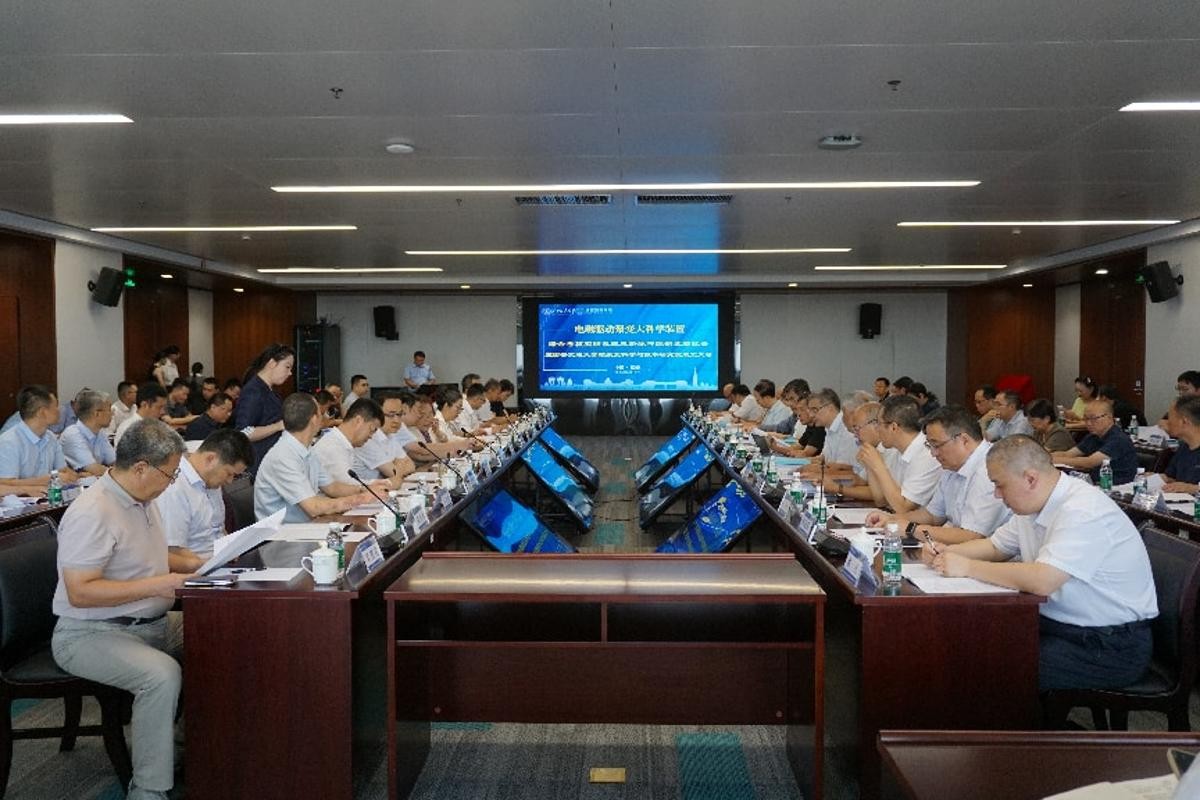
Single-Channel Pulse Source of Electromagnetic-Driven Fusion Large Scientific Facility Passes Acceptance
On August 16, the test and acceptance meeting for the single-channel pulse source of the comprehensive assessment experimental system of the electromagnetic-driven fusion large scientific facility, along with the inauguration ceremony of the Institute of Nuclear Fusion Science and Technology at Xi'an Jiaotong University, was held at the China Western Science and Technology Innovation Harbor. During the meeting, the single-channel pulse source of the comprehensive assessment experimental system passed testing and acceptance, and the Institute of Nuclear Fusion Science and Technology at Xi'an Jiaotong University was officially inaugurated. Before the meeting, attending experts and guests inspected the single-channel pulse source experimental system. During the acceptance session, the project team presented the overall status of the electromagnetic-driven fusion large scientific facility, the development progress of the single-channel pulse source, and the test verification results. The expert panel discussed the...
2026-08-18
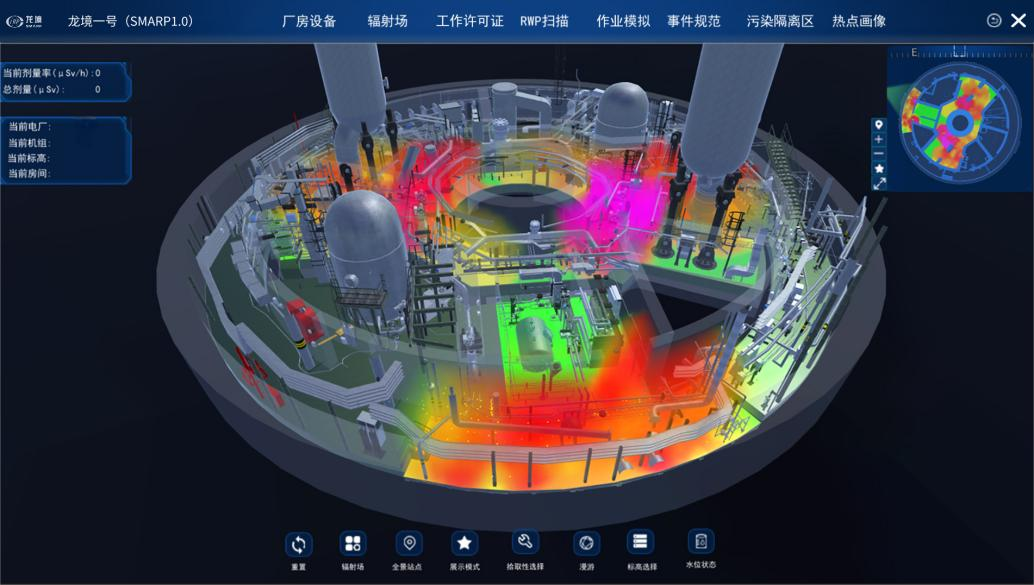
CIRP's "Dragon Realm" Series Advances Digital Upgrade of Radiation Protection for Nuclear Facilities
The Dragon Realm series is a digital radiation protection system product independently developed by CIRP (China Institute for Radiation Protection), refined over more than a decade of accumulation, based on the on-site radiation protection needs of nuclear facilities. It integrates radiation field visualization, real-time monitoring, and intelligent management and control, providing core technical support for the digital transformation of radiation protection in nuclear facilities. Dragon Realm One focuses on "seeing." It recreates the radiation environment of nuclear facilities in three-dimensional digital form, integrating scene roaming and operational simulation to make radiation risks perceivable and tangible, providing an intuitive basis for protection decision-making. Radiation field visualization: establishes a mapping relationship between dose rate and color in the radiation field, achieving 3D visualization of the radiation field. Simulation roaming: supports...
2026-08-18