
Search Results
Keyword:RI

Danzhou in Hainan Advances "Nuclear Power to Yangpu" and "Nuclear Steam to Yangpu" to Support Zero-Carbon Industrial Park Development
On September 2, the series of themed press conferences for the "15th Five-Year Plan" kickoff (fifth session at the city and county level) — the Danzhou special session was held. A relevant official from Danzhou stated that during the "15th Five-Year Plan" period, Danzhou will focus on building a new-type power system, a new-type energy system, and zero-carbon industrial parks and low-carbon city development, promoting deep integration of clean energy with port-adjacent industries, and striving to become a national demonstration area for new-type power systems. According to the released content, during the "15th Five-Year Plan" period, Hainan Power Grid plans to invest 5 billion yuan in Danzhou to build a coordinated "transmission-distribution-microgrid" three-tier power grid. By 2030, Danzhou will fully establish a layered, zoned, and independently operated grid framework, promote "nuclear power to Yangpu" to achieve local consumption of green electricity with full-chain traceability and verifiability, reducing the regional power carbon emission factor across the entire area to below 0.05 kgCO₂/kWh.
2026-09-04
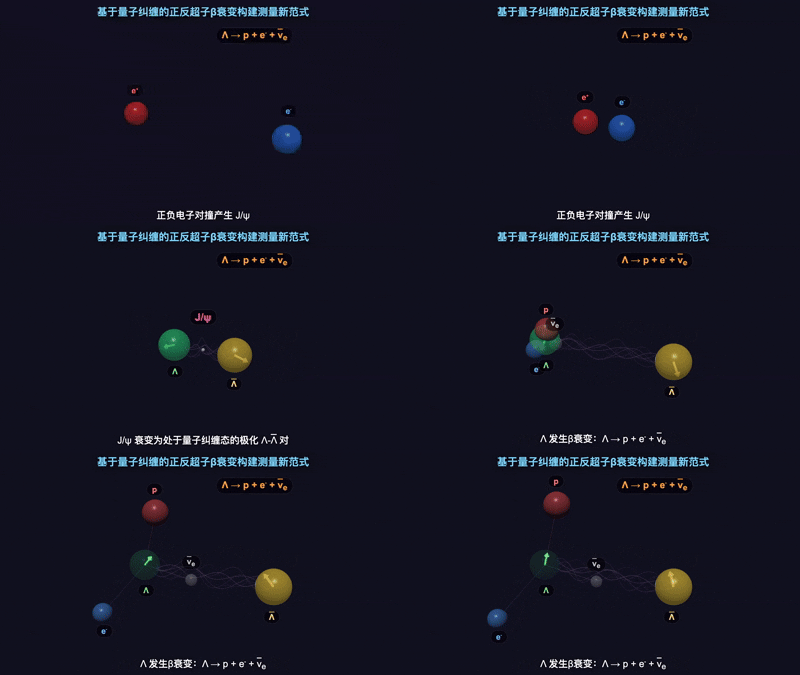
Fudan team extracts CKM matrix element |Vus| via quantum entanglement in collider experiment for the first time
On the evening of September 2, 2026, Beijing time, the team led by Luo Tao from the Institute of Modern Physics at Fudan University, together with collaborators, published a research achievement titled "Exploring baryon semileptonic decays through polarization and entanglement" in Nature. This study, for the first time in a collider experiment, utilized quantum entanglement and polarization information to extract the Cabibbo-Kobayashi-Maskawa (CKM) matrix element |Vus|, providing a new experimental pathway for precisely testing the Standard Model of particle physics. The CKM matrix describes the strength of transitions between different quarks under the weak interaction. Among them, |Vus| corresponds to the transition from the strange quark to the up quark, and its numerical precision is related to the test of the three-generation quark mixing mechanism in the Standard Model. Currently, results for |Vus| obtained from different decay processes still show discrepancies, and the unitarity test of the first row of the CKM matrix also exhibits some tension, necessitating more independent measurement methods for verification.
2026-09-04

Sweden's First New Nuclear Reactor Could Be Operational by Mid-2030s
Sweden's Minister for Energy and Industry, Ebba Busch, who also leads the Christian Democrats (KD), stated at a public hearing on September 3 that the country's first newly built nuclear reactor could be operational by the mid-2030s. When asked when the new nuclear unit could be connected to the grid, Busch indicated the mid-2030s. She also noted that the new nuclear project would not rely on direct state funding. However, the Swedish government has previously prepared a support framework for new nuclear construction. The arrangements could involve financial support amounting to hundreds of billions of Swedish kronor, including loans and electricity price guarantees totaling approximately 400 billion Swedish kronor. Busch stated that this is indeed a substantial sum, but its nature is that of loans and price hedging arrangements targeting critical infrastructure.
2026-09-04
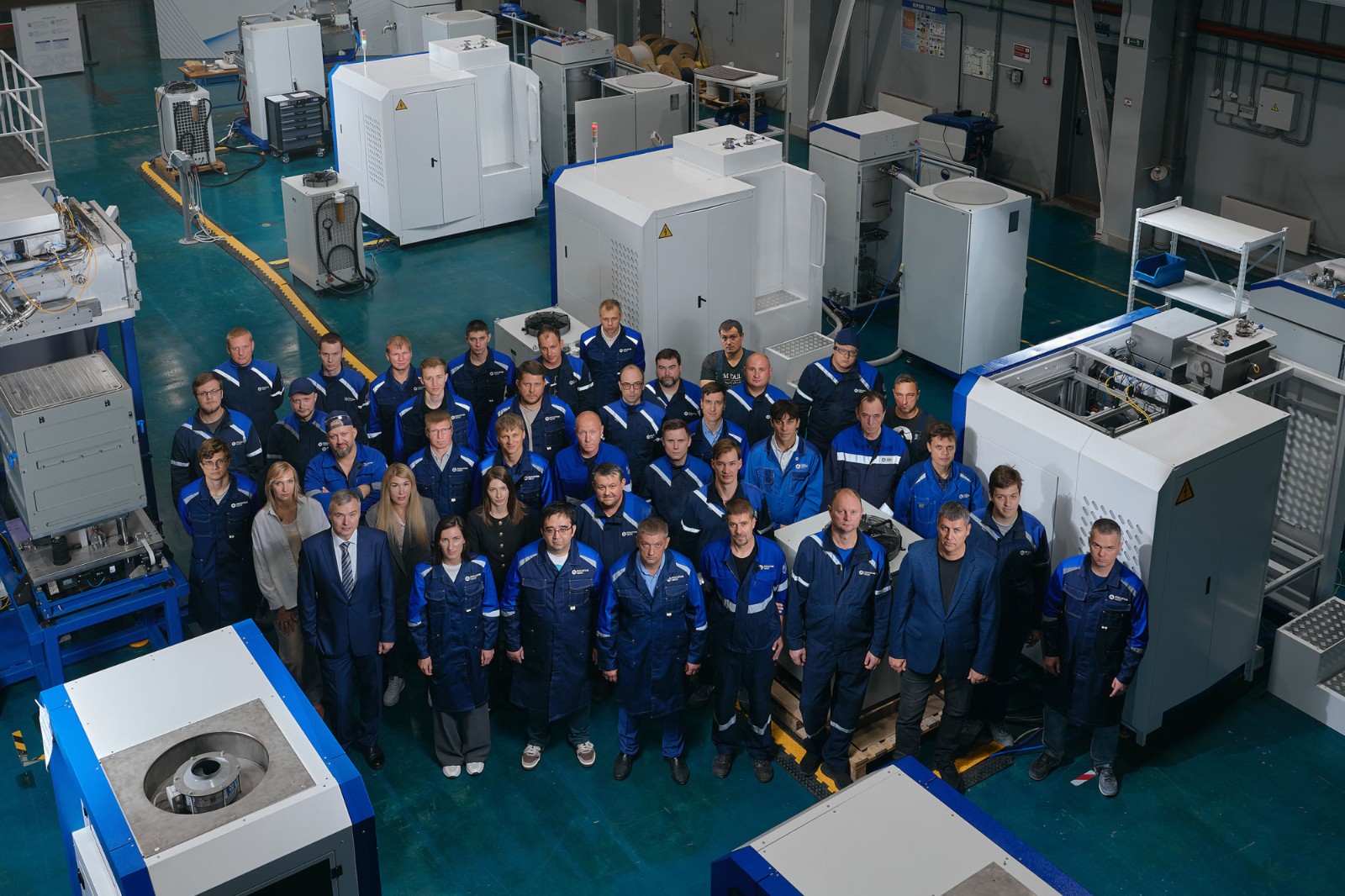
Rosatom Fuel Division Completes Assembly of 30th Industrial Metal 3D Printer
On September 3, 2026, the Moscow Additive Manufacturing Technology Center of Rosatom's Fuel Division completed the assembly of its 30th industrial metal 3D printer. The equipment is the medium-sized RusMelt 300M, a flagship model in Rosatom's metal 3D printer product line. The rollout of the 30th unit coincides with the 30th anniversary of TVEL JSC, the management company of Rosatom's Fuel Division. According to reports, the additive manufacturing technology business unit of Rosatom's Fuel Division currently produces industrial-grade 3D printers capable of meeting manufacturing needs for components of various sizes, utilizing mainstream metal additive manufacturing technologies such as selective laser melting (SLM), direct metal deposition (DMD), and electron beam additive manufacturing (EBAM)...
2026-09-04
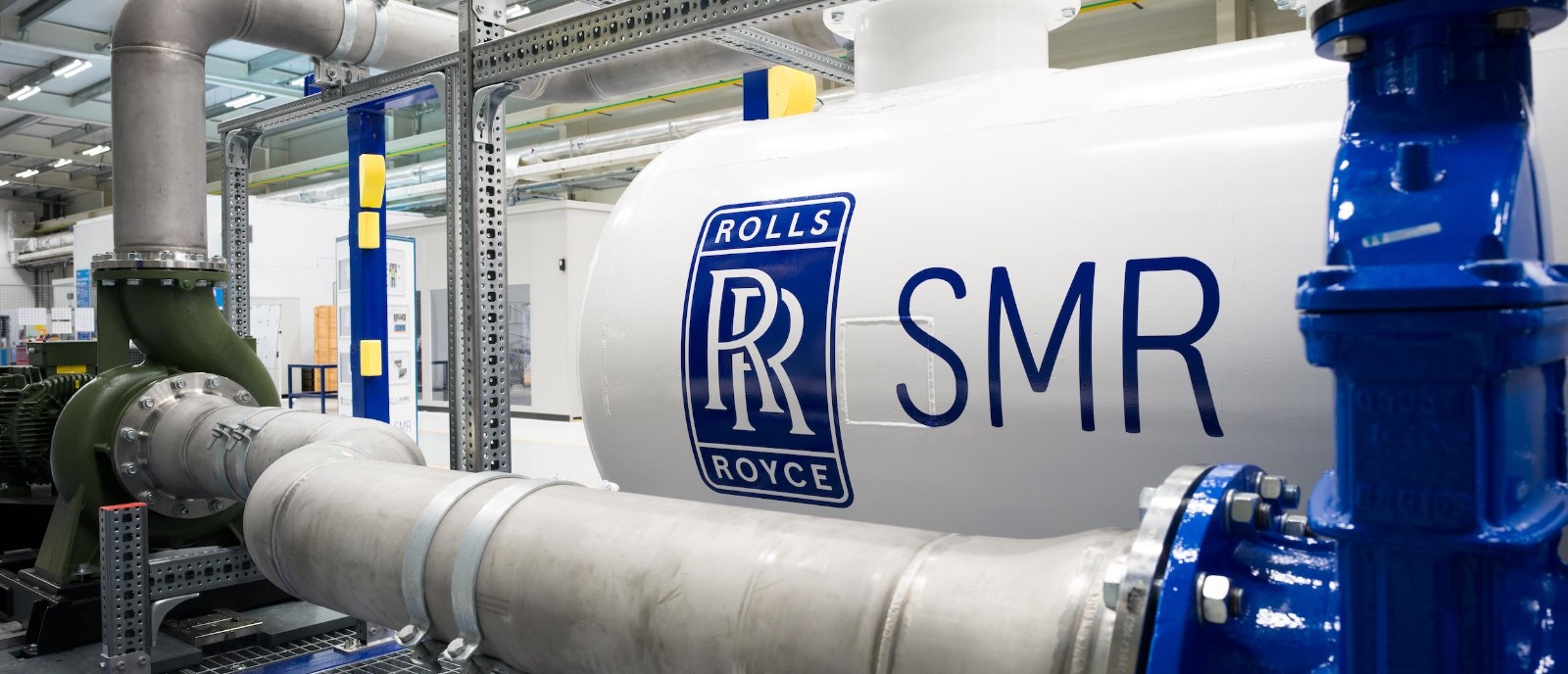
Key steam turbine components for UK Rolls-Royce SMRs to be produced in Newcastle
Key steam turbine components for the first three small modular reactors planned by Rolls-Royce SMR for the Wylfa project on Anglesey, North Wales, will be manufactured in the UK. Siemens Energy's Newcastle facility will undertake the production of components including high-pressure turbines and valve casings. This marks the first time in Europe that such components have been produced domestically for small modular reactors. Under the arrangement, the Siemens Energy Newcastle facility is also planned to become the company's key component service centre for the Rolls-Royce SMR UK project fleet. The facility is located on the historic...
2026-09-04

UK and US Ports and Shipping Organizations Study Nuclear-Powered Container Ship Deployment Across the Atlantic
UK classification society and professional consultancy Lloyd's Register, Danish shipping company Maersk, the Port of Charleston in the United States, and the Port of Felixstowe in the United Kingdom are collaborating on the "Pink Corridor" project to study the safety and security requirements involved in deploying nuclear-powered container ships on transatlantic routes. (Image credit: Lloyd's Register) The project uses a conceptual nuclear-powered container ship as its research subject, focusing on analyzing the port access conditions and regulatory requirements it may face when operating on a commercial route between the Port of Charleston in South Carolina and the Port of Felixstowe in Suffolk, UK.
2026-09-04
South Korea Exports Molten Salt Reactor R&D Technology to Denmark
The Korea Atomic Energy Research Institute (KAERI) announced on September 4 that it has signed a two-year contract worth USD 2.26 million (approximately KRW 3 billion) with Danish nuclear energy company Saltforce to provide molten salt reactor-related R&D services, covering areas such as nuclear fuel manufacturing, molten salt testing, and material corrosion assessment. Molten salt reactors are a class of next-generation reactors that typically use high-temperature molten salt as a fuel carrier or coolant medium. Based on the molten salt chemical system, this type of technology is mainly divided into fluoride-based and chloride-based systems. Under the contract arrangement, KAERI will provide support for the fluoride-based...
2026-09-04
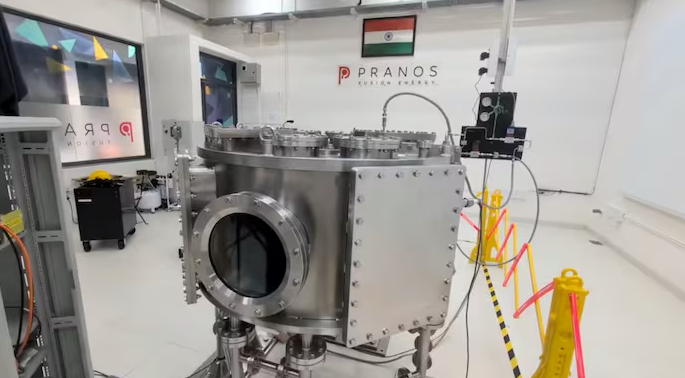
India's Private Fusion Tokamak PRAGYA Achieves Plasma Operation
Bengaluru-based deep-tech energy startup Pranos Fusion has produced plasma in its experimental device PRAGYA. The company states that PRAGYA is India's first compact tokamak developed by a private enterprise, marking a transition in India's private fusion research and development from the design and manufacturing phase to experimental operation. PRAGYA adopts a compact, low-aspect-ratio tokamak design, primarily used to generate, confine, and control plasma. Tokamaks use strong magnetic fields to confine high-temperature plasma within a toroidal vacuum vessel, creating conditions for future fusion of light atomic nuclei. The fundamental process of fusion reactions is the same mechanism by which the Sun releases energy, but engineering implementation still faces multiple challenges in plasma confinement, magnets, materials, and control systems.
2026-09-04

Russia's Primorsky Krai Nuclear Power Plant Planned to Connect to Grid by 2031
Rosatom plans to connect the Primorsky Krai Nuclear Power Plant to the power grid by 2031. The company's CEO, Alexey Likhachev, stated on September 3 during the Eastern Economic Forum that the project is progressing according to established targets. Likhachev said Rosatom is working to ensure the first concrete pour for the plant's first unit is completed by the end of 2027. Under current plans, the project aims to achieve grid connection and power generation by 2031, with full commercial operation in 2032. He also noted that the Far East region, particularly Primorsky Krai, still lacks sufficient experience in nuclear energy utilization...
2026-09-04
Russia Plans Floating Small Nuclear Power Plant in Yakutia
Andrey Petrov, First Deputy CEO for Nuclear Energy at Rosatom and President of JSC Atomstroyexport, stated that Russia's Ministry of Energy has supported the advancement of a floating small nuclear power plant project in the Republic of Sakha (Yakutia). Speaking at the Eastern Economic Forum, Petrov noted that according to the relevant master plan, the Yakutia small nuclear power plant needs to be completed by 2031. The new option currently under study involves converting the originally planned land-based nuclear power plant into a floating nuclear power plant. He said the floating option offers lower costs and shorter construction timelines, and can meet Yakutia's current electricity demand of approximately 106 MW...
2026-09-04

Hungary's Paks II Nuclear Project May Require Major Adjustments
According to sources familiar with Hungary's nuclear industry and discussions on the Paks II nuclear project, the new Hungarian government led by Peter Magyar believes that the Paks II project, based on Russia's Rosatom design, can only proceed if major adjustments are made. Sources said that due to factors such as ethics, technology, sanctions restrictions, licensing procedures, and existing contract terms, the Paks II project is difficult to continue under its original arrangement. However, industry insiders also believe that it would not be appropriate to abandon the project outright due to short-term sentiment or temporary setbacks. If more participants could be brought in,...
2026-09-04
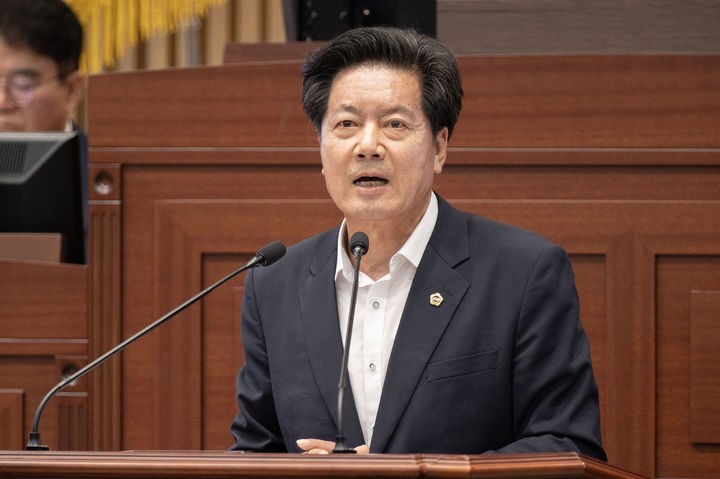
Gyeongsangbuk-do lawmakers demand stronger nuclear power plant accident notification and oversight
On September 3, Gyeongsangbuk-do lawmaker Kim Jae-jun spoke at the 365th provisional session of the Gyeongsangbuk-do Council, criticizing the delayed notification and inadequate response to the recent boric acid solution leak at Unit 6 of the Hanul Nuclear Power Plant, and calling for stronger resident safety protection mechanisms in areas with concentrated nuclear power plants. Kim stated that on August 3, a boric acid solution containing radioactive materials leaked from Unit 6 of the Hanul Nuclear Power Plant during spent fuel transfer, but local residents were not informed of the incident until approximately three weeks after it occurred. He argued that Korea Hydro & Nuclear Power (KHNP) failed to disclose information about the incident promptly and transparently, undermining residents' trust in nuclear safety management...
2026-09-04
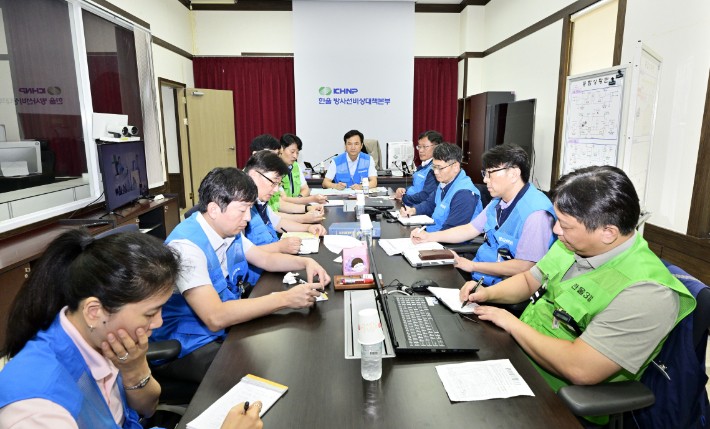
Radiation Emergency Drill Conducted at Unit 6 of South Korea's Hanul Nuclear Power Plant
Korea Hydro & Nuclear Power (KHNP) recently conducted a comprehensive radiation disaster prevention drill at Unit 6 of its Hanul Nuclear Power Plant to test the emergency response system and on-site handling capabilities under radiation emergency conditions. According to the Hanul Nuclear Power Plant, the drill was held on September 3, organized in accordance with the evaluation guidelines established by the Korea Institute of Nuclear Safety (KINS) and based on the National Radiation Emergency Plan. The drill scenario was not disclosed in advance, and the evaluation methods were also adjusted, with a focus on verifying the unit's response capabilities under actual emergency scenarios. During the drill, all emergency personnel of Unit 6 at Hanul Nuclear Power Plant participated in the response. The scenario simulated a casualty incident occurring within the controlled area, with medical rescue operations organized, and a 3.2 MW mobile generator was used to inspect the operational capability of emergency facilities.
2026-09-04

Israel's Quantum X Labs Claims Efficient Geometric Encoding for Complex Nuclear Environments
Quantum X Labs Inc. of Israel announced on September 3 that it has achieved a key milestone in its nuclear quantum business: the company has developed a new method to more efficiently encode complex spatial geometries into quantum transport frameworks. The company stated that the new method can be used to simulate the trajectories of particles moving through complex material boundaries and heterogeneous structures, providing a new technical pathway for representing more complex physical systems within quantum computing frameworks. Such capabilities are closely related to simulation needs in practical nuclear-related scenarios such as nuclear power plants, medical devices, and space exploration. In photon and particle transport simulations, real-world systems often contain complex boundaries,...
2026-09-04

BWXT Selected for Conceptual Design of First Module of U.S. NNSA Lithium Processing Facility
BWX Technologies, Inc. (BWXT) has announced that it has been awarded a contract by the U.S. Department of Energy's National Nuclear Security Administration (DOE/NNSA) to perform conceptual design work for the first module of a new lithium processing facility planned for the Y-12 National Security Complex. According to available information, lithium post-processing operations are currently still being conducted in some aging facilities. To continue supporting missions such as direct reuse of lithium materials, purification, component production, and recycling, NNSA plans to modernize related facilities to meet its national security mission requirements. Heatherly Dukes, President of BWXT Technical Services Group, stated that this project represents a significant investment in the modernization of U.S. nuclear security infrastructure, aimed at...
2026-09-04