
Search Results
Keyword:RI
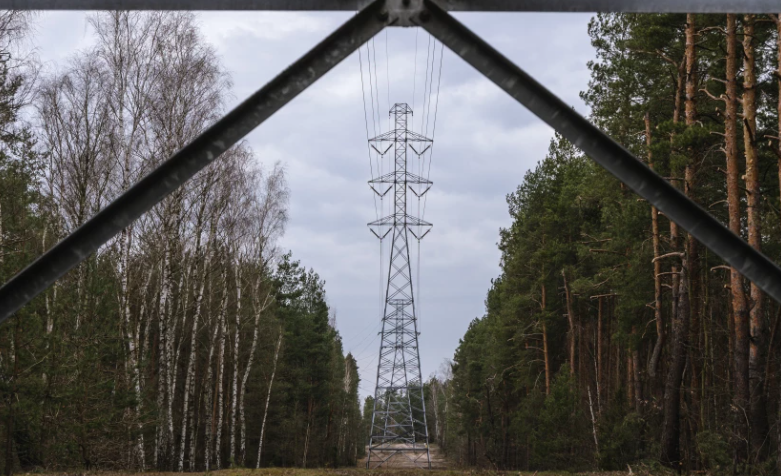
Polish cable manufacturer FPE secures PSE framework contract to support national grid infrastructure for nuclear power
Energy Cable Factory (FPE) in Będzin has signed a framework agreement with Polish Power Grid Company (PSE) for the supply of cables used in the construction and upgrade of high-voltage transmission lines. The contract is valued at PLN 362.1 million net, equivalent to PLN 445.4 million gross. Under the agreement, FPE plans to expand the production capacity of its Będzin plant. This cooperation is not merely a commercial contract but also a vote of confidence in and recognition of Poland's industrial capabilities, proving its ability to undertake the modernization of national strategic infrastructure. The company emphasizes that it can deliver not only cables but also ensure the secure transmission of tomorrow's energy. The agreement covers the supply of phase conductors from 2026 to 2031, with a total length of...
2026-07-31
German state of Lower Saxony approves production of Russian-designed VVER nuclear fuel at Lingen plant under additional strict conditions
The government of Lower Saxony in northwestern Germany has approved a nuclear project linked to Russia's state nuclear corporation Rosatom. The project, operated by French company Framatome, aims to produce Russian-designed nuclear fuel rods and fuel assemblies in the city of Lingen, with key components to be supplied by Rosatom's subsidiary TVEL. Nevertheless, to address potential security risks, particularly threats of espionage and sabotage from Russian participants, the approval was granted with strict conditions. Under the terms of the approval, employees of Rosatom and TVEL will be barred from entering the facility, except in exceptional circumstances and when accompanied by nuclear regulatory authorities. Additionally, all...
2026-07-31
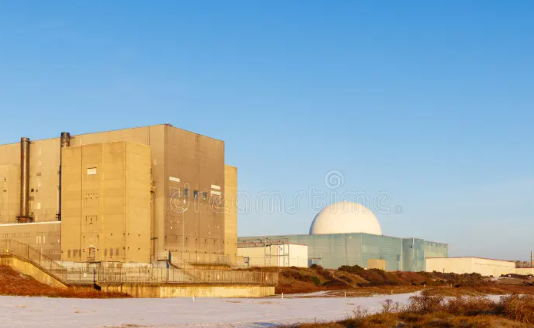
UK's largest nuclear power station Sizewell B placed on standby due to nearby wildfire
On July 30, the UK's largest nuclear power station, Sizewell B, was placed on "standby" status due to a heathland fire at Dunwich Heath, less than 5 kilometers from the plant site. There is currently no risk of the fire spreading toward the facility given wind direction. EDF stated it is "continuously monitoring, with no threat to facility safety," but approximately 120 firefighters and 18 fire engines were deployed to tackle the blaze in the Liston area. Suffolk Fire Service assessed the fire as "active and changing," warning it could last two days, with hundreds of homes evacuated. Suffolk Fire Service warned the fire is expected to last two days and described it as an active and evolving situation. Hundreds of properties have been evacuated as firefighters continue to battle the raging forest fire. Experts noted...
2026-07-31
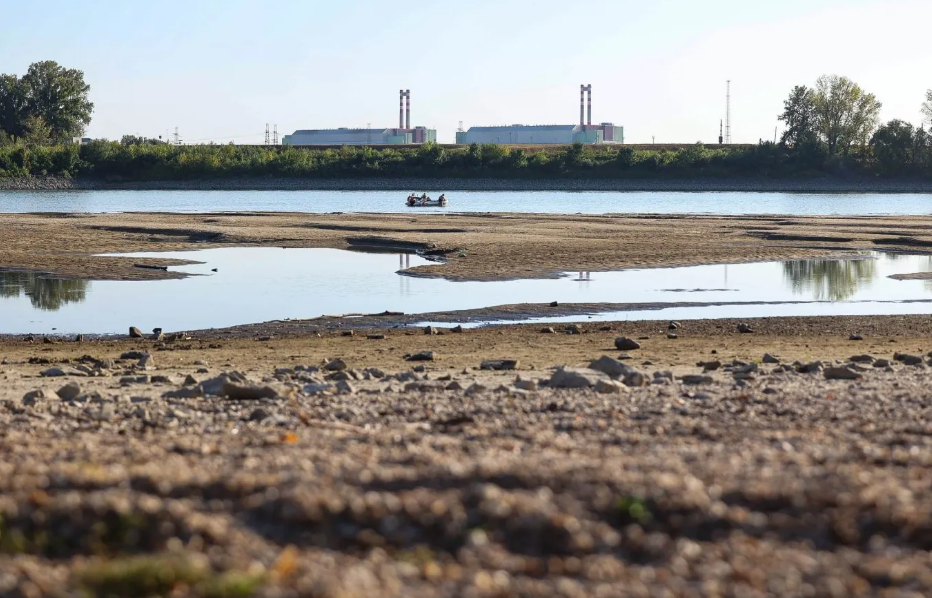
Hungary's Paks Nuclear Power Plant Faces Full Shutdown Due to Record Low Danube Water Level
Affected by persistent drought and high temperatures, the water level of the Danube River at the Budapest section dropped to 23 cm (fixed datum reading, a record low), restricting cooling water intake at the Paks Nuclear Power Plant. Starting Wednesday, July 29, Unit 3 was the first to be shut down; the operator, MVM Paks Nuclear Power Plant Ltd, subsequently stated on its official website that all four units would inevitably be disconnected within the next 24 to 72 hours, with power generation coming to a complete halt. MVM explained that the existing water volume of the Danube is still sufficient to cool the reactors, but the intake pumps can no longer draw water because the riverbed is exposed and the pump inlets are too far from the water surface—an equipment failure rather than an absolute shortfall in cooling water volume. To this end, the Hungarian side deployed 4 pumping barges and 2 floating cranes near the plant as an emergency measure, but with water levels expected to continue falling, a preventive full shutdown remains unavoidable.
2026-07-31
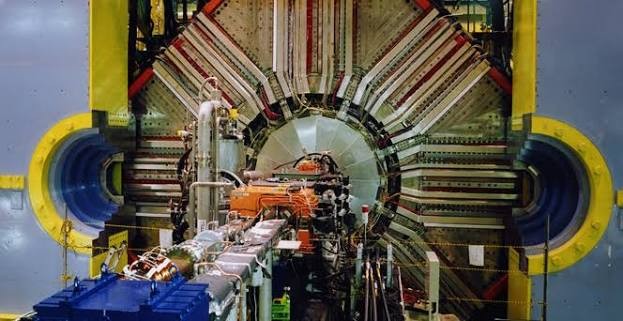
Russian researchers detect anomalous signs in bottomonium states using Belle II experiment data
The Budker Institute of Nuclear Physics of the Siberian Branch of the Russian Academy of Sciences recently announced that Russian researchers have detected anomalous phenomena in the analysis of data from the international Belle II experiment, indicating that the structure of certain excited states of bottomonium may be more complex than predicted by traditional models. Bottomonium is a class of unstable heavy particles composed of a bottom quark and an anti-bottom quark. Yevgeny Kovalenko, a young researcher at the Budker Institute of Nuclear Physics of the Siberian Branch of the Russian Academy of Sciences, stated that analysis of Belle II experiment data suggests that certain excited states of bottomonium may contain lighter quark components. In other words, these particles in specific states may not simply be plain bottom quark–anti-bottom quark combinations.
2026-07-31
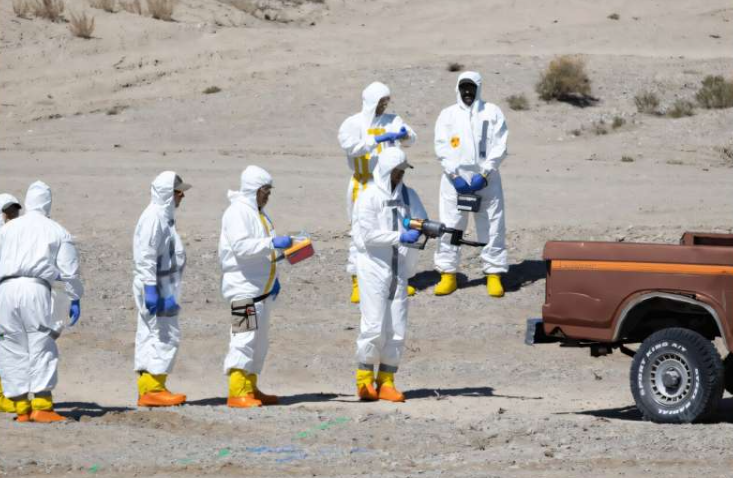
U.S. Idaho National Laboratory (INL) Develops New Vacuum Attachment for Nuclear Fallout Collection
Nuclear nonproliferation researchers at Idaho National Laboratory (INL) have invented a specialized attachment compatible with commercial handheld vacuum cleaners, designed to safely and efficiently collect radioactive fallout generated after a nuclear explosion. The intense heat from a nuclear blast lifts ground debris into the atmosphere, where it melts and cools into radioactive glass beads less than 1 millimeter in diameter that fall back to the ground. In the past, nuclear experts undergoing training could only collect samples using brooms, dustpans, and ordinary household battery-powered vacuum cleaners, making manual containment difficult and posing extremely high radiation exposure risks. The INL team began producing prototypes with a thermoplastic 3D printer in 2017, and after multiple rounds of iteration, has now commissioned a company in American Falls, Idaho, to mass-produce the attachment using industrial-grade 3D printing, significantly improving durability.
2026-07-31

South Korea Confirms Operating Nuclear Power Units Unaffected by Strong Earthquake in Kyushu, Japan
Following the strong earthquake in the Kyushu region of Japan, related aftershock signals have been detected in southern South Korea. The Nuclear Safety and Security Commission (NSSC) of South Korea stated that inspections confirmed all operating nuclear power units within the country remain unaffected. The NSSC noted that after the earthquake, inspections were conducted on all 27 operating nuclear power units, including the Kori Nuclear Power Plant in Busan and the Wolseong Nuclear Power Plant in Gyeongju, with no significant abnormalities or safety issues found. Korea Hydro & Nuclear Power (KHNP) also stated that no reports of damage to nuclear facilities have been received so far. The NSSC will continue to monitor the operational status of nuclear power plants to respond to potential subsequent aftershocks....
2026-07-31
UK Interim Report on Fission Materials Roadmap Highlights New-Generation Nuclear R&D Priorities
The UK National Nuclear Laboratory (UKNNL) and the Henry Royce Institute recently released the "UK Fission Materials Roadmap Interim Report." The report states that the UK needs to clarify as soon as possible the priority technology routes and operating environments for next-generation nuclear reactors, so as to concentrate materials research resources on key directions and support future nuclear power development. The report argues that the UK should decide within the next one to two years whether to build a domestic materials test reactor; within the next five years, the government should also establish a national materials archive to preserve irreplaceable irradiated material samples. The report also recommends making long-term funding commitments of at least five years for relevant research projects...
2026-07-31
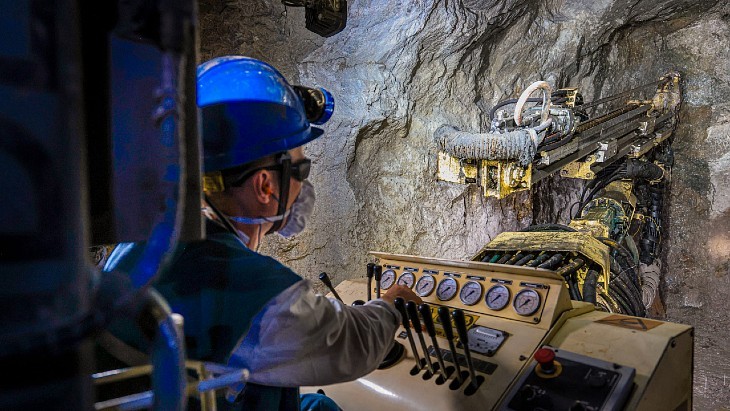
Progress in Russia's Khilonduevskoye Uranium Deposit Development: 3 Kilometers of Mine Workings Completed Ahead of Schedule
The mining division of Russia's Rosatom recently announced that underground mining crews completed three kilometers of mine workings ahead of schedule during the development of the Khilonduevskoye deposit. This milestone, originally planned for completion on August 10, was achieved by a team of workers from the Priargunsky Industrial Mining and Chemical Union (PIMCU), which is part of Rosatom Nedra. According to PIMCU, this mine connection will significantly optimize the ventilation system at the fourth level of the Khilonduevskoye deposit and improve the efficiency of rock block loading, laying the foundation for subsequent development work. The company's CEO, Ivan Kiselev, stated that this connection is of critical importance to the company, as it not only links two sections of the mine but also fundamentally transforms the logistics and safety of fourth-level operations.
2026-07-31

Japan Atomic Industrial Forum Chairman: Overseas SMR Projects Help Sustain Supply Chain, but Japan Still Needs to Build New Nuclear Plants
Hideki Masui, Chairman of the Japan Atomic Industrial Forum (JAIF), stated on May 31 that Japanese companies are playing a significant role in global small modular reactor (SMR) projects through design and equipment supply, but the long-term maintenance and development of Japan's nuclear technology base ultimately requires the construction of new nuclear power plants domestically. At a regular press conference, Masui reviewed international developments in the SMR field. He noted that approximately 30 countries currently use nuclear energy, and about 20 countries are studying the deployment of SMRs in some form. Projects involving Japanese companies include GE Vernova Hitachi Nuclear Energy's BWRX-300 and NuScale Power's VOYGR SMR, whi...
2026-06-06

Rosatom Says Small Nuclear Power Development Requires Regulatory Reform
Rosatom Director General Alexey Likhachev said on July 5 that if Russia hopes to maintain its global leadership in the small nuclear power market, nuclear regulations and standards also need to keep pace with technological changes, particularly by revisiting the licensing and approval process for small nuclear power plants. In an article published in the Rosatom Corporate Newspaper, Likhachev stated that small nuclear power plants are expected to become a significant new form of energy in the coming decades, but their deployment still faces considerable regulatory challenges. Due to the relative novelty of such facilities to regulators, approval approaches tend to be cautious. He believes that accelerating the licensing and construction process while ensuring safety has become a task of national importance.
2026-07-06

Chinese Jinshui River study reveals seasonal variations affect nitrogen removal capacity of forest streams
A new study shows that the capacity of forest streams to remove excess nitrogen varies with the seasons, influenced by different environmental factors in summer and winter respectively. This finding suggests that water quality management in forest watersheds needs to give greater consideration to seasonal differences. Figure 1. Location of study sites along the Jinshui River. (a) Watershed location; (b) Watershed topography and sampling point distribution; (c) Watershed land use types. Researchers focused on the Jinshui River in central China, analyzing water and surface sediment samples from 18 sites along forested riparian zones. The study combined nitrogen-15 isotope tracing, remote sensing monitoring, water and sediment chemical measurements, and microbial-based...
2026-07-31

U.S. Research Team Tracks Main Drivers of Global Methane Rise Using Stable Isotope Analysis
A research team from the U.S. National Oceanic and Atmospheric Administration Global Monitoring Laboratory and the University of Colorado has recently traced the sources of the rapid rise in global atmospheric methane since 2007 through high-precision methane concentration measurements and carbon and hydrogen stable isotope analysis. The findings show that over the past two decades, microbial emissions have been the primary factor driving the increase in methane concentrations, while fossil fuel-related methane emissions may have remained relatively stable overall. A methane molecule consists of one carbon atom and four hydrogen atoms, and methane from different sources differs in its carbon and hydrogen isotope composition. Researchers used this chemical fingerprint to distinguish methane sources: fossil fuel methane such as natural gas typically contains a relatively higher proportion of carbon-13, while methane produced by microbial processes in wetlands, landfills, livestock, and agricultural environments has a lower carbon-13 proportion, exhibiting a "lighter" isotopic signature. The proportion of deuterium in hydrogen isotopes also varies with the way methane is formed, providing a further basis for source identification.
2026-07-31
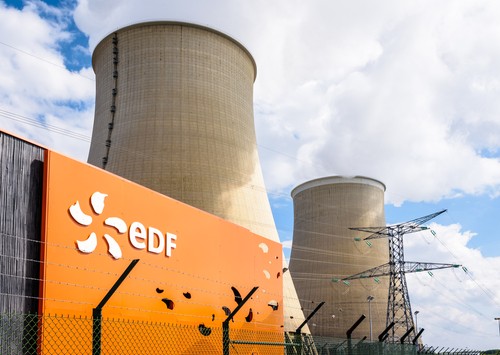
EDF plans to bring in investors for Nuward small modular reactor project by end of 2026
French utility EDF said on July 30 that it plans to bring in investors for its Nuward small modular reactor project by the end of 2026. The company stated that the related financing arrangements will be centered around European customers and industrial partners to support the development of a batch of initial reactors better aligned with user needs. Small modular reactors have not yet entered large-scale commercial production, but multiple companies worldwide are advancing the deployment of related technologies. Supporters believe that compared with traditional large nuclear power units, small modular reactors offer greater flexibility in deployment methods, application scenarios, and low-carbon energy supply. EDF is a state-owned French power company operating 57...
2026-07-31

Masayoshi Son: Nuclear Fusion Could Become Key to Powering Future AI Data Centers
SoftBank Group founder Masayoshi Son said at the SoftBank World annual event in Tokyo on July 14 that as electricity demand from AI data centers continues to rise, nuclear fusion technology is expected to become one of the most realistic power solutions in the near future. Son believes that most of the current electricity demand from data centers will still be met by natural gas, but this landscape could change over the next 15 years. He predicted that by 2040, global data center capacity demand will reach 3 terawatts, with nuclear fusion playing a significant role. He said at the event that fusion will become a major source of a cheaper, cleaner, and safer new form of energy on Earth, and asked rhetorically: Now...
2026-07-15