
Search Results
Keyword:South Korea nuclear power
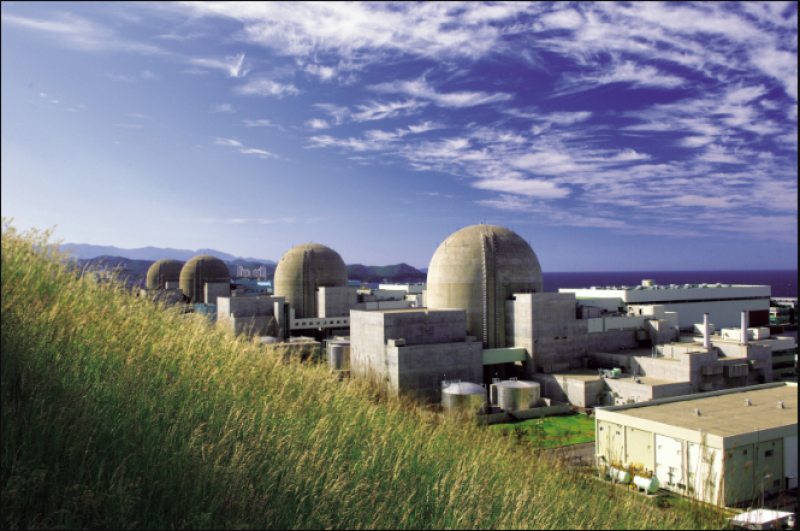
North Gyeongsang Province, South Korea, increases temporary radiation disaster shelters to 96
North Gyeongsang Province announced on August 11 that it has increased the number of temporary radiation disaster shelters from 56 to 96 to enhance resident evacuation and accommodation capabilities in nuclear accident scenarios. The expansion primarily targets the areas surrounding Uljin County, where the Hanul Nuclear Power Plant is located, focusing on addressing the shortage of nearby accommodation capacity and strengthening the reception capability for evacuees in areas related to the Hanul radiation emergency planning zone, including Uljin, Yeongyang, and Bonghwa. Previously, due to limited shelter capacity in Uljin County, approximately 33,000 people were expected to require evacuation in the event of a nuclear accident, while local shelters could only accommodate about 13,000 people. To meet accommodation needs, Uljin County also had to utilize 5 shelters in Gyeongju and 2 in Pohang, with long-distance transfers being unfavorable for rapid evacuation.
2026-08-12
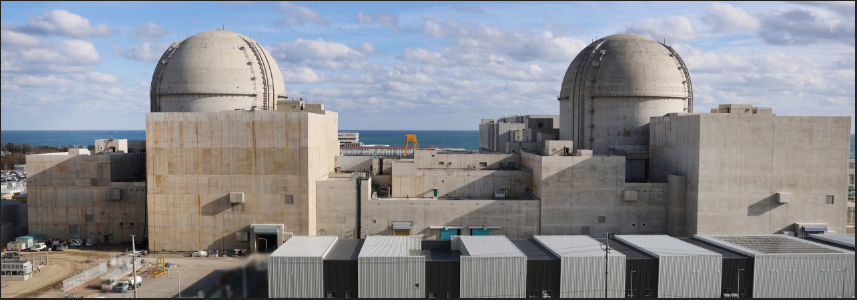
Automatic Reactor Trip at Unit 3 of Shin-Kori Nuclear Power Plant During Commissioning
Unit 3 of the Shin-Kori nuclear power plant in Ulju, Ulsan, South Korea, is undergoing commissioning ahead of its planned commercial operation this year. The Nuclear Safety and Security Commission (NSSC) stated that it had received a report from Korea Hydro & Nuclear Power (KHNP) that the unit's reactor automatically tripped at approximately 20:56 on the 11th. Unit 3 of the Shin-Kori plant received its operating license from the NSSC in December last year and is currently in the power ascension testing phase. KHNP reported that during the commissioning test, when reactor power reached 80%, the unit experienced a loss of power transmission, and the reactor subsequently tripped automatically. The unit has been confirmed to remain in a safe shutdown condition...
2026-08-12

South Korea's Nuclear Energy Paper Output Ranks High but Quality Impact Remains Low
According to the report "Academic Competitiveness Analysis in Five Core and Emerging Technology Fields of the United States" released by the National Research Foundation of Korea on the 12th, from 2016 to 2025, South Korea's paper output in fields such as semiconductors, artificial intelligence, nuclear energy, biotechnology, and quantum information has maintained a certain level of competitiveness overall. Among these, the number of papers in the semiconductor field ranked 4th globally, artificial intelligence and nuclear energy both ranked 7th, biotechnology ranked 8th, and quantum information ranked 14th. The quantitative and qualitative status of South Korea in the five major fields. Excerpted from the National Research Foundation of Korea report. The report is based on analysis of data from SciVal, the research performance analysis platform of Elsevier. In terms of the share of South Korean papers in the global total...
2026-08-12
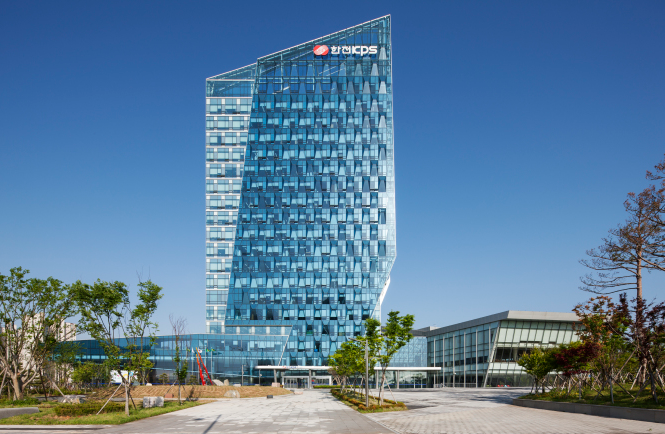
KEPCO KPS Q2 Results Miss Expectations; Nuclear Maintenance Demand Expected to Drive Recovery in H2
KEPCO KPS's Q2 results significantly missed market expectations, mainly due to factors such as extended long-term planned preventive maintenance cycles for nuclear power plants and a reduction in external and overseas variable works. Data shows that the company's preliminary Q2 sales stood at KRW 437.9 billion, down 3.5% year-on-year; operating profit was KRW 43.6 billion, down 33.6% year-on-year, approximately 30.1% below market consensus; net profit attributable to controlling shareholders was KRW 38.3 billion, down 24.8% year-on-year. The operating margin fell to 10.0%, down 4.5 percentage points from the same period last year, indicating pressure on both the revenue side and, to some extent, the cost side. The nuclear maintenance business was one of the key factors dragging down Q2 performance. In Q2...
2026-08-11
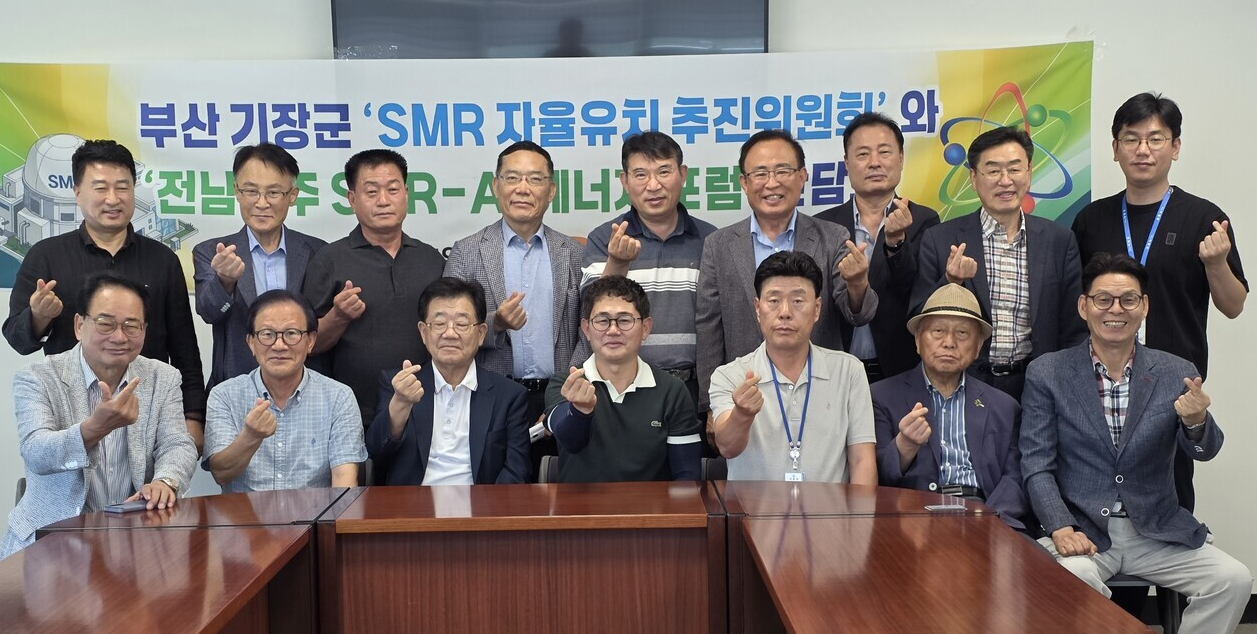
South Korea's Honam Region Visits Busan Gijang for SMR Experience, Seeking New Solutions for Stable Semiconductor Power Supply
South Korea's South Jeolla Province and Gwangju region are paying attention to Small Modular Reactors (SMR) as a potential alternative for semiconductor industry power supply. On August 7, members of the "South Jeolla-Gwangju SMR-AI Energy Forum" visited the Gijang-gun Jangan-eup Gilcheon-ri Village Hall in Busan to hold discussions with the local nuclear safety consultative body, village representatives, the Gori headquarters of Korea Hydro & Nuclear Power, and relevant Gijang-gun departments, focusing on understanding Gijang's autonomous pursuit process and resident communication experience in the siting of the innovative Small Modular Reactor (i-SMR). The direct background of this visit is the potential stable power supply challenge that the semiconductor industry in the Honam region may face in the future. Semiconductor manufacturing relies heavily on continuous, reliable large-scale...
2026-08-11
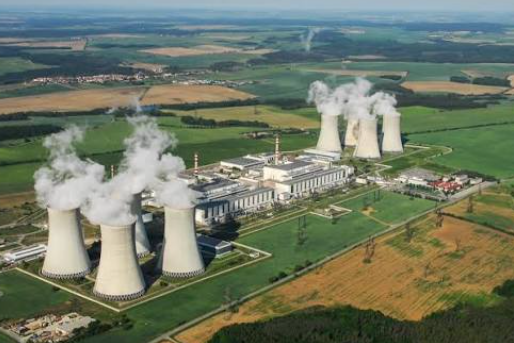
South Korean Environmental Groups to Hold Nuclear Safety Seminar, Focusing on SMR Regulatory Independence and Institutional Gaps
The Korean Federation for Environmental Movement recently announced that it will hold a session of the Continuous Nuclear Safety Seminar Series, under the safety regulation domain, at 10:00 a.m. on August 21, 2026, in Conference Room 8 of the National Assembly Members' Office Building, under the theme "Moving Beyond Promotion-Centered Nuclear Policy Toward an Independent Safety Regulatory System." The event is hosted by National Assembly member Lee Ju-hee and co-organized by the Citizens' Institute for Environmental Studies and the Korean Federation for Environmental Movement, aiming to discuss structural issues in South Korea's nuclear safety regulatory system. According to available information, the South Korean government is accelerating the research and development, industrial support, and commercialization of small modular reactors (SMRs), with the i-SMR standard design approval application already accepted and the Special Act on SMR Development Promotion scheduled to take effect in September.
2026-08-11
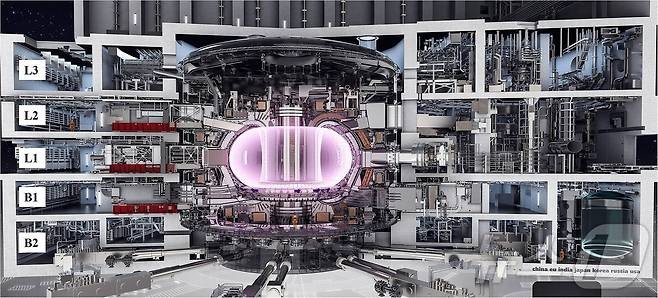
Korea's Naju Artificial Sun Research Facility Expected to Receive Preliminary Feasibility Study Results in September
The project to build the Naju Artificial Sun research facility in Korea is expected to receive the results of the national preliminary feasibility study in September. With a total investment of approximately 1.2 trillion KRW, the project plans to construct large-scale nuclear fusion research and demonstration infrastructure in Wangok-myeon, Naju City, South Jeolla Province, and is regarded by local governments as a key pillar in the future industrial layout of the South Jeolla–Gwangju Integrated Special Zone. The Ministry of Science and ICT (MSIT) designated the "Nuclear Fusion Core Technology Development and Strategic Infrastructure Construction Project" as a national R&D project and included it in the preliminary feasibility study on January 30. According to the previous schedule, the evaluation period was approximately seven months. The results were originally expected to be announced in August, but...
2026-08-11
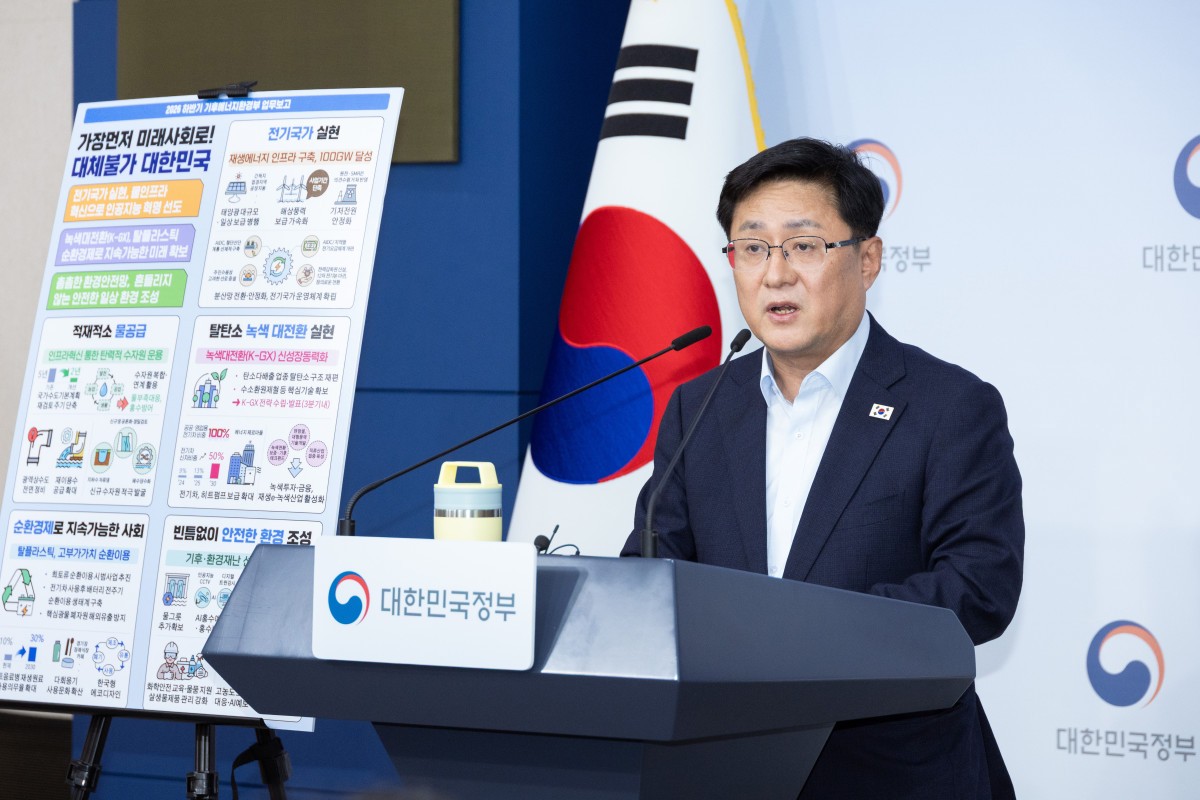
South Korea's semiconductor cluster adds about 21 GW of new power demand; government to study whether to build new nuclear units
South Korea's Minister of Climate, Energy and Environment, Kim Sung-hwan, said on the 10th that the new electricity demand from the Yongin—Hoseon semiconductor industry cluster is approximately 21 GW, equivalent to the power supply capacity of about 15 nuclear units based on an estimate of 1.4 GW per unit. The Ministry of Climate, Energy and Environment plans to seek expert and public opinions before announcing the 12th Basic Plan for Electricity Supply and Demand in October, and will decide accordingly whether to push for the construction of new nuclear units. Kim Sung-hwan stated that the electricity demand of the semiconductor industry has increased significantly compared to the past. The South Korean government has decided to raise renewable energy capacity from 78 GW to 100 GW by 2030, but whether the increase in renewable energy alone can meet the new demand still requires further assessment.
2026-08-11
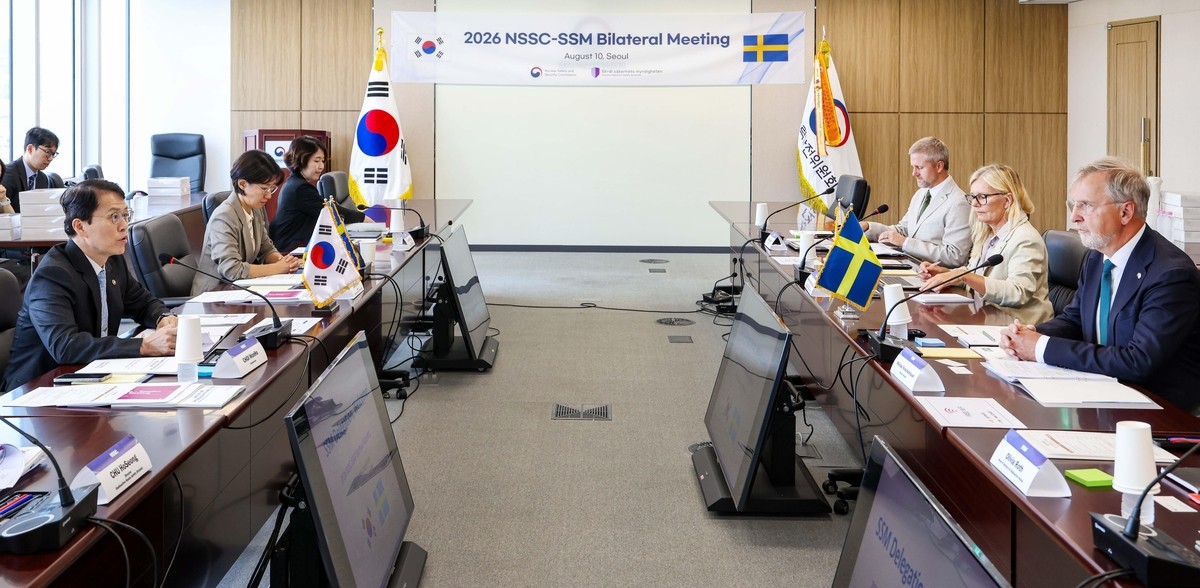
South Korea and Sweden Discuss Cooperation on High-Level Waste Disposal and SMR Regulation
The Nuclear Safety and Security Commission (NSSC) of South Korea announced on August 10 that it held a bilateral meeting with the Swedish Radiation Safety Authority (SSM) in Seoul, during which the two sides exchanged views on topics including high-level radioactive waste management, nuclear safety regulation, and the development of small modular reactors (SMRs). Sweden has accumulated strong technical expertise in the field of radioactive waste management and has developed a relatively mature technical system for high-level radioactive waste disposal. Currently, Sweden has 6 operating nuclear power units and 7 permanently shut down units, 6 of which are in the decommissioning phase. Following Finland, Sweden is constructing the world's second deep geological disposal facility for high-level radioactive waste. The NSSC of South Korea...
2026-08-10
Woori Technology Signs VMI Agreement with Korea Hydro & Nuclear Power for Nuclear Power Plant Components
Woori Technology announced on the 10th that it has signed a Vendor Managed Inventory (VMI) agreement with Korea Hydro & Nuclear Power (KHNP). Under the agreement, Woori Technology plans to supply certain components for nuclear power plant control and instrumentation as early as next month. Vendor Managed Inventory is an inventory management model in which a supplier pre-stocks critical components based on customer demand forecasts and delivers them quickly upon customer request. The customer pays the corresponding procurement costs only after the components are put into use. This agreement primarily covers long-term inventory management and supply arrangements for components related to nuclear power plant control and instrumentation systems supplied by Woori Technology...
2026-08-10
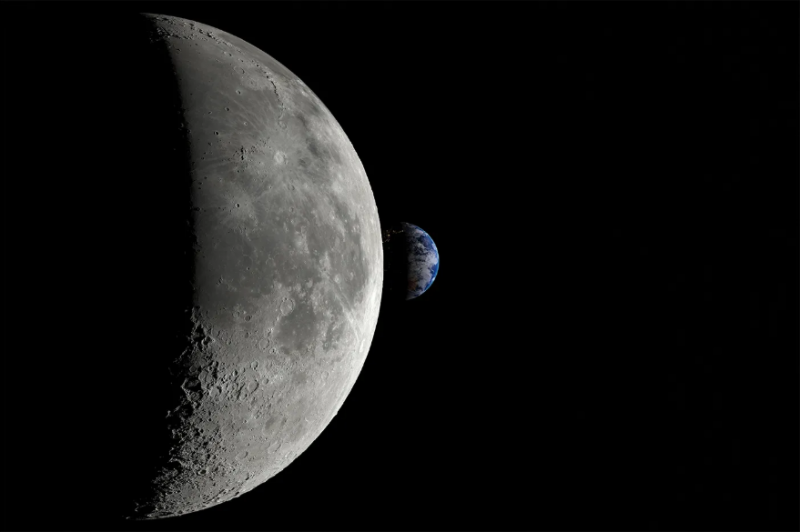
South Korea Advances K-Moonshot Initiative, Nuclear Fusion and SMR Spacecraft Listed as Key Missions
The South Korean government is accelerating the K-Moonshot initiative, seeking to tackle critical technologies that are difficult to break through via traditional research pathways through a national-level R&D organizational approach. Among these, nuclear fusion and small modular reactor (SMR) spacecraft have been included in 12 key missions, alongside new drug development, quantum technology, and artificial intelligence, all under the government's coordinated promotion. On August 10, Vice Minister Goo Hyuk-chae of the Ministry of Science and ICT (MSIT) met with the heads of the 12 mission projects and representatives of related institutions at the K-Moonshot Project Support Office in Sejong City to discuss next-stage implementation arrangements. The meeting focused on detailing...
2026-08-10
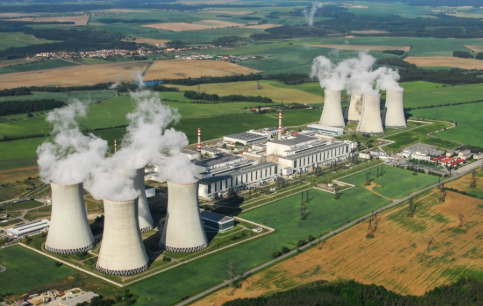
South Korea Designates SMR as National Strategic Technology, Tax Incentives to Drive New Investment in Nuclear Supply Chain
The South Korean government's inclusion of Small Modular Reactors (SMR) in its national strategic technology support scope signals that its energy and industrial policies are extending from traditional large-scale nuclear power plants to next-generation nuclear technologies. SMRs feature modular manufacturing, relatively shorter construction periods, and higher site flexibility, making them a key direction for South Korea in balancing energy security, low-carbon transition, and advanced manufacturing upgrades. This policy has gained support from South Korea's nuclear industry, with the key being that national strategic technology status typically entails tax credits and other incentives for corporate R&D, equipment investment, and related capital expenditures. For companies involved in nuclear equipment, castings and forgings, control systems, engineering design, and fuel-related businesses...
2026-08-10
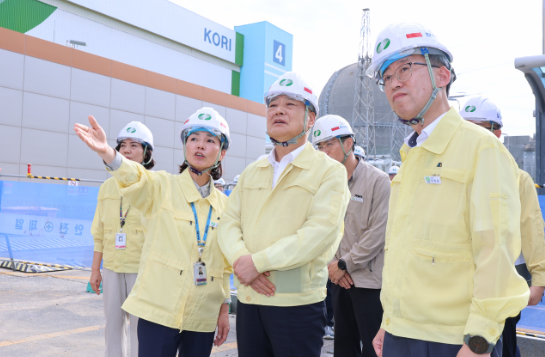
KHNP President Visits Kori Nuclear Power Plant, Pledges Stable Power Supply
Amid sustained heat waves driving up electricity demand, Kim Hoi-cheon, President of Korea Hydro & Nuclear Power (KHNP), recently conducted an on-site inspection at the Kori Nuclear Power Plant headquarters, focusing on the operational status of power generation facilities and frontline working conditions under high-temperature environments. The visit came as the South Korean government issued extreme heat warnings and strengthened its response posture, reflecting heightened attention to the stability of nuclear power as a baseload source in summer electricity supply. According to KHNP, Kim inspected work areas at the Kori plant that are vulnerable to high temperatures, reviewing employee health conditions, working environments, and the implementation of heat prevention and cooling measures. He also examined the operation of...
2026-08-10
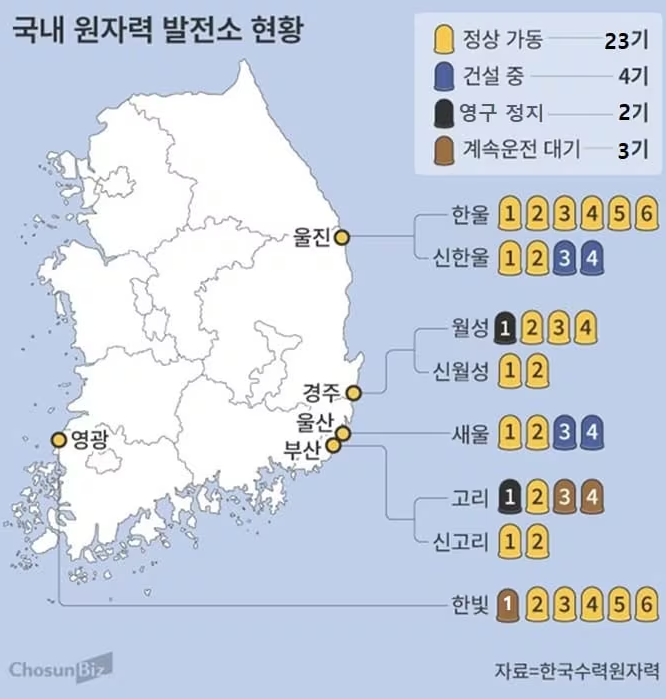
Sea Temperature Approaching Shutdown Threshold, Nuclear Power Belt on South Korea's East Coast Faces Load Reduction Pressure
Climate change is pushing nuclear power plants on South Korea's east coast toward new operational boundaries. South Korean nuclear plants generally rely on seawater as cooling water; after the heat generated by the reactor drives the turbine, seawater is needed to condense the steam back into water. Once the intake water temperature approaches or exceeds the design seawater temperature set by the equipment, heat exchange efficiency declines, affecting the heat dissipation capacity of key safety systems, and the plant must reduce load or even shut down in accordance with safety regulations. The area currently at greatest risk is around Uljin in North Gyeongsang Province. Data from the National Institute of Fisheries Science shows that nearshore surface seawater temperatures along parts of the east coast have approached 30°C, with multiple observation points near Uljin recording approximately 29.6°C to 30.2°C on the afternoon of August 7.
2026-08-10
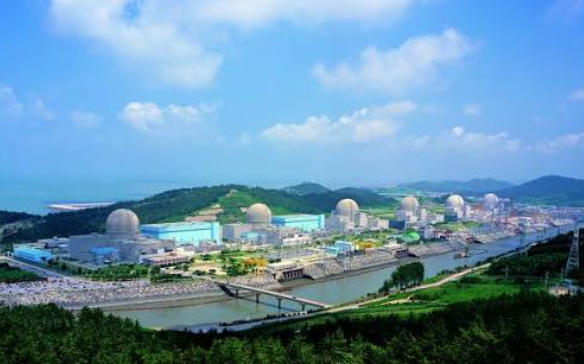
South Korea Plans to Upgrade National Radiation Monitoring System to Address Impacts of Overseas Nuclear Facility Accidents
South Korea's Nuclear Safety and Security Commission is pushing to strengthen the national radiation monitoring system, bringing radioactive contamination of the domestic environment caused by potential overseas nuclear facility accidents into institutionalized regulatory scope. According to partial amendments to the Enforcement Decree and Enforcement Rules of the Atomic Energy Safety Act pre-announced on August 7, South Korea will incorporate radioactive contamination surveys into existing radiation environment surveys and environmental radioactivity monitoring and evaluation operations, entrusting the Korea Institute of Nuclear Safety with the execution of related survey work. This institutional adjustment is a supporting measure following South Korea's revision of the Atomic Energy Safety Act in February this year, with the relevant law set to take effect on February 20, 2027. The core of the amendment lies in that when overseas...
2026-08-09