
Search Results
Keyword:UE

TRISO-X and Oak Ridge National Laboratory Extend Advanced Nuclear Fuel R&D Collaboration
TRISO-X announced on August 11 that it has extended its Collaborative Research and Development Agreement with the U.S. Department of Energy's Oak Ridge National Laboratory (ORNL). The newly signed agreement has a term of 30 months and will continue to advance commercial-scale development of TRISO fuel, manufacturing process optimization, and technology transfer, building on the collaboration established since 2016. TRISO-X is a wholly-owned subsidiary of X-energy, primarily engaged in advanced nuclear fuel manufacturing. Under the agreement, TRISO-X will continue to operate its existing pilot-scale facilities at Oak Ridge National Laboratory, with a focus on transitioning TRISO fuel from laboratory R&D to commercial-scale manufacturing. The collaboration includes optimizing fuel...
2026-08-12

Chinese Team Proposes "Toxic Blood Meal" Pre-Treatment Approach to Boost Sterile Insect Technique for Mosquitoes
Chinese researchers have recently proposed a novel sex-sorting approach for the Sterile Insect Technique (SIT) in mosquitoes: adding a specific agent to the blood meal ingested by female mosquitoes, leveraging the biological difference that female mosquitoes feed on blood while males do not, to substantially reduce the number of females before release. The study was published in the June issue of the Journal of Medical Entomology. The Sterile Insect Technique is a pest population control method centered on radiation-induced sterility. Its basic process involves mass-rearing male target insects in the laboratory, sterilizing them through radiation exposure to render them reproductively incapable, and then releasing them into the field, where they mate with wild females to produce non-viable eggs, thereby suppressing target population growth. This technique has been incorporated into integrated pest management systems and is regarded as a relatively environmentally friendly pest control approach.
2026-08-12

Texas to Accelerate Opening of Sterile Fly Facility to Combat New World Screwworm Outbreak
The U.S. Department of Agriculture announced that, in response to the New World screwworm (NWS) outbreak already detected in Texas and New Mexico, the sterile fly facility at Moore Air Base in Edinburg, Texas, will open early next spring, approximately seven months ahead of the original schedule. Construction on the facility began in April of this year, and once completed, it will produce sterile flies to support outbreak control efforts using the Sterile Insect Technique (SIT). Under the plan, the facility will reach full operational capacity by the end of 2028, producing approximately 300 million sterile flies per week. The Sterile Insect Technique works by releasing sterilized flies into the environment to mate with wild screwworms, thereby interrupting the reproductive cycle and reducing the risk of continued parasite spread...
2026-08-12

French city of Illkirch plans to test sterile insect technique to combat tiger mosquitoes
Thibaud Philipps, Mayor of Illkirch-Graffenstaden in France's Bas-Rhin department, hopes to pilot the Sterile Insect Technique (SIT/TIS) locally, sterilizing male tiger mosquitoes through radiation and releasing them regularly to curb population growth. According to local authorities, tiger mosquitoes have been officially established in Illkirch-Graffenstaden since 2019. In recent years, the local tiger mosquito population has continued to increase, significantly impacting residents' daily lives. The municipal government has previously implemented multiple control measures, including launching the "Tiger Team" project in 2024 to educate the public on mosquito prevention and control methods, as well as providing subsidies of up to 50 euros per household for purchasing mosquito traps. To date, approximately 400 households have received relevant traps...
2026-08-12

Korea Fusion Energy Institute Launches Design and Manufacturing of ITER Tritium Storage and Supply Vessels
The Korea Fusion Energy Institute (KFE) announced on August 12 at its headquarters in Daejeon that it has signed a contract with a consortium comprising Iljin Power and Aizen Core to undertake the design and manufacturing of the tritium storage and supply vessels for the International Thermonuclear Experimental Reactor (ITER). ITER is currently the world's largest fusion experimental device, being jointly constructed by seven parties—Korea, the United States, the European Union, Japan, China, Russia, and India—in Cadarache, southern France. Under the procurement agreement signed between KFE and the ITER Organization in March 2025, Korea...
2026-08-12

Brazil's uranium imports from Russia hit highest since 1997 in July, reaching $84.5 million in a single month, a 168-fold surge month-on-month
Brazil's uranium imports from Russia in July this year reached $84.5 million, equivalent to approximately 430 million reais, the highest level since 1997. Compared with the import value of only $504,000 in June, the single-month increase was as high as 168-fold, indicating that this transaction was not a general monthly fluctuation but a concentrated procurement of exceptionally large scale. Looking at historical data, Brazil's uranium imports have typically remained at the level of hundreds of thousands of dollars per month, and even previous periodic peaks were far below the scale seen in July. Materials show that there was an import peak exceeding $1 million in August 2025, but it still pales in comparison with this $84.5 million figure. This means that the July data not only changes...
2026-08-12

Bulgaria's Kozloduy Nuclear Power Plant Faces Shutdown Risk Due to Low Danube Water Levels
On August 11, Bulgaria's Ministry of Energy warned that the Kozloduy Nuclear Power Plant is facing the risk of reduced output or even shutdown due to the continuously declining water level of the Danube River. The plant relies on the Danube to provide cooling water for its two 1,000 MW reactors. If the water intake capacity continues to be constrained, it will directly affect the safe operation of the reactors and the stability of power supply. Bulgaria's Ministry of Energy stated that measures have been taken to ensure water supply to the cooling system, including dredging the channels connecting the Danube to coastal pumping stations to maintain the necessary flow. This summer, the Danube's water level has dropped to historic lows due to prolonged drought. Near Ruse, Bulgaria, the river's flow is already more than one meter below the safe navigation level, and it has continued to decline over the past 24 hours...
2026-08-12

IAEA Trains Ukrainian Experts in Non-Destructive Testing Techniques to Assess Damaged Infrastructure
The International Atomic Energy Agency (IAEA) recently conducted non-destructive testing (NDT) training for Ukrainian civil engineering experts through the International Atomic Energy Agency Support and Assistance Mission to Kherson State (ISAMKO), to support infrastructure safety assessment and recovery efforts following the destruction of the Kakhovka Dam. The training was held in July 2026 at the IAEA Non-Destructive Testing Service Center in Seibersdorf, Austria, over a five-day period, with nine Ukrainian experts participating. This was also the first training program held at the center since its inauguration in 2024. The course focused on the application of NDT techniques in civil engineering for infrastructure inspection, structural diagnostics, safety assessment, and asset integrity evaluation, helping participants...
2026-08-12

Novovoronezh NPP Transfers New Equipment to On-Site Fire and Rescue Unit
A ceremony was held in Novovoronezh, Russia, marking the 40th anniversary of the Federal Fire Service Special Directorate No. 72 of the Russian Emergency Situations Ministry (EMERCOM of Russia), which is responsible for fire protection at multiple Russian nuclear power plants. During the event, Novovoronezh NPP Director Vladimir Povarov (Владимир Поваров) presented certificates for a new minibus and a batch of firefighting technical equipment to Fire and Rescue Unit No. 14, which provides fire protection for the plant. The NPP stated that this equipment will further strengthen the unit's material and technical base. Novo...
2026-08-12

Romania's Cernavodă Nuclear Power Plant to Shut Down Completely Due to Low Danube Water Levels
Affected by persistent drought and low Danube water levels, the Cernavodă Nuclear Power Plant in Constanța County, southeastern Romania, is expected to be completely shut down within the next 48 hours. Sorin Lindasu, a representative of Romania's water utility company Apele Române, stated that based on current hydrological forecasts, the shutdown of the nuclear power plant is unavoidable and there is no other solution. On Tuesday local time, the Danube's flow rate at its Romanian estuary dropped to 1,370 cubic meters per second, below the previous historical low of 1,450 cubic meters per second. Meteorological forecasts indicate no significant rainfall in the Danube basin over the next five days. Cristian Bușoi, State Secretary of the Romanian Ministry of Energy...
2026-08-12

U.S. and European Nuclear Fuel Markets Accelerate Adjustment, with Canada and Kazakhstan Remaining Leading Uranium Supply Sources
Annual reports recently released by the U.S. Energy Information Administration and the European Supply Agency show that the global nuclear fuel supply landscape in 2025 continues to be shaped by geopolitical and energy security factors. Canada remains the most important source of uranium for utility nuclear power operators in the United States and the European Union, followed closely by Kazakhstan, underscoring the two countries' central role in the Western nuclear fuel supply chain. Meanwhile, both the United States and the European Union are focusing on concerns over supply source concentration, dependence on Russian-related supplies, and security assurance issues arising from future growth in nuclear power demand. In the U.S. market, owners and operators of civilian nuclear power plants procured 46.9 million pounds U3O8e of uranium deliveries from domestic and foreign suppliers in 2025...
2026-08-12
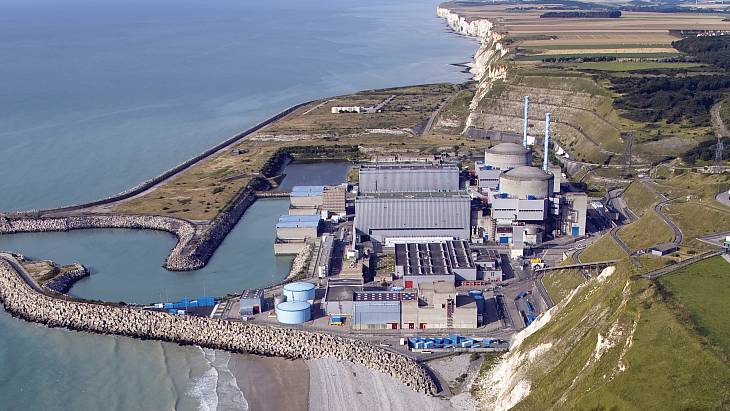
Three units at France's Gravelines nuclear power plant automatically shut down due to jellyfish intrusion
French utility EDF recently stated on its website that three units at the Gravelines nuclear power plant in northern France automatically shut down after a large influx of jellyfish clogged the filtration system, triggering safety measures. The statement indicated that the incident occurred on August 10, 2026. Due to the jellyfish intrusion, three units at the Gravelines plant automatically shut down, while a fourth unit reduced its power output. The plant has a total of six reactors, of which the fifth reactor had already been shut down for planned maintenance, and the sixth reactor remained in operation. The Gravelines plant experienced a similar situation a year earlier, when a large number of jellyfish entered the relevant water intake and filtration systems, causing four reactors to automatically shut down...
2026-08-12
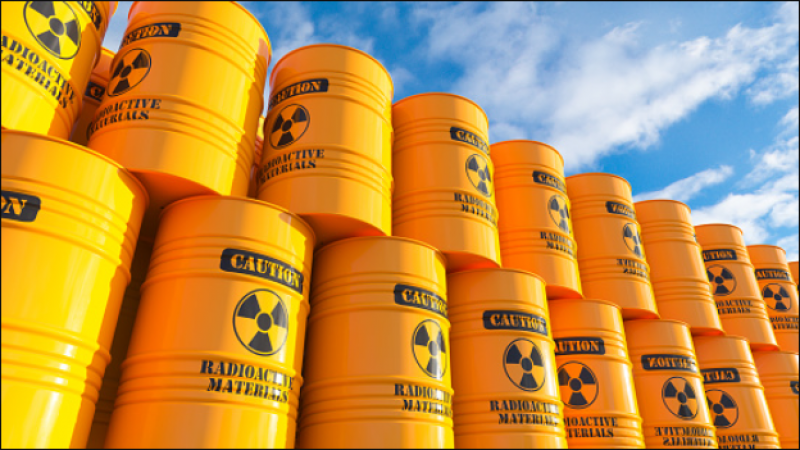
Japan's Mutsu Spent Fuel Interim Storage Facility May Expand Participants; KEPCO and Hokuriku Electric Power Say They Are Considering
Tokyo Electric Power Company (TEPCO) and Japan Atomic Power Company (JAPC) began contacting eight other domestic electric power companies that own nuclear power plants on August 10, asking whether they would be interested in participating in the expansion of the entities responsible for transporting spent fuel to the interim storage facility in Mutsu City, Aomori Prefecture. Among the eight companies contacted, Kansai Electric Power Company (KEPCO) and Hokuriku Electric Power Company indicated in response to the inquiries that they are considering whether to participate. In December 2025, TEPCO and JAPC had submitted a proposal to Aomori Prefecture and Mutsu City regarding the expansion of operating entities, and at that time they had also sought the intentions of these eight companies...
2026-08-12

First batch of experimental stations at Russia's Siberian Circular Photon Source expected to be operational by end of 2026
On August 11, Russian President Vladimir Putin stated at a meeting of the Council for Science and Education that the first research stations of the Siberian Circular Photon Source (SKIF) synchrotron are expected to be commissioned by the end of 2026. At the meeting, Putin noted that the Siberian Circular Photon Source is currently one of the world's most powerful particle accelerators, with some parameters being unique, capable of helping researchers conduct in-depth studies of the structure of matter at the atomic and molecular levels. He also stated that Russia needs to accelerate the development of future technologies, concentrate efforts on priority tasks, and make more efficient use of national strategic scientific resources, including research institutions, advanced digital computing resources, and unique biological resources. The Siberian Circular Photon...
2026-08-12
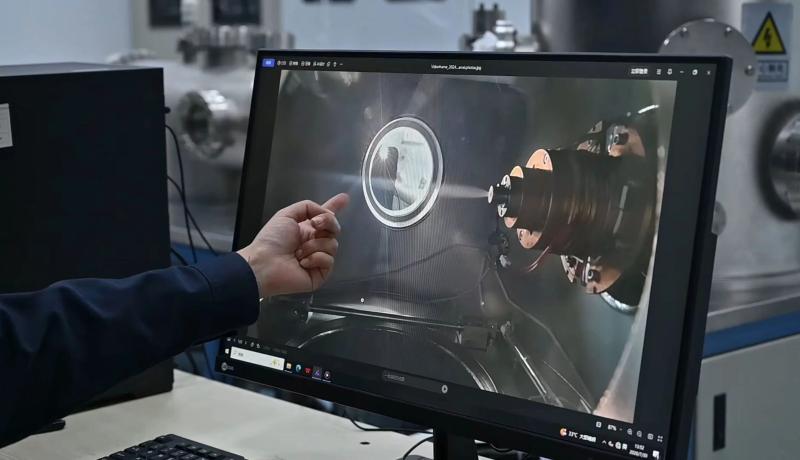
Unanimously Approved! China's First ISO International Standard in the Field of Fusion Fueling Officially Released
On August 10 local time, the international standard ISO 19991:2026, "Fusion Technology — Experimental Magnetic Confinement Fusion Facilities — Ultrasonic Molecular Beam Injection Fueling Technology for Fusion Devices," formulated by China, was officially released. Earlier, during the final voting process, all 12 countries, including France, Germany, and Russia, cast affirmative votes. This is the first ISO international standard in the field of fusion fueling and the second ISO international standard in the fusion field led by the Southwestern Institute of Physics (SWIP) under the China National Nuclear Corporation (CNNC). Ultrasonic molecular beam injection fueling technology is a key fuel supply technology for controlled nuclear fusion devices. This technology, an advanced fusion fueling technology originally developed by China, forms high-speed, directional molecular beams through adiabatic gas expansion. It features high speed, strong directionality, relatively high fueling efficiency, and low particle recycling, significantly enhancing the fuel control capability of fusion devices. It has been applied to more than ten magnetic confinement fusion experimental devices both domestically and internationally.
2026-08-11