
Search Results
Keyword:UE
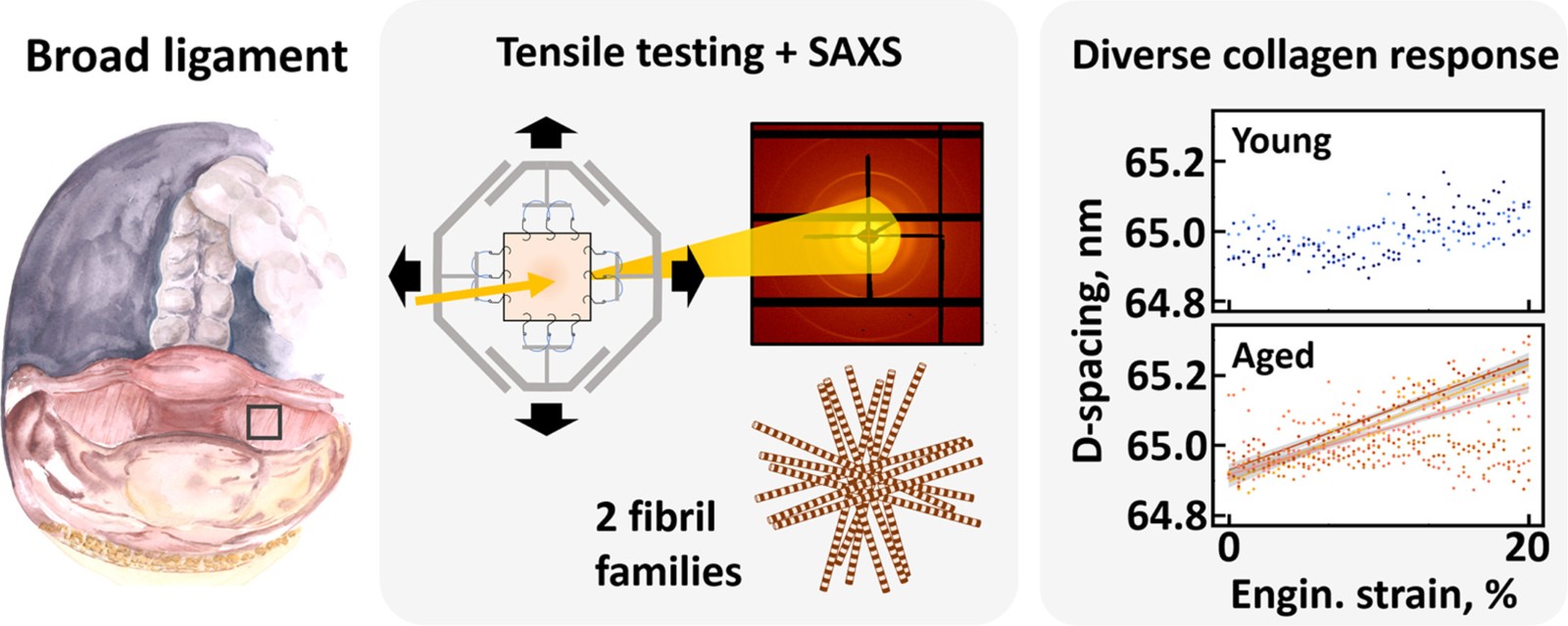
PETRA III Synchrotron Radiation Study Reveals New Clues to Aging Mechanisms of the Uterine Broad Ligament
Austrian and German research teams recently used the PETRA III facility at the German Electron Synchrotron (DESY) to conduct X-ray analysis of the broad ligament, an important ligament supporting the uterus, providing new biomechanical clues for understanding the mechanisms of pelvic organ prolapse. The findings were published in *Acta Biomaterialia*. Pelvic organ prolapse is a common but poorly understood issue in women's health, affecting approximately 40% of women, and predominantly occurring in the latter half of life. Medical researchers have previously speculated that age-related loosening of the ligaments surrounding the uterus may be a significant contributing factor to prolapse. The broad ligament connects the uterus to the pelvic wall, and its strength and elasticity primarily derive from collagen...
2026-08-09
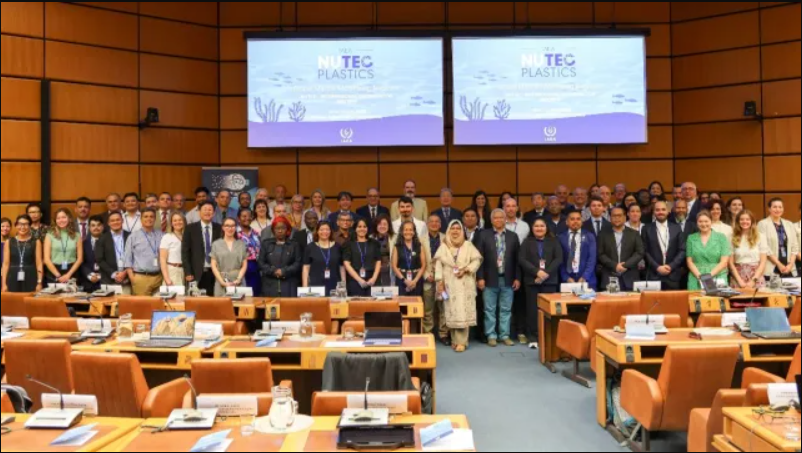
IAEA Launches Global Marine Microplastics Monitoring Platform
The International Atomic Energy Agency recently launched a global marine monitoring platform under the "Nuclear Techniques for Controlling Plastic Pollution" initiative, aiming to strengthen cooperation and data sharing among countries on the abundance, distribution, and trends of microplastics in marine and coastal areas. Scientific experts from 65 countries attended the platform launch event. The platform will serve as a repository of results from the network of marine monitoring laboratories supported by the initiative. Participating laboratories can enter monitoring data into the platform to compile global information on marine microplastic pollution; users can access relevant content after creating a free IAEA Nucleus account. Plastic pollution has become a global environmental issue. According to reports...
2026-08-09
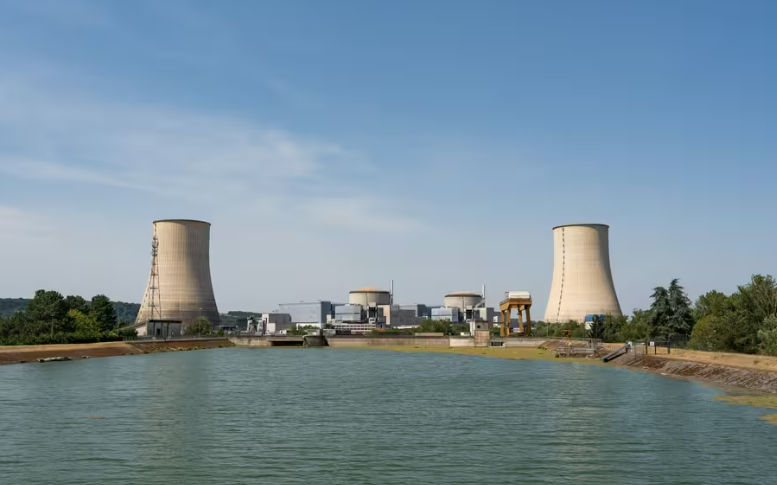
France's Golfech Nuclear Power Plant Reconnected to Grid After Shutdown Due to High Temperatures
French utility EDF (Électricité de France) announced that the Golfech nuclear power plant, located in the Tarn-et-Garonne department, has been reconnected to the grid. Unit 2 of the plant was restarted around noon on August 7, following a forced shutdown on July 29 due to high-temperature weather. At the time of the shutdown, Unit 1 was in the maintenance and refueling phase, making the interruption of Unit 2 more impactful on plant operations. The direct cause of the shutdown at Golfech was that the water temperature of the Garonne River reached regulatory limits. According to relevant regulations, when the daily average water temperature of the Garonne River exceeds 28 degrees Celsius, the plant must reduce reactor power or temporarily cease operations. Since the nuclear plant needs to draw water from the river for...
2026-08-08
Canadian laboratory validates molten salt separation process with real spent fuel, extracting nearly 90% of plutonium in 24 hours
A chemical experiment in Canada involving real commercial reactor spent fuel has achieved noteworthy progress. Canadian Nuclear Laboratories, in shielded hot cells at Chalk River, used irradiated spent fuel from CANDU reactors to validate the first phase of Moltex Energy's waste-to-stable-salt process. The experiment showed that within 24 hours, 89.4% of the plutonium was transferred into the molten salt; by 60 hours, this proportion rose to 94.3%. Meanwhile, the vast majority of uranium remained outside the salt phase, indicating that the process exhibits strong selectivity in separating target elements. This process, named WATSS, is not a plutonium purification route but rather a group separation technology. In addition to large quantities of uranium, spent fuel contains fission products as well as transuranic elements such as plutonium and americium, the latter being a significant source of long-term radiological risk. WATSS uses high-temperature chloride molten salt and specific reducing metals to convert transuranic oxides into salt-soluble forms, while most uranium oxides remain solid. In this experiment, researchers used niobium as the reducing metal; after 24 hours, only 0.05% of uranium entered the salt, dropping to 0.02% after 60 hours, demonstrating that it does not carry large amounts of uranium into the molten salt system.
2026-08-09

Finland's Onkalo Repository to Be Commissioned, Experts Say 100,000-Year Safety Assessment Still Faces Uncertainties
Finland's Olkiluoto is about to commission the world's first permanent deep geological repository for spent nuclear fuel — Onkalo. The facility is designed for long-term underground containment of spent fuel, with a design safety period of up to 100,000 years. There remains debate within the nuclear industry over whether such facilities can remain safe over such an immense timescale. Dmitry Pripachkin, head of the Department of Radiation Physics and Nuclear Technology Safety at the National Research Nuclear University MEPhI (Moscow Engineering Physics Institute), stated that modern science does not yet possess tools capable of reliably predicting the state of such facilities after 100,000 years. Science can study the evolution of geological formations over long historical periods, but...
2026-08-09

Danube Water Level Temporarily Recovers, Hungary's Paks Nuclear Power Plant May Continue Reduced-Power Operation
Hungarian Prime Minister Peter Magyar said on August 7 that due to rainfall in Austria, the Danube water level is expected to temporarily recover in the near term, which will help improve cooling conditions at the nuclear power plant, but the Paks Nuclear Power Plant, which supplies nearly half of Hungary's electricity, may still continue to operate at reduced power. In a social media video, Magyar said the current situation at the Paks Nuclear Power Plant remains very difficult. Affected by persistent high temperatures and historically low Danube water levels, the plant has been operating at approximately 10% output since last week. At a subsequent press conference, he stated that Hungary must find a solution for the operation of the Paks Nuclear Power Plant, because "the Hungarian economy cannot function for months without the plant." Previously, the government had called on businesses and residents to reduce electricity consumption in the evening and dim the decorative lighting of historic buildings in Budapest to alleviate power supply pressure.
2026-08-08
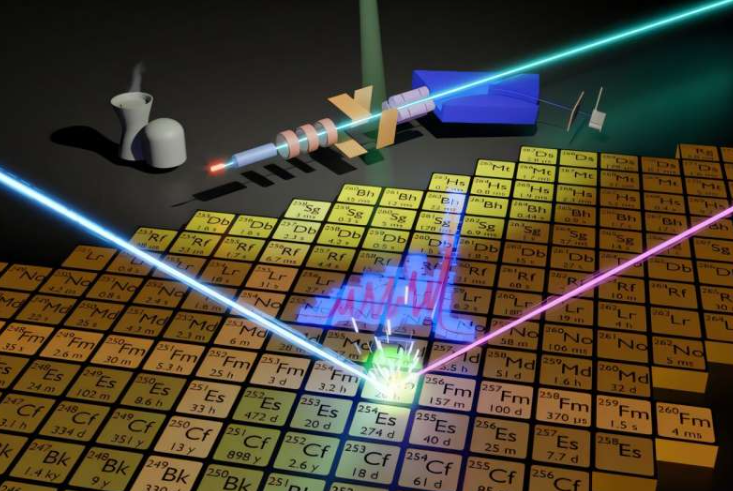
Laser spectroscopy reveals for the first time the precise nuclear shape of fermium-255, offering new clues in the search for superheavy elements
An international research team has, for the first time, precisely determined the nuclear structure of the actinide fermium-255, confirming that its nucleus exhibits a pronounced prolate deformation, similar to a rugby ball. The study, published in *Physical Review Letters*, was conducted in collaboration with 18 institutions, including Johannes Gutenberg University Mainz in Germany, the Helmholtz Institute Mainz, and the University of Gothenburg in Sweden. The findings not only correct several unreasonable nuclear property values in previous standard data tables but also provide crucial experimental validation for modern nuclear theory models. Fermium is a synthetic heavy element that does not exist in nature. Fermium-255 contains 100 protons and 155 neutrons, making its experimental production extremely challenging. The research team...
2026-08-08
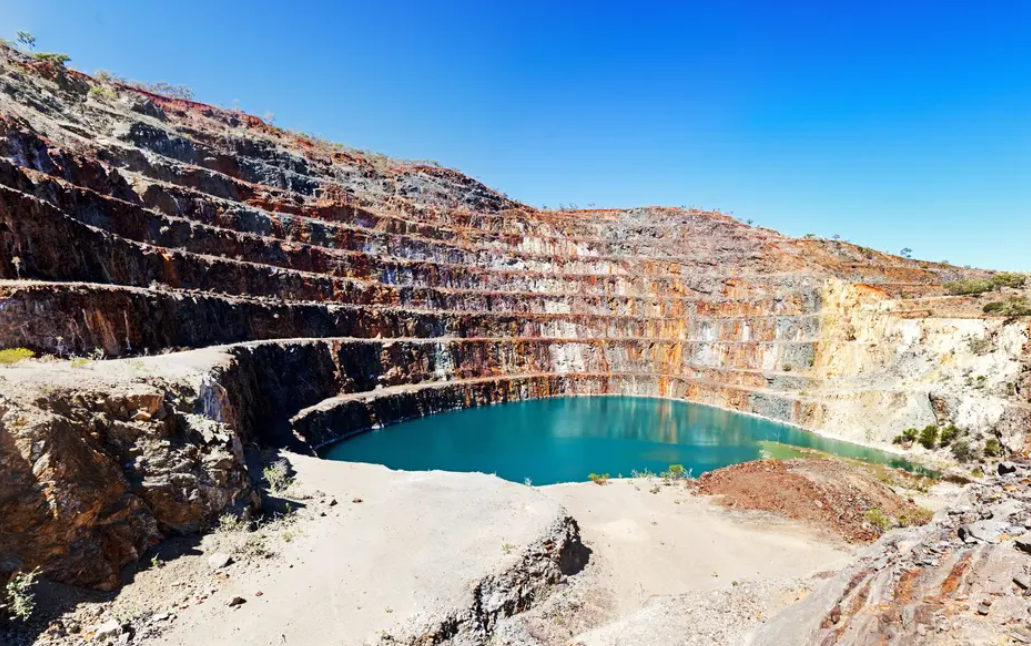
Eagle Nuclear Energy Advances 47-Hole Pre-Feasibility Drilling at Aurora Uranium Project
Against the backdrop of rebuilding a domestic U.S. uranium supply chain, newly listed Eagle Nuclear Energy Corp. has entered the industry spotlight with what it claims to be the largest conventional measured+indicated uranium resource in the country. Its flagship Aurora uranium project, located on the Oregon-Nevada border, contains 32.75 million pounds of indicated resources and 4.98 million pounds of inferred resources under S-K 1300 standards. The company has submitted permit applications for a pre-feasibility drilling program comprising 47 holes totaling approximately 27,000 feet, with work slated to begin upon federal and state approvals and pre-feasibility study completion targeted for the second half of 2027. On the technical front, the company recently added Yukuskokon Professional Services and expanded its collaboration with BBA USA and SLR I...
2026-08-08

Fluor's Q2 New Orders Surge to $6.1 Billion, Nuclear Fuel Enrichment Projects Boost Backlog to $26.9 Billion
U.S. engineering and construction giant Fluor demonstrated a clear acceleration in order intake in the second quarter of 2026, with new project awards reaching $6.1 billion, significantly higher than the $1.8 billion recorded in the same period last year. Among these, nuclear fuel enrichment projects emerged as a key highlight, driving the company's ending backlog to $26.9 billion. The rapid expansion in order volume indicates that customer demand for its engineering, procurement, and construction capabilities is recovering, and also reflects the tangible results of converting earlier front-end design and project development work. In terms of contract structure, 89% of Fluor's new orders this quarter were reimbursable contracts, while reimbursable contracts also accounted for 85% of total backlog, up from 80% in the same period last year....
2026-08-09
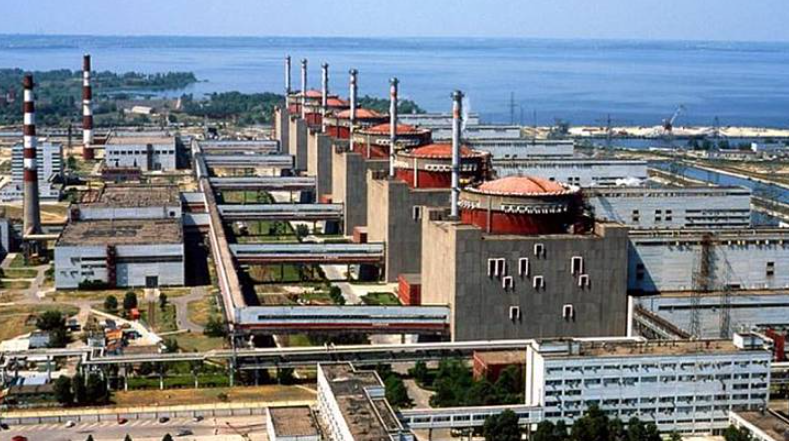
Zaporizhzhia Nuclear Power Plant to Raise Spent Fuel Pool Water Levels to Mitigate Power Outage Risks
The International Atomic Energy Agency (IAEA) stated that the operator of the Zaporizhzhia Nuclear Power Plant has decided to raise the water levels in the spent fuel pools on site to enhance safety buffer capacity in the event of a prolonged loss of external power. The primary purpose of raising the water levels is to extend the time before water in the spent fuel pools begins to boil and evaporate under extreme conditions where external power to the plant is interrupted for an extended period, diesel reserves are depleted, and emergency diesel generators can no longer supply power to the cooling systems. Spent fuel pools are used to store used nuclear fuel underwater, typically for at least five years, allowing its radioactivity and residual heat to gradually decay, making continuous cooling a critical element of nuclear safety. All six units at the Zaporizhzhia Nuclear Power Plant...
2026-08-08

French innovative nuclear company Newcleo submits regulatory engagement plan to NRC for U.S. MOX fuel plant
On August 7, 2026, France-based innovative nuclear company Newcleo submitted a Regulatory Engagement Plan (REP) to the U.S. Nuclear Regulatory Commission (NRC), paving the way for its proposed mixed oxide (MOX) fuel fabrication facility in the United States. The REP defines the framework for the company's pre-application phase with the NRC, key regulatory and technical topics, technical document submittals, and an indicative schedule. Previously, Newcleo sent a letter to the NRC on February 23 expressing its intent, and initiated pre-application interactions in March, engaging with the NRC on the design and safety approach for the LFR-AS-200 lead-cooled fast reactor and the associated MOX plant; last month, it had already submitted the REP for the LFR-AS-200 (200 MWe commercial version). Newcleo stated that this submission is a step toward advanced...
2026-08-09

Indian Parliamentary Committee Emphasizes Urgency of Accelerating Uranium Mining Projects
On August 7, 2026, the Indian Parliamentary Committee on Public Undertakings noted in its report on nuclear power expansion progress that India's uranium mining project expansion needs to be accelerated. DAE has committed UCIL to doubling production by 2036 through enhancing existing capacity and new projects in Jharkhand, Rajasthan, and Chhattisgarh, but the committee considers this timeline too late—NPCIL's installed capacity will surge significantly over the next decade, and delays in mining clusters would prolong the strategic vulnerability period of imported fuel. Currently, PHWR units of approximately 25 GWe require about 5,400 tonnes of U3O8 annually, with UCIL able to meet only about 30% of that demand; accelerated domestic production and diversified supply are needed to reduce import dependence. The committee supports UCIL forming a joint venture with NTPC to acquire equity stakes in overseas uranium assets...
2026-08-08
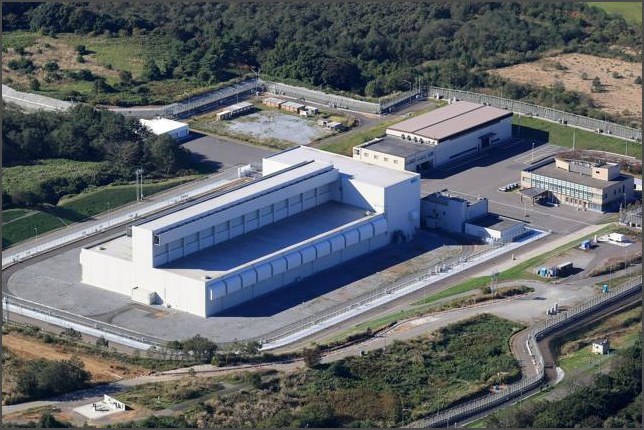
Mutsu City Requests Submission of Revised Plan for 5,000-Ton Transport to Spent Fuel Interim Storage Facility
On August 7, Tomoya Yamamoto, Mayor of Mutsu City, Aomori Prefecture, Japan, met with representatives of Recycle Fuel Storage (RFS) and its co-investors Tokyo Electric Power Company Holdings (TEPCO HD) and Japan Atomic Power Company (JAPC), requesting the three parties to submit a revised mid-to-long-term spent nuclear fuel transport plan, with consideration given to inter-operator cooperation. The plan may involve accepting spent nuclear fuel from other electric power companies. The facility in question, located in Mutsu City, Aomori Prefecture, is currently Japan's only interim spent fuel storage facility situated outside a nuclear power plant site. Under the existing siting agreement, the facility's acceptance scope...
2026-08-08
German team achieves first separation of tritium-containing hydrogen isotope mixtures using silver-exchanged zeolites
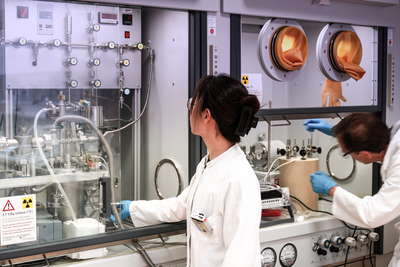
A team at the Helmholtz-Zentrum Dresden-Rossendorf (HZDR) and partners recently demonstrated a new method for separating hydrogen isotopes using silver-containing zeolites, successfully separating hydrogen isotope mixtures containing radioactive tritium through a porous solid material for the first time. The research findings were published in Nature Communications. Future fusion power plants will require not only high-temperature plasma and strong magnetic fields during operation, but also a stable fuel cycle system for recovering, separating, and reusing deuterium and tritium. Inside a fusion reactor, deuterium and tritium participate in reactions and release energy, but the fuel is not completely consumed, and the residual gas may also contain ordinary hydrogen (protium), forming a mixture of protium, deuterium, and tritium...
2026-08-07
SHINE Selected for Two U.S. Department of Energy AI Nuclear Fuel Recycling Projects
SHINE Technologies, a U.S. fusion energy company, has recently been selected for projects under the U.S. Department of Energy's Genesis Mission, participating in two artificial intelligence applications for the nuclear energy sector. Among these, SHINE will lead a nuclear fuel cycle facility optimization project and join the Prometheus project, a collaborative effort between national laboratories and industry. The project led by SHINE, named AI-Guided Fuel Cycle Facility Optimization, is a Phase 1 project with Argonne National Laboratory as the technical partner. The project plans to develop an AI-assisted workflow to help engineers...
2026-08-07