
Search Results
Keyword:X-ray

Brookhaven National Laboratory Develops Integrated X-ray Imaging Tool for Nuclear Materials Research
A research team at the U.S. Department of Energy's Brookhaven National Laboratory has recently developed and built a new experimental apparatus that integrates four X-ray computed tomography techniques into a single instrument, enabling multiscale, comprehensive studies of next-generation nuclear reactor materials. The related technical achievements and capability demonstration have been published in the Journal of Synchrotron Radiation. The apparatus is located at the X-ray Powder Diffraction (XPD) beamline of the National Synchrotron Light Source II (NSLS-II) and was commissioned jointly by the U.S. Department of Energy Office of Nuclear Energy's Nuclear Science User Facilities program, Brookhaven National Laboratory's Nuclear Science and Security Department, and NSLS-II. Researchers said that next...
2026-09-12

Institute of Radiation Medicine, Chinese Academy of Medical Sciences Promotes the Translation and Application of Medical X-ray Skin Protective Agent
On September 10, Zhang Jianhong, Party Secretary of the Institute of Radiation Medicine, Chinese Academy of Medical Sciences, led a delegation to Nanjing to conduct research with the Institute of Dermatology, Chinese Academy of Medical Sciences and Jiangsu Haizhi Biomedical Co., Ltd., exchanging views on the translation and application of the medical X-ray skin protective agent project. Representatives from the hospital, research institute, and enterprise held discussions on industry-university-research collaboration, clinical demand alignment, and industrialization pathways. It is understood that the medical X-ray skin protective agent is one of the core products in the radiation protection series independently developed by the Institute of Radiation Medicine. After being put into production, the product is expected to become China's first medical X-ray skin protective agent for scar radiotherapy. At the symposium, Zhang Jianhong stated that dermatology...
2026-09-12

NASA's Chandra Telescope Discovers 84 Mysterious Supersoft X-ray Sources
NASA's Chandra X-ray Observatory recently announced that researchers using the observatory's publicly available observation data discovered 84 mysterious celestial objects known as supersoft X-ray sources in 6 galaxies. The related research was published in Nature Astronomy. Image credit: X-ray: NASA. These objects emit X-rays with unusually low energy and may be accompanied by strong high-energy ultraviolet radiation. The research team stated that the behavior of these objects is clearly different from previously observed known celestial bodies and may provide new clues for explaining the origin of Type Ia supernovae and the electron-stripping mechanism in the intergalactic medium. The 6 galaxies covered by this search include two spiral...
2026-09-10
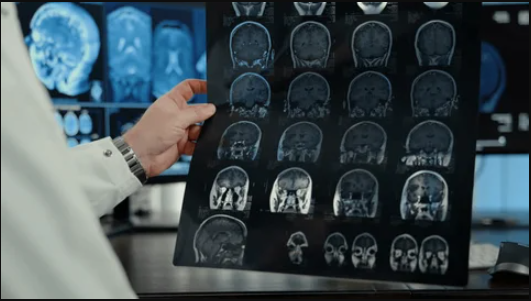
Penza State University in Russia Develops Training Simulator for X-ray Image Defect Recognition
Researchers at Penza State University in Russia have developed an interactive training simulator for identifying defects in X-ray images, aimed at helping medical students and residents more accurately assess abnormalities in medical images and understand the physical causes behind different image defects. X-ray image quality directly affects the efficiency of pathological change detection and clinical diagnostic judgment. Factors such as equipment condition, exposure parameters, radiation dose, and quantum noise levels can all lead to degraded image quality. Therefore, radiologic technologists and radiologists need not only to identify lesions in images, but also to assess image quality and determine whether defects such as low contrast, noise, blur, and artifacts may affect diagnosis...
2026-09-09
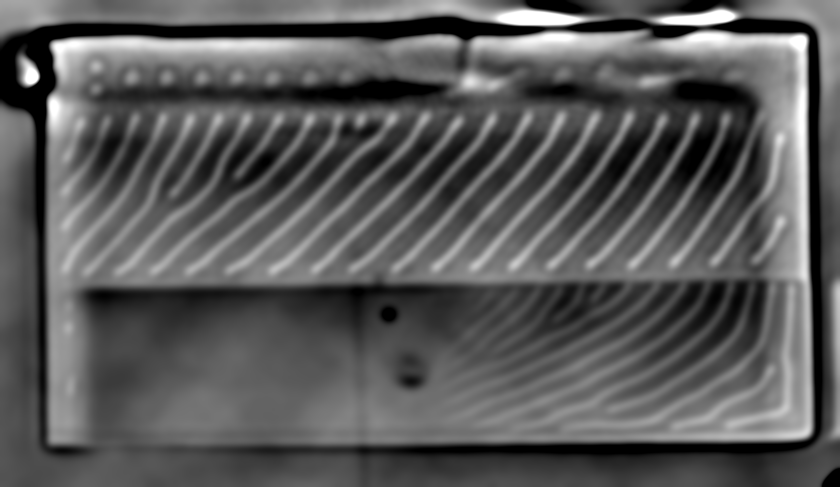
German BESSY II 3D Magnetic Field Experiments Reveal Mechanism of Weak Magnetic Field Control over Magnetic Textures
A team at the Helmholtz-Zentrum Berlin (HZB) in Germany has made progress in controlling magnetic textures in the magnetic material (Fe0.63Ni0.3Pd0.07)3P (abbreviated as FNPP) through 3D magnetic field experiments conducted at the BESSY II synchrotron facility. The research shows that a very small external in-plane magnetic field is sufficient to alter the magnetic stripe structure in this material, providing new experimental evidence for the development of functional magnetic materials for spintronics. FNPP is a magnetic material that exhibits complex magnetic structures at room temperature, making it a focus of spintronics research. Spintronics is considered promising for lower-energy data processing and novel data storage applications. However, to achieve practical applications, the key lies in...
2026-09-08
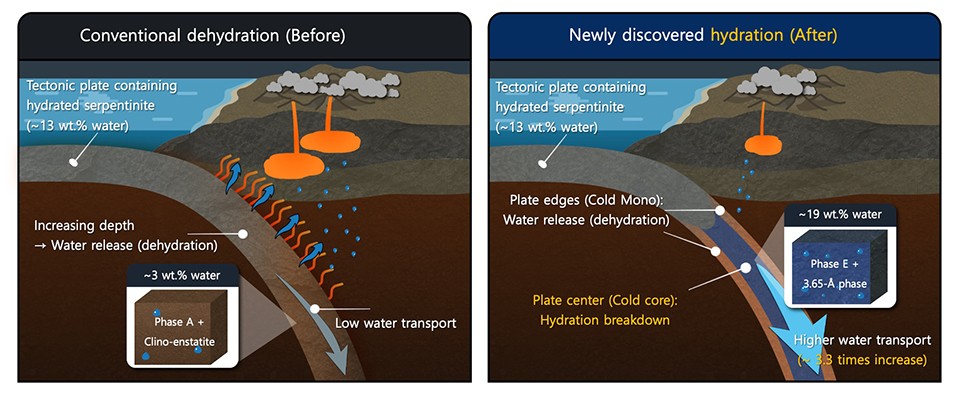
South Korean research team reveals that water storage capacity of cold subducting slabs has been underestimated using synchrotron radiation sources
A research team led by Professor Yongjae Lee of the Department of Earth System Sciences at Yonsei University in South Korea has recently found that in cold, rapidly descending tectonic subduction zones, crustal rocks may transport up to 1 trillion kilograms of water to the mantle each year—approximately twice the previous estimate. The findings have been published in Nature Communications. Subduction zones are regions where Earth's tectonic plates converge and one plate descends beneath another, often accompanied by volcanic and seismic activity. For a long time, the academic community has generally believed that serpentinite, a water-bearing rock, gradually dehydrates as it descends with the plate due to increasing pressure and temperature, and the released water further promotes melting of the overlying plate and is associated with the formation of volcanic arc chains.
2026-09-07
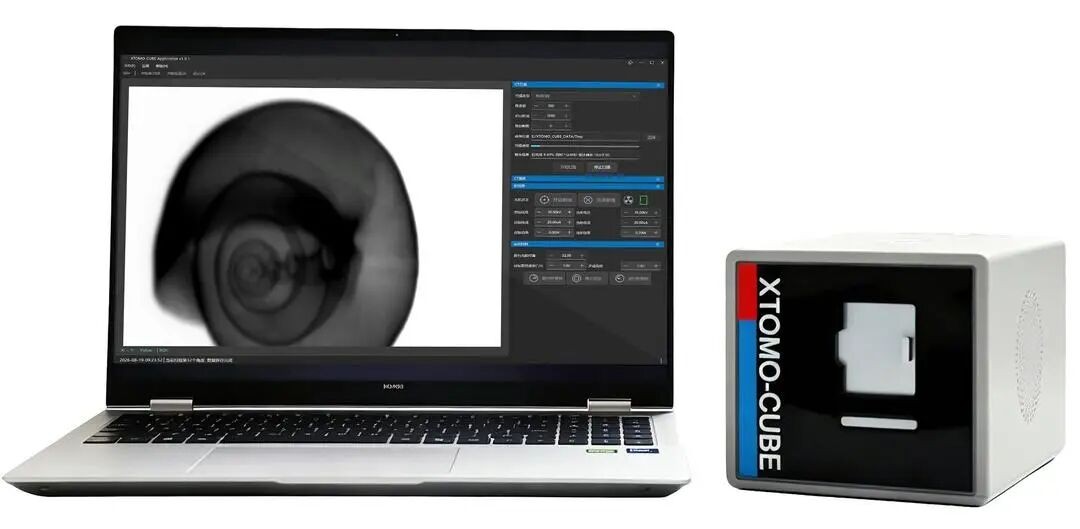
Domestically Developed "Palm-Sized CT" Debuts: 6 kg Micro X-ray CT Enables 3D Non-Destructive Testing
The XTOMO-CUBE series micro-CT, independently developed by Ruiying Detection Technology (Jinan) Co., Ltd., recently made its debut. With dimensions of 140×132×220 mm and a total weight of approximately 6 kg, the device can be held in one hand and is dubbed the "palm-sized CT." It can scan small-sized samples such as chicken bones, snail shells, and capsule tablets, revealing their internal three-dimensional structures. According to reports, CT stands for computed tomography technology. Compared with traditional CT equipment, the XTOMO-CUBE integrates key modules such as a miniaturized X-ray source, rotation stage, and detector into a compact body, paired with fully self-developed software capable of completing processes including projection data acquisition, CT image reconstruction, and 3D rendering. The...
2026-09-04
Russian scientists use 3D-printed tungsten grid to improve X-ray imaging quality, potentially reducing patient radiation exposure
The press service of the Russian Ministry of Education and Science recently stated that a Russian research team has used 3D printing technology to manufacture a tungsten-based anti-scatter grid for X-ray machines, with partition thickness only one-third that of similar products. The researchers believe this achievement could help reduce patient radiation exposure during X-ray examinations while maintaining medical image quality. During X-ray imaging, some rays scatter after passing through human tissue, creating background noise that weakens image contrast. Clinical equipment typically suppresses such interference through anti-scatter grids. Traditional anti-scatter grids are mostly made of lead, but lead has low mechanical strength and imposes high requirements on processing techniques, resulting in...
2026-09-01
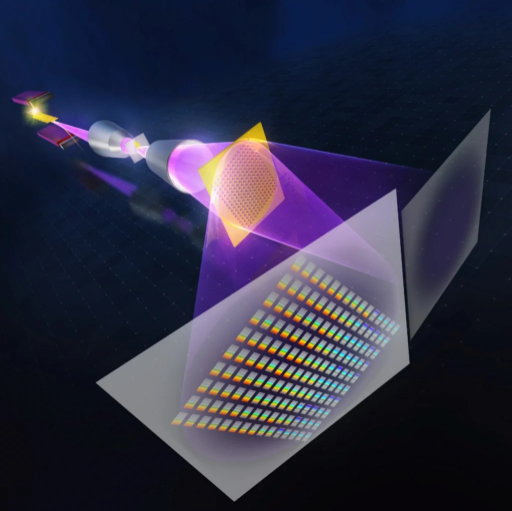
Japanese Team Achieves Femtosecond Soft X-ray Hyperspectral Microscopy, Simultaneously Acquiring Spatial and Energy Information with Single Pulse
On August 21, the Japan Science and Technology Agency, RIKEN, and the University of Tokyo announced that a research team comprising Assistant Professor Yoko Takeo and Associate Professor Takashi Kimura from the Institute for Solid State Physics at the University of Tokyo, Assistant Professor Satoru Egawa from the Research Center for Advanced Science and Technology at the University of Tokyo, and Team Leader Makina Yabashi from the RIKEN SPring-8 Center, among others, successfully developed and implemented a femtosecond soft X-ray hyperspectral microscope. The findings were published on August 20 in the U.S. scientific journal *Optica*. This technology utilizes a single soft X-ray pulse from an X-ray free-electron laser (XFEL) to simultaneously acquire soft X-ray spectra transmitted through different positions of a sample, enabling...
2026-08-31

First experiments at Russia's SKIF microfocus station to target "invisible" gold deposits and extraterrestrial particle research
On August 19, 2026, the microfocus station, one of the first-stage experimental stations of the Russian SKIF Collective Use Center, announced its initial experimental directions. The station will utilize synchrotron radiation-based analytical techniques to study the elemental composition and structural characteristics of objects, serving fields such as geology, geophysics, microelectronics, and materials science. At the SKIF opening ceremony, Russian President Vladimir Putin inspected the microfocus station. According to the presentation, the station's first experiments will focus on the exploration and extraction of hard-to-recover gold, platinum, rare earth elements, and oil reserves. Ore sample research is a critical step in the development of new mineral deposits. By determining the elemental composition of rocks, researchers can...
2026-08-31
Japan's PF Launches Quantum Multi-Beam Experiments, Achieving Simultaneous Hard and Soft X-ray Measurements
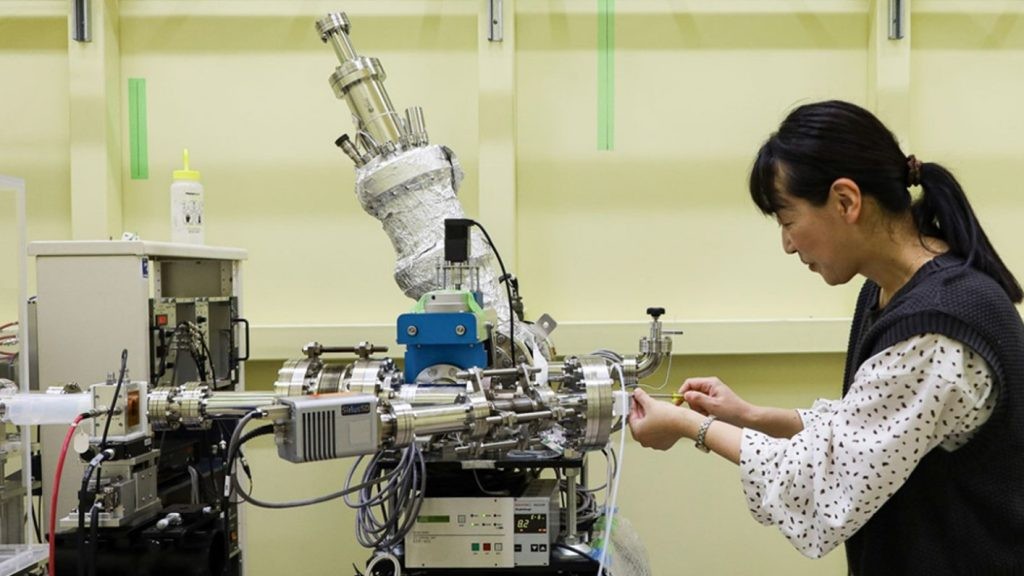
The Photon Factory, a synchrotron radiation facility at the Institute of Materials Structure Science, High Energy Accelerator Research Organization (KEK) in Japan, has recently launched collaborative experiments on the development and research multi-purpose beamlines BL-11A and BL-11B, achieving simultaneous irradiation of the same sample with hard and soft X-rays at the same position. The research results will be published in the international academic journal *Review of Scientific Instruments*. The Photon Factory uses electrons moving at near-light speed to generate high-brightness X-rays, known as synchrotron radiation, for studying material structures and properties. Among these, hard X-rays are better suited for observing the internal structure of materials, while soft X-rays are ideal for analyzing material surfaces and electronic states. Previously, at synchrotron radiation facilities, the two types of X-rays typically had to...
2026-08-31
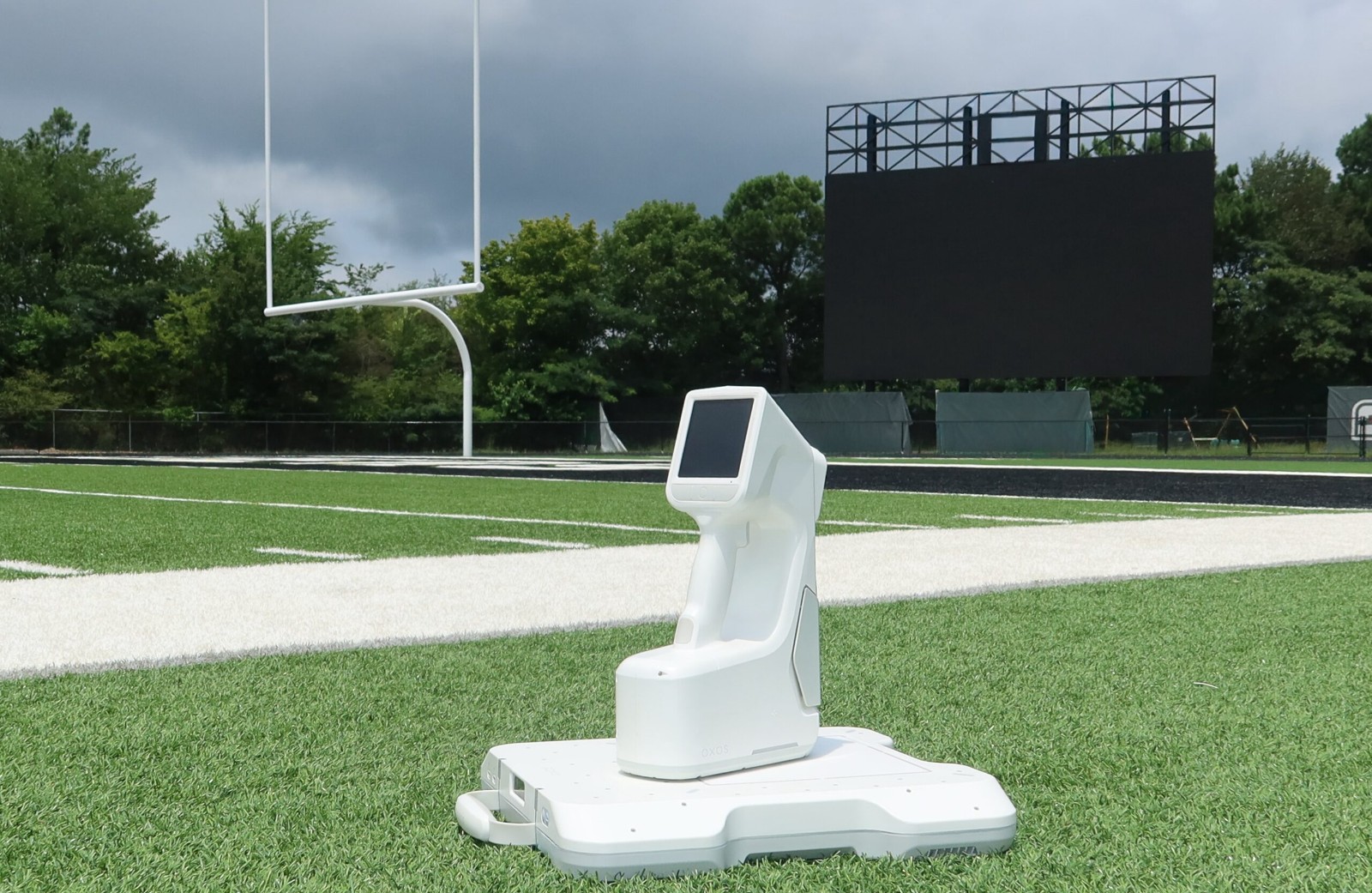
Portable X-ray Equipment in the U.S. Used for On-Site Assessment of American Football Injuries
As the 2026–2027 American football season approaches, team training camps, player evaluations, and medical support preparations are getting underway. Given the risk of acute sports injuries from the high-intensity physical contact in American football, portable X-ray equipment is being used to improve the efficiency of injury assessment on the sidelines and at training facilities. According to reports, American football players are prone to fractures, sprains, joint dislocations, and contusions. Relevant data indicates that the incidence of severe injuries such as fractures, dislocations, and contusions in this sport is higher than in other sports, with fractures accounting for approximately 10% of all football injuries. Such injuries typically require X-ray radiography to aid diagnosis, but traditional X-ray machines are bulky and fixed in place, usually requiring use in facilities with appropriate shielding. Injured players often need to be transported to the radiology department for examinations, which may delay diagnosis and treatment decisions.
2026-08-31

Chonnam National University Hospital in Hwasun, South Korea, Adopts Deepnoid's Chest X-ray AI Interpretation Solution "M4CXR"
Deepnoid announced on August 31 that it has signed a supply contract with Chonnam National University Hospital in Hwasun, South Korea, to provide the hospital with its AI-based chest X-ray preliminary opinion generation solution, M4CXR. This contract is part of the "AI Medical System Support Project for Regional Responsible Medical Institutions" promoted by the Ministry of Health and Welfare of South Korea. Chonnam National University Hospital in Hwasun plans to improve the work efficiency of medical staff in interpreting chest X-ray images and further enhance the quality of medical services through the introduction of M4CXR. A representative from the Hwasun branch of Chonnam National University Hospital stated that introducing a generative AI-based image interpretation support system is of great significance for improving the quality of public medical services...
2026-08-31
South Korea's Medical Radiation Examinations Exceed 430 Million Annually, with CT Scans Accounting for 67.1% of Radiation Dose
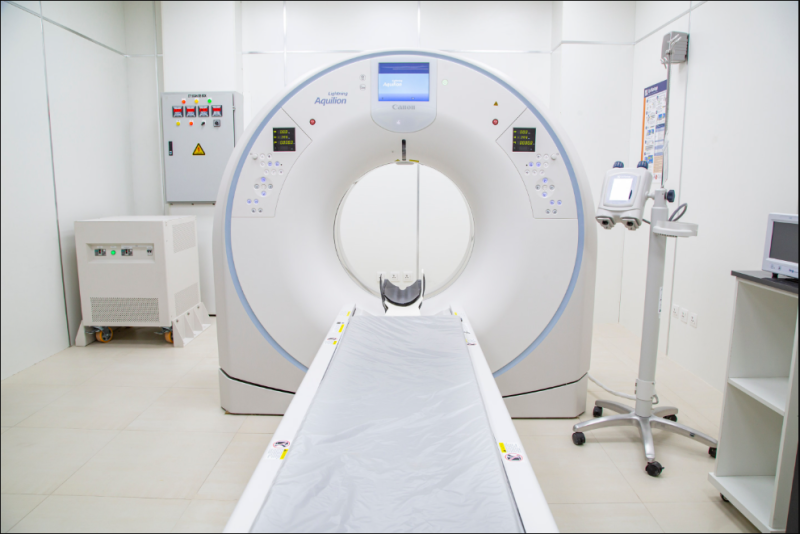
According to the "2025 National Medical Radiation Assessment Yearbook" released by the Korea Disease Control and Prevention Agency on August 28, South Koreans underwent a total of 431.59 million medical radiation examinations last year, averaging 8.4 examinations per person. Over the past five years, the number of medical radiation examinations in South Korea has continued to rise, with last year's figure increasing by 4.6% year-on-year and 29.6% compared to 2021. The report shows that the collective radiation dose from medical radiation examinations in South Korea increased from 136,804.73 person-sieverts in 2021 to 167,659.18 person-sieverts last year, an increase of 22.6%. On a per capita basis, the radiation dose rose from 2.64 millisieverts to 3.24 millisieverts. The Korea Disease Control and Prevention Agency stated that with advances in medical technology, an aging population, and growing demand for health checkups, the use of medical radiation examinations in public healthcare services continues to expand.
2026-08-28
U.S. Advanced Light Source Upgrade to Enhance Nanoscale Research Capabilities for Quantum Materials
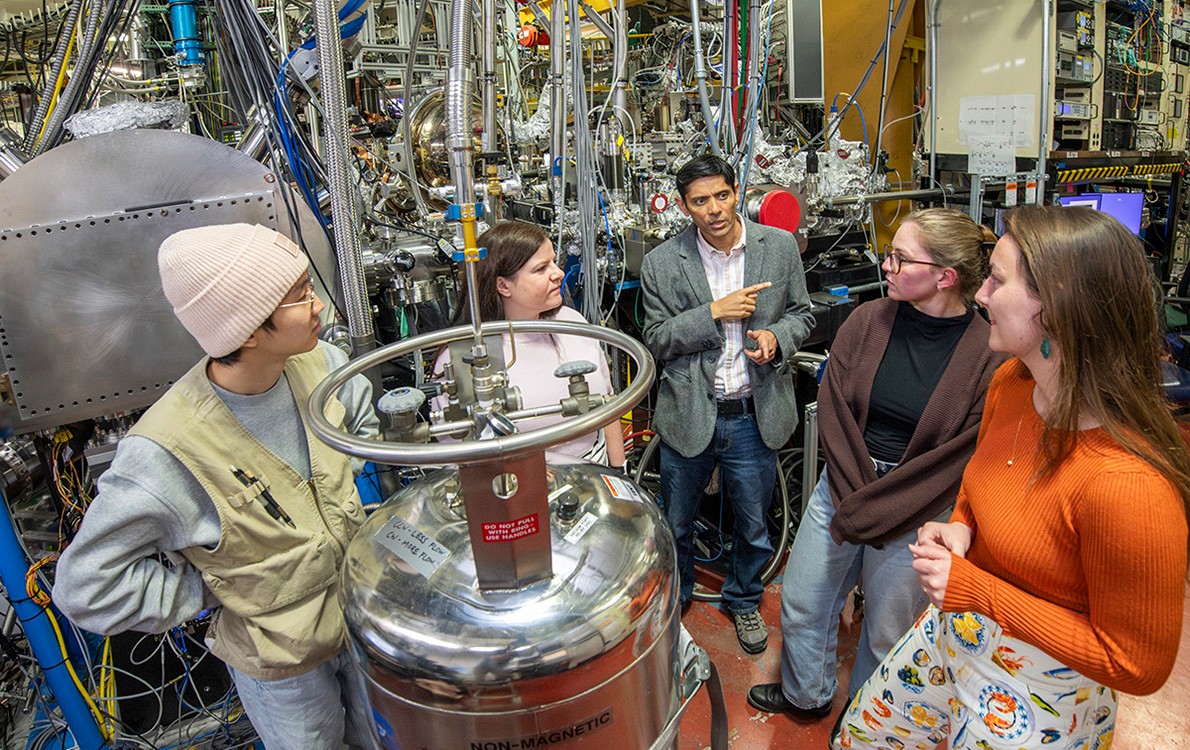
The Advanced Light Source (ALS) at Lawrence Berkeley National Laboratory in the United States is enhancing its quantum materials research capabilities through an upgrade project. As a U.S. Department of Energy Office of Science user facility, ALS has supported researchers worldwide over the past 30+ years in studying quantum materials such as superconductors, topological insulators, and correlated electron materials, leveraging its synchrotron soft X-ray, ultraviolet, and full-spectrum X-ray experimental capabilities. Doctoral students Wei Francis He (left), Kate Matthews (second from right), and Robin Greifke (right) from the University of California, San Diego, are from the Alex Frañó research group at the ALS COSMIC beamline (7.0.1)...
2026-08-27