Registration
REGISTER FOR THE CONFERENCE
Registration
REGISTER FOR THE CONFERENCE
 Apply to Exhibit
APPLICATION FOR EXHIBITION
Apply to Exhibit
APPLICATION FOR EXHIBITION
 Sponsorship
SPONSORSHIP APPLICATION
Sponsorship
SPONSORSHIP APPLICATION
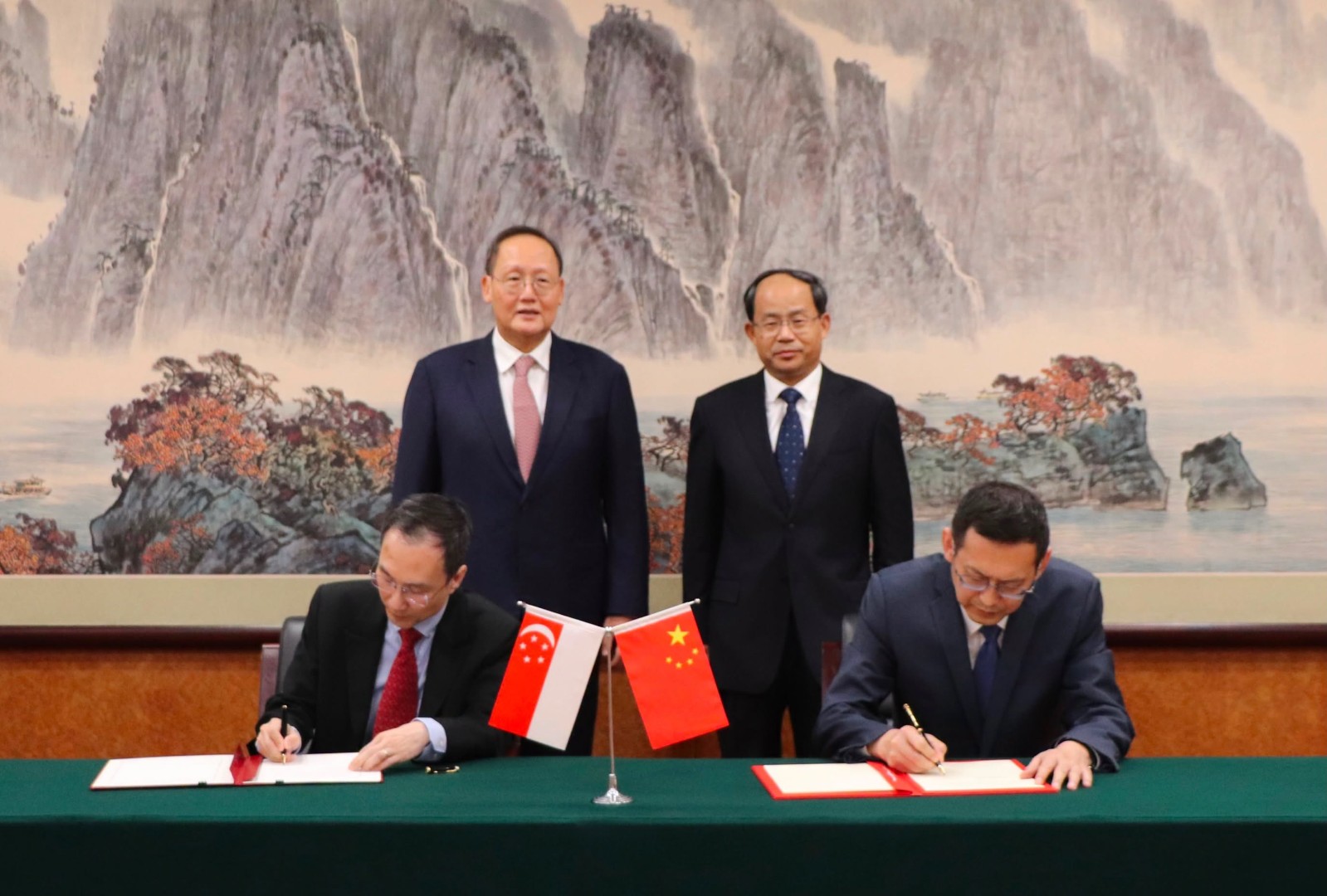
China and Singapore Sign Memorandum of Understanding on Cooperation in Peaceful Uses of Nuclear Technology
Singapore's Ministry of Trade and Industry and the China Atomic Energy Authority recently signed a Memorandum of Understanding on cooperation in the peaceful uses of nuclear technology, with cooperation priorities including capacity building for assessing potential nuclear energy deployment, safety assessment of nuclear reactor technology, personnel training, and nuclear technology applications. The signing ceremony was held on August 17. Singapore's Permanent Secretary for Energy and Trade at the Ministry of Trade and Industry, Augustin Lee, and Liu Jing, Deputy Director of the China Atomic Energy Authority, signed the document on behalf of their respective sides. Singapore's Minister for Trade and Industry (Energy and Industry), Tan See Leng, and Shan Zhongde, Director of the China Atomic Energy Authority, witnessed the signing...
2026-08-18
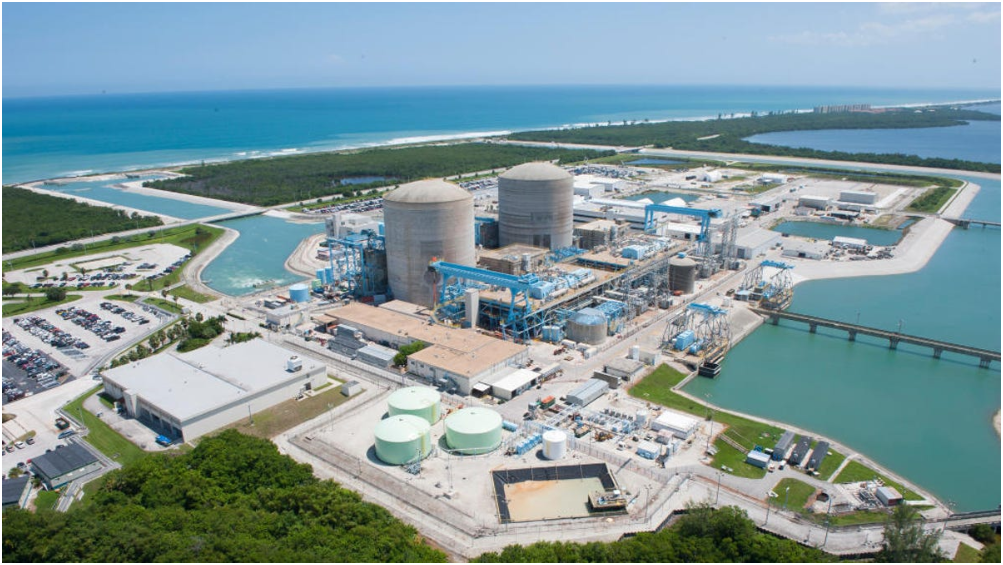
St. Lucie Nuclear Power Plant Unit 1 Returns to Full Power After Control Rods Unexpectedly Dropped into Reactor Core
2026-08-18

Gyeongju City, South Korea, Promotes Cooperation with Uzbekistan in Nuclear Power and Water Resources
2026-08-18

South Korea's Gyeongbuk East Coast Nuclear Power Belt Proposed as National AI Training Center
2026-08-18

Rostov NPP Transfers New Specialized Firefighting Vehicle to Fire Department
2026-08-18

Rosatom Public Council holds expanded meeting in Novovoronezh
2026-08-18
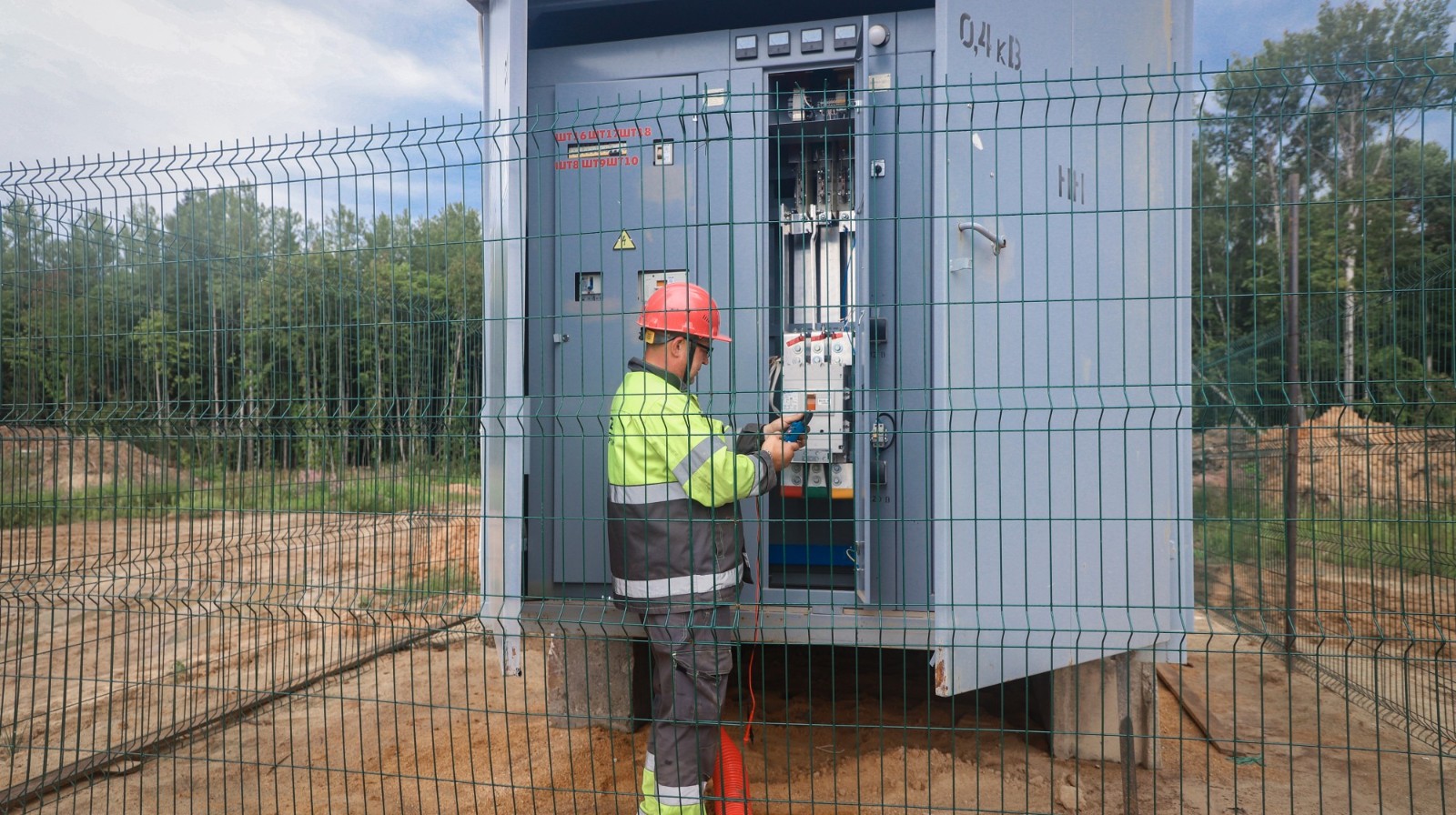
First Power Transmission Line Commissioned at Smolensk NPP-2 Construction Site
2026-08-18

Fresh nuclear fuel delivered for Reactor 1 of the Akademik Lomonosov floating nuclear power plant
2026-08-18

Myanmar Leader's Visit to Russia to Attend Bilateral Business Forum, Small Nuclear Power Plant Cooperation Draws Attention
2026-08-18
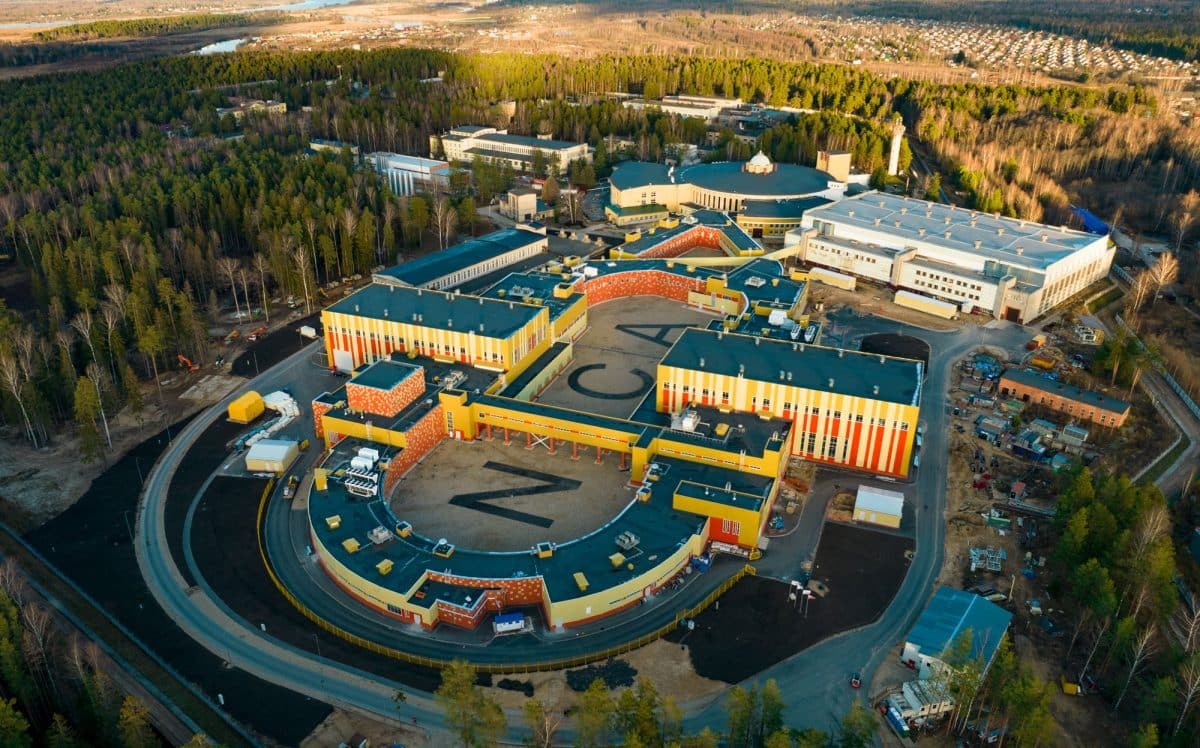
Experts from the Moscow Institute of Physics and Technology and the Joint Institute for Nuclear Research have proposed a compact Siberian snake magnetic field device design for Russia's NICA collider. The device employs a transverse magnetic field, aiming to maintain proton spin direction during acceleration to a maximum of 13.5 GeV and control polarization orientation during experiments. Related numerical simulations of proton polarization show that this design can effectively suppress beam depolarization. Russia's NICA accelerator complex — Moscow Institute of Physics and Technology press office In an accelerator, proton beams travel along a closed orbit, and particle spins precess around a specific rotation axis. When the beam reaches certain energies, spin may resonate with periodic perturbations in the ring structure, causing beam depolarization; without dedicated control measures, the beam polarization state required for experiments would be difficult to maintain.
2026-08-18
An international research team led by the US Facility for Rare Isotope Beams (FRIB), with participation from Lawrence Livermore National Laboratory (LLNL) and other institutions, recently published findings in Nature that explain a long-standing question in nuclear physics: why some atomic nuclei emit anomalously high numbers of low-energy gamma rays. Image: FRIB Gamma rays are a type of electromagnetic radiation. Excited atomic nuclei release gamma rays during radioactive decay, gradually returning to lower, more stable energy levels. Over the past few decades, scientists have discovered that certain nuclei exhibit a low-energy enhancement phenomenon, where the number of low-energy gamma rays emitted exceeds expectations. However, this phenomenon is not universal, and its occurrence is theoretically difficult to predict.
2026-08-18
The Libyan Atomic Energy Establishment recently proposed a plan to restore and restart the Tajoura nuclear research reactor for the production of medical radioisotopes. The establishment stated that this initiative aims to support the diagnosis and treatment of diseases and tumors, while reducing dependence on imports of relevant isotopes. Radioisotopes are essential materials in nuclear medicine, serving as tracers in medical imaging to help track organ function and detect certain diseases and tumors; some isotopes are also used in radiotherapy targeting specific tissues. According to the Libyan Atomic Energy Establishment, the Tajoura reactor has a rated thermal power of 10 megawatts and holds potential for producing various medical isotopes, including...
2026-08-18
According to Japanese media reports, due to record-breaking rainfall in Chiba Prefecture, an underground facility of the National Institutes for Quantum Science and Technology (QST) in Chiba City was flooded, and radioactive liquid waste in underground storage tanks at the facility may have mixed with rainwater and leaked outdoors. QST stated that as of the 13th, an estimated 2,000 to 3,000 liters of liquid waste had accumulated in the relevant underground storage tanks. After investigating water bodies around the tanks, the institute confirmed that detected radioactive material concentrations were below standard values, and no environmental impact has been indicated so far. QST reported the incident to national and local governments the following day and plans to submit preventive measures to the Nuclear Regulation Authority of Japan.
2026-08-18
On August 17, CNNC Sichuan Environmental Protection held a cadre meeting to announce the decision of the Group Company Party Leadership Group on the appointment of Comrade Zhang Xiangming as Chief Accountant of CNNC Sichuan Environmental Protection Engineering Co., Ltd. Wang Suohui, Secretary of the Party Committee and Chairman of CNNC Environmental Protection, attended the meeting via video and delivered a speech. Chang Yu, Secretary of the Party Committee and Chairman of the Company, presided over the meeting. On behalf of the Party Committee of CNNC Environmental Protection, Wang Suohui extended congratulations to Comrade Zhang Xiangming on his new appointment. He pointed out that this cadre adjustment was a decision made by the Group Company Party Leadership Group from the overall perspective of optimizing and strengthening the leadership team, fully reflecting the high importance attached to and earnest expectations for CNNC Sichuan Environmental Protection. At present, CNNC Sichuan Environmental Protection is at a critical stage of tackling tough challenges, with various tasks...
2026-08-18
Researchers at the Paul Scherrer Institute (PSI) in Switzerland recently reported that the Cristallina experimental station of the Swiss Free-Electron Laser (SwissFEL) can now observe quantum states that only emerge at extremely low temperatures using X-ray scattering at temperatures close to absolute zero. Simon Gerber (left) and Bill Pedrini (right) at the Cristallina experimental station of SwissFEL. With the help of a custom-built cryostat connected to the beamline (far left), quantum states can now be studied at extremely low temperatures. Paul Scherrer Institute PSI/Markus FischerAccording to the team, they recently achieved a low temperature of 35 millikelvin in experiments...
2026-08-17
An international team of researchers from Denmark, Sweden, and Switzerland recently conducted a three-dimensional non-destructive analysis of a slice of the Martian meteorite NWA 7034 "Black Beauty" using neutron tomography and X-ray tomography, discovering macroscopic hydrogen-rich regions within it. The study suggests that these hydrogen-rich features provide evidence of early water-rock interactions on Mars. The findings have been published in Geophysical Research Letters. Black Beauty is a brecciated meteorite from Mars that was ejected into space by an impact event and eventually landed in the Sahara Desert in Morocco. Weighing approximately 320 grams, the meteorite contains material up to 4.48 billion years old, making it one of the oldest known Martian crustal fragments...
2026-08-17