
Search Results
Keyword:-

Singapore and India to Explore Cooperation on Small Modular Reactors
On August 20, the fourth India-Singapore Ministerial Roundtable was held in Singapore. After reviewing progress in the six existing areas of cooperation, both sides proposed to further explore cooperation in new areas such as space and nuclear technology. Singapore's Deputy Prime Minister and Minister for Trade and Industry Gan Kim Yong, who led the Singapore delegation, said after the meeting that Singapore and India are satisfied with the good progress of cooperation in the six areas of sustainable development, digitalization, skills development, healthcare and pharmaceuticals, advanced manufacturing, and connectivity. Among the new areas of cooperation, nuclear technology became one of the topics discussed by both sides, with a focus on...
2026-08-21
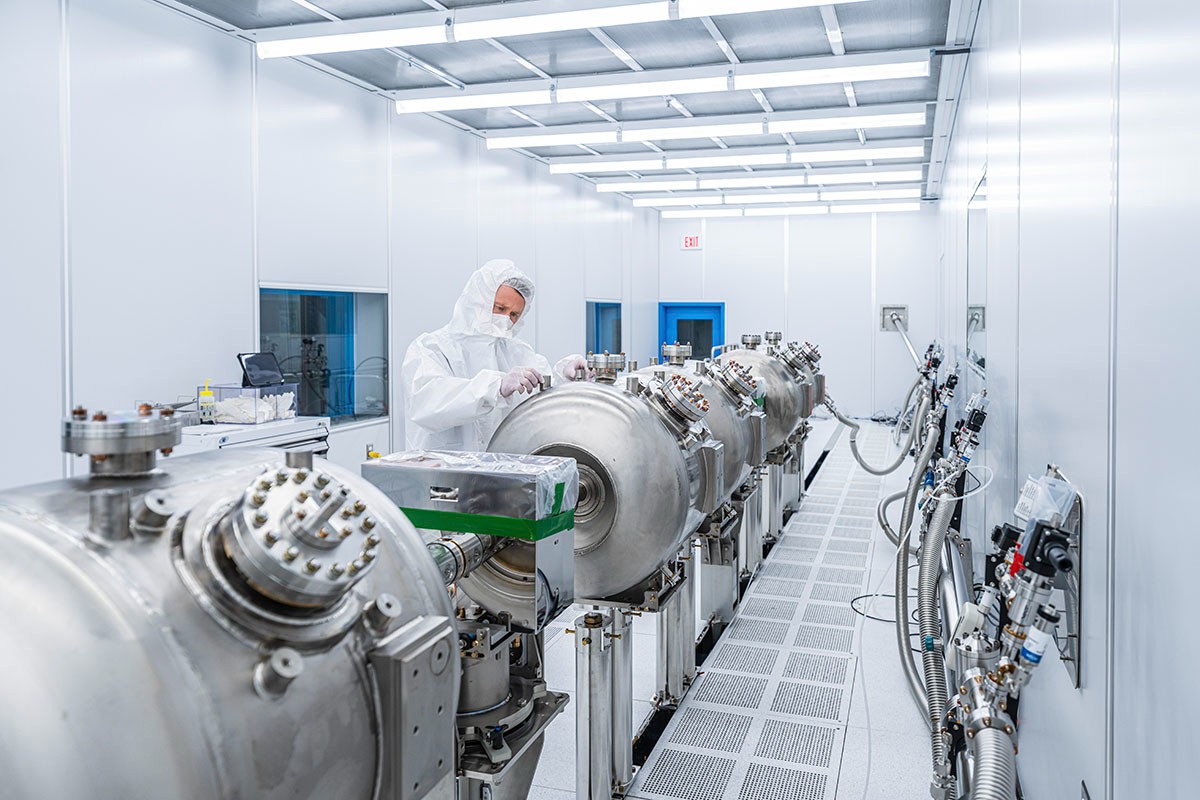
U.S. Department of Energy Selects Fermilab to Lead AI Project to Enhance Superconducting Radio-Frequency Cavity Control in Particle Accelerators
The U.S. Department of Energy's Genesis Program recently selected an artificial intelligence project led by Fermi National Accelerator Laboratory, supporting its collaboration with national laboratories, universities, and industry to use AI and machine learning technologies to improve resonance control in particle accelerators. The project aims to enhance accelerator operational performance and beam stability while reducing energy consumption and operating costs. Superconducting radio-frequency cavities are being assembled and tested, ready for installation on the Proton Improvement Plan-II at the Fermilab Accelerator Complex. By finely tuning the resonant frequency of the cavities, scientists can optimize acc...
2026-08-21
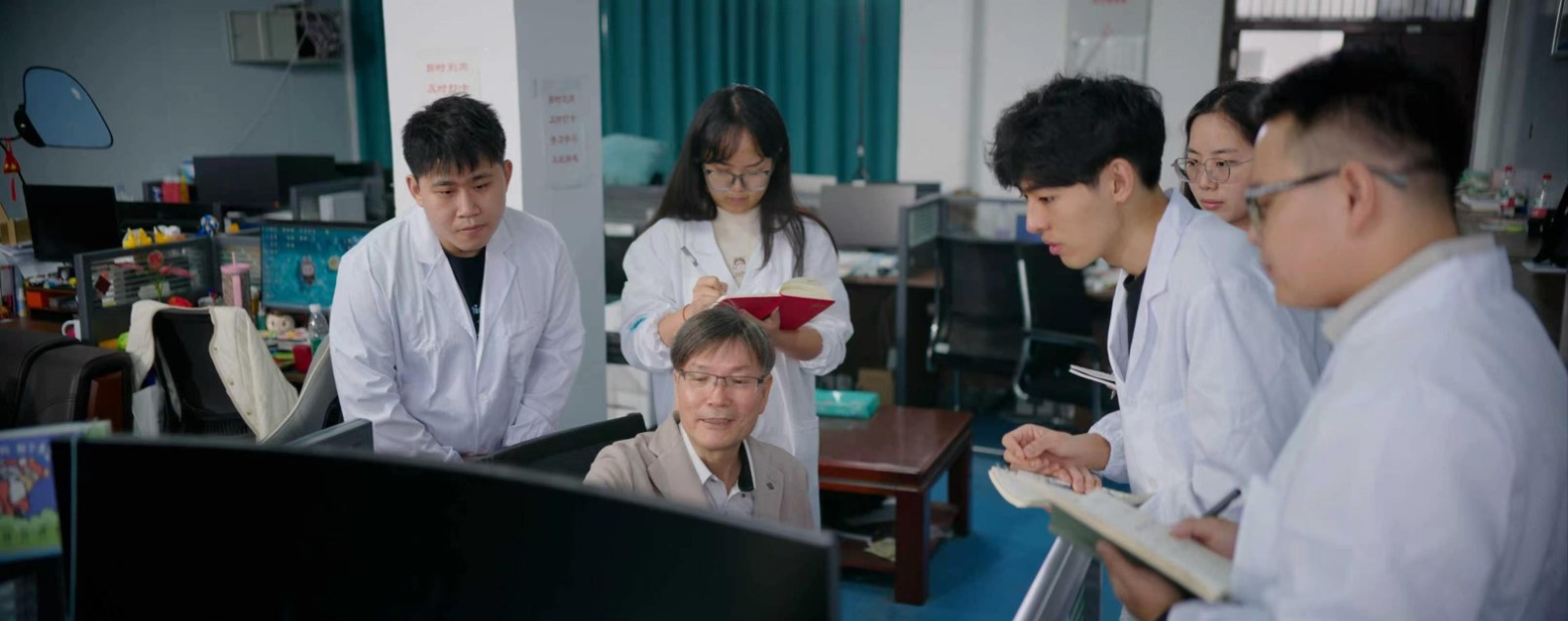
University of South China team extracts high-purity medical alpha nuclide Lead-212 from rare earth slag
On August 20, it was learned from the University of South China that the team led by Professor Wei Yuezhou successfully separated and obtained high-purity alpha nuclide Lead-212 and its precursor nuclide Thorium-228 directly from rare earth slag, achieving the extraction of 158 microcuries of Lead-212/Bismuth-212 from kilogram-level rare earth slag in a single batch. The achievement recently passed the scientific and technological achievement appraisal meeting for the "Technology Development for Extracting Medical Alpha Nuclide Lead-212 and Thorium-228 from Radium Slag from Monazite Processing" organized by the China Isotope and Radiation Association. Experts unanimously agreed that the overall technology has reached internationally advanced level, with single-pass recovery rate reaching internationally leading level, which is expected to promote China's independent supply of medical alpha nuclides and ensure the security of the nuclear medical industry chain, with broad application prospects...
2026-08-21
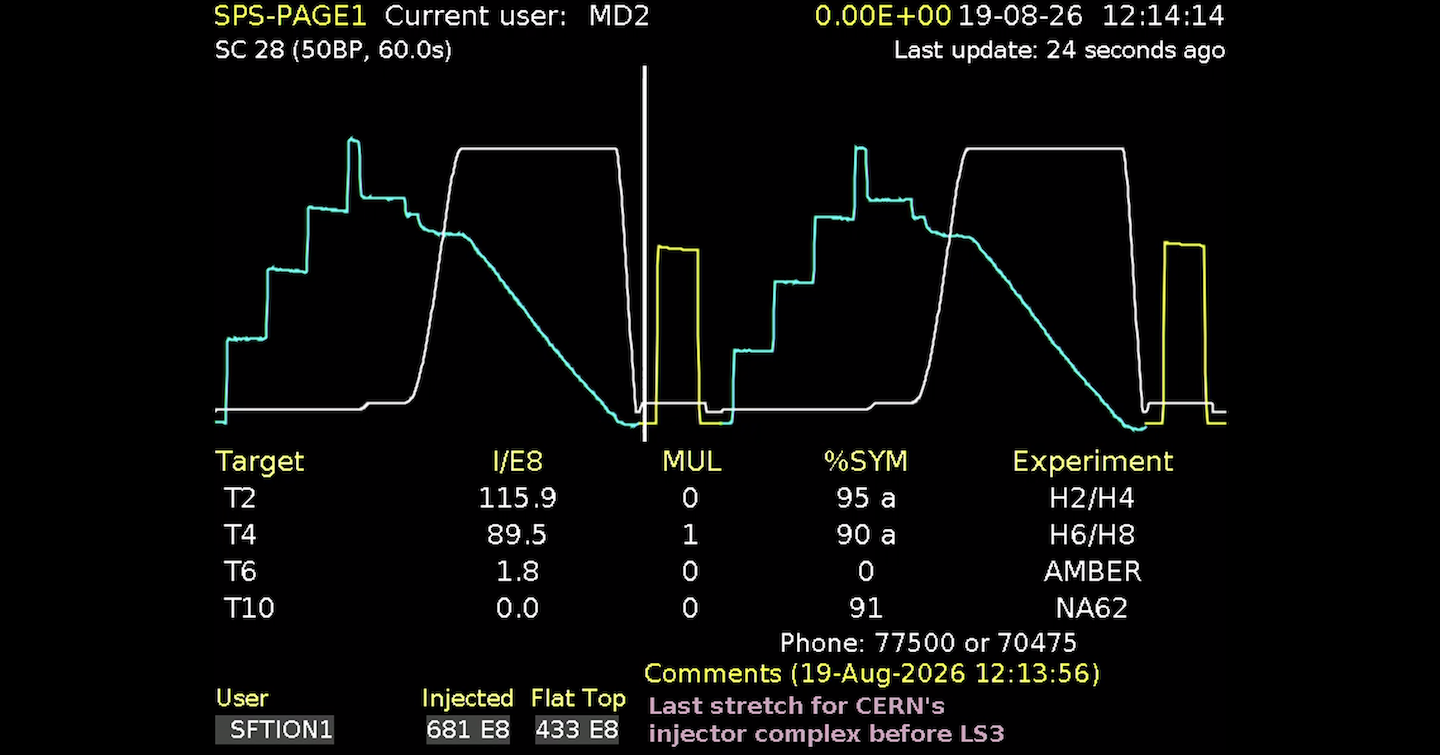
CERN Injector Complex Enters Final Beam Run Phase Before LS3
The CERN accelerator complex is entering its final operational phase before the third Long Shutdown (LS3). With the Large Hadron Collider (LHC) having already entered LS3, the injector complex and associated facilities will continue high-intensity beam operations until 6:00 a.m. on Monday, August 31, after which the operations team will hand over control to the LS3 coordination team, marking the formal transition of the entire accelerator complex into the shutdown maintenance phase. August 19, 2026, page one of the SPS. The third run of the injector complex is drawing to a close. (Image: CERN) During the final week-plus of operations, CERN will continue delivering proton and ion beams to physics experiments.
2026-08-21

Large Hadron Collider experiments reveal neon nucleus may be bowling-pin shaped
A recent experimental result from the Large Hadron Collider at CERN suggests that the internal structure of the neon-20 nucleus may not be approximately spherical as commonly depicted in traditional textbooks, but rather closer to a "bowling pin" shape. This finding provides new experimental clues for studying deformation of light atomic nuclei and collective behavior in high-energy nuclear collisions. Atomic nuclei are composed of protons and neutrons, determining the elemental identity of atoms and carrying most of their mass. Although nuclei are often simplistically depicted as spherical, nuclear physics research has shown that some nuclei exhibit pronounced non-spherical deformation, such as the pear-shaped nuclei mentioned in previous studies. Accurately understanding these shapes helps physicists...
2026-08-21

Hennessy Capital VII and ONE Nuclear Advance "Gas-to-Nuclear" Data Center Power Supply Plan
Hennessy Capital Investment Corp. VII and ONE Nuclear recently held a joint investor update to review the latest progress of their proposed business combination and disclosed ONE Nuclear's gas-to-nuclear strategy developed around the power supply needs of hyperscale data centers. According to relevant documents, the S-4 registration statement filed by both parties became effective on August 3, 2026, and Hennessy Capital VII has mailed the final proxy statement to shareholders of record as of July 31, 2026, for a vote on the business combination. ONE Nuclear stated that its business path will begin with behind-the-meter natural gas power generation to provide faster-deployable on-site electricity for data centers...
2026-08-21
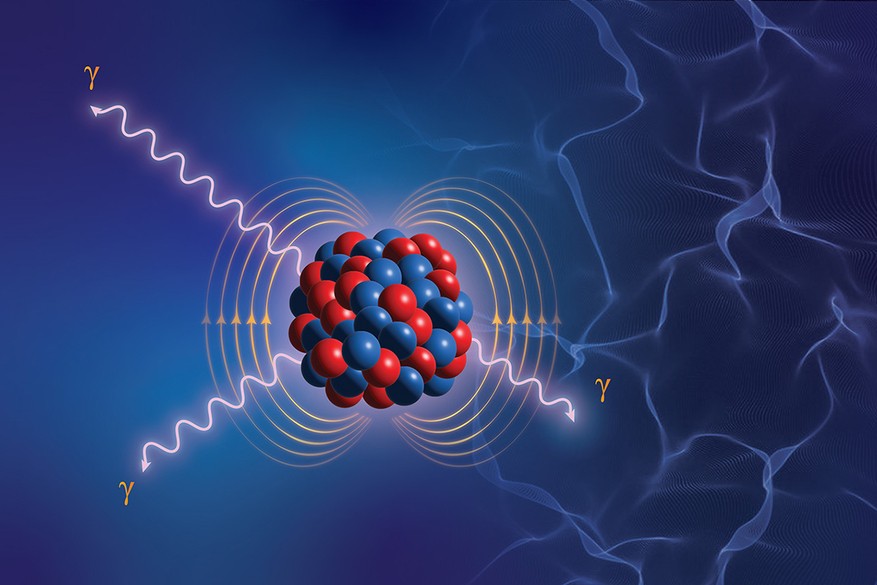
US FRIB Experiment Reveals Magnetic Origin of Anomalous Low-Energy Gamma-Ray Enhancement
According to an August 21 announcement from Lawrence Livermore National Laboratory, a new study led by the U.S. Facility for Rare Isotope Beams (FRIB) with participation from researchers at Lawrence Livermore National Laboratory and other institutions has provided a new experimental explanation for the long-standing low-energy enhancement phenomenon in nuclear physics. The findings were published in the journal Nature. An experiment at the Facility for Rare Isotope Beams (FRIB) has yielded new results, answering a fundamental question about nuclear structure. (Image: FRIB) Gamma rays are a form of electromagnetic radiation. When an excited nucleus loses energy during radioactive decay and transitions to a lower, more stable energy level, it emits gamma rays. Over the past few decades, scientists have discovered that certain nuclei emit anomalously large numbers of low-energy gamma rays, but this phenomenon does not occur in all nuclei, and its occurrence conditions have been difficult to predict reliably in theory.
2026-08-21
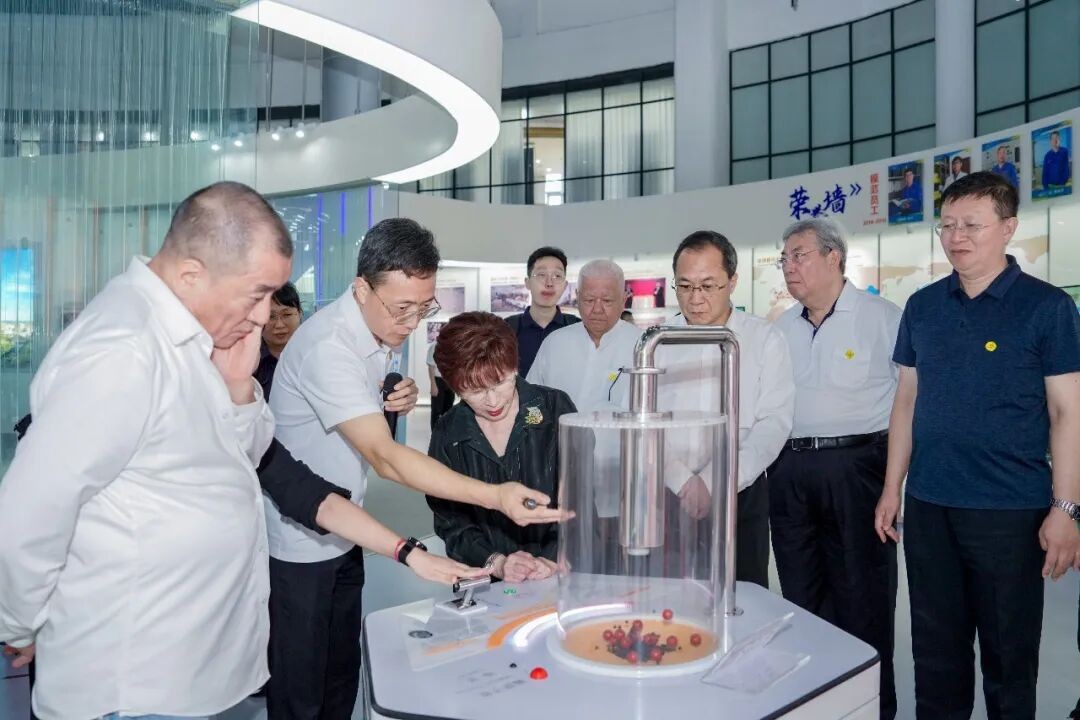
Hung Hsiu-chu, Former Chairman of the Chinese Kuomintang, Visits CGN Yangjiang Nuclear Power Base
From August 15 to 19, the Second Cross-Strait Folk Customs and Sports Festival - Nanhai (Yangjiang) Fishing Season Opening Folk Culture Exchange Activity was held in Yangjiang. Prior to the event, Hung Hsiu-chu, former Chairman of the Chinese Kuomintang and Chairwoman of the China Youth Eagle Peace Education Foundation, led a delegation to visit the CGN Yangjiang Nuclear Power Base on August 15 for an on-site inspection of the nuclear power industry's development achievements. Yang Jianbing, Secretary of the Party Committee and Chairman of Yangjiang Nuclear Power, accompanied the delegation throughout the visit and provided explanations. Zhao Yu, Second-Level Inspector of the Liaison Bureau of the Taiwan Work Office of the CPC Central Committee and the Taiwan Affairs Office of the State Council, Pan Jianyong, Deputy Director of the Taiwan Affairs Office of the Guangdong Provincial Party Committee, Lu Yixian, Secretary of the Yangjiang Municipal Party Committee and Director of the Standing Committee of the Municipal People's Congress, and Li Kun, Secretary of the Yangdong District Party Committee, accompanied the visit. During the visit, Hung Hsiu-chu and her delegation...
2026-08-21
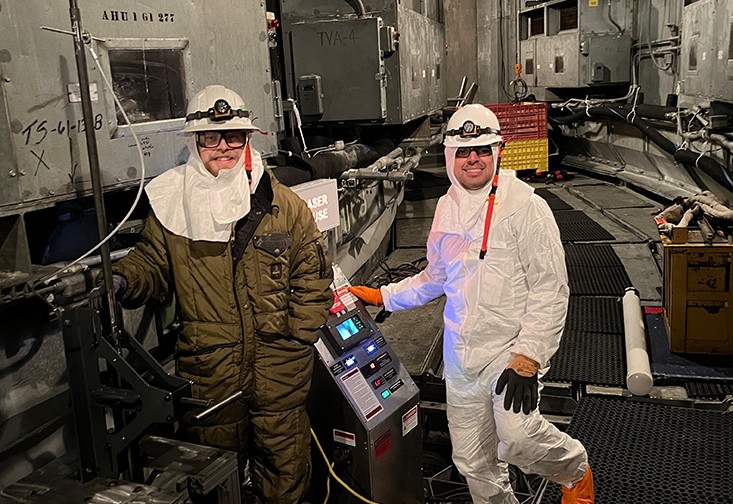
U.S. University Develops Laser De-icing Technology for Nuclear Power Plant Safety System Maintenance
An engineering team at the University of South Florida has developed a customized laser de-icing technology to address the issue of ice basket adhesion in the maintenance of critical safety systems at nuclear power plants. After four years of research, design, and testing, the technology has completed field testing at two nuclear power plants operated by the Tennessee Valley Authority (TVA). Developed jointly by Ahmed Vaselbehagh, Professor of Mechanical and Aerospace Engineering at the University of South Florida, and postdoctoral researcher Ty Hagan, the technology is primarily aimed at ice condenser systems used in certain nuclear power plants in the United States, Japan, and Finland...
2026-08-21

U.S. SYNOPTICS Produces Large-Size Yb:YLF Crystal for Inertial Confinement Fusion Laser Systems
On August 19, SYNOPTICS, a subsidiary of Northrop Grumman, announced that it had successfully grown and harvested a large-size ytterbium-doped yttrium lithium fluoride crystal, namely a Yb:YLF crystal ingot. The crystal measures approximately 127 millimeters at its widest point, with a diameter three times the industry standard. SYNOPTICS stated that as laser engineering continues to expand toward higher efficiency and higher power, the demand for gain media with larger apertures and larger dimensions continues to grow. The Yb:YLF crystal produced this time is approximately 20% larger than the largest crystal the company had previously grown, and approximately 50% larger than the company's conventional product size. Kevin Stevens, General Manager of SYNOPTICS, stated that yttrium lithium fluoride is a commonly used host material for laser-active rare-earth ions, and scaling up the growth of YLF crystals will help laser engineers continue to raise the upper limit of achievable laser output power. He said that such materials are of significant importance for applications including directed energy, inertial confinement fusion, and industrial laser systems. Stevens also stated that Yb:YLF crystals can be used in applications requiring reduced thermal lensing effects and enhanced pulsed energy storage capability, while also leveraging their natural birefringent host to achieve polarization characteristics. According to information recently released by SYNOPTICS, some of the crystals will be used in the high-energy laser system at the German Electron Synchrotron Research Center (DESY) to support its inertial confinement fusion energy research. The company is currently studying the feasibility of further scaling up the size of Yb:YLF crystals, and plans to extend the relevant processes to other rare-earth-ion-doped YLF crystals, including holmium, thulium, and neodymium doping systems.
2026-08-21
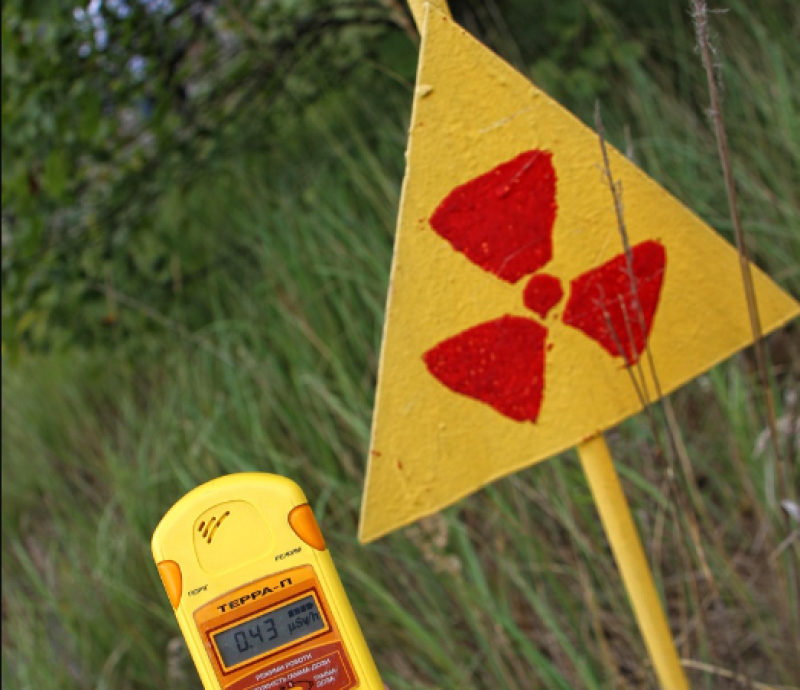
22 Atmospheric Radiation Automatic Monitoring Stations in Shaanxi Operate Stably, with National-Controlled Stations Achieving 99.9% Data Acquisition Rate
In recent years, Shaanxi Province has continuously strengthened the construction of its radiation environmental monitoring network. The 22 atmospheric radiation automatic monitoring stations across the province, including 12 national-controlled stations and 10 provincial-controlled stations, have maintained stable operation. These stations utilize high-pressure ionization chambers, ultra-high-flow aerosol samplers, gamma spectrometers, and other equipment to conduct continuous monitoring of atmospheric instantaneous gamma dose rates, aerosol samples, and gamma radionuclides. Relevant data are transmitted in real time to the system platform of the Shaanxi Provincial Nuclear and Radiation Safety Supervision Station. According to reports, Shaanxi has gradually established an automatic station operation and maintenance management system featuring strong organization, closed-loop responsibility, funding guarantees, standardized procedures, and digital-intelligent empowerment. In 2023, the 5-minute data acquisition rate of Shaanxi's 12 national-controlled stations reached 99.9%, ranking third nationwide.
2026-08-21
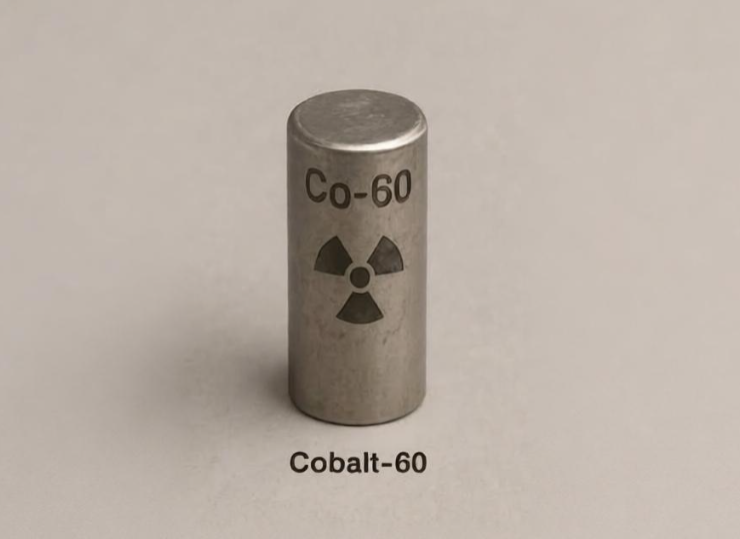
A Category IV Cobalt-60 (Co-60) radioactive source retired in Huangshi
Recently, under the coordinated deployment and on-site supervision of the Huangshi Municipal Ecological Environment Bureau in Hubei Province, a retired Category IV Cobalt-60 (Co-60) radioactive source was transported in a closed loop by a professionally qualified vehicle and safely delivered to the Hubei Provincial Urban Radioactive Waste Repository, where it was permanently sealed in a standardized manner. The collection and storage process for this waste source followed standard procedures with meticulous control, and no readings exceeding limits, equipment loosening, or other safety anomalies occurred throughout the entire transport process. It is understood that this Cobalt-60 radioactive source was originally the core component of a level gauge supporting an enterprise's kiln production line. As the production line was dismantled and scrapped, the related equipment ceased operation, increasing the safety management pressure of the idle radioactive source. Upon receiving the enterprise's disposal application, the Huangshi Municipal Ecological Environment Bureau...
2026-08-21

Norroy Bioscience's 68Ga-NYM096 Receives FDA Breakthrough Therapy and Fast Track Designations
China-based Norroy Bioscience announced on August 19 that the U.S. Food and Drug Administration (FDA) has granted Breakthrough Therapy and Fast Track designations to its radiopharmaceutical imaging agent 68Ga-NYM096. The agent is a PET imaging tracer targeting carbonic anhydrase IX (CAIX), intended for imaging clear cell renal cell carcinoma (ccRCC). According to the company, 68Ga-NYM096 is being developed as a non-invasive PET imaging tool to characterize renal masses detected by CT or MRI and to help distinguish clear cell renal cell carcinoma from other non-ccRCC renal lesions. Clear cell renal cell carcinoma is the most common subtype of renal cell carcinoma...
2026-08-21
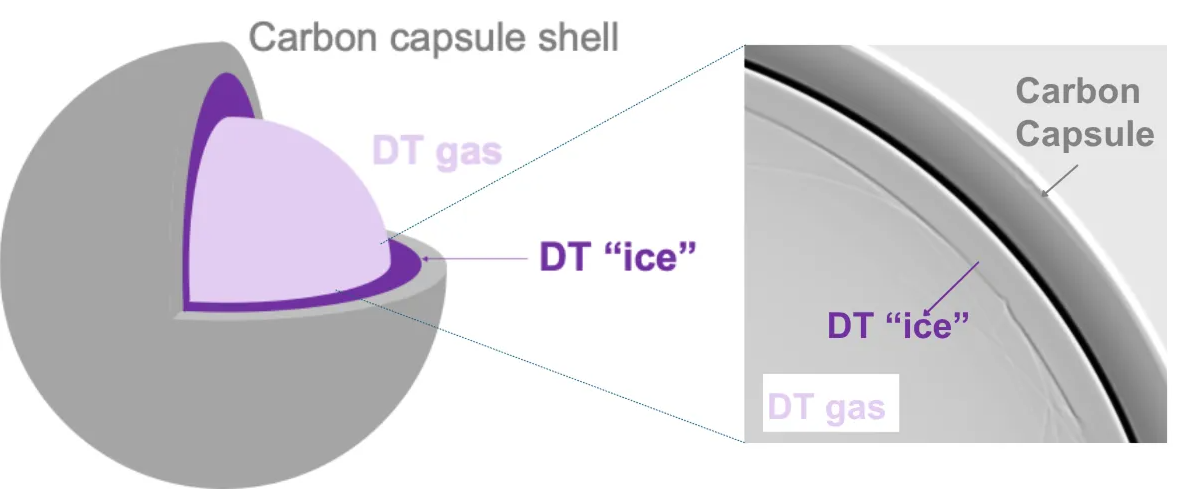
US Inertia Fusion Fuel Preparation Time Significantly Reduced
US fusion startup Inertia Enterprises said it has made progress in inertial fusion energy fuel preparation in collaboration with Lawrence Livermore National Laboratory (LLNL), reducing the time required for the critical step of forming a cryogenic deuterium-tritium fuel layer from potentially several days in the past to tens of minutes. The company said this achievement completes a key task in the first phase of its commercial fusion power plant development goals. The fundamental approach of inertial fusion energy involves using high-energy lasers to compress and heat small targets containing deuterium-tritium fuel, bringing the fuel to ignition conditions and releasing energy. The National Ignition Facility (NIF) has already...
2026-08-21
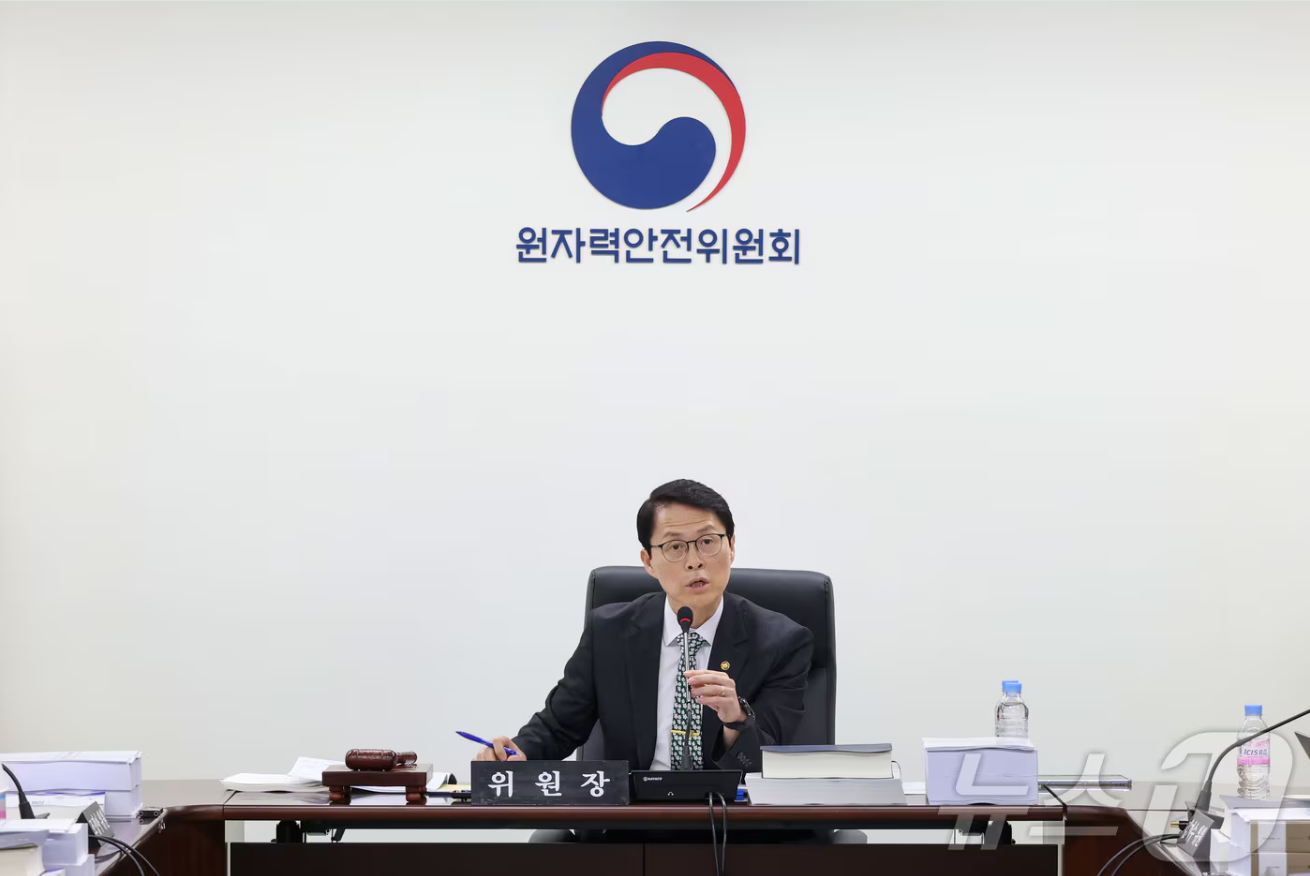
South Korea Approves License Amendment for Gyeongju Low- and Intermediate-Level Radioactive Waste Disposal Facility
The Nuclear Safety and Security Commission (NSSC) of South Korea announced on August 21 that it held its 12th meeting of 2026 in written form on August 20, reviewing and approving the license amendment for the construction and operation of the near-surface disposal facility for low- and intermediate-level radioactive waste operated by the Korea Radioactive Waste Agency (KORAD). The near-surface disposal facility is located in Munmu-daewang-myeon, Gyeongju-si, Gyeongsangbuk-do, and is the second-phase project of the Gyeongju low- and intermediate-level radioactive waste disposal facility. Near-surface disposal refers to the disposal of low- and intermediate-level radioactive waste in near-surface facilities, rather than in deep underground caverns. The facility completed its pre-operational inspection in March this year. This license amendment is primarily intended to update the safety analysis report...
2026-08-21