
Search Results
Keyword:ARC
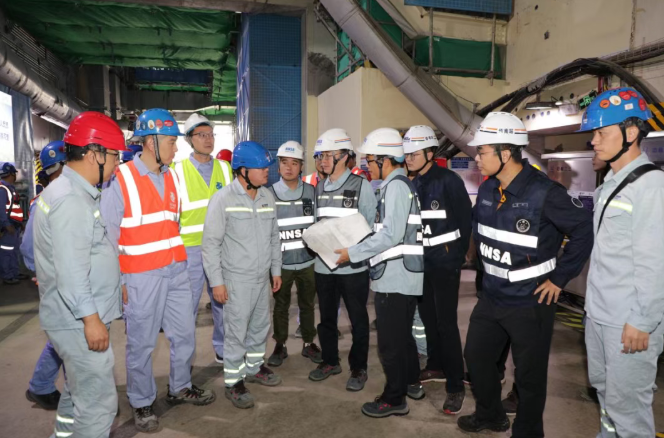
South China Supervision Station and CGN Research Institute Conduct Equipment Supervision Exchange
Recently, the South China Nuclear and Radiation Safety Inspection Station of the Ministry of Ecology and Environment (hereinafter referred to as the South China Supervision Station) and CGN Research Institute Co., Ltd. (hereinafter referred to as the Research Institute) conducted an in-depth work exchange on nuclear safety equipment supervision matters, aiming to further strengthen equipment supervision communication and smoothly take over nuclear safety equipment supervision responsibilities. As an important licensed unit for nuclear safety equipment design and manufacturing in South China and a Class 1 radioactive material transport container design unit, CGN Research Institute detailed at the exchange its nuclear equipment...
2026-11-07
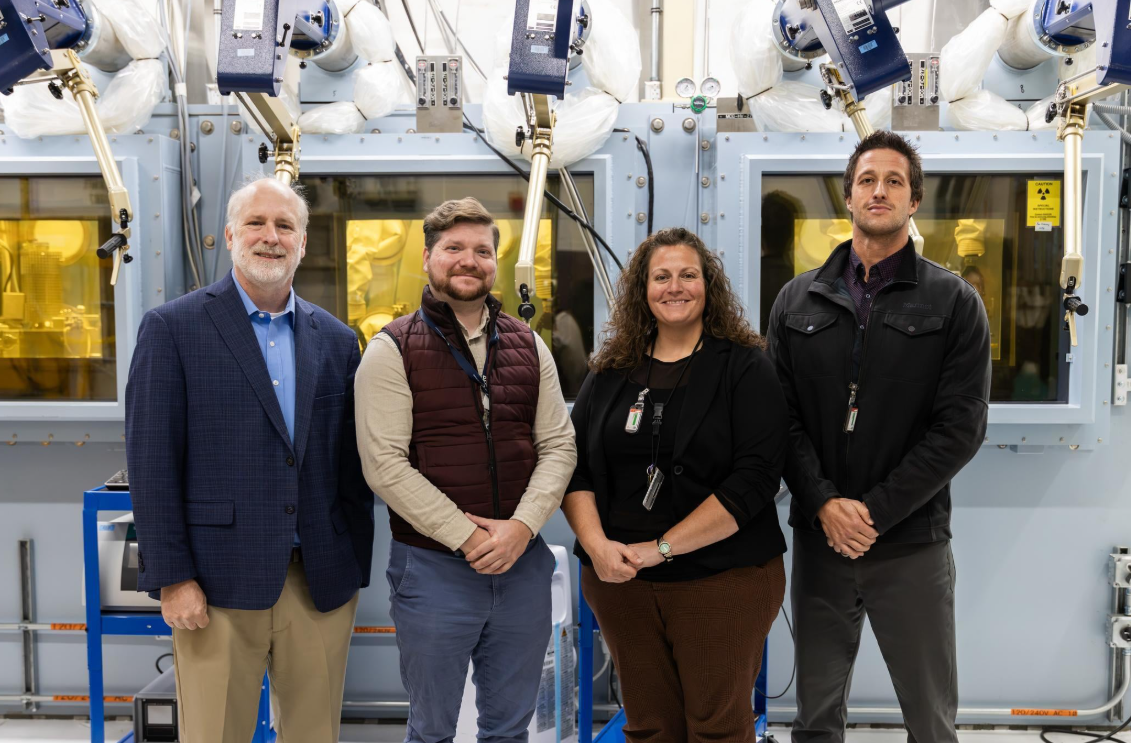
Recycled chloride salt fuel prepares to enter research reactor: Can spent fuel become a resource, and what data must be obtained first?
Turning nuclear material into another kind of fuel. Idaho National Laboratory (INL) announced on November 2 that it will lead the IMPACT project to fabricate and test chloride salt fuel containing recycled transuranic elements. The project has received $7 million in support from the U.S. Department of Energy's Advanced Research Projects Agency-Energy (ARPA-E) and plans to use nuclear materials already available at the laboratory to complete fabrication and property testing, and to conduct irradiation in the Advanced Test Reactor (ATR). This research advances the improvement of spent fuel utilization to a specific question: after recovered materials form new fuel, how exactly do they change in the reactor environment? Moltex participates in modeling and design-related work.
2026-11-05

U.S. Society Publishes Research Progress on Interpretation of Brain Amyloid Imaging
Recently, SNMMI released information on a real-world interpretation study of amyloid PET. The study compared interpretations of nearly 1,500 scan images by routine clinicians and expert panels, providing support for the application of this nuclear medicine examination in daily clinical practice. The study used data from the IDEAS project, selecting approximately 500 scan images for each of three imaging agents, which were visually interpreted by the corresponding expert panels; the majority opinions of the expert panels were then compared with the interpretation results of local clinicians. The results showed that the interpretation concordance rate was 86.6% for positive scans and 91.5% for negative scans; no significant differences in concordance were observed among different imaging agents, suggesting that image interpretation in routine clinical settings has relatively...
2026-11-04
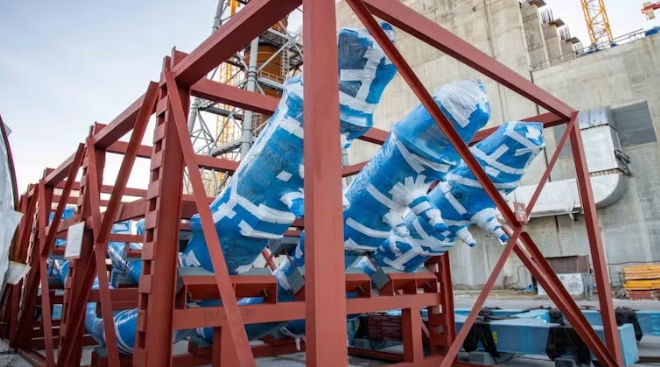
Russia Delivers First Steam Generator for MBIR Fast Neutron Research Reactor
Recently, the Podolsk Machine-Building Plant (ZiO-Podolsk), a subsidiary of Russia's State Atomic Energy Corporation (Rosatom), has officially completed the manufacture and delivery of the first of two steam generators for the Multipurpose Fast Neutron Research Reactor (MBIR). The unit is currently under intensive construction at the Research Institute of Atomic Reactors (NIIAR) in Dimitrovgrad, Ulyanovsk Oblast. It is reported that as the world's largest 150 MW sodium-cooled fast neutron research reactor of its kind, the MBIR employs a unique three-circuit heat transfer scheme and a counter-flow steam generator design, with its technology continuing and optimizing the experience from the BOR-60 reactor, which has been operating smoothly for decades. Each unit weighs 9 tonnes...
2026-11-04

Russian Floating Nuclear Power Plant Improves Air Quality in Arctic City
Recently, the Russian floating nuclear power plant Akademik Lomonosov released its latest environmental monitoring report. The report shows that since the nuclear power plant officially took over most of the heating load of Pevek in the Chukotka Autonomous Okrug in 2022, total pollutant emissions into the local atmosphere have plummeted from 11.64 tons to 2.281 tons, a reduction of nearly 80%. It is reported that Rosatom has established 11 automated radiation monitoring stations in Pevek and its surroundings to conduct comprehensive monitoring of air, water quality, soil, and waste. Monitoring results indicate that all environmental impact indicators are better than the established national standards, with average levels less than 10% of the maximum permissible...
2026-10-31
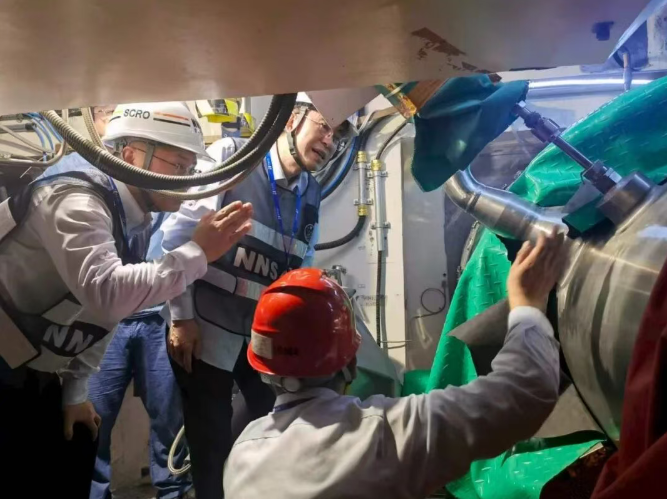
South China Supervision Station Conducts Safety Research at Hainan Changjiang Nuclear Power Base
Recently, the principal responsible person of the South China Nuclear and Radiation Safety Supervision Station (South China Supervision Station) of the Ministry of Ecology and Environment went to the Hainan Changjiang Nuclear Power Base to carry out on-site research and safety verification, comprehensively understanding the safe operation status of operating units, the construction quality of Units 3 and 4, and the commissioning progress of the "Linglong One" onshore commercial modular small reactor (SMR). It is learned that the research team went deep into the production frontline of the Changjiang Nuclear Power Base, focusing on on-site surveys of the main control room of Unit 3, the construction site of Unit 4, and the small reactor building, and held discussions with Huaneng Hainan Changjiang Nuclear Power Co., Ltd. and Hainan Nuclear Power Co., Ltd. respectively, comprehensively sorting out project technical difficulties and management shortcomings, and further tightening and consolidating the nuclear safety responsibility of the operating organization.
2026-10-30

Norway Funds Research and Development of Microreactors for Marine Nuclear Propulsion
Recently, the Research Council of Norway announced an early-stage grant of US$2 million to the Marine Nuclear Power Systems (MarNuPS) project to support the integration and testing of maritime nuclear propulsion technology. It is reported that the project is led by the Norwegian subsidiary of Emerald Nuclear, a U.S. microreactor startup, with a total first-phase research budget of approximately US$15 million. Emerald's GEM microreactor concept uses tristructural isotropic (TRISO) high-assay low-enriched uranium fuel, has a refueling cycle of 5 to 15 years, and plans to adopt a "reactor leasing" rather than direct sales...
2026-10-28
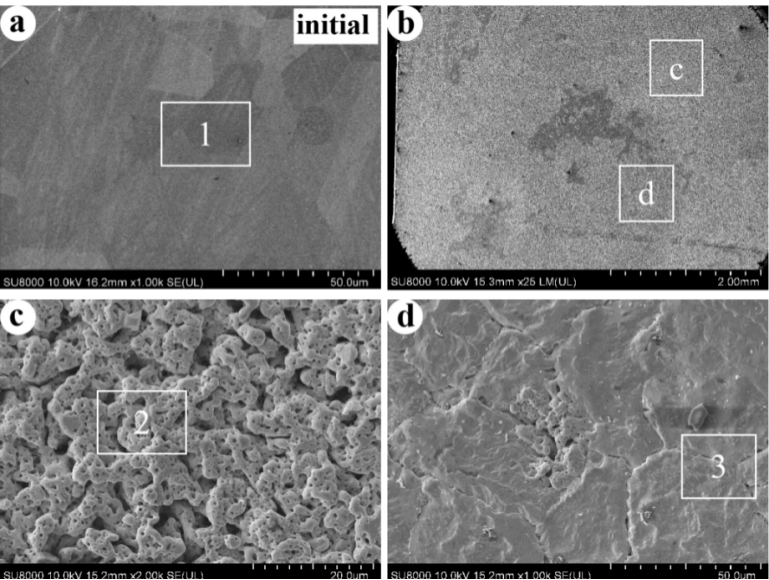
Hefei Energy Research Institute Achieves Progress in Research on Compatibility Between Fusion Materials and Liquid Metals, Providing a Basis for Cladding and First Wall Material Selection
The research team at the Neutron Technology Application Research Center of the Institute of Energy, Hefei Comprehensive National Science Center, has recently made important progress in research on material compatibility and performance evolution mechanisms under liquid metal environments in nuclear fusion reactors. The team conducted in-depth research on the long-term corrosion characteristics of austenitic heat-resistant stainless steel and iron-nickel-based heat-resistant alloys in high-temperature static liquid lead-lithium, as well as the contact damage mechanisms between tungsten fiber-reinforced tungsten matrix composites and liquid lithium. The related results were not only published in top academic journals in the field of nuclear materials, but also presented at the 9th International Symposium on Liquid Metal Applications in Fusion. Liquid lithium and lead-lithium eutectic alloys, due to their...
2026-10-25
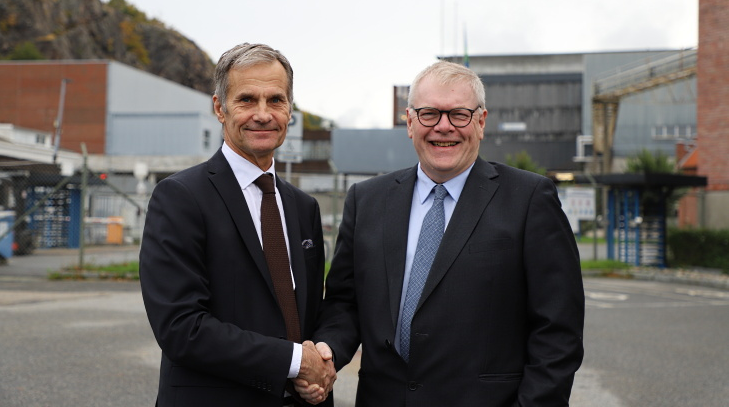
Norway and Sweden Sign Long-Term Agreement for Cross-Border Processing of Spent Fuel from Decommissioned Research Reactors
Recently, the Norwegian Nuclear Decommissioning (NND) and the Swedish nuclear technical service provider Studsvik formally signed a landmark agreement in Halden valid until 2055, under which the latter will take full responsibility for the cross-border transport, inspection, oxidation treatment, and interim storage of spent nuclear fuel from the former research reactors at Halden and Kjeller in Norway. It is understood that Norway has accumulated approximately 16.5 tonnes of spent research reactor fuel over the past 60 years, including metallic uranium fuel, aluminum-clad fuel, and various experimental fuels, the vast majority of which cannot be directly subjected to long-term safe disposal. Under the agreement, Studsvik will transport this spent fuel to its licensed facility outside Nykoping, Sweden, for oxidation and other key processing, after which it will be temporarily stored in Sweden until it is returned to Norway in the future for final geological disposal.
2026-10-17

Construction of the Pallas research reactor in the Netherlands advances steadily, with commercial operation planned before 2032
Recently, the second-phase construction of the Pallas research reactor project in Petten, the Netherlands, has made significant progress, with construction of the underground walls and the Aircraft Protection Shell (APS) advancing steadily. As a key new-build project to replace the aging High Flux Reactor (HFR) currently in service, Pallas is scheduled to complete civil construction around 2030 and achieve full commercial operation before 2032. In terms of engineering and construction details, with the smooth completion of the floor slab on underground level -3, the construction team has fully launched segmented pouring operations for the walls on each underground level and the APS protective shell. On level -3, the APS protective wall is being concreted in 12 successive segments...
2026-10-16

Russia plans to build its first lunar nuclear power plant around 2035 to supply energy for extraterrestrial research bases
Recently, Alexey Likhachev, CEO of Rosatom, stated during a visit to the Atomic Museum at the All-Russian Exhibition Center (VDNKh) that Russia plans to build its first nuclear power plant on the lunar surface before the mid-2030s (around 2035), to provide stable electricity for future lunar bases and research facilities. It is understood that this lunar nuclear power plant will become the core energy hub for future extraterrestrial space stations and deep space exploration infrastructure. Roscosmos signed a formal contract with the Lavochkin Association in December 2025, fully launching the lunar...
2026-10-16
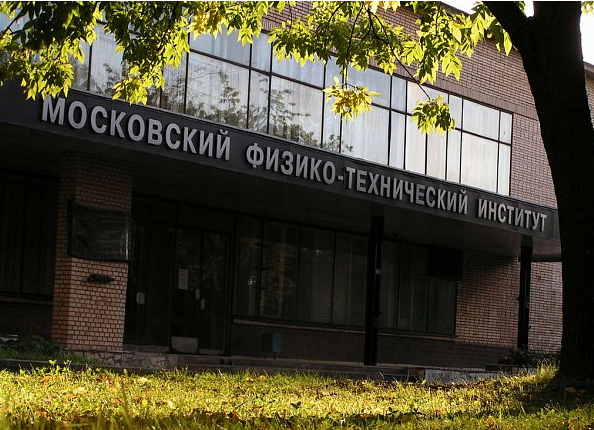
Russian MEPhI Successfully Develops Prototype Instrument for Aurora Research, to Be Launched Aboard CubeSat
Recently, the Geospace Research Laboratory of the National Research Nuclear University MEPhI (Moscow Engineering Physics Institute, abbreviated as MEPhI) in Russia announced the successful development of a prototype instrument for detecting high-energy electrons in Earth's outer radiation belt. This device is a key scientific payload for investigating the causes of auroras and will in the future be launched into orbit as part of a CubeSat 3U space platform from Geoscan LLC. In terms of technical architecture and core parameters, the detector is specifically designed for small spacecraft, overcoming strict size and power consumption constraints. Its core component uses a thallium-doped cesium iodide (CsI(Tl)) scintillation crystal, capable of highly...
2026-10-16
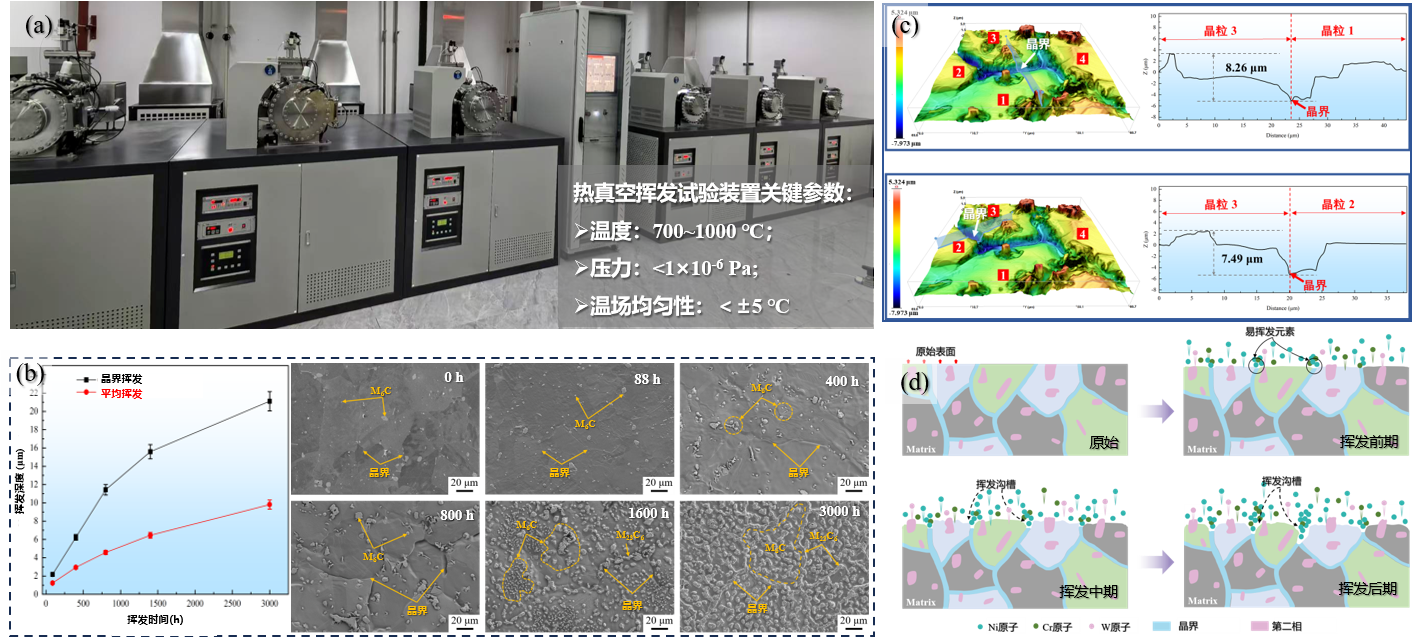
Important Breakthrough Made in Research on Key Structural Materials in China's Reactors
It was learned from CNNC that the China Institute of Atomic Energy, leading a collaboration with Nanchang University, Shanghai Jiao Tong University and other institutions, has achieved an important breakthrough in research on the volatilization behavior of materials under high-temperature ultra-high vacuum conditions, quantitatively revealing for the first time the volatilization anisotropy mechanism of nickel-based alloys under high-temperature ultra-high vacuum. This provides important theoretical basis and experimental data support for the microstructure optimization, life prediction, and reliability design of high-temperature structural materials used in extreme thermal vacuum environments, and is of great significance for promoting the independent and controllable development of high-temperature ultra-high vacuum materials in China. The related research paper was published in the internationally leading journal in the field of corrosion and oxidation, Corrosion Science. Nickel-based alloys...
2026-10-15
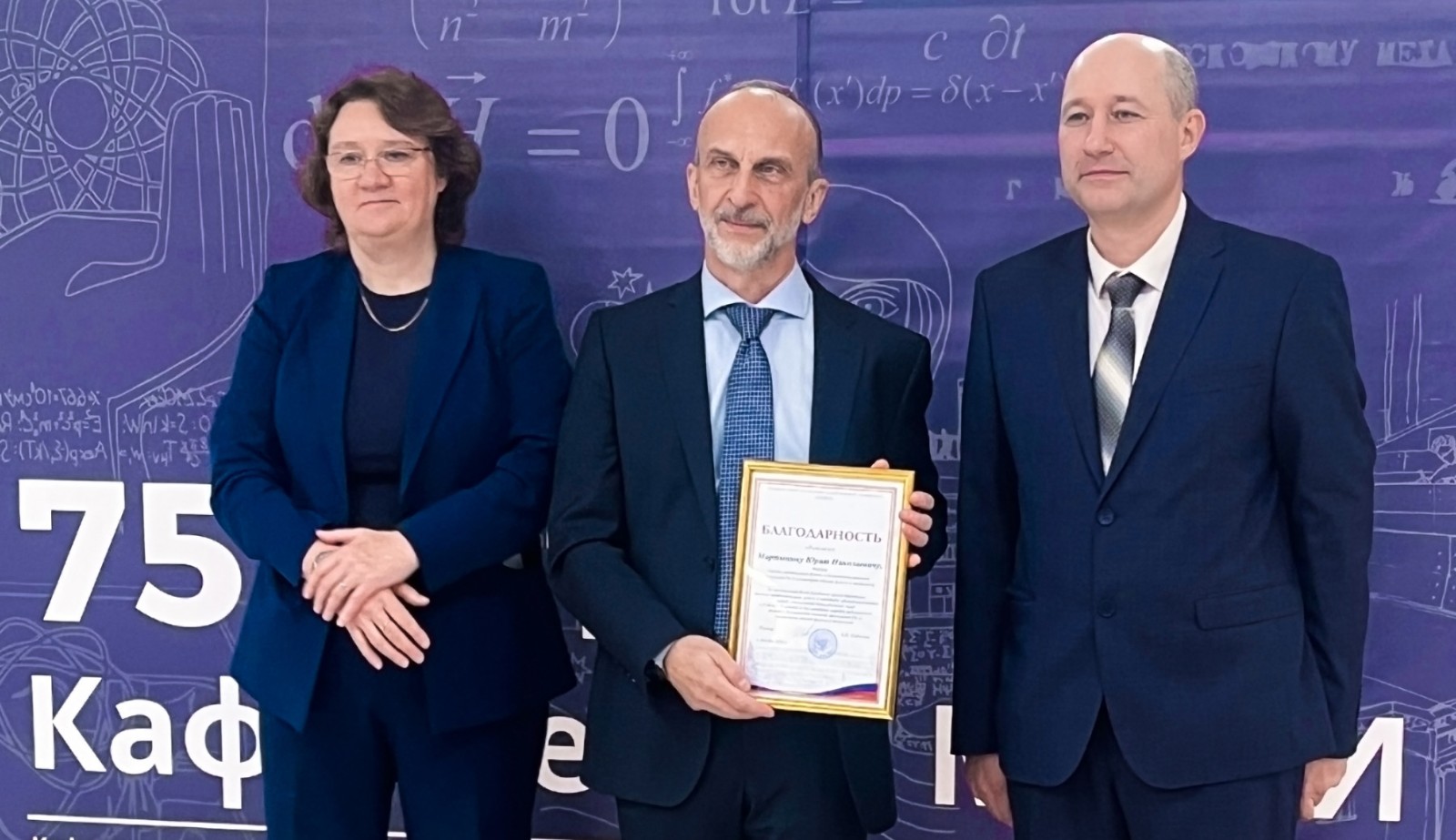
Russian radiation safety instrument manufacturer "Doza" Research and Production Enterprise congratulates Department No. 1 of the Moscow Engineering Physics Institute on the 75th anniversary of its founding
National Research Nuclear University MEPhI held a grand ceremony on October 2 to celebrate the 75th anniversary of its historic Department No. 1—the Department of Radiation Physics and Safety of Nuclear Technologies. Several experts from the renowned Russian radiation safety monitoring system research, development, and manufacturing enterprise NPP Doza, who serve both as key technical personnel of the company and as faculty members at the university, were invited to attend the event. As a major center for training professional and technical personnel for Russia's nuclear industry...
2026-10-14
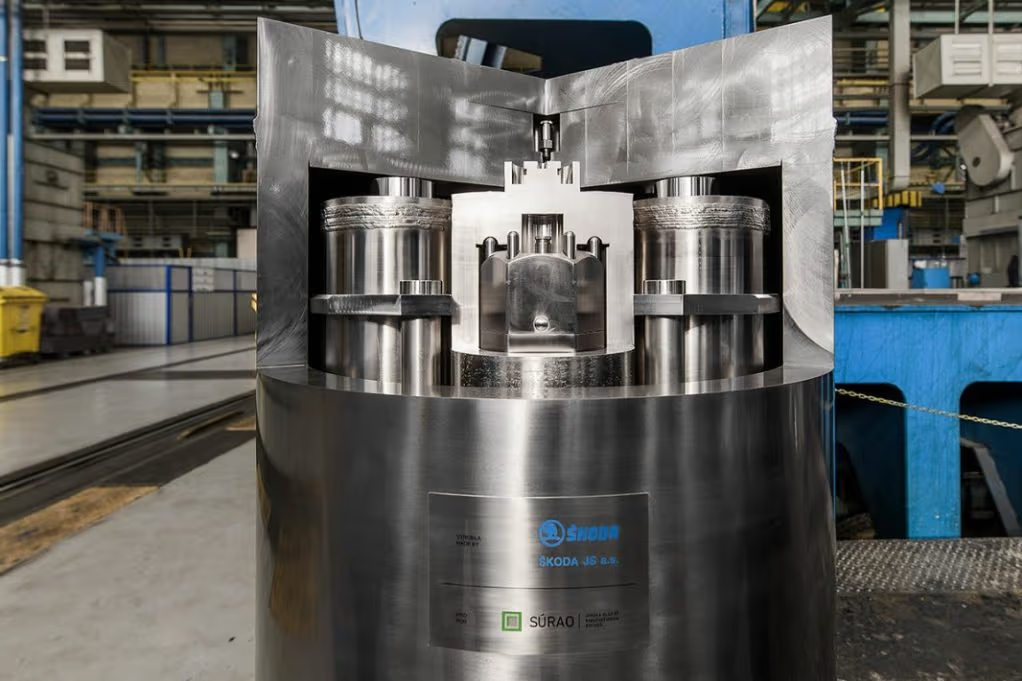
Czech Škoda JS Wins First Polish Nuclear Energy Order, to Invest About CZK 300 Million in Modernizing MARIA Research Reactor
Pilsen-based Škoda JS a.s., part of the Czech ČEZ Group, has recently won its first commercial contract in the Polish market. The company will invest approximately CZK 300 million to carry out a comprehensive modernization of the MARIA research reactor, which belongs to the Polish National Centre for Nuclear Research (NCBJ) and is located in Otwock, near Warsaw. Škoda JS spokesperson Karel Samec confirmed the deal to the Czech News Agency (ČTK), saying the company hopes to use this as an opportunity to further expand into the Polish nuclear power market and to secure a role as a core equipment...
2026-10-12