
Search Results
Keyword:CT

Iran and Russia Plan Joint Construction of Small Modular Reactors
Recently, Behrouz Kamalvandi, spokesperson for the Atomic Energy Organization of Iran (AEOI), announced that Iran is currently at a critical stage of signing a cooperation agreement with Russia, aimed at comprehensively accelerating the joint construction and engineering implementation of small modular reactors (SMRs) between the two sides. It is reported that Kamalvandi made this announcement while attending the 6th Nuclear Energy Ministerial Meeting held in South Korea. He pointed out that in recent years, escalating global environmental challenges have further highlighted the urgency of expanding nuclear power generation. Currently, the total installed nuclear power capacity worldwide is approximately 400,000 MW, of which Iran's Bushehr ...
2026-10-29
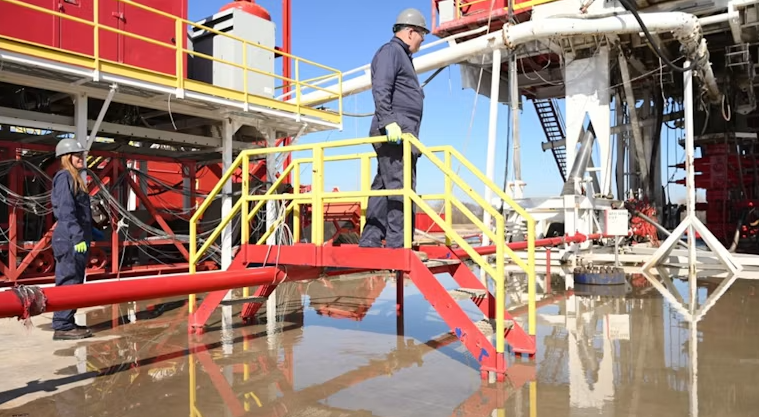
US Company Deep Isolation Announces Start of Site Preparation for Texas Deep Borehole Demonstration Project
Recently, US-based nuclear waste disposal technology company Deep Isolation Nuclear announced that it has officially launched site preparation activities at its Deep Borehole Demonstration Center in Texas, marking the entry of deep borehole nuclear waste disposal technology into the pilot construction phase. It is reported that the project was selected for the Scaleup Ready program of the US Department of Energy (DOE) Advanced Research Projects Agency-Energy (ARPA-E) and received up to $40 million in federal funding support. This site preparation work includes building a calculated wellsite to provide the surface foundation for subsequent drilling, casing, and cementing operations of the demonstration borehole. The wellsite...
2026-10-29
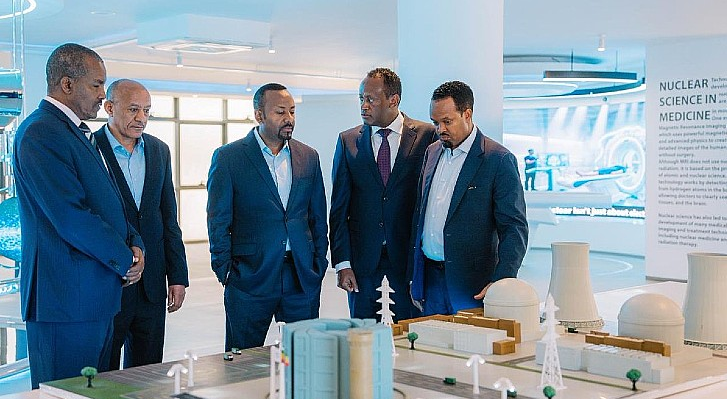
Ethiopian Prime Minister Announces Launch of Nuclear Power Program, Plans to Build Two Reactors
Recently, Ethiopian Prime Minister Abiy Ahmed Ali stated during an inspection visit to the Ethiopian Nuclear Energy Commission that developing nuclear energy is the next chapter in Ethiopia's pursuit of technological progress and economic transformation, and that the country will be committed to converting its abundant natural resources into tangible drivers of prosperity. It is reported that Ethiopia plans to build two nuclear reactors with a unit capacity of 1,200 megawatts each. Abiy Ahmed Ali pointed out that although nuclear power requires high initial investment and a construction period of at least ten years, its high stability and high output characteristics, which are unaffected by seasonal fluctuations, offer irreplaceable and significant advantages over hydropower and solar energy...
2026-10-29
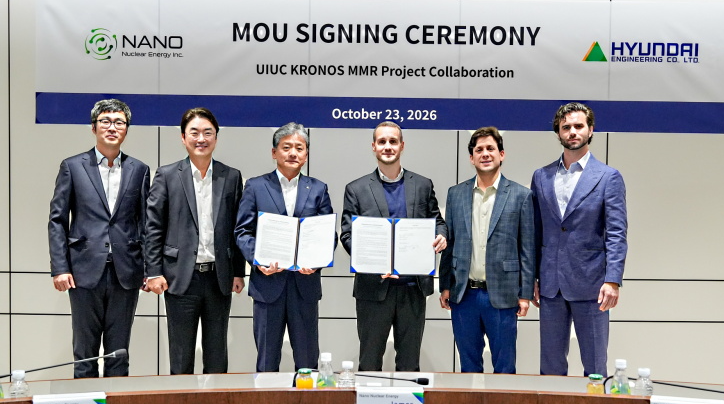
Hyundai Engineering of South Korea Partners with Two U.S. SMR Developers
Recently, Hyundai Engineering of South Korea announced the signing of memoranda of understanding with U.S. small modular reactor (SMR) developers NANO Nuclear Energy and ARC Clean Technology, marking a comprehensive push into the global small modular reactor and Generation IV advanced nuclear reactor markets. Under the cooperation framework with NANO Nuclear, Hyundai Engineering will integrate its comprehensive capabilities in engineering design, procurement, construction (EPC), supply chain management, and modular construction to jointly advance the KRONOS reactor energy system project at the University of Illinois Urbana-Champaign (UIUC). The reactor is a 45...
2026-10-29

Micro Suns of the Atom: Deconstructing the Radioisotope Nuclear Battery Supply Chain Behind Deep Space Exploration
In humanity's ultimate quest to explore the macrocosm and the abyssal depths of the Earth, the greatest physical constraint is often not the strength of mechanical structures, but the ubiquitous decay of energy. Whether in the red Martian deserts far from sunlight where photovoltaic panels completely fail, or on the seafloor ten thousand meters below where no daylight reaches and pressures exceed a thousand atmospheres, conventional chemical batteries and solar cells are both found wanting in extreme environments. However, at the intersection of microscopic nuclear physics and extreme engineering, a class of physical perpetual motion machines that require no charging, no sunlight, and rely on the energy released by the decay of microscopic atoms themselves—Radioisotope Thermoelectric Generators (RTGs, a static energy conversion device that directly converts the decay heat of radioisotopes into electrical energy through the thermoelectric effect)—is becoming the ultimate energy foundation for humanity to knock on the doors of deep space and the deep sea.
2026-10-28
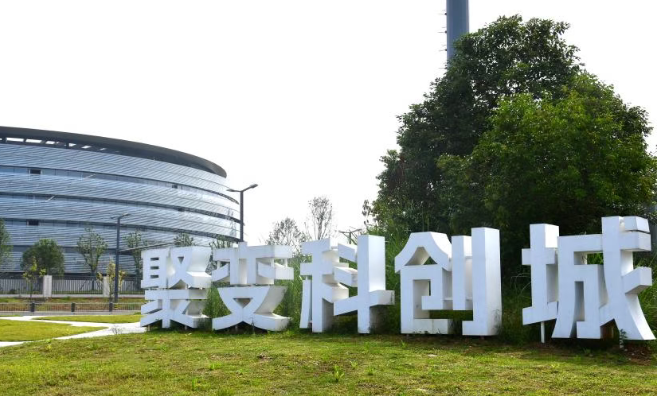
From Aerospace to the "Artificial Sun": Deconstructing the Extreme Manufacturing Breakthrough of China's Fusion Industry Chain
In the grand narrative of controlled nuclear fusion, public attention is often drawn to plasma temperatures exceeding 100 million degrees, the massive scale of tokamaks, and the ultimate vision of unlimited clean energy. However, in the shadows beyond the spotlight of fundamental physics, what determines whether humanity can truly tame nuclear fusion has never been merely theoretical breakthroughs in laboratories, but rather the extreme manufacturing foundation hidden within micron-level machining precision, ultra-high vacuum sealing, and extreme material irradiation. As global commercial fusion startups struggle in Western capital markets due to high capital burn rates and supply chain fractures, the Fusion Science and Technology Innovation City—located within the Science City of Chengdu Tianfu New Area, with a core planned area of...
2026-10-28
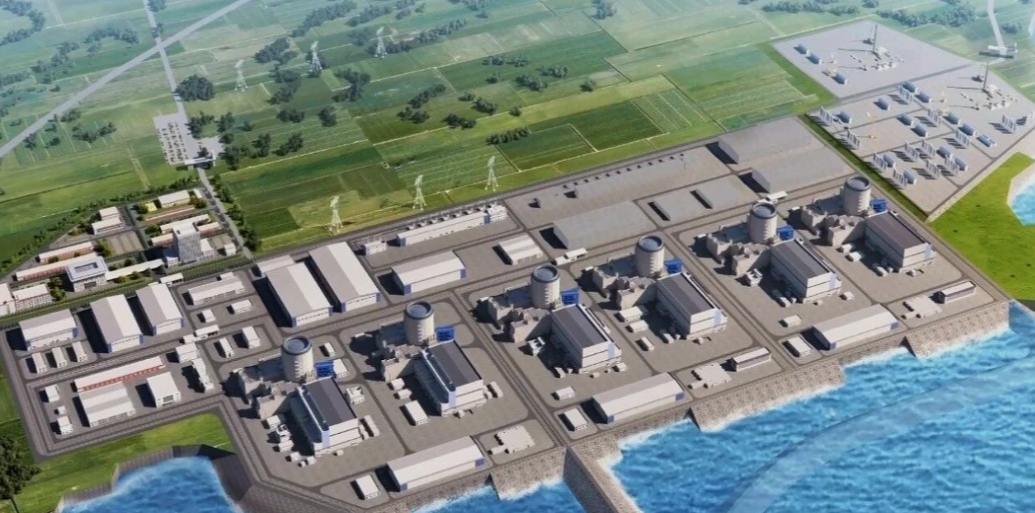
CNNC and CSCEC Consortium Wins Major Zhuanghe Nuclear Power Marine Engineering Contract
Recently, the public announcement of the winning candidates for the marine engineering works of Phase I of the Liaoning Zhuanghe Nuclear Power Plant Project was officially released. The consortium composed of China Nuclear Industry Huaxing Construction Co., Ltd. and CSCEC Port and Waterway Engineering Bureau Group Co., Ltd. successfully secured the top position with a bid price of 1,356,800,300 yuan, becoming the first winning candidate. It is reported that this marine engineering works, as one of the key contract packages of the nuclear power project, covers core construction contents including the water intake open channel, plant area revetment, heavy-lift wharf, marine outfall drainage works, and temporary construction cofferdam. The maximum bid price for the project is approximately 1.484 billion yuan, with construction planned to commence on January 31, 2027, and a total construction period of 1,034 days. Upon completion, it will fully satisfy the nuclear power plant's cooling water intake and discharge, heavy equipment transportation, and plant area wave and flood protection requirements.
2026-10-28
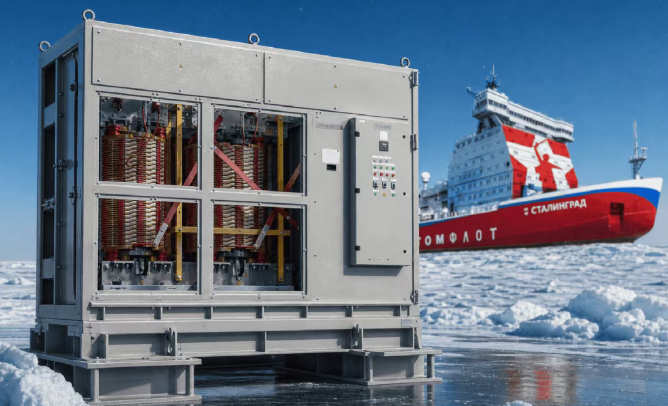
Russian Maritime Register of Shipping Completes Inspection of Key Transformers for Nuclear-Powered Icebreaker
Recently, the Nuclear Ship Branch of the Russian Maritime Register of Shipping (RS) successfully completed the technical inspection of the ТРСЗП-6000/10-ОМ4 three-phase dry-type power transformer intended for the Project 22220 universal nuclear-powered icebreaker Stalingrad. It is reported that the inspection was led by Alexander Mamontov, Chief Engineer Surveyor of the RS Nuclear Ship Branch, and the equipment was manufactured locally by the St. Petersburg-based Electro-Physics company. The transformer has a rated power of 6000 kVA and a rated voltage of 10.5 kV,...
2026-10-28

MEPhI Develops Diagnostic Methods for Reactor and Chip Overheating Prevention
Recently, the team from the Laboratory of Thermal Hydraulics and Boiling Physics at the Moscow Engineering Physics Institute (MEPhI) proposed an early diagnostic method for heat transfer crisis based on the analysis of temperature fluctuations on heat-dissipating surfaces, which enables accurate prediction before dangerous boiling phenomena occur, thereby significantly enhancing the safety margin and economic efficiency of nuclear power plants. It is known that in the operation of pressurized water reactors such as VVER, if bulk boiling occurs in the reactor core, it can easily trigger a heat transfer crisis and lead to fuel element melting; therefore, operating nuclear power plants typically adopt a conservative underload operating strategy. Laboratory Director Kirill Kutsenko pointed out that this research, by establishing the correlation between coolant pressure, flow rate...
2026-10-28
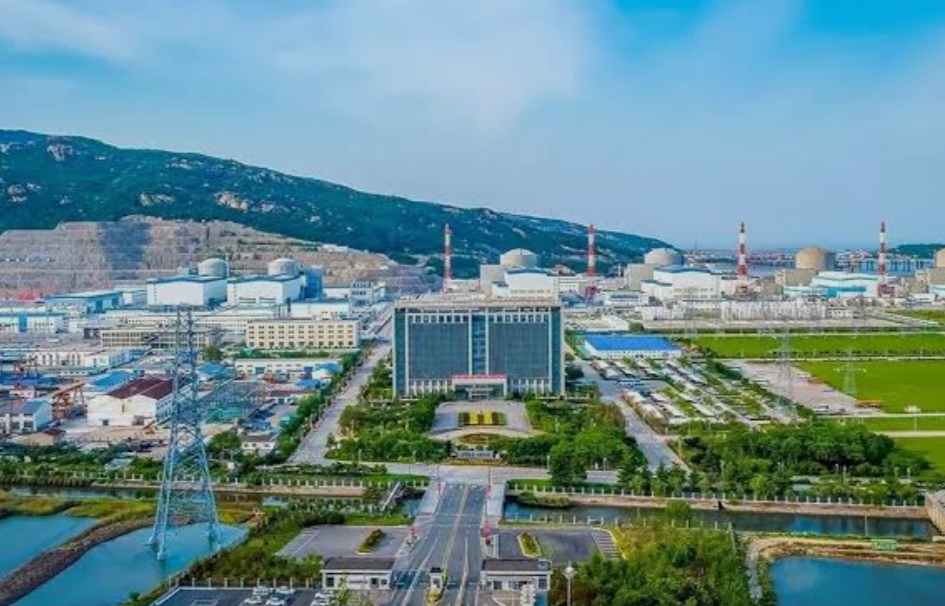
Tianwan Tidal Flat PV Project Surpasses One Million Kilowatts to Build a Nuclear-PV-Storage Hub
Recently, the cumulative grid-connected capacity of the CNNC Tianwan 2-million-kilowatt tidal flat photovoltaic demonstration project, located in the thermal discharge sea area of Tianwan Nuclear Power Station in Lianyungang, Jiangsu Province, has exceeded 1 million kilowatts. This marks a breakthrough of 77% in the construction progress of the world's first nuclear-thermal-PV-storage multi-energy complementary demonstration project, representing a key step toward the goal of full-capacity commissioning by the end of the year. It is understood that the project covers approximately 28,300 mu of sea area and is the largest offshore photovoltaic project in China as well as a project in the third batch of national large-scale wind and photovoltaic bases. Its core innovation lies in the three-dimensional composite utilization of sea areas—the water body retains the circulating function of nuclear power thermal discharge, while photovoltaic arrays are installed on the sea surface, achieving dual use of a single sea area without additional land occupation;...
2026-10-28
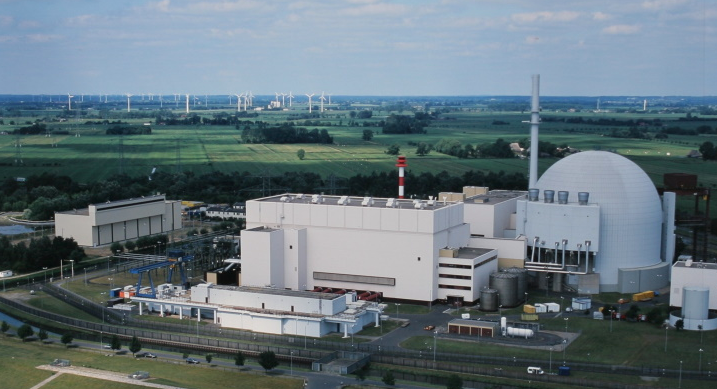
NVIDIA to Assess Construction of AI Data Centers at Decommissioned German Nuclear Power Plant Sites
Recently, PreussenElektra, the nuclear facility decommissioning subsidiary of Germany's E.ON Group, and multinational technology giant NVIDIA have entered into a partnership to jointly assess whether PreussenElektra's decommissioned nuclear power plant sites are suitable for building high-performance AI data centers (i.e., artificial intelligence factories). It is reported that PreussenElektra owns 8 decommissioned nuclear power plant sites currently in the dismantling phase, including well-known facilities such as Brokdorf. Since former nuclear power plant sites generally feature large industrial land areas, high-performance grid connections, and comprehensive infrastructure, they have become ideal sites for meeting extremely high power demands and computing...
2026-10-28
South Korea Expects Tripling of Demand for Nuclear Design Personnel by 2034
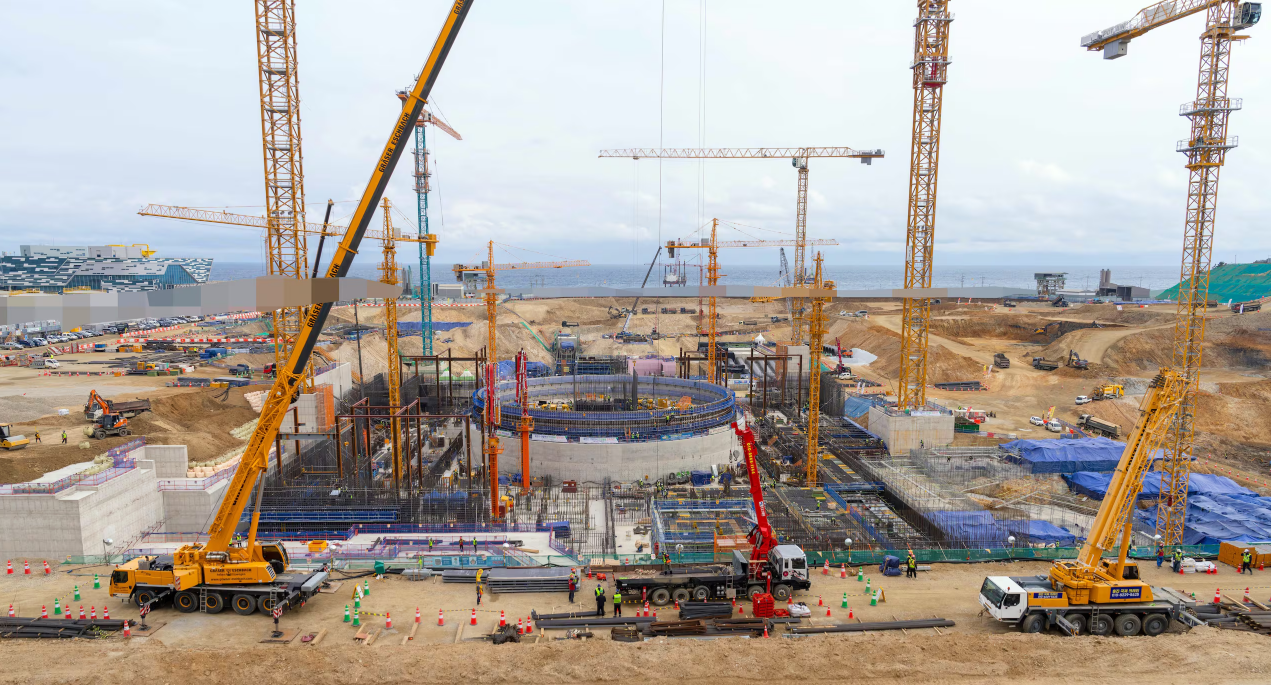
Recently, the Industry-Academic Cooperation Foundation of Seoul National University and KEPCO E&C jointly released a report titled "Human Resource Enhancement Plan to Boost Nuclear Power Plant Export Competitiveness," warning that with the revival of nuclear power at home and abroad, South Korea will simultaneously construct 15 nuclear power plants domestically and overseas by 2034, at which point demand for design personnel will surge to 4,171, facing a severe talent gap of up to 2,771. It is reported that the root cause of South Korea's nuclear design talent crisis lies in the brain drain and shrinkage of academic foundations caused by the previous nuclear phase-out policy. Data from the Ministry of Science and ICT of South Korea show that the number of domestic nuclear design personnel has plummeted from 2,486 in 2016 to 20...
2026-10-28

Gigawatt-Scale Computing Meets Megawatt-Scale Fission: Examining the Underlying Assets and Geopolitical Restructuring Behind Asia-Pacific's Nuclear Renaissance
As human civilization enters the "century of electricity," large AI models and hyperscale data center clusters are devouring power grids at an astonishing pace. When intermittent renewable energy cannot satisfy the stringent demand of high-load data centers for absolutely stable baseload power, nuclear energy—long marginalized or viewed with caution in the Asia-Pacific region—is now experiencing an unprecedented rational return. According to the Asia-Pacific energy observations published by Ben Carrozzi, a partner at international law firm Norton Rose Fulbright, data center electricity demand in Southeast Asia is projected to surge fourfold between 2025 and 2035, rising from 2.6 gigawatts (G...
2026-10-28
US Plans $15 Billion Nuclear Reactor Manufacturing Hub in Oak Ridge
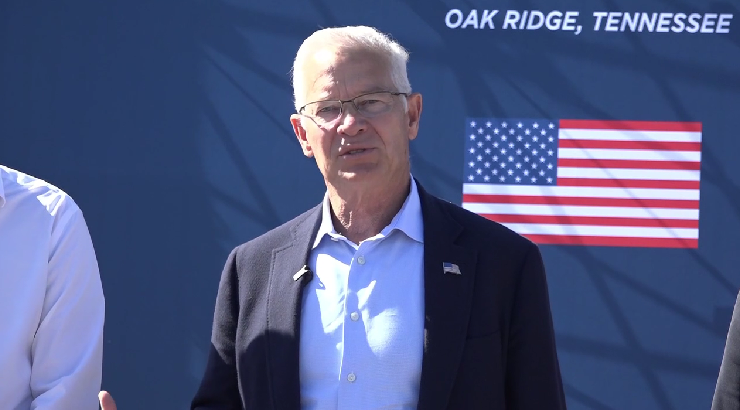
Recently, the U.S. Department of Energy (DOE) and several nuclear energy companies jointly announced that they will invest a total of $15 billion to build a nationwide advanced nuclear reactor development and equipment manufacturing center in Oak Ridge, Tennessee. It is reported that the project is primarily driven and supported by private capital and is expected to create approximately 10,000 high-paying technical jobs locally over the next five years. The plan aims to completely reshape Oak Ridge's nuclear energy industrial landscape by shutting down legacy gaseous diffusion facilities and building new advanced nuclear fuel fabrication plants, uranium enrichment facilities, and modular reactor production lines, establishing a reactor manufacturing supply...
2026-10-28
Norway Funds Research and Development of Microreactors for Marine Nuclear Propulsion
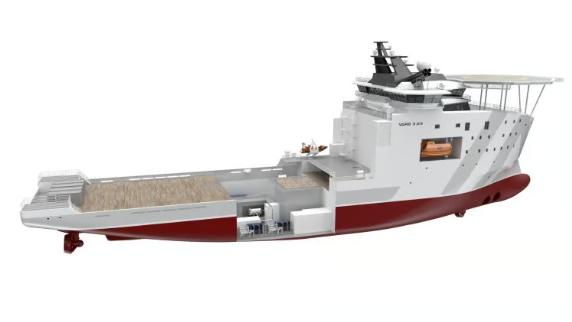
Recently, the Research Council of Norway announced an early-stage grant of US$2 million to the Marine Nuclear Power Systems (MarNuPS) project to support the integration and testing of maritime nuclear propulsion technology. It is reported that the project is led by the Norwegian subsidiary of Emerald Nuclear, a U.S. microreactor startup, with a total first-phase research budget of approximately US$15 million. Emerald's GEM microreactor concept uses tristructural isotropic (TRISO) high-assay low-enriched uranium fuel, has a refueling cycle of 5 to 15 years, and plans to adopt a "reactor leasing" rather than direct sales...
2026-10-28