
Search Results
Keyword:CT
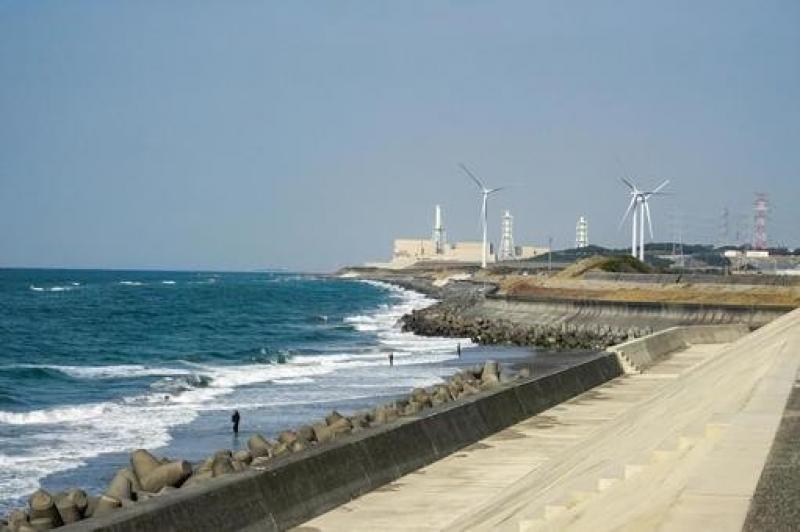
Chubu Electric Power considers withdrawing Hamaoka nuclear plant restart review application
Chubu Electric Power Company (CEPCO) is considering withdrawing its restart review application for Units 3 and 4 of the Hamaoka Nuclear Power Plant. The plant is located in Omaezaki City, Shizuoka Prefecture, Japan, and it was previously revealed that seismic design data related to the restart review was suspected of falsifying "design basis ground motion" data, making the ground motion amplitude in the submitted materials lower than originally expected. On the morning of the 11th, Chubu Electric Power announced that it had received a report submitted by an investigation committee composed of external lawyers. The committee was commissioned by Chubu Electric Power to investigate the causes and process of the seismic design data issue at the Hamaoka Nuclear Power Plant. Chubu Electric Power President Shingo Hayashi and others plan to hold a press...
2026-09-11

Director of the Division of Radiation, Transport and Waste Safety, Department of Nuclear Safety and Security, IAEA, Van den Howe, Visits the Nuclear and Radiation Safety Center of the Ministry of Ecology and Environment
On September 8, 2026, Ms. Hildegard Van den Howe, Director of the Division of Radiation, Transport and Waste Safety, Department of Nuclear Safety and Security, International Atomic Energy Agency (IAEA), visited the Nuclear and Radiation Safety Center of the Ministry of Ecology and Environment (hereinafter referred to as the Center). Chai Guohan, Director of the Center, and heads of relevant departments participated in the exchange activities. At present, cooperation between the Center and the IAEA is continuously deepening. Since being designated by the IAEA in May 2023 as the world's first Collaborating Center for Nuclear and Radiation Safety, the Center has, relying on this platform, successfully hosted high-level activities such as the Nuclear and Radiation Safety Leadership Workshop, the ANSN Regional Workshop, and multiple international training sessions, with the platform's clustering and radiation effects becoming increasingly prominent. The Center has always been a trusted partner of the IAEA.
2026-09-11

Yanchaojuneng Completes VPI of Stainless Steel-Jacketed Superconducting Prototype Coil for Stellarator
Recently, Yanchaojuneng (Shanghai) Technology Co., Ltd. completed vacuum pressure impregnation (VPI) of a next-generation stellarator stainless steel-jacketed three-dimensional shaped superconducting prototype coil. Previously, the prototype coil had completed two core processes: three-dimensional precision winding and ground insulation wrapping. The completion of VPI signifies that the company has established an autonomous process chain from coil winding and forming, insulation wrapping, to integrated insulation curing. The stellarator is an important device type for steady-state operation in the field of controlled nuclear fusion, capable of reducing the risk of major plasma disruptions. Three-dimensional shaped superconducting coils are the core components for building the magnetic field that confines plasma in a stellarator. Public information shows that Germany's W7-X stellarator uses aluminum alloy jackets...
2026-09-10
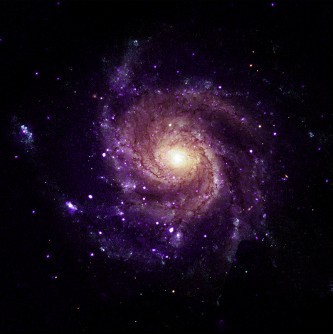
NASA's Chandra Telescope Discovers 84 Mysterious Supersoft X-ray Sources
NASA's Chandra X-ray Observatory recently announced that researchers using the observatory's publicly available observation data discovered 84 mysterious celestial objects known as supersoft X-ray sources in 6 galaxies. The related research was published in Nature Astronomy. Image credit: X-ray: NASA. These objects emit X-rays with unusually low energy and may be accompanied by strong high-energy ultraviolet radiation. The research team stated that the behavior of these objects is clearly different from previously observed known celestial bodies and may provide new clues for explaining the origin of Type Ia supernovae and the electron-stripping mechanism in the intergalactic medium. The 6 galaxies covered by this search include two spiral...
2026-09-10

Sichuan Energy Nuclear Industry Co., Ltd. Established in Chengdu, Focusing on Advanced Nuclear Microreactor R&D
On September 9, according to Chengdu Sci-Tech Innovation Investment Group, Sichuan Energy Nuclear Industry Co., Ltd. recently completed its establishment in Chengdu with a registered capital of 1 billion yuan. The company was jointly funded and established by Chengdu Sci-Tech Innovation Investment Group through its Chengdu Future Industry Venture Capital Fund, together with Sichuan Energy Development Group, China Nuclear Power Research and Design Institute, Shenzhen Capital Group, and other state-owned capital entities, with its registered address in Chengdu. According to disclosed information, Sichuan Energy Nuclear Industry Co., Ltd. will mainly focus on advanced nuclear microreactor technology R&D iteration, industrialization implementation, and green energy technology layout, positioned as a resource integration center, R&D innovation center, and investment decision-making center, with priority on advancing advanced multi-purpose...
2026-09-10
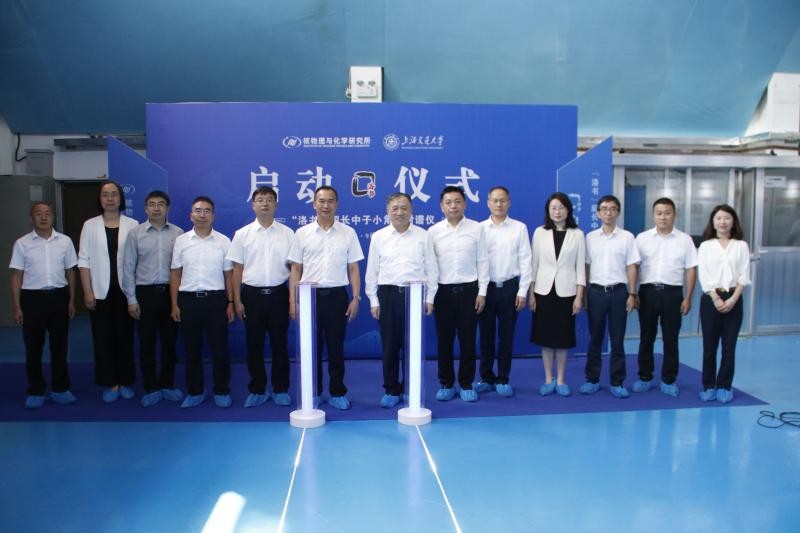
Shanghai Jiao Tong University's "Luoshu" Ultra-Long Neutron Small-Angle Scattering Spectrometer Officially Commissioned
On September 2, the launch ceremony for Shanghai Jiao Tong University's Luoshu Ultra-Long Neutron Small-Angle Scattering Spectrometer was held at the China Mianyang Research Reactor. Yang Zhenbin, Secretary of the Party Committee of Shanghai Jiao Tong University, Huang Ming, Vice President of the China Academy of Engineering Physics, and other leaders attended the event to jointly witness the official commissioning of this major scientific research facility. At the launch ceremony, Yang Zhenbin and Huang Ming jointly lit up the Luoshu Ultra-Long Neutron Small-Angle Scattering Spectrometer, marking its official commissioning. The Luoshu spectrometer was jointly built and collaboratively developed by Shanghai Jiao Tong University and the China Mianyang Research Reactor, with multiple core indicators reaching internationally advanced levels. It can broadly support research in fields such as aerospace, nuclear power and energy, biomedicine, new materials, and basic sciences, providing...
2026-09-10

HD Hyundai Heavy Industries to Invest KRW 238.6 Billion in Dedicated Plant for Manufacturing Major SMR Equipment
HD Hyundai Heavy Industries announced on September 10 that it will invest KRW 238.6 billion to build a dedicated plant for manufacturing major equipment for small modular reactors (SMRs). The plant will be built on the site of HD Hyundai Heavy Industries' Ulsan Shipyard, with the goal of commencing operations in 2029. SMRs are regarded as one of the next-generation nuclear power technologies. Compared with conventional nuclear power units, SMRs have lower output power, and their major equipment can be configured in a modular manner, combining features such as stable power supply and reduced carbon emissions. As AI data centers requiring round-the-clock, large-scale power supply increase rapidly, SMRs are attracting more attention. According to projections by the Organisation for Economic Co-operation and Development (OECD), by 2050, the global SMR market is expected to grow to 150G...
2026-09-10
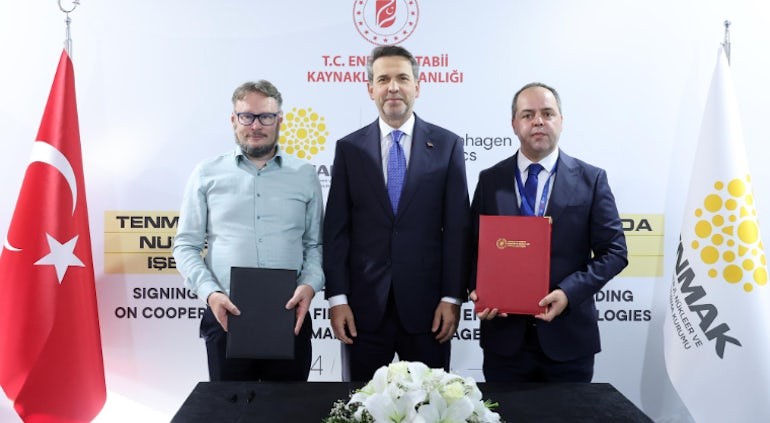
Turkey and Danish Developer Sign Memorandum of Understanding on Thorium-Based Molten Salt Reactor Research
On September 9, 2026, the Turkish Ministry of Energy stated that the Turkish Energy, Nuclear and Mining Research Institute (TENMAK) has signed a memorandum of understanding with Danish advanced reactor developer Copenhagen Atomics (CA), under which the two parties will conduct collaborative research on the application of thorium as a potential nuclear fuel for molten salt reactors. Tenmak and Copenhagen Atomics signed the memorandum of understanding on September 7. Photo courtesy of the Turkish Ministry of Energy and Natural Resources. The Turkish Ministry of Energy stated that the cooperation aims to advance research in areas related to thorium as a potential fuel for nuclear reactors, with a focus on assessing...
2026-09-10

Ghana Seeks to Resume Nuclear Energy Cooperation with Russia, Plans to Discuss Floating Nuclear Power Plant Project
On September 8, Ghana's Ambassador to Russia, Koma Steem Jehu-Appiah, stated that Ghana intends to resume cooperation with Russia in the field of nuclear energy, with discussions including offshore floating nuclear power plant projects. Jehu-Appiah said that energy is an important foundation for economic and social operation, and Ghana has been continuously facing energy supply problems in recent years. Relevant Ghanaian ministers had previously visited Russia, and the two sides discussed energy cooperation matters including floating nuclear power plants. Ghana is currently awaiting a response from the Russian side. He also mentioned that Ghana still retains Soviet-era helicopters but faces a shortage of spare parts. Ghana's Ministry of Foreign Affairs and Ministry of Defence will hold separate talks with the Russian side to discuss related maintenance and support matters. In February this year...
2026-09-10
Russia's RADON advances pre-disposal work on radioactive waste at multiple sites
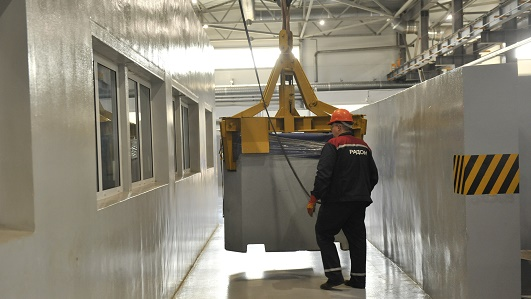
The Russian federal state unitary enterprise RADON is advancing multiple pre-disposal work activities for radioactive waste to reduce existing inventories and transfer compliant waste to the national operator FSUE NO RAO for final disposal. The work falls under special measures within the federal targeted program for nuclear and radiation safety (FTP NRS-2). The radioactive waste accumulated at RADON facilities remains under continuous monitoring and control to meet safety requirements. At the facility of RADON's Northwest Regional Branch in Sosnovy Bor, Leningrad Oblast, the retrieval, sorting, and pre-disposal preparation of federally owned radioactive waste has been completed. Between 2014 and 2018, this batch of waste was in...
2026-09-10
Rosatom and Petrovietnam to Build Additive Manufacturing Center Together
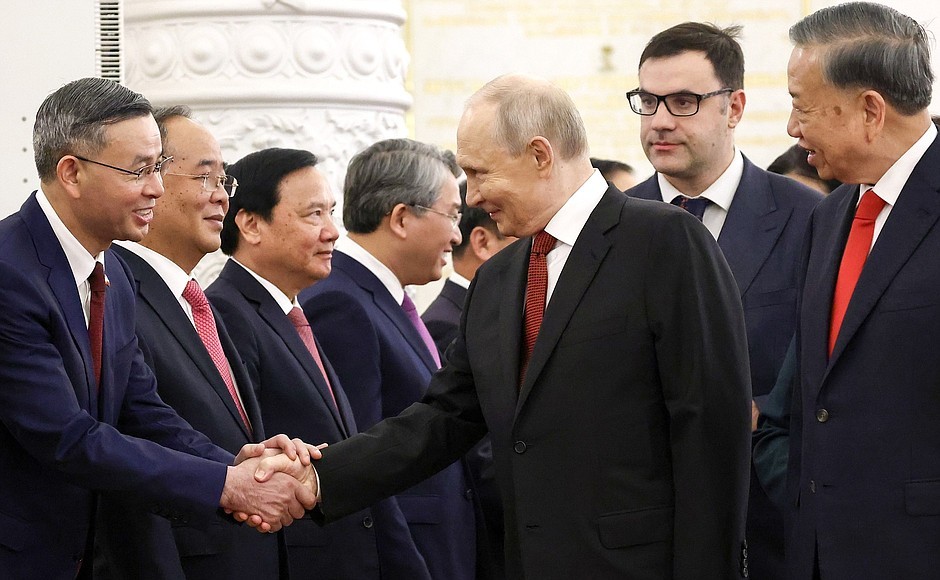
The Fuel Division of Rosatom and Petrovietnam signed an agreement to jointly advance a project to build an additive manufacturing center in Vietnam. The document exchange ceremony was held on September 9, 2026. Under the agreement, the two sides defined the scope of equipment and the delivery schedule required to establish a fully functional 3D printing center in Vietnam. The project is intended to introduce 3D printing equipment produced by the Fuel Division of Rosatom, using selective laser melting and direct laser deposition technologies for the manufacture of metal parts. At the same time, the agreement also includes arrangements for the delivery of related Russian equipment for heat treatment, turning, laboratory analysis, and other purposes. The Vietnamese side stated...
2026-09-10
Rosatom Launches Full-Cycle Production of High-Purity Germanium Detectors
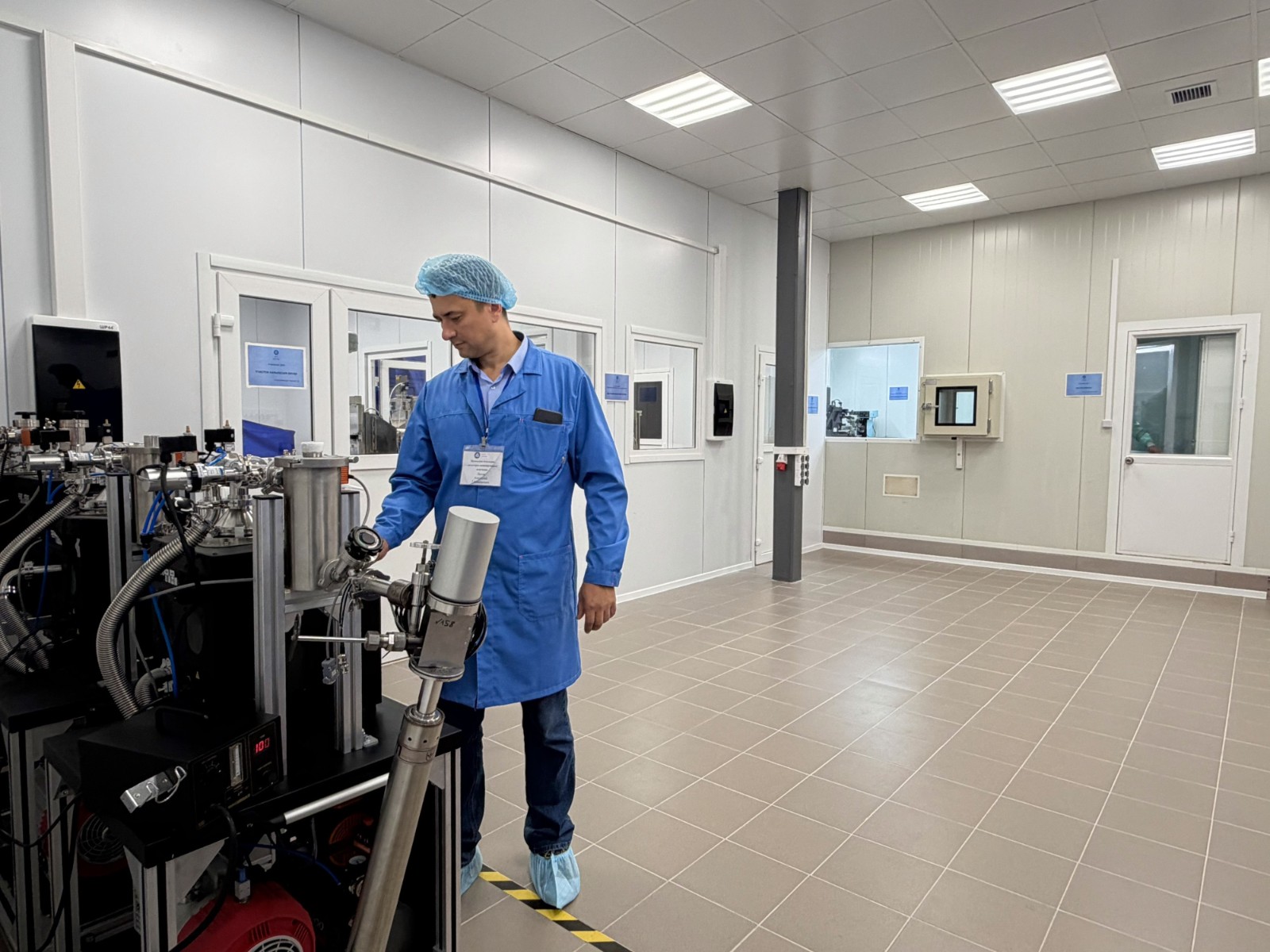
Rosatom announced on September 9 that its subsidiary enterprises have begun producing detectors made of high-purity germanium and have established a complete domestic technology chain in Russia, from deep purification of germanium raw materials and detector manufacturing to the assembly of spectrometers and measurement instruments. The final stage of this production chain is located at a new production facility of a plant under Rosatom's Automated Control Systems and Electrical Engineering Division. To meet the requirements for processing ultrapure materials, the facility has specially built a cleanroom compliant with ISO Class 8 standards to reduce contamination of germanium materials, improve product stability and extend equipment service life. High-purity germanium detectors are a key...
2026-09-10
Vietnam to Join International Consortium for Russia's MBIR Fast Neutron Research Reactor
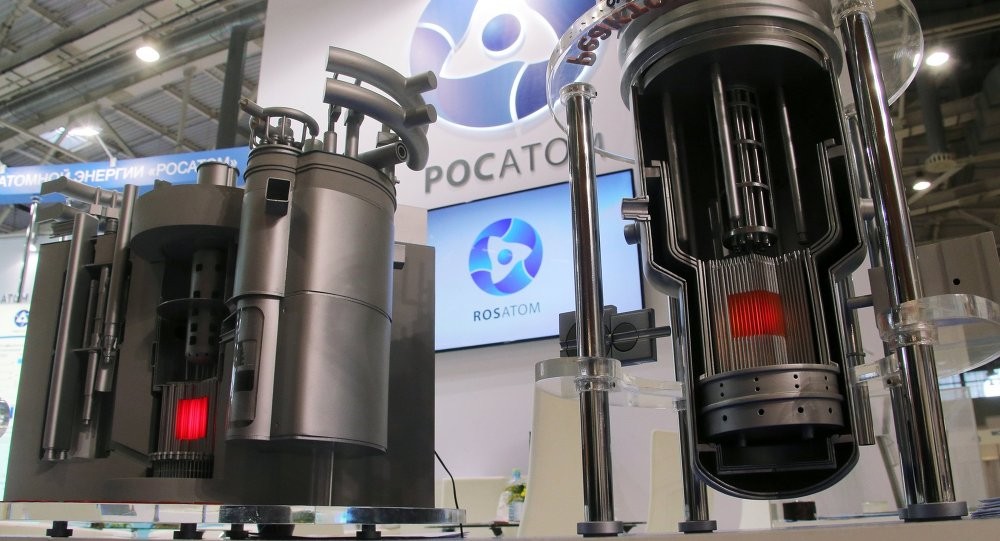
On September 9, the press service of Rosatom announced that Vietnam will join the international consortium for Russia's MBIR multi-purpose fast neutron research reactor. The reactor is currently under construction in Dimitrovgrad, Russia. Under the arrangement, the Vietnam Atomic Energy Institute (Vinatom) has been designated as Vietnam's lead organization for participation in the International Research Centre MBIR (IRC MBIR) project based on the MBIR reactor. Tran Chi Thanh, President of the Vietnam Atomic Energy Institute, stated in a declaration that participation in the project will give Vietnam more direct access to this unique experimental platform, further...
2026-09-10
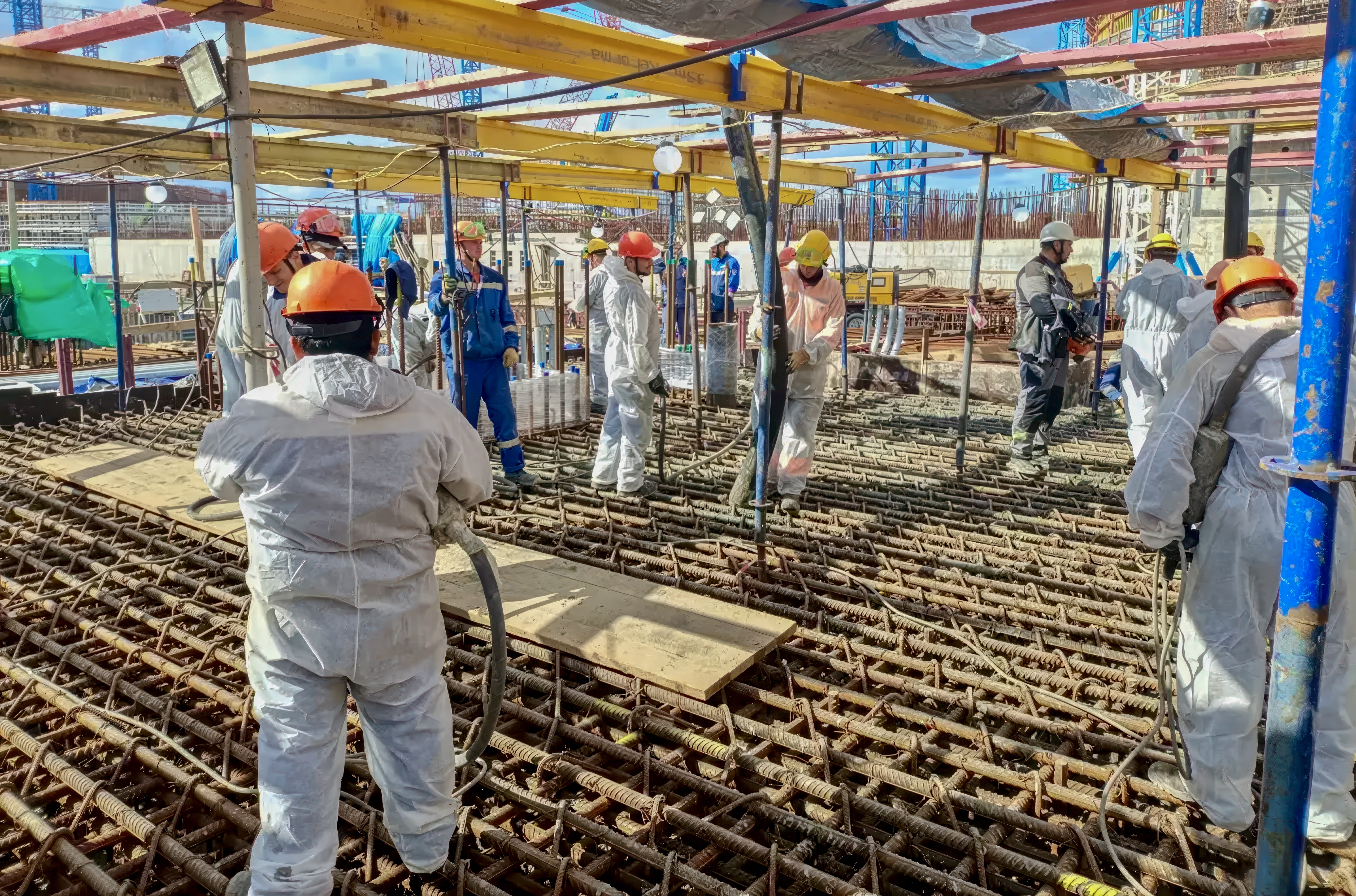
First concrete poured for turbine building foundation of Unit 3 VVER-1200 at Leningrad NPP Phase II
On September 9, 2026, concrete pouring began for the foundation of the turbine building of Unit 3 VVER-1200 at Leningrad NPP Phase II in Russia. Construction workers have completed the pouring of the central section of the future foundation, with concrete consumption approaching 5,000 cubic meters. This pour is the first stage of construction of the foundation structure for this building. According to the plan, the contractor will use nearly 5,000 tonnes of rebar and more than 20,000 cubic meters of high-strength concrete to build a monolithic foundation slab 2.5 meters high and more than 8,000 square meters in area. The related operations are currently being carried out simultaneously in 7 construction zones. Konstantin Khudyakov, head of the Leningrad NPP project at TITAN-2 Holding (TITAN-2), said that the foundation construction of the turbine building places high demands on concrete quality, pouring technology and curing conditions, especially in the first few days after pouring, when it is necessary to focus on controlling on-site temperature and humidity and preventing mechanical damage. After the concrete reaches design strength, the contractor will, together with the owner, use non-destructive testing methods to inspect the structure, including ultrasonic testing; at the same time, specimens made from the same batch of concrete will also be subjected to compressive tests on a hydraulic press to confirm that the foundation is capable of bearing the loads of walls, floors, piping and large operating equipment.
2026-09-10

Siemens Healthineers Completes PET Detector Manufacturing Expansion Project in Tennessee, USA
Siemens Healthineers recently completed the expansion and renovation project of its PET detector center in Rockford, Tennessee, USA, with a total investment of $43.6 million. The project aims to enhance PET detector manufacturing capacity to meet the growing demand for PET/CT scanning equipment. The project added 40,000 square feet of building area to the existing 97,000-square-foot campus and renovated 7,500 square feet of existing space. The Rockford facility is Siemens Healthineers' only manufacturing site globally for producing PET detectors used in its PET/CT systems. The expansion includes 36,000 square feet of dedicated manufacturing space and a 4,000-square-foot expansion of R&D facilities; meanwhile, the company also renovated...
2026-09-10