
Search Results
Keyword:CT

Daejeon, South Korea Ranks Second Nationwide in Low- and Intermediate-Level Radioactive Waste Storage, Spent Fuel Transfer Plan Still Not Implemented
According to data released on September 12 by South Korea's Integrated Radioactive Waste Safety Management Information System, two nuclear-related facilities in Daejeon——the Korea Atomic Energy Research Institute and Korea Hydro & Nuclear Power's Nuclear Fuel Company——currently store a total of 29,587 drums of low- and intermediate-level radioactive waste, with each drum having a capacity of 200 liters. This storage volume ranks second in South Korea, surpassed only by the Gori Nuclear Power Plant's 40,087 drums. Transportation of low- and intermediate-level radioactive waste Daejeon provides The low- and intermediate-level radioactive waste stored by the Korea Atomic Energy Research Institute mainly comes from the operation of the Hanaro research reactor, as well as waste generated during the decommissioning of an experimental reactor in Seoul in the mid-2000s. Nuclear-related facilities in Daejeon...
2026-09-13

Russia and India Plan to Sign Nuclear Energy Cooperation Documents
Alexey Likhachev, Director General of the State Atomic Energy Corporation Rosatom (Rosatom), stated that Russia and India are preparing to sign a series of bilateral cooperation documents in the field of nuclear energy. The preparation of the relevant documents has reached a relatively high level of maturity and is ready for direct signing. Likhachev said that the documents to be signed involve multiple areas of cooperation, including fourth-generation nuclear energy technology using fast neutron reactors. Such cooperation will be carried out around the direction of advanced nuclear energy technology....
2026-09-12

Institute of Radiation Medicine, Chinese Academy of Medical Sciences Promotes the Translation and Application of Medical X-ray Skin Protective Agent
On September 10, Zhang Jianhong, Party Secretary of the Institute of Radiation Medicine, Chinese Academy of Medical Sciences, led a delegation to Nanjing to conduct research with the Institute of Dermatology, Chinese Academy of Medical Sciences and Jiangsu Haizhi Biomedical Co., Ltd., exchanging views on the translation and application of the medical X-ray skin protective agent project. Representatives from the hospital, research institute, and enterprise held discussions on industry-university-research collaboration, clinical demand alignment, and industrialization pathways. It is understood that the medical X-ray skin protective agent is one of the core products in the radiation protection series independently developed by the Institute of Radiation Medicine. After being put into production, the product is expected to become China's first medical X-ray skin protective agent for scar radiotherapy. At the symposium, Zhang Jianhong stated that dermatology...
2026-09-12

First Supercapacitor Pulsed Power Supply System of the HL-3 Upgrade Project Successfully Handed Over
On September 10, the 300MVA/3000MJ supercapacitor pulsed power supply system of the HL-3 upgrade project was successfully handed over. This is the first system of the project to complete handover, marking that the project construction is gradually transitioning from the equipment installation and subsystem static commissioning stage to the system joint commissioning stage, providing support for advancing fusion engineering. Zhang Libo, President and Deputy Secretary of the Party Committee of the Southwestern Institute of Physics, and Chen Qingchuan, Vice President, attended the handover ceremony. Zhang Libo stated at the ceremony that the completion of the handover of the first system is the result of collaborative efforts by all participating units, accumulating experience and creating conditions for subsequent system joint commissioning. All parties will continue to consolidate responsibilities and advance key milestones on schedule....
2026-09-12

Rosatom Launches Nuclear Instrumentation Technology Cluster to Produce Radiation Monitoring and Dosimetry Detectors
Rosatom has recently launched a nuclear instrumentation technology cluster at its subsidiary Instrument Engineering Specialized Research Institute JSC. The cluster will be used for the development and mass production of detectors for applications including radiation monitoring, personal dosimetry, medical and scientific research. According to reports, the science and technology complex will concentrate the synthesis of new materials, the manufacture of detectors and electronic components, the application of special coatings, and post-processing operations such as painting and polymerization in a single location. With the key process chain from R&D and testing to production centralized in one place, the development cycle for related products is expected to be shortened, and production costs will be reduced accordingly. Rosatom...
2026-09-11
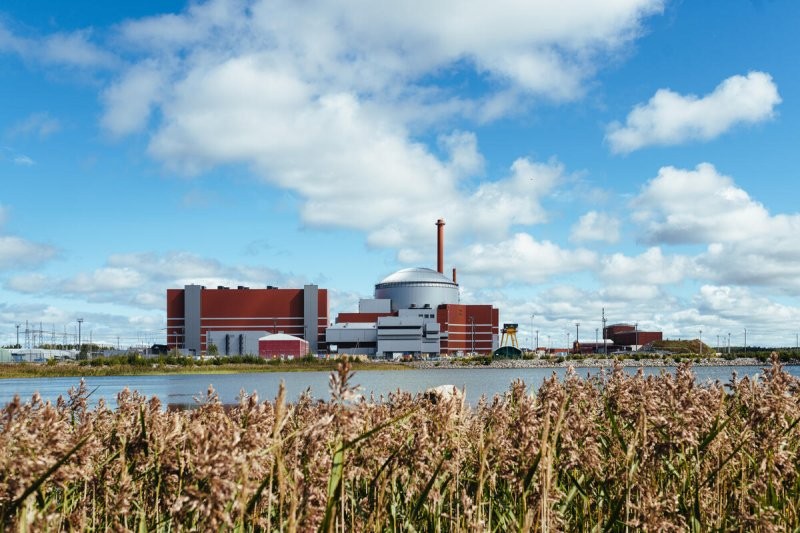
Unit 3 of Finland's Olkiluoto Nuclear Power Plant automatically disconnected from the grid due to a technical fault
On September 10, several hours before the start of a planned shutdown for maintenance, Unit 3 of Finland's Olkiluoto Nuclear Power Plant automatically disconnected from the grid due to a technical fault detected in the steam generator. The plant operator, Teollisuuden Voima Oyj (TVO), said that at the time of the incident, Unit 3 was gradually reducing power as planned and was already operating at extremely low power. The automatic disconnection occurred earlier than the originally scheduled grid disconnection for maintenance. TVO stated that all plant systems were operating normally and that the event had no impact on nuclear safety. The Olkiluoto Nuclear Power Plant is located on the Olkiluoto Peninsula along the coast of the Gulf of Bothnia in the Baltic Sea in Finland. The plant has three operating units, of which Unit 3...
2026-09-11

US-based Terrestrial Energy Submits IMSR Graphite Topical Report to Advance Molten Salt Reactor Licensing Preparation
US fourth-generation molten salt nuclear power plant developer Terrestrial Energy Inc. (NASDAQ: IMSR) recently announced that it has submitted a graphite topical report to the US Nuclear Regulatory Commission (NRC). The report is intended to provide a regulatory basis for the use of graphite, a key core component of the Integral Molten Salt Reactor (IMSR), in commercial power plant operation. Terrestrial Energy CEO Simon Irish stated that this is the second of at least three IMSR topical reports the company plans to submit to the NRC in 2026, and is part of its structured regulatory engagement plan, ultimately...
2026-09-11

US ONE Nuclear Plans Up to 1 GW Small Modular Reactor Project in Louisiana
ONE Nuclear Energy LLC (ONE Nuclear) announced the launch of its Louisiana project portfolio, with a planned total installed capacity of 5 GW, covering dispatchable generation, grid-scale battery energy storage, data center infrastructure, and advanced nuclear development pathways. The portfolio includes the Cayman Project, the Amberjack Project, and the Barracuda Project. Among them, the one directly related to nuclear power is the Amberjack Project, which aims to build a multi-unit small modular reactor station fleet with an installed capacity of up to 1 GW. ONE Nuclear CEO Richard Taylor stated that the Louisiana project portfolio is designed to meet the growing US electricity demand in different but complementary ways...
2026-09-11
US-based Deep Fission Completes Full-Scale Reactor Vessel Deployment and Retrieval Demonstration Using Commercial Drilling Equipment
On September 3, 2026, advanced nuclear energy development company Deep Fission, Inc. (stock ticker: FISN) announced that it had completed a deployment and retrieval demonstration of a full-scale non-nuclear prototype reactor vessel using standard commercial drilling and hoisting equipment. The company is developing a technology pathway that deploys small modular pressurized water reactors in boreholes approximately 1 mile deep underground. In this demonstration, a commercial drilling and hoisting team lowered a 20-foot-long prototype reactor vessel into a 34-inch-diameter, 100-foot-deep borehole, and after completing alignment, retrieved it to the surface. Deep Fission stated that the equipment used in the demonstration was all standard equipment already in commercial...
2026-09-11

Best Cyclotron Systems 70MeV high-current proton cyclotron passes factory acceptance test, to be delivered to Taiwan, China
Best Cyclotron Systems (BCS) recently announced that its 70 megaelectronvolt (MeV) high-current proton cyclotron B-70 completed factory acceptance testing in July, and the equipment will soon be delivered to the National Atomic Research Institute (NARI) in Taoyuan City, Taiwan, China. Related installation and project construction are expected to be completed in 2027. According to the introduction, B-70 was designed, developed and manufactured in Canada by engineers and scientists under TeamBest, and is an advanced cyclotron system for high-current proton beam applications. The equipment will be used to expand accelerator-based radioisotope production and research capabilities, and also reflects the company's...
2026-09-11

Canada's Nuclear Laboratories Adjusts Clean Energy Program to Support Deployment of New Nuclear Projects in Canada
On September 10, 2026, Canadian Nuclear Laboratories (CNL) announced an adjustment to its clean energy research program arrangements in order to direct more resources toward new nuclear projects currently under way and planned in Canada. CNL stated that, as of July 2026, it had terminated the Clean Energy Program Invitation and the Canadian Nuclear Research Initiative (CNRI). These two programs had previously been intended to leverage facilities and technical capabilities managed by CNL to support research, development, and demonstration of clean energy-related projects. CNL said the adjustment was made to optimize program priorities and concentrate efforts on supporting Canada's current and anticipated...
2026-09-11
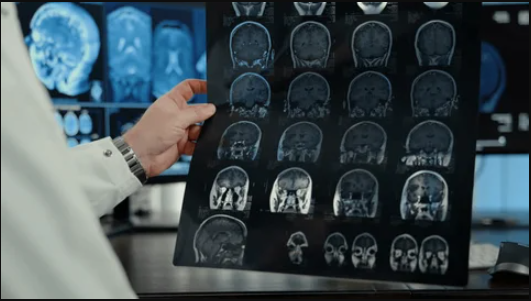
Denmark's Region East Denmark to expand Sectra One imaging platform, unifying regional nuclear medicine and other medical imaging services
Swedish medical imaging IT and cybersecurity company Sectra has recently signed a contract to expand the application of its Sectra One enterprise imaging solution from hospitals in Denmark's Capital Region to the entire Region East Denmark. Region East Denmark was formed by merging the Capital Region and Region Zealand, and this expansion aims to promote unified operation of imaging services across hospitals in the entire region. Under the contract, Sectra One will be delivered as a fully managed cloud service, covering all hospitals in Region East Denmark for the review and storage of radiology medical images, including breast imaging, nuclear medicine, and clinical physiology. Hospitals in Region Zealand will migrate to the system currently in use in the Capital Region,...
2026-09-11
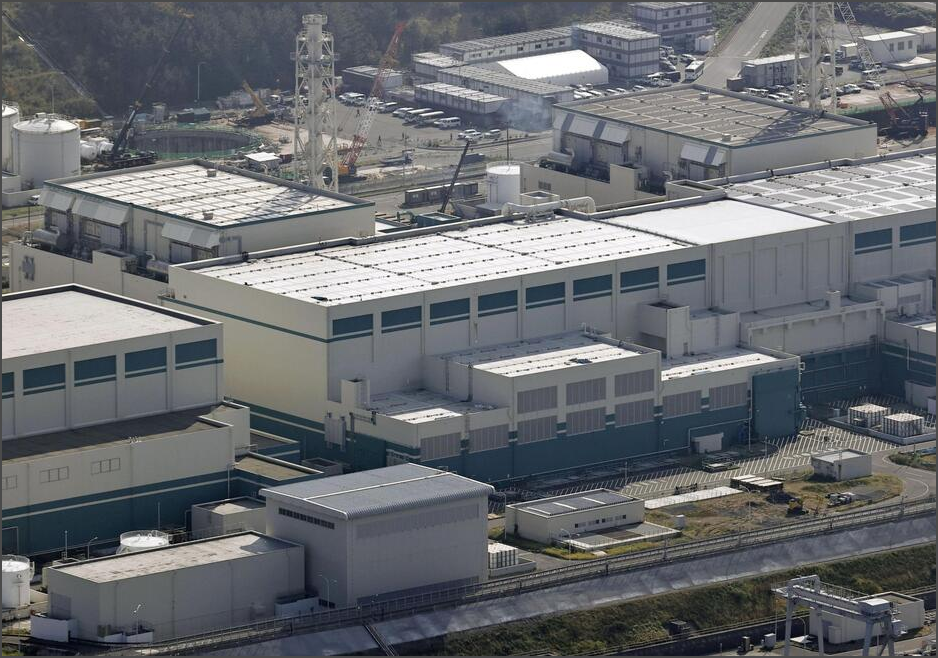
Investigation to Be Conducted into Emergency Diesel Generator Failure at Unit 6 of Japan's Kashiwazaki-Kariwa Nuclear Power Plant
Tokyo Electric Power Company announced that it will investigate the failure of the emergency diesel generator at Unit 6 of the Kashiwazaki-Kariwa Nuclear Power Plant in Niigata Prefecture, Japan. The unit was restarted after 14 years of shutdown and resumed commercial operation in April this year. According to Tokyo Electric Power Company, in July this year, workers discovered that water had mixed into the lubricating oil of the emergency diesel generator at Unit 6. Subsequent inspections confirmed that there was a water leak in the cylinder head, a component of the generator engine. The company therefore determined that the unit currently does not meet the operational safety specification requirements. Tokyo Electric Power Company stated that it plans to complete the relevant repair work by September 19. If the repair cannot be completed by then, the cause of the failure will be further investigated, and measures may include shutting down the reactor for inspection.
2026-09-11

Japan's Monju Fast Breeder Reactor Sodium Coolant Overseas Transport Planned to Start in Fiscal 2028
Japan's Ministry of Education, Culture, Sports, Science and Technology plans to include 23.7 billion yen in its fiscal 2027 budget request to advance decommissioning work for the Monju fast breeder reactor in Tsuruga City, Fukui Prefecture, including preparation costs for overseas transport of sodium coolant. The amount represents an increase of 4.9 billion yen over the previous fiscal year's budget, including supplementary budgets. Under the plan, overseas transport of sodium coolant from the Monju reactor will begin in fiscal 2028. Unlike conventional light water reactors, Monju uses metallic sodium rather than water as a coolant to remove heat from the reactor. Sodium has a boiling point of approximately 880 degrees Celsius and does not easily pressurize at high temperatures, but it can burn upon contact with water or air, making handling and management highly difficult...
2026-09-11
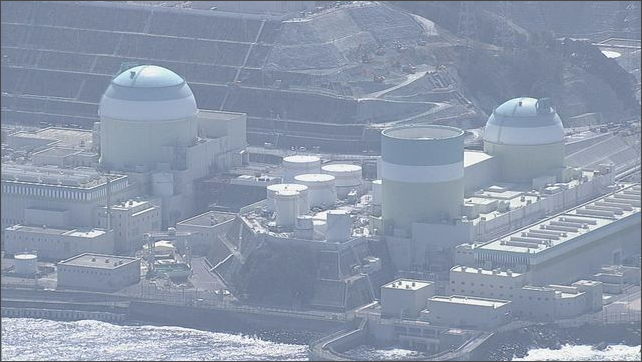
Decommissioning of Unit 1 at Japan's Ikata Nuclear Power Plant Proposed to Move to Phase 2
On the 11th, Ichiro Ogi, Mayor of Yawatahama City in Ehime Prefecture, Japan, reported to the prefectural government that he has agreed to the decommissioning work of Unit 1 at the Ikata Nuclear Power Plant of Shikoku Electric Power Company entering Phase 2. Ichiro Ogi requested that Shikoku Electric Power thoroughly implement relevant measures during the subsequent decommissioning process to prevent the spread of radioactive materials, control the radiation exposure dose of workers, and protect the surrounding environment of the nuclear power plant. Unit 1 at the Ikata Nuclear Power Plant ceased operation in 2016, and since 2017, decommissioning work has been carried out in four phases, with a planned duration of more than 40 years. Currently, the decommissioning work of this unit is still in Phase 1. According to the safety agreement arrangements, Shikoku Electric Power has submitted a prior consultation application to the Ehime Prefectural Government...
2026-09-11