
Search Results
Keyword:IC
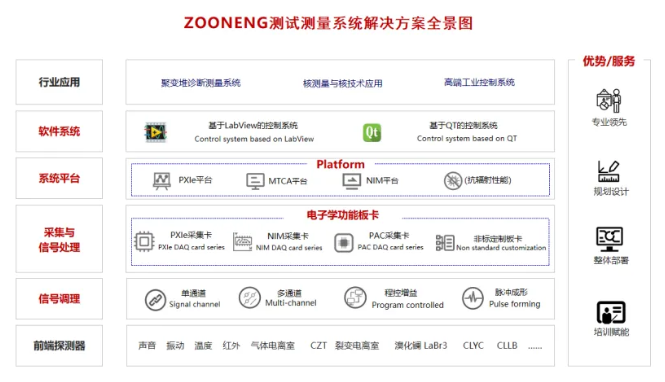
Zhongneng Jukong and Fusion Diagnostics: From a Single Discharge to Continuous Operation, How Measurement Systems Affect Device Performance
After a fusion device completes a discharge, researchers must first answer what actually happened in that experiment: how temperature and density changed, where the input energy flowed, whether instabilities appeared in the plasma, and which conditions should be adjusted for the next experiment. These judgments must be built on diagnostic data. As devices advance toward longer pulses and higher parameters, measurement systems must also take on a new task——providing information that can support control decisions in a timely manner before the experiment has ended. Anhui Zhongneng Jukong Technology Co., Ltd. operates precisely at this link connecting detection, computation, and device operation. Founded in 2022, the company focuses on test and measurement systems and...
2026-11-05

UK Parliament Recommends Improving Fusion Planning Policy and Public Engagement Mechanisms
Recently, the House of Commons Energy Security and Net Zero Committee completed its scrutiny of the draft National Policy Statement for fusion energy EN-8, proposing recommendations including supplementary nuclear non-proliferation guidance, strengthened early public engagement, and clarified community benefit arrangements. The scrutiny focused on the institutional conditions required for fusion to develop from research devices to commercial facilities; the relevant opinions have been submitted for government response and do not yet constitute implemented new policy. Nuclear non-proliferation is a key area the Committee requires to be further improved. As fusion device scale expands, mechanisms for identifying and assessing facility-related risks also need to develop accordingly. The Committee recommends that the government provide guidance to developers preparing construction projects as soon as possible...
2026-11-05
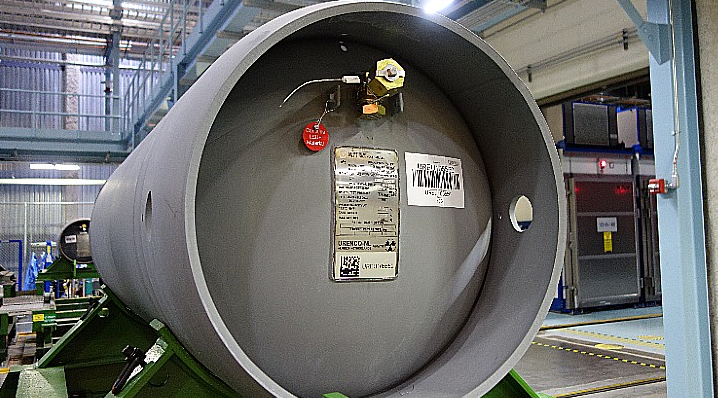
Urenco USA Completes Production of First Commercial Upgraded Low-Enriched Uranium Product Cylinder
Recently, Urenco USA completed the production of its first upgraded low-enriched uranium (LEU+) product cylinder at the National Enrichment Facility in New Mexico, advancing this fuel feedstock from production readiness to the commercial product supply stage. This development provides a new enriched uranium option for operating light water reactors and some advanced reactors, but completing the production of enriched product does not equate to fuel assemblies having been manufactured or loaded into a reactor. LEU+ is Urenco's product name for enriched uranium with uranium-235 assays of approximately 5% to 10%, higher than the typical enrichment levels of fuel commonly used in operating commercial nuclear power plants. Fuel made from this material is expected to support longer operating cycles and reduce refueling outages...
2026-11-05
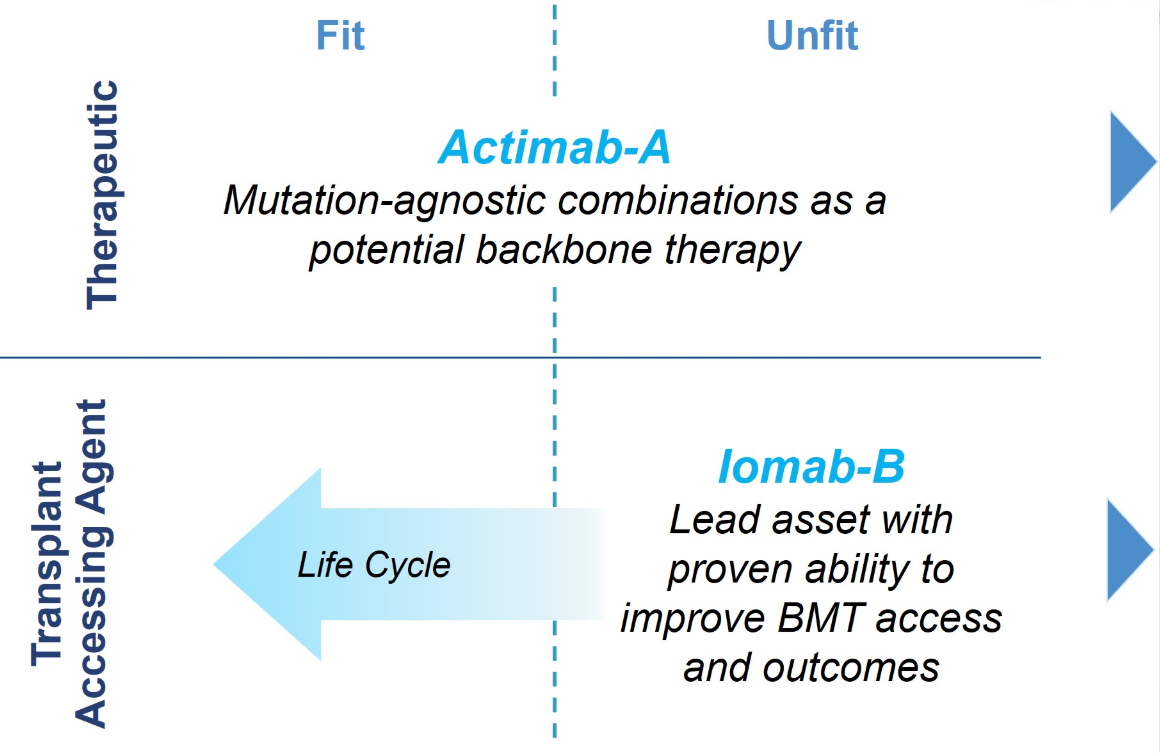
US Company Publishes Long-Term Safety Study of Targeted Radiopharmaceutical for Leukemia
Recently, a new American Society of Hematology (ASH) conference abstract has been developed from the long-term safety and tolerability study of Actimab-A combined with CLAG-M intensive salvage chemotherapy, focusing on the recovery of patients with relapsed or refractory acute myeloid leukemia after treatment. This progress extends the research focus from prior antitumor activity to long-term follow-up, supplementing data for continued development of the combination regimen. Actimab-A is an investigational targeted α therapy developed by Actinium Pharmaceuticals, composed of the antibody lintuzumab conjugated with actinium-225. This abstract involves follow-up of patients in a Phase I study who survived at least three months after treatment, with emphasis on analyzing blood cell count recovery and potential delayed renal and hepatic toxicity, in order to more comprehensively evaluate the safety profile after intensive treatment.
2026-11-05

U.S. Microreactor Project Submits All Eighteen Chapters of Safety Analysis Materials
Recently, all 18 chapters of the preliminary safety analysis report for the SOLO micro modular reactor have been submitted to the U.S. Nuclear Regulatory Commission (NRC), entering the readiness review prior to formal application. Project developer Terra Innovatum had previously provided 14 of the chapters, and this submission of the remaining materials further completes the safety analysis documentation, advancing one step toward the subsequent formal submission of a construction permit application. The readiness review focuses on assessing the completeness and quality of the application materials, helping to identify content that needs to be supplemented or improved before formal submission. Throughout this process, the project team will continue technical exchanges with regulatory staff, addressing review comments and information requests, so that the react...
2026-11-05
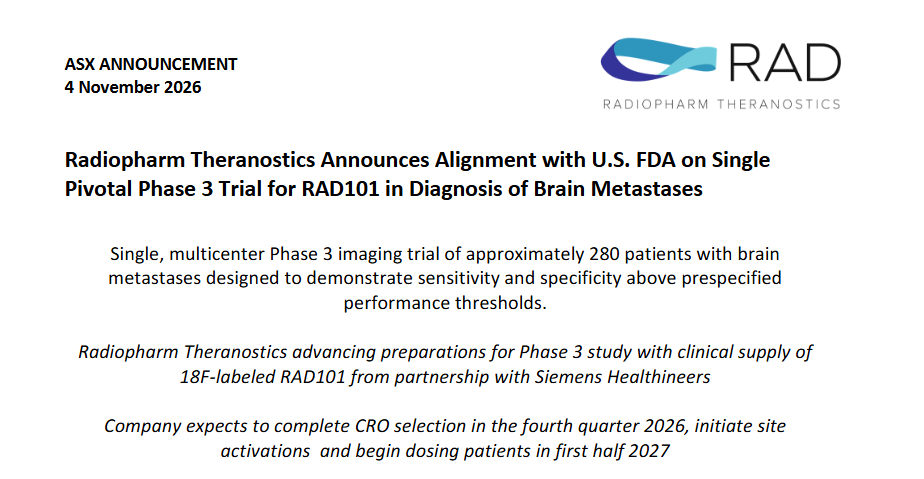
Australian Company Finalizes Phase III Protocol for Brain Metastasis Imaging Radiopharmaceutical
Recently, Radiopharm Theranostics announced that it has received the final meeting minutes from the FDA End-of-Phase 2 meeting, during which both parties reached agreement on the design of the pivotal Phase III imaging trial for RAD101, advancing registration development preparations for this investigational radiopharmaceutical imaging agent. The study is planned as a single-arm, multicenter Phase III trial designed to enroll approximately 280 patients with previously irradiated brain metastases of indeterminate nature. The co-primary endpoints are the sensitivity and specificity of RAD101 PET relative to an established reference standard. RAD101 is labeled with Fluorine-18, and its development goal is to help identify brain metastasis lesions and improve the differentiation between tumor recurrence and treatment-related changes. Si...
2026-11-04

Beyond 5% Uranium Enrichment: Why Does Nuclear Power Fuel Upgrading Require an Integrated Delivery Chain?
Nuclear Power Operational Needs Behind a Single Product Container On November 2, Urenco USA announced the completion of production of the first commercial LEU+ enriched uranium product container in New Mexico. This development brings fuel upgrading to a concrete industrial milestone: enrichment plants are beginning to supply new products, downstream enterprises need to process them into fuel, and power plants must demonstrate that these fuels can improve operations within established safety boundaries. For operators seeking to extend refueling cycles, higher enrichment levels provide more options, but whether these options can be translated into benefits still depends on whether manufacturing, transportation, licensing, and in-core use can be linked together. Urenco uses LEU+ to...
2026-11-04

Kazakhstan Advances Strategic Uranium Reserve and Thousand-Square-Kilometer Exploration
Recently, Kazakh President Kassym-Jomart Tokayev received a dedicated briefing from Kazatomprom on the company's operating conditions and national strategic planning in the capital Astana. The meeting focused on key topics including the construction of Kazakhstan's strategic uranium reserve, expansion of the resource base, and international nuclear energy industry chain cooperation. Currently, Kazatomprom is conducting comprehensive geological exploration across six blocks with a total area exceeding 1,000 square kilometers, and plans to launch operations in the Kyzyltu area covering 124 square kilometers...
2026-11-04
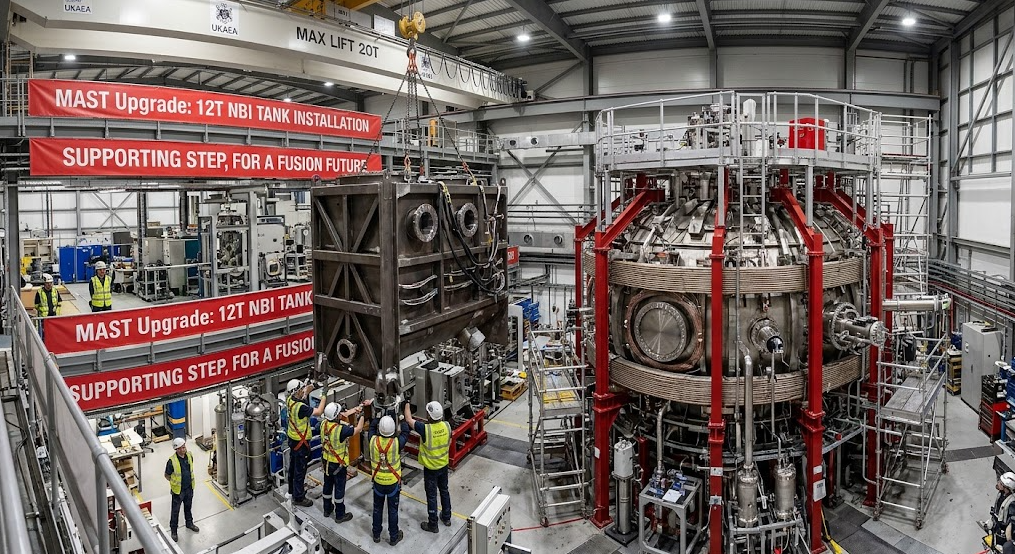
UKAEA Completes Heavy Enclosure Lift for Spherical Tokamak
Recently, the UK Atomic Energy Authority (UKAEA) flagship spherical tokamak experimental device (MAST Upgrade) reached an important engineering milestone with the successful lifting and installation of a 12-tonne dual-layer beam enclosure. The enclosure is specifically designed to house two additional neutral beam injectors (NBI). With the subsequent installation of related infrastructure and supporting systems, the neutral beam heating power of the MAST Upgrade device is planned to increase from the current 4.4 MW to 8.8 MW, doubling its heating capability. The core strategic objective of this upgrade is to explore plasma physics behavior under extremely high temperature and pressure conditions, and to focus on testing the ultimate capability of the core heat exhaust system (such as the Divertor) to handle the heat load of higher-performance plasmas, thereby providing key technical and physics parameter support for the UK's prototype fusion power plant (STEP) project.
2026-11-04
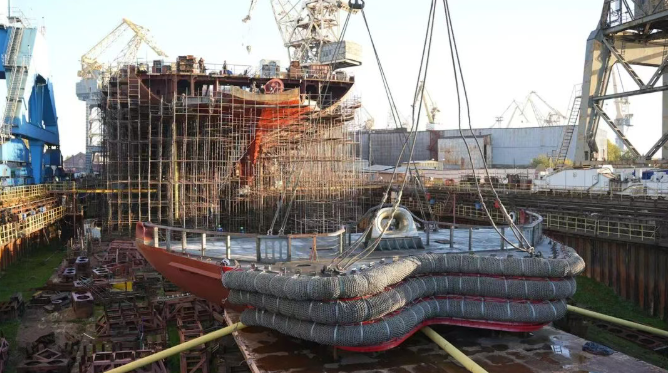
Russia's Leningrad Nuclear Icebreaker to Be Launched in December
Recently, Russia's Baltic Shipyard (Baltic Shipyard) is stepping up construction of the Leningrad, the fifth Project 22220 universal nuclear-powered icebreaker, with a launching ceremony scheduled for December 3 this year, Russian Nuclear Icebreaker Fleet Day. It is noted that choosing December 3 for the launch carries profound historical commemorative significance. On December 3, 1959, the world's first nuclear-powered icebreaker, the Lenin, officially raised its flag, and this day was established as Russian Nuclear Icebreaker Fleet Day. As the fifth production vessel of Project 22220, the smooth progress of the Leningrad marks that Russia's polar nuclear-powered ship construction is maintaining...
2026-11-04

America's First "Large Reactor in a Chemical Plant" Clears the Hurdle: X-energy Xe-100 Ushers in the Conclusion of Safety Review and a Key Springboard to Commercialization
In the global race to industrialize advanced nuclear energy technologies, the high-temperature gas-cooled reactor is reaching a milestone. In late October 2026, the U.S. Nuclear Regulatory Commission (NRC) formally issued the Final Safety Evaluation Report (FSER) for the construction permit application of the Long Mott Generating Station, proposed to be built at Dow Chemical's Seadrift site along the Texas Gulf Coast. This means that the Xe-100 high-temperature gas-cooled reactor, developed by X-energy with an installed capacity of 320 megawatts electric, has successfully passed the most central safety examination at the U.S. nuclear regulatory level, clearing...
2026-11-03

US NRC Finalizes New Rule to Speed Up Nuclear Licensing Through Contested Hearing Reform
Recently, according to relevant foreign media reports, the U.S. Nuclear Regulatory Commission (NRC) has formally completed the formulation of a new rule restructuring the contested hearing process in licensing applications for reactors and other nuclear facilities, aiming to significantly compress administrative adjudication timelines and support the rapid deployment and expansion of advanced nuclear technologies. It is reported that in the past, NRC adjudication of contested matters typically lasted for years, causing delays in nuclear power project approvals. The new rule introduces three hearing tracks—Standard, Focused, and Expedited—based on the complexity of applications, compressing the adjudication period for the simplest cases to approximately 6 months, with the vast majority...
2026-11-03

US Regulator Completes Safety Review of X-energy's Microreactor
Recently, the U.S. Nuclear Regulatory Commission (NRC) formally completed its final Safety Evaluation Report (SER) for the first deployment in Texas of X-energy's Xe-100 high-temperature gas-cooled reactor (HTGR). It is reported that the project is planned for construction at the Longtom nuclear power plant site in Texas, located at the Seadrift operations center owned by chemical giant Dow. X-energy, which is backed by investment from technology and retail giant Amazon, stated that once completed, the plant will become the first grid-scale advanced modular nuclear reactor deployed within a large industrial facility in U.S. history. The U.S. Nuclear Regulatory Commission, in its final safety...
2026-11-03
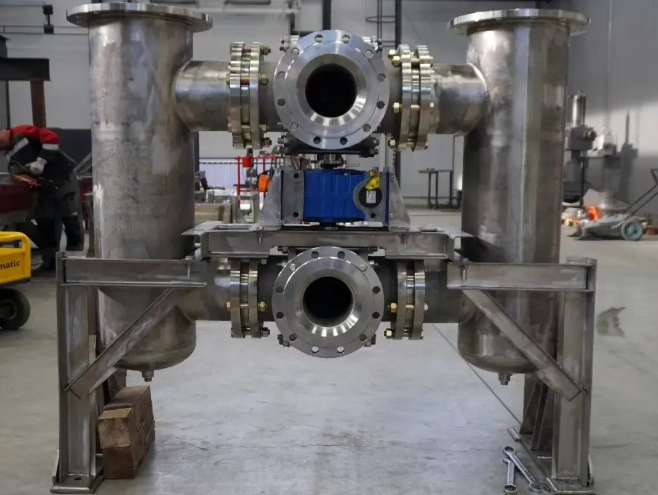
Russia's InterPolyaris Company Successfully Develops New Filter for Nuclear-Powered Icebreakers
Recently, the International Polyaris (InterPolyaris) company, located in Novovoronezh, successfully completed the manufacture and test preparation of a new type of mechanical filter specially designed for nuclear energy facilities and nuclear-powered icebreakers. It is reported that the new mechanical filter adopts a compact two-stage sealed architecture and is mainly deployed at the condensate and feedwater system nodes of turbine units, as well as in the makeup water and water treatment systems of reactor installations, for efficiently removing mechanical impurities from process media and ensuring high-standard water quality cleanliness requirements for nuclear power systems. The equipment consists of two independent sealed housings with built-in metal filter elements, connected in the middle by upper and lower three-way ball valves. By adjusting the upper valve...
2026-11-03

Xeonova Pulsed Field-Reversed Configuration Fusion Validation Device X-3 Begins Installation
Recently, Xeonova, a fusion startup established under the authority of the University of Science and Technology of China, has officially entered the on-site construction and equipment installation phase for its self-developed X-series pulsed compression Field-Reversed Configuration (FRC) high-parameter validation device XEONOVA-3 (X-3). It is noted that the Field-Reversed Configuration (FRC) possesses unique advantages such as high beta, compact structure, and low cost, and is becoming an important development direction in the international controlled nuclear fusion field. Professor Sun Xuan, founder of Xeonova, pointed out that the X-3 device adopts the overall technical route of "high-flux FRC formation + staged wall compression + magnetic compression implosion," aiming to validate the formation, compression, and high-repetition-rate pulsed operation capabilities of high-parameter FRCs...
2026-11-03