
Search Results
Keyword:IC
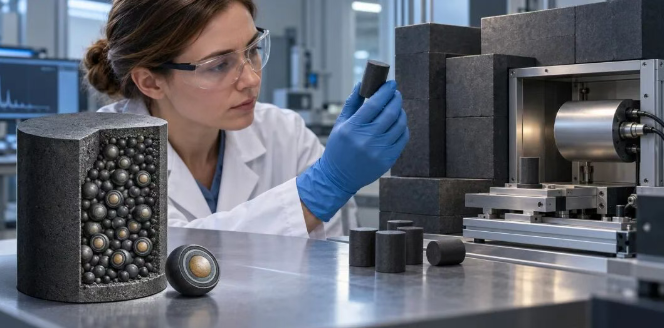
MEPhI Develops Non-Destructive Testing Device for Microfuel of High-Temperature Gas-Cooled Reactors
Recently, the research team led by Tatyana Borisovna Aleyeva, Associate Professor of the Department of Theoretical and Experimental Physics of Nuclear Reactors at the National Research Nuclear University MEPhI (Moscow Engineering Physics Institute), announced that it is about to complete the development of an experimental device for non-destructive testing of uranium content in fuel compacts for innovative high-temperature gas-cooled reactors (HTGR). It is reported that the helium temperature at the core outlet of the 200 MW HTGR under design can reach 850°C, aiming to provide high-potential heat for large-scale nuclear hydrogen production process stations (AETS). Its fuel uses graphite cylindrical compacts with a height of 5 cm and a diameter of 12.5 mm, each...
2026-11-03
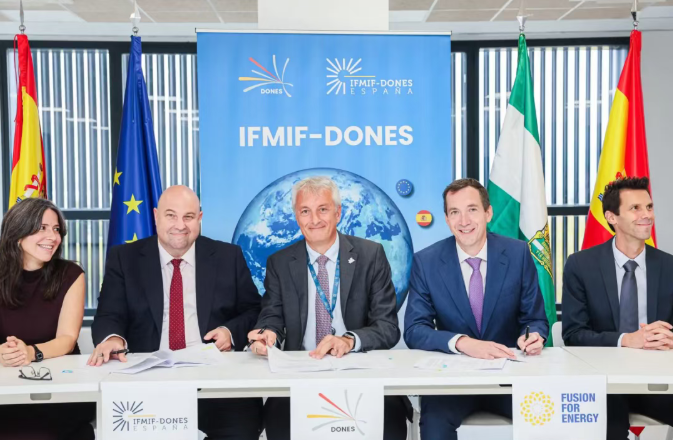
The "Chain-Building" Lessons from Europe's Fusion Supply Chain: An Industrial Paradigm Leap from "Building Devices" to "Nurturing Chains"
When examining the global race toward commercializing controlled nuclear fusion, external attention is often drawn to record-breaking plasma temperatures, confinement times, and device scales. However, as the industry gradually enters the deep waters of transitioning from physics experiments to engineering construction, what ultimately determines whether parties can cross the commercialization chasm is often no longer merely theoretical breakthroughs in the laboratory, but rather the thickness of the industrial supply chain hidden behind the spotlight. Recently, Europe's "Fusion for Energy" organization (F4E, Fusion for Energy) officially released the research report "Building Europe's Fusion Supply Chain: 2007–2026." This report, which systematically reviews nearly two decades of construction history, discloses that through more than €7 billion...
2026-11-02

CNNC Atom High-Tech Sodium Iodide Capsules Supplied Directly to Macao for the First Time
Recently, sodium iodide [¹³¹I] capsules independently developed and produced by Atom High-Tech Co., Ltd., a subsidiary of China Isotope & Radiation Corporation under CNNC, successfully arrived at clinical frontlines in Macao, achieving the first stable supply of domestically produced sodium iodide [¹³¹I] capsules to Macao and completely filling the previous gap in Macao's lack of this clinical diagnostic and therapeutic service. It is understood that sodium iodide [¹³¹I] capsules are core radiopharmaceuticals widely used clinically for the diagnosis and treatment of thyroid diseases. Previously, Atom High-Tech had successfully achieved routine supply of short-half-life radiopharmaceuticals to Macao; the successful launch of this new product will strongly support Macao medical institutions in carrying out systematic radionuclide therapy and effectively reduce the burden of cross-border medical treatment on local patients.
2026-11-02
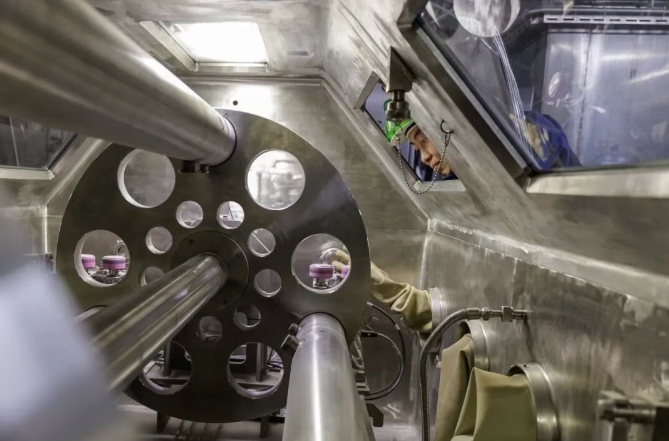
Russia proposes optical laser monitoring method for spent nuclear fuel reprocessing
Recently, a research team from Sechenov University in Russia, together with the Proryv Project and the All-Russian Scientific Research Institute of Inorganic Materials (VNIINM), published latest results in the journal Applied Spectroscopy, proposing a non-contact optical method for continuous monitoring of the spent nuclear fuel reprocessing process. It is reported that in the liquid-liquid extraction process of spent nuclear fuel reprocessing, traditional laboratory analysis has problems such as long sampling time and increased risk of radioactive waste. The research team introduced Raman Spectroscopy to monitor the state of extractants such as tributyl phosphate in the organic phase, measuring a median error of about 1%; meanwhile, laser-induced breakdown spectroscopy (LIBS) was used to determine the concentration of metal elements in the aqueous phase, with an average error controlled at 4%–8%, achieving near-real-time synchronous monitoring of the two-phase streams.
2026-11-02

IAEA Urges Kenya to Improve Radioactive Waste Policy
Recently, the International Atomic Energy Agency (IAEA) conducted a nine-day Artemis radioactive waste management assessment mission to Kenya and released its assessment findings in Nairobi, calling on Kenya to introduce a national radioactive waste management policy as soon as possible before introducing nuclear power and to strengthen the independence of its regulatory body. It is reported that this is the first Artemis assessment conducted by the IAEA in Africa, initiated at the request of the Kenyan government. The assessment team acknowledged Kenya's significant progress in radioactive waste management in recent years, while also recommending that Kenya develop a comprehensive policy framework covering nuclear energy, the nuclear fuel cycle and radioactive waste, and deepen regulatory...
2026-10-31

Polskie Elektrownie Jądrowe Submits Application for Pre-construction Permit for First Nuclear Power Plant
Recently, Polskie Elektrownie Jądrowe (PEJ) has formally submitted an application to the Governor of Pomorskie Voivodeship in northern Poland to obtain a construction permit for the pre-construction works of Poland's first nuclear power plant. It is understood that this phase of works mainly involves site preparation and large-scale earthworks and rock excavation at the proposed site. Poland plans to build three AP1000 pressurized water reactor units designed by Westinghouse of the United States at this site. The pre-construction works cover major infrastructure construction, including the onshore section of the plant's cooling water channel, deep foundation pit excavation, pit wall reinforcement, and special protective measures to prevent groundwater infiltration...
2026-10-31

Russian Floating Nuclear Power Plant Improves Air Quality in Arctic City
Recently, the Russian floating nuclear power plant Akademik Lomonosov released its latest environmental monitoring report. The report shows that since the nuclear power plant officially took over most of the heating load of Pevek in the Chukotka Autonomous Okrug in 2022, total pollutant emissions into the local atmosphere have plummeted from 11.64 tons to 2.281 tons, a reduction of nearly 80%. It is reported that Rosatom has established 11 automated radiation monitoring stations in Pevek and its surroundings to conduct comprehensive monitoring of air, water quality, soil, and waste. Monitoring results indicate that all environmental impact indicators are better than the established national standards, with average levels less than 10% of the maximum permissible...
2026-10-31

Exploring the Frontier of Advanced Fusion Physics: Physical Mechanisms and Engineering Challenges of D–³He Secondary Neutron Suppression under the Synergy of Hot Tails and Spin Polarization
In the process of controlled nuclear fusion advancing from theoretical exploration to commercial validation, the choice of fuel pathway has always been the core variable determining the engineering feasibility and economics of a reactor. For a long time, the deuterium–helium-3 (D–³He) reaction has been regarded as an ideal "low-neutron" ultimate fusion scheme because its primary products are only charged particles (helium-4 and high-energy protons), it does not directly produce neutrons, and it possesses the potential for direct energy conversion. However, under the traditional thermal equilibrium plasma framework, D–³He is not a truly neutron-free fuel. In October 2026, the U.S. Princeton Plasma Physics Laboratory (PP...
2026-10-31
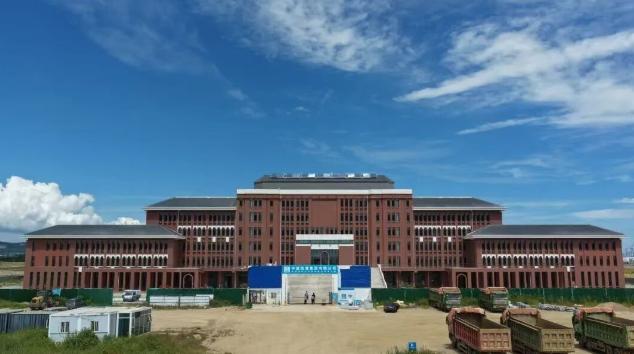
Tsinghua University Advances the Advanced Nuclear Energy Base and Major Scientific Facility in Rongcheng, Shandong
Recently, the Tsinghua University Rongcheng Advanced Nuclear Energy Technology Research Base project is being comprehensively advanced along the coast of Shidao Bay in Shandong. The project has a planned total investment of approximately 10.3 billion yuan and covers an area of 978 mu. In the future, it will become Tsinghua University's only comprehensive advanced nuclear energy technology research base outside Beijing that integrates discipline development, talent cultivation, scientific and technological innovation, and industrial incubation. It is reported that the research base is planned to build five major sections: a nuclear-related test area, a general test area, a national laboratory, an office and teaching area, and a logistics support area, with a focus on establishing 9 high-level laboratories. Among them, the comprehensive research building has completed its main structure and entered interior decoration, and is planned to be fully completed and officially handed over to the Institute of Nuclear and New Energy Technology of Tsinghua University for use by the end of November.
2026-10-31
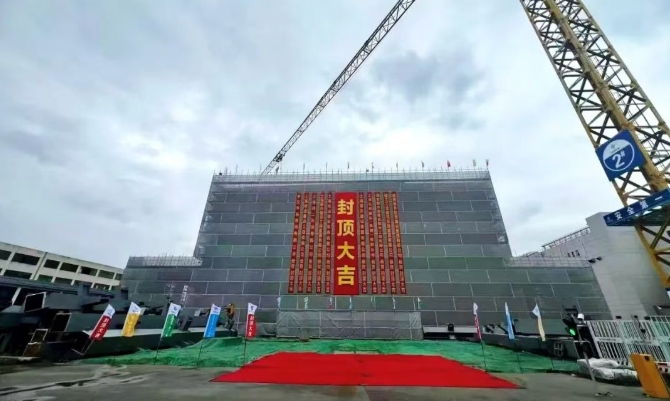
Top-Out of the Experimental Hall of Startorus Fusion's NTST Fusion Device and Delivery of the Dewar
Recently, Startorus Fusion's self-developed native negative triangularity spherical tokamak (NTST) device has achieved two breakthrough milestones: the main structure of the device's experimental hall at the experimental base in Xuxing Town, Jiading District, Shanghai, has been successfully topped out, and the device's core component—the Dewar—has completed manufacturing and factory acceptance and been officially delivered. It is reported that the Dewar, as the outermost core structure of the fusion device's main machine, can provide a high-vacuum insulation environment and a precise installation reference for the entire system, and is a key facility for ensuring the stable operation of magnet coils at cryogenic temperatures. The Dewar was independently designed overall by Startorus Fusion and jointly manufactured with Wuxi Huali Fusion Energy Equipment Co., Ltd. Its structure and interfaces...
2026-10-31
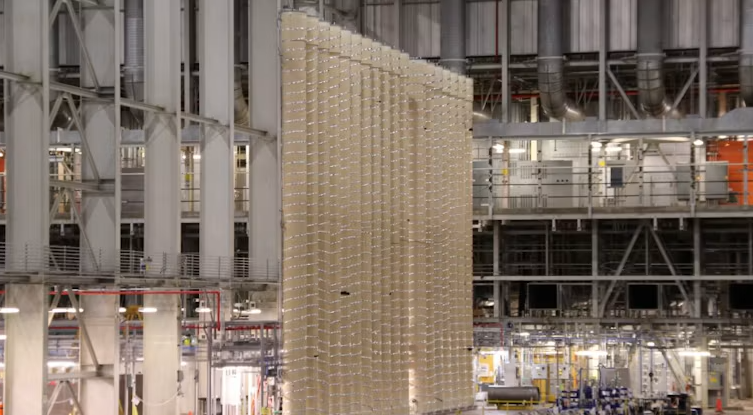
First New Centrifuge of Centrus Energy Rolls Off Production Line, Boosting Uranium Enrichment Expansion
Recently, U.S. nuclear fuel enrichment company Centrus Energy announced that it has successfully completed the manufacturing of the first new centrifuge for its multi-billion-dollar uranium enrichment capacity expansion program and has officially launched interstate transportation of the equipment, shipping it from Tennessee to the Piketon enrichment plant in Ohio. It is reported that the new centrifuge was manufactured at Centrus Energy's facility in Oak Ridge, Tennessee, and will undergo final assembly and testing upon arrival in Ohio. Centrus Energy plans to install multiple new centrifuge cascade arrays at the Piketon enrichment plant to achieve a comprehensive upgrade of commercial low-enriched uranium (LEU) and high-assay low-enriched uranium (HALEU) production capacity.
2026-10-30
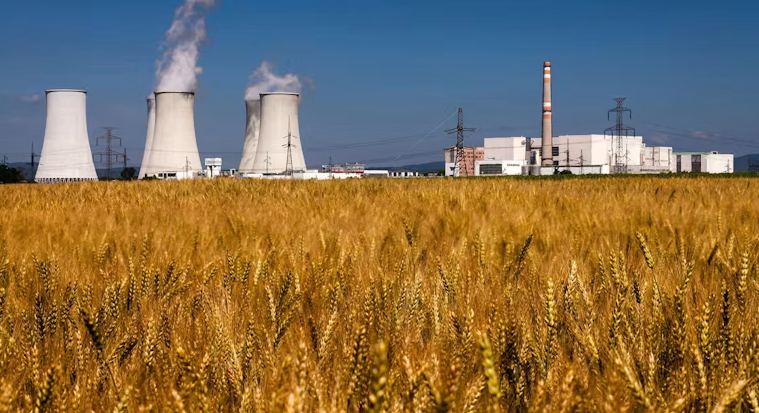
Westinghouse Electric Company of the United States Launches Design Study for Slovak Nuclear Power Plant
Recently, Westinghouse Electric Company of the United States officially launched a Front-End Engineering Design (FEED) study for an advanced AP1000 nuclear reactor at the Bohunice Nuclear Power Plant in Slovakia, marking a breakthrough in Slovakia's new nuclear power project. It is reported that the project is being developed by JESS (Slovak Nuclear Energy Company), wholly owned by JAVYS (Slovak state-owned nuclear decommissioning company), and has received funding support from the U.S. Department of State. This six-month preliminary study will fully advance the project's engineering design, licensing approval, and overall construction planning. Slovakia...
2026-10-30
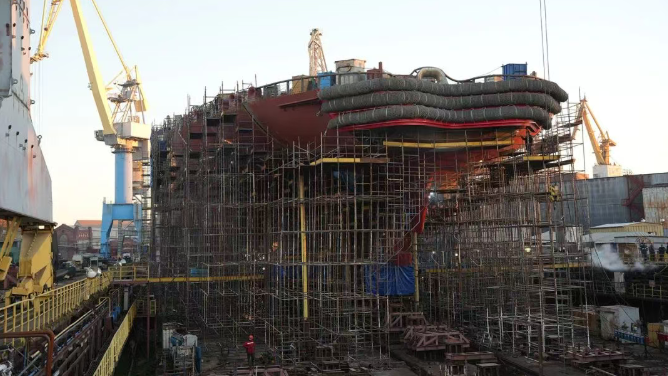
Russia's Nuclear Icebreaker Leningrad Completes Anti-Icing System Installation
Recently, the Baltic Shipyard, a subsidiary of Russia's United Shipbuilding Corporation (ОСК), announced that it has successfully installed the anti-icing device turbo-compressor unit for the Leningrad, the sixth nuclear-powered icebreaker of Project 22220 currently under construction. It is reported that this domestically produced high-performance compressor can provide large-flow compressed air, forming an air-water curtain through underwater exhaust ports on the hull, thereby significantly reducing friction between the hull and ice and scouring away ice debris and accumulated snow. Combined with the 45 mm thick special steel used in the hull's ice belt, this anti-icing system can ensure that the nuclear-powered vessel maintains optimal navigation performance and structural safety when operating in the extreme cold latitudes of the Arctic. The Leningrad is Russia's...
2026-10-30
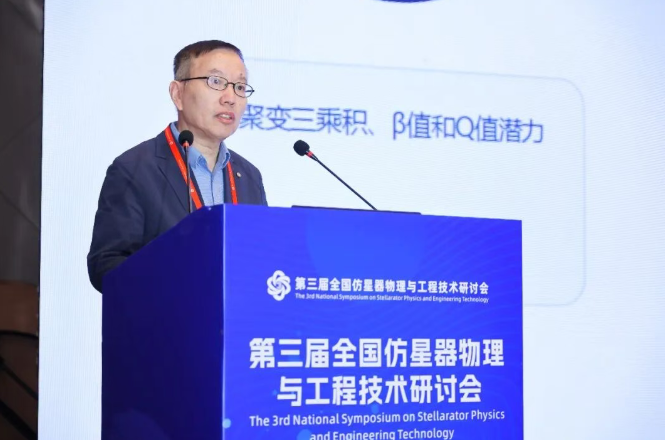
Topological Fusion of Magnetic Mirror and Stellarator: How Fu Guoyong's Team's "Linked-Mirror" Deduces a New Engineering Pathway for Controlled Nuclear Fusion
After decades of fundamental theoretical exploration and engineering trial and error, global controlled nuclear fusion is accelerating into the deep waters of commercial validation. Faced with the engineering limits of the Tokamak approach under extreme parameters and the manufacturing complexity ceiling confronting traditional Stellarators, Chinese research teams are opening a new pathway that combines physical feasibility with engineering economy. Recently, the team led by Fu Guoyong, Professor at the School of Physics of Zhejiang University, Director of the Zhejiang University Fusion Theory and Simulation Center, and Founder of Jingjie Fusion Energy, officially released on the preprint website arXiv a research paper titled "A Novel Linked-Mirror Device for Fusion." Through three-dimensional numerical computation, the study obtained for the first time equilibrium solutions of the Linked-Mirror configuration under finite Beta (the ratio of plasma pressure to magnetic pressure) conditions. This breakthrough marks a decisive step for this technical pathway from a purely theoretical concept toward an engineering validation device.
2026-10-30

Russia-Africa Summit Concludes with Both Sides Agreeing to Strengthen Cooperation in Nuclear Energy and Fertilizers
Recently, the third Russia-Africa Summit officially concluded in Moscow. Russian President Vladimir Putin received nearly twenty African heads of state, and the two sides signed multiple cooperation agreements, agreeing to further deepen the strategic partnership in nuclear energy development and fertilizer trade. It is reported that in terms of nuclear energy cooperation, the priorities reached between Russia and multiple African countries cover the entire nuclear energy industry chain, including uranium mining and processing, construction of nuclear power plants of various power scales, and providing full-lifecycle operation and maintenance support for Africa's existing nuclear facilities. In addition to deep binding in the nuclear energy sector, both sides also committed to expanding trade in agricultural products and fertilizers,...
2026-10-30