
Search Results
Keyword:IC
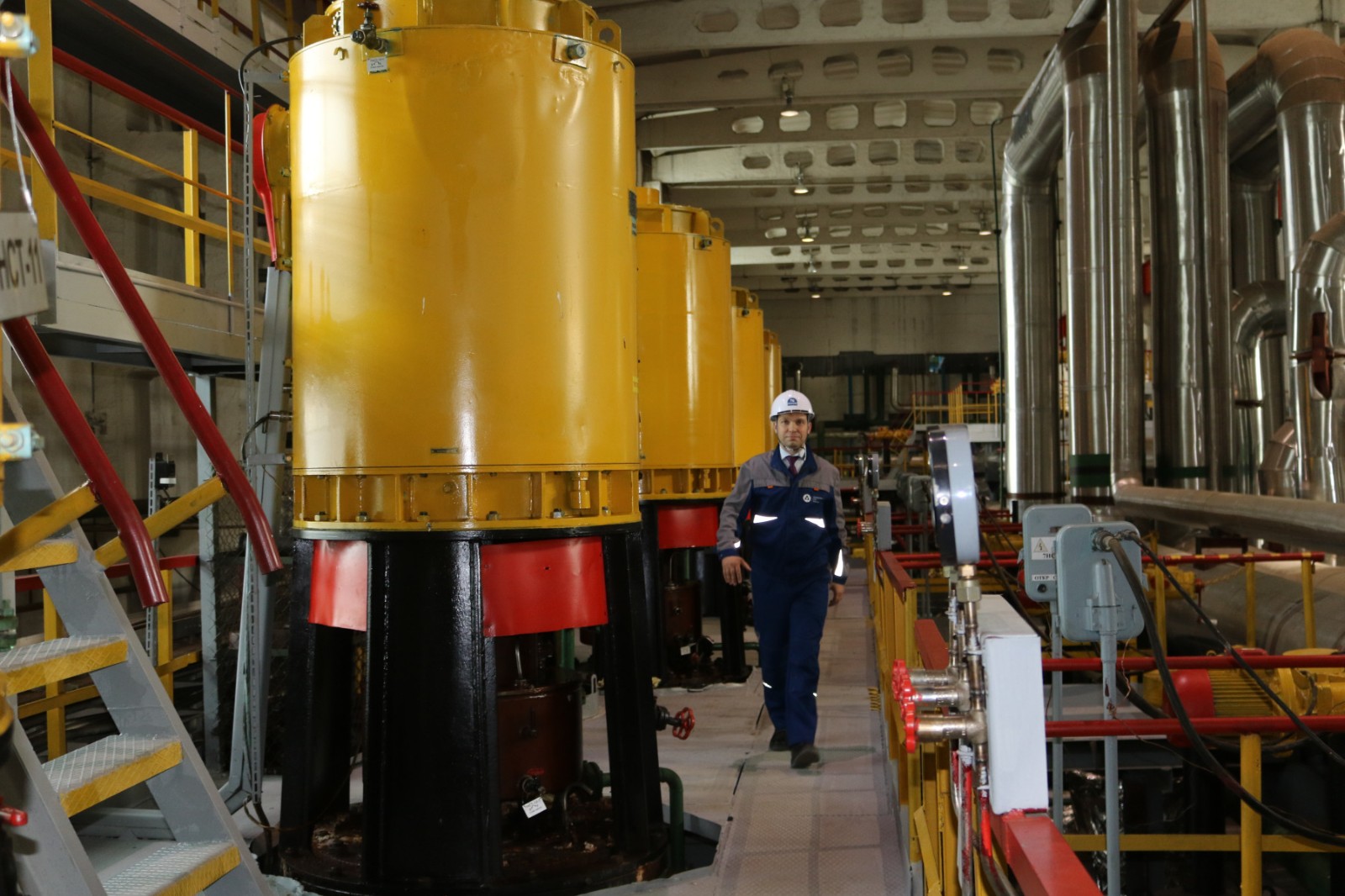
Russia's Leningrad NPP resumes hot water supply to Sosnovy Bor
On August 31, 2026, Russia's Leningrad NPP resumed hot water supply to the city of Sosnovy Bor via the district heating station (BRT) after completing scheduled maintenance. Dmitry Tsygankov, workshop manager of the turbine department at Leningrad NPP, stated that the plant had successfully completed BRT-related maintenance work in August, including chemical cleaning of heat exchange equipment, overhaul of pumping equipment, industrial safety assessments, and the necessary hydraulic pressure tests of pipelines. He said that the BRT is now supplying hot water to the city and industrial zone as planned, and the plant is preparing for the scheduled start of the Sosnovy Bor heating system; the heating system will be put into operation once outdoor temperatures drop to the appropriate level.
2026-09-01

First Russia-IAEA Small Modular Reactor Training Course Concludes in Murmansk
On August 31, the Small Modular Reactor training course jointly organized by Rosatom Technical Academy and the International Atomic Energy Agency (IAEA) concluded in Murmansk, Russia. The training focused on operational experience and future prospects of small modular reactors. The five-day training brought together participants from Asia, Africa, the Middle East, and Latin America, including representatives from national nuclear energy agencies, regulatory bodies, and organizations interested in developing small nuclear power projects. Participants exchanged views on the current state of small modular reactor technology, readiness for engineering application, and deployment prospects. The course highlighted Russia's...
2026-09-01
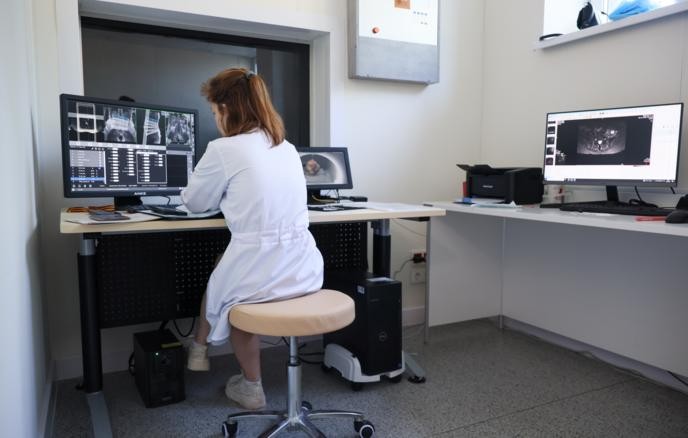
Russian scientists use 3D-printed tungsten grid to improve X-ray imaging quality, potentially reducing patient radiation exposure
The press service of the Russian Ministry of Education and Science recently stated that a Russian research team has used 3D printing technology to manufacture a tungsten-based anti-scatter grid for X-ray machines, with partition thickness only one-third that of similar products. The researchers believe this achievement could help reduce patient radiation exposure during X-ray examinations while maintaining medical image quality. During X-ray imaging, some rays scatter after passing through human tissue, creating background noise that weakens image contrast. Clinical equipment typically suppresses such interference through anti-scatter grids. Traditional anti-scatter grids are mostly made of lead, but lead has low mechanical strength and imposes high requirements on processing techniques, resulting in...
2026-09-01
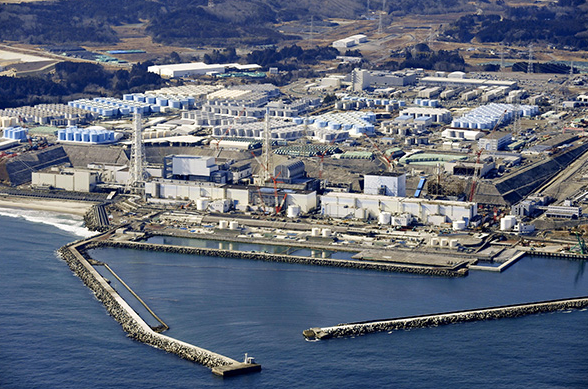
Japan Plans to Introduce Physical AI into Fukushima Daiichi Nuclear Power Station Decommissioning
The Japanese government and Tokyo Electric Power Company (TEPCO) are preparing to introduce Physical AI technology into the decommissioning operations at the Fukushima Daiichi Nuclear Power Station to enhance the autonomous operational capabilities of robots in high-radiation environments. This technology enables artificial intelligence to autonomously control robots based on on-site conditions, performing tasks such as inspection, data collection, and cleanup. To advance this effort, an advisory organization involving the government, businesses, universities, and research institutions is planned to be established within the year, with discussions centered on technology development, equipment application, and on-site verification. The organization is expected to be led by relevant government ministries and TEPCO, and will include AI startups, robot manufacturers, and university researchers.
2026-09-01

Nuclear technology breeding helps Laos improve rice varieties and increase yields
Rice is a vital staple food and source of income for rural households in the Lao People's Democratic Republic, and serves as the foundation of the country's food security. Over 80% of local farmers grow rice, with paddy fields accounting for approximately 60% of the nation's cultivated land. To enhance food supply capacity, Laos has set a target of increasing rice production to 5.5 million tonnes. The Saphart 1 rice variety was launched at the 2023 National Seed Fair for Food Security and Nutrition. (Photo: S. Phommalath/ RCCRC) Facing challenges such as environmental change, flooding, plant diseases, and increasing pressure on agricultural systems, agricultural researchers in Laos are turning to nuclear technology to improve rice varieties. The National Agriculture and Forestry Research Institute of Laos...
2026-09-01

Bayer Presents Phase III Data for Iodine-124 PET Tracer: High Sensitivity Shown in Cardiac Amyloidosis Diagnosis
At the 2026 European Society of Cardiology Congress, Bayer presented results from the Phase III REVEAL study of its investigational PET radiotracer iodine-124 evuzamitide (I-124 evuzamitide). Data showed that the tracer met the study's primary endpoints in diagnostic sensitivity and specificity when used for imaging in patients with suspected cardiac amyloidosis. The REVEAL study, sponsored by Brigham and Women's Hospital, is a multicenter, open-label, single-arm Phase III clinical trial conducted at 18 sites in the United States, enrolling 170 adult patients with suspected cardiac amyloidosis. Following a single intravenous injection of I-124 evuzamitide, subjects underwent cardiac and...
2026-09-01

Balakovo NPP Publishes 2025 Ecological Safety Report
Russia's Balakovo NPP released its 2025 ecological safety report on August 31, 2026. The report data show that the plant's operational activities comply with the requirements of sanitary, epidemiological, and environmental protection regulations. The report was presented in a roundtable format. Participants learned about the plant's ecological policy and the results of environmental monitoring studies, and exchanged views on relevant issues. Alexander Kurlov, head of the external radiation safety laboratory at Balakovo NPP, stated that before the plant's construction, the natural gamma background of the local area had to be measured and its upper and lower limits determined. Since the plant was put into operation, no exceedances of these limits have been recorded at the industrial site or in the surrounding areas.
2026-09-01

Australian One Nation leader calls for two nuclear reactors in Victoria
Australian One Nation leader Pauline Hanson recently stated that two nuclear reactors should be built on Australia's east coast. She also emphasized that the party's proposal differs from the nuclear power plan previously put forward by Liberal Party leader Peter Dutton. Hanson made these remarks while campaigning in Victoria for the November state election. Her statements go beyond the party's existing public policy. Under the party's published policy, Australia should build one reactor at a site supported by community consultation. Hanson said nuclear reactors are necessary, but the energy mix also needs to remain diverse, and she advocated for continuing to operate coal-fired power stations.
2026-09-01

Qinshan Nuclear Power Plant Unit 2 Outage 218 Officially Commences
At 2:20 AM on September 1, Unit 2 of Qinshan Phase II was disconnected from the East China Power Grid, marking the official commencement of Outage 218. This outage is a Category C overhaul for Unit 2 of Qinshan Phase II. In addition to the routine annual overhaul items such as reactor coolant system head removal and installation, fuel handling, SG eddy current inspection and flushing, it also includes important special tasks such as generator rotor removal, insertion and inspection, diesel generator excitation system renovation, PSR weakness anti-boron dilution modification, reactor coolant system automatic makeup and residual heat removal eddy current detection function, and nuclear island low-voltage switchgear renovation. The planned items for this outage total 6,119: including 3,764 preventive items, 171 strategic maintenance items, 789 periodic tests, 133 modification work orders, and 1,262 other types of work.
2026-09-01

Defence Therapeutics Expands Radiopharmaceutical R&D Program to Evaluate Alpha and Beta Emitter Applications
MONTREAL, Quebec, Canada — Biotechnology company Defence Therapeutics Inc. recently announced the expansion of its radiopharmaceutical R&D program to include α and β radioisotopes in its evaluation scope, further validating the application potential of its proprietary Accum® technology in precision oncology. Defence Therapeutics is a publicly traded biotechnology company developing next-generation oncology treatments centered on its Accum® precision drug delivery platform. The company stated that the Accum® technology is designed to facilitate the entry of drug payloads into the intracellular compartment, thereby improving delivery efficiency. This expansion of the radiopharmaceutical program...
2026-09-01

CERN Accelerator Complex Enters Full LS3 Shutdown for Upgrades, Paving the Way for the High-Luminosity LHC Era
On the morning of August 31 local time, the injector complex and the Antimatter Factory at the European Organization for Nuclear Research (CERN) ceased operation after completing their final beam deliveries, officially entering the third Long Shutdown (LS3) phase. Earlier, the Large Hadron Collider (LHC) had been closed in June, marking the flagship accelerator as the first to kick off LS3 upgrade work at the center. Bettina Mikulec (left), head of the Operations Group at CERN, handed a symbolic baton—a miniature superconducting magnet from the LHC—to Jean-Philippe Tock (right), head of the LS3 Coordination Group, with CERN Director-General Mark Thomson (second from left) and Oliver Brüning (third from left), head of Accelerators and Technology, in attendance.
2026-09-01

Tennessee Issues First-Ever Commercial Fusion-Specific Permit in the U.S. to Type One Energy
The Tennessee Department of Environment and Conservation (TDEC) has issued Type One Energy the state's first permit specifically for a fusion energy facility, allowing the company to advance fusion-related projects at the Tennessee Valley Authority's (TVA) Bull Run Energy Complex in Clinton. Tennessee officials stated this is the first permit of its kind in the United States issued under a new state-level fusion regulatory framework. Tennessee Governor Bill Lee, alongside fusion energy partners, presented the first U.S. permit specifically for a commercial fusion facility on Monday at the Organization of American States (OAS) annual meeting in Nashville. (LR) TVA Interim...
2026-09-01

US Westinghouse Electric Seeks to Restart Nuclear Expansion via IPO
US nuclear power company Westinghouse Electric Company is seeking to advance its business revival through an initial public offering. The company previously fell into bankruptcy due to project delays and sharp cost overruns in its nuclear projects, and has since undergone changes in ownership. Recently disclosed information shows that Westinghouse Electric submitted a confidential IPO application last July, with the specific listing date and offering size yet to be determined. Market observers believe that growing electricity demand driven by artificial intelligence development, along with the policy environment promoting nuclear power expansion in the US, is improving valuation expectations for nuclear power companies. David Nicholas, CEO of nuclear energy ETF manager Xfunds...
2026-09-01

Kansai Electric Power Applies to Build Dry Cask Storage Facilities for Spent Fuel
Kansai Electric Power Company (KEPCO) announced on August 31 that it has submitted an application to Japan's Nuclear Regulation Authority (NRA) seeking approval for the design and construction plans of dry cask storage facilities for spent fuel at its Mihama and Takahama nuclear power plants in Fukui Prefecture. The company plans to begin construction in 2027 and aims to complete the facilities by 2029. This application covers the first-phase construction at the Mihama and Takahama nuclear power plants. KEPCO had previously planned to build a total of four dry cask storage facilities for spent fuel at three nuclear power plants within Fukui Prefecture, including the Mihama, Takahama, and Ohi nuclear power plants. Currently, the related project at the Ohi nuclear power plant and the second-phase construction at the Takahama nuclear power plant remain...
2026-09-01
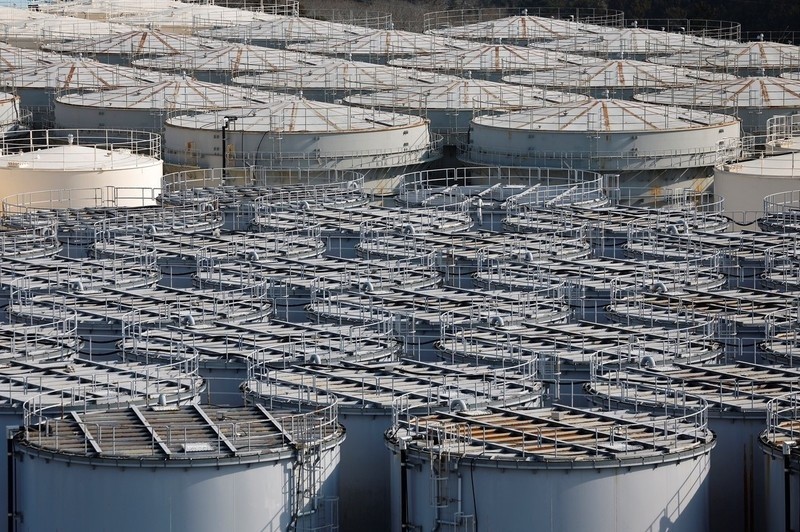
Fukushima Daiichi Nuclear Power Station begins 23rd discharge of treated nuclear-contaminated water
At 11:29 on August 31, Fukushima Daiichi Nuclear Power Station began its fifth discharge of treated nuclear-contaminated water in fiscal year 2026 and the 23rd overall. The operation is scheduled to last 19 days, concluding on September 18, with an estimated discharge of approximately 7,800 tonnes of nuclear-contaminated water diluted with seawater, equivalent to the capacity of about 8 storage tanks. The total tritium content is estimated at approximately 1.2 trillion becquerels. The reactors of Units 1 to 3 at Fukushima Daiichi still contain nuclear fuel that melted and solidified during the accident, known as fuel debris. Groundwater and rainwater that come into contact with this fuel debris form contaminated water. Since the discharge of treated nuclear-contaminated water began in August 2023, Fukushima Daiichi has cumulatively released approximately 173,000 tonnes, equivalent to about 173 storage tanks' capacity.
2026-09-01