
Search Results
Keyword:PERI
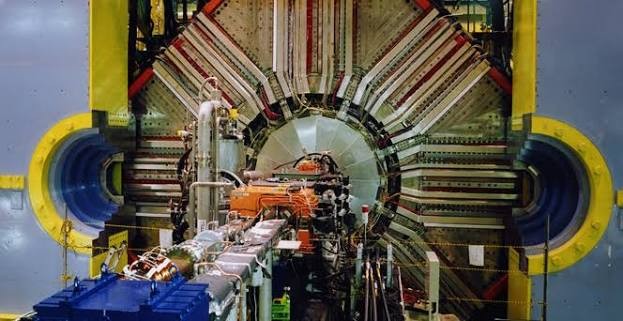
Russian researchers detect anomalous signs in bottomonium states using Belle II experiment data
The Budker Institute of Nuclear Physics of the Siberian Branch of the Russian Academy of Sciences recently announced that Russian researchers have detected anomalous phenomena in the analysis of data from the international Belle II experiment, indicating that the structure of certain excited states of bottomonium may be more complex than predicted by traditional models. Bottomonium is a class of unstable heavy particles composed of a bottom quark and an anti-bottom quark. Yevgeny Kovalenko, a young researcher at the Budker Institute of Nuclear Physics of the Siberian Branch of the Russian Academy of Sciences, stated that analysis of Belle II experiment data suggests that certain excited states of bottomonium may contain lighter quark components. In other words, these particles in specific states may not simply be plain bottom quark–anti-bottom quark combinations.
2026-07-31
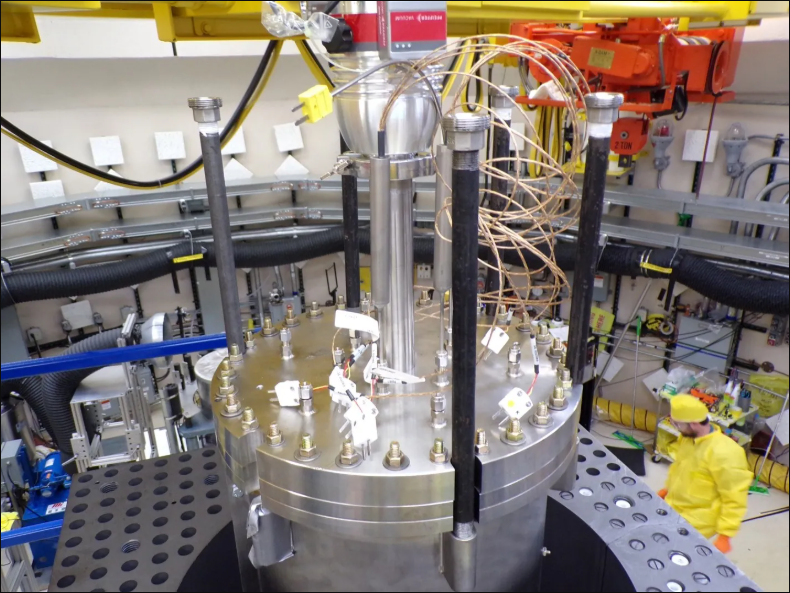
ZiaCore Microreactor Achieves Criticality in High-Temperature Zero-Power Experiment
Los Alamos National Laboratory announced on July 30 that its ZiaCore microreactor design has completed a high-temperature zero-power criticality proof-of-principle experiment at the National Criticality Experiments Research Center (NCERC) in Nevada, successfully achieving initial criticality. ZiaCore is an advanced nuclear energy microreactor design that uses low-enriched uranium dioxide fuel. The experiment lasted approximately four weeks from April to May this year, advancing the ZiaCore system to zero-power criticality under high-temperature conditions. According to the reactor design and verification process, zero-power criticality experiments can be used to validate the effectiveness of reactor physics designs, providing key benchmark data for subsequent engineering development.
2026-07-31

Xinhua Exclusive Interview | China Makes Significant Contributions to the "Artificial Sun" Project — Interview with Alain Bécoulet, Deputy Director-General and Chief Scientist of the International Thermonuclear Experimental Reactor Organization
On July 26, 2027, Xinhua News Agency published an exclusive interview with Alain Bécoulet, Deputy Director-General and Chief Scientist of the International Thermonuclear Experimental Reactor (ITER) Organization, on China's significant contributions to the "Artificial Sun" project and its role in accelerating global fusion research. Bécoulet noted that China plays a fundamental role in supplying ITER components (superconducting technology, cables, magnet manufacturing, cryostats, etc.), and that the tokamak installation work undertaken by the Chinese consortium "exceeded expectations in terms of time and cost." He also stated that facilities such as EAST, HL-3, and BEST provide ITER with experimental predictions, component testing, and technical twin validation. He believes that through sustained investment and international cooperation, China has begun to play a leading role in the global fusion field.
2026-07-27

Hefei Compact Fusion Energy Experimental Device Accelerates Construction
On July 27, the Compact Fusion Energy Experimental Device (BEST), located in Sanshigang Township, Luyang District, Hefei City, Anhui Province, is accelerating its construction. From aerial footage, the construction at the project site is progressing in an orderly manner, with related work continuing to unfold. The BEST device is a follow-up project to the Experimental Advanced Superconducting Tokamak (EAST) and will conduct further experimental validation based on the first-generation EAST device. As a key experimental platform for future fusion energy applications, BEST is expected to become the world's first compact fusion energy experimental device, providing support for the transition of fusion energy from scientific experiments to engineering applications. ...
2026-07-30
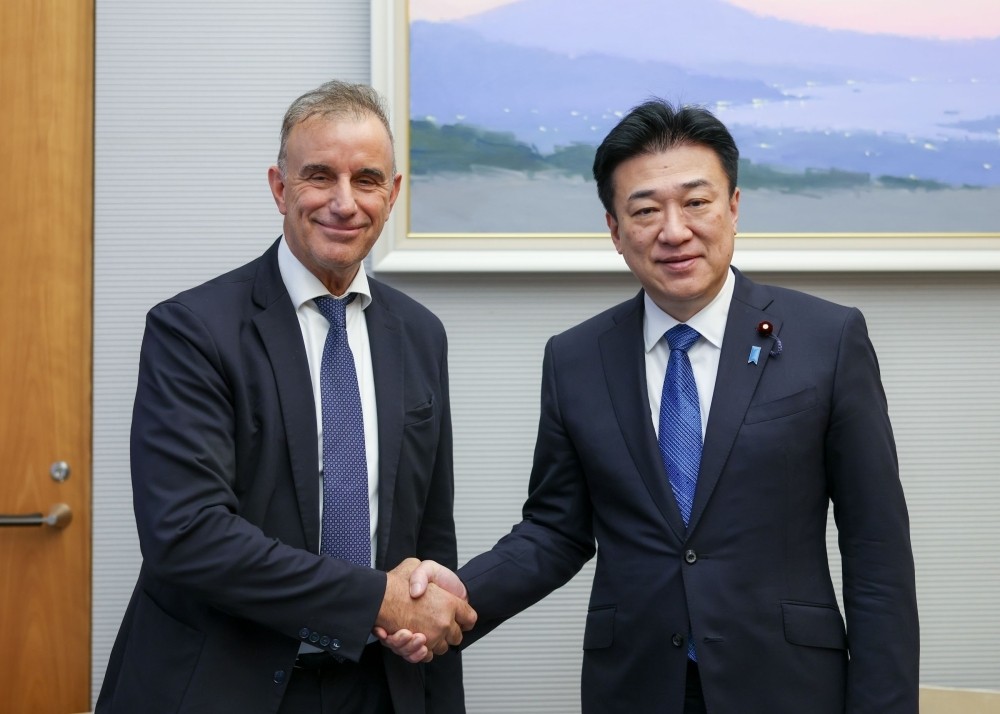
Japan's Chief Cabinet Secretary Meets ITER Organization Director-General
Starting at 4:50 p.m. on July 29, Japan's Chief Cabinet Secretary Yoshimasa Hayashi met with Pietro Barabaschi, Director-General of the International Thermonuclear Experimental Reactor (ITER) Organization, who was visiting Japan. The meeting lasted approximately 15 minutes. (Photo source: Japan Cabinet Public Affairs Office) Hayashi welcomed Barabaschi's visit to Japan. He stated that fusion energy has been listed as one of the 17 strategic areas in Japan's growth strategy. Japan looks forward to progress in the ITER project and believes it will play a significant role in advancing the realization of fusion energy and enhancing energy security. Hayashi...
2026-07-30
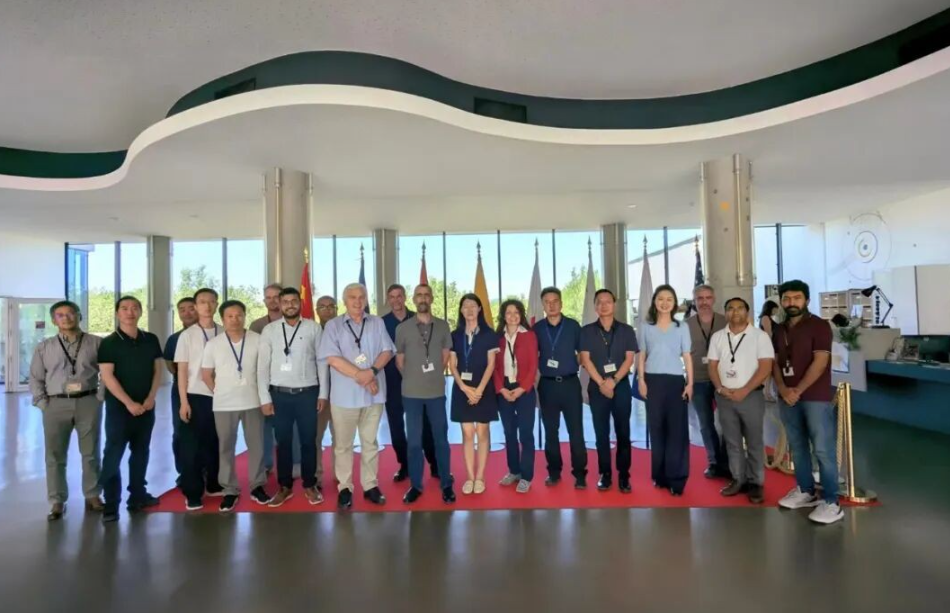
Preliminary Design Review Meeting Successfully Held for China's Helium-Cooled Solid Test Blanket Module System
From July 6 to 10, 2026, the ITER Organization held an expert review meeting at its headquarters in France regarding the preliminary design of China's Helium-Cooled Ceramic Breeder Test Blanket System (HCCB TBS). During the meeting, the Chinese te
2026-07-27